What to Pack in Your Personal Item Bag
Your personal item bag is your in-flight home base. The travelers who pack it right never have to dig through the overhead bin mid-flight again. Everything you need for the journey goes in your personal item. Everything else can wait in the overhead bin. This article shows you exactly what that means and exactly what goes where.
Grab Our Travel Packing Checklist
Our free checklist includes the personal item section most packing lists skip entirely. Every item that belongs under the seat rather than in the overhead bin, and the comfort items most travelers forget until they are an hour into a flight wishing they had not. Print it once and use it before every flight.
Get the Free ChecklistThe outermost pocket of your personal item bag is for documents only. Your passport, your boarding pass in all three accessible formats, your travel insurance emergency card, and your ID. These are the documents produced at the check-in counter, the security checkpoint, the gate, the aircraft door, the immigration counter at an international arrival, and the car rental desk at the destination. Every one of these moments requires the document immediately and without searching. The outer pocket is the location that produces it in under three seconds from a stationary position without any unpacking required.
The consistency of the document location matters as much as the location itself. A passport that is sometimes in the outer pocket and sometimes in the main compartment is a passport that requires a search at every checkpoint under the eyes of a queue that is waiting for you. A passport that is always in the outer pocket of the personal item is a passport reached for and produced in one motion at every checkpoint for every flight forever. The three-second document production is a habit built on location consistency, not organizational talent.
Your boarding pass belongs in three places simultaneously: the airline app on your phone, a screenshot in your camera roll, and the outer pocket of your personal item if you have a printed version. The app version requires connectivity and a functioning device. The screenshot requires neither. Three access points mean no single failure eliminates document access. A phone that dies at the gate, an app that fails to load, and the printed pass in the outer pocket: the gate agent sees your boarding pass regardless of which one of the three has a problem.
Everything you need for the journey goes in your personal item. Everything else can wait in the overhead bin.
The travelers who pack the personal item right never have to dig through the overhead bin mid-flight again. That is the whole system in one sentence.
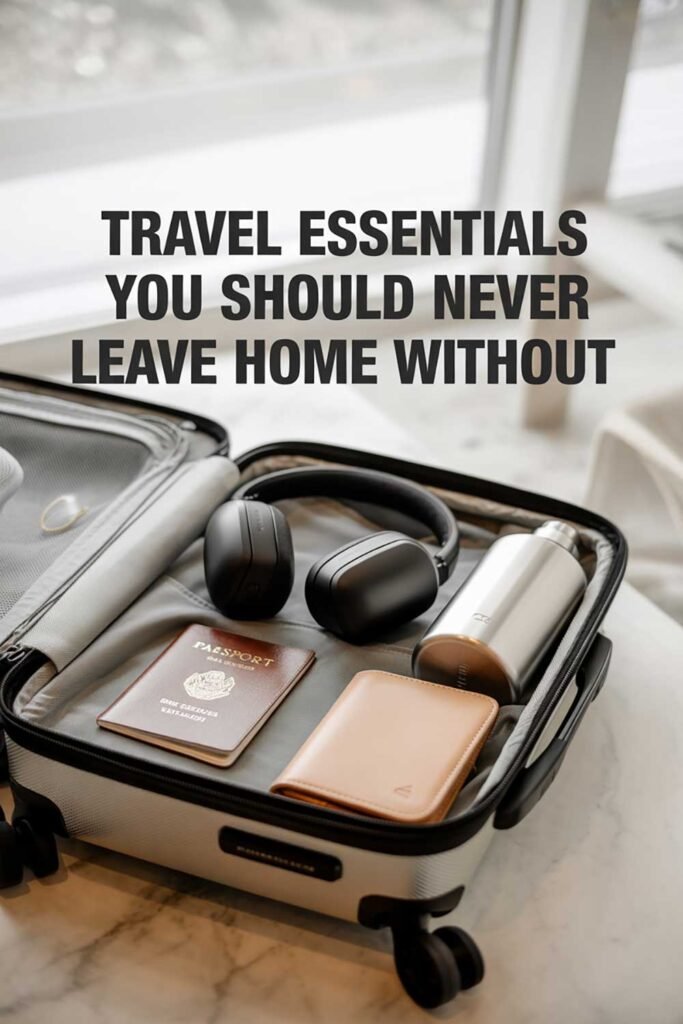
Keep a slim travel wallet in the outer pocket of your personal item rather than a standard wallet. The travel wallet holds your passport or ID, the one card you use for travel purchases, a small amount of local cash, your boarding pass, and your travel insurance card. Nothing else. Your everyday wallet with loyalty cards, gym memberships, and home-life financial cards stays packed deep in the main compartment where its loss produces a manageable inconvenience rather than a complete financial and identity disruption. The travel wallet is purpose-built for transit. The everyday wallet is not.
Let Us Plan the Trip on the Other Side of the Boarding Gate
A perfectly packed personal item is the beginning of a great travel day. A perfectly planned trip is what follows. Tell us where you want to go, your travel dates, and your travel style. We will handle the planning and itinerary so the only thing between you and the destination is a flight you are now completely prepared for.
Plan Our EscapeAirplane air is ruthless to skin and mucous membranes. At 10 to 20 percent humidity, significantly drier than most indoor environments on the ground, the cabin air draws moisture from your lips, hands, and face at a rate that produces visible and uncomfortable dryness across a long flight without active countermeasures. Lip balm and hand cream in the personal item, accessible without standing up or opening the overhead bin, are the difference between a flight where your skin progressively tightens and a flight where you address the dryness at the first sign of it.
The in-flight comfort kit belongs in the inner accessible pocket of the personal item, not buried in the main compartment. Lip balm in a small tube. A travel-size hand cream of one ounce. A small facial moisturizer for longer flights. Eye drops for contact lens wearers. These items together weigh under two ounces and address the specific physical comfort complaints that most long-flight passengers describe on arrival without having addressed them during the flight.
Your sleep kit goes in the personal item alongside the comfort items if the flight is long enough to involve sleeping. A contoured sleep mask that blocks light without pressing on eyelids. Foam earplugs with a noise reduction rating that handles cabin engine noise. A travel neck pillow if you use one. All three within reach before the lights dim, not in the overhead carry-on that requires standing and reaching to access during the lighting transition when the cabin is dark and your neighbors are already trying to sleep.
Hand sanitizer in a small squeeze bottle is one of the most consistently useful personal item additions. Aircraft cabins and airport surfaces are high-contact shared environments. A small bottle in the personal item pocket means you can sanitize immediately after handling tray tables, seatbelt buckles, and lavatory door handles before touching your face, your food, or your eyes without requiring a trip to the lavatory every time.
Apply lip balm and hand cream within the first thirty minutes of any flight over three hours and reapply every two to three hours. Proactive application produces materially better skin comfort on arrival than reactive application made only when dryness becomes uncomfortable. By the time dryness is noticeable and uncomfortable on a long flight, the skin has already lost significant moisture. The two products together weigh about one ounce and produce a different arrival experience from a flight where neither was used.
The specific frustration of having no accessible entertainment on a long flight is the specific frustration of the passenger whose phone is in the overhead bin carry-on, whose earbuds are in the main compartment under three other items, and whose downloaded content turns out not to have completed its download. All three are preparation failures rather than flight failures, and all three are addressed in the five minutes at home before the bag is closed and the twenty minutes of boarding setup after getting to your seat.
Your phone with all offline content downloaded, tested in airplane mode at home the day before, goes in an accessible pocket of the personal item or a jacket pocket during transit. Earbuds or headphones go in the same pocket or a dedicated accessories pouch that opens in under three seconds. A book or e-reader goes in the front pocket or the main compartment top so it is accessible within one hand’s reach without unpacking anything else. These three items provide complete entertainment redundancy: visual content if you want to watch, audio if you want to listen, and physical reading if you want to read.
The offline content preparation happens at home where Wi-Fi is fast and free, not at the gate where airport Wi-Fi is slow and congested. Download your entertainment the day before the flight, test it in airplane mode to confirm it completed, and arrive at the gate with entertainment that is ready and confirmed rather than in progress and uncertain.
Carry a short charging cable in the personal item’s outer accessible pocket rather than only in the main electronics pouch. Seat pocket USB charging ports and seat-arm power outlets are usable with a short cable that reaches from the port to your hand without draping across your seat neighbor. A one-to-two-foot cable handles this reach in most seat configurations. A standard three-foot cable used in a middle seat drapes across a stranger’s leg. A short cable in the outer pocket charges your phone from the seat while your longer cable stays in the electronics pouch for accommodation charging.
The Personal Item Gear We Pack on Every Flight
The slim travel wallet that holds every flight document in one accessible location, the in-flight comfort pouch that has been in every personal item for years, and the short charging cable that has made seat-power-port charging pleasant rather than awkward. Real personal item picks from real travel across flights of every length and destination.
DND FavoritesA snack in the personal item outer pocket is accessible in under five seconds without unbuckling, standing, or disturbing anyone. The same snack in the main compartment of the overhead bin carry-on requires unbuckling, standing, waiting for an aisle moment, opening the overhead bin, finding the bag, extracting the snack, closing the bin, returning to the seat, and rebuckling — a process that takes two to three minutes and disturbs everyone in the aisle during it. The snack is worth having on any flight of more than two hours. Its location in the personal item is what makes it actually function as a snack rather than as a theoretical option too inconvenient to act on.
Pack the snack in the most accessible location in the personal item, the outer zip pocket or the seat pocket immediately after boarding, before the tray table goes down or the entertainment starts. The snack is not needed at this moment. Placing it now means it will be immediately accessible when it is needed, at hour three of a six-hour flight when the meal service ended ninety minutes ago and the next service is ninety minutes away.
The best personal item snacks have no strong smell in a confined space, require no refrigeration, need no utensils or surface, and provide meaningful energy rather than a brief sugar spike. Individual nut butter packets with crackers. A protein bar without a chocolate coating that melts. Mixed nuts and dried fruit. Two rice cakes. These handle the gap between meal services, the travel day with no time for a proper meal, and the arrival hunger that strikes when check-in takes longer than expected.
Pack the snack and the reusable water bottle together in the same accessible location of the personal item. Hunger and thirst frequently arrive in the same gap between meal services. An insulated water bottle in the personal item side pocket, filled at the airport water fountain after security, provides cold water for the first several hours. A flight attendant is almost always happy to refill a passenger’s own bottle during a water service pass. The combination of snack and water within reach converts the standard in-flight comfort gap into a managed and self-sufficient period rather than a dependency on service timing.
The personal item is the in-flight charging and tech station for every device you use during the journey. Power bank fully charged the night before. Phone cable short enough to reach the seat power outlet. Earbuds in their case in an accessible pocket. Any medication taken during the flight in a dedicated pouch rather than mixed with toiletries. All of it organized so accessing any one item requires opening exactly one pocket rather than searching through a bag compressed under the seat into a configuration that no longer matches how you packed it.
The power bank in the personal item is available throughout the flight without any overhead bin access. On a long flight where the phone is handling GPS, camera, entertainment, and messaging simultaneously, battery begins declining within two to three hours. A power bank in the personal item means beginning a top-up charge at the three-hour mark when the phone is at 70 percent rather than at the eight-hour mark when it is at 15 percent and someone needs to navigate to an accommodation in an unfamiliar city in thirty minutes.
Any item needed for the destination arrival goes in the personal item accessible section, not the overhead carry-on. The accommodation address screenshot. The transfer driver’s phone number. The travel insurance card. The local SIM or eSIM that needs activating. The pen for the arrival card. All of these are needed within fifteen to thirty minutes of landing when the overhead bin may still be blocked by other passengers deplaning.
Do a five-minute personal item setup immediately after taking your seat, before the boarding is complete. Phone in the seat pocket or a jacket pocket. Snack in the seat pocket. Water bottle in the cup holder. Sleep mask and earplugs in a jacket pocket. Lip balm and hand cream in the personal item outer zip. Charging cable connected to the seat power outlet if available. This setup takes five minutes at boarding and eliminates every mid-flight search. The staged personal item functions like an organized work desk. The unstaged personal item is a bag you dig through repeatedly across a long flight while increasingly tired.
Same Flight. Same Row. Completely Different Journeys.
Leon and Adaeze were seat partners on a nine-hour overnight flight. They had been together long enough that their opposing travel styles had become a standing conversation topic. Leon packed quickly and heavily. The personal item was overflow for whatever did not fit elsewhere, and he considered the overhead bin to be the correct location for everything he brought. Adaeze packed methodically. The personal item was a deliberate system, and she had not opened the overhead bin during a flight in years.
By hour two of the nine-hour flight, Leon had stood up three times. Once for his earbuds, which were in the outer zipper of the carry-on in the overhead bin. Once for his phone charger, which had been packed in the toiletry pouch of the carry-on. Once for his neck pillow, which was at the bottom of the carry-on under his clothes. Each time he stood he disturbed the passenger in the aisle seat, waited for the cart to pass, opened the overhead bin while standing on one leg, searched for the item, and returned to his seat having found something slightly different from what he was looking for in the dark. He was also hungry by hour three because his snacks were in the carry-on and the meal service was not for another hour.
Adaeze reached into the outer pocket of her personal item for the earbuds she had placed there at boarding. She reached into the side pocket for her lip balm when the cabin air started feeling dry. She reached into the seat pocket for her snack when the meal gap arrived. She pulled her sleep mask from her jacket pocket when the lights dimmed. She reached into the accessible inner pocket for the hand cream at hour five. She had not opened the overhead bin or stood from her seat since the plane left the gate. The nine hours were genuinely manageable. She was not the most comfortable person on the aircraft. She was in economy like everyone else. But she was the most organized person in their row, and the organization produced a noticeably different flight.
Leon’s standing count for the nine-hour flight was seven. Adaeze’s was two, both for the lavatory. On the bus to the terminal after landing, Leon asked her what she had in the personal item that she never needed to get up for. She listed it. Everything you need for the journey. Everything else in the overhead. He had everything he needed in the overhead. She had everything she needed in the personal item. The list in this article is the list she gave him.
The complete personal item system organizes a single bag into three zones that produce immediate access to any needed item without disturbing anyone. Zone one is the outer zip pocket: document wallet with passport, boarding pass, and travel insurance card. Nothing else. Zone two is the inner accessible pocket or an organized pouch within the main compartment: comfort kit including lip balm, hand cream, eye drops, hand sanitizer, sleep mask, earplugs, and any in-flight medication. Zone three is the main compartment, organized with most frequently needed items at the top: entertainment items, snack if not in the outer pocket, power bank, and short charging cable.
The seat pocket holds items accessed repeatedly during the flight without any bag interaction: the current snack, the current reading material, the earbuds in their case. The seat pocket is a staging area for the current hour’s active items that moves its contents dynamically as the flight progresses. The snack goes in when you board and comes out when you eat it. The book goes in during the reading phase and comes back in the bag when you switch to a show. It is a temporary extension of the personal item for items currently in use, not a secondary bag.
What stays in the overhead bin and is never accessed during flight: your main clothing items, your full toiletry kit, your checked-bag overflow, your destination gear, your shoes, and any item that requires more than momentary access during the journey. The overhead bin is the cargo hold of the cabin. It holds everything that does not serve the journey itself. It is accessed once at boarding to stow and once at landing to retrieve. Nothing in between.
Before the flight lands, return every item from the seat pocket to its place in the personal item during the final thirty minutes of descent. Seat pockets are one of the most common locations for items left behind on aircraft. A phone, a book, earbuds, a passport case, or a lip balm left in the seat pocket is discovered missing at the immigration hall rather than at the aircraft door, by which point the plane may have been prepared for the next flight. The thirty-second sweep of the seat pocket, tray table area, and floor around the seat before the gate announcement catches every item before the door opens.
Book the Flight Worth Being Organized For
The perfectly packed personal item starts with a flight that was worth boarding. Our travel agents handle the flight research, the itinerary, and every confirmation that belongs in that outer pocket document wallet. You handle the comfort kit and the snacks. Let us build the trip. You organize the bag.
Book A TripCommon Personal Item Mistakes to Avoid
Most mid-flight overhead bin visits and most in-flight discomforts are caused by the same consistent personal item packing gaps. These are the most common ones and what to do differently before the next boarding call.
Documents buried in the main compartment instead of the outer pocket
A passport in the main compartment under a snack, a charger, and a comfort pouch requires unpacking to the middle of the bag at a checkpoint while an agent waits and a queue forms behind you. The outer pocket of the personal item is the document location. Nothing else lives there. Every checkpoint of the journey involves a three-second reach rather than a bag excavation. The location of the document determines the experience of every checkpoint. The outer pocket makes every checkpoint effortless.
No in-flight comfort items or all of them in the overhead bin
Lip balm and hand cream inaccessible during a ten-hour flight in 10 percent cabin humidity are lip balm and hand cream that are not being used. Skin not actively moisturized in that environment produces the tight, dry, uncomfortable state most long-haul passengers accept as inevitable jet lag and that is at least partly cabin dehydration addressed topically. Two items weighing one ounce combined, in the personal item inner pocket, change the physical comfort of the last four hours of any long flight. The same items in the overhead bin change nothing because they are not reachable when the benefit would occur.
Entertainment not downloaded before departure
Offline content that requires downloading on airport Wi-Fi before a flight is content downloading at the speed of shared congested airport bandwidth rather than home broadband. A single movie downloads in forty-five minutes to an hour at a busy airport compared to ten to fifteen minutes at home. Download everything the day before departure, test it in airplane mode, and arrive with entertainment that is ready and confirmed rather than in progress and uncertain.
Snack in the overhead bin instead of within reach
A snack in the overhead bin is a snack that requires standing, disturbing a neighbor, waiting for the aisle, opening the bin, searching, closing the bin, returning, and rebuckling to access. The same snack in the personal item outer pocket is accessible in five seconds without any of those steps. On a flight where standing in the aisle multiple times is a social friction many passengers avoid even when genuinely uncomfortable, a snack within reach is a snack that actually gets eaten when needed.
Power bank in the overhead carry-on
A power bank inaccessible during a flight cannot prevent the travel anxiety of a phone at 8 percent when the plane is on approach to a foreign airport and navigation, transfer communication, and the accommodation address are all on the phone. The power bank in the personal item, accessible without standing, converts battery management from a crisis response into a proactive habit. Start topping up at 70 percent. Land at 80 percent. Navigate confidently rather than hoping the 8 percent holds until the hotel Wi-Fi connects.
No seat pocket staging before the seatbelt sign turns off
The passenger who boards and immediately stuffs the personal item completely under the seat without staging any items in the seat pocket spends the first thirty minutes excavating the personal item for the earbuds, the snack, the phone, and the entertainment that were all accessible at boarding. A two-minute setup at boarding produces a bag that serves the flight from the first minute rather than a bag that needs to be reorganized once the flight is underway.
Love Helping Travelers Arrive Better Prepared?
If sharing travel organization habits, recommending the right trips, and helping people arrive at their destinations prepared and genuinely comfortable sounds like work you were made for, becoming a home-based travel agent might be exactly the right next step. Earn commissions, get insider travel perks, and build a real business from anywhere. See how it works.
Become An AgentFrequently Asked Questions
These are the questions travelers ask most often about organizing their personal item bag for flights. Real answers from real in-flight experience across every type of journey.
What is the size limit for a personal item and how does it differ from a carry-on?
A personal item is the smaller of the two bags most airlines allow in the cabin. It typically goes under the seat in front of you rather than in the overhead bin. Most major US carriers allow a personal item up to approximately 18 by 14 by 8 inches, though specific dimensions vary by airline and are worth confirming for each carrier you fly. A carry-on is the larger overhead bin bag, typically up to 22 by 14 by 9 inches on major carriers. Budget airlines often have stricter personal item and carry-on size requirements and sometimes charge for carry-on bags while including a personal item in the base fare. Always check the specific size requirements for the airline and fare class on your ticket rather than assuming standard major carrier dimensions apply.
What medications should be kept in the personal item versus the main carry-on?
Any medication taken on a scheduled basis, including daily medications, timed doses during the flight, and as-needed medications for conditions that can arise during a flight such as motion sickness, anxiety, or pain, belongs in the personal item in an accessible location rather than in the overhead carry-on. Airlines recommend keeping all medications in carry-on luggage rather than checked bags due to temperature sensitivity, security, and accessibility. Prescription medications in their original labeled packaging are the safest form for air travel. Controlled substances may require documentation for customs purposes on international flights. Over-the-counter flight comfort medications such as motion sickness tablets, sleep aids, decongestants for ear pressure discomfort during descent, and pain relievers are all worth having in the personal item rather than the overhead bag where a sudden need during flight would require standing to access.
How do you organize a personal item that serves as both an in-flight bag and a day bag at the destination?
The dual-function personal item, sized to fit under the aircraft seat and also serving as the daily destination bag, is one of the most efficient travel setups available. For the flight, in-flight essentials are staged in the accessible pockets as described in this article. For the destination, the same bag holds the day’s essentials: water bottle, snacks, sunscreen, a small first aid kit, the camera, the travel wallet, and a light layer. The transition from in-flight mode to destination mode takes about two minutes at the accommodation: remove the sleep mask to the bedside, move the power bank to the charger, refill the water bottle. The same bag, reorganized for its new function, serves both purposes without requiring a separate day bag to be purchased at the destination.
Is it worth buying a specific personal item bag or can any small bag work?
Any bag within the airline’s personal item dimensions technically works. A bag designed specifically for the personal item function produces a better experience because it is organized around the access patterns a flight requires. Multiple external pockets at different access levels. A dedicated document pocket. A padded laptop or tablet sleeve if you use one. A stable structure that maintains its shape when compressed under the seat rather than collapsing against its contents. A comfortable carry option for transit between the airport and the accommodation. A quality purpose-built personal item bag costs $40 to $120 and pays for itself in flight comfort and organization across the first several trips where it prevents the specific frustrations a poorly structured bag produces.
What should never go in a personal item bag?
Items that should stay in the overhead carry-on or checked luggage rather than the personal item: bulky clothing items that reduce space for genuinely in-flight-needed items. Full-size toiletries that should be in the carry-on toiletry bag in the overhead. Items of high monetary value that would be problematic if the personal item were lost or stolen during transit, since the personal item is the bag most frequently left in seats, lavatories, and gate areas by distracted travelers. Prohibited items such as liquids over 3.4 ounces not in the quart bag. Excessively heavy items that make the personal item difficult to carry in and out of the aircraft. The personal item is an in-flight functional tool, not overflow from a bag that did not close. Items in it earn their place by being needed during the journey.
How do you handle the personal item on a connecting flight with a tight connection?
On a tight connection the personal item becomes even more important as an immediately functional bag because the overhead carry-on may be gate-checked on smaller first-leg aircraft or may require overhead bin retrieval time a tight connection cannot accommodate. Keep everything genuinely critical for the connection in the personal item: boarding pass and passport, phone and charger, any medication needed during the connection, and a small snack and water if the connection involves an extended transit. A connection of 90 minutes or less at a major hub with the personal item fully organized and immediately accessible produces a functional and manageable connection experience. The same connection with documents in the overhead carry-on, a dead phone, and nothing to eat in the personal item is the connection that produces gate-arrival anxiety the personal item system eliminates entirely.
The personal item is not the bag you could not fit in the carry-on. It is the bag that carries the flight. Pack it like it matters, because for the hours between the gate and the destination, it is the only bag that does.
Picture Your Next Flight From the Moment You Take Your Seat
You place the personal item under the seat. You spend two minutes staging: snack in the seat pocket, earbuds accessible, phone charged and ready, sleep mask in the jacket pocket, lip balm and hand cream in the inner zip. The document wallet is already in the outer pocket where it has been since you left home. You stow the carry-on. You sit down. You buckle. You do not stand up again for the first three hours. At hour two you reach into the seat pocket for the snack. At hour three you reach into the inner zip for the lip balm. At hour five you reach into the jacket pocket for the sleep mask. At hour eight the phone is at 82 percent and the accommodation address is in the camera roll. You deplane without looking in the overhead bin. The personal item is under your arm. You are the traveler who packed it right. That is every flight from here.
One More Thing Before You Board
Print our free Travel Packing Checklist before your next flight. The personal item section covers every item in this article so nothing gets accidentally packed in the overhead when it should be under the seat. The same checklist we use before every single flight we take.
Get the Free ChecklistExplore Our Top Picks for a Better Trip
From the slim travel wallet that holds every flight document in one organized accessible location to the in-flight comfort pouch that has been in every personal item for years, see the personal item products and travel resources we actually use and recommend on every flight we take. Real picks from real travel built around these exact in-flight habits.
See Our Top PicksTravel Prints and Printables From Our Shop
Visit Premier Print Works for travel journals, packing planners, in-flight organization printables, trip organizers, and wall art that makes every trip a little more beautiful and a lot more organized from the first item staged in the personal item to the last memory made at the destination.
Visit Premier Print WorksDisclaimer
The information shared in this article is provided by Don and Diana’s Travels for general informational, educational, and inspirational purposes only. It reflects our personal experiences, opinions, and the experiences of travelers we have worked with. It is not professional travel, legal, medical, or financial advice, and it should not be relied on as such.
Travel Information and Airline Policies
Personal item size restrictions, carry-on policies, baggage fees, security procedures, and related airline regulations change frequently and vary significantly between airlines, routes, and fare classes. Always confirm current personal item and carry-on requirements with your specific airline and fare class before travel. The personal item dimensions mentioned in this article reflect general current major carrier standards and may not apply to all airlines, particularly budget carriers with stricter requirements. We make no guarantee that any airline policy information in this article is current, complete, or applicable to your specific travel situation.
Medical and Medication Information
Any information in this article about medications, in-flight health items, or cabin health conditions is general educational content only and not professional medical advice. Always consult your prescribing physician regarding medication management during travel, international travel, and changes in altitude or time zone. Keep all medications in appropriate labeled packaging and carry documentation for controlled substances as required by relevant customs and security authorities. We are not responsible for any health outcome arising from decisions made based on the information in this article.
Affiliate and Partner Links
This article may contain affiliate links, partner links, referral links, and links to products or services that pay us a commission. If you click a link and make a purchase or complete any qualifying action, we may earn a small commission at no extra cost to you. Our recommendations are based on real use and genuine belief in the products and services we share.
Third-Party Websites and Services
We may link to third-party websites, services, and resources for your convenience. We do not control these sites and are not responsible for their content, terms of service, privacy practices, pricing, availability, or any product or service they sell. Your use of any third-party site is entirely at your own risk.
Health, Safety, and Personal Responsibility
Travel involves personal risk. You are solely responsible for your own health, safety, travel insurance, medications, vaccinations, documentation, financial decisions, and choices while planning or taking any trip. We strongly recommend purchasing comprehensive travel insurance for every trip. Don and Diana’s Travels, its owners, employees, contractors, and affiliates accept no liability for any loss, injury, illness, delay, cancellation, damage, theft, or inconvenience arising from your use of the information in this article or from any travel decisions you make.
Composite Stories and Characters
Some stories, examples, and traveler experiences shared on this site are composites drawn from the real experiences of Don, Diana, clients, friends, and travelers we have worked with over the years. Names, identifying details, locations, and circumstances may be combined, changed, or fictionalized to protect privacy. Any resemblance to a specific real person beyond the composite portrayal is unintentional.
No Guarantees
We do not guarantee any specific result, outcome, savings, or experience from using the information, tips, services, or products mentioned in this article. Your results depend on many personal factors including your own choices, effort, circumstances, and external conditions outside of our control.
Copyright and Use
All content in this article is the copyrighted property of Don and Diana’s Travels unless otherwise noted. You may not copy, republish, redistribute, modify, sell, or reuse our content without our prior written permission. You are welcome to share a direct link to this article with proper credit.
By reading and using the information in this article, you acknowledge that you have read, understood, and agree to this disclaimer in full.