How to Pack Light Without Feeling Unprepared
Packing light and feeling prepared are not opposites. They are the same skill mastered from different angles. The most prepared traveler in any room is almost always the one carrying the smallest bag. Not because they got lucky and nothing went wrong. Because they understood before they packed that preparation is not a function of how much you carry. It is a function of how well you chose what to carry. This article makes that distinction practical before you ever open a suitcase.
Grab Our Travel Packing Checklist
The pack-light traveler’s checklist is not a shorter list. It is a more intentional one. Every item earns its place. Every category has a weight and space limit. And every question you need to ask before something goes in the bag is already there. Print it once and use it before every trip where the small bag is the goal.
Get the Free ChecklistA ten-piece capsule wardrobe is the most complete lightweight clothing system available to any traveler of any style or destination type. Ten pieces, chosen deliberately and built on a shared palette, produce enough daily combinations to carry any trip from three days to two weeks without repetition anxiety, without orphaned pieces that only work with one other item, and without the weight and volume of the larger wardrobes most travelers pack by default rather than by design.
The ten-piece capsule for a flexible trip: three bottoms, two casual day bottoms and one slightly smarter option. Four tops, two casual tees or tanks, one slightly nicer blouse or shirt, and one long-sleeve or thermal depending on destination temperature. One layer, a cardigan, linen shirt worn open, or a lightweight jacket. One dress or jumpsuit that functions as a complete outfit requiring no layering decision. One active or swimwear piece if the destination warrants it. Ten pieces. Every one of them coordinating with every other piece in the shared palette. Every combination deliberately pre-tested as a working outfit before anything goes in the bag.
The combinations math from ten coordinated pieces is generous. Three bottoms paired with four tops produces twelve base combinations. Add the layer over any combination and you add twelve more. The dress stands alone as multiple looks through shoe and accessory variation. The active piece serves its specific function. A conservative count of the total distinct daily looks from ten pieces is eighteen to twenty-two, which covers any two-week trip with zero repetition if you want variety, and zero anxiety about having something that works if you do not care about variety at all.
The shared palette is the mechanism that produces this result. Every piece must work with every other piece in terms of color. Navy, cream, and warm terracotta. All-neutral charcoal, white, and camel. Earthy olive, tan, and rust. Whatever palette you choose, every piece passes through it before entering the bag. A beautiful piece in a color that nothing else in the bag coordinates with is not a ten-piece capsule piece regardless of how much you love it independently. The palette discipline is the packing discipline. One without the other produces a bag of individual beautiful pieces rather than a working wardrobe.
The most prepared traveler in any room is almost always the one carrying the smallest bag.
Packing light and feeling prepared are not opposites. They are the same skill mastered from different angles.
Choose fabrics for the ten-piece capsule based on three criteria: wrinkle resistance, quick drying, and weight. Merino wool, jersey knit, linen, quick-dry synthetics, and cheesecloth cotton score well on all three. Heavy cotton, silk, and structured wovens score poorly on at least two. A ten-piece capsule built from fabrics that resist wrinkles, dry quickly after hand-washing, and weigh little individually produces a bag that is lighter, fresher, and more versatile across a long trip than the same ten pieces built from heavy or high-maintenance fabrics. The fabric choice is the invisible infrastructure of the pack-light system.
Let Us Plan the Trip Your Light Bag Deserves
The best pack-light trips are to destinations worth traveling light for. Tell us where you want to go, your travel dates, and your travel style. We will find the trip that matches the vision and handle the logistics while you handle the capsule wardrobe. Real travel agents, real destinations, real results.
Plan Our EscapeLaundry access is the variable that determines how many days a given number of clothing pieces can cover. A ten-piece capsule without any laundry access covers seven to ten days of wear before pieces need repeating in ways that feel genuinely repetitive. The same ten-piece capsule with two laundry sessions of any kind covers fourteen to twenty-one days of the same trip without any piece feeling worn out. Research the laundry options at your destination before packing and the question of how many clothes to bring changes from a volume question to a logistics question.
The three laundry options available at most destinations, in order of cost and effort: sink hand-washing with a travel laundry bar or detergent strips. A destination laundromat, which is available in virtually every city and most towns globally and typically costs $3 to $10 to wash and dry a full load. And in-accommodation laundry service ranging from the hotel laundry that charges by item to the Airbnb with a washing machine the host mentions is available. One of these three options is accessible at most destinations on most trips of more than five days, and knowing which one before you pack eliminates the anxiety that requires packing more clothes than the laundry-accessible reality requires.
A travel laundry bar weighs one ounce, costs under $5, and washes five to eight items per bar depending on item size. Underwear, socks, and lightweight tops wash in under two minutes and dry overnight on a towel rail or balcony railing in most climates. Hang them before bed and they are dry and fresh the next morning. This sink-washing system requires no planning beyond remembering to pack the bar and requires no extra time beyond the two minutes before bed that it takes. It extends the effective wardrobe of a ten-piece capsule across any trip length without adding a single additional clothing item to the bag.
The decision to pack a laundry bar is the decision to pack fewer clothes. It is not about doing laundry on vacation. It is about freeing yourself from the constraint that requires bringing every possible outfit variation because laundry was not part of the plan. The traveler who plans for two hand-wash sessions across a two-week trip packs for one week confidently. The traveler who does not plan for laundry feels compelled to pack for two weeks out of fear rather than necessity.
Research the specific laundry culture of your destination before relying on it as part of your pack-light plan. In some destinations laundromats are on every high street. In others they are rare and require research to locate. In some accommodation types a washing machine is a standard amenity. In others it is never mentioned and requires asking. A quick search for laundromats near your accommodation address before departure identifies whether the plan is as reliable as you need it to be. If laundry access is genuinely limited at your specific destination, add two or three additional pieces to the capsule rather than the ten items most travelers add out of general anxiety when laundry was never specifically considered.
Double-duty packing is the practice of choosing items that serve multiple functions so the total number of items required is significantly smaller than a function-specific approach would produce. Every item that replaces two or three single-purpose items reduces the bag weight by the weight of the items eliminated minus the weight of the double-duty item, which is almost always a net positive since double-duty items are chosen for their dual efficiency rather than their single-use optimization.
The best double-duty clothing choices: a linen shirt worn open as a beach cover-up, buttoned as a casual day shirt, and worn over a dress as an evening layer. A lightweight sarong used as a beach towel, a wrap skirt, a modesty cover at a religious site, a picnic blanket, and a carry-all. Dark jeans that work for both daytime city exploring and casual evening dining. A jersey wrap dress that packs to the size of a fist, wrinkles to nothing, and transitions from a summer day to a beach bar evening to a warm-weather morning with different shoes and accessories. Each of these serves two to four functions with one item rather than requiring a separate item for each function.
Double-duty toiletries reduce the quart bag significantly. A tinted moisturizer with SPF that replaces a separate moisturizer, a separate SPF product, and a foundation for light-coverage days. A hair oil that doubles as a face serum and a cuticle treatment. A bar soap that works as both body wash and shampoo for short trips where hair-specific products are not necessary. A multi-use balm that works as lip balm, cuticle cream, and a highlighter. These are not compromises in product quality. They are products chosen specifically for their dual function that perform their intended purposes effectively while reducing the total number of containers in the quart bag from eight or ten to four or five.
Tech double-duty: a phone that replaces a separate camera for most travel photography, a separate GPS device, a separate music player, and a separate book for most purposes. A power bank that replaces the need for a second charging session at the accommodation by providing the midday top-up. A universal adapter with built-in USB ports that replaces a separate USB hub. Each tech item that consolidates multiple functions reduces the electronics pouch weight and complexity while maintaining the full set of capabilities the trip requires.
Before packing any item, ask specifically: what function does this serve that another item in the bag does not already serve? If the answer is that another item already covers this function partially, ask whether the partial coverage is adequate or whether the specific item is genuinely necessary. Most travelers discover on honest reflection that five to eight items in their usual packing list serve functions already covered by other items they are bringing. Removing those redundancies before packing produces a bag that is lighter without losing any practical capability, which is the precise definition of packing light without feeling unprepared.
The Double-Duty Travel Gear We Actually Pack
The tinted SPF moisturizer that replaced three separate products, the lightweight sarong that has served as beach towel, wrap, modesty cover, and evening shawl across dozens of trips, and the travel laundry bar that extended every capsule wardrobe by a full week of effective coverage. Real double-duty picks from real trips built around the pack-light system.
DND FavoritesThe belief that drives most overpacking is a specific and rarely examined assumption: that forgetting something important at home will produce a crisis at the destination that cannot be resolved. This assumption is almost universally wrong. The destination is not a remote wilderness. It is a city, a beach town, a resort area, or a mountain destination, all of which have pharmacies, supermarkets, clothing shops, and gear providers that stock the essential everyday items most travelers forget.
The math makes the point clearly. A standard airline checked bag fee ranges from $30 to $75 per direction, or $60 to $150 on a round trip. A replacement toothbrush at a destination pharmacy costs $3 to $5. A replacement phone charger at a destination electronics shop costs $8 to $20. A replacement lightweight cardigan at a destination clothing shop costs $15 to $40. A replacement pair of flip-flops at a beach shop costs $8 to $20. The items most commonly forgotten and most commonly used as justification for overpacking cost a fraction of the checked bag fee they justified packing to avoid, even at destination prices which are often comparable to home prices rather than the tourist premium many travelers assume.
The genuine exceptions to the buy-at-destination rule are worth knowing clearly so they inform actual packing rather than theoretical packing. Prescription medications cannot be replaced at foreign pharmacies without significant bureaucratic effort and in some cases cannot be replaced at all. Contact lens supplies in specific prescriptions may not be available locally. Highly specific skincare products for particular skin conditions may not be available. Custom orthotic insoles do not have a destination replacement. These are items that justify space in the bag because their absence creates a genuine problem. The full-size shampoo, the backup pair of shoes for an occasion that might not arise, and the three alternative outfits for unspecified evenings do not belong on the same list as prescription medication.
Reframing forgotten items as local shopping opportunities rather than failures changes how you pack before departure. The traveler who accepts that they might buy a $5 item at a destination pharmacy if they need it packs with significantly less anxiety than the traveler who believes every forgotten item is a crisis. One mindset produces a lighter bag. The other produces a heavier one without producing meaningfully better preparation for anything that is likely to actually happen.
Build a small emergency fund into your travel budget specifically for destination purchases of forgotten or unexpectedly needed items. $30 to $50 designated for destination purchases eliminates the last remaining anxiety about packing light. If you need something you did not pack, the money is already there. If you do not need it, it funds a destination meal or a market souvenir. The emergency fund converts the pack-light strategy from a gamble into a plan: a deliberate, budgeted plan for the scenarios where something is needed that was not packed. The plan is not to forget things. The plan is to not fear forgetting things because the response to any forgetting is already funded.
The reason most travelers cannot pack light despite wanting to is not a knowledge gap. Most people who read packing advice already know that rolling saves space, that neutrals mix and match, and that travel-size toiletries are smaller than full-size ones. The reason is a belief: the belief that preparation is demonstrated by volume. The more you pack, the more prepared you look. The lighter you pack, the more you are risking. This belief is wrong in a specific and important way that is worth understanding before it produces another heavy bag.
Preparation is not the quantity of items you carry. It is the quality of the decisions you made before carrying them. A traveler who spent thirty minutes building a coordinated ten-piece capsule from wrinkle-resistant fabrics, researched laundry access at the destination, packed double-duty products, and set aside $40 for destination purchases has made better preparation decisions than the traveler who spent two hours stuffing a large bag with every item they could imagine needing. The second traveler carries more. The first traveler is more prepared. These are not the same thing.
The emotional experience of packing light for the first time after years of heavier packing is almost universally described the same way: it feels wrong before the trip and right during it. The light bag feels insufficient at home where all the unpacked items are still visible as options. At the destination, where the question is not which of sixty items to choose from but which of twenty coordinated items best suits today, the light bag produces a genuinely simpler and more confident daily decision rather than the daily rummaging through a suitcase looking for the right combination that somehow is never quite where you expect it.
Give yourself explicit permission to pack less than you think you need on the next trip. Not because minimalism is a virtue. Because the experiment will demonstrate more quickly than any article that the heaviness of the bag was driven by fear rather than necessity, and that the destination was always ready to provide what you did not bring if you needed it and almost never produced the scenario that justified bringing everything you did.
After each trip, keep a list of items you packed that you did not use and items you needed that you did not pack. After three or four trips with this list, the patterns become unmistakable. The items you consistently pack and never use are specific, repeating, and almost always driven by the same few anxieties rather than actual need. The items you consistently need and forget are also specific and repeating, and are almost always small, light items rather than the large clothing pieces that dominate the over-packed bag. This list, built from your own travel behavior over time, is the most accurate and most personalized pack-light guide available. It cannot be found anywhere else because it comes from you.
The Trip Where She Finally Understood What Prepared Actually Meant
Priya had always been an over-packer and had always been privately embarrassed about it. On every trip she brought more than she needed, paid the overweight fees without complaint, and arrived at her destination dragging a bag that was conspicuously larger than anyone else’s in the accommodation lobby. She justified it internally as preparation. She was the person who had everything. She was never caught without something she needed.
What she noticed on her third solo trip, slowly and then all at once, was that she was never caught without something she needed not because she had packed everything but because nothing she needed had ever been missing from any destination she had visited. The pharmacy three streets from every accommodation she had ever stayed in had everything she had ever needed. The clothing shop near the market had a lightweight cardigan the one time she had been cold. The supermarket had everything for the picnic she had not planned. She had been carrying a sixty-litre bag as insurance against emergencies that the destination was always already equipped to handle.
For her fourth trip she forced herself to use a carry-on. She built a ten-piece capsule in navy, cream, and warm terracotta. She packed a travel laundry bar. She brought a tinted SPF moisturizer instead of three separate products. She set aside $40 in the trip budget for anything she needed that she had not packed. She stood in front of the carry-on after closing it and felt the specific discomfort of having packed less than she thought she needed. She went anyway.
She used everything in the bag. She bought nothing at the destination because she needed it in an emergency. She came home and looked at the carry-on on her bed and thought about every previous trip she had spent at baggage claim, every overweight fee she had paid, and every bag-dragging moment through every transit. The $40 she had set aside for emergencies bought a meal at the restaurant the host had recommended. The most prepared traveler in any room is almost always the one carrying the smallest bag. She understood it now as something she had proved rather than something she had been told.
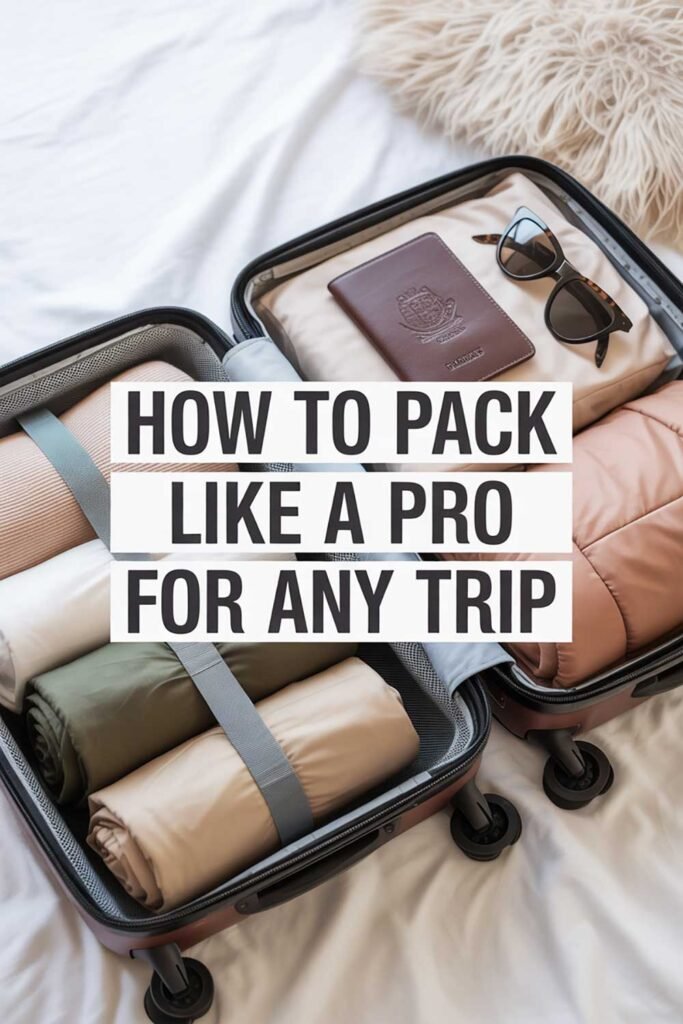
The complete pack-light system applies every element of this article as a connected preparation sequence rather than as individual tips to be adopted selectively. The sequence: choose the palette first, then choose the ten pieces that work within it. Choose fabrics that roll small, resist wrinkles, and dry quickly. Choose toiletries and products by their double-duty capacity first and their specific formulation second where possible. Pack the laundry bar. Set aside the destination purchase budget. Roll everything soft. Fold everything structured at the top. Close the bag and lift it. If it is manageable with one hand from a standing position, it is the right weight. If it requires two hands or a back adjustment to lift, remove items until it is not.
The one-hand test is the most reliable pack-light assessment available. A bag that requires two hands to lift comfortably is a bag that requires two hands to carry through every transit of the trip: the airport, the train station, the cobblestone street, the accommodation staircase without an elevator, the bus with the luggage rack above shoulder height. A bag manageable with one hand is a bag that does not require logistical effort at any transit point. The hand test takes three seconds and communicates more about the bag’s true travel weight than any scale reading.
The final editing pass before closing the bag permanently: remove one more item after you think you are done. Not arbitrarily. The item most recently added out of anxiety rather than confirmed necessity. The backup piece for the occasion that might arise. The product that serves a function already covered by another product in the bag. The book for the flight that is also downloaded to your phone. One item. Its absence will not be noticed at the destination. Its presence will be felt in every lift, every carry, and every overhead bin attempt for the entire trip.
Photograph the contents of the bag laid out flat before you pack it for the first few trips using the pack-light system. The photograph shows you exactly what you committed to bringing and creates accountability for the post-trip inventory of what was actually used. After the trip, photograph the items separated into worn and unworn piles alongside the original flat-lay photograph. The comparison across three or four trips builds a definitive visual record of your pack-light progress and makes the remaining over-packing habits visible and specific rather than vague and persistent. Visible habits are changeable habits. The photograph makes them visible.
Book the Trip Your Light Bag Was Built For
The destination that rewards the light bag is the one where you walk everywhere, explore freely, and are not managing luggage when you should be absorbing the place. Our travel agents know which destinations and which accommodation choices produce that kind of trip. Let us book it. You pack the carry-on.
Book A TripCommon Pack Light Mistakes to Avoid
Most failed attempts to pack light come from the same patterns. These are the most consistent ones and what to do differently before the next bag is closed.
Packing for imagined scenarios rather than confirmed ones
The formal outfit for the unbooked dinner. The exercise clothes for the gym that hotel travel rarely produces. The third pair of shoes for the occasion that might arise. Every item in a bag driven by an imagined scenario rather than a confirmed one is an item occupying space and weight for a scenario that has not yet materialized and may never. The editing question, will I use this specific item on this specific trip based on what I have actually planned, removes most imagined-scenario items in a single pass. Pack for the trip you have confirmed. Trust the destination for the trip that surprises you.
Treating pack light as deprivation rather than curation
The traveler who approaches packing light as giving things up experiences the process as loss. The traveler who approaches it as curation, choosing only the best and most useful items rather than accepting all plausible ones, experiences it as improvement. The distinction is entirely in framing and the framing entirely determines whether the resulting bag feels inadequate or perfectly considered. The curated ten-piece capsule is not the compromised version of the forty-item suitcase. It is the better version. It is better because everything in it was chosen rather than included.
Not researching laundry options and then not packing a laundry bar
The traveler who neither researches laundry options nor packs a laundry bar has eliminated the most powerful clothing multiplier available and then filled the gap with extra clothing. One travel laundry bar weighs one ounce and costs under $5. It extends a ten-piece capsule across any trip length through periodic hand-washing of lightweight items. The extra five shirts that fill the space it could have occupied weigh twenty to thirty times more and take up significantly more bag space for the same effective wardrobe result. One bar replaces five shirts. That is the pack-light mathematics in its simplest form.
Packing single-function items when double-duty alternatives exist
A sunscreen, a moisturizer, and a light foundation in the bag when a tinted SPF moisturizer serves all three functions is three items where one works. A beach towel, a cover-up, and a light wrap when a sarong serves all three is three items where one works. Every single-function item identified and replaced by a double-duty alternative reduces bag weight by the weight of the replaced items minus the weight of the replacement, which is almost always a meaningful net positive. The double-duty scan of a packed bag, asking whether each item could be replaced by something already in the bag or by a single double-function item, is the editing pass that most effectively reduces bag weight without reducing capability.
Believing that forgetting something is always a problem
The assumption that drives most overpacking, that any forgotten item creates an unresolvable problem, is nearly always incorrect at any actual travel destination. Pharmacies, supermarkets, and shops in cities, beach towns, and resort areas stock everything a traveler needs for a short-to-medium stay. The checked bag fee paid to avoid forgetting a $5 item costs ten to fifteen times the item itself. Setting aside $30 to $40 for destination purchases eliminates the anxiety that the assumption creates and converts the pack-light strategy from a risky choice into a deliberately funded plan.
Packing a non-coordinating palette that creates orphaned pieces
A bag containing beautiful pieces that only work with one specific other piece is a bag where any single item being worn, dirty, or uncomfortable renders its paired item unwearable. The orphaned piece is the item that was packed as part of a specific planned outfit and has no alternative combination available when the outfit does not work as planned. A fully coordinating neutral palette eliminates orphaned pieces entirely. Every item works with every other item and nothing is stranded by a missing specific partner. The palette discipline is the structural foundation of the pack-light system. Without it, every item requires a specific partner and the bag doubles in size to accommodate all the partners.
Love Helping Travelers Pack Smarter and Travel More Freely?
If helping travelers find the right destinations, build the right itineraries, and arrive prepared and confident with a bag that serves them rather than burdens them sounds like work you were made for, becoming a home-based travel agent might be exactly the right next step. Earn commissions, get insider travel perks, and build a real business from anywhere. See how it works.
Become An AgentFrequently Asked Questions
These are the questions travelers ask most often about packing light without sacrificing preparation. Real answers from real pack-light experience across trips of every length and destination.
How do you handle packing light for a trip that covers multiple climates?
The multi-climate trip is the scenario most often cited as the reason a light bag is impossible, and it is the scenario where the layering system produces the most dramatic pack-light results. A multi-climate wardrobe built on layers rather than separate climate-specific wardrobes uses the same base pieces in different combinations to cover a wide temperature range. A moisture-wicking base layer, a mid layer in merino wool or a light fleece, and a packable outer shell together cover temperatures from 40 to 80 degrees Fahrenheit by adding and removing layers. These three pieces weigh less than two heavy sweaters and cover a far wider temperature range. The base layer worn alone in heat. The base and mid layer in cool weather. All three in cold or wet conditions. One additional warm layer, a packable down gilet or a thicker knit, extends the coverage to genuinely cold destinations without adding significant bulk.
How do you pack light for a two-week trip versus a one-week trip?
The pack-light answer to this question is counterintuitive: a two-week trip does not require significantly more clothing than a one-week trip when a laundry strategy is part of the plan. A ten-piece capsule with one planned laundry session at the midpoint of the two weeks covers the full trip without repeating any combination. A ten-piece capsule with two laundry sessions covers three weeks. The clothing quantity does not scale linearly with the trip duration when laundry is a planned variable rather than an ignored one. What scales with trip length is consumable quantities: toiletry decants sized for two weeks rather than one, more days of medications, and a larger destination purchase budget. The bag remains the same size or only marginally larger. The planning accounts for the duration where the clothing volume does not need to.
What are the best double-duty products beyond the obvious tinted SPF moisturizer?
Beyond tinted SPF moisturizer, the strongest double-duty products for travel are a multi-use balm in a small tin that works as lip balm, cuticle cream, dry skin spot treatment, and a light highlighter on the cheekbone. A hair oil that doubles as a skin serum, a nail treatment, and a frizz-control product for the day after air travel. A solid shampoo bar that also works as a gentle body cleanser. A dry shampoo that also works as a texturizing spray and an oil-absorber between hand-washing sessions. A neutral eyeshadow in a medium warm tone that works as an eyeshadow, a brow filler with a small brush, and a contour product. A small jar of coconut oil that works as a body moisturizer, a hair mask, a makeup remover, and a cuticle treatment. Each of these replaces two to four dedicated products with one, and the collective weight and quart-bag space reduction from all of them together is significant.
What items genuinely justify overpacking despite the principle that most things can be bought at the destination?
The items that genuinely justify space in a pack-light bag despite the buy-at-destination principle fall into four categories. Prescription medications in exact formulations and doses, which cannot reliably be replaced internationally and should never be left to destination availability. Specialized medical supplies for specific conditions including CPAP equipment, diabetic supplies, or any device or supply related to a managed health condition. Custom or prescribed orthotics, braces, or medical devices. And any item for which the destination-specific alternative would be so significantly inferior that the experience of the trip would be meaningfully diminished by the absence of the original. Everything outside these four categories is subject to the buy-at-destination assessment and very rarely requires the bag space it is allocated by default.
How do you convince a travel partner to pack light when they resist it?
Convincing a travel partner to pack light is most effective when approached through practical experience rather than theoretical argument. Suggesting the light bag for a short trip of three to five days, where the risk of being underprepared is low and the benefit of moving easily is immediately visible, converts the skeptic through experience rather than persuasion. The traveler who exits the airport in ten minutes while their partner waits at baggage claim has had the argument made for them by the trip rather than by you. Beyond demonstration, the most effective practical support is offering to help with the capsule building process, specifically the palette selection and the double-duty product identification, which are the two steps where most light-bag resisters get stuck not because they do not want to pack light but because they do not have the system to make it work.
Is there a bag weight target to aim for on a pack-light trip?
Experienced pack-light travelers often use weight targets as a practical constraint that forces genuine editing decisions. Common targets are 10 kilograms or less for a one-week international carry-on trip including the personal item. 7 kilograms or less for a one-week domestic carry-on trip where the destinations are warm enough to require only light fabrics. 5 kilograms or less for a weekend trip in a personal item only. These targets are not rules. They are the weight ranges that experienced pack-light travelers have converged on through multiple trips as the weight at which the bag is genuinely manageable with one hand, does not exceed most airline carry-on weight limits, and produces the physical freedom of movement that is one of the primary benefits of the pack-light approach. Start with the one-hand test rather than a specific weight target and see what number it produces. That number, across a few trips with honest post-trip audits, will converge toward your own personal pack-light sweet spot.
The light bag is not the lesser bag. It is the bag where every item was chosen rather than included. The difference between those two things is the difference between packing out of fear and packing out of confidence.
Picture Closing Your Next Bag
The ten-piece capsule is rolled and organized by category. The palette means everything works with everything else. The laundry bar is in the toiletry pouch. The double-duty products have reduced the quart bag from ten items to five. The $40 destination purchase budget is in the trip envelope. You close the bag. You lift it with one hand from a standing position. It is manageable. You leave it for twenty-four hours. You open it and remove one more thing. You close it again. You are the most prepared traveler in the departure hall not because you packed the most but because you packed only what you actually needed and trusted the destination with everything else. That trust is the preparation. It always was.
One More Thing Before You Pack
Print our free Travel Packing Checklist and use it as the foundation for your first deliberate pack-light bag. Every category covered, every double-duty check included, and the final editing reminder that produces the bag you are genuinely glad you packed rather than the one you are apologizing for at the overhead bin. The same checklist we use before every trip we take.
Get the Free ChecklistExplore Our Top Picks for a Better Trip
From the travel laundry bar that extended every capsule wardrobe permanently to the multi-use balm that replaced four products with one, see the pack-light products and travel resources we actually use and recommend on every trip we take. Real picks from real travel built around the pack-light system in this article.
See Our Top PicksTravel Prints and Printables From Our Shop
Visit Premier Print Works for travel journals, packing planners, capsule wardrobe worksheets, packing list printables, and wall art that makes every trip a little more beautiful and a lot more organized from the first palette decision to the last memory made.
Visit Premier Print WorksDisclaimer
The information shared in this article is provided by Don and Diana’s Travels for general informational, educational, and inspirational purposes only. It reflects our personal experiences, opinions, and the experiences of travelers we have worked with. It is not professional travel, legal, financial, or medical advice, and it should not be relied on as such.
Travel Information and Airline Policies
Airline carry-on policies, weight limits, baggage fees, and related travel regulations change frequently and vary significantly between airlines, routes, and fare classes. Always confirm current baggage requirements with your specific airline before travel. We make no guarantee that any airline policy information in this article is current, complete, or applicable to your specific travel situation.
Medical and Prescription Medication Information
The guidance in this article about bringing prescription medications rather than relying on destination purchases is general educational content only. Always consult your prescribing physician regarding medication management during travel, traveling internationally, and traveling to destinations where specific medications may not be available or where regulations may affect your ability to bring them. We are not medical professionals and are not responsible for any health outcome arising from packing or medication decisions made based on information in this article.
Affiliate and Partner Links
This article may contain affiliate links, partner links, referral links, and links to products or services that pay us a commission. If you click a link and book a trip, make a purchase, sign up for a service, or complete any qualifying action, we may earn a small commission at no extra cost to you. This includes but is not limited to links to our travel booking platform, host agency, recommended products, the Premier Print Works shop, and any third-party retailers or service providers mentioned in the article. Our recommendations are based on real use and genuine belief in the products and services we share. Commissions help support the cost of running this site and producing free content for our readers.
Third-Party Websites and Services
We may link to third-party websites, services, and resources for your convenience. We do not control these sites and are not responsible for their content, terms of service, privacy practices, pricing, availability, accuracy, customer service, refund policies, or any product or service they sell. Your use of any third-party site is entirely at your own risk and subject to that site’s own terms and policies.
Health, Safety, and Personal Responsibility
Travel involves personal risk. You are solely responsible for your own health, safety, travel insurance, medications, vaccinations, documentation, financial decisions, and choices while planning or taking any trip. We strongly recommend purchasing comprehensive travel insurance for every trip. Don and Diana’s Travels, its owners, employees, contractors, and affiliates accept no liability for any loss, injury, illness, delay, cancellation, damage, theft, or inconvenience arising from your use of the information in this article or from any travel decisions you make.
Composite Stories and Characters
Some stories, examples, and traveler experiences shared on this site are composites. They are drawn from the real experiences of Don, Diana, clients, friends, and travelers we have worked with over the years. Names, identifying details, locations, and circumstances may be combined, changed, or fictionalized to protect privacy and to better illustrate a point. Any resemblance to a specific real person beyond the composite portrayal is unintentional.
No Guarantees
We do not guarantee any specific result, outcome, savings, experience, or financial return from using the information, tips, services, or products mentioned in this article. Your results depend on many personal factors, including your own choices, effort, circumstances, and external conditions outside of our control.
Copyright and Use
All content in this article, including text, images, graphics, design, and original stories, is the copyrighted property of Don and Diana’s Travels unless otherwise noted. You may not copy, republish, redistribute, modify, sell, or reuse our content in whole or in part without our prior written permission. You are welcome to share a direct link to this article with proper credit.
By reading and using the information in this article, you acknowledge that you have read, understood, and agree to this disclaimer in full.