Carry-On Packing Tips for Women
Carry-on only travel is the most liberating upgrade a woman ever makes to her travel style. The most stylish woman at any destination packed her entire trip into one bag and looked like she brought everything. Not more options. A better system. A capsule wardrobe that multiplies, one heel and one flat that work for everything, skincare that clears security without a second thought, and every bulky item on her body at the boarding gate. This article builds that system before you ever open a suitcase.
Grab Our Travel Packing Checklist
Our free packing checklist is the companion to this carry-on system. Every category covered, every skincare decant reminder included, and the editing check that most women need before the bag closes for the first time. Print it once, use it before every trip, and never check a bag again unless you genuinely choose to.
Get the Free ChecklistThe five-piece capsule wardrobe is the foundation of every great carry-on. Not five outfits. Five pieces, each chosen because it works with every other piece in the bag, producing combinations that feel like variety even though the mathematics of a small capsule are working in your favor from the moment you choose the first item. Five pieces, a shared palette, and the right pairing logic produces ten or more distinct daily looks without requiring a larger bag, a checked suitcase, or any outfit that risks leaving you with nothing to wear if the first choice does not feel right at the destination.
The five-piece women’s carry-on capsule for a five-to-seven-day trip: two bottoms in neutral coordinating colors, dark jeans and a linen trouser or a midi skirt and tailored shorts depending on the destination type, and three tops that each work with both bottoms and with each other. A simple fitted tee in the palette’s neutral base. A slightly nicer blouse or button-front in the same palette that elevates the combination for evenings and smarter occasions. A third top, a loose casual shirt, a silk-effect top, or a striped tee, that provides the variation between the two more structured options. These five pieces together produce six base combinations. Add a sixth piece, one layer, a blazer, a linen shirt worn open, or a classic cardigan, and every combination gets a seventh and eighth variation for evenings, layered casual looks, and any air-conditioned interior that the destination produces. Eight to ten complete looks. Five to six total pieces. All of them fitting in the same bag with room for everything else.
The palette that makes the capsule work is non-negotiable. Every piece must share a common color family for the system to function. Classic women’s carry-on palettes that photograph beautifully and provide maximum internal coherence: navy, white, and a warm accent like cognac or terracotta. All-neutral stone, cream, and chocolate. Black, white, and a single color accent. Muted tones of sage, cream, and tan. Whatever palette you choose, every piece passes through it before it goes in the bag. A beautiful piece in a color that nothing else in the bag works with is not a carry-on piece for this trip regardless of how much you love it independently.
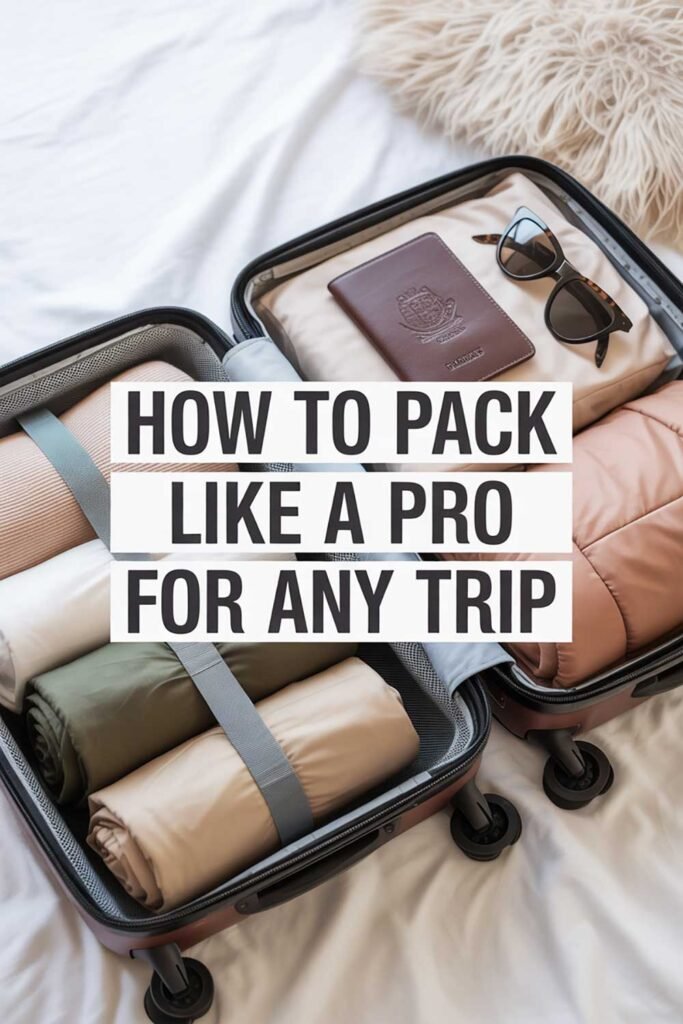
Roll every piece in the capsule before packing. A rolled five-piece capsule wardrobe takes up approximately the bottom third of a standard carry-on. Everything else, shoes, skincare, accessories, tech, and the personal documents, occupies the remaining two-thirds. The bag that feels impossibly small for a week-long trip before the rolling technique is applied becomes a bag that closes easily and travels without checked fee after it. This is the transformation that converts skeptics. Not theoretical. The bag you packed before rolling is not the bag you have after rolling.
The most stylish woman at any destination packed her entire trip into one bag and looked like she brought everything.
Carry-on only travel is not about packing less. It is about packing better. The same looks. One bag. Complete freedom.
Before any trip, photograph every outfit combination the five-piece capsule produces and save them to a dedicated trip album on your phone. When you are tired at the destination and standing in front of the open bag at 7 p.m. trying to decide what to wear for dinner, the album already has the answer. The combination was photographed at home in good light, confirmed as working, and is immediately accessible without any decision-making required at the destination. This twenty-minute session at home eliminates the standing-in-front-of-a-bag uncertainty that makes a small capsule wardrobe feel more limiting than it actually is.
Let Us Plan the Trip This Carry-On Was Built For
A perfectly packed carry-on deserves a perfectly planned destination. Tell us where you want to go, your travel dates, and what kind of experience you are dreaming of. We will handle the planning while you handle the capsule wardrobe. Real travel agents, real destination expertise, real results.
Plan Our EscapeShoes are the carry-on packing challenge that derails more women’s attempts at one-bag travel than any other single category. A single pair of heeled boots takes up a quarter of a standard carry-on. Two pairs of heeled shoes and a pair of sandals can fill half the bag before a single item of clothing goes in. The shoe decision for any carry-on trip is the most consequential packing decision you will make and the one where the right choice produces the most dramatic space and weight reduction.
One block-heeled sandal or low-heeled mule in a neutral that bridges casual and evening is the heel that serves a carry-on. Not a stiletto that works for one occasion and must be removed on cobblestones. Not a platform that requires its own shoe bag and takes up the space of three tops. A block heel or kitten heel in tan, cognac, nude, or black that works with the jeans, works with the trouser, works with the midi skirt, and elevates any combination into an evening-appropriate look without requiring you to change shoes before dinner. One pair. Every elevated occasion in the bag served.
One quality flat that handles every casual and walking occasion the destination produces. A leather ballet flat in a neutral. A quality white or tan leather sneaker. A slip-on loafer in a complementary neutral. The flat does the daytime, the walking tours, the market days, and any casual occasion where the heel would be inconvenient or impractical. The flat must pass the walking test: comfortable for five to eight miles of destination walking, wearable for the full duration of the trip without producing blisters, and genuinely attractive enough that you do not wish for the stylish alternative you left behind.
Wear the bulkier of the two pairs through the airport on every transit leg. Shoes on your feet weigh nothing in the bag. A pair of shoes in the carry-on weighs the shoe and occupies space that could hold two rolled tops. On the return journey with a bag that has accumulated trip purchases, the shoes on your feet represent the weight and space most likely to determine whether the bag still closes easily or whether you spend the morning reorganizing.
Choose both shoes from the same or adjacent color family as your capsule palette. A cognac heel and a tan flat in a navy-cream-cognac palette work with every combination in the bag and with each other visually if you ever carry both in a day bag. A shoe that works with only some of the combinations creates the orphaned-piece problem at the shoe level rather than the clothing level. The shoe that works with everything is the shoe that earns its place in a bag where every item must justify its inclusion.
The skincare and makeup category is the most consistently overpacked category in women’s carry-on attempts. A full skincare routine transported in its original full-size containers fills the TSA quart bag two or three times over, weighs several pounds, and takes up a significant portion of carry-on space that the capsule wardrobe needs. The skincare and makeup strategy for carry-on travel is built on two principles: decant everything possible into the smallest container that holds enough for the trip, and bring only what you genuinely use daily rather than what you might theoretically need.
Decanting is the practice of transferring your actual skincare products from their full-size containers into small travel pots, bottles, or dropper bottles sized for the trip duration. A one-ounce pot holds ten to fourteen days of twice-daily moisturizer applications, which covers most trips twice over. A small dropper bottle holds enough serum for a week of daily use. A 0.5-ounce squeeze tube holds a week’s worth of face wash with room to spare. These containers are available in sets at any travel goods shop or online retailer, cost $10 to $15 for a complete set, and produce a skincare kit that weighs under four ounces, fits inside a single quart bag with room remaining, and provides your actual products rather than hotel alternatives for the full trip duration.
The makeup bag for carry-on travel is the edited version of your daily makeup, not the full collection transported into a smaller space. Ask the editing question for each makeup item before it goes in the bag: will I actually use this specific product on this specific trip? The everyday mascara, a tinted moisturizer or lightweight foundation, a brow product, a neutral lip color that also works as blush, and a highlighter covers the vast majority of daily makeup needs for most women traveling to most destinations. Separately a setting spray and the one eye product you genuinely use daily complete the kit. This edited makeup selection weighs about three ounces and fits inside the quart bag alongside the skincare decants without requiring a second bag.
Consider the destination’s humidity and climate before building the skincare and makeup kit. A humid tropical destination requires oil-controlling products and long-wear formulas rather than richer creams and high-coverage foundations that will not perform in heat and humidity. A dry or high-altitude destination requires additional moisture rather than the routine designed for your home environment’s specific conditions. Packing the appropriate product types rather than simply the home routine transported is a skincare decision that both reduces what goes in the bag and produces better skin outcomes at the destination.
Build a permanently-stocked travel skincare kit that lives in a dedicated pouch between trips rather than assembling it freshly before each departure. Fill the decant containers from your home products after each trip and seal the pouch. When the trip arrives, the pouch is already done. It takes the most time-consuming and detail-oriented component of the carry-on assembly completely off the pre-trip to-do list. The pouch you pull from the bathroom shelf rather than build from scratch is also the pouch that never forgets the SPF, the lip treatment, or the specific product that your skin genuinely needs rather than the product that was near the front of the cabinet when you were assembling in a hurry.
The Carry-On Gear We Trust Trip After Trip
The slim structured carry-on that passes every airline size requirement without a second glance, the decant set that replaced the full skincare pouch permanently, and the block-heeled neutral sandal that has been on every trip for years and served every occasion from morning markets to dinner without changing. Real carry-on picks from real trips of every type and destination.
DND FavoritesThe heaviest and bulkiest items in any women’s carry-on are almost always the same items that can be worn rather than packed without any meaningful reduction in travel comfort. A chunky sweater, a denim jacket, a structured blazer, a thick scarf, a winter coat, ankle boots or heeled booties, and heavy jeans are all items that serve as substantial clothing on the body and substantial weight and volume problems in a carry-on. The solution is wearing them to the airport, through security, and onto the plane, where they serve as warmth during the often air-conditioned cabin experience and are available to be removed and stored in the overhead bin or the seat back if you are warm without ever having occupied a single inch of bag space.
Wearing bulk on the plane is not uncomfortable. Aircraft cabins are frequently cold to the point where most passengers want an extra layer within the first hour of the flight. The structured blazer worn to the airport serves as an in-flight layer, a security-appropriate outfit component that removes easily for the checkpoint, and a wrinkle-resistant garment that looks sharp at the destination when it is removed from the overhead bin on landing. The ankle boots worn to the gate are the shoes you check into the hotel in, removing them during the flight if comfort requires. None of these items feel like a compromise. They feel like wearing exactly what you needed to wear on a travel day anyway.
The outfit you wear on the plane should be the most versatile and largest-space-saving combination in the wardrobe, specifically because it does not pack. A chunky knit sweater over a fitted tee with dark jeans, a scarf, and ankle boots worn to the airport is an outfit worth wearing on the first day at the destination and worth wearing on the return journey home. It occupies the entire heaviest-items-in-the-bag category while being genuinely worn rather than packed, and it is the same outfit most women would pack specifically for cooler destination evenings if it were not already being worn for that purpose on transit day.
On the return journey, wear the heaviest and bulkiest items from the trip back through the airport even if they were not what you wore on the outbound flight. The carry-on that left home at the weight and size limit may have accumulated purchases during the trip. The items worn on the body on the return reduce the bag’s contents by the weight and volume of whatever you are wearing, often converting an over-limit bag back to a compliant one without any item being left behind. Wear the heaviest boots. Wear the thickest layer. Carry the coat in the crook of the arm if needed. Everything on your body is weight and volume the airline cannot measure at the gate.
The most powerful tool in a women’s carry-on wardrobe is not a clothing piece. It is the accessories that transform identical base outfits into visually distinct looks without adding meaningful weight or volume to the bag. Two necklaces in different lengths or styles, a silk scarf that works as a hair accessory, a neck wrap, a bag tie, and an evening layer, a small crossbody bag that transitions from market to dinner, and two or three pairs of earrings in different styles take up the combined space of one rolled top and add more visible variety to the capsule than a seventh clothing piece would.
The silk scarf is the most versatile accessory a woman can pack in a carry-on. Tied at the neck it completes a classic smart casual look. Worn in the hair it adds a bohemian note to a simple top and trouser combination. Tied to the handle of a bag it transforms the bag’s visual register. Used as a light wrap over the shoulders at an air-conditioned restaurant it replaces an additional layer. Folded and packed it takes up the space of two postcards and weighs about one ounce. One accessory, four uses, zero meaningful space or weight in the bag.
Jewelry in a carry-on travels best in a flat jewelry organizer or a dedicated small roll that keeps chains untangled and earrings paired. A bag full of loose jewelry requires ten minutes of untangling every time it is accessed. A flat organizer with dedicated pockets for each piece takes thirty seconds to close and open and keeps the jewelry in wearable condition throughout the trip. Choose jewelry in gold-toned stainless steel or gold-fill for travel since these resist the salt air, humidity, and the occasional contact with sunscreen that tarnishes sterling silver quickly at most destinations.
Wear your most valuable and most irreplaceable jewelry items on your body through transit rather than packing them. A ring, a necklace, or a pair of earrings that you would be genuinely distressed to lose are items that should be on you, where their loss requires your direct involvement, rather than in a bag that can be lost, stolen, or left at an accommodation without you being immediately aware. Travel jewelry for daily destination wear is chosen specifically for being low enough in monetary and sentimental value that its loss would be unfortunate but manageable. The pieces that would devastate you to lose stay home or stay on your body.
The Trip That Finally Made Her a One-Bag Traveler
Tamara had always been a checked-bag traveler. Not because she needed to be. Because she had never been forced to think about whether she needed to be. She checked a large rolling suitcase on every trip without examining the habit. She paid the fees without calculating them. She waited at baggage claim without questioning why. She arrived at accommodations dragging a bag that was genuinely heavy because she had never asked herself whether everything in it had earned its place.
A last-minute flight change produced a situation where checking her usual bag would have caused her to miss the flight. She had forty-five minutes from the gate change announcement to the new departure. She was told by the gate agent that she could not check the bag and board in time but that a carry-on would be fine. She stood at the gate looking at a bag she had not designed to be a carry-on and spent fifteen minutes transferring what she actually needed into a smaller bag a fellow traveler lent her for the journey. She left the large bag at storage and caught the flight with what amounted to one-third of what she had originally packed.
At the destination she wore the same five pieces in combinations across five days. She had her decanted skincare in the small pouch that had always been in the large bag’s outer pocket anyway. She had one heel and one flat. She had the scarf she wore on the plane and the blazer she had been wearing when the gate change happened. She had the jewelry on her body. She came home wearing what she came in.
She did not miss a single item from the large bag in storage. Not the backup outfits. Not the second pair of heels. Not the full-size products. Not the just-in-case items that had been in the bag so long they were no longer traceable to a specific concern. She came home and built the capsule system described in this article deliberately, with intention, for the first time. The habit she had built by accident on the day of the gate change became the habit she chose on every subsequent trip. The checked bag has been in storage at home ever since.
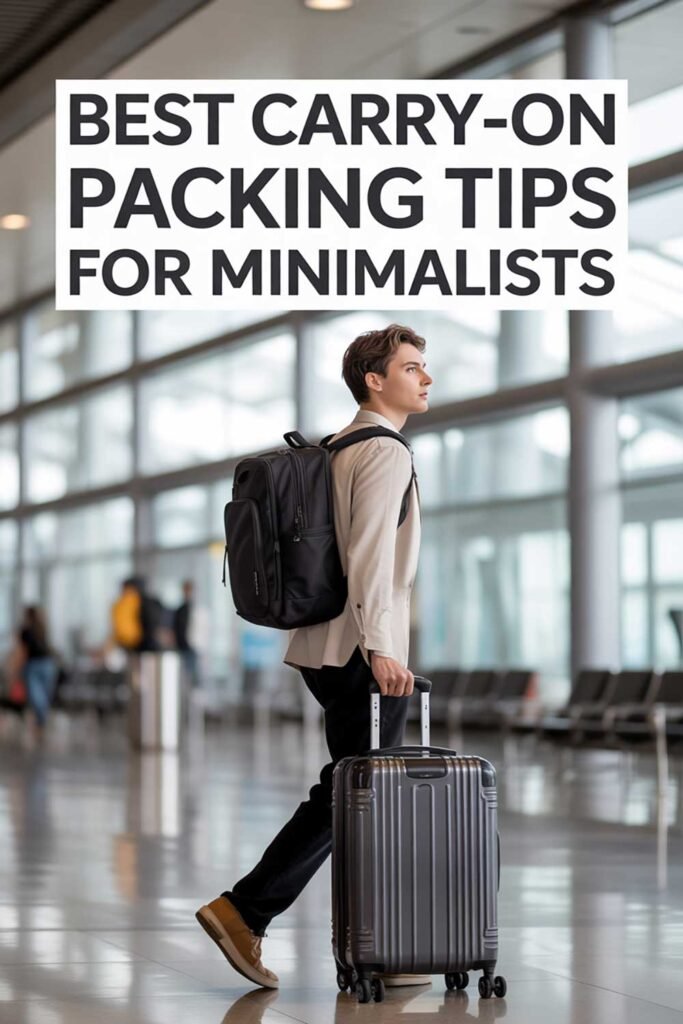
The right carry-on bag for women who travel with a capsule wardrobe has three non-negotiable qualities: it meets the most restrictive airline carry-on size requirements of any airline you fly regularly, it opens fully for easy access to the rolled capsule contents, and it is structured enough to maintain its shape in an overhead bin without collapsing against the contents and creating compression wrinkles in the clothing underneath.
A 22 by 14 by 9 inch hard-shell or semi-structured softshell carry-on is the most versatile size for most US domestic airlines and many international carriers. Confirm your specific airlines’ requirements since budget carriers on both domestic and international routes sometimes enforce stricter dimensions. A bag bought to the standard major carrier dimensions may be gate-checked by a budget carrier with different standards, which defeats the carry-on purpose. One bag that passes every airline you regularly fly is more valuable than the best bag in the world for one carrier and problems on another.
The opening style matters specifically for a capsule wardrobe system. A clamshell carry-on that opens flat like a suitcase allows the entire capsule to be visible and accessible simultaneously. A top-loading carry-on requires removing items to reach anything near the bottom. For a trip of more than a few days where clothing is accessed daily, the clamshell opening converts the suitcase into a portable organized wardrobe rather than a bag you dig through. Packing cubes in a clamshell carry-on produce a system where each cube’s category is visible and accessible in one motion without disturbing the others.
A dedicated carry-on that functions as the personal item as well, a structured bag in the 35 to 40 liter range that fits under the seat on most aircraft, eliminates the overhead bin competition entirely and allows the kind of immediate access to the personal item contents described throughout this article. On airlines where overhead bin space fills up early or where personal item policies are more generously enforced than carry-on policies, a personal-item-sized carry-on travels more freely, boards earlier, and exits the aircraft faster than a full overhead-bin carry-on.
Pack your carry-on and weigh it before departure on any airline with weight limits for carry-on bags. Many international carriers and some budget domestic carriers impose carry-on weight limits of 7 to 10 kilograms. A perfectly-sized carry-on that is over the weight limit at a strict carrier’s gate is a bag that will be checked and charged. Knowing the bag’s weight at home and removing anything that pushes it over the limit before leaving for the airport is the same five-second check that prevents the overweight-checked-bag fee at the standard check-in counter. A portable luggage scale provides this information reliably for $8 to $15 and eliminates the gate-weight surprise permanently.
Book the Trip That Deserves This Carry-On
The best carry-on system works best when the trip was planned as carefully as the bag. Accommodation confirmations organized before departure. Itinerary details in hand. Every booking ready in the phone’s screenshot album before the first boarding call. Our travel agents handle the planning so the only thing you manage is the capsule wardrobe. Let us build the trip. You close the bag.
Book A TripCommon Women’s Carry-On Mistakes to Avoid
Most failed carry-on attempts come from the same consistent gaps. These are the most common ones and what to do differently before the bag closes next time.
Building a wardrobe of specific outfits rather than a capsule
Seven outfits for seven days is seven specific combinations where each piece is tethered to its intended partner. A piece that does not work outside its planned combination is a piece that becomes unusable if anything in the combination does not survive the trip as intended. Five coordinating pieces in a shared palette produce ten or more combinations where every piece works with every other piece and nothing is stranded by a single missing partner. The capsule wardrobe is not a compromise on variety. It is the structure that makes variety possible from a genuinely small bag.
Packing three or four pairs of shoes
A pair of heeled boots occupies the same volume as three to four rolled tops. Three pairs of shoes in a carry-on is three pairs of shoes that could be one pair on your feet, one pair in the bag, and the rest of the space occupied by the capsule wardrobe and everything else the trip requires. One block heel that works for evenings and one flat that works for everything else is the shoe solution that makes a carry-on genuinely workable for a full trip. The shoes that only work for one specific occasion that may not arise are the shoes that convert a manageable carry-on into an overstuffed one.
Packing the full skincare collection in original containers
Full-size skincare in original containers fills the TSA quart bag multiple times over, weighs several pounds, and violates the 3.4-ounce liquid rule for most products. Decants of your actual products into the smallest containers that hold enough for the trip duration provide your genuine skincare routine in four ounces of total kit weight rather than two pounds, with every product passing through the quart bag in a single organized pouch. The decant set costs $10 to $15 and pays for itself in bag weight and space on the first trip where it replaces the original containers.
Packing bulky layers instead of wearing them
A chunky sweater, a structured blazer, and ankle boots in a carry-on take up approximately one-third of the bag’s available volume and a significant portion of its weight allowance. The same items on your body on the travel day take up zero bag space and zero bag weight and keep you warm in an air-conditioned cabin without requiring any additional layer in the bag. Wearing the bulkiest items is the carry-on decision that determines whether the bag closes comfortably or whether packing anxiety continues through the morning of departure.
Not photographing outfit combinations before the trip
A five-piece capsule wardrobe that produces ten outfits is only as useful as the traveler’s ability to remember and access those combinations at the destination when tired and standing in front of an open bag at the end of a long day. The outfit photo session at home, twenty minutes, natural light, every combination documented in the phone’s trip album, converts the decision from an in-destination creative exercise into a quick album check. The capsule works better when the work of confirming that it works was done at home rather than rediscovered at the destination each evening.
Choosing a bag without checking specific airline size requirements
A carry-on bought to the most common major carrier dimensions may be checked at the gate by a budget carrier with stricter requirements. A carry-on that works for every airline you regularly fly is more valuable than the best bag for one carrier and a fee-generating problem on another. Confirm your specific airlines’ carry-on and personal item dimensions before purchasing any bag intended for carry-on-only travel. The airline’s website lists current requirements. Budget carriers change these requirements more frequently than major carriers. A one-minute check before purchasing prevents the discovery at a gate that the bag you planned to carry on has just become a checked bag.
Love Helping Women Travel Smarter and Lighter?
If recommending the right destinations, helping women pack the carry-on system that changes their travel forever, and building trips that work beautifully with a one-bag travel style sounds like work you would love, becoming a home-based travel agent might be exactly the right next step. Earn commissions, get insider travel perks, and build a real business from anywhere. See how it works.
Become An AgentFrequently Asked Questions
These are the questions women ask most often about carry-on-only travel. Real answers from real carry-on experience across trips of every length, type, and destination.
Can you really do a week-long trip with only a carry-on?
Yes. A standard 22 by 14 by 9 inch carry-on packed with a five-piece capsule wardrobe, two pairs of shoes, a decanted skincare kit, an edited makeup pouch, a slim accessories roll, a charging kit, and a slim travel document wallet has room remaining. The technique is the important variable: every soft clothing item rolled rather than folded, packing cubes for category organization, the bulkiest items worn rather than packed, and skincare in decant containers rather than original sizes. A seven-day trip packed this way travels lighter, exits the airport faster, never risks lost luggage, and arrives at the destination with everything needed for the full week. The initial skepticism is universal and the post-first-carry-on-trip conviction is equally universal. Almost every woman who makes the transition for one trip does not go back to checked bags for trips under ten to fourteen days.
How do you handle hair styling tools in a carry-on?
Hair styling tools are the category that most frequently converts a workable carry-on into an overstuffed one. The options in order of space efficiency: rely on the accommodation’s provided hairdryer and accept a brief adjustment period to a different dryer’s heat and airflow, which most travelers adjust to within one use. Pack a compact travel hairdryer in dual voltage that folds or collapses to half the size of a standard dryer, adding about the volume of two rolled tops to the bag. Use a silk sleep bonnet or overnight hair prep technique that produces acceptable hair with no heat styling required. For flat irons and curling tools, the dual-voltage travel versions are significantly smaller than standard tools and worth investing in before any carry-on trip where heat styling is part of your daily routine. Confirm that any styling tool is dual voltage before using it internationally with an adapter, as single-voltage tools on a foreign electrical system can be damaged or create a safety hazard even with an appropriate adapter.
What do you do about laundry on a longer carry-on trip?
A carry-on trip of more than seven days requires either a mid-trip laundry solution or a slightly expanded capsule. The options are hand-washing the most frequently worn items, underwear, socks, and lightweight tops, in the sink overnight using a travel laundry bar or detergent strips that weigh one ounce and wash five to eight items. Most lightweight fabrics including jersey, linen, and quick-dry travel clothing dry overnight on a towel rail or balcony in warm climates and within twelve hours in cooler or more humid environments. Destination laundromats are available in most cities and handle a full carry-on load for a small fee in one to two hours. Some accommodations offer laundry service or facilities. For trips of ten to fourteen days, two to three hand-wash sessions using the sink method extend the five-piece capsule wardrobe across the full trip without requiring a larger bag or additional clothing beyond the original capsule.
How do you pack for a trip that includes a formal event?
A formal event, a wedding, a gala, or a black-tie occasion, is the scenario most women cite as the reason they cannot travel carry-on only. The solutions in order of practicality: choose a formal dress in a packable fabric such as matte jersey, silk charmeuse, or crepe that rolls without wrinkling rather than a structured gown that requires a garment bag. Pack the dress rolled in tissue paper at the top of the clamshell carry-on, the last item in so it sits without compression and is the first item out. Hang it immediately on arrival and steam any light wrinkles with the shower steam technique or a travel steamer the size of a water bottle. The shoes for the formal occasion are the heel already in the bag rather than a separate formal shoe. The accessories are the nicest items from the accessory roll. The formal outfit is in the capsule from the beginning, considered as one of the five pieces or as an additional sixth piece, rather than treated as an external requirement that breaks the system.
How do you keep clothes fresh in a carry-on across multiple days of wearing?
Fabric choice, airing, and targeted freshening extend the wearability of every piece in a carry-on capsule significantly. Linen, merino wool, quick-dry synthetics, and jersey fabrics all resist odor and wrinkle better than cotton and most other common fabrics. Hanging worn pieces overnight allows them to air out before the next wear. A small travel-size fabric refresher spray freshens any item that has been worn without washing in under thirty seconds. Separating worn items from unworn items in the packing cube system, a worn clothes cube or a dedicated laundry bag, keeps the capsule organized and prevents the clean-item-contamination-by-proximity that makes the whole bag smell like yesterday’s walking clothes. Merino wool in particular can be worn two to three times between washes without odor or freshness issues, making it the most versatile fabric investment for any serious carry-on traveler.
What is the best capsule palette for photographing well in travel photos?
Palettes that photograph beautifully in travel contexts are those that contrast well against a variety of backgrounds, complement a range of skin tones, and avoid colors that clash with specific destination environments. Neutrals with one warm or cool accent consistently perform well: navy and cream with terracotta or cognac accents photograph beautifully against stone buildings, beaches, markets, and natural landscapes. All-neutral camel, cream, and white photograph cleanly against any background and create an effortlessly chic travel aesthetic. Earthy tones of sage, tan, and chocolate work beautifully in natural and market settings but require a pop of lighter color for city architecture photography. Avoid palettes built around green or brown when the primary destination backgrounds are parks and greenery. Avoid heavily patterned pieces in photographs where the destination itself is the visual interest. Solid neutrals in the foreground with the destination as the background produce the strongest travel photography in every setting.
The one-bag traveler is not the woman who sacrificed her style to pack light. She is the woman who understood that style is not measured by volume and proved it with every trip she took in one bag.
Picture Your Next Departure as a One-Bag Traveler
You close the carry-on. Everything is in it. The five-piece capsule, rolled and organized by category. The one heel and the one flat, one on your feet and one in the bag. The decanted skincare pouch, packed and tested and already done. The accessories roll, the photography album of ten outfit combinations on your phone, the charged devices. You lift the bag. It is manageable. You walk to the gate. You board. You place the bag in the overhead bin with one hand. You sit down. At the destination you walk straight out of the airport past the baggage claim. You step into the city. You are the most stylish woman at any destination who packed her entire trip into one bag and looked like she brought everything. Because you did.
One More Thing Before You Pack
Print our free Travel Packing Checklist alongside this carry-on guide. Every category is there: the capsule wardrobe confirmation, the skincare decant reminder, the shoe decision, the bulky-items-to-wear list, and the editing check that makes the bag close comfortably. The same checklist we use before every single trip we take.
Get the Free ChecklistExplore Our Top Picks for a Better Trip
From the slim structured carry-on that passes every airline size requirement to the decant set that replaced the full skincare bag, see the women’s carry-on products and resources we actually use and recommend. Real picks from real trips built around the exact system in this article.
See Our Top PicksTravel Prints and Printables From Our Shop
Visit Premier Print Works for travel journals, packing planners, capsule wardrobe printables, trip organizers, and wall art that makes every trip a little more beautiful and a lot more organized from the first item rolled to the last memory made.
Visit Premier Print WorksDisclaimer
The information shared in this article is provided by Don and Diana’s Travels for general informational, educational, and inspirational purposes only. It reflects our personal experiences, opinions, and the experiences of travelers we have worked with. It is not professional travel, legal, or financial advice, and it should not be relied on as such.
Travel Information and Airline Policies
Airline carry-on size and weight restrictions, personal item policies, TSA liquids rules, baggage fees, and security procedures change frequently and vary significantly between airlines, routes, and jurisdictions. Always confirm current baggage requirements, size limits, and weight limits with your specific airline before travel. Carry-on size dimensions mentioned in this article reflect general current major carrier standards and may not apply to all airlines, particularly budget carriers who may have stricter requirements. We make no guarantee that any airline policy information in this article is current, complete, or applicable to your specific travel situation.
Electrical and Appliance Safety
Hair tools and other electrical appliances require voltage compatibility confirmation before international use. Using a single-voltage appliance on a foreign electrical system can damage the appliance and create a fire or safety hazard even when used with an appropriate plug adapter. Always confirm that any electrical appliance is dual voltage by checking the label or documentation before using it internationally. We are not responsible for any appliance damage or safety incident arising from the use of electrical information in this article.
Affiliate and Partner Links
This article may contain affiliate links, partner links, referral links, and links to products or services that pay us a commission. If you click a link and book a trip, make a purchase, sign up for a service, or complete any qualifying action, we may earn a small commission at no extra cost to you. This includes but is not limited to links to our travel booking platform, host agency, recommended products, the Premier Print Works shop, and any third-party retailers or service providers mentioned in the article. Our recommendations are based on real use and genuine belief in the products and services we share. Commissions help support the cost of running this site and producing free content for our readers.
Third-Party Websites and Services
We may link to third-party websites, services, and resources for your convenience. We do not control these sites and are not responsible for their content, terms of service, privacy practices, pricing, availability, accuracy, customer service, refund policies, or any product or service they sell. Your use of any third-party site is entirely at your own risk and subject to that site’s own terms and policies.
Health, Safety, and Personal Responsibility
Travel involves personal risk. You are solely responsible for your own health, safety, travel insurance, medications, vaccinations, documentation, financial decisions, and choices while planning or taking any trip. We strongly recommend purchasing comprehensive travel insurance for every trip. Don and Diana’s Travels, its owners, employees, contractors, and affiliates accept no liability for any loss, injury, illness, delay, cancellation, damage, theft, or inconvenience arising from your use of the information in this article or from any travel decisions you make.
Composite Stories and Characters
Some stories, examples, and traveler experiences shared on this site are composites. They are drawn from the real experiences of Don, Diana, clients, friends, and travelers we have worked with over the years. Names, identifying details, locations, and circumstances may be combined, changed, or fictionalized to protect privacy and to better illustrate a point. Any resemblance to a specific real person beyond the composite portrayal is unintentional.
No Guarantees
We do not guarantee any specific result, outcome, savings, experience, or financial return from using the information, tips, services, or products mentioned in this article. Your results depend on many personal factors, including your own choices, effort, circumstances, and external conditions outside of our control.
Copyright and Use
All content in this article, including text, images, graphics, design, and original stories, is the copyrighted property of Don and Diana’s Travels unless otherwise noted. You may not copy, republish, redistribute, modify, sell, or reuse our content in whole or in part without our prior written permission. You are welcome to share a direct link to this article with proper credit.
By reading and using the information in this article, you acknowledge that you have read, understood, and agree to this disclaimer in full.