Ultimate Vacation Packing List for Families
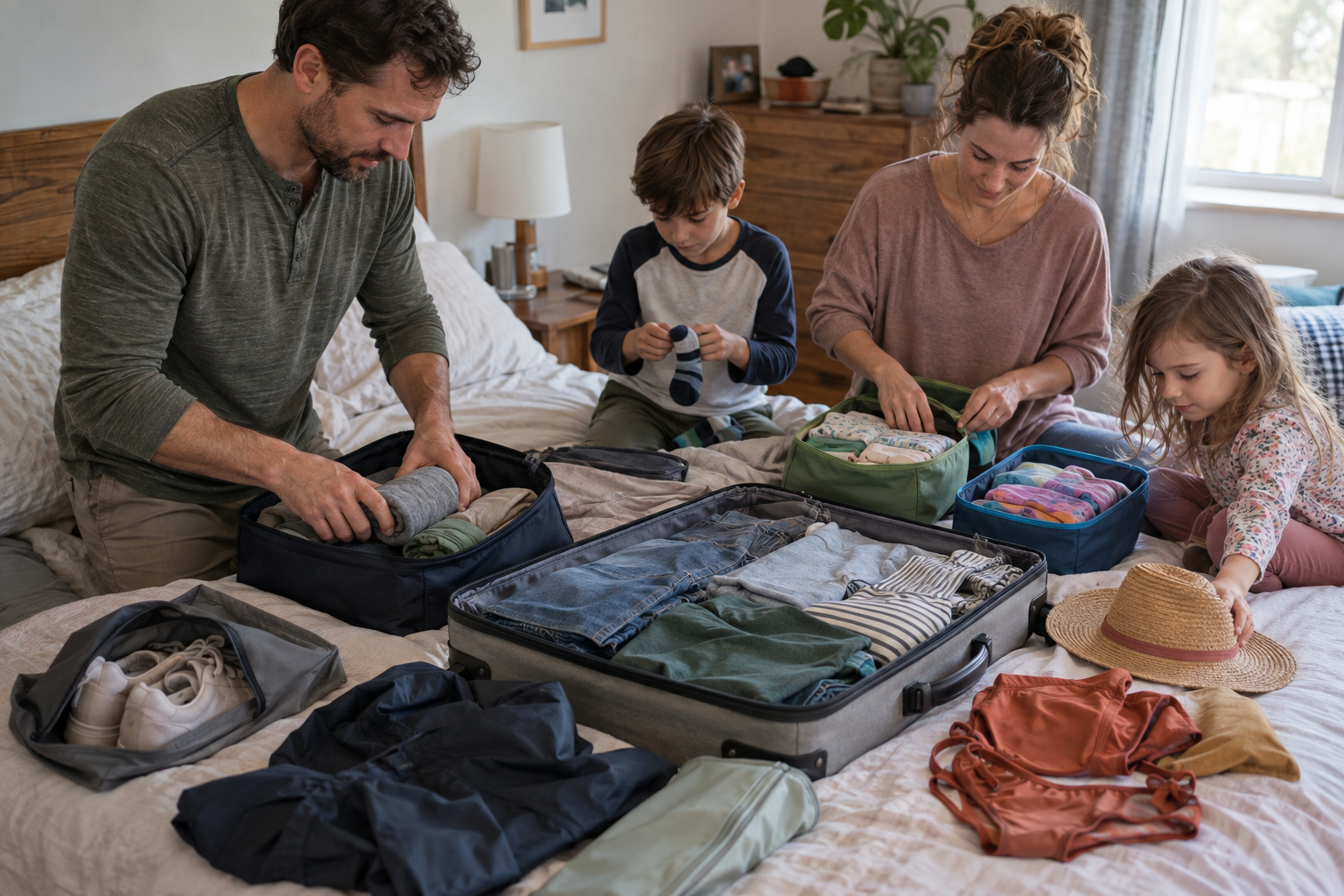
Family packing works best when every person has a role and every item has a place. The families who enjoy vacation most are the ones who did the hard work of organizing before they ever left the driveway. Not more items. A better system. Color-coded bags, one family document wallet, a dedicated snack bag, and the carry-on essentials that handle every travel day scenario. This article builds that system before your next departure morning arrives.
Grab Our Travel Packing Checklist
Family packing has more categories, more people, and more ways for something to be forgotten than any other type of travel. Our free checklist covers every category, every age-specific item, and the carry-on essentials most families discover they need only when they are already at the airport. Print one for the whole family and use it before every trip together.
Get the Free ChecklistThe color-coded bag system is the family travel organization habit that experienced traveling parents name most consistently when asked what changed their experience of managing multiple children through transit. Each child is assigned a color at the beginning of the family’s traveling life and that color stays with them across every trip. The color means one specific child’s items are always in one specific bag, that child knows which bag is theirs without asking, and any adult in the family can find any child’s belongings immediately without searching through a pile of identical luggage.
In practice: a navy bag for the oldest child, a coral or red bag for the middle child, a green or teal bag for the youngest. Any bag, backpack, or packing cube set purchased for family travel comes in that child’s color. The child’s clothing is in the colored bag. Their entertainment items for the journey are in a colored backpack that is their personal item. Their specific toiletries are in a colored toiletry pouch. At the accommodation, each child’s bag goes in their designated area and unpacking is immediate rather than a family-wide sorting operation.
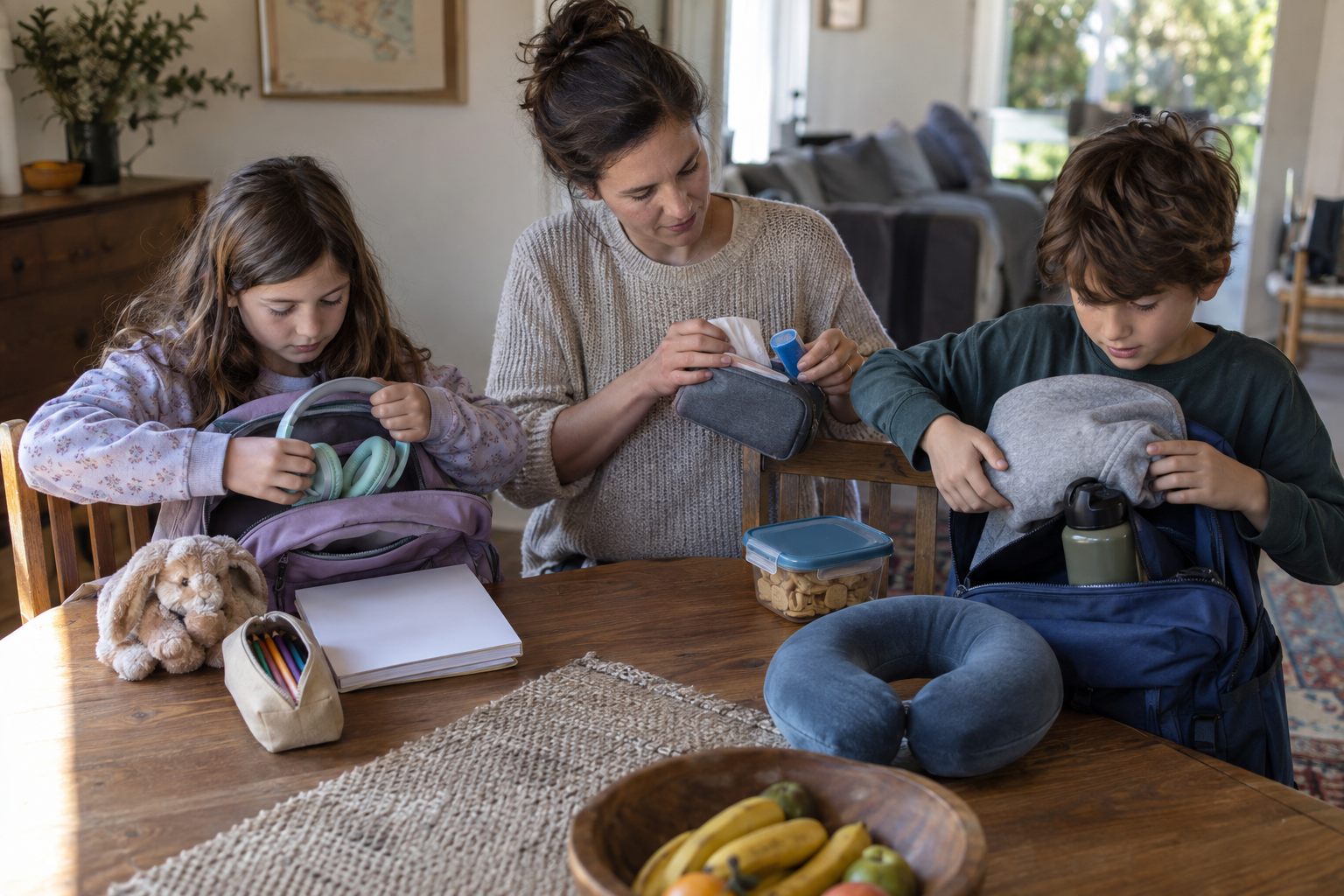
Assign each child their own backpack as their personal item for flights as soon as they are old enough to carry it consistently, which is typically age four to five for most children. The child’s personal item backpack contains only that child’s in-journey items: their entertainment, their snack portion, their comfort item, and their change of clothes for the journey. They carry it through the airport. They are responsible for it being with them at all times. This small act of ownership converts the child from a passenger being managed to a participant in the family travel system, which changes both their experience and the parents’ workload in measurable ways.
Color-code luggage tags as well. Each child’s bag gets a luggage tag in their color with their name, the family’s phone number, and the destination address. At baggage claim, the colored tag on the conveyor belt is identifiable at a glance from twenty feet away. Any bag separated from the family in transit is identifiable as belonging to a specific child without opening the bag.
The families who enjoy vacation most are the ones who did the hard work of organizing before they ever left the driveway.
Family packing works best when every person has a role and every item has a place. The system that produces calm travel days is built at home, not discovered at the airport.
Include each child in the packing of their own color-coded bag as soon as they are old enough to participate, even if participation means only choosing between two options you present rather than choosing freely from the full wardrobe. A child who helped pack their bag knows what is in it and is invested in its location and condition. A child who watched their bag be packed has no particular relationship with its contents. The ownership that comes from participation, even minimal participation, converts the bag from an object being managed by adults to a responsibility being held by the child. This distinction matters across every transit of every family trip.
Let Us Plan Your Next Family Adventure
Family travel works best when the destination was chosen for the whole family rather than just the adults. Tell us the ages of your children, your travel dates, your interests as a family, and your budget. We will find the trip that works for everyone from the youngest to the oldest and handle the logistics while you handle the color-coded bags. Real travel agents, real family expertise, real results.
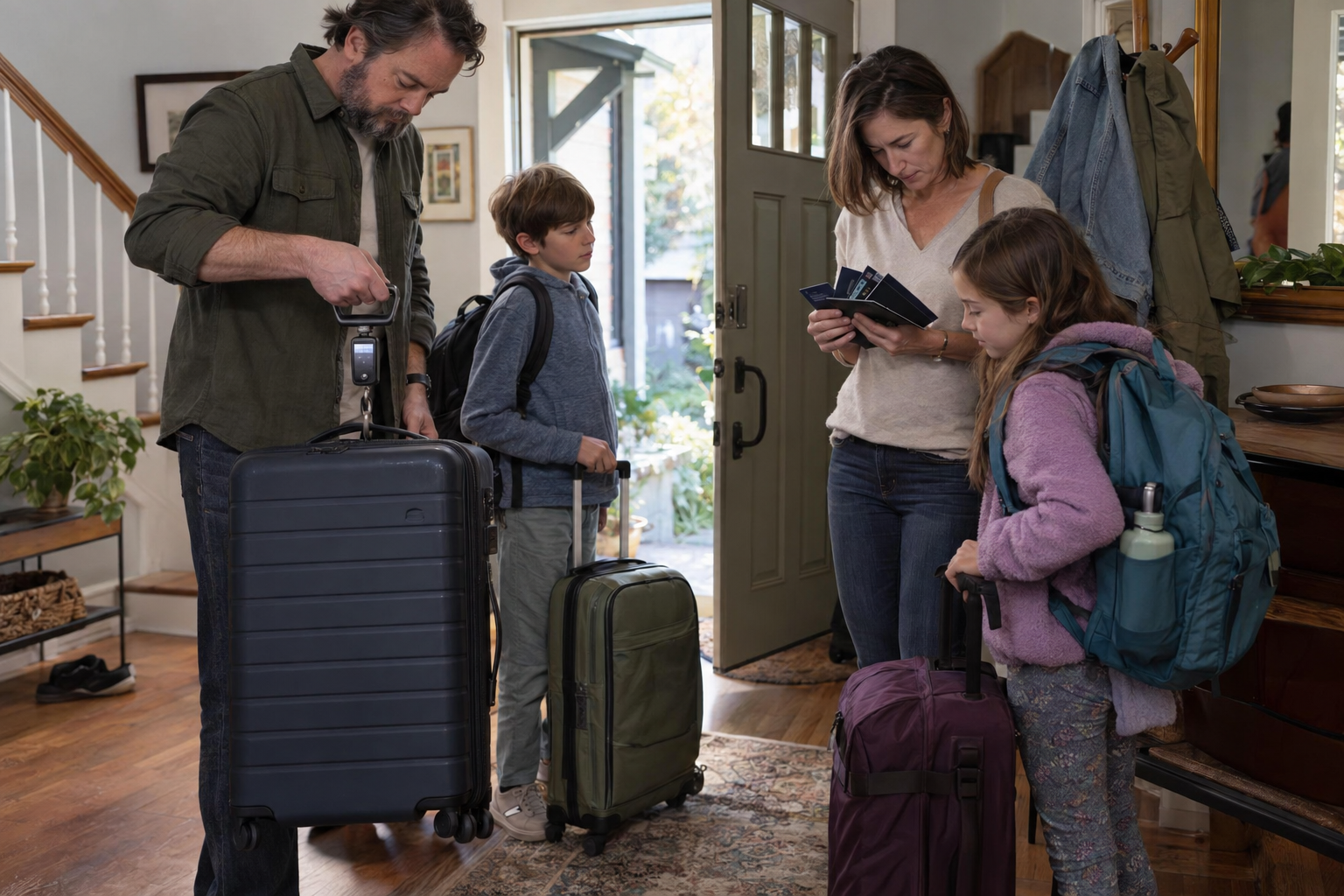
Plan Our EscapeFamily travel documents are the category where the greatest organizational failure occurs and where organizational success produces the most visible benefit. A family of four crossing an international border has four passports, four boarding passes, four immigration forms, and potentially four loyalty numbers to manage. These documents spread across four separate bags and four separate people produce airport chaos at every checkpoint. One family document wallet where every document lives and one designated adult who manages it produces a family that moves through every checkpoint as a unit.
The family document wallet is a slim accordion-style wallet or a small zippered travel document organizer large enough to hold every family member’s passport, every boarding pass, a family travel insurance card with the emergency number, any vaccination cards or health documentation, and the loyalty cards used for the trip. The wallet lives in the outermost accessible pocket of the managing adult’s personal item and is never relocated during transit. Every document the family needs at any checkpoint comes from this one wallet in under ten seconds.
Email a digital copy of every family member’s passport to a dedicated family trip folder before any international trip. Forward the folder to one trusted contact at home who holds the complete set independently. If the family document wallet is lost or stolen, the trusted contact can read every passport number and booking reference over the phone. This backup layer costs five minutes to set up and provides last-resort insurance that no physical copy system alone provides.
For families traveling with children old enough to understand, brief each child on the family document system before departure. Tell them which adult holds the passports, where they go if separated from the family, and what their own passport looks like. Children who know the system are calmer at checkpoints and more capable of assisting in a genuine separation scenario.
Screenshot each family member’s passport photo page and save the screenshots to a dedicated family trip album on your phone, labeled with each family member’s name. If any passport is needed for reference before the wallet is accessible, the screenshot album provides the information immediately without opening the wallet. Finding a specific detail in a labeled phone album takes five seconds rather than the thirty seconds of searching through multiple documents that produces visible nervousness regardless of how compliant the situation actually is.
A hungry child on a travel day is one of the most reliable predictors of a difficult travel day. Travel produces more hunger than usual because of physical activity, sensory stimulation, disrupted routines, and the metabolic demands of excitement and mild anxiety on a child’s system. The dedicated travel day snack bag eliminates the hunger variable entirely by ensuring food is always available at the moment it is needed rather than at the moment a meal service or airport vendor makes it available.
The dedicated snack bag for family travel is separate from any other bag in the system. It travels in the most accessible adult personal item pocket or in a dedicated slot in the family carry-on that every family member knows. Its contents are chosen specifically for a travel day: no refrigeration required, no strong smell in a confined space, no utensils or prep needed, meaningful nutrition rather than a brief sugar spike.
The complete family travel day snack bag: individual nut butter packets with crackers for older children and adults. Squeeze pouches of fruit or yogurt for younger children and toddlers. Protein or granola bars for adults and older children. Mixed nuts and dried fruit. Fresh fruit that travels without cutting. Individual packages of whole grain crackers. A small bag of pretzels as the volume snack for persistent hunger during long transits. One small sweet treat per child reserved for a moment of particular patience during a difficult transit phase.
Pack the children’s snacks in individual pre-portioned servings rather than shared family-sized packages. Individual portions eliminate the in-transit negotiation about how much each child has consumed and how much remains. They also prevent the specific disaster of a shared snack container being opened, spilled, and distributed across a carry-on in a way that requires the full attention of both adults during exactly the phase of the transit where full adult attention is most needed elsewhere.
The Family Travel Gear We Actually Recommend
The color-coded luggage tag sets that made every family baggage claim instantly identifiable, the slim accordion family document wallet that holds every passport and boarding pass in one organized location, and the snack organizer pouch that converted every family travel day from a snack-hunting expedition into a simple reach and distribute. Real family travel picks from real family trips of every destination and age range.
DND FavoritesThe two carry-on inclusions most families discover the need for on the trip where they did not pack them rather than because they were specifically recommended are a family first aid kit and a change of clothes for every family member. Both are items that are never needed on most travel days and are desperately needed on the travel day where something goes wrong, which fits a meaningful percentage of family travel days given young children, unfamiliar food, long transit hours, and the general entropy of moving a family through multiple transit points.
The family carry-on first aid kit for travel contains: adhesive bandages in multiple sizes including knuckle and fingertip versions. Antiseptic wipes in individual packets. A small tube of antibiotic ointment. Children’s pain reliever and fever reducer in appropriate age-specific forms and dosages. Adult pain reliever. Antacid tablets. Antihistamine tablets. Motion sickness medication if any family member is prone to it. Blister plasters. A digital thermometer. Tweezers. Any child-specific medications prescribed by the family’s pediatrician for travel. The kit weighs about four to six ounces and fits in a dedicated pouch at the top of the family carry-on where it is immediately accessible.
A change of clothes for every family member in the carry-on handles the scenario it was packed for with zero drama when it arrives. A child who spills a meal on a long flight, who has a car sickness incident during a mountain transfer, or who has a toileting accident during a particularly long queue needs a change of clothes immediately rather than at the accommodation. The same change of clothes in the checked bag serves no purpose for a mid-transit incident. In the carry-on it handles the incident in the airport lavatory in five minutes and converts a potential ruined travel day into a minor inconvenience.
Pack each child’s carry-on change of clothes in a small clear zip bag labeled with the child’s name. The clear bag means the right child’s change of clothes is identifiable without opening multiple bags. The label means another adult can retrieve the correct bag in an emergency. The sealed bag means the clean clothes stay clean even in a carry-on opened and closed multiple times during a long travel day. The five seconds it takes to label and seal a clear bag before every trip prevents the disorganized lavatory scramble that the unlabeled pile of rolled clothes in the bottom of the carry-on produces when the emergency actually arrives.
The family packing list scales differently by age in ways that are not obvious until the first trip where the wrong items were included or the right items omitted. Each developmental stage has specific travel requirements that determine what the child’s bag must contain and what the family carry-on must prioritize.
Infants under twelve months require the most weight-intensive family travel packing. Diapers for the journey plus two days extra in the carry-on in case of checked bag delay. A dedicated changing pad. Sufficient formula or breast milk for the journey and the first day. Baby food pouches if solids have started. Multiple changes of clothes since infant clothing changes are frequent and unpredictable on travel days. A familiar comfort item that anchors a disrupted sleep environment. Any pediatrician-prescribed medications. Most airlines accommodate infant formula and breast milk through security in quantities exceeding the standard liquid limit with declaration, but confirm current rules with your specific airline and destination before travel.
Toddlers between one and four years require the highest entertainment-to-space ratio in the family carry-on. A toddler’s attention span during transit is measured in minutes rather than hours. Include two to three small new toys or activities as surprises revealed at strategic moments rather than all at once. A small activity pad with crayons. A favorite book. A downloaded show on a device with headphones sized for small ears. Pull-ups or diapers beyond the expected need by at least 50 percent for toddlers in toilet training who experience more accidents during travel days due to disrupted routines and excitement.
School-age children between five and twelve are the most capable travel participants in a family system and can hold genuine responsibility for their own color-coded bag and personal item backpack. This age group benefits from age-appropriate decision-making participation: choosing between clothing options for the trip, selecting their own snacks from a shortlist, choosing their own entertainment items within a quantity limit. The school-age child who made choices about their bag knows what is in it and remembers where things are. Their bag should include their own water bottle, their own sunscreen for the destination, any medication for their specific health management needs, and a light journal or drawing materials if they enjoy them.
Teenagers are full travel participants who should pack their own bag entirely within a brief family briefing about the trip type, destination weather, and any specific occasions requiring specific clothing. A teen who packed their own bag is accountable for its contents. A teen whose bag was packed for them has no clear accountability for anything in it. The family briefing takes ten minutes and covers the trip type, the weather forecast, any specific occasions, the bag weight limit, and the family’s rolling and organization approach. The teen packs. The parent checks the key items, medications and weather-appropriate essentials, without repacking everything.
Build a family pre-trip packing meeting into the departure week for every trip involving children old enough to participate. Fifteen minutes where every family member checks their color-coded bag against a shared packing list, the snack bag is assembled, the family document wallet is verified, and the carry-on first aid kit is checked. This meeting converts packing from a parent-only logistical burden into a family process where every member has a visible role and visible accountability. The children who participated are the children who do not report missing items at the destination that they were responsible for packing.
The Departure Morning That Finally Did Not Feel Like a Crisis
Priya and Marcus had taken three family trips before the fourth one that changed the system. The first three had followed the same pattern: they packed the night before in a state of frantic accumulation. Every item anyone might need was added without a system for organizing where it went. The documents were in Marcus’s backpack except for one child’s passport, which was in the family computer bag in a different pocket. The snacks were with whoever had grabbed them last. The first aid kit was in the checked bag where it would never be needed.
On the third trip, their younger child had a motion sickness incident on the transfer bus from the airport to the accommodation. Everything the moment required, a change of clothes, antiseptic wipes, and a specific medication the pediatrician had prescribed for exactly this possibility, was in the checked bag currently traveling on a separate vehicle to the same accommodation. The thirty-minute transfer became a very difficult thirty minutes. The checked bag arrived an hour after they did. By then the incident was resolved but the memory of what it would have taken to have been prepared was specific and lasting.
For their fourth trip, Priya spent an afternoon building the system in this article. She assigned colors. She bought a family accordion wallet and loaded every passport, every boarding pass copy, and every insurance card into it before packing anything else. She assembled the travel day snack bag with individual labeled portions. She packed a change of clothes for every family member in labeled clear bags at the top of the family carry-on. She built a family first aid kit including the motion sickness medication in a labeled pouch at the top of the same carry-on. She held the pre-trip meeting where both children checked their own bags against a packing list.
The fourth departure morning took thirty minutes and involved no raised voices. The airport transit took twenty minutes because the document wallet produced every required document in under ten seconds at every checkpoint. The older child carried their own backpack and managed it through the entire journey. The snack bag handled two hunger emergencies without any adult standing in an aisle searching through a carry-on. Nothing went wrong that required the first aid kit, but it was there. They arrived at the destination and both children immediately identified their colored bags at baggage claim before either adult had spotted them. The system had worked. It would work on every family trip after that because it required building once and then simply continuing.
The complete family vacation packing list organizes every category across every family member with the color-coded system as its structural foundation. The family carry-on holds items that serve every family member and cannot be distributed to individual bags: the family document wallet, the family first aid kit, the travel day snack bag, the change of clothes in labeled clear bags for every family member, the charging kit with cables and power bank, a travel adapter for international trips, and any medications needed during transit. These items are accessible without opening any checked bag regardless of what happens to any other piece of family luggage.
Each child’s color-coded bag holds that child’s clothing for the trip organized by day and packed by the child with parental guidance. Their personal item backpack holds their in-journey entertainment, their labeled snack portion, their comfort item, their change of clothes in a labeled clear bag, their water bottle, and any child-specific items for the journey. The child carries the backpack. They are accountable for it.
The parents’ bags hold the adult clothing, the family toiletry pouches, any destination-specific gear, and the items that require adult management. A small zippered laundry bag in each checked bag separates worn items from clean ones at the destination rather than the gradual mixing that makes day four packing feel like the whole bag needs to be emptied to find anything. A foldable tote in the bottom of the largest suitcase handles souvenirs, market purchases, and any return-journey overflow.
Build a master family packing document in the notes app on your phone that lists every item in every bag by person and by category. After the first trip using the system, update the document with any items that were missed, any items not needed that should be removed, and any category adjustments based on what the trip actually required. This document becomes the family’s permanent packing intelligence, refined across multiple trips to reflect the specific needs of this specific family. Share it with any family member old enough to use it and make it the foundation of every pre-trip packing meeting.
Book the Family Trip Worth All This Preparation
A well-organized family packing system deserves a well-planned family destination. Our travel agents know which properties are genuinely family-friendly beyond the marketing, which destinations match the ages and interests of your specific children, and how to build an itinerary that leaves room for the spontaneous moments that become the memories. Let us book the trip. You build the system.
Book A TripCommon Family Packing Mistakes to Avoid
Family packing failures follow consistent patterns across all family sizes and trip types. These are the most common ones and what to do differently before the next family departure morning.
All family items mixed across all family bags with no system
A family packing system where every item could be in any bag produces a search exercise at every point of the trip where a specific item is needed. The child’s allergy medication could be in three different bags. The extra pull-ups could be in the carry-on or the checked bag. The color-coded individual bag system eliminates every one of these uncertainties by establishing where each person’s items are, always, without variation. The search that would have taken five minutes at the destination takes zero minutes because the item is always in the assigned bag.
Documents distributed across multiple family members’ bags
A family’s passports distributed across four separate bags managed by four separate people, including children who may not reliably know where their bag is at any given moment, produces the scramble at every checkpoint that makes family airport transit stressful. One family document wallet, one managing adult, one consistent outer pocket location, and every document accessible in under ten seconds eliminates passport-location anxiety from every transit of every family trip from that point forward.
No dedicated snack system and relying on meal service and airport vendors
Airport food prices for families compound rapidly. A family of four buying snacks at an airport shop at tourist prices spends $20 to $40 on items that cost $8 to $12 at home. The time spent finding and purchasing airport snacks with multiple children adds twenty to thirty minutes and significant organizational effort to a travel day that already has more demands than most. A snack bag packed at home with individual labeled portions costs home grocery prices, takes five minutes to assemble, and is accessible in under three seconds at any point during the transit.
First aid kit and change of clothes in checked luggage rather than the carry-on
A first aid kit in the checked bag is unavailable during the transit when most family medical moments occur. A change of clothes in the checked bag is unavailable during the plane ride, the bus transfer, and any transit moment where a young child has an incident requiring an immediate change. These items require minimal space in the carry-on, weigh under eight ounces combined for a typical family, and address the two most common family travel emergencies immediately rather than after bag claim at the destination.
Not involving children in the packing process
Children who watch their bag be packed have no accountability for its contents and no investment in its location. Children who participated in packing their bag know what is in it, care about where it is, and are more likely to flag missing items before departure rather than after arrival. The family packing meeting that includes age-appropriate tasks for every child takes fifteen minutes more than packing without it and produces children who are active participants in the family travel system rather than passengers being managed through it.
Packing for the ideal version of the trip rather than the actual one
The family packing list assembled for the ideal version of the family trip includes matching outfits for a photo that did not get taken, formal dinner outfits for a restaurant that was not reserved, and elaborate beach toy collections for a full beach day that became a half day in the pool. Family trips with children rarely unfold as imagined because children’s needs, energy, and interests at a destination often diverge from the planned itinerary. Pack for the trip as it is most likely to actually unfold based on the ages, interests, and patterns of your specific children.
Love Helping Families Travel Better Together?
If matching families with the right destinations, planning trips that work for every age group, and helping parents arrive at their family vacation organized and genuinely ready to enjoy it sounds like work you were made for, becoming a home-based travel agent might be exactly the right next step. Earn commissions, get insider travel perks, and build a real business from anywhere. See how it works.
Become An AgentFrequently Asked Questions
These are the questions families ask most often about packing for a vacation together. Real answers from real family travel experience across every age group and trip type.
How do you pack light as a family when children require so many specific items?
The family pack-light mindset separates genuinely child-specific items that cannot be sourced at the destination from items that simply feel necessary at home but are available everywhere. Most children’s clothing, most toiletries, most sunscreen, most over-the-counter medications, and most entertainment items are available at any destination at comparable prices. Building the family packing list by category and asking for each item whether it is genuinely unavailable at the destination reduces the family bag volume significantly without reducing genuine preparedness. The family of four that packs the full home inventory transfers the organizational burden of home to every transit of the trip. The family that packs intentionally moves more freely and manages fewer items at every point of the journey.
How many outfits should each child pack per day of the trip?
For children under five, pack one outfit per day plus two additional complete changes for unexpected incidents. Children under five change clothes more frequently due to food spills, sun protection reapplication, swimming, and toileting accidents, and a comfortable margin is two above the expected daily count. For children five to twelve, pack one outfit per day plus one additional change. For teenagers, one outfit per day with the general pack-light principle applied to any outfit brought specifically for an unconfirmed occasion. All family members’ clothing should be in wrinkle-resistant fabrics that hand-wash and dry overnight, allowing a single laundry session to extend the packing list significantly for trips over seven days.
What entertainment works best for different age groups during long travel days?
For infants and young toddlers, entertainment that engages each sense in turn is most effective: a crinkle toy, a bright simple book, a familiar music playlist. New toys revealed gradually throughout the flight last significantly longer than familiar toys presented all at once. For toddlers and preschoolers, a small activity book with stickers is one of the highest engagement-to-weight entertainment items available. A downloaded show with toddler-sized headphones handles the middle flight hours. For school-age children, age-appropriate chapter books or graphic novels, a small art kit, downloaded shows and games, and a trip journal all travel well and provide sustained engagement. For teenagers, downloaded entertainment, a book they chose themselves, and genuinely useful noise-canceling earbuds justify their own weight in family-travel peace.
How do you handle car seat and stroller logistics when traveling by air?
Car seats and strollers can be checked at the gate on most airlines at no additional charge, which is the most convenient handling option for families since the stroller is available throughout the airport up to the aircraft door and retrieved immediately on deplaning. A gate-checked stroller needs a gate check tag attached before boarding. Check the current policy with your specific airline since practices vary. Car seats can also be used on aircraft for children under two who have their own seat booked. The FAA-approved certification label is required on any car seat used on a US aircraft. A travel stroller that folds to carry-on dimensions can be stored in the overhead bin, which is particularly useful on shorter flights and connecting flights.
What medications should families always carry in the travel first aid kit?
The family travel first aid kit should address the most common travel health situations for children: fever and pain management in age-appropriate forms and doses, motion sickness medication if any family member experiences it, antihistamine for allergic reactions in both adult and child formulations, antidiarrheal medication, antacid for digestive upset, and any prescription medications for any family member’s managed health condition. Consult your family’s pediatrician before any international travel about recommended travel medications for children, including any vaccinations or prophylactics recommended for the specific destination. A pediatric travel health consultation before any significant family trip is strongly recommended, particularly for travel to tropical destinations, developing countries, or anywhere with specific health advisories for children. Always consult a healthcare professional for all medication decisions related to children’s travel health.
How do you handle the family packing list for an all-inclusive resort versus a city trip?
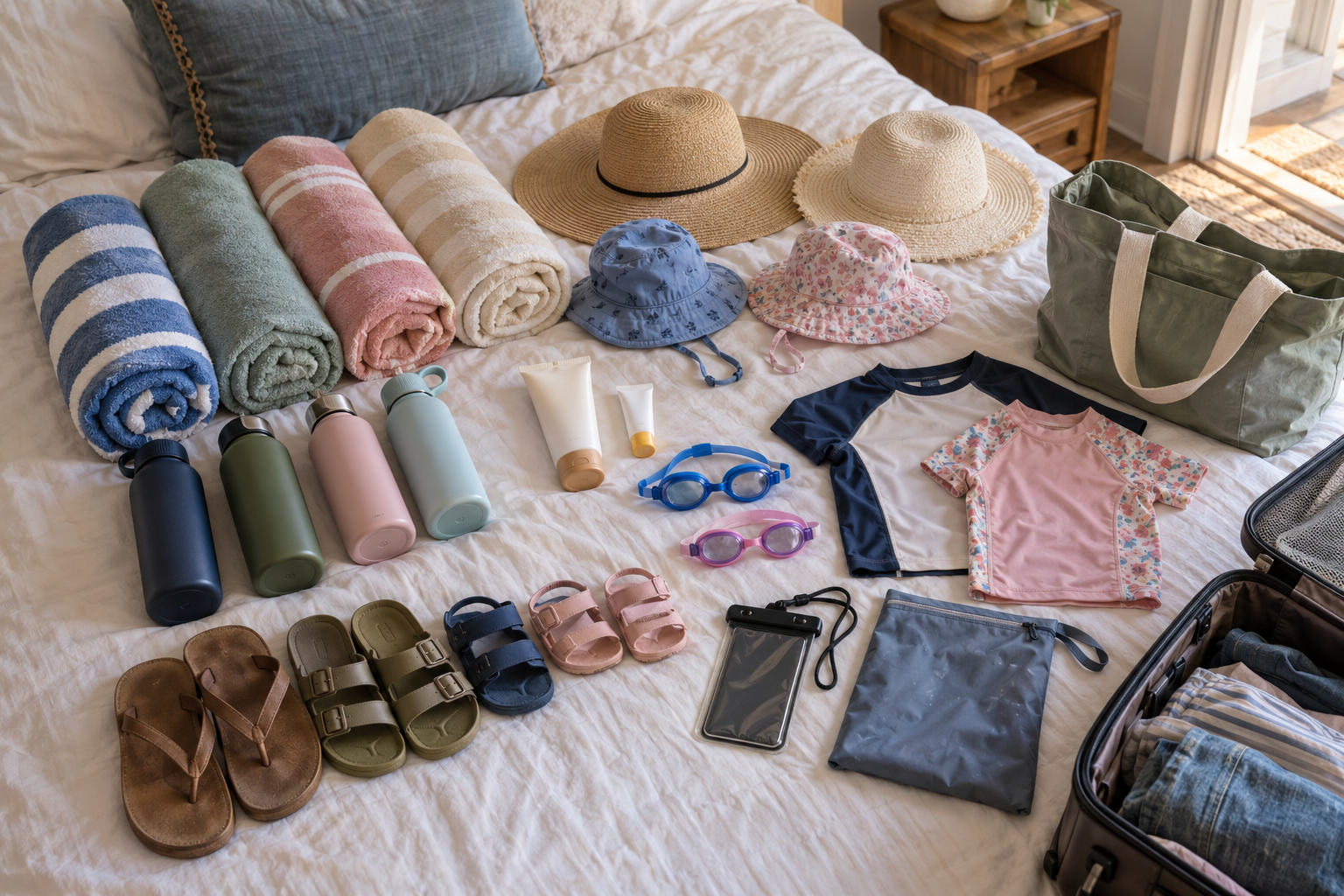
An all-inclusive resort list and a city family trip list differ primarily in activities gear and clothing formality. The resort list adds multiple swimsuits per family member, adequate reef-safe sunscreen for full sun days, rash guards for extended water activity, water shoes if the beach has rocky areas, and after-sun treatment. It reduces the city-appropriate clothing since resort dress codes are generally informal throughout. The city family trip list adds comfortable walking shoes for every family member with the mileage test applied to children’s shoes specifically since a city walk of five to seven miles produces blisters in shoes that have never caused them at home. It reduces swimwear and sun gear proportionally. The organizational system, the color-coding, the family wallet, the snack bag, and the carry-on essentials, remains identical across both trip types because the organizational challenges of family travel are the same regardless of the destination.
The best family trips start before the driveway. They start with a packing system that every family member understands, every item can be found in, and every transit can rely on. The system is the preparation. The preparation is the trip going well.
Picture Your Next Family Departure Morning
The family packing meeting happened two days before. Every color-coded bag was checked against the list. The family document wallet has every passport, every boarding pass, and every insurance card. The snack bag has individual labeled portions for every family member. The carry-on first aid kit and labeled clear bag changes of clothes are at the top of the family carry-on. The children’s colored backpacks are by the door. The older child knows which adult has the passports and what to do if the family is separated. The morning of departure is thirty minutes of final items and a family ready photo. The airport transit is a family moving as a unit. The families who enjoy vacation most are the ones who did the hard work before they ever left the driveway. That is you, every family trip from now on.
One More Thing Before You Pack
Print our free Travel Packing Checklist and use it as the foundation for your family packing meeting. Every category covered, every age-specific reminder included, and the carry-on essentials that most families discover they needed when it is too late to add them. Print one for the whole family and use it together before every trip.
Get the Free ChecklistExplore Our Top Picks for a Better Trip
From the color-coded luggage tag sets that made every family baggage claim instantly identifiable to the slim accordion family document wallet that holds every family passport in one organized location, see the family travel products and resources we actually use and recommend. Real picks from real family trips of every size, age range, and destination.
See Our Top PicksTravel Prints and Printables From Our Shop
Visit Premier Print Works for family travel journals, trip planners, children’s travel activity books, packing list printables, and wall art that makes every family adventure a little more beautiful and a lot more organized from the first packing meeting to the last memory made together.
Visit Premier Print WorksDisclaimer
The information shared in this article is provided by Don and Diana’s Travels for general informational, educational, and inspirational purposes only. It reflects our personal experiences, opinions, and the experiences of travelers we have worked with. It is not professional travel, legal, medical, or financial advice, and it should not be relied on as such.
Health and Medical Information for Children and Families
Any health, medical, or medication information in this article including guidance about children’s first aid kits, age-appropriate medications, infant travel requirements, and pediatric travel health is general educational information only and not professional medical advice. Children’s medical needs, appropriate medications, dosages, and travel health requirements vary significantly based on age, weight, existing health conditions, destination, and individual circumstances. Always consult your family’s pediatrician or a qualified healthcare professional before any family travel involving children, particularly for international travel, travel to tropical destinations, or travel with infants and young children. A pediatric travel health consultation before any significant family trip is strongly recommended. We are not medical professionals and are not responsible for any health outcome arising from packing, medication, or travel health decisions made based on information in this article.
Travel Information and Airline Policies
Airline policies regarding car seats, strollers, gate checking, carry-on sizes, baggage fees, and related family travel regulations change frequently and vary significantly between airlines, routes, aircraft types, and fare classes. Always confirm current family-specific travel requirements with your specific airline before travel. Immigration and customs entry requirements for families traveling with minors, including requirements for children traveling with only one parent, with grandparents, or with non-parental guardians, vary by destination and change frequently. Research current requirements for your specific destination through official government sources before international family travel.
Affiliate and Partner Links
This article may contain affiliate links, partner links, referral links, and links to products or services that pay us a commission. If you click a link and book a trip, make a purchase, sign up for a service, or complete any qualifying action, we may earn a small commission at no extra cost to you. Our recommendations are based on real use and genuine belief in the products and services we share.
Third-Party Websites and Services
We may link to third-party websites, services, and resources for your convenience. We do not control these sites and are not responsible for their content, terms of service, privacy practices, pricing, availability, or any product or service they sell. Your use of any third-party site is entirely at your own risk.
Health, Safety, and Personal Responsibility
Travel involves personal risk. You are solely responsible for your own health and the health and safety of any minors traveling with you, as well as travel insurance, medications, vaccinations, documentation, financial decisions, and choices while planning or taking any trip. We strongly recommend purchasing comprehensive travel insurance for every trip, particularly for family travel involving children. Don and Diana’s Travels, its owners, employees, contractors, and affiliates accept no liability for any loss, injury, illness, delay, cancellation, damage, theft, or inconvenience arising from your use of the information in this article or from any travel decisions you make.
Composite Stories and Characters
Some stories, examples, and traveler experiences shared on this site are composites drawn from the real experiences of Don, Diana, clients, friends, and travelers we have worked with over the years. Names, identifying details, locations, and circumstances may be combined, changed, or fictionalized to protect privacy. Any resemblance to a specific real person beyond the composite portrayal is unintentional.
No Guarantees
We do not guarantee any specific result, outcome, savings, or experience from using the information, tips, services, or products mentioned in this article. Your results depend on many personal factors including your own choices, effort, circumstances, and external conditions outside of our control.
Copyright and Use
All content in this article is the copyrighted property of Don and Diana’s Travels unless otherwise noted. You may not copy, republish, redistribute, modify, sell, or reuse our content without our prior written permission. You are welcome to share a direct link to this article with proper credit.
By reading and using the information in this article, you acknowledge that you have read, understood, and agree to this disclaimer in full.