23 Smart Packing Tips for a Relaxing Vacation
Packing smart before a relaxing vacation means you spend zero time on the trip digging through your bag looking for things you are not even sure you brought. Twenty-three tips for the traveler who wants to arrive with exactly the right things, nothing extra, and a suitcase so well organized that the vacation feels easy from the moment the zip opens at the destination.
Grab Our Travel Packing Checklist
Our free packing checklist is the master list these twenty-three tips are built around — written two days early, filtered by the confirmed itinerary, organized by outfit and category, and closed with the final edit that removes the last of the just-in-case items before the zip closes. The same list we use before every relaxing vacation we take.
Get the Free ChecklistA smart packing list is not about bringing less — it is about bringing exactly the right things so the whole trip feels easier from the moment you arrive.
Packing smart before a relaxing vacation means you spend zero time on the trip digging through your bag looking for things you are not even sure you brought.
The List: Write It Two Days Early and Let It Write Itself
Write the packing list two days before you pack — not the night before
The packing list written the night before departure is written under the specific pressure of tomorrow’s early start, with the mental bandwidth devoted to getting out the door rather than thinking clearly about what the trip requires. The list written two days before departure is written from a calm starting point whose most valuable feature is not the items on it at the time of writing — it is the forty-eight hours of background processing that follow. The brain that has written a packing list and left it open continues working on it: the item thought of in the shower the next morning, the thing remembered at lunch that did not make the first draft, the detail noticed when walking past the medicine cabinet that should be on the list. None of this happens when the list is written the night before. Two days early produces a more complete list, a calmer packing session, and the time to address anything the list turns up while there is still time to address it at home.
Use the confirmed itinerary to filter every item on the list before adding it
The packing list built without reference to the confirmed itinerary is the list that packs for the imagined vacation rather than the actual one — and the imagined vacation is always more demanding, more varied in occasion, and more formally eventful than the real one turns out to be. Before any item is added to the list, ask which specific confirmed moment in the actual itinerary it serves. The snorkeling gear for the reef tour already booked has a confirmed answer. The fourth top for the dinner venue that has not been researched does not. The dress packed for a possible nice restaurant that does not have a reservation does not. Filter every item through the itinerary. The list that survives this filter is the list whose contents each have a confirmed purpose — and the suitcase packed from that list is the one that comes home with an unworn count close to zero rather than the half-full one that the unfiltered list produces.
Keep a running note on your phone in the two days before packing to catch what occurs to you naturally
The item that occurs to the traveler at a random moment two days before packing — in the shower, during a commute, while making dinner — is the item whose natural timing demonstrates that the brain was working on the packing list in the background exactly as it does when the list is written early enough to allow it. A note on the phone, kept open and easy to add to across the two days between the initial list and the packing session, captures these naturally arising items before they are forgotten and before they produce the departure morning discovery that the specific thing thought of two days ago was not written down and is now forty minutes from home in the back of a taxi. The note is not the list — it feeds the list on the day of packing. Add to it whenever something occurs to you. The accumulated two days of background processing is the most complete first-draft packing list available without any additional effort.
Set the list deadline forty-eight hours before departure and treat it as final
The packing list with no closing deadline grows until departure, collecting the anxiety additions that the approaching trip generates without any filter beyond the general sense that more is safer. Setting the deadline at forty-eight hours before departure and enforcing it — new additions after the deadline require removing something already on the list to balance them — stops the growth at the right point. The list at forty-eight hours reflects the genuine requirements of the trip filtered through the itinerary. The list at twelve hours reflects the genuine requirements plus the anxiety of the last two days. The difference between these lists is almost entirely the just-in-case items that arrived after the deadline should have closed and that would have come home unused. Set the deadline. Close the list. Pack from the closed list. The relaxing vacation begins with the packing list that was finished early enough not to become part of the stress.
Read the final list once more and remove everything marked “just in case”
The just-in-case item is the item on the packing list whose itinerary answer is a possibility rather than a confirmed occasion. It is the item that makes it through the initial edit because it seems harmless to include, the secondary edit because it would be annoying to need and not have, and the final read-through only if that final read specifically targets just-in-case items rather than reading the list as a checklist to pack from. Read the final list with just one question: is this for a confirmed moment in the actual trip, or is it just in case? Every item whose honest answer is just in case comes off the list. Most vacations produce zero of the scenarios their just-in-case items were packed for. All of them produce the weight, the full bag, and the final checkout repack of the items that came home unused. Remove them before the bag is opened. The honest final read is the last edit the relaxing vacation’s bag needs.
Let Us Build the Trip That Gives Every Packing Decision a Real Answer
The smart packing list works best when it is built around a real itinerary — one that tells you exactly what the trip requires so the bag contains only what belongs. Tell us where you want to go and we will plan the relaxing vacation that earns every deliberate packing choice from the first outfit to the last.
Plan Our EscapeThe Clothing System: Pack by Outfit So Nothing Arrives Without a Match
Pack every outfit as a complete confirmed set before any piece goes in the bag
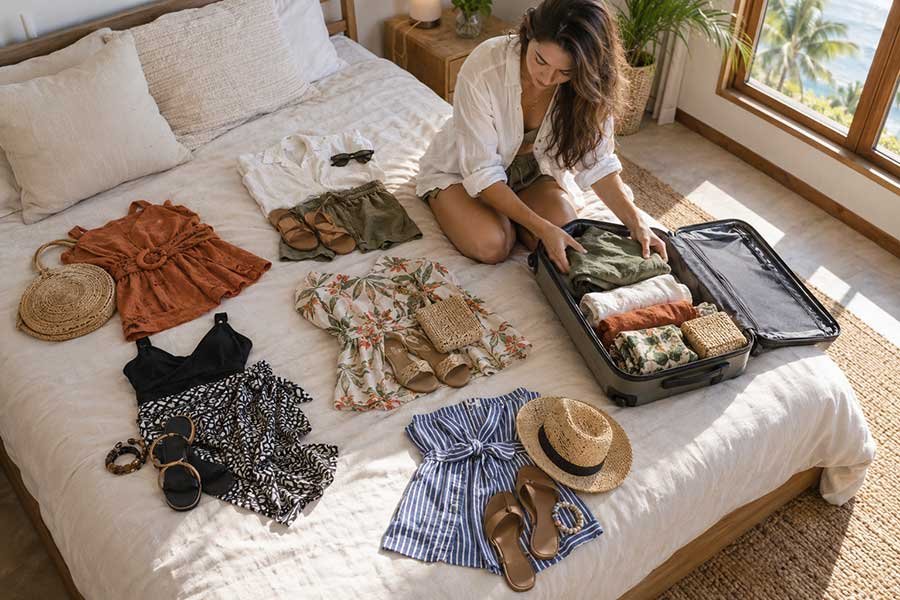
The relaxing vacation’s clothing anxiety — the discovery at the destination that five tops and three bottoms do not all pair correctly, the shoes that work with one outfit and nothing else, the layer that matches nothing in the bag — is almost entirely preventable at the packing session by assembling each complete outfit flat before a single piece is moved. Top, bottom, shoes, layer, and any accessory that completes the occasion: laid out together, confirmed as a working combination, and only then packed as a unit. Every piece that lacks a complete outfit it belongs to stays in the closet. The bag that arrives at the relaxing vacation contains confirmed complete looks rather than the general population of individual garments whose outfit chemistry was assumed rather than checked. Nothing to dig through looking for a match. Nothing to improvise. Every morning is a selection between ready combinations. That is the packing that makes the relaxation begin at the bag’s first opening.
Build the capsule in two or three colors that all mix and match with each other
The capsule color palette is the structural principle that allows a small bag to dress a traveler for a full vacation without gaps, without mismatches, and without the pressure of having made a wrong choice between items that do not go together. Two or three colors — a neutral base paired with one or two accent colors that also work together — mean that every top works with every bottom, every layer works with every outfit, and the combination count multiplies across the palette rather than being fixed by specific pairings. The bag built outside a palette contains individually attractive pieces each with one or two partners. The bag built within a palette contains fewer pieces that all partner freely. The relaxing vacation needs fewer decisions, not more, and the capsule palette makes the morning outfit selection the easiest decision of the day rather than the one requiring deliberate thought before the coffee is finished.
Pack fewer bottoms and more variety in tops — tops create the outfit change, bottoms repeat
Bottoms — trousers, jeans, shorts, skirts — are heavy, pack inefficiently, and take the longest to dry after a sink wash. Tops are lighter, more compressible, and dry quickly. The vacation’s outfit variety is almost entirely produced by the top rather than the bottom, because the observer at the restaurant or the beach does not register which specific pair of shorts or neutral trousers is being worn — they register the top, the color, the detail. Two or three bottoms in neutral, versatile colors provide the foundation for the entire vacation’s outfit rotation. The tops in the capsule palette’s accent colors provide the day-to-day variation that makes the same bottoms look like different outfits when paired differently across the week. The lighter, simpler bag that results from this ratio is the bag that is never a logistics problem at any point in the relaxing vacation it was packed for.
Remove everything you are packing just in case — because just in case almost never happens
The just-in-case clothing item deserves its own tip in the clothing section because it is the category of clothing overpacking that is most consistently justified at packing time and most consistently regretted at checkout. The dress packed in case there is a fancy dinner. The extra layer in case the weather turns. The fourth pair of shoes in case the first three are not quite right for some occasion that has not been imagined clearly enough to name. Remove all of these from the clothing section of the bag. The relaxing vacation is called relaxing because its occasions are known and comfortable rather than uncertain and formal — and the just-in-case clothing is the clothing that belongs to a different kind of trip than the one being taken. Leave it. The closet holds it until the trip that actually confirms its occasion. The relaxing vacation’s bag is lighter and more organized without it.
Pack one genuinely versatile layer instead of multiple single-purpose ones
The relaxing vacation’s temperature variation — the cool morning, the warm afternoon, the breezy evening by the water — is handled more efficiently by two items working together than by three or four single-purpose items each packed for one scenario. A light merino or soft fleece layer plus a windproof or water-resistant shell covers the full range the relaxing vacation typically produces, produces more outfit combinations than three single-purpose items of similar total weight, and occupies less space in the bag than the alternative pile. The versatile layer is also the one that earns its weight most consistently across every day of the vacation: worn in the morning cool, removed at midday, used again in the evening breeze, and on the flight home as the light layer in the personal item. One system. Multiple occasions. Less weight. More ease. The relaxing vacation’s bag is lighter and more functional for it.
The Suitcase: Organize It for How You Actually Use It on Vacation
Keep your most reached-for items on top — always, on every vacation
The top layer of the suitcase’s main compartment is the layer accessed at check-in, at the first evening’s arrival, and at every point in the vacation when the energy for reorganizing the bag is lowest and the need for a specific item is highest. The relaxing vacation’s most reached-for items are also its most immediately needed ones: the charger for the first night’s phone, the sleep clothes for the arrival evening, the toiletry bag for the first morning’s routine. These belong on top, packed last, accessible first. The items needed on the vacation’s last day or in an emergency belong at the base. Pack in reverse order of use: the last-needed items first, the first-needed items last. The suitcase that answers the first question the accommodation asks — where is the charger, where are the sleep clothes — without requiring the whole bag to be unpacked is the suitcase that begins the relaxing vacation relaxing rather than searching.
Place shoes sole-to-sole along the frame at the base, socks tucked inside them
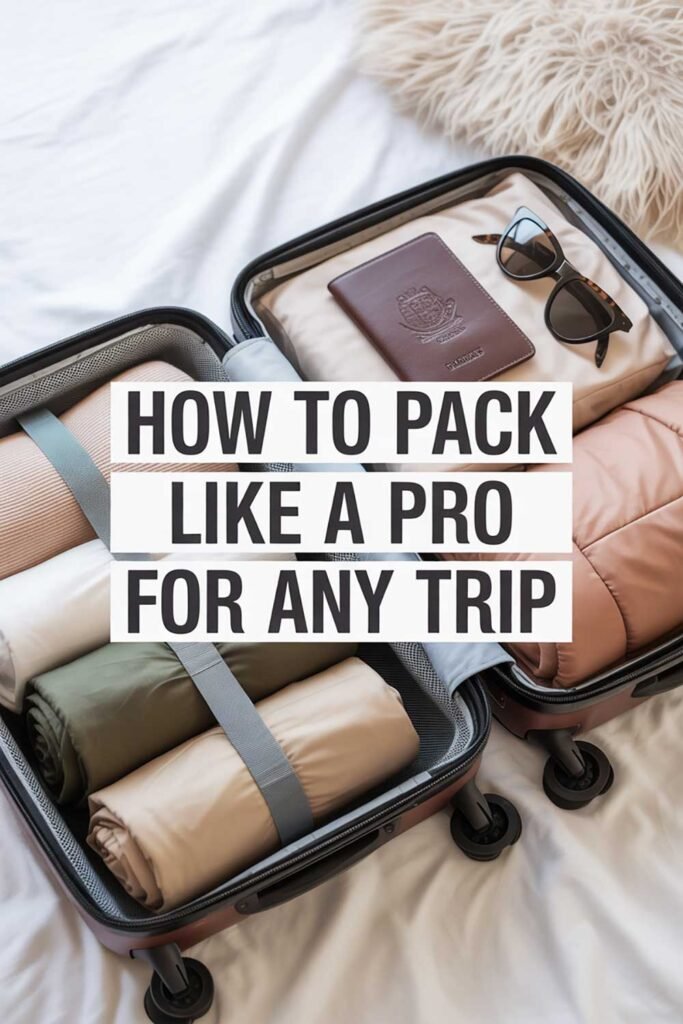
The shoe layer at the base of the suitcase is the foundation the packing cubes build on — and it is most efficiently placed when the shoes go in sole-to-sole along the frame’s perimeter rather than scattered in whatever position they land. The sole-to-sole pairing positions the shoes’ narrower profile against the frame’s rigid channels and leaves the center of the base available for the heaviest packing cubes. Every shoe’s hollow interior is reclaimed space: socks rolled and tucked inside, a compact charger nested in the heel space, a small accessories pouch in the remaining cavity. These consolidations keep the sock category within the shoe layer and free the packing cube space above for the items that need it. The base built this way is organized, efficient, and stable — the kind of suitcase foundation that makes every layer above it behave predictably when the bag is opened at the relaxing vacation’s first accommodation.
Roll soft casual clothes and fold structured items that wrinkle if rolled
Rolling is not the right technique for every garment, and applying it universally produces the wrinkle outcome it is supposed to prevent on the structured items whose fabric does not accommodate rolling. The distinction is simple: soft, casual items — t-shirts, knitwear, jeans, fleeces, casual trousers — roll to cylinders that fit every gap and corner of the suitcase, wrinkle softly and evenly, and resolve quickly on a hanger. Structured items — blazers, linen shirts, formal trousers, dresses with shape — fold flat, preferably inside a dry cleaning bag that allows the fabric to shift under pressure, and go in the top layer where they are accessed last and pressed least. Apply both techniques to the right garments. The suitcase that rolls its casual items and folds its structured ones arrives with every category looking the way the vacation requires it to — effortlessly, because the technique was matched to the garment.
Use one packing cube per clothing category and keep the assignment consistent every trip
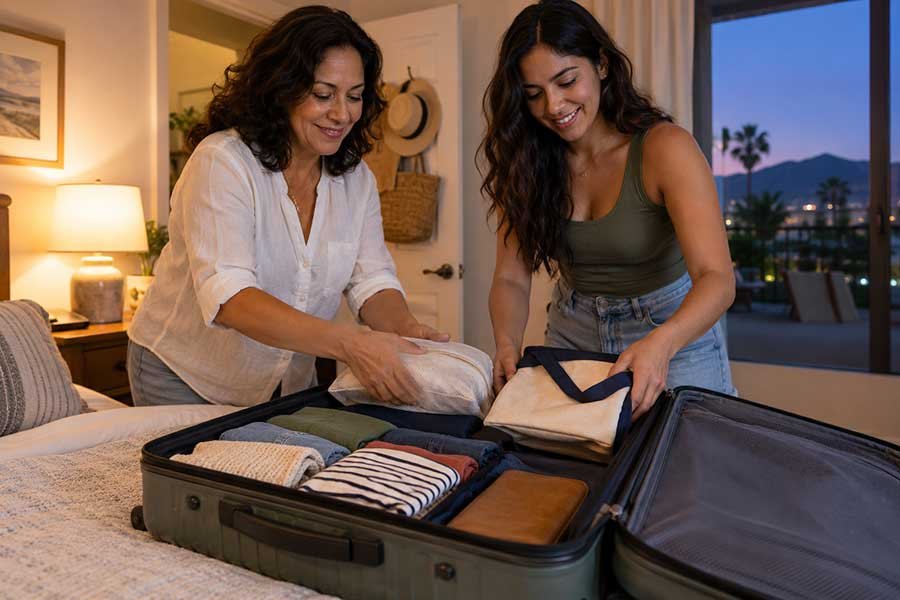
Packing cubes are at their most useful when each one has a single, consistent, assigned category that never changes across trips: tops in one cube, bottoms in another, underwear in a third, layers in a fourth. The cube assignment makes every item’s location predictable — the tops cube is always tops, regardless of which vacation, which destination, or which specific items it holds for the current trip. The relaxing vacation whose bag uses assigned cubes is navigated without searching: the specific item needed is in the specific cube that always holds it, located in the same position in the suitcase as it was on the last trip. The cube system maintained consistently across trips becomes invisible — not something the traveler thinks about at the destination, just the reliable organization that makes the bag feel like it knows where everything is because the system decided that in advance.
Dex’s First Vacation Where the Bag Was Never a Thing He Thought About
Dex had a specific relationship with packing that he described as functional but not enjoyable. The trips happened. The bags were packed. The clothes arrived. But the bag was also a recurring minor presence throughout every vacation — the slight uncertainty about whether a specific item had been packed, the dig through the main compartment at the accommodation on the first evening, the final checkout repack with the specific discovery that the blazer he had brought for a dinner that had not quite materialized was still folded exactly as he had packed it. The bag worked. It just also generated small frictions that he had come to accept as part of vacationing rather than artifacts of a packing system that could be improved.
The trip that changed this was one where he decided, for no particular reason, to write the packing list on the Tuesday before a Thursday departure. He wrote it in fifteen minutes, left it, and then over the following two days added seven items at random moments when they occurred to him — four of which would not have made the night-before list because he would not have thought of them at that point. He also removed four items that the two days of background processing correctly identified as just-in-case rather than confirmed: the second pair of dress shoes for a dinner he had not booked, the umbrella for a destination in its dry season, and two tops that had made the initial list from vague coverage anxiety rather than specific outfit planning.
He packed by outfit for the first time, laying each complete look flat before packing any piece. The exercise removed three more items — a top whose only partner in the bag was the one specific bottom he had not confirmed was going on the trip, and two items whose outfit positions were occupied by better options. The bag closed easily. He weighed it at home. It came in under the limit with room. At the accommodation’s first evening he found the charger on top because it was packed last, used it, and did not search the bag for it. At the final checkout the repack took four minutes and the unworn count was two — the lowest it had ever been — and both of those were items he had been uncertain about at packing and had correctly identified as close calls. He updated the master list before the return flight. The bag was reset within twenty-four hours of arriving home. The next trip’s packing session started from there. The twenty-three tips in this article are the system that produced the bag that was never a thing he thought about during the vacation — which turned out to be exactly what the relaxing vacation was supposed to mean.
The Relaxing Vacation Specifics: Pack for the Trip That This Actually Is
Pack for the vacation’s actual pace — not an imagined more active version of it
The relaxing vacation is, by design, a lower-activity trip whose physical demands are lighter than the adventure trip, the city-sprint trip, and the culturally intense trip. Packing for it as if it might become more active than planned — the hiking gear in case the resort has trails, the formal wear in case there is an event, the extra layers in case the weather turns — is packing for the imagined version rather than the actual one. A relaxing vacation’s packing list is shorter than almost any other trip type when built from the confirmed itinerary rather than the imagined one. It requires comfortable clothes, swimwear if applicable, and the comfort items that make the rest and enjoyment the trip is designed for feel genuinely supported. Everything else is the coverage anxiety of the imagined active trip masquerading as smart preparation. Pack for the pace the trip was booked at. The bag is lighter and the vacation is more of what it was supposed to be.
Pack for simple when the trip is simple — and trust that simple is enough
The relaxing vacation is the trip that most consistently over-packed travelers under-serve by packing for a more complex version of it. The beach week does not require the formal dinner clothes, the multiple shoe options, or the professional layer. The resort stay does not require the full skincare routine, the emergency medical kit, or the backup outfit for every imagined activity. Simple trips are served by simple packing, and simple packing is the system that produces the bag that arrives, provides everything needed, and stays organized through every day of the vacation because there was never enough in it for the system to break down. Trust the simple packing for the simple trip. The vacation that is designed to be uncomplicated is the vacation most genuinely improved by packing the same way. The bag reflects the trip it is heading to. Pack accordingly.
Pack specifically for comfortable mornings and easy evenings — the relaxing vacation’s best hours
The relaxing vacation’s best moments are disproportionately the mornings and evenings — the slow morning coffee with no agenda, the easy evening walk that becomes the day’s highlight, the comfortable dinner that ends at whatever time the conversation ends rather than because the next morning’s schedule requires it. The bag packed specifically to support these moments — the soft loungewear for the first morning hour, the comfortable shoes that work for the evening walk, the light layer for the cool dinner terrace — is the bag whose contents are used and valued throughout the vacation rather than carried as options. Think about the morning and evening when building the relaxing vacation’s packing list. These hours are the ones the trip was booked for. The bag that serves them well is the bag that makes the relaxing vacation genuinely relaxing.
Skip the formal option unless a specific confirmed occasion with a dress code is on the itinerary
The formal item in the relaxing vacation bag is almost always there for an occasion that was possible at the time of packing and hypothetical in practice — the nice restaurant that the vacation’s pace and the accommodation’s breakfast-inclusive plan never quite led to, the event that seemed plausible when planning but did not materialize. The relaxing vacation is not the trip whose occasions require formal options. Its evenings are casual, its restaurants are the kind that welcome the vacation’s natural clothes, and its social moments are the kind that the trip’s comfortable outfits already handle correctly. Leave the formal option home unless a specific booking, a specific dress code, or a specific confirmed event — with a date and a reservation — justifies it. The formal item that comes home folded as it was packed was correctly identified at checkout. It should have been identified at packing. The confirmed occasion is always the right standard.
Leave deliberate space in the bag for what you bring back from the vacation
The relaxing vacation produces return cargo in proportion to how relaxed it was — the local market finds, the small gift worth bringing home, the bottle of the regional product that became the trip’s recurring pleasure, the items accumulated across days of unhurried browsing that would not have been found on a faster, more scheduled trip. Pack to approximately three-quarters of the bag’s capacity and reserve the remaining quarter as the planned return margin rather than a packing failure. The deliberate gap is the answer to the question every overpacked return trip asks: where does the souvenir go? It goes in the space that was left for it. The bag whose return margin was built in closes cleanly at every checkout. The one that was packed to capacity on the outbound journey produces the departure morning repack whose stress does not belong on the last day of the relaxing vacation it was supposed to close.
Our Curated Collection of Trusted Tools and Official Sources
Everything we use to plan, prepare, and travel with confidence — from official government travel tools to practical planning aids. We have pulled together the resources we trust most so every trip you take is better informed, better prepared, and a lot less stressful from start to finish.
DND ResourcesThe Final Habits: Close the Bag Right and Keep the System Ready
Do a final edit after the bag is fully packed and remove three more items
The fully packed bag almost always has three more items. Not the obvious items that should never have been packed — three items that made it through every editing pass because each one seemed reasonable individually. The fourth top assembled for an occasion the itinerary does not specifically confirm. The second pair of shoes whose function is covered by the first pair with a minor difference. The just-in-case layer that survived the list edit because it felt like good preparation. Open the packed bag one final time and remove three items without negotiating with the anxiety that packed them. These items will not be missed at the destination. They would have traveled the whole trip unused and confirmed at checkout as the items that were correctly identified — but one editing pass too late. Remove them at home, where the closet is available and the decision costs nothing. Every bag has three. Finding them before closing is the habit that makes the relaxing vacation’s bag the right size rather than the overpacked version of it.
Weigh the bag at home on the bathroom scale before you leave
The bathroom scale used while holding the packed bag provides the most useful number available to the relaxing vacation traveler before the airport: the bag’s actual weight compared to the airline’s limit. At home, the closet is available and the response to an over-limit discovery is removing items in two minutes without an audience. At the check-in counter, the response is a fee or a public redistribution into a carry-on that was not packed to hold the redistributed items. The weigh-in takes sixty seconds and produces information whose value depends entirely on when it is received. The home version produces an easy response. The airport version produces an expensive or awkward one. The relaxing vacation begins more relaxed when the first logistical discovery was made at home rather than in the departure terminal. Weigh the bag. Know the number. Leave knowing everything about it.
Photograph the packed bag before you leave and compare it to the return repack
Two photographs, one comparison: the organized bag before the outbound departure and the return repack at the vacation’s final accommodation. The outbound photograph documents the contents before transit and provides the visual inventory any lost luggage claim requires. The return photograph — or the memory of which items were worn and which came home folded as packed — is the most precise feedback available for the packing list’s next update. The items in the outbound photograph that came home untouched are the items to remove from the master list or to flag for itinerary-confirmation before the next trip. The items that were missing and wished for are the items to add. The comparison is made once, takes five minutes, and produces a packing list that is more accurate for the vacation type it was built around. The relaxing vacation traveler who makes this comparison consistently reaches the packing session where the bag closes without question because the list was honest about the previous trips.
Reset and reload the bag within twenty-four hours of arriving home
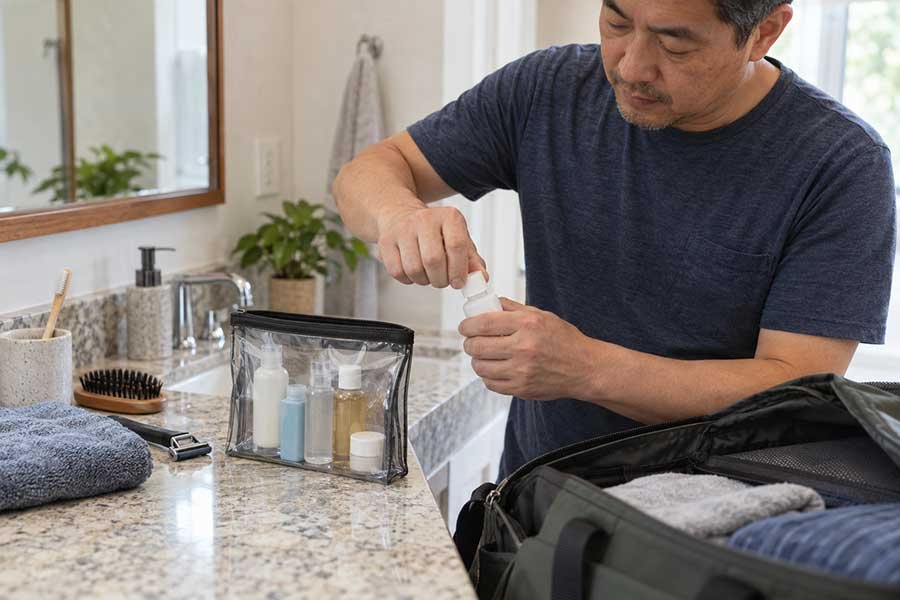
The bag reset within twenty-four hours of returning from the relaxing vacation is the bag ready for the next one without a rebuild. The laundry goes to the wash immediately. The packing cubes are emptied, wiped down if needed, and returned to their positions. The toiletry kit is restocked with whatever ran low. The master packing list is updated with the comparison from tip twenty-two. The bag is closed in its organized, ready state rather than left half-unpacked in the corner of the bedroom where it gradually becomes a minor organizational problem for the next two weeks. The reset takes fifteen minutes. The bag that is reset after every trip is the bag that starts every subsequent packing session from a known, complete foundation rather than from the disassembly of the previous trip’s aftermath. That is the bag whose twenty-three tips have all been applied. That is the bag whose relaxing vacation begins at packing, not in spite of it.
Book the Relaxing Vacation That Makes Smart Packing Worth Every Deliberate Choice
The bag packed for exactly the right things deserves a destination worth arriving at without a single unnecessary item weighing it down. Our travel agents plan the relaxing vacations that make every confirmed outfit, every removed just-in-case item, and every organized cube feel like exactly the right preparation for exactly the right trip.
Book A TripThe list was written two days early and the brain added seven things naturally across the gap. The outfit edit removed five items without a partner. The just-in-case pile was empty. The most-reached-for items were on top. The bag closed on the first try. At checkout the unworn count was two. The bag was reset before the week was out. That is twenty-three tips. That is the relaxing vacation that felt easier from the moment the zip opened at the destination.
Picture the Vacation Where the Bag Was Never a Thing You Had to Think About
The list was written Tuesday and packed Thursday, and the two days between produced seven additions at natural moments and four removals at honest ones. Every outfit was laid out flat before any piece was packed, and three items that had no confirmed partner stayed in the closet. The just-in-case pile was empty before the bag was opened. Two colors in the capsule. Every combination confirmed. The most-reached-for items were on top. The shoes were along the frame with socks inside them. The cubes were assigned and consistent. The formal option was left home because nothing on the confirmed itinerary required it. The deliberate gap at the top waited for what came home from the market on day four. The final edit removed three more items that were correctly identified as borderline before the zip closed. The bag weighed in under the limit at home. At the accommodation’s first evening the charger was on top and the morning clothes were one layer down and the whole unpacking took three minutes. The vacation felt easy from that moment. That is twenty-three tips. That is the smart packing that made the relaxing vacation genuinely relaxing.
One More Thing Before the List Is Written
Print our free Travel Packing Checklist and use it as the master list foundation — organized by category, built for outfit-first packing, and closed with the final-edit step that removes the last just-in-case items before the vacation begins. The same checklist we use before every relaxing vacation we take.
Get the Free ChecklistExplore Our Top Picks for a Better Trip
After years of exploring the globe together, these are the exact tools, platforms, and services we rely on for every single trip — personally tested, traveler approved, all in one place. We don’t recommend anything we wouldn’t use ourselves, and this is the collection of booking platforms and travel tools that have made our adventures smoother, smarter, and more memorable.
See Our Top PicksLove Helping Travelers Show Up to Every Relaxing Vacation With Exactly the Right Things?
Helping a traveler pack the right bag for the right trip — and booking the relaxing vacation it is heading to — is the kind of practical care that makes a home-based travel agent genuinely worth coming back to. If turning your love of travel into a business sounds like the right next move, see how the TravelPreneur system works.
Become An AgentVacation Packing Printables at Premier Print Works
Visit Premier Print Works for smart packing checklists, outfit assignment planners, vacation packing guides, and travel printables that make every departure more organized and every relaxing vacation easier from the moment you arrive — because the bag was right before you ever left the house.
Visit Premier Print WorksDisclaimer
The information shared in this article is provided by Don and Diana’s Travels for general informational, educational, and inspirational purposes only. It reflects our personal experiences, opinions, and the experiences of travelers we have worked with. It is not professional travel, legal, or financial advice.
Airline and Baggage Policies
Airline baggage allowances, weight limits, size restrictions, and related policies vary by carrier and are subject to change without notice. Always confirm current requirements with your specific airline before traveling. We are not responsible for any fees or outcomes arising from reliance on baggage information in this article.
Affiliate and Partner Links
This article may contain affiliate and partner links that pay us a commission at no extra cost to you. Our recommendations are based on real use and genuine belief in the products and services we share.
Composite Stories
Stories on this site combine real experiences from Don, Diana, clients, and travelers we have worked with. Details may be adjusted for privacy and narrative clarity.
No Guarantees
We do not guarantee any specific packing or travel experience from using the information in this article. Results vary by traveler, destination, and trip type.
Copyright and Use
All content is the copyrighted property of Don and Diana’s Travels. You may not copy or republish our content without prior written permission. You are welcome to share a direct link with proper credit.
By reading this article, you acknowledge that you have read and agree to this disclaimer.