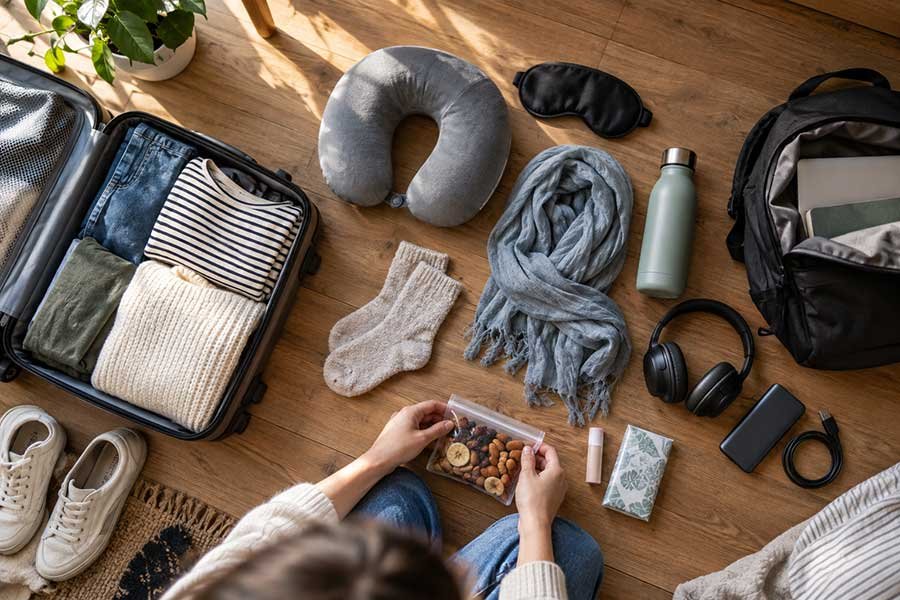
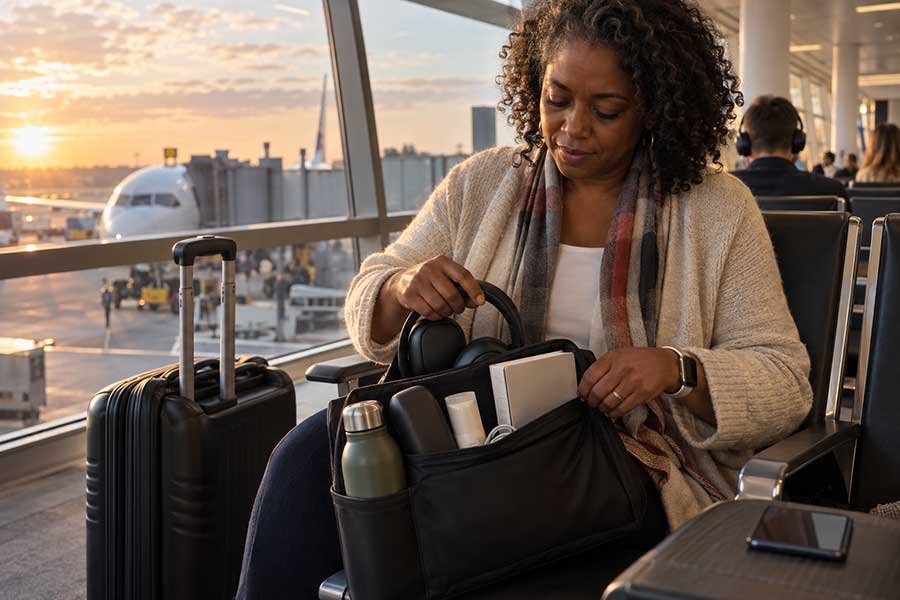
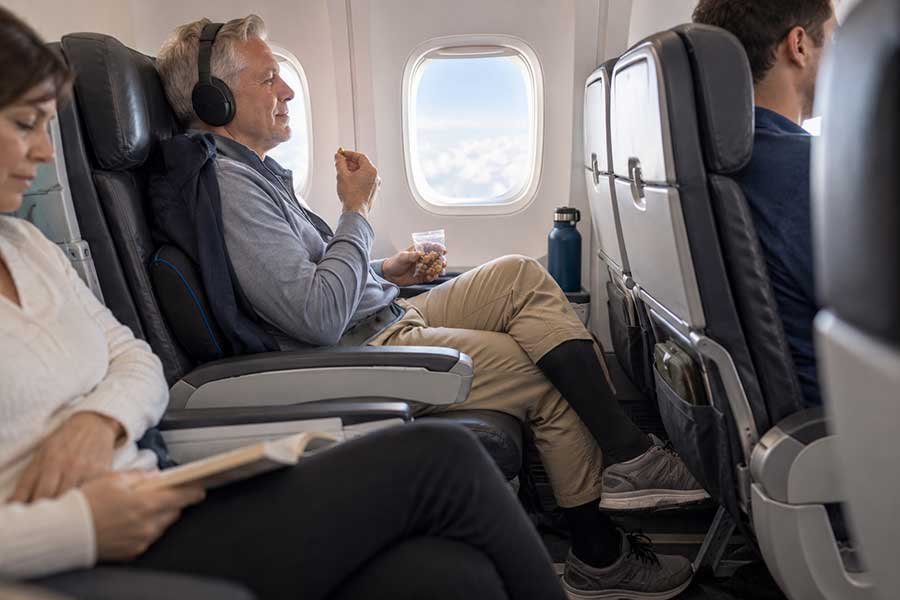
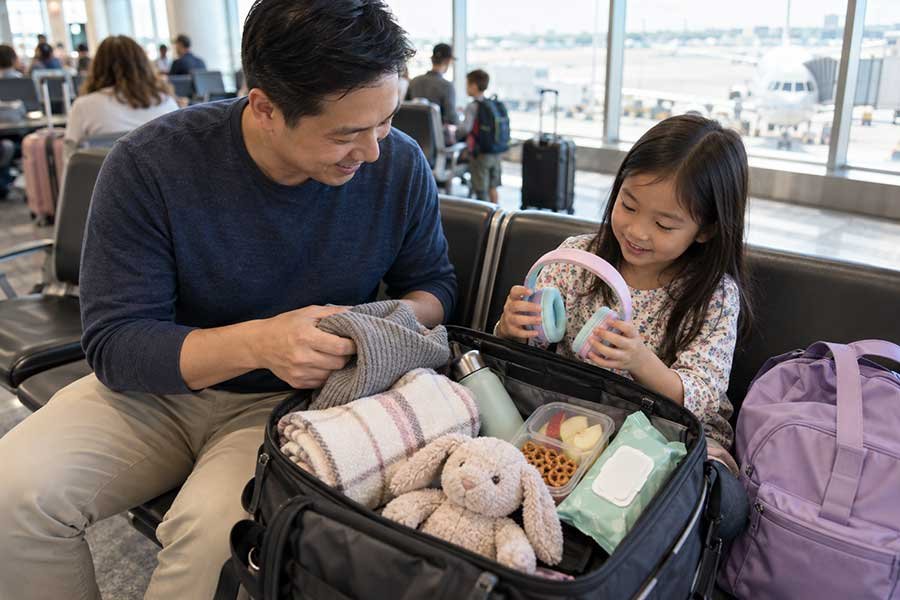
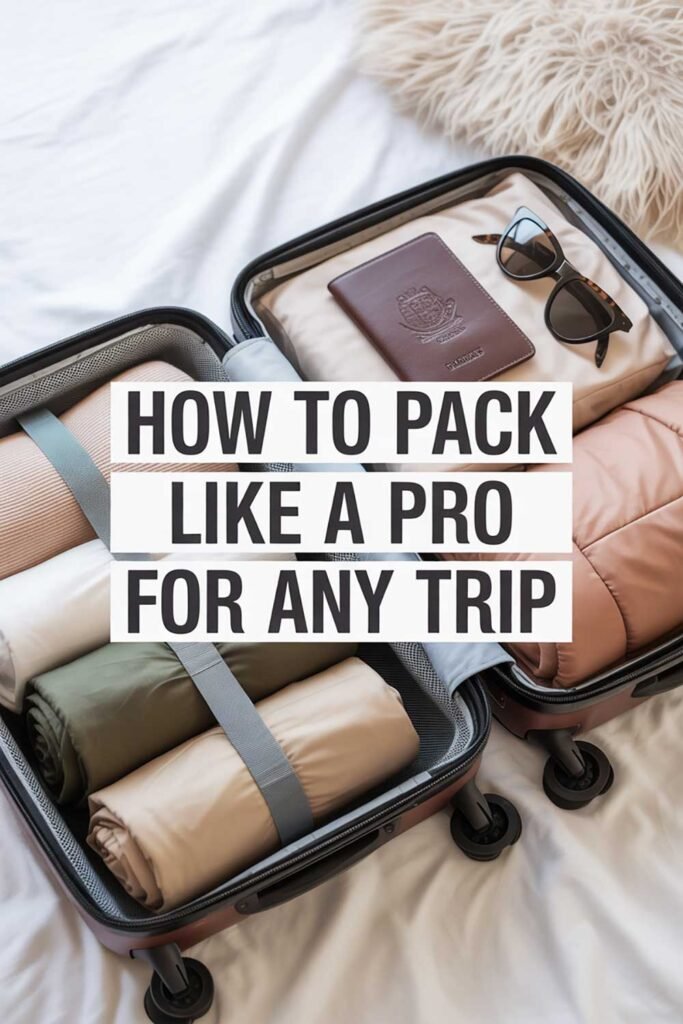
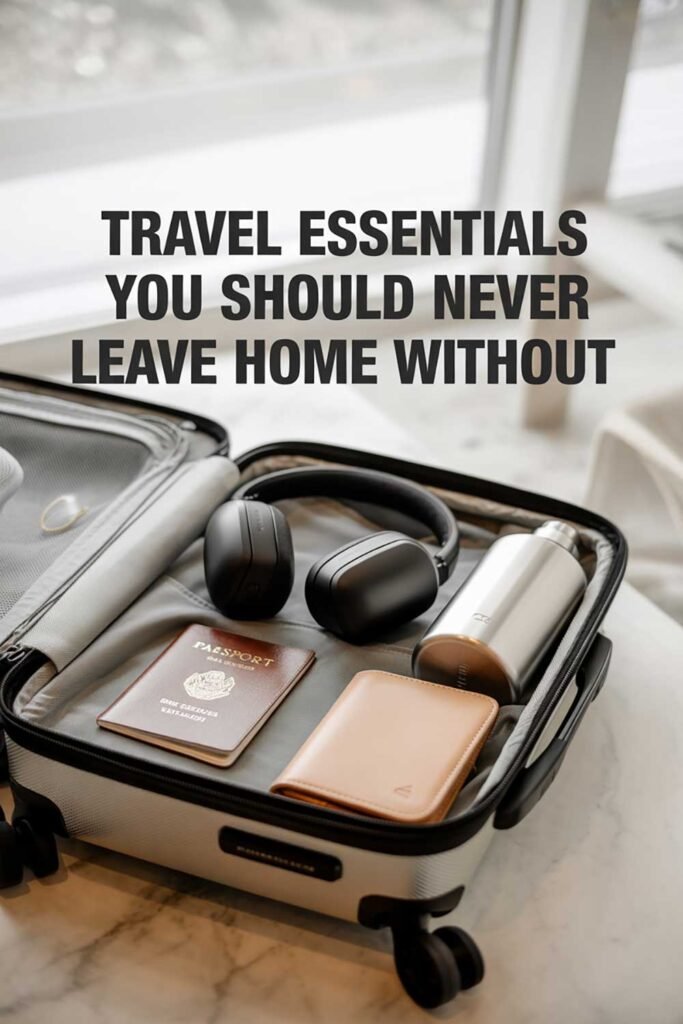
The difference between a miserable flight and a genuinely comfortable one almost always comes down to what you put in your carry-on before you left the house. Thirty-one carry-on essentials for the traveler who is ready to stop wishing mid-flight that they had packed differently — and start arriving at every destination the way the trip deserves.

Best For
Every Traveler Who Regrets Their Carry-On Packing Mid-Flight
Essentials Count
31 Carry-On Essentials
Read Time
12 Minutes
Walk Away With
The Personal Item System for a Genuinely Comfortable Flight
Free Download

Grab Our Travel Packing Checklist

Our free packing checklist includes the full carry-on and personal item section — every comfort essential confirmed, every medication noted for carry-on only, and the personal item system laid out so the flight starts with everything in the right place and nothing requires standing up to reach.

Get the Free Checklist

The most comfortable passengers on any flight are never the ones in the best seats — they are the ones who packed their carry-on like the flight was the first part of the trip worth preparing for.

The difference between a miserable flight and a genuinely comfortable one almost always comes down to what you put in your carry-on before you left the house.

Comfort Essentials: Reach Them Without Standing Up

01

Neck pillow in the personal item, out and in position before the door closes

The neck pillow in the overhead carry-on is the neck pillow that stays in the overhead carry-on for the first hour because the seatbelt sign is on, because retrieving it requires the whole row to shift, and because by the time the sign goes off the neck has been held in a static unsupported position long enough that the pillow’s arrival is solving a problem rather than preventing one. The neck pillow in the personal item under the seat is the one out before the door closes — placed around the neck at seat assignment, providing support from the first taxiing minute rather than the first rest stop. This single position change is the difference between arriving at the first destination with a stiff neck and arriving without one. The personal item is specifically for flight essentials. The neck pillow is one of its most important passengers. Pack it there. Use it before anything else.

02

Sleep mask in the exterior pocket of the personal item — within one reach of the seated position

The sleep mask in the exterior pocket is out in three seconds when the cabin dims — placed before the first attempt at sleep rather than after the first failed attempt without one. Cabin darkness at altitude is relative rather than absolute: the standby glow of the seat entertainment screen, the light through the window gap, the corridor lighting between sections, the reading light of a neighbor who sleeps later — all of these penetrate the closed-eye level of darkness and interrupt the sleep onset process for light-sensitive travelers. The sleep mask eliminates every one of them in a single motion. Exterior pocket of the personal item. One reach. In place before the need for it becomes acute. The traveler who puts the mask on when the cabin dims rather than after the first thirty minutes of restless non-sleep wakes up at the destination meaningfully less depleted.

03

Light layer packed in the personal item where you can reach it without standing up

Aircraft cabin temperature at cruise altitude is noticeably cooler than the departure hall temperature, inconsistently cooler at different points in the same flight, and on overnight flights cold enough to make sleep difficult without a layer that was only retrievable from the overhead if the seatbelt sign was off and the row’s cooperation was available. The light layer — a soft hoodie, a thin packable jacket, a warm cardigan that compresses to the size of a folded shirt — belongs in the personal item’s top layer or top opening for exactly this moment: available from the seated position, pulled out in thirty seconds when the cabin cools at altitude, put away when the cabin warms, never requiring standing or apologizing to the row. The carry-on can hold the heavier items. The personal item holds the items the flight requires from the seated position. The light layer is one of the most important of them.

04

Quality earplugs or noise-cancelling earbuds where they can be reached immediately

The noise environment of a commercial flight — the engine’s constant frequency, the air conditioning system, the announcements, the conversations around the seat, the infant three rows forward — is one of the most consistent contributors to in-flight fatigue, and addressing it with the right audio management tool from the beginning of the flight rather than after the noise has been endured for two hours produces a measurably different energy state at arrival. Quality foam earplugs reduce the ambient noise level significantly without the battery requirement or the cost of noise-cancelling earbuds. Noise-cancelling earbuds reduce it further and allow audio listening simultaneously. Either option — accessible from the exterior pocket of the personal item, in place before the engines reach cruise thrust — converts the ambient flight noise from a background that the body works against for twelve hours into the muted backdrop that the right ear protection produces.

05

Compression socks on before you sit down — not after the flight starts

Compression socks provide their full circulatory benefit when worn from the beginning of the extended sitting period, before the venous pooling that prolonged immobility in a pressurized cabin produces has already begun. Worn before boarding, they support the lower leg’s blood return from the first seated minute. Worn after the first two hours when the swelling has already started building, they are addressing an effect rather than preventing it. Put compression socks on at home before leaving for the airport, or at the latest in the departure terminal before boarding, as a standard pre-flight habit on any flight over four hours. They are comfortable enough for extended wear, compact enough to take no meaningful space in the personal item if carried rather than worn, and their contribution to arriving without the specific lower-leg stiffness that long flights produce is consistent and meaningful. On before boarding. On for the entire flight. Off after arrival and the first walk.

06

A lightweight travel scarf that doubles as a blanket when the cabin gets cold

Airline blankets are distributed on most long-haul flights but on no particular schedule, in limited quantities on shorter international flights, and with no guarantee of availability on the flights where they are most needed. The lightweight travel scarf — a generously sized soft scarf in a neutral color that works with the travel outfit — folds to the size of a paperback, weighs almost nothing, and provides the specific warmth that the missing or thin airline blanket was supposed to deliver. Draped across the lap and legs, it addresses the cold that accumulates at the lower half of the body during long seated flights. Wrapped around the shoulders, it supplements the light layer packed in tip three. It is also a versatile first-day item at the destination: the beach cover, the museum modesty layer, the cool-evening addition to an otherwise insufficient outfit. One item. Many uses. Practically weightless. Always worth including.

We Book the Destination Worth Arriving Comfortably For

Let Us Plan the Trip That Makes Every Long Flight Worth the Preparation

The most comfortable passengers on the plane are heading somewhere genuinely worth arriving well-rested for. Tell us where you want to go and we will plan the trip that makes every item in this list earn its place in the carry-on — and every comfortable arrival the beginning of something worth the journey.

Plan Our Escape

Hydration, Skin, and Snacks: What the Flight Does to the Body and How to Counter It

07

Refillable water bottle filled at the airside fountain before boarding

Cabin air at cruise altitude is extremely dry — dry enough that the body loses water through breathing and skin evaporation at a meaningfully faster rate than normal ground conditions produce. The airline’s water service arrives on its schedule rather than the body’s, which can mean ninety minutes into a long flight before the first cup is offered. A refillable bottle filled at the airside water fountain after security — available at every major airport and most medium-sized ones — provides water from the moment of boarding through the first in-flight service and through the overnight period when the cabin crew is not actively distributing. Keep it in the personal item’s exterior pocket where it is reachable from the seated position without opening the main compartment. The consistently hydrated flight is the flight whose headache, fatigue, and post-arrival malaise are absent because their primary cause was addressed from the first boarding minute rather than the first service cart.

08

Your own snacks packed for the full flight duration

The airline meal service provides what it provides on the schedule it provides it on, and neither the timing nor the content is calibrated to the specific traveler’s hunger pattern, dietary preference, or energy management across a long travel day. Packing your own snacks — calorie-dense, low-sodium, individually packaged for convenience and cabin courtesy — means eating when hunger arrives rather than when the service cart does, and eating what the body performs best on rather than what the menu offers. The snack selection that works best on a long flight is typically lighter than a full meal: nuts, protein bars, dried fruit, small amounts of dark chocolate, and crackers or rice cakes whose sodium content is manageable given the dehydrating cabin environment. Keep them in the personal item’s top compartment or exterior pocket alongside the water bottle. The eight-hour flight whose hunger was managed from the carry-on is the flight whose energy level at the destination reflects the management rather than the service cart’s schedule.

09

Lip balm in the exterior pocket — applied proactively rather than reactively

Lip balm is the carry-on essential most consistently packed as a theoretical item and applied too late to be fully effective. Applied once the lips have already cracked or become painfully dry — which on a long-haul flight can happen within a few hours of the dry cabin air beginning its work — it is remediation rather than prevention. Applied at the beginning of the flight and every two to three hours throughout, it is prevention: the lips maintained in a hydrated state rather than allowed to dehydrate to the point of discomfort. Exterior pocket of the personal item, reachable from the seat in three seconds. Applied before the need is felt rather than after. This takes under a minute across the entire flight and produces the arrival where the lips are in the same condition as the boarding — which is exactly the difference between a detail that was managed and one that was not.

10

A small hand lotion or travel moisturizer for the cabin’s drying effect on skin

The same low-humidity cabin environment that dries the lips dries the hands and exposed skin throughout the flight — a gradual effect whose cumulative result across a long-haul journey is the specific tight, dry, uncomfortable skin condition that the traveler who moisturized proactively avoids and the one who did not arrives with. A travel-size moisturizer in the personal item — a small lotion, a face moisturizer, or a multipurpose balm that works for both hands and face — applied during the flight when the dryness begins rather than at the destination when it has already developed fully, keeps the skin in a condition close to departure. This is not a cosmetic consideration alone. The comfort of maintained skin hydration across a long flight contributes to the general physical well-being that the whole carry-on system is designed to protect. Pack the small tube. Use it during the flight. Arrive without the tight, parched feeling the unprepared flight produces.

11

Face wipes or a small travel towel for freshening up before arrival

The long flight’s final hour is the hour that determines the first impression at the destination — the energy presented to the accommodation’s check-in desk, the condition the travel companions encounter at arrivals, and the personal feeling of having arrived ready rather than having arrived depleted. Face wipes — individually wrapped, individually useful — provide a quick freshening in the seat before landing that the aircraft lavatory’s limited space and mid-descent accessibility does not always allow. A small travel towel serves the same purpose and takes up no meaningful space. Used in the final thirty minutes of a long flight: face wiped clean of the accumulated travel day, hands freshened, the specific reset of a brief but genuine self-care moment that signals to the body that the flight is over and the destination is beginning. It takes two minutes and costs the space of two folded cards in the personal item’s exterior pocket.

12

Peppermint or ginger chews for nausea and general in-flight discomfort

Motion sickness and general nausea on flights affect travelers who do not typically experience either in ground transportation, because the combination of cabin pressure, air recycling, minor turbulence, and sustained visual stillness while the inner ear processes movement creates a physiological environment that is different from the one most bodies are calibrated for. Peppermint and ginger — available in compact chew or lozenge form — address mild nausea through mechanisms that have been used for centuries and are compatible with every other in-flight habit in this list. A few in the exterior pocket add essentially no weight, take no meaningful space, and are available at the first sign of discomfort. They are also useful independently of nausea as a palate refresher and a small sensory reset during a long flight. Pack them. Use them if needed. Their presence in the exterior pocket costs nothing and addresses a discomfort that, once it arrives, is difficult to manage without something specifically intended for it.

Power, Tech, and Entertainment: Stay Charged and Connected the Whole Flight

13

Portable charger always in the personal item — fully charged before every flight

The portable charger is the carry-on item whose presence is most consistently undervalued until the moment it is needed, which is usually the specific moment of the travel day when the phone’s battery percentage is falling toward the boarding pass threshold. A portable charger at full capacity in the personal item covers the entire travel day’s phone use without a wall outlet being required after the home charger — the gate outlet used in tip fourteen becomes a bonus rather than a necessity, and the flight’s entertainment is available for the full duration rather than being limited by the battery countdown that starts from whatever percentage reached the gate. Keep the portable charger in the personal item specifically, not the carry-on, because it will be needed during the flight rather than after it. Charge it the night before every departure alongside every other device. The full portable charger at boarding is the travel day that never requires anxious battery management.

14

Short charging cable in the personal item’s exterior pocket

The short charging cable — thirty centimeters, coiled small, living permanently in the personal item’s exterior pocket — is the cable that connects the phone to the gate outlet before boarding, the aircraft’s USB port during the flight, and any available outlet at the layover airport without requiring the bag to be opened, the main compartment to be searched, or the long cable to be managed from under the seat. A short cable adds approximately thirty grams to the personal item and occupies the space of a lip balm tube. Its permanent position in the exterior pocket means it is never not available and never requires finding. The phone charged at the gate from this cable is the boarding pass available, the entertainment loaded, and the navigation ready for the arrival without a moment of battery anxiety. The cable’s position makes the habit automatic. Keep it in the exterior pocket on every trip without exception.

15

Earbuds or headphones accessible before boarding begins — not after the flight starts

The earbuds or headphones buried in the main compartment of the personal item are the audio solution that requires the bag to be extracted from under the seat, opened, and searched at altitude — a process that the seated position and the restricted under-seat space makes cumbersome and that is entirely avoidable by placing the earbuds in the personal item’s exterior pocket or the top compartment before boarding. Earbuds in the exterior pocket go directly into the ears from the seat as boarding completes. Over-ear headphones in the top layer of the personal item are out before the seatbelt sign illuminates. The audio environment of the flight is managed from the first moment because the management tool was accessible from the first moment. The specific quality improvement of having headphones in the right place rather than in the main compartment is disproportionate to the two seconds it takes to pack them correctly before the flight.

16

Offline entertainment downloaded before leaving home — not during the boarding wait

In-flight Wi-Fi is available on many flights and reliable on fewer of them — a service whose value on the specific flight that offers it depends on the aircraft, the route, the altitude, the passenger load, and whether the system is having a good day or not. The downloaded film, the offline playlist, the podcast episodes cached before departure, the e-book loaded into the reader app — these are available at full quality regardless of in-flight connectivity, at thirty-five thousand feet, over open ocean, for the full duration of the flight, without any purchase required beyond the subscription to the service they came from. Download specifically for the flight: a film or two whose running time fits the flight duration, three or four episodes of a podcast whose episode length works for the flight’s breaks, an e-book ready for the quiet hours. Do this at home before leaving, where the connection is reliable and the download is fast. The entertainment library built the night before is always better than the one assembled in the departure hall.

17

A physical book or journal as backup entertainment for when screens are not what the flight needs

The ten-hour flight whose only entertainment is screen-based produces the specific eye fatigue and mental stimulation state that is least compatible with the sleep the flight’s overnight portion requires. A physical book — light, paperback, wherever it is in the current reading — or a journal for reflection, writing, or planning requires no battery, produces no blue light, and provides the specific different cognitive engagement that long flights occasionally require when the screen-based options have been exhausted or when the body’s state is genuinely ready for a quieter activity. The physical book adds weight and volume to the personal item that must be balanced against this benefit. For long-haul flights of eight hours or more, the balance is consistently favorable — the book earns its space on most of the flights that carry it. Pack it when the flight length justifies it. Use it in the hours when the screen entertainment has run its productive course.

18

Phone and portable charger both fully charged before boarding — every time

The phone and the portable charger charged together the night before every flight are devices that begin the travel day at full capacity, provide the boarding pass without battery anxiety, and arrive at the destination — or the next departure gate — with whatever the transit has consumed rather than the specific uncertainty of a device that was not at full charge when the travel day began. This is a night-before habit rather than a morning-of one because the morning-of charging under departure pressure is the charging that rarely completes before the taxi needs to leave. The phone and the portable charger on the nightstand charger from the last thing the previous evening through the first thing the next morning arrive at full capacity. Both belong in the personal item. Both are available from boarding to destination. The full charge is free. The habit is free. The anxiety it prevents across every travel day that uses it is the return.

19

A universal travel adapter for long layovers with accessible power outlets

Long layovers at international airports frequently involve outlets whose plug format differs from the traveler’s devices — and the adapter packed in the checked bag or left at home to save personal item space is the adapter whose absence is discovered at the terminal outlet that could have extended every device’s battery by the full layover duration. A compact universal travel adapter covers the major global outlet formats in a device the size of a deck of cards and weighs under a hundred grams. It belongs in the personal item because long layovers happen mid-journey rather than at the destination, which is where the checked bag’s contents are headed. Use it at the layover airport’s outlet. Remove it when boarding resumes. Pack it back in the exterior pocket for every subsequent transit that might produce the same need. Compact, consistent, lightweight, and occasionally the most useful item in the bag.

Nora’s Flight That Finally Felt Like the First Part of the Trip Instead of the Part Before It

Nora had taken enough long-haul flights to have a reliable description of how she felt during and after them: stiff, dry, headachy, and slightly depleted in a way that turned the first day at any international destination into something requiring recovery rather than exploration. She had attributed this to flying itself — to the physics of pressurized cabins, dry air, and time zones — rather than to anything she was doing or not doing. The causes felt structural. The consequences felt inevitable.

The flight that changed her thinking was one where a delay in the departure hall gave her two hours she had not planned for and a half-charged phone, a dry mouth that had started before boarding, and nothing in the carry-on that addressed either. She filled the water bottle at the fountain she had walked past for years assuming it was not usable. She found it was not only usable but cold and clean and available at every airport she had been through for the previous decade. She bought the lip balm at the terminal shop because her lips had already started and the flight had not yet boarded. The earplugs she found in the bottom of the carry-on rather than an exterior pocket, and the specific digging required at altitude to find them while the row waited was the experience that prompted the exterior pocket reorganization she undertook that same trip.

By the return flight she had moved the sleep mask, the earplugs, the lip balm, and the short charging cable to the personal item’s exterior pocket. The neck pillow went into the personal item before she put the carry-on overhead, and it was around her neck before the door closed for the first time in memory rather than after the first hour of taxiing with her neck held unsupported. She drank from the water bottle consistently rather than waiting for the service cart. She ate the snacks she had packed rather than the heavy meal the service provided. She used the face wipes thirty minutes before landing and arrived at the destination feeling the specific way the first day of the trip deserved — present, hydrated, rested enough to walk out of the airport and begin rather than checking in and lying down. The thirty-one essentials in this article are the system she built from that return flight and has used on every flight since.

Health, Safety, and the Non-Negotiables: What Always Travels in the Cabin

20

All medications — prescription and daily — always in the carry-on, always

The carry-on is the bag that arrives at the destination because the traveler carried it there. The checked bag is the bag that arrives at the destination because the airline put it on the same aircraft — which it almost always does and occasionally does not. Every medication required during the travel period — prescription medications, daily supplements, over-the-counter essentials, and any other health management item — belongs in the carry-on because the consequences of a delayed or lost checked bag without the medications on board range from inconvenient to genuinely medically significant depending on the specific medication involved. This rule requires no nuance and admits no exceptions. Medications in the carry-on, always. The medication that traveled in the checked bag because the carry-on was full or because it was easier is the medication whose absence becomes the trip’s most significant problem on the specific occasion when the checked bag is not on the same aircraft. Pack it in the carry-on. Every flight. Every time.

21

A change of clothes in the carry-on in case the checked bag arrives late

The checked bag delayed by a day or two at an international destination is an inconvenience whose severity is entirely determined by what was in the carry-on. The traveler whose carry-on contains a change of clothes — the next day’s outfit, at minimum, in a rolled, compressed package that takes one cube’s space in the carry-on — arrives at the accommodation ready for the next morning regardless of what the checked bag is doing at an airport three cities away. The change of clothes does not need to be elaborate: a clean set of the same basic outfit type packed for the trip’s activities. Fresh socks and underwear are the most important component, followed by a clean top. The traveler who has these in the carry-on treats the delayed bag as a logistical inconvenience rather than a day-canceling emergency. The one who does not has the specific experience of wearing travel clothes to the first full day of the trip while waiting for the accommodation’s laundry service to open.

22

Travel-size pain reliever and antihistamine in a small pouch in the personal item

The headache that arrives at altitude is the headache most often produced by the combination of dehydration, pressure change, and disrupted sleep — a specific cluster whose timing is mid-flight rather than at the destination where the hotel gift shop is available. The pain reliever in the personal item addresses it within the same flight hour it arrived. The antihistamine addresses the sinus pressure, the allergic response to cabin air recycling, and any first-day reaction to the destination’s plant life or environment that the arrival produces. A small zipper pouch with these two items alongside the other health essentials — the melatonin, the nausea chews, the vitamin C packets if used — adds under fifty grams to the personal item and is accessible from the seat in one reach. The in-flight health condition addressed from the carry-on is managed at its onset. The same condition waited on until the destination’s pharmacy is reached is the one that shapes the first day of the trip.

23

Hand sanitizer in the exterior pocket — used before eating and after aisle walks

Aircraft cabin surfaces — armrests, tray tables, seatbelt buckles, lavatory handles — are among the higher-contact shared surfaces the average person interacts with regularly, and the tray table specifically is a surface whose prior use covers a range of activities that makes hand hygiene before eating on it a consistently sensible practice. A small hand sanitizer in the personal item’s exterior pocket is available before every snack, after every aisle walk past the cabin’s handles and surfaces, and before handling the face wipes used for arrival freshening. This is not a protocol requiring elaborate adherence — it is the thirty-second habit applied at two or three natural moments during the flight. Exterior pocket, accessible from the seat. The same position as the lip balm and the charging cable. One reach. Used consistently. The immunity resilience built through sensible in-flight hygiene is the resilience that does not produce the cold that the traveler who did not manage this particular input sometimes arrives home with.

24

A pen always in the personal item for customs forms, documents, and anything requiring a signature

The customs form that requires completion on the inbound international flight has a specific relationship with the number of pens available in the cabin: there are never enough of them, and borrowing one requires locating a neighbor who has one and waiting to share it while the flight descends and the form’s deadline approaches. The pen in the personal item’s exterior pocket is always available, completes the form at a natural pace without the neighboring-row negotiation, and is also available for every other document-signing or note-making moment the travel day produces — the hotel check-in form, the tour waiver, the car rental agreement, the credit card slip at a destination that still uses paper receipts. A pen. Under twenty grams. The space of a lipstick. Permanent resident of the personal item’s exterior pocket. Changed out when it runs dry. Never borrowed and never lent because it is always there when the moment for it arrives.

25

Melatonin or sleep support for overnight flights and long-haul time zone crossings

Melatonin is a sleep onset support whose benefit on overnight flights and long-haul time zone crossings comes from signaling the body’s sleep systems in alignment with the destination’s sleep time rather than the departure city’s circadian state — which is the behavioral jet lag mitigation that tip two in the flight comfort article started with the watch change and that the melatonin supports biochemically. A low dose taken thirty to sixty minutes before the planned sleep onset on the overnight flight supplements the behavioral decision to sleep at destination-time with a physiological signal that aligns with it. It is not a sedative and is not appropriate for everyone — consult a healthcare provider if there is any uncertainty about suitability. For the traveler whose destination crosses multiple time zones and whose first day quality depends on sleeping on the overnight flight, melatonin in the health pouch of the personal item is one of the most consistently useful items on this list.

Travel Resources

Our Curated Collection of Trusted Tools and Official Sources

Everything we use to plan, prepare, and travel with confidence — from official government travel tools to practical planning aids. We have pulled together the resources we trust most so every trip you take is better informed, better prepared, and a lot less stressful from start to finish.

DND Resources

The Personal Item System: Pack It for the Flight and Keep It Ready for Every Trip

26

Pack the personal item specifically for the flight — not as overflow from the carry-on

The personal item used as overflow from the carry-on — stuffed with whatever the carry-on’s main compartment could not accommodate — is the personal item whose flight-specific essentials are somewhere in a bag that is organized around everything except the flight. The personal item packed specifically for the flight contains only the items needed between boarding and deplaning: the comfort essentials, the hydration, the tech, the health pouch, and the entertainment. The carry-on holds the trip’s clothing and organization. The personal item holds the flight’s comfort system. The two bags serve two different purposes with no overlap. The personal item under the seat contains everything the flight requires and nothing the flight does not. This distinction — consistently applied — produces the flight where the right item is always one reach away and the carry-on overhead is never opened between takeoff and landing for a flight-specific need that belonged under the seat from the start.

27

Use the exterior pockets for the most-reached items — not the least-reached ones

The personal item’s exterior pockets are the most accessible storage positions in the bag from the seated position — reachable with a single downward reach without opening the main compartment, without extracting the bag from under the seat, and without disturbing the row. Their contents should be the items most frequently needed during the flight: lip balm, hand sanitizer, short charging cable, pen, earplugs, ginger chews, face wipes. The items least frequently needed during the flight — the book, the change of clothes, the travel adapter — belong in the main compartment. The exterior pocket organization is the personal item’s access logic: the frequency of need determines the position, and the most-needed items are in the position that makes them most accessible. Most travelers pack exterior pockets incidentally rather than intentionally. The traveler whose exterior pockets are deliberately packed for flight-frequency access reaches for everything the flight needs without ever opening the main compartment.

28

Position the personal item under the seat with the opening facing toward you

The personal item pushed to the back of the under-seat space with the opening facing the seat’s base is the personal item that requires being pulled forward and turned before anything inside it can be accessed. The personal item positioned with the opening or top facing the aisle — toward the seated traveler — is the one whose exterior pockets and top compartment are accessible from the seated position with a single reach. Position the bag deliberately when placing it under the seat: opening toward you, top accessible, exterior pockets facing in the direction from which they will be reached. This takes five seconds at boarding and produces an entire flight of one-reach access to every item in the bag’s accessible positions. The bag positioned incidentally may or may not be accessible depending on how it landed. The bag positioned deliberately is always exactly as accessible as the packing system was designed to make it.

29

Keep the top layer of the main compartment for the comfort items needed first

The main compartment’s top layer is accessed first when the bag is opened — the items sitting above everything else, visible and reachable without removing anything beneath them. Reserve this layer for the items most likely to be needed in the first hour of the flight: the light layer, the neck pillow if it did not fit in an exterior pocket, the sleep mask if the exterior pocket is full, the first snack. The items needed later in the flight — the book, the second snack, the change of clothes, the travel adapter — go below this layer where their retrieval requires more bag navigation. The top layer accessed at altitude in the first hour of the flight is the layer whose contents should require no search. If the first thing opened from the main compartment takes under thirty seconds to find and extract, the top layer is organized correctly. If it does not, the layer needs the same exterior-pocket logic applied: most-needed items closest to the opening.

30

Leave a small deliberate gap at the top for what you collect between home and the gate

The departure morning produces items that were not in the personal item the night before it was packed: the phone taken off the charger with its cable, the sunglasses removed in the taxi, the document wallet with the boarding pass that was the last thing picked up before leaving home. These items need to go somewhere immediately accessible — not buried in the main compartment alongside the book, not shuffled into an exterior pocket that already has its designated items. A small reserved space at the top of the main compartment accommodates the departure-morning additions without disrupting the packing system established the night before. This gap is built in deliberately rather than discovered on arrival at the gate when everything the morning produced needs to go somewhere and the only available option is re-packing the bag in the departure terminal. Leave the gap. The morning fills it exactly as expected.

31

Reset and reload the personal item system within twenty-four hours of returning home

The personal item system that is maintained across trips rather than rebuilt from scratch before each one is the system that makes every subsequent flight’s comfort preparation a five-minute confirmation rather than a thirty-minute assembly. Within twenty-four hours of returning: the lip balm is back in the exterior pocket, the short charging cable is back in its exterior pocket slot, the health pouch is restocked, the pen is replaced if it ran out, the snack supply is noted for restocking before the next trip, and the bag is closed in its ready state. The personal item that is always ready is the bag that never produces the departure morning discovery that the sleep mask was never returned to its pocket or the lip balm ran out two trips ago and was never replaced. Reset within twenty-four hours. Every trip after this one starts from a personal item whose system was maintained rather than rebuilt. That is the carry-on the flight was worth preparing for.

Book With Us

Book the Flight That Finally Arrives at the Right Destination With the Right Preparation

The carry-on packed like the flight is the first part of the trip worth preparing for deserves a destination genuinely worth arriving ready for. Our travel agents plan the trips that make every comfortable arrival feel like exactly the beginning it was supposed to be.

Book A Trip

The neck pillow was out before the door closed. The sleep mask went on when the cabin dimmed. The water bottle was full before boarding. The snacks were there when the service cart was not. The lip balm was used before the dryness arrived. The medications were in the carry-on, always. The face wipes came out thirty minutes before landing. That is thirty-one essentials. That is the flight packed like it was the first part of the trip worth preparing for.

Picture the Flight Where You Arrived Ready to Actually Begin

The neck pillow was in the personal item and around the neck before the seatbelt sign first illuminated. The sleep mask was in the exterior pocket and in place the moment the cabin dimmed. The light layer was out of the top compartment before the cabin had fully cooled. The water bottle — filled at the airside fountain, cold, full — kept hydration consistent from the first boarding minute through the overnight’s dry hours. The snacks managed hunger on the body’s schedule rather than the service cart’s. The lip balm was applied at boarding, at hour three, and at hour seven, and the lips arrived intact. The earbuds were in before the door closed. The offline entertainment covered the full duration without a single moment of searching for signal. The medications were in the carry-on, where they are always, without exception. The face wipes came out thirty minutes before landing. The customs form was completed with the pen from the exterior pocket while everyone else was asking to borrow one. The personal item was positioned with the opening toward the seat from the moment of boarding and was one reach away from every item the flight needed across its entire duration. At the gate: rested enough to walk out and begin. That is thirty-one essentials. That is the flight that was the first part of the trip worth preparing for.

Free Download

One More Thing Before the Personal Item Is Packed

Print our free Travel Packing Checklist and use the carry-on section to confirm every comfort essential is packed, every medication is in the cabin bag rather than the checked one, and the personal item is organized for the flight before the departure morning begins. The same checklist we use before every flight we take.

Get the Free Checklist

Explore Our Top Picks for a Better Trip

After years of exploring the globe together, these are the exact tools, platforms, and services we rely on for every single trip — personally tested, traveler approved, all in one place. We don’t recommend anything we wouldn’t use ourselves, and this is the collection of booking platforms and travel tools that have made our adventures smoother, smarter, and more memorable.

See Our Top Picks
Turn Travel Into Income

Love Helping Travelers Arrive at Their Destinations Comfortable and Ready?

Helping a traveler pack the right carry-on for the right flight — and booking the trip it is heading to — is the kind of practical care that makes a home-based travel agent genuinely worth coming back to. If turning your love of travel into a business sounds like the right next move, see how the TravelPreneur system works.

Become An Agent

Carry-On Packing Printables at Premier Print Works

Visit Premier Print Works for carry-on checklists, personal item packing guides, flight comfort planners, and travel printables that make every departure more organized and every flight more comfortable — from the neck pillow out before the door closes to the face wipes used thirty minutes before landing.

Visit Premier Print Works

Disclaimer

The information shared in this article is provided by Don and Diana’s Travels for general informational, educational, and inspirational purposes only. It reflects our personal experiences, opinions, and the experiences of travelers we have worked with. It is not professional medical, health, legal, or travel advice.

Medical and Health Information

References to medications, compression socks, melatonin, pain relievers, antihistamines, and other health-related items in this article are general educational information only. Individual health conditions vary significantly. Always consult a qualified healthcare provider before making decisions about medications or supplements for travel, particularly for long-haul flights. We are not medical professionals and nothing in this article constitutes medical advice.

Airline and Baggage Policies

Personal item size restrictions, carry-on allowances, and in-flight service details vary by carrier and are subject to change without notice. Always confirm current requirements with your specific airline before traveling. We are not responsible for any fees or outcomes arising from carry-on information in this article.

Affiliate and Partner Links

This article may contain affiliate and partner links that pay us a commission at no extra cost to you. Our recommendations are based on real use and genuine belief in the products and services we share.

Composite Stories

Stories on this site combine real experiences from Don, Diana, clients, and travelers we have worked with. Details may be adjusted for privacy and narrative clarity.

No Guarantees

We do not guarantee any specific flight comfort or travel experience from using the information in this article. Results vary by traveler, flight, and individual health circumstances.

Copyright and Use

All content is the copyrighted property of Don and Diana’s Travels. You may not copy or republish our content without prior written permission. You are welcome to share a direct link with proper credit.

By reading this article, you acknowledge that you have read and agree to this disclaimer.