21 Flight Comfort Hacks for Long Travel Days
A long travel day does not have to leave you stiff, exhausted, and completely drained before the trip even begins — if you board the plane with the right things already in place. Twenty-one flight comfort hacks for the traveler who is ready to stop arriving at every destination worn out and start landing ready to actually enjoy the first day.
Grab Our Travel Packing Checklist
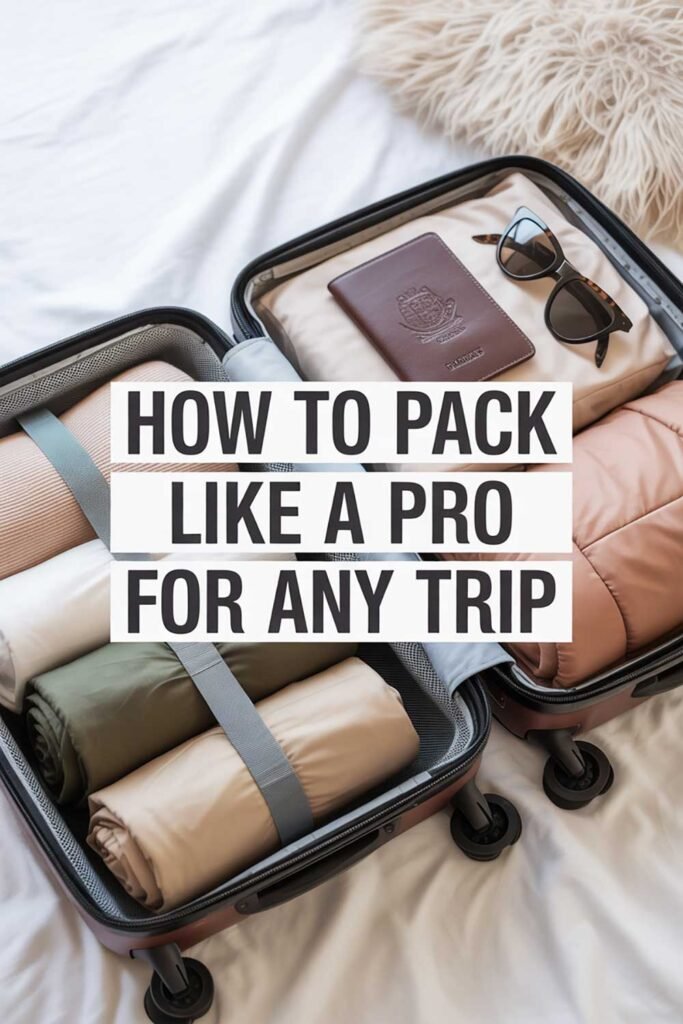
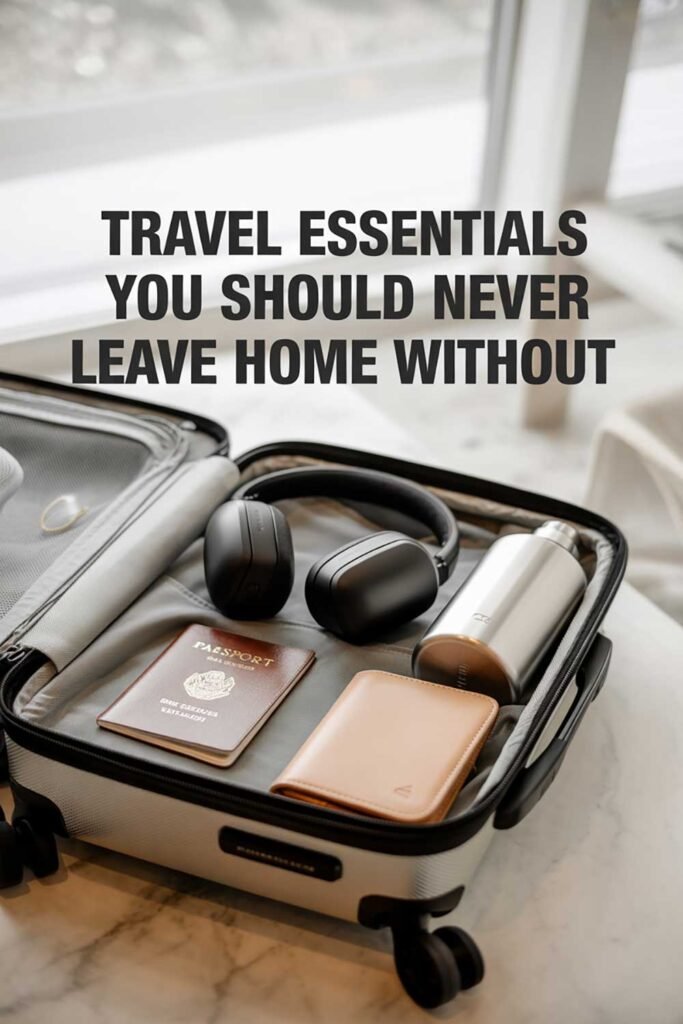
Our free packing checklist includes the full flight comfort section — the neck pillow, the compression socks, the refillable water bottle, the sleep mask and earplugs in the exterior pocket — so every item that makes the difference between arriving worn out and arriving ready is confirmed in the bag before the travel day begins.
Get the Free ChecklistThe travelers who land ready to actually enjoy the first day are almost always the ones who treated the flight like the first part of the trip worth taking care of themselves through.
A long travel day doesn’t have to leave you stiff, exhausted, and completely drained before the trip even begins — if you board with the right things already in place.
Before You Sit Down: Set Up the Comfort Before the Flight Starts
Choose your seat strategically at booking — it shapes the whole flight
The seat on a long travel day is the environment inhabited for the duration, and the difference between a seat that works for the specific traveler and one that does not is the difference between arriving rested and arriving with a specific, avoidable discomfort. Window seats provide the wall to lean against and full control over the window shade — critical for sleep on overnight flights. Aisle seats provide the freedom to stand and walk without climbing over anyone — critical for the movement habits that prevent stiffness. Exit rows and bulkhead seats provide legroom that makes a measurable difference across a long flight. The choice is personal and the availability is limited by when the selection is made. Select at booking. The best seats available in the fare class go to the passengers who chose first, and the seat the last-minute selector accepts is the one left after everyone else’s preferences were accommodated.
Set your watch and phone to the destination time zone the moment you sit down
Jet lag is partly physiological and partly behavioral, and the behavioral component begins with the first time-keeping decision on the travel day. Setting every device to destination time the moment you sit down starts the mental adjustment before the flight begins — determining when to sleep and when to stay awake on the flight based on the destination’s current clock rather than the departure city’s. If the destination’s time is currently nighttime, sleeping on the flight is the right strategy. If it is morning at the destination, staying awake and arriving into daylight on local time serves the adjustment better. The traveler who is still running on departure-city time when the wheels touch down is the traveler who needs the most recovery. The one who changed the clocks at seat assignment and slept or stayed awake accordingly has already started the adjustment before the destination is reached.
Dress in loose, comfortable, adjustable layers that work for the whole travel day
The outfit worn through an eight or twelve-hour travel day serves a different purpose than any outfit packed in the bag — it needs to be comfortable enough to sleep in, flexible enough to layer up as the cabin cools at altitude, and appropriate enough to move through airports and check into accommodations without requiring an immediate change on arrival. Loose-fitting trousers or soft jeans, a breathable top, and a light but genuinely warm layer that can come on and off without disrupting the row covers the full temperature range of a long travel day. Tight waistbands, restrictive cuts, and stiff fabrics that are fine for an hour become genuinely uncomfortable across twelve hours of seated transit. Dress for the travel day as its own event. The outfit packed in the bag handles the destination. The outfit worn on the flight handles the journey.
Put on compression socks before sitting down — not after the flight has started
Compression socks support venous blood return from the lower legs, and their benefit is maximized when worn from the beginning of the extended sitting period rather than after the swelling that the sitting produces has already begun. Put them on at home before leaving for the airport, or at the latest in the departure terminal before boarding. The flight of more than four hours — and certainly any transcontinental or transoceanic journey — creates the specific conditions compression socks address: prolonged immobility, reduced cabin pressure, and the corresponding pooling of blood in the lower legs that produces swelling, stiffness, and discomfort. They are not a medical intervention for most healthy travelers — they are the comfortable, lightweight garment that makes the seated hours of a long travel day measurably less uncomfortable from the first minute to the last. Wear them before the sitting begins.
Let Us Plan the Trip That Makes Every Long Travel Day Worth Taking Care of Yourself Through
The flight that lands you ready to enjoy the first day deserves a destination planned to use that readiness. Tell us where you want to go and we will build the trip that makes the travel day feel like the beginning of something worth arriving at — rested, ready, and genuinely glad you came.
Plan Our EscapeThe Personal Item: Pack It for the Flight, Not the Destination
Keep the neck pillow in your personal item where you can reach it without standing up
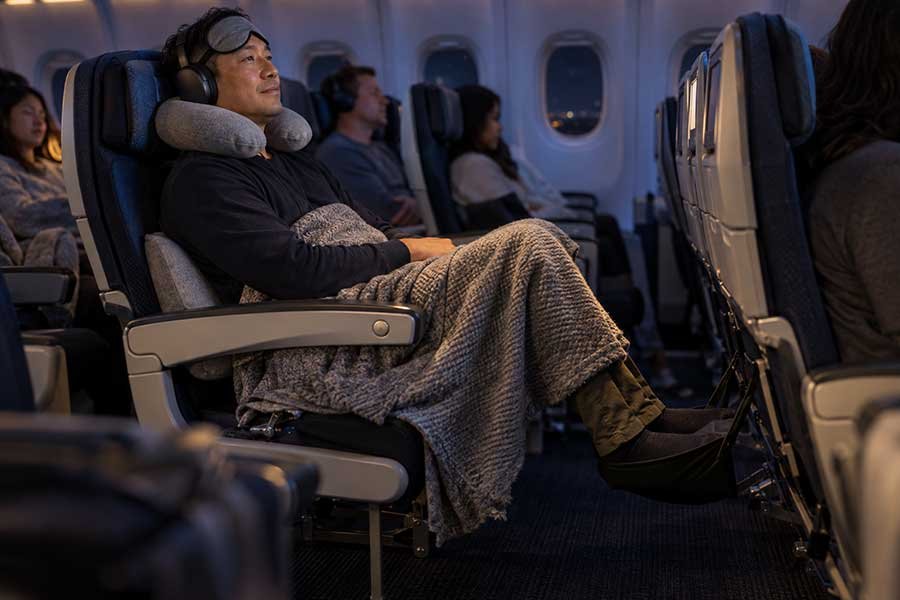
The neck pillow in the overhead carry-on is the neck pillow that stays in the overhead carry-on for the first part of the flight because the seatbelt sign is on and retrieving it requires the entire row to shift, or because the act of standing mid-flight feels like more effort than the stiff neck being accumulated. The neck pillow in the personal item under the seat in front of you is the one available before the door closes — out of the bag, around the neck, providing support before the neck has stiffened rather than after. This is the specific value of the personal item for long travel days: it stays under the seat the whole flight, reachable from the seated position, and the items inside it are available at any moment without standing, without opening the overhead bin, and without involving the row. Pack the neck pillow in the personal item. Have it ready before the seatbelt sign goes on the first time.
Keep the sleep mask and earplugs in the personal item’s exterior pocket
The sleep mask and earplugs in an exterior pocket of the personal item are available the moment the cabin dims — pulled out in one reach, in place before the first attempt at sleep begins. The same items buried in the main compartment require extracting the bag from under the seat, opening the main compartment, locating the items in whatever the main compartment’s organization currently is, and closing and replacing everything before the attempt. The exterior pocket version of this interaction is three seconds. The main compartment version is closer to thirty. On a long overnight flight where the sleep window is the most valuable period of the journey, the three-second reach produces sleep onset conditions from the first moment the cabin cooperates. The thirty-second search produces them after the first attempt has already been interrupted. Exterior pocket. Always.
Keep the light layer within reach in the personal item — not in the overhead bin
Aircraft cabin temperature varies across a long flight in ways that the departure hall temperature does not predict — comfortable during boarding, noticeably cooler at cruise altitude, and occasionally cold enough on overnight flights to make sleep genuinely difficult without a layer that was only accessible if the seatbelt sign had gone off and the overhead bin was within reach and the row’s cooperation was available. The light layer in the personal item — the soft hoodie, the thin packable jacket, the warm layer that compresses to the size of a folded shirt — is available from the seat at any point in the flight regardless of the seatbelt sign. Pull it out when the cabin cools. Put it away when the cabin warms. The layer that is in the right place is the one that keeps the body comfortable across the full temperature range the flight produces without any of the logistical overhead that the overhead-bin version requires.
Keep snacks and lip balm accessible from the seat without opening the full bag
The top of the personal item’s main compartment and the exterior pockets are the accessible layer — the items reachable with a single downward reach from the seated position without fully extracting the bag. Snacks belong here: hunger on a long flight is real, the airline meal service arrives on its schedule rather than the body’s, and the snack that is accessible in thirty seconds is eaten when the body needs it rather than when the service cart reaches the row. Lip balm belongs here for the same reason as the sleep mask and earplugs: it will be needed multiple times during a long flight and its use is most consistent when it is most accessible. The exterior pocket with the lip balm, the hand sanitizer, and the small comfort items is the pocket whose contents come out and go back in repeatedly throughout the flight without the full bag ever needing to leave its position under the seat.
Hydration and What to Avoid: What You Put In Shapes How You Land
Drink water consistently throughout the entire flight — not just when you feel thirsty
Cabin humidity at cruise altitude runs significantly lower than most people’s daily environment — dry enough that the body loses water through respiration and skin evaporation at a faster rate than normal, and dry enough that the thirst signal that usually indicates the need for replenishment is a lagging indicator that arrives after the dehydration has already been building for hours. The headache, the fatigue, the post-flight malaise, and the specific stiffness that many travelers attribute to the flight itself is frequently dehydration that began at altitude and was not addressed until the destination’s water supply was reached. Drink water before you feel thirsty, at regular intervals throughout the flight, beginning from the moment the flight starts and continuing through every waking period. The standard is simple: drink more than you feel you need. The consistent hydration is what the arrival feeling reflects.
Bring a refillable water bottle filled at the airside fountain before boarding
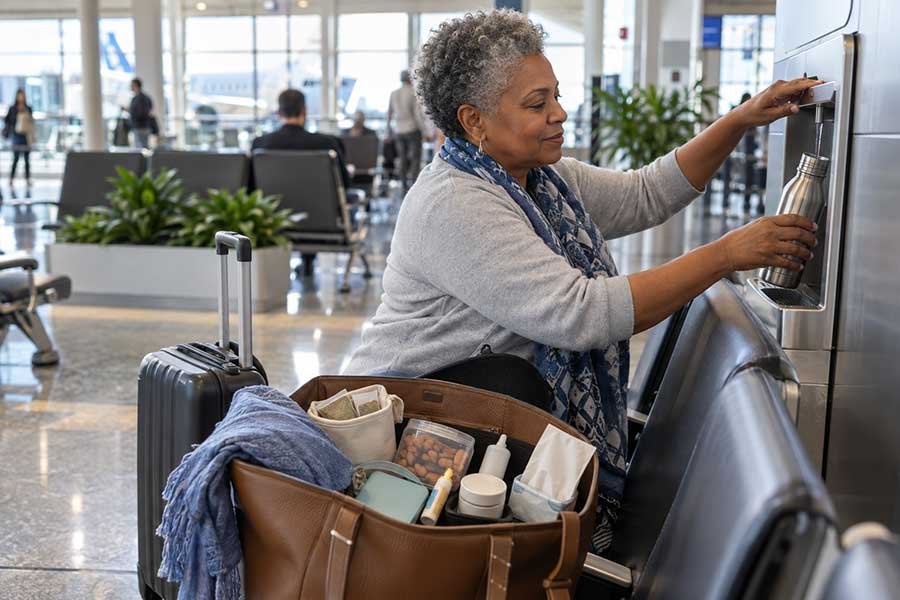
The refillable water bottle filled at the airside water fountain after security is the hydration strategy that puts the water supply in the traveler’s hands from the first moment of boarding rather than in the airline service cart’s schedule — which distributes water when the service reaches the row, which may not be for the first ninety minutes of the flight. A full bottle at boarding covers the pre-service window, supplements the service when it arrives, and provides water through the night on an overnight flight when the cabin crew is not actively serving. A half-liter bottle is the minimum for any flight over three hours. A liter is better for flights over eight. Fill it from the airside fountain after security on every long travel day. The water is free. The hydration it provides is the most consistent contributor to how the arrival feels.
Skip the alcohol entirely on overnight flights
Alcohol on an overnight long travel day produces effects that feel like relaxation during the flight and cost the traveler on arrival: it accelerates the dehydration that the low-humidity cabin is already producing, disrupts sleep architecture so that the hours of sleep after a drink are less restorative than the same hours of natural sleep, and contributes to the specific depleted quality of the arrival that these hacks exist to prevent. The glass of wine with dinner on the overnight flight feels like the reasonable choice. The arrival feeling after the overnight flight where it was skipped is the honest comparison. The destination will still have wine. The first morning will not be repeated. For the overnight long travel day specifically — the flight whose sleep quality determines how the first day at the destination goes — skipping alcohol is the single highest-return dietary choice the flight offers. Keep the water active instead. The first day will reflect the difference.
Go easy on salty food and heavy meal options at altitude
Salty food at altitude accelerates the dehydration the low-humidity cabin is already producing because sodium draws water from the body’s tissues in a context where water is already being lost faster than normal. Heavy meals create the specific in-seat discomfort of a full stomach in a reclined position with limited movement — contributing to the bloating, sluggishness, and general discomfort that long travel days accumulate. The lightest practical meal at altitude, with the lowest reasonable sodium content, is the meal whose effects on the arrival feeling are most favorable. Eat what the destination time zone’s mealtime requires. Eat lighter than the menu suggests is available. Keep the water active. These three dietary habits together address the single largest controllable factor in how a long travel day affects the body from the first flight to the final arrival.
Petra’s First Travel Day That Ended in the Trip Instead of Recovery From It
Petra had traveled enough to have a reliable description of how she felt after long travel days, and the description was consistent: like the trip owed her a day before it could begin. The first day at a new destination was reliably the worst one — the stiff back from the seat, the headache that was probably dehydration but felt like something more significant, the specific grey quality of being present in a place she had wanted to visit while not quite being there enough to enjoy it. She had attributed this to flying itself. A long flight was what it was. The cost was the first day. She had accepted the exchange without examining it.
The trip that changed her thinking was one where a seat upgrade meant a different position on the aircraft — window seat, more legroom, the ability to lean against the wall — and she slept more than she had ever slept on a flight. She arrived with a clarity that was new for a travel day. The destination looked exactly the way she had imagined it, which had not been her experience on previous first days. She was there for it in a way she had not expected. She credited the seat and filed the lesson under “upgrade when possible.”
What she discovered on the following trips, when upgrades were not available, was that many of the things the upgrade had produced were producible without one. The neck pillow that had been in the overhead bin was moved to the personal item and was out before the seatbelt sign went on the first time. The water bottle filled at the airside fountain meant she never went forty-five minutes without water while waiting for the service cart. The sleep mask in the exterior pocket went on when the cabin dimmed rather than after the first failed attempt at sleep without it. The compression socks went on in the terminal before boarding. The wine at dinner was skipped. The watch was changed to destination time at seat assignment. She walked twice on the next long flight and arrived with legs that did not ache.
The arrival feeling she had attributed to the seat upgrade was available without it — not in full, not every time, but significantly more than the depleted arrival her pre-upgrade travel days had produced. The twenty-one hacks in this article are the system she built across those trips. The first day at the destination is no longer the recovery day. It is the first day of the trip.
Movement and Circulation: Keep the Body Working Through the Flight
Get up and walk the aisle every couple of hours without exception
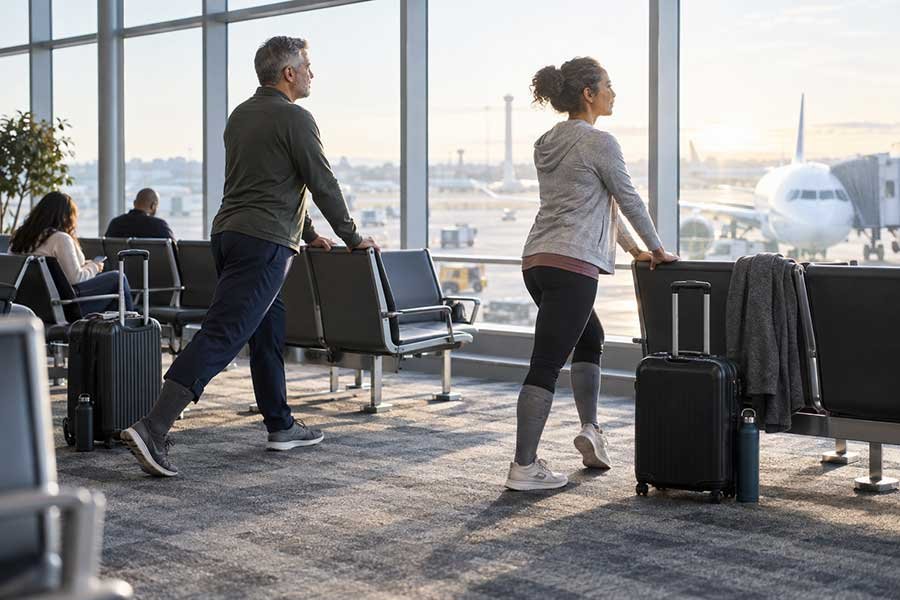
The aisle walk on a long travel day is not optional comfort — it is the intervention that interrupts the prolonged immobility whose effects accumulate silently with every seated hour: reduced circulation in the lower legs, stiffening in the hips and lower back, and the general physical flatness that produces the depleted arrival feeling. Stand up, walk to the back of the aircraft and back to the seat, two or three times on any flight over six hours. The total time is under five minutes per walk. The inconvenience to the aisle-seat neighbor is momentary and universally understood by anyone who has taken a long travel day. The physical benefit of three short walks across a twelve-hour flight is cumulative and measurable in how the body feels at the gate — which is where the first day of the trip begins. Walk every two hours. The film will be there when you return to the seat.
Do in-seat stretches and ankle exercises between aisle walks
The aisle walk addresses the full-body circulation that standing and movement produces. The in-seat exercise addresses the gap between walks with smaller-scale circulation support that requires no standing and no disruption to anyone in the row. Ankle circles — rotating each foot in both directions for thirty seconds — pump the calf muscles that support venous blood return from the lower legs. Seated knee lifts, gentle torso rotations, and careful neck rolls address the stiffening that prolonged fixed posture creates in the joints and muscles the seat restricts most. None of these requires special knowledge or equipment — only the decision to do them at regular intervals throughout the seated hours rather than waiting for the physical discomfort to become pronounced enough to prompt action. Move in the seat between walks. Walk the aisle between in-seat sessions. The travel day managed this way arrives significantly better than the one that waited for discomfort to motivate movement.
Set a movement reminder before takeoff so the walk actually happens
The movement reminder set before the aircraft door closes is the commitment device that makes the aisle walk actually happen on a long travel day rather than being indefinitely deferred by a good film, a sleep that ran longer than planned, or the specific inertia of a reclined seat in a dimmed cabin. Set a two-hour repeating timer on the phone before takeoff, configured to vibrate rather than sound. The vibration fires regardless of what is on the screen and regardless of how comfortable the current position is. The walk happens because the timer made it happen rather than because the body asked for it at a point where asking came with discomfort already attached. This is the cheapest possible intervention in the long travel day experience — ten seconds to set before the door closes — and one of the most consistent contributors to how the body feels at the destination gate.
Avoid crossing your legs for extended periods during the flight
Crossing the legs while seated compresses the blood vessels behind the knee and in the upper thigh, restricting the circulation that the compression socks and the aisle walks are specifically supporting. On a short flight the effect is minor. On a twelve-hour overnight flight where the legs may spend hours in a crossed position during sleep, the circulatory restriction is cumulative and contributes to the swelling, stiffness, and general discomfort that many long travel days produce. Keep both feet flat on the floor where possible during waking hours. During the sleep period, aim for an uncrossed position — the window seat with the wall to lean against makes this easier to maintain than the middle seat. Support the circulatory system throughout the flight rather than working against it in between the habits designed to support it. The crossed legs are the most easily corrected single contributor to in-flight stiffness.
Wear compression socks throughout the whole flight — not just the first few hours
Compression socks worn for the boarding and removed at the seat are compression socks whose benefit applies to the boarding and the first hours of the flight. Compression socks worn throughout the entire travel day — from the departure terminal through every flight and transit to the final destination — provide the circulatory support consistently across the full seated duration that produces the most benefit. The benefit of compression is cumulative across time: the ten-hour leg with compression socks worn the whole time produces a measurably different arrival than the same leg with socks worn for three hours. Keep them on. They are designed to be comfortable for extended wear. The discomfort they prevent is the stiffness and swelling that accumulates across every hour of seated transit that the socks were there to address. They work best when they are not removed before the work is finished.
Our Curated Collection of Trusted Tools and Official Sources
Everything we use to plan, prepare, and travel with confidence — from official government travel tools to practical planning aids. We have pulled together the resources we trust most so every trip you take is better informed, better prepared, and a lot less stressful from start to finish.
DND ResourcesSleep, Rest, and Arrival: Land Ready to Actually Be There
Sleep based on the destination time zone, not the one you departed from
The most effective jet lag mitigation on a long travel day is the one that costs nothing and requires only one decision: sleep when it is nighttime at the destination and stay awake when it is daytime there, regardless of what the departure city’s clock says. This is the watch change made at seat assignment in tip two made actionable — the destination clock that is now on the wrist and the phone determines the sleep and wake schedule across the flight. The traveler who arrives having slept when the destination’s clock said to sleep arrives partly adjusted before the first day begins. The one who slept when the departure city’s circadian rhythm said to sleep arrives with the full time zone gap still to manage. The decision is simple. The discipline is the hardest part. The watch change at boarding is the tool that makes the discipline practical rather than merely aspirational.
Use the sleep mask from the moment the cabin dims — before the first attempt at sleep
The sleep mask used proactively — put on when the cabin dims for the overnight period, before the attempt to sleep begins — is the mask that produces the dark environment sleep onset requires from the first moment of trying. The cabin that appears mostly dark still contains the sources that interrupt sleep onset for light-sensitive travelers: the screen glow from the entertainment system on standby, the corridor lighting between cabin sections, the light that enters at window gaps. The sleep mask eliminates all of these in one motion. Put it on when the cabin dims. Give sleep the conditions it needs from the start rather than reaching for the mask after fifteen minutes of attempting sleep through ambient light that the mask would have addressed immediately. The exterior pocket placement from tip six means the mask is already in hand before the cabin dims. It is the preparation that removes the barrier before the barrier exists.
Moisturize and apply lip balm proactively — cabin air dries everything, consistently
Cabin air at cruise altitude is drier than most people’s daily environment — dry enough that the effects on skin and lips are noticeable within a couple of hours and genuinely uncomfortable on longer flights if not addressed. Apply facial moisturizer before the sleep period rather than only at the morning routine time. Use lip balm at regular intervals throughout the flight rather than once when the dryness has already become uncomfortable. The lips that crack by hour eight on the overnight flight that was not addressed began drying by hour three. The same lips on the flight where lip balm was applied at hours two, five, and seven arrive at the destination in the condition the destination’s first day photographs reflect. Moisturize. Use lip balm. Keep both in the personal item’s exterior pocket alongside the other comfort essentials. The flight that addresses these things proactively is the flight whose effects are least visible on arrival.
Treat the flight like the first part of the trip worth taking care of yourself through
The framing that changes every long travel day is the one this article began with: the flight is not the obstacle before the trip. It is the first part of the trip, and the care taken during it determines the condition in which every subsequent part is experienced. The compression socks, the water, the walks, the skipped alcohol, the sleep mask placed before it is needed, the neck pillow out before the neck has stiffened, the watch set to destination time at seat assignment — none of these are significant sacrifices. They are small acts of care taken during a long transit that produce a landing with energy intact and a first morning at the destination that looks like the place rather than the inside of the accommodation with the curtains drawn. Treat the flight like the first part of the trip worth caring for. Arrive ready. The destination you traveled to see will still be exactly what you imagined — if you are there for it from the first day.
Book the Long Travel Day Destination Worth Landing Ready For
The flight that lands you ready to enjoy the first day deserves somewhere genuinely worth that readiness. Our travel agents plan the long-haul destinations that justify every comfort habit in this list — the right place, the right pace, and the right arrival day built into the plan so the first morning is the trip, not the recovery from getting there.
Book A TripThe compression socks went on in the terminal. The watch changed to destination time before the door closed. The neck pillow was out before the seatbelt sign lit. The water bottle was full. The sleep mask went on when the cabin dimmed. The walks happened because the timer made them happen. The alcohol was not ordered. The landing was ready. That is twenty-one hacks. That is the first day of the trip instead of the recovery from getting there.
Picture Yourself Walking Off the Plane Ready to Actually Be There
The compression socks are on before boarding. The watch reads destination time — changed at seat assignment before the door closed. The neck pillow is out before the first hour passes. The refillable water bottle is full, filled at the airside fountain, and has been actively used since the moment of boarding. The sleep mask and earplugs are in the exterior pocket and went on the moment the cabin dimmed. The alcohol at dinner was passed. The walks happened at hours three and six and nine because the timer made them happen when the film made forgetting easy. The lip balm was used twice without waiting for the dryness to arrive. The legs were uncrossed. The in-seat ankle circles kept the circulation moving between walks. At the gate the body feels like a body that was taken care of across the journey rather than one that survived it. The first day at the destination is the first day of the trip. That is twenty-one hacks. That is the traveler who lands ready to actually enjoy it.
One More Thing Before the Long Travel Day Begins
Print our free Travel Packing Checklist and confirm the compression socks are packed, the neck pillow is in the personal item, the water bottle is on the list, and every item that makes the difference between arriving worn out and arriving ready is confirmed before the travel day begins. The same checklist we use before every long flight we take.
Get the Free ChecklistExplore Our Top Picks for a Better Trip
After years of exploring the globe together, these are the exact tools, platforms, and services we rely on for every single trip — personally tested, traveler approved, all in one place. We don’t recommend anything we wouldn’t use ourselves, and this is the collection of booking platforms and travel tools that have made our adventures smoother, smarter, and more memorable.
See Our Top PicksLove Helping Travelers Arrive at Their Destinations Ready to Enjoy Them?
Helping a traveler choose the right seat, plan the right flight, and arrive at the right destination in the best possible condition is the kind of care that makes a home-based travel agent genuinely worth coming back to. If turning your love of travel into a business sounds like the right next journey, see how the TravelPreneur system works.
Become An AgentLong Travel Day Printables at Premier Print Works
Visit Premier Print Works for flight comfort checklists, packing guides, travel planners, and travel journals that make every long travel day more manageable and every arrival more ready — from the compression socks packed the night before to the first morning at the destination that starts the trip instead of recovering from getting there.
Visit Premier Print WorksDisclaimer
The information shared in this article is provided by Don and Diana’s Travels for general informational, educational, and inspirational purposes only. It reflects our personal experiences, opinions, and the experiences of travelers we have worked with. It is not professional medical, health, or travel advice.
Medical and Health Information
References to compression socks, circulation, hydration, jet lag, in-seat exercises, and related health topics in this article are general educational information only. Individual health conditions vary significantly. If you have any circulatory condition, history of blood clots, or other health concern relevant to long-haul air travel, please consult a qualified healthcare provider before traveling. We are not medical professionals and this article does not constitute medical advice.
Airline and Flight Information
Seat availability, meal service, cabin conditions, and all other in-flight experiences vary by carrier, aircraft, route, and class of service. We make no guarantees about specific airline experiences described in this article.
Affiliate and Partner Links
This article may contain affiliate and partner links that pay us a commission at no extra cost to you. Our recommendations are based on real use and genuine belief in the products and services we share.
Composite Stories
Stories on this site combine real experiences from Don, Diana, clients, and travelers we have worked with. Details may be adjusted for privacy and narrative clarity.
No Guarantees
We do not guarantee any specific flight or travel experience from using the information in this article. Travel involves inherent uncertainty and personal responsibility.
Copyright and Use
All content is the copyrighted property of Don and Diana’s Travels. You may not copy or republish our content without prior written permission. You are welcome to share a direct link with proper credit.
By reading this article, you acknowledge that you have read and agree to this disclaimer.