The families who have the best beach days are the ones who came prepared and left the improvising at home. A perfect family beach day is ten minutes of preparation the night before and a whole day of saying yes to everything after that. This article builds those ten minutes so the beach day takes care of itself.

Best For
Families Who Love the Beach
Vibe
Relaxed, Prepared, All Day
Read Time
11 Minutes
Walk Away With
The Complete Family Beach Day System
Free Download

Grab Our Travel Packing Checklist

Our free packing checklist includes a family beach day section organized by the night-before preparation system this article describes — frozen water bottles, individual snack pouches, mesh bag, sunscreen supply — so the beach morning is the car loaded and the doors open, not the last-minute assembly.

Get the Free Checklist

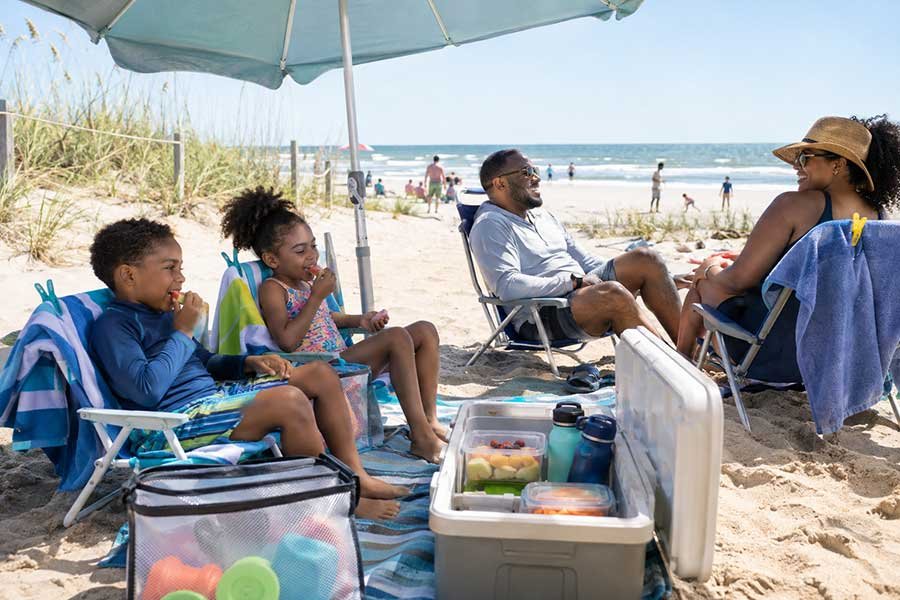
Freeze Water Bottles the Night Before for All-Day Cold Drinks

The family beach day’s hydration challenge is a physics problem as much as a preparation problem. Any drink brought to the beach in a warm container or cooled only by ice is warm within two to three hours of the beach day’s heat, even in a well-insulated cooler bag, because the ice melts and the ambient temperature does the rest. A frozen water bottle — filled three-quarters full the night before to allow for expansion and placed in the freezer overnight — is a block of ice in a bottle that melts slowly across the beach day from the outside in, producing cold water from morning through early afternoon rather than the lukewarm water that the melted ice and the beach’s heat combine to produce by 11 a.m.

Freeze one large water bottle per family member plus one additional for the cooler bag to keep the food and remaining drinks cold. Each frozen bottle has a dual purpose: it is the family member’s personal cold drink source throughout the morning’s first portion as it begins to melt, and it is a secondary cooling element in the cooler bag alongside or in place of ice packs. The frozen bottle in the cooler bag melts slowly and keeps the cooler’s contents cold without the waterlogged-snack problem that loose ice in a cooler produces as it melts into the food. As the morning progresses and the frozen bottle melts to cold water, it becomes the mid-morning hydration. By early afternoon when it is fully liquid and at ambient temperature, the second frozen bottle that was kept cold by the cooler has come forward to replace it.

Freeze the bottles in the refrigerator’s freezer the night before — the ten-minute task that requires only the filling and the placing — and put them directly into the cooler bag in the morning. The cooler bag loaded with the frozen bottles, the individual snack pouches, and any additional food produces a beach day cold supply that lasts until mid-afternoon without any loose ice, any ice pack weight, and any separate ice cooler management. Three-quarters full prevents the bottle from cracking as the water expands during freezing. Lid off during freezing or leave enough headspace for the expansion. Simple, cheap, and the specific beach preparation that produces cold drinks at 1 p.m. when the beach is at its hottest and the children are asking for something cold.

A perfect family beach day is ten minutes of preparation the night before and a whole day of saying yes to everything after that.

The families who have the best beach days are the ones who came prepared and left the improvising at home.

Insider Note

Freeze half the bottles with plain water and half with the children’s preferred diluted juice or a mild sports drink for the family members who prefer a flavored cold drink. The plain water frozen bottle serves the hydration need throughout the day. The flavored frozen bottle serves the mid-afternoon treat motivation when the children need the specific reward of something they genuinely enjoy rather than the hydration they genuinely need. The two-type frozen bottle setup produces both the health hydration and the beach treat from the same freezer-to-cooler system without any additional preparation time.

We Plan Beach Destinations

Let Us Find Your Family the Beach Worth These Preparations

The perfect family beach day is even better when the beach itself is perfect for the family’s ages, interests, and comfort preferences. Tell us what the family is looking for — calm water, great sand, nearby amenities, or seclusion — and we will find the beach destination that makes the preparation worth every frozen bottle.

Plan Our Escape

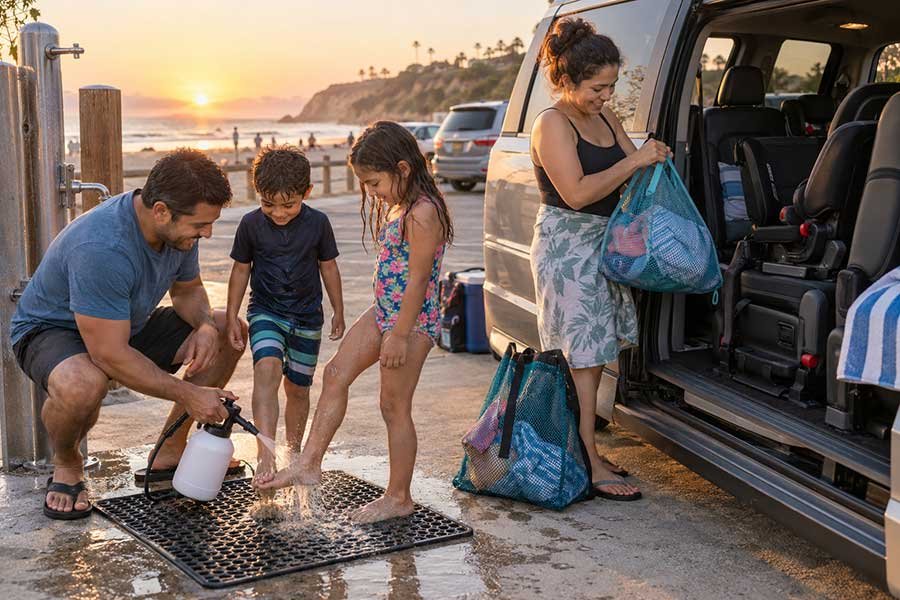
Use a Mesh Bag So Sand Falls Straight Through

Sand is the beach’s most persistent secondary attendant. It enters every bag, every pocket, every fold, and every crevice of every item brought to the beach with the specific efficiency of a material designed by nature for maximum infiltration of any container that is not entirely sealed. The standard tote bag, canvas bag, or backpack brought to the beach accumulates sand in its bottom seams over the course of the beach day at a rate that produces the specific returning-from-beach experience of the bag that deposits a small portion of the beach’s sand inventory into the home, the car, the hotel room, or the rental property at every destination it reaches after leaving the sand.

The mesh bag eliminates this problem by design. A mesh bag — a bag constructed from open-weave net material through which sand-sized particles fall freely — carries the beach day’s items at the beach and releases the accumulated sand on the walk back rather than retaining it through every subsequent location. The beach toys, the wet swim goggles, the sandy towel, the water shoe with the inevitable sand accumulation, and any other item removed from the beach while covered in sand all deposit their sand cargo through the mesh during the walk from the beach to the car. The car receives the bag without most of its sand. The hotel room receives the bag with negligible sand transfer. The beach remains largely at the beach where it belongs.

The mesh bag functions as the beach collection bag rather than the primary personal bag. The items that need sand protection — the phone, the wallet, the dry snacks, the sunscreen, and the personal valuables — travel in the waterproof dry bag or the individual personal bags where the mesh’s open structure would not protect them. The mesh bag collects everything that survived the beach in a sandy state: the toys, the shells, the towels, the wet gear. At the accommodation, the mesh bag hangs in the shower or on the balcony to air dry with minimal sand transfer. The separation of sand-acceptable items into the mesh bag and sand-sensitive items into the protected bag is the specific organization decision that converts the returning-from-beach experience from sandy to manageable.

Insider Note

Rinse wet and sandy items in the beach’s accessible rinse station, at the beach’s water tap, or in a shallow container of fresh water before placing them in any bag — mesh or otherwise — for the return. The mesh bag releases sand through the mesh while the items are carried but does not remove sand that is embedded in the fabric of the towel, the lining of the swim shoe, or the grooves of the beach toy. A brief rinse before the return reduces the sand transfer from embedded items by removing the surface sand layer before the bag becomes the transport mechanism. Most public beaches with parking areas have a rinse station or foot wash at the access point. Use it before loading anything into the car. The thirty seconds of rinsing produces the car interior without the specific damp sand distribution that the skipped rinse deposits across the car’s floor mats, seat bases, and cup holders.

Arrive Early to Claim the Best Spot

The family beach day’s most consequential decision — the one that determines whether the day is relaxed and enjoyable or spent managing the consequences of a poor beach position — is made at arrival: where the family sets up. The best family beach spots share a specific set of characteristics that are consistently taken by the families who arrive early: proximity to the water’s edge so the children can move between the family’s base and the waves without any distance management by the parents, access to natural or structure-provided shade for the midday hours when direct sun exposure is highest, proximity to the beach’s restroom facilities so the youngest children’s bathroom urgency is manageable, and the specific distance from adjacent families that reduces the back-of-chair setup’s noise and space pressure. These characteristics describe a specific zone of any beach that represents a small portion of the beach’s total available space. The families who arrive at 8:30 or 9 a.m. access this zone. The families who arrive at 11 a.m. find it occupied and select from what remains.

The early arrival’s benefits extend beyond the spot itself. The early morning beach — before 10 a.m. at most popular family beach destinations — produces lower UV intensity than the midday hours, which reduces the cumulative sun exposure the family receives during the setup and the first activity hours. The early morning beach is less crowded, which means the children’s water play area has more space, the waves are observed more easily from the family’s position, and the beach’s general noise level is at its daily minimum. The parking, where parking is a constraint, is available and accessible rather than the midday’s full lot with the three-block walk in both directions with the full family’s equipment.

Arriving early at the beach requires the night-before preparation that the other hacks in this article produce. The family that packs the beach bag the night before, freezes the water bottles the night before, and assembles the individual snack pouches the night before is the family whose beach morning is breakfast and sunscreen and the car — a forty-five-minute departure process rather than the ninety-minute departure that the morning-of assembly produces. The early arrival and the night-before preparation are the same system. The ten minutes the night before produces the 9 a.m. arrival. The 9 a.m. arrival produces the best spot. The best spot produces the all-day beach experience. The preparation is the beach day.

Insider Note

Research the specific beach’s peak arrival time and parking characteristics before the first visit. Popular family beaches at vacation destinations fill their convenient parking to capacity between 10 and 11 a.m. on good weather days, with the premium spots at the family zone’s natural shade and water-proximity intersection gone an hour before that. A quick search for the specific beach’s review comments about arrival times and crowd patterns reveals the specific arrival window that secures the spot type the family prefers. Some beaches have different dynamics on weekday versus weekend mornings. Some have specific areas with picnic facilities and shade structures that are worth knowing about before arrival to target them specifically. Five minutes of research produces the arrival plan that the unprepared family never has.

Helpful for Your Journey

Find Booking Ideas and Travel Essentials on Our Favorites Page

Our favorites page has helpful booking ideas and travel essentials that we have found genuinely useful for family beach trips. Whether you are planning a beach vacation or looking for resources that make the beach day itself more comfortable and better organized, it is worth a look.

DND Favorites

Pack Individual Snack Pouches for Each Child

The shared family snack bag at the beach is the snack system that runs empty by noon. The beach environment produces the specific snack consumption pattern of children who are simultaneously active, excited, and in the fresh air — which means they are hungry at intervals that are closer together than the shared snack bag’s quantity was assembled to cover. When two or three children are drawing from the same bag of food and each child’s appetite is running at the beach’s elevated rate, the bag that seemed like plenty at the car boot is empty before the noon hour when the children are at their maximum energy expenditure and the nearest food vendor is the beach snack shack with the specific snack shack pricing that the shared bag was specifically intended to avoid reaching.

The individual snack pouch — a small zip bag, a small reusable pouch, or a cloth bag assembled for each child specifically — contains the specific snacks that child prefers in quantities calibrated for the full beach day: a mid-morning snack around 10 a.m., a pre-lunch bridge snack around 11:30 a.m., and an early afternoon snack around 2 p.m. Each pouch is the child’s personal snack supply for the day, managed by the child at the appropriate ages and managed by the parent as a distributed supply at younger ages. The individual pouch system eliminates the shared bag’s depletion problem by distributing the daily snack supply across individual portions, and it eliminates the sibling negotiation that the shared bag’s uneven depletion produces — the snack situation where one child ate the preferred item first and the other child arrives at the shared bag to find only the items they like less.

The individual snack pouch content: age-appropriate, non-melting, not too salty (which increases thirst at the beach), and sufficiently varied that the child reaches into the pouch with genuine interest rather than the specific resigned acceptance of the snack that was all that remained. Mixed dried fruit, a small number of crackers, a cereal bar, a squeeze apple sauce pouch, and the single treat item that is the day’s reward — a small chocolate if the beach temperature allows, a fruit gummy, a specific small sweet that makes the early afternoon the moment the pouch produces its best moment. The treat is the snack bag’s emotional anchor. Everything else is the bridge to it.

Insider Note

Pack the individual snack pouches in the cooler bag rather than the main beach bag. The cold environment keeps the perishable items — the fruit, the dairy-containing items, the items whose quality is better cold — in edible condition throughout the beach day. At room temperature and in the beach’s heat, many snack items degrade from pleasant to unappetizing within a couple of hours. The cooler bag with the frozen water bottles provides the cold environment that the snack pouches benefit from at no additional cost to the cooler system already being used for the drinks. The snack is produced from the cooler when needed. The cooler keeps it cold until it is needed. The child’s individual pouch means the cooler is opened for that specific child’s specific pouch rather than the full shared bag’s excavation at every snack moment.

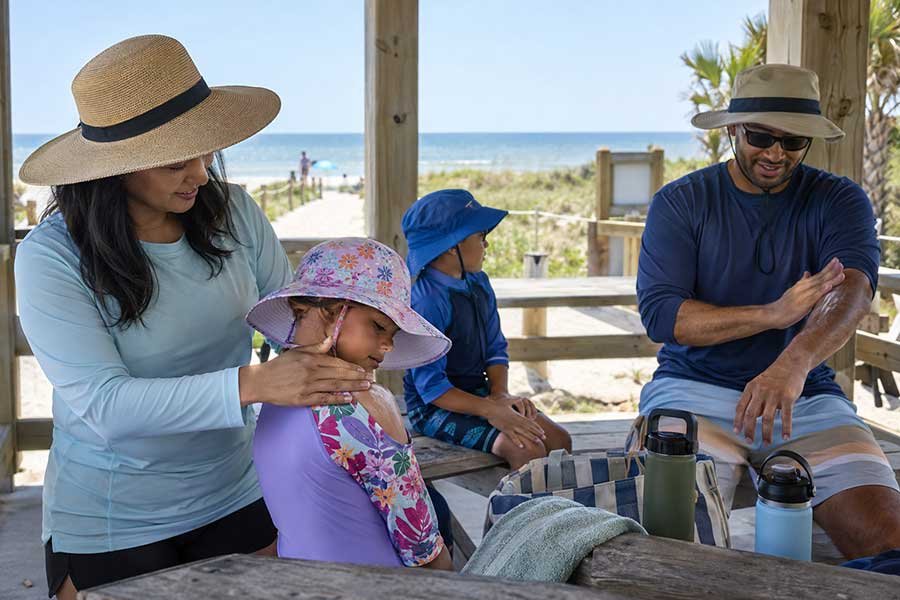
Always Bring More Sunscreen Than You Think You Need

The family beach day’s sunscreen requirement is consistently underestimated because the estimation is made before the beach day rather than during it, and the before-beach imagination of sunscreen application is an orderly once-per-day coverage that the actual beach day replaces with the reality of active children who need reapplication every two hours, swim-off replacement after every pool or ocean entry, and towel-wipe replacement after every toweling session. The single bottle of sunscreen that seemed generous at the car boot empties during the reapplication rounds rather than the initial application, and the family at the beach at 1 p.m. without sunscreen remaining is the family making the specific calculation of whether the half-hour drive to the nearest pharmacy is worth the afternoon beach time it costs.

Use reef-safe mineral sunscreen specifically at any beach with reef access, reef-adjacent water, or destination regulations on chemical sunscreen use. Many popular family beach destinations have environmental guidance or regulations requiring reef-safe mineral sunscreen for ocean swimming. Pack the reef-safe formulation from home rather than discovering the requirement at the beach or the resort’s beach entry sign. Reef-safe mineral sunscreen — with zinc oxide or titanium dioxide as the active UV filters — is available at normal retail pricing from pharmacy and outdoor retailer chains before the trip and at the specific premium of the only available alternative at the beach access point where the requirement is posted.

The practical sunscreen quantity for a family of four at a full beach day: plan for four applications per person — initial application before leaving accommodation, reapplication at two hours, reapplication after the major swim session, and the early afternoon reapplication. At the FDA’s recommended one ounce per full-body adult application, a family of four requires approximately four ounces of sunscreen per complete application round and sixteen ounces total for the four-round day. That is one large family-size bottle at minimum for adequate coverage across the full beach day. Pack two. The second bottle is the insurance against the first running out at noon, the insurance against the reapplication rounds being as generous as they should be, and the specific investment that prevents the afternoon beach departure that the empty sunscreen bottle produces.

Insider Note

Apply sunscreen to each family member before leaving the accommodation rather than at the beach. The before-accommodation application allows the sunscreen to absorb into the skin for the fifteen to twenty minutes that most mineral sunscreens require to reach full effectiveness before UV exposure begins — a window the beach’s walk-to-chair-to-water sequence does not consistently provide when applied at the beach chair. Apply before departure. Reapply at the first two-hour mark at the beach. The family that applies before leaving is the family whose first beach entry has full sunscreen coverage from the first moment in the water rather than the application that was being absorbed while the children were already in the ocean.

The Complete Family Beach Day System

The family beach day system organizes the night-before preparation into fifteen minutes that produces the all-day beach experience the morning-of assembly cannot reliably achieve.

The night before: fill the water bottles three-quarters full and place them in the freezer. Assemble each child’s individual snack pouch with the day’s snacks and the treat item. Pack the beach bag with every non-perishable item needed for the day: the towels, the sunscreen supply, the mesh bag, the sand toys, the goggles, the rash guards if not already packed from the resort preparation. Charge the portable Bluetooth speaker and the waterproof phone case. Confirm the sunscreen quantity is adequate for the day’s application rounds. Load the car with the beach chairs, the umbrella, and the cooler bag before the morning — the items that are always forgotten in the morning-of scramble because they are in the garage rather than in the sightline of the morning’s departure preparation.

The morning of: sunscreen applied to every family member before leaving the accommodation. Frozen bottles retrieved from the freezer and placed in the cooler bag alongside the individual snack pouches. The beach bag confirmed complete. Departure. Early.

At the beach: the best spot claimed. The umbrella positioned. The chairs set up. The cooler bag in the shade. The individual snack pouches distributed or accessible in the cooler. The sunscreen reapplication scheduled for two hours from arrival. The frozen water bottles already producing cold water for the children who want a drink before the first ocean entry. The family is at the beach and the beach day has started. Nothing needs to be improvised. Nothing was forgotten. Everything is where it was placed the night before. The day says yes to everything until the sun is low.

Insider Note

Set a phone timer for the sunscreen reapplication interval at beach arrival. The two-hour timer that fires at the beach prevents the specific beach day pattern of the reapplication that was going to happen but was delayed by the water play, the sand castle construction, and the general beach time absorption that makes every beach hour feel shorter than it was. The timer fires. The family comes out of the water or pauses the sand castle. The sunscreen is applied. The timer is reset. The beach day continues with full sun protection rather than the accumulated exposure of the forgotten reapplication. Set the timer. It is the single most impactful beach day health preparation available from a phone’s alarm application.

The Beach Day That Ended at 2 P.M. and the One That Lasted Until Sunset

Priya and Marcus had looked forward to the beach day for two weeks. The beach vacation was planned specifically for the children, who had been talking about the beach since the booking confirmation had arrived. The packing for the beach day had happened the morning of, in the general vacation packing context of a family with two children and the specific beach day items identified when the beach bag was pulled from the bottom of the holiday packing stack at 9:30 a.m.

They arrived at the beach at 11 a.m. The spots closest to the water with any natural shade were taken. They set up fifty meters from the water’s edge in full sun because the family’s preferred zone was fully occupied by the families who had arrived two hours earlier. The shared drink bag contained four bottles of water and two juice boxes that were room temperature because there had not been time to freeze them. The shared snack bag contained crackers, trail mix, and two protein bars for a family of four. By 12:30 p.m. the drinks were warm. The children had depleted the shared snack bag. The sunscreen had been applied at arrival and not reapplied because the timer that was going to be set was not set. The younger child had a shoulder that was pink from the midday exposure. The older child was asking when lunch would be available. Marcus was asking whether they should pack up and find a restaurant. Priya was looking at the parking lot. They were at the beach from 11 a.m. to 2 p.m. The children spoke about the beach for a day and then spoke about the restaurant they went to instead.

The second beach trip, three months later at a different destination, was prepared the night before. Priya filled four water bottles three-quarters full and put them in the freezer at 9 p.m. Marcus assembled individual snack pouches for each child — specific snacks for each child plus a treat — and placed them in the small cooler bag. The beach bag was packed entirely before 10 p.m.: towels, sunscreen in two bottles, mesh bag, sand toys, rash guards, goggles, the portable speaker. The beach chairs and umbrella went in the car the night before. The morning was sunscreen application and frozen bottles into the cooler bag and the car reversing out of the drive at 8:45 a.m.

They arrived at the beach at 9:15 a.m. The spot with the natural shade thirty meters from the water’s edge was unoccupied. They took it. The umbrella went up. The chairs were positioned. The frozen water bottles were producing cold water before the first ocean entry. The children were in the water at 9:30. The sunscreen timer fired at 11:15 and the family came out of the water for reapplication. The individual snack pouches came out at 10:30 and again at 12:30. The treat emerged at 1:30 p.m. when the youngest needed the beach day’s emotional highlight. At 2 p.m. the older child was still in the water. At 4 p.m. Marcus was still watching from the chair with a cold drink that had been frozen since 9 p.m. the previous evening. The family left the beach at 6:15 p.m. when the sun was lower and the beach was quieting. The children spoke about this beach day for three months. This article is the fifteen minutes the night before that produced the sunset departure.

Six More Family Beach Hacks That Make the Whole Day Better

Beyond the five core family beach day principles, these six additional approaches address the specific beach day scenarios the core system does not fully cover.

Bring a pop-up beach tent or a large beach umbrella specifically sized for the family’s setup rather than a personal umbrella that provides shade for one person. A beach tent that covers the family’s entire setup — the chairs, the cooler, the youngest child’s nap space — produces the midday shaded environment that the family needs to extend the beach day through the 11 a.m. to 2 p.m. peak UV period rather than relocating to avoid it. A pop-up beach tent weighs under two kilograms, sets up in three minutes, and is one of the highest-return beach investments for any family with young children who need a shaded rest option during the beach day’s longest and hottest period.

Pack a small dry bag or waterproof pouch for the adult’s phone, wallet, car keys, and any other item that should not be exposed to sand and water during the beach day. The beach chair setup with the valuable items in the main beach bag while everyone is in the water is the specific beach vulnerability that the dry bag or pouch eliminates by keeping the items visible, accessible, and protected in a waterproof container that can go in the water with the adults on the shallow entries without concern. A small roll-top dry bag in a bright color is visible on the beach chair from the water’s edge.

Bring a second smaller cooler bag specifically for the children’s snacks and drinks, separate from the adult cooler. The second cooler for children allows the children’s items to be accessed independently of the adult cooler whose organization the children’s frequent access would disturb. The children’s cooler contains the individual snack pouches and the frozen water bottles designated for the children. The adult cooler contains the adults’ drinks and food in the organization the adult established. Access to one cooler does not require opening or reorganizing the other. Both stay better organized and colder for longer because neither is opened as frequently as a single combined cooler would be.

Pack a lightweight changing poncho or a large towel sarong for modular privacy at the beach when the children need to change out of wet swimsuits for the return journey. The changing poncho — a hooded towel-poncho that can be slipped over the child while they step out of the wet swimsuit and into dry clothes — provides modular changing privacy anywhere on the beach without requiring a beach facility changing room visit. The return trip in dry clothes rather than wet swimsuits is a more comfortable child at home and a car seat without the specific damp swimsuit saturation that the wet-swimsuit car journey produces over any drive longer than twenty minutes.

Bring sand-free mats rather than traditional beach towels for the base layer of the family’s beach setup. Sand-free beach mats are woven from materials that allow sand to fall through rather than accumulate on the surface, producing the specific sitting and lying surface at the beach that remains genuinely sand-free throughout the beach day rather than the traditional towel that is covered in sand fifteen minutes after arrival and deposits that sand on every family member who uses it. The sand-free mat produces the dry and genuinely sand-minimal surface that the traditional towel promises and does not deliver in any beach environment with active children.

Set up the family’s beach area with a specific designated spot for every category of item before the beach day begins: shoes and flip-flops at one corner, towels on the chairs, dry bags and valuables under the umbrella, cooler in the shade, sand toys at the water-facing end. The designated spot system means every item can be returned to its specific location after each use without any search, and the end-of-day pack-down is a circuit of the designated spots confirming each item rather than a full beach scan for everything that left its original position during the day. The end-of-day pack-down circuit takes three minutes. The end-of-day search for everything takes twenty, and is done in the late afternoon when everyone is tired and the car is a long walk away.

Insider Note

The ten-minute night-before preparation is the beach day’s single most impactful investment, but it only works if the beach bag lives in a consistent location between trips. The beach bag hung on a specific hook in the garage or stored in a specific shelf in the closet is the beach bag that is confirmed complete in ten minutes because its contents are known and its location is reliable. The beach bag stored wherever it ended up after the last trip is the beach bag whose ten-minute preparation becomes thirty minutes because finding the bag is the first step and confirming its contents against the memory of what came home in it is the second. Assign the beach bag a specific home. Return it there after every trip. The beach bag in its place is the beach day system’s starting point for every trip after the first.

Book With Us

Book the Beach Destination Worth Every Frozen Water Bottle

The family beach day that lasts until sunset is best at a destination where the beach is genuinely excellent for families. Our travel agents know the beach destinations with the right conditions, the right facilities, and the right character for families with children of every age. Let us find yours.

Book A Trip

The Family Beach Day Mistakes That Bring the Day to an Early End

Each of these is a reason the family is in the car at 2 p.m. rather than at the beach at sunset. Each has a night-before solution.

1

Bringing drinks that are warm by 11 a.m.

Warm drinks in the beach heat produce the specific discomfort and dissatisfaction that shortens the beach day faster than almost any other single factor. The frozen water bottle from the night before produces cold drinks from 9 a.m. through early afternoon at zero incremental cost beyond the ten-second task of filling the bottle three-quarters full and placing it in the freezer. The cooler bag that is full of ice packs or frozen bottles is the cooler bag that produces cold drinks at 1 p.m. Pack the frozen bottles the night before. Every time. The warm drink at noon is the beginning of the end of the beach day.

2

Using a standard bag that fills with sand and distributes it everywhere

Sand in the bag is sand at every subsequent destination the bag reaches. The mesh bag releases sand during the return walk. The dry bag protects valuables from sand entirely. The combination of a mesh bag for sandy items and a dry bag for protected items is the specific two-bag system that manages the beach’s most persistent secondary product better than any single bag can.

3

Arriving at 11 a.m. and finding all the good spots taken

The best family beach spots are claimed between 8:30 and 9:30 a.m. The family that arrives at 11 a.m. selects from what the early arrivals left. The night-before preparation produces the early arrival. The early arrival produces the best spot. The best spot produces the all-day beach experience. The 11 a.m. arrival is not a beach timing problem. It is a preparation problem with a night-before solution.

4

Using a shared snack bag that depletes by noon

The shared snack bag at the family beach does not last until noon when multiple children are drawing from it at beach-day appetite rates. The individual snack pouches per child distribute the daily snack supply, eliminate the sibling negotiation, and extend the snack coverage through the full beach day with the specific treat as the afternoon’s motivating item. Assemble the pouches the night before. The noon snack bag depletion is the problem the pouch system solves entirely.

5

Bringing one small bottle of sunscreen for the full family for the full day

The single small sunscreen bottle empties at the reapplication round it was least expected to empty. The family at the beach at 1 p.m. without sunscreen remaining is the family making the warm-car-and-pharmacy calculation. Pack two bottles. Set the reapplication timer. Apply before leaving the accommodation. The sunscreen that runs out is the sunscreen that was not packed in the quantity the beach day’s four-round reapplication reality requires.

6

Packing the beach day the morning of departure rather than the night before

The morning-of beach pack produces the late departure, the forgotten item, and the 11 a.m. arrival. The night-before beach pack produces the early departure, the confirmed complete bag, and the 9 a.m. arrival at the best spot. The difference between the beach day that ended at 2 p.m. and the beach day that ended at sunset was ten minutes the night before. That is the only meaningful difference between the two beach days.

Turn Travel Into Income

Love Helping Families Find the Perfect Beach for Their Perfect Beach Day?

Beach destination bookings are among the most joyful travel agent work — these are the trips where the families come back with the photographs and the stories. If becoming a home-based travel agent who helps families find and book those destinations sounds like the right next step, see how the TravelPreneur system works.

Become An Agent

Frequently Asked Questions

These are the questions families ask most often about the perfect beach day with kids.

What is the best time to arrive at a family beach?

For most popular family beach destinations, arriving between 8:30 and 9:30 a.m. provides the best combination of spot availability, UV intensity, parking access, and overall beach experience for families with young children. The early morning beach has the lowest UV index of the day, the most available spots, and the least crowd pressure at the water’s edge where young children play. Families who arrive before 10 a.m. consistently report better beach days than families who arrive at or after 11 a.m. at the same beach, because the available setup space, the UV environment, and the energy required to get everyone settled are all more favorable in the early morning. The specific best arrival time for any beach varies with the beach’s location, its typical crowd pattern, its parking access, and the season. Researching the specific beach’s crowd and parking patterns from recent reviews provides the most accurate arrival guidance for the specific destination.

How do you keep sand out of the beach bag?

The complete approach to sand management at the beach uses the mesh bag for items that can tolerate sand pass-through during transport and a waterproof dry bag or a specifically sand-resistant zippered tote for the items that require sand protection. Sand-free beach mats at the base of the family’s setup reduce the amount of sand that accumulates on the family’s surfaces and therefore reduces the sand that reaches the bag. Rinsing sandy items before placing them in any bag — at the beach’s rinse station or foot wash — removes the surface sand that would otherwise transfer into the bag’s interior during transport. For the standard beach tote that is not mesh, a reusable plastic bag liner inside the main compartment contains the sandy items’ sand within the liner rather than distributing it throughout the bag’s interior pockets and seams.

How much water should children drink at the beach?

Children’s hydration needs at the beach are higher than their normal daily water requirements because the combination of physical activity, sun exposure, sweating, and salt water contact from ocean swimming increases fluid loss significantly. As a general reference, children should drink water frequently throughout the beach day rather than only when thirsty, since thirst is a lagging indicator of hydration status that signals dehydration has already begun. Offering water at the sunscreen reapplication intervals — every two hours — ensures regular hydration alongside the sun protection schedule. Specific water intake recommendations for children vary by age, weight, activity level, and ambient temperature, and parents concerned about specific children’s hydration or health circumstances should consult a healthcare provider. Signs of dehydration in children at the beach include reduced urine output, dry mouth, fatigue, and irritability that exceeds normal tiredness. The frozen water bottle system in this article provides continuous cold water access throughout the beach day that supports frequent sipping at a more palatable temperature than warm water in the beach heat.

What do you do if a child gets sand in their eyes at the beach?

Sand in a child’s eyes at the beach is a common occurrence that is most effectively managed by not rubbing the eye — which can cause the sand particle to scratch the eye’s surface — and rinsing with clean fresh water. A small bottle of saline eye wash in the family’s beach first aid kit is the most appropriate rinse for sand in the eye, producing the gentle flushing that removes the sand without introducing any contaminants. If a saline rinse is not available, clean fresh water from the drinking supply is the next best option. Rinsing should be done with the eye open and the water flowing across the eye surface from the inner corner outward. If the child reports continued pain, significant redness, or vision disturbance after rinsing, or if the sand is not cleared by rinsing, consult a medical professional. A small bottle of saline eye wash weighs under fifty grams and fits easily in the beach first aid kit alongside the bandages and the antiseptic wipes.

How do you handle sunscreen for children who resist it?

Sunscreen application resistance in young children is a common challenge that is most effectively reduced by making sunscreen application a consistent, matter-of-fact routine rather than a negotiated event. Children who experience sunscreen as a daily morning routine from an early age — applied before school, before outdoor play, before any sun exposure — are significantly less resistant to beach sunscreen application than children who encounter it as an unfamiliar pre-beach intrusion. For the beach day specifically: applying sunscreen at the accommodation before departure rather than at the beach chair reduces the resistance by removing the application from the excitement context of imminent beach arrival. Sunscreen sticks are less intrusive for sensitive-skinned or application-resistant children than lotion applied to the face, as they avoid the eyes more easily and apply without the lotion’s cold-on-skin initial reaction. Rash guards cover the torso and upper arms without any child cooperation requirement, reducing the application surface to the face, neck, lower arms, and legs. For persistent resistance, consult the child’s pediatrician for age-appropriate guidance on sunscreen application approaches for children with specific sensory sensitivities.

What beach toys are best for multiple age groups?

The beach toys that produce the most engagement across the widest age range — from toddlers to older children — are the classic bucket and spade set in graduated sizes, which supports parallel play at different complexity levels simultaneously; soft waterproof balls or frisbees, which scale from simple throw-and-catch for toddlers to skilled frisbee play for older children; snorkeling equipment for children old enough to swim independently and comfortable with face-in-water breathing; and any floating toy that works in shallow water — inflatable rings, floating seating, and small inflatable creatures that toddlers enjoy in the shallows while older children use them in deeper water. The toys that work best across multiple ages are the ones whose engagement scales with the child’s ability rather than requiring a specific skill level, so the toddler and the ten-year-old can both engage with the same toy category in their own way simultaneously. Research the specific beach’s water conditions — calm flat water versus wave-active water — before selecting the toys, as the bucket-and-sandcastle activity that works brilliantly on a calm Caribbean beach is impractical on the surf beach whose wave action fills the castle at the waterline.

The beach day that ended at sunset started the night before at 9 p.m. with four water bottles three-quarters full going into the freezer. That is the whole system. The beach does the rest.

Picture 4 p.m. at the Beach

The frozen water bottles have been cold since morning. The individual snack pouches are half empty and the treats were the best part of the afternoon. The best spot was claimed at 9:15 a.m. and the umbrella has provided shade through the hottest hours. The mesh bag is at the chair leg with the sandy toys ready for the last round of sand castle. The sunscreen timer has fired twice and both applications happened. The older child is still in the water. The younger child is building something with a bucket and looking up every few minutes to check that the adults are still there. The adults are still there, in the shade, with cold drinks. It is 4 p.m. Nobody is talking about leaving. That is the ten-minute system. That is every beach day from here.

Free Download

One More Thing Before the Next Beach Day

Print our free Travel Packing Checklist and use the family beach day section to confirm every item is ready the night before: frozen bottles in the freezer, individual snack pouches assembled, beach bag packed, sunscreen supply confirmed, mesh bag at the door. The same checklist we recommend before every family beach day.

Get the Free Checklist

Explore Our Top Picks for a Better Trip

Visit our favorites page for helpful booking ideas and travel essentials that we have found genuinely useful for family beach trips. Whether you are planning a beach vacation or looking for resources that make every beach day better and longer, worth a look.

See Our Top Picks

Travel Prints and Printables From Our Shop

Visit Premier Print Works for family beach day packing checklists, beach vacation planners, children’s travel activity printables, vacation journals, and wall art that makes every beach trip a little more beautiful and a lot more organized — from the night the bottles go in the freezer to the afternoon the family stays until sunset.

Visit Premier Print Works

Disclaimer

The information shared in this article is provided by Don and Diana’s Travels for general informational, educational, and inspirational purposes only. It reflects our personal experiences, opinions, and the experiences of travelers we have worked with. It is not professional medical, safety, or parenting advice.

Sun Safety and Child Health

Sun protection guidance in this article is general educational information and is not a substitute for professional medical or dermatological advice. Consult your children’s healthcare provider for sun protection recommendations specific to each child’s age, skin type, and health circumstances. We are not responsible for any health or sun safety outcome arising from information in this article.

Water Safety

Beach and water safety for children requires constant attentive adult supervision regardless of the preparation in this article. Always follow current water safety guidelines appropriate to your children’s ages and swimming abilities. Never leave children unsupervised at or near water.

Child Hydration

Hydration information in this article is general educational guidance. Consult your child’s healthcare provider for hydration recommendations specific to each child’s age, weight, and health circumstances.

Sunscreen Regulations

Sunscreen regulations vary by destination and are subject to change. Always research current requirements at the specific beach destination before travel.

Affiliate and Partner Links

This article may contain affiliate and partner links that pay us a commission. Our recommendations are based on real use and genuine belief in the products and services we share.

Third-Party Websites

We may link to third-party sites for convenience. We are not responsible for their content, pricing, or availability.

Health, Safety, and Personal Responsibility

Travel involves personal risk. You are solely responsible for your own and your family’s health, safety, and decisions. Don and Diana’s Travels accepts no liability for any loss, injury, or inconvenience arising from information in this article.

Composite Stories

Stories on this site combine real experiences from Don, Diana, clients, and travelers we have worked with. Details may be adjusted for privacy and narrative clarity.

No Guarantees

We do not guarantee any specific result from using the information in this article. Your results depend on your own choices and circumstances.

Copyright and Use

All content is the copyrighted property of Don and Diana’s Travels. You may not copy or republish our content without prior written permission. You are welcome to share a direct link with proper credit.

By reading this article, you acknowledge that you have read and agree to this disclaimer.