All-Inclusive Resort Packing Tips for Families
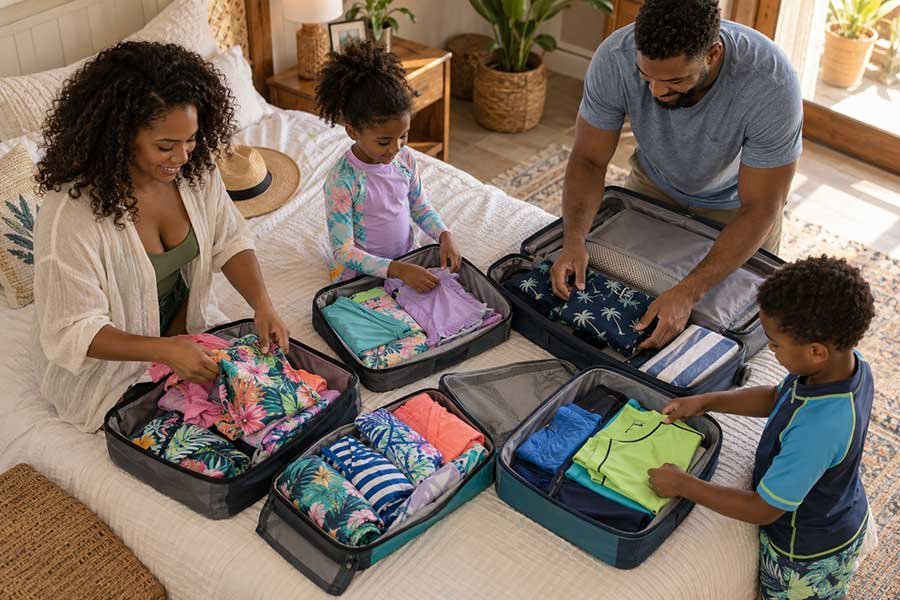
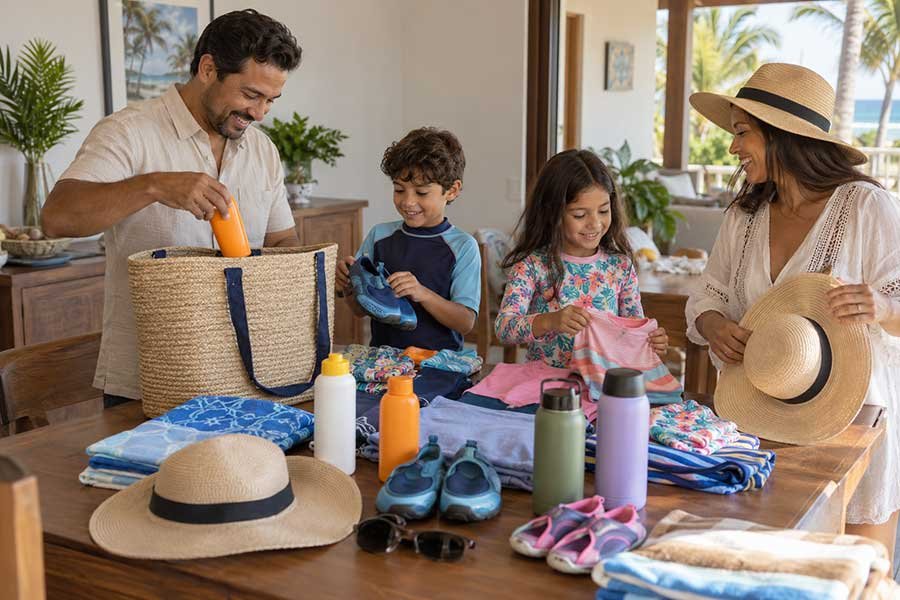
All-inclusive resorts provide the food and the fun but not the reef-safe sunscreen, the rash guards, the water shoes, or the after-sun lotion your family will absolutely need every single day. The families having the most fun at any all-inclusive are the ones who came prepared for the beach, not just the buffet. This article builds the family packing list that makes the entire resort stay run smoothly from the first morning on the beach to the last afternoon at the pool.
Grab Our Travel Packing Checklist
Our free packing checklist includes a family all-inclusive section organized by the sun safety, beach essentials, and health preparedness categories this article describes — so nothing that costs vacation prices at the resort gift shop is forgotten before departure. Print it before the next family resort trip.
Get the Free ChecklistThe family all-inclusive’s daily sunscreen requirement is larger than most families estimate before packing and significantly larger than any amount that feels like enough the evening before departure. A family of four — two adults and two children — applying sunscreen adequately before the morning beach session, reapplying at the two-hour mark, applying before the afternoon pool session, and reapplying again at the water park goes through a substantial volume of sunscreen product each day. Multiplied across a seven-night stay’s seven beach and pool days, the family’s sunscreen requirement is a volume that most families underestimate by a significant margin when pulling the single bottle from the bathroom cabinet before packing.
The sunscreen volume calculation before packing: the FDA recommends approximately one ounce of sunscreen — about two tablespoons or the volume that fills a shot glass — for adequate full-body coverage for one adult. A child requires proportionally less but still more than a thin smear. For a family of four with two applications per person per day, the daily sunscreen volume is four to six ounces at minimum adequate coverage. Across a seven-day stay, the family’s total sunscreen requirement is twenty-eight to forty-two ounces — several full-size bottles — before the swim-off, sweat-off, and towel-wipe losses that reduce effective coverage between applications and require additional product for the reapplication to reach adequate coverage again.
Pack reef-safe sunscreen specifically — a mineral sunscreen with zinc oxide or titanium dioxide as the active UV filter rather than chemical UV absorbers including oxybenzone and octinoxate, which have been linked to coral reef damage and are regulated or banned at several popular family all-inclusive destinations including Mexico’s Caribbean coast, Hawaii, and other reef-adjacent locations. Many all-inclusive resorts in reef-adjacent destinations have their own reef protection guidance or requirements at pool and beach areas. Arriving with reef-safe sunscreen from home confirms the family is meeting any destination or resort requirement without paying the resort gift shop’s premium price for reef-safe products, which are available at normal retail pricing from pharmacy and outdoor retailer chains before departure.
The families having the most fun at any all-inclusive are the ones who came prepared for the beach, not just the buffet.
All-inclusive resorts provide the food and the fun but not the reef-safe sunscreen, the rash guards, the water shoes, or the after-sun lotion your family will absolutely need every single day.
Pack one large bottle of sunscreen per person for a seven-night stay rather than one bottle for the whole family, and pack a separate travel-size bottle per person in the beach bag for the daily reapplication that the large bottle in the room cannot provide without the trip back to the room. The large bottle stays in the room for the initial morning application. The travel-size bottle in each person’s beach bag handles the two-hour reapplication and the post-swim reapplication at the beach without requiring the family to leave the beach and return to the room mid-session. The sunscreen that is at the beach gets used. The sunscreen that requires a trip to the room gets skipped, and the skipped reapplication is the specific sunscreen application that produces the sunburn that affects the following day’s beach time.
Let Us Find You the Family All-Inclusive That Is Worth Packing This System For
The best family all-inclusive resorts have the right combination of beach access, pool facilities, children’s programming, and included activities for every age in the family. Tell us the family’s ages, travel window, and destination preferences. We will find the resort worth every item in this packing list.
Plan Our EscapeThe rash guard is the single most effective sun protection garment for children at beach and pool environments, providing UPF-rated UV protection for the full torso and upper arm area without any reapplication requirement, any child cooperation requirement, and any risk of the sunscreen being wiped off, worn off, or swum off before the next reapplication window. A child wearing a UPF 50+ rash guard at the beach has the covered areas protected to a level that even the most diligent sunscreen application cannot reliably maintain across a full day of swimming, running, playing, and toweling. The uncovered areas — the neck, the lower arms, the legs below the shorts, the face — still require sunscreen. The covered areas are managed by the garment rather than the reapplication schedule.
Pack one rash guard per child per day of the stay, or two per child with an evening rinse and hang for the next morning’s use. The rash guard that is wet from the morning’s beach session and hangs in the room to dry is the rash guard that is dry and ready for the afternoon pool session or the following morning’s beach. One rash guard per child for a seven-night stay requires an every-other-day rinse cycle that most families manage easily. Two rash guards per child eliminates the rinse cycle dependency and provides a dry garment every session regardless of the previous session’s drying time. Both approaches work. The number depends on the specific stay’s beach and pool session frequency and the family’s preference for laundry management versus luggage volume.
Water shoes for every child protect the feet from the rocky beach entries, the pool’s concrete surrounds, the reef encounters during snorkeling excursions, and the hot sand of the midday beach that is genuinely hot enough to cause discomfort on young feet. The all-inclusive resort’s beach and pool environment produces the specific situations where bare feet encounter sharp reef fragments, hot poolside concrete, and rough sand with a frequency that flip-flops cannot address — the flip-flop that comes off in the water, the flip-flop that the four-year-old abandons at the water’s edge, the flip-flop that provides no protection for the reef entry. A close-fitting water shoe stays on the child’s foot through water entries and exits, protects against reef and rocky substrate contact, and provides the pool deck and beach sand coverage that bare feet and flip-flops both leave unaddressed. Pack one pair per child. They weigh almost nothing and provide the beach safety preparation that the resort gift shop’s overpriced equivalent also provides at three times the retail cost.
Choose rash guards and water shoes in a distinctive, easily identifiable color or pattern for each child at a family resort. The beach and pool environment at a busy all-inclusive is populated with many families whose children are wearing similar swimwear, rash guards, and water shoes in similar colors and styles. The child in the distinctive teal rash guard with the yellow stripe on the left sleeve is identifiable across the beach and across the pool in a way that the child in a standard blue rash guard is not. The water shoe in a specific bright color is identifiable at the pool’s edge in a way that the standard black water shoe is not. Distinctive gear does not prevent the beach and pool monitoring that any child’s safety requires. It makes the visual identification that monitoring depends on faster and more reliable across the specific crowded beach environment of a full family resort.
The family all-inclusive with one swimsuit per person per day of the stay is the family whose swimsuits are wet from the morning beach session when the afternoon pool session begins. A wet swimsuit worn for a full day of resort activities is the specific comfort issue that is avoided entirely by packing one more swimsuit per person than the number of stay days, so there is always a dry swimsuit available when the wet one is drying. For children who use the beach and pool multiple times daily, the dry swimsuit availability is not a luxury. It is the specific comfort difference between the child who changes into a dry suit for the afternoon and the child who sits through the afternoon’s beach activities in damp swimwear from the morning session.
The swimsuit count per person for a seven-night family all-inclusive: three swimsuits per person minimum. One in use, one drying from the previous session, and one for the next session that starts before the previous one is dry. At a family resort where the beach and pool sessions run from early morning through late afternoon with multiple entries and exits, the three-suit rotation provides continuous dry suit availability without any swimsuit management beyond hanging the used suit in the bathroom on the towel bar. The resort’s in-room towel bar and the bathroom space typically accommodate three suits per person drying simultaneously. The family of four with three suits per person has twelve swimsuits in the room’s bathroom which sounds like a lot until the seventh morning when every person has a dry swimsuit available without thinking about it.
For children specifically, err higher. Young children change swimsuits with greater frequency than adults — the pool accident, the sand-filled suit, the child who wants the other suit because they have decided the first one is no longer preferred, the suit that gets left at the beach. Pack four swimsuits per child for a seven-night stay. They are small, they are lightweight, and the specific problem they prevent — the child without a dry clean swimsuit on day five when the beach day is just beginning — is entirely avoidable with the ten minutes of additional packing the fourth swimsuit requires.
Pack a small mesh laundry bag for the beach bag to collect wet swimsuits and sandy items after each beach or pool session. The mesh bag provides the waterproof containment that keeps wet swimsuits from soaking through the beach bag’s other contents and the sand from distributing itself into every interior pocket of the bag. The mesh bag’s contents are identifiable through the mesh without opening it, making the wet swimsuit retrieval at the room as simple as taking the mesh bag to the bathroom and hanging the contents on the towel bar. The mesh bag itself is the beach bag’s wet items management system, weighs under thirty grams, and prevents the specific beach bag condition of wet items distributed throughout dry items that the resort day without it reliably produces.
Find Booking Ideas and Travel Essentials on Our Favorites Page
Our favorites page has helpful booking ideas and travel essentials that we have found genuinely useful for family resort travel. Whether you are planning your next family all-inclusive vacation or looking for resources that make the stay better organized and more enjoyable for every age, it is worth a look.
DND FavoritesThe single family beach bag — one large bag shared among all family members — is the beach bag that becomes the family’s single point of failure for the entire stay: the bag that the sunscreen is somewhere inside, the bag that the water bottle may or may not be in depending on whether it was packed back in after the last use, the bag that the four-year-old wants something from and the access requires locating it among the seven-year-old’s items and the adult’s items and the towels and the reef shoes and the empty sunscreen bottle from the previous session. The dedicated beach bag for each child converts the family beach setup from one overcrowded shared bag into individual bags whose contents each child is responsible for and each child knows the location of their own items within.
The child’s dedicated beach bag for the all-inclusive resort stay: a small backpack or a canvas tote appropriately sized for the child’s carrying capacity. Contents: the child’s individual sunscreen travel bottle, the child’s water bottle, one dry swimsuit in the mesh pocket for the post-session change, one small towel or microfiber towel, the child’s beach toys or activity for the beach day, and the child’s goggles and snorkel equipment if the pool session includes underwater exploration. The bag is the child’s responsibility for the beach and pool day — the child carries it, the child knows what is in it, and the child manages the retrieval of their own items without requiring the parent’s bag excavation at every request.
The child’s dedicated beach bag also produces the ownership dynamic that has been consistent across this site’s family travel content: the child who has their own beach bag with their own items is the child who is more engaged with the beach day, more careful with the bag’s contents, and less likely to be bored at the beach because the bag contains the specific items they selected for it. The child who carries a bag of their own things to the beach has a different relationship to the beach day than the child who is carried to the beach and provided items from the adult’s bag. The beach bag is the beach day’s ownership signal. Pack one for each child.
Pack the beach bag the evening before the first beach day with everything except the perishable and the wet items, and make the beach bag preparation a pre-beach ritual for older children. The child who packs their own beach bag the evening before knows exactly what is in it when the morning beach session begins, does not need to search for any item at the beach, and has the specific beach-day anticipation that the evening’s preparation builds. The evening bag preparation also catches the missing item — the goggles not yet located, the sunscreen bottle that needs refilling from the room’s supply, the water bottle not yet filled — before the beach session rather than at the beach chair after the family is settled and the item discovery requires the trip back to the room.
The all-inclusive resort’s gift shop provides first aid supplies at prices calibrated for the captive guest who arrived without their own — the specific pricing environment where the absence of alternatives makes any available price the acceptable price regardless of how it compares to normal retail. A box of ten adhesive bandages at an all-inclusive resort gift shop costs several times its pharmacy equivalent. Children’s pain reliever in a travel-size format costs a multiple of the equivalent product at a pharmacy. After-sun lotion at the resort boutique is the premium version of a product that was fifty cents a liter at the departure city’s pharmacy.
The family all-inclusive first aid kit — a small zippered pouch of the specific items a family with children routinely needs at a beach destination — is one of the highest return-on-packing-space items in the entire family resort bag. The items it contains are used with near certainty across any beach-heavy family resort stay: adhesive bandages for the scraped knee on the pool steps, the cut from the reef fragment, the blister from the new water shoe; children’s pain reliever (confirmed appropriate for the child’s age and weight with the child’s healthcare provider before travel) for the fever on day four that no resort vacation guarantees against; after-sun lotion for the evening application after the day’s sun exposure regardless of how well the sunscreen was applied; antiseptic wipes for the wound cleaning that precedes the bandage; and any child-specific ongoing medications in the correctly labeled container.
Consult each child’s healthcare provider before any family resort vacation about appropriate over-the-counter medications for the travel context — the correct dosage and formulation of any pain reliever or fever reducer for the child’s current age and weight, any motion sickness preparation for travel days, any relevant health considerations for the specific destination. Pack all medications in their original labeled containers and in the carry-on rather than the checked luggage for access throughout the travel day and at the resort. The first aid kit’s presence in the family beach bag converts the specific inevitable minor injury or minor illness from a resort gift shop trip to a managed moment that the kit resolves in five minutes at the beach chair.
Include after-sun lotion specifically designed for children’s skin in the family first aid kit. After-sun lotion containing aloe vera and ideally a modest cooling agent provides the skin relief that the day’s sun exposure produces whether or not the sunscreen was applied as well as planned — and no matter how carefully sunscreen is applied to active children over a full resort beach day, some sun exposure accumulates. The after-sun lotion applied to each child’s exposed skin at the evening shower converts the evening from the specific skin discomfort of a day in the tropical sun into a comfortable ending to the beach day. It costs almost nothing at normal retail pricing. It costs significantly more at the resort boutique. Pack it. Use it every evening regardless of whether the day’s sunscreen felt adequate. The cumulative sun exposure across seven resort days is meaningful regardless of how good the daily sunscreen management was, and the after-sun lotion is the specific evening skin care that the sun-safe family uses consistently rather than only after the sun has already been felt.
The complete family all-inclusive packing system organizes the resort stay’s preparation into the specific categories that the resort does not provide and the gift shop prices make planning essential.
The sun safety layer: reef-safe sunscreen — one large bottle per person for the room supply, one travel-size bottle per person for the beach bag. One UPF-rated rash guard per child per day, or two per child with an every-other-day rinse cycle. After-sun lotion for the full family for the evening application. Sunglasses and sun hat for every family member including children — the hat is the frequently forgotten item that the resort gift shop sells at the specific markup that the hat’s popularity as a forgotten item warrants.
The beach access layer: one water shoe pair per child. Three to four swimsuits per child, three per adult. One dedicated beach bag per child. One mesh laundry bag per beach bag. Waterproof phone case or dry bag for the adult beach bag. Reusable water bottles for every family member — the resort’s included bar service provides beverages but not the continuous water access that the beach bag’s own bottle provides at any moment of the beach day.
The health and first aid layer: the family first aid kit in the carry-on accessible zippered pouch. All ongoing children’s medications in labeled original containers. Confirmation of any over-the-counter medications appropriate for the trip from the children’s healthcare provider before departure. Travel health insurance confirmation in the documents wallet.
The comfort and convenience layer: a packable beach towel or microfiber towel per family member — the resort provides towels but the towel exchange system at some resorts adds friction to the multiple-session day that personal towels eliminate. A small waterproof beach mat for the youngest children’s sand play. A beach umbrella if shade management is a priority at the specific destination’s beach orientation.
Build the family all-inclusive master packing list from this article and update it after each family resort trip with what was used, what was missing, and what was brought and not needed. The family resort packing list that is updated after each trip is accurate for the family’s specific resort usage by the third trip and eliminates the gift shop purchases that the first trip’s unprepared list produced. Pack the list digitally or in the family travel notebook. Use it before every family resort departure. The family that arrives at the all-inclusive with every beach essential already in the bag is the family spending the resort’s first morning at the beach rather than at the gift shop.
The Gift Shop Receipt That Became the Packing List
Renee had planned the all-inclusive resort trip with the same thorough efficiency she brought to everything. The flights were booked. The resort was researched and selected. The specialty dining reservations were on the list to make at check-in. The children were excited. The packing, however, was the packing she always did — clothing for every occasion, the toiletry kit, the children’s entertainment for the travel day, the documents, the medications. The beach items were not specifically considered because the resort was on a beach and the assumption was that the beach would provide what the beach required.
Day one’s morning beach session began at 9 a.m. By 9:15 a.m. the seven-year-old had a sunburned shoulder because the sunscreen had run out after the adults were applied and there had been only one small bottle to begin with. The four-year-old had stepped on something sharp at the water’s edge and was crying at the beach chair. The swim shoes Renee had considered packing and then decided against — because the resort was all-inclusive and surely had everything — were not in the bag. The single shared beach towel for the family of four was not enough for the four-year-old to also have one. The gift shop was twenty steps from the beach entrance.
The gift shop visit that first morning: sunscreen at three times the pharmacy price. Children’s swim shoes at a markup that reflected their necessity at the very resort selling them. Beach towels. Adhesive bandages for the four-year-old’s foot. After-sun lotion in a travel-size bottle at the resort boutique’s travel-size premium price. A small hat for the seven-year-old who did not have one. The gift shop receipt was a document of the items Renee had not packed and had paid vacation prices for on day one of a seven-night stay, most of which would need replenishment before the stay ended.
That evening she photographed the gift shop receipt and emailed it to herself with the subject line “What to pack next time.” The list from that email became the packing list she used for every subsequent family resort trip. Reef-safe sunscreen — a large bottle per person plus travel-size bottles for the beach bags. Swim shoes for every child. Rash guards. After-sun lotion. Three swimsuits per child minimum. A beach bag for each child. A small first aid kit. A sun hat for every family member. The second family resort trip arrived with all of it. The gift shop visit on day one of the second trip was for a souvenir the youngest had spotted and wanted, not for any item the family had forgotten to bring. The receipt from the souvenir visit was significantly smaller than the receipt from the first trip’s necessity purchases. This article is the packing list Renee built from the receipt she emailed to herself on the first trip’s first evening.
Beyond the five core family all-inclusive packing principles, these six additional items address the specific resort scenarios that the core list does not fully cover.
Pack a portable white noise machine or a white noise app loaded offline for the children’s sleep at the resort. The all-inclusive resort’s nighttime environment — the live entertainment, the poolside music that runs later than the children’s bedtime, the adjacent room’s sounds in a different acoustic environment from the home — is the specific sleep disruption that the children’s resort vacation produces for the first two nights until the novelty and the routine establish themselves. A portable white noise machine weighs under two hundred grams, plugs into the room’s outlet, and provides the consistent audio masking that reduces the resort’s nighttime sounds to a manageable background rather than the specific sleep interruption that exhausted resort children and their parents are both managing in the second week’s first days.
Bring reusable snorkeling equipment for each child old enough to use it rather than relying on the resort’s rental equipment. The resort’s rental snorkel equipment is shared among many guests, may fit imperfectly for specific children’s face shapes, and is cleaned between uses at a standard that shared equipment cleaned at resort volume produces. Personal snorkeling equipment — a fitted mask, a snorkel, and fins for children comfortable with them — provides the specific seal and fit that makes the snorkeling experience successful rather than the leaking mask experience that ends the underwater exploration in the first two minutes. A child’s snorkel set weighs under four hundred grams, fits in the beach bag’s main compartment, and produces a qualitatively different snorkeling experience from the first underwater moment of the vacation.
Pack a small portable waterproof Bluetooth speaker for the beach day. The beach experience with the family’s preferred music playing at comfortable volume is a different experience from the beach in silence or in the ambient sound of the resort’s public speakers. A small waterproof Bluetooth speaker weighs under three hundred grams, fits in the beach bag’s exterior pocket, and provides the beach soundtrack that the family brings rather than the one the resort provides. Charge it the evening before each beach day.
Bring a compact, lightweight beach cart or a wheeled cooler if the resort’s beach chair setup requires carrying significant items from the room to the beach. Many family all-inclusive resorts have a walk between the room block and the beach that is entirely manageable with light bags but challenging with four beach bags, four sets of beach shoes, towels, and the full day’s supplies for a family of four. The wheeled cart — compact enough to check in the luggage on the flight — converts the morning beach procession from a distribution logistics challenge into one rolling trip. For resorts where the beach is adjacent to the room and the walk is minimal, the cart is unnecessary overhead. Research the specific resort’s room-to-beach walk before deciding whether the cart earns its bag space.
Include a small waterproof dry bag for the adult’s phone, wallet, and room key at the beach. The all-inclusive resort’s included beach experience does not include a safe place for the adult’s phone and wallet while the family is in the water. The waterproof dry bag — a small roll-top bag in bright orange or yellow for visual identification on the beach chair — keeps the phone and wallet dry and visible while every family member is in the water simultaneously, which is the specific beach moment that the lost room key, the wet phone, and the sand-filled wallet occur without it.
Pack a small collection of beach toys appropriate for the youngest child’s age and the specific beach type. Resort beaches with fine sand produce the bucket-and-spade play that the family of four enjoys for two hours without requiring any specific toy beyond the bucket and the spade. Resort beaches with rockier substrate or more active water produce the snorkeling, the water gun, and the diving ring play that requires specific equipment. Research the specific resort’s beach character before packing the toys — the bucket-and-spade collection that works perfectly at a calm fine-sand Caribbean beach is not the optimal packing for the rocky Mediterranean beach that the resort’s description did not specifically mention. A lightweight, compressible, and sand-durable selection of age-appropriate beach toys weighs under five hundred grams and provides the youngest children’s beach engagement that the resort’s included activities may not specifically provide for the five-and-under age range.
The family all-inclusive packing approach that consistently works best is the approach built around the question: what will the family absolutely use every single day that the resort does not provide? The answer to this question is the packing list’s foundation. The reef-safe sunscreen, the rash guards, the water shoes, the after-sun lotion, the swimsuits, the beach bags, the first aid kit — each of these is used every single day of the family resort stay. Each of these is sold at the resort gift shop at vacation pricing. Each of these is available at normal retail pricing from home. The family that arrives with all of them has already captured a meaningful financial saving relative to the resort gift shop alternative and has the specific beach-day readiness that the resort morning requires from the first morning forward rather than the day-one gift shop visit and the day-two application of what should have been brought from home.
Book the Family All-Inclusive Where the Beach Is Worth the Packing
The family all-inclusive that earns the packing this article describes is the resort where the beach is excellent, the children’s programming is genuine, and the family can spend the full week exactly where all-inclusive is supposed to put them — in the water, on the sand, and at the buffet, in that order. Let us find yours.
Book A TripFamily All-Inclusive Packing Mistakes That Turn Into Resort Gift Shop Bills
Each of these is a line item on the gift shop receipt that the prepared family never sees.
Packing one small bottle of sunscreen for the whole family for the whole stay
One small sunscreen bottle for a family of four at a beach resort lasts one to two days of adequate application. The remaining five to six days of the stay require either inadequate sun protection or gift shop pricing for the replacement. Pack one large bottle per person for the room supply and one travel-size bottle per person for the beach bag. The sunscreen calculation before packing — the FDA’s one-ounce-per-application guideline multiplied by the number of people, applications per day, and days of the stay — produces the correct quantity rather than the intuitive quantity that feels like enough and is not.
Not packing rash guards and water shoes for the children
The rash guard is the sun protection garment that does not require reapplication, does not wear off in the water, and does not require the child’s cooperation to be effective. The water shoe is the beach safety footwear that stays on the foot through water entries and exits and protects against the reef, the rocky substrate, and the hot pool deck that flip-flops and bare feet do not address. Both are available at normal retail pricing before the trip and at vacation pricing at the resort gift shop. Pack both before departure. Use both from the first beach morning.
Packing one swimsuit per person per day of the stay
The one-per-day swimsuit count produces the wet swimsuit situation for the second session of every double-session day. Three suits per adult and three to four per child provides the dry suit rotation that the resort’s multiple daily beach and pool sessions require. Swimsuits are small, lightweight, and inexpensive relative to the resort’s comfort they provide across a full family resort stay. Pack more than seems necessary. The wet swimsuit on day three is the discomfort the extra suit prevents.
Using one shared family beach bag rather than individual bags for each child
The shared family beach bag is the bag that cannot be located at the specific moment something is needed, that produces the multi-person excavation for any single item, and that carries the responsibility for the full family’s beach day organization in one adult’s hands. The individual child beach bag converts the beach day’s item management into a distributed ownership system where each child knows where their items are and is responsible for their own bag. Less excavation. More beach.
Not packing a family first aid kit and buying everything at the resort gift shop when needed
The all-inclusive resort’s gift shop bandages, children’s pain reliever, and after-sun lotion are the same products available at normal retail pricing before the trip. They are used with near certainty across a seven-night beach stay with children. The specific scenarios that require them — the scraped knee, the mild fever, the sun-exposed evening skin — occur regardless of how well the trip is planned. Pack the first aid kit. Use it when needed. The gift shop visit for the bandage is the visit this article prevents.
Not packing after-sun lotion and forgetting sun hats for the children
After-sun lotion is the evening skincare item that every family member at a tropical beach resort benefits from regardless of how well the daily sunscreen was managed. The sun hat is the daytime UV protection item for the face and neck that sunscreen alone does not adequately protect for the hours-long beach sessions that resort days produce. Both are among the most purchased items at all-inclusive resort gift shops because they are both commonly forgotten at packing and both universally needed at the destination. Pack them before departure. The resort’s pricing for both is the specific reminder that packing them is worth it.
Love Helping Families Arrive at the Beach Completely Prepared?
Family resort bookings are among the most meaningful travel agent work — these are the trips that produce the children’s first memories of what travel feels like. If becoming a home-based travel agent who helps families travel smarter and more joyfully sounds like the right next step, see how the TravelPreneur system works.
Become An AgentFrequently Asked Questions
These are the questions traveling families ask most often before packing for an all-inclusive resort trip.
What sunscreen should you use at an all-inclusive resort?
Reef-safe sunscreen — a mineral sunscreen with zinc oxide or titanium dioxide as the active UV filter — is the recommended choice for all-inclusive resort stays at destinations with coral reef systems or with destination regulations on chemical sunscreen use. Many popular family all-inclusive destinations including Mexico’s Caribbean coast and Hawaii have regulations or strong guidance on reef-safe sunscreen use at the ocean and at reef-adjacent beach locations. Reef-safe mineral sunscreen is available at most pharmacies and outdoor retailers at normal retail pricing, provides broad-spectrum UVA and UVB protection, and meets the requirements at all regulated destinations. Always apply sunscreen generously and reapply according to the product’s instructions, especially after swimming. Consult a healthcare provider or dermatologist for sun protection guidance specific to your family’s skin types and health circumstances, particularly for infants and young children whose skin is more sensitive to both sun exposure and sunscreen formulations.
How do you manage sunscreen application for young children at the beach?
Young children’s sunscreen management at the beach is most effectively approached as a morning routine before leaving the room, a reapplication thirty minutes after arrival at the beach or pool, and a reapplication every two hours and after every swim. Sunscreen sticks are easier to apply to young children’s faces than lotion formats and reduce the eye-exposure risk that lotion application around the face area produces. Sunscreen sprays can be convenient for large-body-area coverage of older children and adults but require care to ensure adequate coverage — the spray that is visually applied may not be at the product’s recommended coverage density. Rash guards significantly reduce the sunscreen management burden by eliminating the need to reapply sunscreen to the covered areas, making the remaining sunscreen task — the face, neck, lower arms, and legs — more manageable for active children who resist frequent lotion applications. Always follow current pediatric sun protection guidance from your child’s healthcare provider, as recommendations for specific sunscreen ingredients and formulations for young children’s skin evolve with current research.
What are the best beach toys to pack for young children at an all-inclusive resort?
The most useful and most versatile beach toys for young children at an all-inclusive resort with a fine-sand Caribbean-style beach are the classic bucket and spade set, a collection of sand molds in different shapes, a small waterproof container of bath letters or numbers for sand-writing activities, and a soft waterproof ball or frisbee for the beach area and the pool’s adjacent area. These items are lightweight, compressible, inexpensive, and produce the broadest range of child-initiated play across the widest age range. For resort beaches with good snorkeling access and older children comfortable in the water, the addition of a quality fitted snorkel mask and snorkel specific to the child’s face size produces hours of independent underwater exploration that the rental equipment cannot reliably replicate. Research the specific resort’s beach character before deciding on the toy selection — the sand castle set that works brilliantly on a fine-sand beach requires a different beach than the rocky pebble beach that some European and Mediterranean all-inclusive destinations adjoin.
How do you handle children’s medications at an all-inclusive resort?
All children’s medications for a family all-inclusive stay should travel in the carry-on in their original labeled containers for access throughout the travel day and at the resort. Before any family resort trip, consult each child’s healthcare provider about appropriate over-the-counter medications for the travel context — the correct pain reliever dosage and formulation for the child’s current age and weight, any motion sickness preparation for the travel day, and any destination-specific health preparations. The healthcare provider can also advise on any health considerations relevant to the specific destination’s climate, water, and food environment. All medications should be confirmed as appropriate for the child’s current health circumstances rather than pulled from a previous trip’s supply that may be outdated or at an inappropriate dosage for the child’s current weight. Keep medications accessible in the family first aid kit in the carry-on and confirm at the destination that any ongoing medication storage requirements — refrigeration, or protection from heat and humidity — are accommodated at the resort room before the medication is stored there.
Is it worth packing snorkeling equipment for children or just renting at the resort?
Whether to pack children’s snorkeling equipment or rent at the resort depends on the children’s ages and experience, the specific resort’s snorkeling access and rental equipment quality, and how central the snorkeling experience is to the specific stay’s planned activities. For families with experienced young snorkelers for whom the snorkeling experience is a primary resort activity, personal fitted equipment provides a significantly better experience than shared rental equipment: a mask that seals properly for the specific child’s face shape, a snorkel without the characteristic slight mildew of high-use rental equipment, and the availability of equipment from the first morning without the rental desk queue or the rental equipment management. For families where snorkeling is a casual secondary activity and the children are beginners trying it for the first time, the resort’s rental equipment is adequate for the first experience and avoids packing equipment whose use is uncertain. A quality children’s snorkel set weighs under four hundred grams and fits in the beach bag alongside the other essentials — for families where snorkeling is a planned primary activity, the weight and volume cost is well justified by the experience improvement it produces.
How much luggage does a family typically need for an all-inclusive resort trip?
A family of four for a seven-night all-inclusive resort stay typically requires one checked bag per adult and one checked bag per child, plus the personal items and carry-ons for the air travel. The beach and pool item volume — the sunscreen supply, the swimsuits, the rash guards, the water shoes, the beach bags, the beach toys, and the first aid kit — is the packing category most responsible for elevating family resort packing beyond what a similar duration trip to a city destination requires. The packing strategy that minimizes the luggage count: the carry-on handles the beach essentials from this article that are needed from the moment the resort is reached (the sunscreen, the first aid kit, the water shoes, the swim bags), while the checked luggage handles the clothing, the swimsuit supply, and the resort evening wear. The beach toys and the bulkier items that are not needed until the day-one beach morning travel in the checked luggage’s most accessible section. A family of four can typically manage a seven-night all-inclusive resort trip with two large checked bags and two carry-ons when the packing is organized around this article’s category system.
The family that arrived at the beach on day one with everything already in the bag did not see the inside of the gift shop until the last day when the youngest wanted a souvenir. That is the difference between the receipt from preparation and the receipt from forgetting. Pack for the beach. The buffet takes care of itself.
Picture Day One at the Beach
The reef-safe sunscreen is in the beach bags. Each child’s rash guard is on. The water shoes are on every child’s feet. The four-year-old has the bucket and the spade. The seven-year-old has the snorkel mask. The first aid kit is in the adult’s beach bag. Every child has their own bag with their own water bottle and their own sunscreen travel bottle. The family walks to the beach. No gift shop detour. No missing item discovery. No wet swimsuit situation because there are four per child and they rotate perfectly. The beach day starts when the family arrives at the beach. That is the prepared-for-the-beach family. That is every resort morning from here.
One More Thing Before the Next Family Resort Trip
Print our free Travel Packing Checklist and use the family resort section to confirm every beach essential is packed before the luggage is closed. Sunscreen, rash guards, water shoes, swimsuits, beach bags, first aid kit, after-sun lotion, sun hats. All of it. From home. At normal retail prices. The same checklist we recommend to every family we help plan a resort trip for.
Get the Free ChecklistExplore Our Top Picks for a Better Trip
Visit our favorites page for helpful booking ideas and travel essentials that we have found genuinely useful for family resort travel. Whether you are planning the next family all-inclusive vacation or looking for resources that make the beach days better and the gift shop visits optional, it is worth a look.
See Our Top PicksTravel Prints and Printables From Our Shop
Visit Premier Print Works for family resort packing list printables, beach bag organization guides, children’s travel activity printables, vacation journals, and wall art that makes every family trip a little more beautiful and a lot more organized — from the evening the rash guards are packed to the morning the family walks to the beach with everything already in hand.
Visit Premier Print WorksDisclaimer
The information shared in this article is provided by Don and Diana’s Travels for general informational, educational, and inspirational purposes only. It reflects our personal experiences, opinions, and the experiences of travelers we have worked with. It is not professional medical, safety, legal, or parenting advice.
Child Health and Sun Safety
Sun protection guidance in this article is general educational information and is not a substitute for professional medical or dermatological advice. Always consult your children’s healthcare provider for sun protection recommendations specific to each child’s age, skin type, and health circumstances. Sunscreen formulation guidelines for young children evolve — always confirm current guidance from your child’s healthcare provider. We are not responsible for any health or sun safety outcome arising from information in this article.
Child Medications
All medication decisions for children must be made in consultation with a qualified healthcare provider. Confirm appropriate medications, dosages, and formulations for each child’s current age, weight, and health circumstances before any trip. We are not responsible for any health outcome arising from information in this article.
Sunscreen and Environmental Regulations
Sunscreen regulations at beach destinations vary by country, region, and specific beach access point and are subject to change. Always research current requirements at the specific destination before travel.
Water Safety
Water and beach safety for children requires constant adult supervision regardless of the preparation in this article. Water shoes, rash guards, and swimming equipment do not replace attentive adult supervision at the pool and beach. Always follow current water safety guidelines for your children’s specific ages and swimming abilities.
Affiliate and Partner Links
This article may contain affiliate and partner links that pay us a commission. Our recommendations are based on real use and genuine belief in the products and services we share.
Third-Party Websites
We may link to third-party sites for convenience. We are not responsible for their content, pricing, or availability.
Health, Safety, and Personal Responsibility
Travel involves personal risk. You are solely responsible for your own and your family’s health, safety, and travel decisions. We strongly recommend comprehensive travel insurance for every family trip. Don and Diana’s Travels accepts no liability for any loss, injury, delay, or inconvenience arising from information in this article.
Composite Stories
Stories on this site combine real experiences from Don, Diana, clients, and travelers we have worked with. Details may be adjusted for privacy and narrative clarity.
No Guarantees
We do not guarantee any specific result from using the information in this article. Your results depend on your own choices and circumstances.
Copyright and Use
All content is the copyrighted property of Don and Diana’s Travels. You may not copy or republish our content without prior written permission. You are welcome to share a direct link with proper credit.
By reading this article, you acknowledge that you have read and agree to this disclaimer.