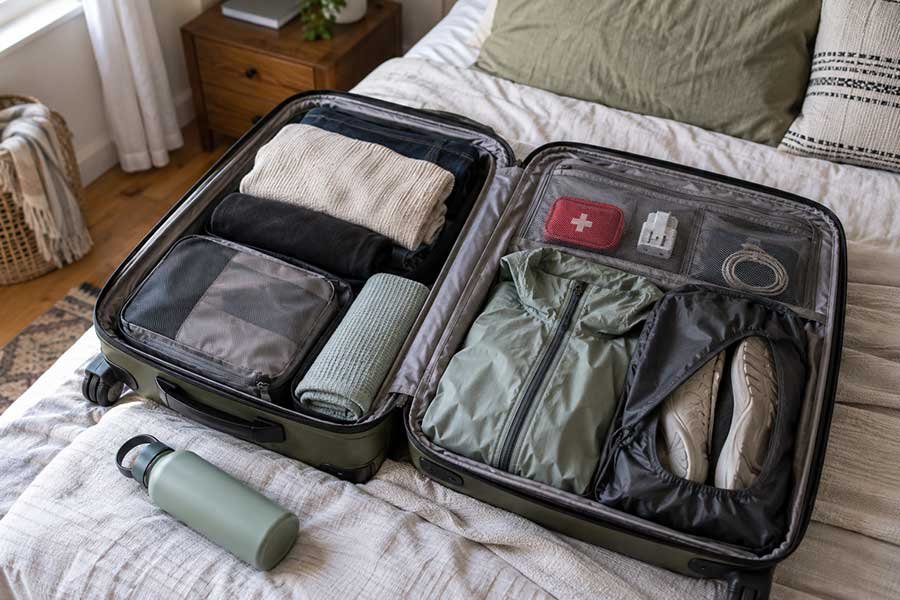
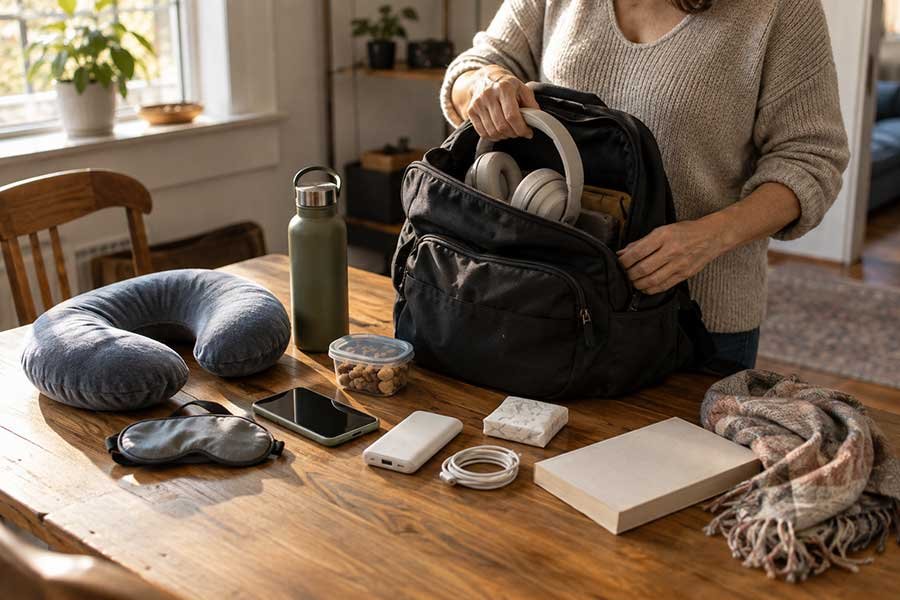
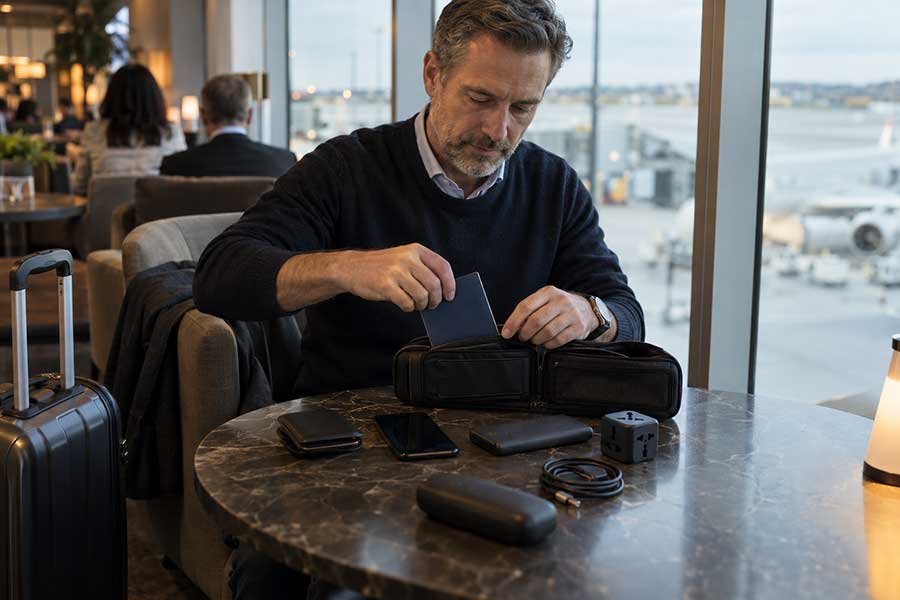
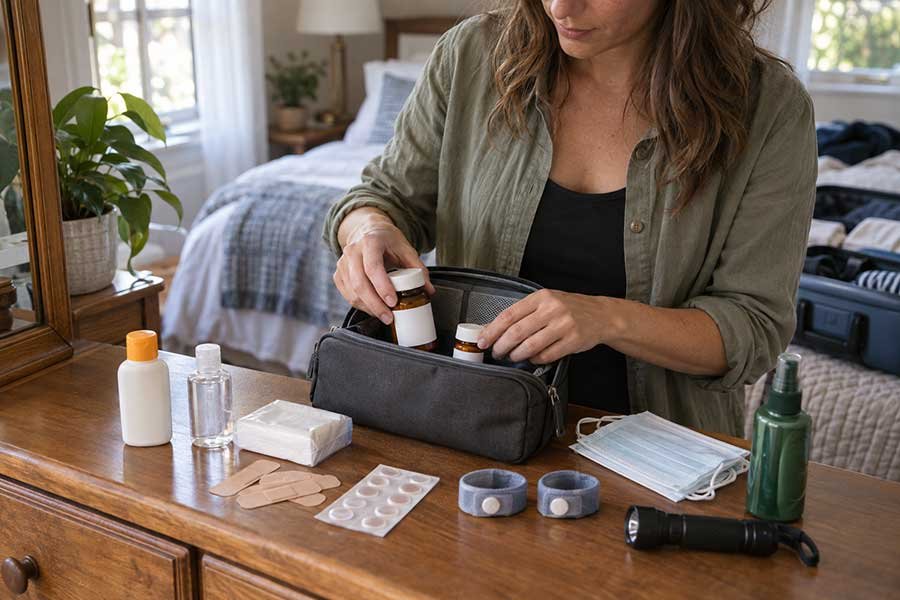
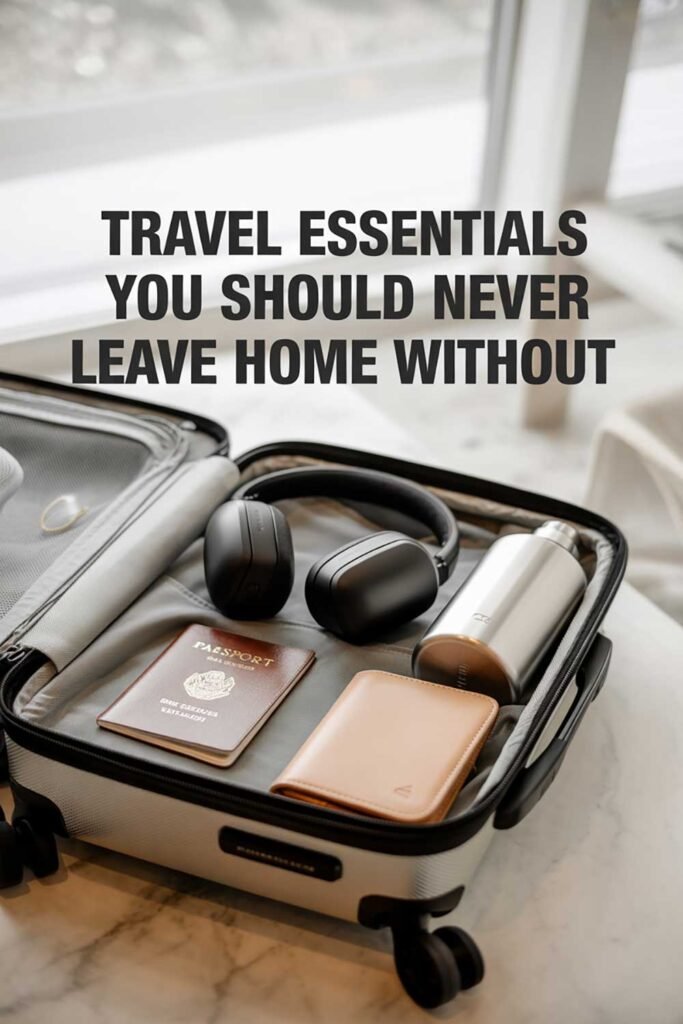
The difference between a stressful trip and a seamless one often comes down to ten items most travelers forgot to pack. Not the clothes or the toiletries. The small, specific things that make every moment of travel more comfortable, more connected, and more manageable. The best-packed traveler is never the one with the most. They are the one with exactly the right things. This article is that list.

Best For
All Travelers
Vibe
Ready for Anything
Read Time
12 Minutes
Walk Away With
The Complete Essentials Kit
Free Download

Grab Our Travel Packing Checklist

Every essential in this article is on our packing checklist so none of them get left behind again. From portable chargers to compression socks to the slim first aid kit most travelers forget until they need it, our free checklist covers every category in the right order. Print it once and use it on every trip.

Get the Free Checklist

Portable Charger and Universal Adapter

A dead phone in an unfamiliar city is the modern traveler’s version of being lost without a map. Your phone is your navigation device, your boarding pass, your translation tool, your booking confirmation, your communication line home, and your camera. When it dies, all of those things stop working simultaneously. A portable charger, also called a power bank, is the single most impactful travel accessory for the modern traveler and also one of the most consistently left at home.

Choose a power bank with at least 10,000 milliamp hours of capacity. This is enough to fully charge most smartphones twice and partially charge a tablet once from a dead battery. It covers a full international sightseeing day where your phone is running GPS, camera, and communication apps continuously without a hotel room charge in between. A 20,000 milliamp hour bank handles two full days and is worth the slightly larger size for any trip involving multi-day excursions, long train journeys, or any situation where you will not be near an outlet for extended periods.

A universal travel adapter handles the outlet compatibility problem on international trips. Outlet types vary by country and the wrong plug will not fit without an adapter regardless of voltage compatibility. A universal adapter with USB-A and USB-C ports built in turns one incompatible foreign outlet into a complete charging station for every device you travel with without needing a separate power strip in most situations. Buy one before your first international trip, keep it in your electronics pouch permanently, and it simply travels with you on every international trip from that point forward without needing to be added to any packing list.

A multi-port USB charging cable that handles USB-C, Lightning, and Micro-USB in one cable eliminates the three separate cables that most travelers pack for their various devices. One cable for everything weighs about one ounce and takes up the space of a single standard cable. On travel days where every ounce and every inch of bag space matters, the reduction from three cables to one is a small but genuine improvement that adds up across every trip.

The best-packed traveler is never the one with the most. They are the one with exactly the right things.

The ten items most travelers forget are not the ones they never thought of. They are the ones they kept meaning to pack and never quite did.

Insider Note

Keep your power bank in your carry-on or personal item on every flight without exception. Lithium batteries, which power all portable chargers, are prohibited in checked luggage by most airlines worldwide due to fire risk in the cargo hold. A power bank checked in your main bag will be confiscated at the check-in counter or at security. Beyond the regulatory requirement, a power bank in your carry-on is available during the flight when you actually need it rather than inaccessible in the hold when your phone hits 8 percent at hour nine of a twelve-hour flight.

Ready to Go

Let Us Plan Your Next Trip

The right essentials kit and the right destination make every trip feel effortless. Tell us where you want to go, your travel dates, and your travel style. We will handle the planning while you handle the packing. Real travel agents, real destinations, real results.

Plan Our Escape

Reusable Water Bottle

A reusable water bottle is one of the most practical and most environmentally impactful travel items on any packing list, and yet it is consistently one of the most forgotten. The traveler who brings a reusable bottle saves money on every single trip, stays better hydrated throughout, and avoids the perpetual inconvenience of hunting for a water bottle at the exact moment they are thirsty and away from a shop.

Airport water costs three to five dollars per bottle and the same bottle of water at a tourist site or a beach destination often costs even more. On a week-long trip where you buy two to three bottles of water per day, that is $30 to $100 spent on water. A reusable bottle filled from every airport water fountain and hotel tap costs nothing after the initial purchase and produces zero plastic waste. The long-term economics are obvious and the convenience is immediate.

Choose a double-walled insulated bottle for travel. A standard plastic or single-wall bottle at room temperature produces warm water on any trip with above-average temperatures, which is most travel destinations at most times of year. A double-walled insulated bottle keeps water cold for 12 to 24 hours regardless of ambient temperature. On a beach day, a hot city walking tour, or a long airport transit, cold water from your own bottle is a genuine comfort that warm water from a forgotten bottle is not.

Empty your bottle before security. Airport security requires liquids above 100 milliliters to be declared or discarded, which applies to the water in your bottle. Empty it before the security checkpoint, carry it through empty, and fill it at the water fountain airside in the departure area. Every major airport has water fountains airside in the terminal. Fill the bottle before boarding so it is full for the flight, where individual water service is infrequent and cabin air dehydrates faster than most travelers realize.

Insider Note

A collapsible water bottle is a strong alternative for travelers who prioritize minimal packing. When empty a collapsible bottle folds or rolls to about the size of a deck of cards and adds almost no bulk to a day bag or carry-on. When full it functions identically to a standard bottle. The trade-off is that collapsible bottles are almost always single-wall, meaning they do not insulate the way a double-walled bottle does, and they are slightly less durable over heavy repeated use. For short trips and light packers, the space saving is worth it. For longer trips or trips in hot climates, the insulated double-wall is worth the extra bulk.

Sleep Mask, Earplugs, and In-Flight Comfort

The quality of sleep and rest you get on long flights, overnight trains, and in unfamiliar accommodation determines how much energy you have for the actual trip. A sleep mask and earplugs together weigh under one ounce, cost under $20 for a quality set, and produce a measurably better rest experience on any journey where light or noise prevents you from sleeping when you need to.

A contoured sleep mask that does not press directly against your eyelids is significantly more comfortable than a flat mask for extended use. Contoured masks create a small dark space over each eye so you can open your eyes inside the mask without the fabric touching your lashes, which eliminates the discomfort that causes most people to remove flat masks within an hour of wearing them. A quality contoured sleep mask in a carry-on pouch weighs half an ounce and is one of the items that frequent long-haul travelers consistently name as one of their most-used travel accessories.

Foam earplugs with a noise reduction rating of 30 to 33 decibels block engine noise, crying infants, and neighboring passenger conversations effectively enough to allow genuine sleep in noisy cabin environments. The total weight of a pair of foam earplugs is essentially zero. A set of five pairs in a small zip bag weighs less than a single coin and provides enough earplugs for the full trip including hotel rooms with noisy corridors, vacation rentals near busy streets, and any overnight transit. Noise-canceling headphones serve a similar purpose for travelers who prefer them, but $2 of foam earplugs produces comparable sleep quality on an aircraft and takes up essentially no space.

A travel neck pillow rounds out the in-flight comfort kit for anyone who sleeps against the window or needs neck support during long travel days. Inflatable neck pillows pack down to the size of a small pouch. Memory foam versions offer better support but take more space. The best neck pillow is the one you will actually use consistently rather than the most technically advanced one that lives in your bag because it is too bulky to keep accessible.

Insider Note

Keep your in-flight comfort items in one small accessible pouch in your personal item under the seat in front of you, not in the overhead bin carry-on. Sleep mask, earplugs, lip balm, a small hand lotion, and any in-flight medication should all be reachable without standing up. The traveler who has to get up and dig through the overhead bin to find their sleep mask after the lights dim disturbs two to four fellow passengers every time they do it. One pouch under the seat takes thirty seconds to set up at boarding and eliminates every mid-flight standing disruption for the rest of the journey.

Our Real Favorites

The Travel Essentials We Pack on Every Trip

The power bank that has never left us stranded, the insulated water bottle that keeps water cold through the hottest beach days, the contoured sleep mask that finally made overnight flights restful, and the compression socks that changed how our legs feel after every long haul. Real essentials from real trips of every length and destination.

DND Favorites

Compression Socks for Long Flights and Travel Days

Compression socks are the travel essential that most travelers have heard about, slightly dismissed as a medical item for older people, and then discovered the hard way on a long-haul flight that they were wrong on both counts. Compression socks are for any traveler who spends more than four hours sitting in a pressurized cabin, which is a description that applies to most international travelers at some point in every trip.

Sitting for extended periods in an aircraft cabin reduces blood circulation in the lower legs and feet due to the combination of immobility, low cabin pressure, and reduced humidity. The result for most travelers is swollen, heavy legs and feet on arrival that take several hours to normalize. For some travelers, particularly those with existing circulation concerns, the risk extends to deep vein thrombosis, which is a blood clot in the deep veins of the legs that can occur as a complication of prolonged immobility on long flights. Compression socks apply graduated pressure along the leg that helps maintain blood flow and significantly reduces both swelling and clot risk.

Travel compression socks are available in regular sock styles, patterns, and colors that look like standard dress socks or casual athletic socks. They are not the clinical white compression stockings of a hospital ward. Modern travel compression socks are worn by athletes, frequent business travelers, and anyone who has discovered that arriving at a destination with functional legs rather than swollen ones produces a better first day of travel.

Put compression socks on before the flight, not after you are seated and realize your legs are already uncomfortable. The compression works best when applied before blood begins pooling in the lower extremities. Wear them throughout the flight and for a few hours after landing until you are moving normally again. Drink water consistently during the flight alongside wearing the socks since hydration and compression together are significantly more effective at reducing travel leg discomfort than either one alone.

Insider Note

Pack two pairs of compression socks for any international trip involving multiple long-haul legs. One pair for the outbound journey and one pair for the return. Some multi-leg international itineraries involve two or three flights on the same day. Starting each long leg with fresh dry compression socks provides better compression than re-wearing a pair from an earlier flight segment. Both pairs together weigh about three ounces and take up almost no space. Anyone who has experienced the difference they make on an eight-plus hour flight considers them essential on every long journey from that trip forward.

A Slim First Aid Kit Built for Travel

A slim travel first aid kit is the item most travelers pack after the trip where they needed one and did not have it. Blisters from the walking shoes that were less broken-in than expected. A headache that arrived at 11 p.m. in a city where the pharmacy closed at 10. A small cut from a market purchase that needed clean antiseptic treatment. A bee sting in a country where English-language pharmacy labels are not available. None of these are dramatic emergencies. All of them are measurably better situations when you have the right small items immediately accessible.

A travel first aid kit does not need to be large or comprehensive. It needs to address the most common travel health situations with the smallest number of items that handle the broadest range of scenarios. The complete slim travel first aid kit: a small selection of adhesive bandages in multiple sizes including knuckle and fingertip versions which travelers use far more than standard sizes, antiseptic wipes in individual packets, a small tube of antibiotic ointment, your preferred pain reliever in a travel-size container, antacid tablets or chews, antihistamine tablets for allergic reactions, anti-diarrheal medication, motion sickness tablets if relevant to your travel type, a digital thermometer, tweezers for splinters and small debris, medical tape, a few sterile gauze pads, and any blister treatment product since blisters are the most consistent travel foot complaint at every destination at every time of year.

Blister prevention and treatment deserve specific attention on the travel first aid packing list. New walking shoes on a trip produce blisters. Walking significantly more per day than usual at home produces blisters on shoes that have never caused them before. Blister plasters applied at the first sign of friction, before a blister fully forms, prevent the blister entirely rather than treating it after it has already made walking uncomfortable. Pack more blister plasters than you think you will need. They are light, small, and you will either use them or be glad you did not need them.

Insider Note

Add a small tube of hydrocortisone cream to your travel first aid kit. Insect bites, minor allergic skin reactions, and heat rash are common travel complaints that hydrocortisone addresses immediately and effectively. A half-ounce tube is enough for a full trip’s worth of minor skin irritation treatment and fits easily into any first aid pouch. Travelers who have used it once on a trip almost always add it permanently to their kit. It costs about $5 at any pharmacy and addresses the skin complaint that over-the-counter antihistamines alone cannot fully resolve when the reaction is localized and topical treatment is more effective.

Ten Items We Learned to Never Leave Home Without

The portable charger became a permanent travel item after a trip where one of us ran out of battery at an international airport during a five-hour delay with a boarding pass only on the phone and no paper backup. We eventually borrowed a cable from a stranger at a charging station. The power bank was purchased the week we got home and has been in our carry-on on every trip since.

The sleep mask and earplugs arrived after a thirteen-hour overnight flight where neither of us slept more than ninety minutes because the seat lighting in the cabin was constant and a passenger three rows back had a cough that no amount of polite thought could filter out. We landed exhausted and spent the first day of an important trip recovering rather than exploring. The sleep mask and earplugs cost about $18 combined. They have been used on every flight over four hours without exception since that trip.

The compression socks came after Diana spent the first two days of a European trip with feet so swollen from a transatlantic flight that her comfortable walking shoes were noticeably tight. She bought compression socks at an airport pharmacy on the return journey after the recommendation of a pharmacist. The difference on the return flight was immediate and significant enough that they went permanently onto the packing list before we unpacked from that trip.

The reusable water bottle replaced the pattern of buying water at every airport and every tourist site on a trip to Southeast Asia where the heat was relentless and the convenience store mark-up on bottled water was felt with each purchase. The first aid kit arrived after a blister on day two of a walking-heavy city trip that turned a five-mile afternoon into a three-mile uncomfortable one because we had nothing to address it with. Each item on the essentials list in this article arrived the same way. Not because we planned for it. Because we discovered the specific cost of not having it.

The Utility Essentials Most Travelers Overlook

Beyond the headline essentials, there is a category of small utility items that weigh almost nothing, take up almost no space, and produce a disproportionate return in convenience and comfort across a full trip. These are the items that experienced travelers carry automatically and that first-time or infrequent travelers discover they needed on every trip they did not have them.

A foldable tote bag is one of the most versatile travel items you can carry. It folds to the size of a small pouch and opens into a full-sized tote bag for the return journey’s souvenir overflow, for day trip use without opening the main luggage, for carrying purchases from a market, for an impromptu beach bag, or for any situation where you need a bag and do not want to carry your full travel bag. A quality foldable tote weighs one to two ounces and takes up almost no space. The traveler who has it on the day they need it uses it on every trip from then on.

A travel-size laundry detergent bar or a small bottle of liquid travel detergent for hand-washing mid-trip is essential for any trip over five days where you want to keep clothing fresh without needing a laundromat. A single bar of travel laundry soap weighs about one ounce, washes five to eight items depending on size, and extends your effective wardrobe without extending your packing list. Hand-washed underwear, socks, and lightweight tops dried overnight covers the most frequently needed refreshed items without adding a single extra clothing item to your bag.

A pen. Specifically, a pen that stays in your travel bag or travel wallet permanently. Customs and arrival forms on international flights must be completed in pen. Many require them to be completed before landing when a flight attendant offers them. The traveler without a pen borrows from a neighbor, finds one in the seat pocket, or completes the form in pencil on the advice of someone else who has been through this enough times to know a pencil is not actually accepted. A pen in the travel wallet costs nothing and weighs nothing and prevents the customs form scramble at every international arrival for the rest of your travel life.

Insider Note

Add a small travel-size stain remover pen to your essentials kit. Restaurant spills, market sauce drips, and the general food-encounter rate of any travel itinerary produce fabric stains that set permanently if not treated within an hour or two. A stain remover pen weighs about half an ounce, costs about $3, and treats the stain immediately before it sets rather than discovering it has permanently transferred to a shirt you wore once on a trip that you just returned from. The stain pen is the item that generates the most immediate visible gratitude in the moment it is needed and that is forgotten immediately after the moment passes.

Book With Us

Book the Trip Worth Packing For

The right essentials kit deserves a destination worth using it on. Our trusted booking platform lets you book flights, hotels, vacation rentals, and travel packages in one place, with real travel agents who know the destinations and the accommodations that deliver on their promise. Pack your essentials and let us handle the rest.

Book A Trip

Common Travel Essentials Mistakes to Avoid

Most travel essentials regrets come from the same consistent pattern of items that seemed optional until they were needed. These are the most common ones and what to do differently before your next departure.

1

No portable charger on a travel day

A phone at 8 percent battery during a long travel day with hours still remaining between the traveler and their hotel room is a specific and entirely preventable stress. Airport charging stations require waiting in a fixed location during boarding windows. Fellow travelers with charging cables require asking a stranger. The alternative is a power bank that weighs about six ounces, costs $20 to $40, and keeps every device charged through the full travel day regardless of outlet availability. Travelers who experience the dead-phone-at-the-airport scenario once almost universally own a power bank before their next trip. Own it before the scenario.

2

Buying bottled water at every airport, attraction, and restaurant

Airport water costs three to five dollars per bottle. Tourist destination water costs more. On a week-long trip with two to three bottles per day, that is $30 to $100 in water expenditure that a reusable bottle and airport water fountains eliminates entirely. Beyond cost, the convenience of having water available at any moment rather than only when a shop is nearby makes every warm-weather walking day, every long transit, and every beach day more comfortable. The reusable bottle costs $15 to $30, lasts for years, and pays for itself on the first trip in water savings alone.

3

No sleep mask or earplugs for long flights

A thirteen-hour overnight flight with no sleep quality tools is thirteen hours of inconsistent, light, easily-interrupted rest that produces a first day of travel in exhausted recovery mode rather than energized exploration. A contoured sleep mask and foam earplugs together weigh under one ounce, cost under $20, and make the difference between arriving at a destination rested and arriving depleted. Experienced long-haul travelers consider them as non-negotiable as the boarding pass. The physical cost of not having them is one full travel day lost to recovery.

4

No compression socks on flights over four hours

Swollen, heavy legs on arrival at a destination are not inevitable. They are the predictable result of extended sitting in low-pressure cabin air without compression support. Compression socks worn through any flight over four hours significantly reduce lower leg swelling, improve circulation, and reduce the arrival discomfort that can affect the first day or two of a trip. They look like regular socks, cost $15 to $30 for a quality pair, and are worn by athletes, doctors, and experienced travelers of every age. Dismissing them as medical items for older travelers is the mistake most people make exactly once.

5

No travel first aid kit

The traveler without a first aid kit spends time and money replacing basic items at destination pharmacies when they need them, sometimes in languages and systems they are not familiar with. A slim travel first aid kit takes up about as much space as a thick paperback book, weighs about four to six ounces, and handles the most common travel health situations immediately. Blisters, cuts, headaches, upset stomachs, minor allergic reactions, and insect bites are the travel health situations that determine the quality of a full day of travel. Having the items to address them takes under a minute. Not having them costs more than that.

6

No pen in the travel wallet or carry-on

International arrival cards and customs forms are filled in pen. On flights where the form is distributed before landing, the ten passengers without a pen borrow from the three who have one. At the immigration queue, the traveler completing their form at the last minute while holding a bag slows everyone behind them. A pen in the travel wallet or a dedicated pen pocket in the carry-on costs nothing and prevents this scenario permanently. It is the simplest, lightest, and least glamorous item on any travel essentials list and also the one that produces the most consistent quiet annoyance when it is not there.

Turn Travel Into Income

Love Helping Travelers Pack Smarter?

If recommending the right destinations, matching travelers with the right trips, and helping people arrive prepared and comfortable sounds like the career you were made for, becoming a home-based travel agent might be exactly the right next step. Earn commissions, get insider travel perks, and build a real business from anywhere. See how it works.

Become An Agent

Frequently Asked Questions

These are the questions travelers ask most often about travel essentials. Real answers from real travel experience across years of long-haul, short-haul, domestic, and international trips.

What size power bank should I bring for different trip types?

For a short domestic trip of one to three days with reliable hotel charging each night, a 5,000 to 10,000 milliamp hour bank is sufficient to top up your phone once or twice per day. For a standard international trip of one to two weeks with accommodation charging each evening, 10,000 milliamp hours covers daily top-ups for a phone and some use for earbuds or a tablet. For adventure travel, multi-day excursions, camping, or travel to destinations with unreliable electricity, 20,000 milliamp hours provides two to three full phone charges, handles tablet charging, and covers multiple days without needing to recharge the bank itself. The weight difference between a 10,000 and a 20,000 milliamp hour bank is typically four to six ounces. If you have ever ended a travel day wishing you had more battery, size up.

Are compression socks safe for everyone and do they require a prescription?

Travel compression socks in standard travel compression levels, typically 15 to 20 mmHg or 20 to 30 mmHg, are available over the counter without a prescription and are safe for most healthy adults traveling on standard flights. If you have specific circulatory conditions, a history of blood clots, peripheral artery disease, diabetes with nerve damage, or any condition affecting circulation in your legs, consult your physician before wearing compression socks. The general guidance for healthy travelers is that travel compression socks at standard compression levels are safe and beneficial for flights over four hours. Higher compression levels, 30 to 40 mmHg and above, are medical-grade products that require professional fitting and physician guidance. Standard travel compression socks purchased at a pharmacy or online are suitable for over-the-counter travel use for most people.

What should go in a travel first aid kit versus what can be bought locally?

Pack the items where immediacy of access matters most or where local purchase involves uncertainty. Blister treatment deserves to be in your kit because a blister starts affecting your comfort within minutes and the pharmacy stop wastes time you might prefer to spend elsewhere. Prescription medications and any condition-specific items pack with you. Pain reliever, antacid, antihistamine, and anti-diarrheal are worth packing in a small supply for the same immediacy reason, a headache at 11 p.m. when pharmacies are closed benefits from having the item immediately rather than waiting until morning. Basic wound care items pack easily and are universally needed on trips with significant walking. What is fine to buy locally: large quantities of sunscreen, full-size toiletries, replacement items for anything that runs out in a long trip destination with accessible pharmacies. The kit covers the immediate and the most-likely-needed. Local purchase covers the rest if needed.

How do you keep a reusable water bottle clean while traveling?

Rinse the bottle with hot water every evening and allow it to air dry overnight with the cap off. A complete air-dry with the cap removed prevents the mold and bacteria growth that occurs when a bottle is sealed while still damp. For a deeper clean every two to three days on a longer trip, add a small amount of baking soda or a drop of dish soap, fill with warm water, shake vigorously, let sit for ten minutes, and rinse thoroughly. Travel-size bottle cleaning tablets are available at most outdoor gear and travel shops and dissolve in the bottle for a full clean without requiring soap. Bring two to three tablets in your toiletry kit for a one-week trip. The bottle is hygienic, the clean takes two minutes, and the investment in the habit is significantly cheaper than the alternative of buying bottled water every day at destination prices.

What noise-canceling options are available beyond earplugs for travel?

Noise-canceling options range from foam earplugs at $1 to $2 per pair through to premium over-ear noise-canceling headphones at $200 to $400. Foam earplugs provide passive noise reduction of 30 to 33 decibels by physically blocking sound from reaching the ear canal. They are the most effective option for sleeping in noisy environments and the least expensive. Silicone moldable earplugs provide a custom fit for slightly better comfort over long wear periods. In-ear noise-isolating earbuds with active noise cancellation reduce lower-frequency sounds like engine rumble effectively and allow audio playback. Over-ear active noise-canceling headphones provide the most comprehensive noise reduction across all frequencies and the most immersive audio experience. The choice depends on your budget, how much you plan to use them for audio versus sleep, and how much bag space you can spare. For sleep specifically, foam earplugs outperform every electronic option in effectiveness per dollar and per ounce.

What travel essentials are worth upgrading from budget to quality versions?

The items where quality meaningfully changes the experience and durability justifies the cost: the reusable water bottle, where a quality double-walled insulated version performs dramatically better than a cheap plastic alternative in any warm-weather destination. The power bank, where a reputable brand with accurate capacity ratings and quality charging circuitry charges devices faster and more safely than no-brand alternatives. The sleep mask, where a contoured version that fits properly and blocks light completely is worth significantly more than one that falls off or lets light in at the edges. The travel first aid kit, where quality blister treatment and medical tape that actually adheres saves real discomfort. The compression socks, where a proper graduated compression sock with durable elastic that maintains compression across a full flight is worth the $20 to $30 price point over a $5 airport alternative that loses compression after an hour of wear.

The best travel kit is not the most complete one. It is the one that has exactly what you need, weighs exactly what it should, and has been tested by the trips where you discovered what you were missing.

Picture Your Next Departure With Every Essential Packed

Your power bank is fully charged and in the personal item. Your reusable water bottle is empty and ready to fill airside. Your sleep mask and earplugs are in the in-flight pouch under the seat in front of you. Your compression socks are on your feet as you walk to the gate. Your first aid kit is in the carry-on top pocket. Your foldable tote is in the suitcase waiting for the return journey’s discoveries. Your pen is in your travel wallet for the arrival card. You are not the most prepared person in the airport because you packed the most. You are the most prepared because you packed exactly the right things. That is the traveler you already know how to be. This was just the list.

Free Download

One More Thing Before You Pack

Print our free Travel Packing Checklist and use it alongside this essentials guide on your next trip. Every item in this article is on the list so none of them get left behind when departure morning arrives and the checklist is the last thing between you and the door. The same checklist we use on every trip we take.

Get the Free Checklist

Explore Our Top Picks for a Better Trip

From the power bank that has never let us down to the compression socks that changed every long-haul flight, see the travel essentials and gear we actually use and recommend on every trip we take. Real picks from real travel, tested and trusted over years of global adventures together.

See Our Top Picks

Travel Prints and Printables From Our Shop

Visit Premier Print Works for travel journals, packing planners, trip organizers, wall art, and printable goodies that make every trip a little more beautiful and a lot more organized from the first essential packed to the last memory made.

Visit Premier Print Works

Disclaimer

The information shared in this article is provided by Don and Diana’s Travels for general informational, educational, and inspirational purposes only. It reflects our personal experiences, opinions, and the experiences of travelers we have worked with. It is not professional travel, legal, financial, or medical advice, and it should not be relied on as such.

Travel Information and Airline Policies

Airline carry-on policies, lithium battery regulations, liquid restrictions, and baggage rules change frequently and vary by airline, route, and jurisdiction. Always confirm current policies with your specific airline before travel. We make no guarantee that any information in this article is current, complete, or applicable to your specific journey.

Health and Medical Information

The health information in this article, including guidance about compression socks, deep vein thrombosis risk, first aid kit contents, and related health topics, is general educational information only and not professional medical advice. Individual health conditions vary significantly. The mention of deep vein thrombosis risk during long-haul travel is general educational awareness information only. Always consult a licensed physician regarding your specific health circumstances, circulatory conditions, travel health needs, and any concerns about flight-related health risks before making any travel health decisions. Compression socks described in this article are standard over-the-counter travel compression socks and not medical prescription products. If you have any circulatory condition, history of blood clots, diabetes, or peripheral vascular disease, consult your physician before using compression socks. We are not responsible for any health outcome arising from use of the information in this article.

Affiliate and Partner Links

This article may contain affiliate links, partner links, referral links, and links to products or services that pay us a commission. If you click a link and book a trip, make a purchase, sign up for a service, or complete any qualifying action, we may earn a small commission at no extra cost to you. This includes but is not limited to links to our travel booking platform, host agency, recommended products, the Premier Print Works shop, and any third-party retailers or service providers mentioned in the article. Our recommendations are based on real use and genuine belief in the products and services we share. Commissions help support the cost of running this site and producing free content for our readers.

Third-Party Websites and Services

We may link to third-party websites, services, and resources for your convenience. We do not control these sites and are not responsible for their content, terms of service, privacy practices, pricing, availability, accuracy, customer service, refund policies, or any product or service they sell. Your use of any third-party site is entirely at your own risk and subject to that site’s own terms and policies.

Health, Safety, and Personal Responsibility

Travel involves personal risk. You are solely responsible for your own health, safety, travel insurance, medications, vaccinations, documentation, financial decisions, and choices while planning or taking any trip. We strongly recommend purchasing comprehensive travel insurance including medical coverage for every trip. Don and Diana’s Travels, its owners, employees, contractors, and affiliates accept no liability for any loss, injury, illness, health complication, delay, cancellation, damage, theft, or inconvenience arising from your use of the information in this article or from any travel decisions you make.

Composite Stories and Characters

Some stories, examples, and traveler experiences shared on this site are composites. They are drawn from the real experiences of Don, Diana, clients, friends, and travelers we have worked with over the years. Names, identifying details, locations, and circumstances may be combined, changed, or fictionalized to protect privacy and to better illustrate a point. Any resemblance to a specific real person beyond the composite portrayal is unintentional.

No Guarantees

We do not guarantee any specific result, outcome, savings, experience, or health benefit from using the information, tips, services, or products mentioned in this article. Your results depend on many personal factors, including your own choices, effort, circumstances, and external conditions outside of our control.

Copyright and Use

All content in this article, including text, images, graphics, design, and original stories, is the copyrighted property of Don and Diana’s Travels unless otherwise noted. You may not copy, republish, redistribute, modify, sell, or reuse our content in whole or in part without our prior written permission. You are welcome to share a direct link to this article with proper credit.

By reading and using the information in this article, you acknowledge that you have read, understood, and agree to this disclaimer in full.