Stress-free travel is not about everything going perfectly. It is about being organized enough that when something goes sideways you have everything you need to handle it calmly. The most relaxed traveler in any airport is always the most organized one. Not the one with the best luck. The one with the best system. This article gives you that system.

Best For
All Travelers
Vibe
Calm and In Control
Read Time
12 Minutes
Walk Away With
A Complete Travel System
Free Download

Grab Our Travel Packing Checklist

Organization starts before the trip with the right checklist. Ours covers documents, digital backups, itinerary essentials, and the packing categories most travelers miss until they are at the airport wishing they had not. Print it once and use it as the foundation of your travel system on every trip from here forward.

Get the Free Checklist

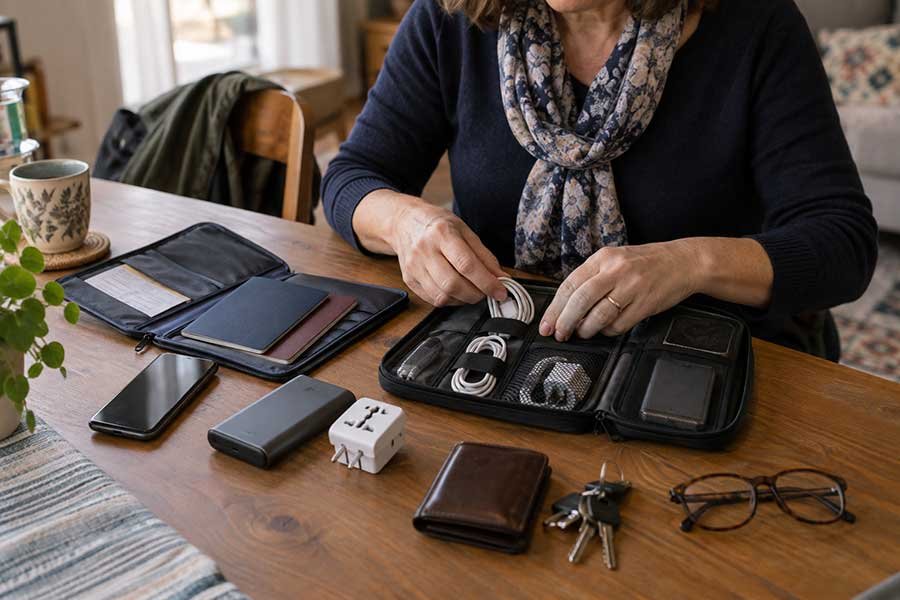
Keep All Documents in One Slim Travel Wallet

A slim travel document wallet is the physical anchor of every organized travel system. It is the single location that holds every piece of paper and card you need throughout the journey, from the departure gate to the hotel check-in desk to the rental car counter to the return flight. When everything lives in one place, finding anything takes seconds. When documents are spread across a wallet, a carry-on pocket, a boarding pass in your hand, and a hotel confirmation buried in email, every checkpoint of the trip requires a search.

Your travel wallet should hold your passport, your boarding passes printed or in a protective sleeve, your travel insurance card, your primary and backup credit cards for the trip, a small amount of local currency, your hotel confirmations for the first and last nights on paper, your emergency contact card, and any visa documentation required for your destination. Everything travel-critical in one slim organized wallet that lives in one specific location throughout the entire trip.

The location matters as much as the wallet itself. Your travel wallet always goes in the same place on every trip. The outer zip pocket of your carry-on. The inside pocket of your jacket. The front compartment of your personal item bag. The location is your choice but the consistency is not optional. When you reach for your passport at immigration without thinking about where it is because it is always in the same place, that is the organizational habit that prevents the frantic pocket search at the front of a queue of two hundred people.

A dedicated travel wallet separates travel documents from your everyday wallet entirely. Your everyday wallet stays home or goes in a secure location in your luggage. At the destination you carry only the travel wallet with the travel-specific cards and currency. This means a lost wallet at a market or a pick-pocketing incident produces a disruption rather than a catastrophe. Your travel wallet has what you need for the day. Your everyday financial life is not in it.

The most relaxed traveler in any airport is always the most organized one. Not the one with the best luck. The one with the best system.

Stress-free travel is not about everything going perfectly. It is about being organized enough that when something goes sideways you can handle it calmly.

Insider Note

Write an emergency information card for your travel wallet that lists your full name, your home country and city, your travel insurance policy number and emergency contact line, the phone number of a trusted contact at home, and the address of your destination accommodation for your first night. Laminate it or protect it in a card sleeve. If your phone dies, your wallet is stolen, or you need to communicate essential information to someone in an emergency, the card provides everything they need to help you. This card weighs almost nothing and travels in the back pocket of your travel wallet on every trip permanently.

Ready to Go

Let Us Plan Your Next Trip

The most organized travel experience starts with the most organized planning. Tell us where you want to go, your travel dates, and your budget. We will build the itinerary, book the accommodation, and make sure every confirmation ends up in exactly the right place before you ever leave home. Real travel agents, real results.

Plan Our Escape

Save Digital Copies of Everything in Your Email

Digital backup is the insurance policy for every physical document in your travel wallet and every confirmation on your phone. It costs nothing, takes about fifteen minutes to set up before any trip, and has rescued more stranded travelers than any other single preparation habit. The principle is simple. Everything important that travels with you physically should also exist digitally in at least two locations accessible from any internet-connected device anywhere in the world.

Email yourself high-resolution photographs or scans of your passport photo page and any visa page. Email every booking confirmation including flights, accommodation for every night, car rental, tour bookings, and any time-sensitive reservations. Email your travel insurance policy and emergency contact number. Email photographs of the front and back of every card in your travel wallet. Email your emergency information card details. Then create a folder in your email labeled with the trip name and move every travel-related email into it.

The email location matters because email is accessible from any device in the world, including a borrowed phone, a hotel lobby computer, or an internet cafe. Cloud storage apps are useful but require specific apps and login credentials to access on an unfamiliar device. Email requires only a browser. When you are standing in a foreign city with a dead phone and a lost bag and you need your insurance policy number, you can walk into any hotel lobby, ask to use the computer, open your email, and find everything you need in under two minutes.

A second digital backup location adds another layer of security. A cloud folder, a secure photo album, or a notes app with the key information stored in plain text. Keep it simple enough that someone else could navigate it to help you in an emergency without needing to be familiar with your specific organization system. The backup is for worst-case scenarios, not for daily use. Clarity and accessibility matter more than elegance.

Insider Note

Forward all confirmation emails to a trusted person at home, preferably a family member or close friend who knows you are traveling. This person does not need to monitor your trip. They need to have the information in their inbox in case you need them to read something to you over the phone, retrieve a booking reference, or act on your behalf in an emergency. Two minutes of forwarding before departure creates a human backup layer that no app or cloud folder fully replaces.

Build a Master Itinerary With All Confirmations in One Place

A master itinerary is the single document that replaces the search through twenty-three emails and four apps when you need to know your flight number, your hotel address, your check-in time, or your tour booking reference at any point during the trip. It is not the trip plan. It is the trip reference document, and the difference between having it and not having it is the difference between a confident traveler and a stressed one at every friction point of the journey.

Build your master itinerary in a single document, whether a note, a spreadsheet, a Google Doc, or a simple text file. Organize it chronologically day by day. For each day, include every booking or reservation for that day with the confirmation number, the address or meeting location, the check-in or departure time, and any relevant contact number. Day one: flight number, departure time, terminal, airline contact, hotel name, hotel address, check-in time, hotel phone, confirmation number. Day two: day trip booking reference, pickup time and location, guide contact. And so on through departure day.

The master itinerary lives in three places. Your email. Your phone as a downloaded or saved note. And one printed copy in your travel wallet for the first day when you may not have reliable phone access or data. After the first day, the phone version handles most reference needs. The email version handles any scenario where your phone is unavailable. The printed version handles the airport arrival, the first transit, and the first check-in before you have oriented yourself in the new destination.

Update the master itinerary whenever a booking changes. Flight time changed by the airline. Restaurant reservation moved. Tour rescheduled due to weather. A master itinerary that has not been updated is a master itinerary that produces confident wrong decisions. Keep it current and it stays the most reliable reference document you own for the trip.

Insider Note

Add a section to your master itinerary titled Useful Numbers that includes the local emergency number for your destination (not 911 if you are traveling internationally), your travel insurance emergency line, your airline’s rebooking line, the front desk number for your accommodation, and the local number for your home country’s embassy or consulate. These numbers are almost never needed and are invaluable when they are. Finding them is difficult when you are stressed. Having them one scroll away in your master itinerary means the most important calls happen immediately rather than after a frantic search.

Our Real Favorites

The Travel Organization Gear We Actually Use

The slim travel wallet that has been in our carry-on on every trip for years, the document organizer that keeps every confirmation accessible in under ten seconds, and the travel journal we use as a combined master itinerary and trip memory keeper. Real organization picks from real organized travel.

DND Favorites

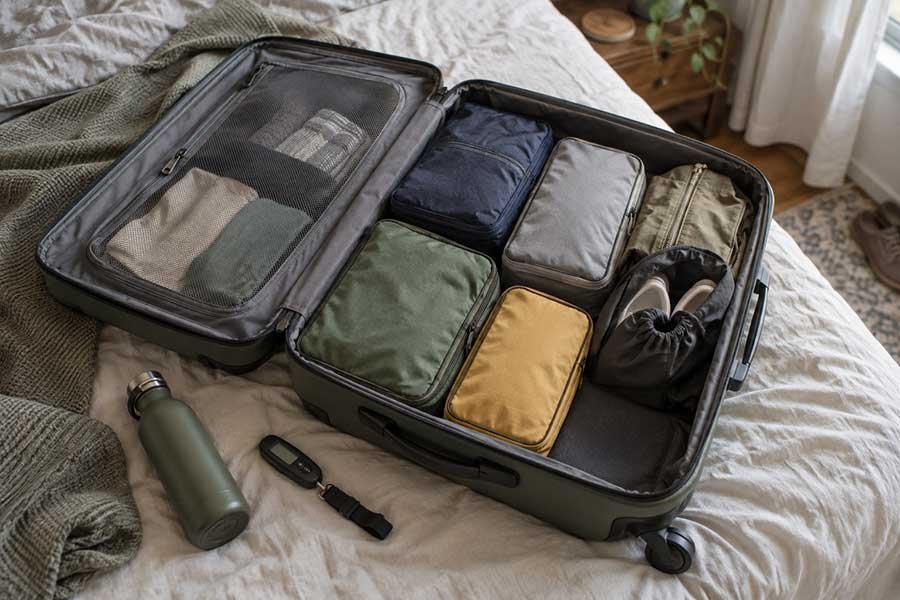
Pack Your Bag the Same Way Every Single Trip

Consistency in packing is the organizational habit with the longest payoff timeline and the most underestimated impact. Packing the same way on every trip means your bag becomes a system you navigate by memory rather than a puzzle you solve from scratch each time. After three or four trips with the same packing structure, you know exactly where everything is without looking. You reach for your phone charger and your hand goes to the right pocket. You reach for your headache tablets and they are in the same place they were on the last six trips.

Define your packing structure once and document it. Your carry-on outer pocket always holds: your travel wallet, your phone charger cable, your earbuds, and a pen. Your carry-on main compartment always holds: your laptop in the back sleeve, your in-flight essentials cube in the front, your toiletry bag at the top, and your clothing in the middle in packing cubes. Your personal item always holds: a book or tablet, a snack, your water bottle, and your medication pouch. This structure is not the only correct structure. It is your structure, built around your habits and your gear, and the key is that it never changes.

When your packing structure is consistent, security screening becomes faster because you know exactly where your electronics and liquids are without searching. Check-in is faster because you know which bag has your boarding pass. Hotel arrival is smoother because you know which bag to open first for your toiletries. Departure is faster because your packing structure means every item goes back to its zone without thinking and the bag is ready in fifteen minutes rather than thirty-five.

Consistent packing also makes the post-trip unpacking and recharge routine faster. You know which items need restocking, which chargers need to go back in their pocket, and which bags need washing before the next trip. The system maintains itself between trips because the structure is the same going in and coming out.

Insider Note

Write your packing structure down the first time and save it alongside your packing checklist. Not just what you pack but where it goes. Over two or three trips you will refine it as you discover a better location for something or realize a specific pocket is used more than you expected. After the third refinement it tends to stabilize. The stable structure is the one that runs automatically. Print it, save it in your notes, and refer to it until the structure is automatic rather than remembered.

Build a Simple Contingency Layer Into Every Trip

The organized traveler is calm when something goes wrong not because they are naturally unflappable but because they thought about the most likely disruptions before they happened and have a simple plan for each one. This is not catastrophic thinking. It is the three-minute mental exercise before every trip that converts potential crises into manageable inconveniences.

Flight delays and cancellations are the most common travel disruption. The contingency is simple: know your airline’s rebooking number or app before departure, have your loyalty program number handy, and know the general layout of the airport so that if your flight is cancelled you can walk directly to the rebooking desk rather than searching for it while stressed. If you have travel insurance that covers delays, know the waiting period required before a claim is valid and keep your receipts from any expenses during the delay.

Lost or delayed luggage affects roughly one in two hundred checked bags. The contingency: pack a change of clothes, your medications, and your toiletries in your carry-on. Keep your most important items with you in the cabin rather than in the hold. Register your bag with the airline immediately at the baggage claim if it does not appear, and take the reference number they give you. Know that most delayed bags are delivered within 24 to 48 hours and plan one day of airport clothing as an acceptable worst case rather than a catastrophe.

Accommodation issues, double bookings, or properties that look nothing like the photos, happen. The contingency: have your booking confirmation immediately accessible in your email and travel wallet, know the name and phone number of the booking platform’s customer service line before arrival, and keep enough on a backup credit card for one night at an alternative property if needed. The backup card limit never needs to be accessed if everything goes right. If it is needed, having it available converts a serious problem into a solvable one.

Insider Note

Build a one-page trip contingency note that lives in the back of your travel wallet on every trip. On it: your airline’s rebooking number, your travel insurance emergency line, your backup accommodation option for the first night if your primary falls through, the local emergency number for your destination, and your embassy or consulate contact. You will almost certainly never open this note. The act of writing it forces you to think through the most likely problems and the peace of mind from knowing the answers are in your wallet if needed is worth the five minutes it takes to write it once.

The Missed Flight That Changed How We Travel

Mia and Carlos had been together for three years when they took their first international trip as a couple. They had different travel styles. Mia kept everything in her phone. Carlos kept everything in various email folders that he had a general sense of but no specific organization for. Neither of them had a physical document wallet. Neither had a printed itinerary. Neither had thought about what they would do if something went wrong.

On the connection from their first flight to the second, they had forty-five minutes. It was tight but manageable. Then the first flight landed twenty-two minutes late and they had twenty-three minutes to make the connection in an unfamiliar terminal. They ran. Carlos’s phone died in the concourse. His boarding pass was digital. Neither of them knew the gate number for the second flight because they had always planned to look it up on arrival. They missed the flight by four minutes.

The next two hours were stressful in a specific way that both of them remember clearly. Not knowing the airline rebooking number. Not finding the boarding passes in Mia’s phone quickly enough because they were buried in a long email thread. Not knowing their travel insurance policy number when the airline agent asked. Not knowing the hotel’s phone number or address to give the rebooking agent as the destination confirmation. Everything they needed existed somewhere in one of their devices or accounts. Finding it in the middle of an airport, stressed and running late on a dead phone, took far longer than it should have.

They got rebooked and made it to the destination four hours later than planned. On the flight they built the system in this article on a single sheet of paper. One document wallet. One master itinerary with every confirmation. One digital backup in a dedicated email folder. A consistent packing structure so the important things were always in the same place. They have used some version of that system on every trip since. Nothing has ever required the contingency layer. But they carry it anyway because the calmest version of any traveler is the one who knows exactly what to do before anything goes wrong.

Airport and Transit Organization That Saves Time

The airport is where travel organization produces its most visible dividend. The organized traveler moves through security, boarding, and transit with an efficiency that looks effortless from the outside because the preparation happened at home. The unorganized traveler produces the same outcome eventually but through a process that is slower, more stressful, and more disruptive to everyone around them.

Check in online the moment it becomes available, typically 24 hours before departure for most airlines. Download your boarding pass to your phone’s wallet or airline app immediately and also forward the confirmation email so the boarding pass is accessible from your email if the app fails. Take a screenshot of your boarding pass as a second backup. Having your boarding pass in three accessible locations means no boarding pass scenario is a crisis.

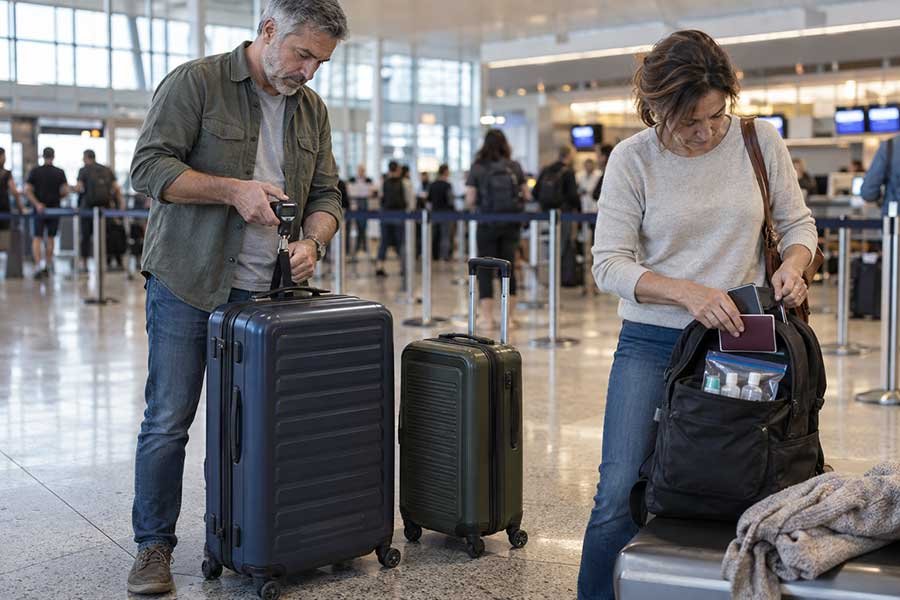
At security, prepare before you reach the conveyor. Phone in a pocket of your carry-on you can reach in one motion rather than your pants pocket where it requires two movements. Laptop in the dedicated laptop sleeve at the back of your carry-on where it slides out immediately. Liquids bag at the top of your carry-on where it can be pulled in one motion. Belt removed before you reach the bins. Shoes ready to slip off. The traveler who does this preparation while approaching the queue goes through security in forty seconds. The traveler who figures it out at the conveyor spends two to three minutes rearranging and slowing everyone behind them.

At boarding, have your boarding pass and ID ready before you reach the gate agent, not while you are standing in front of them. Know your boarding zone or group before you join the boarding queue. Put your carry-on in the overhead bin with the wheels toward the back of the bin so the bag fits properly and the next person’s bag can fit next to it. Take only what you need for the flight in the under-seat personal item so you do not have to access the overhead bin during the flight and inconvenience your row neighbors.

Insider Note

Arrive at your departure gate at least fifteen minutes before boarding begins, not fifteen minutes before departure. Boarding for most flights begins 30 to 45 minutes before scheduled departure. Arriving at the gate with your boarding pass ready, your carry-on manageable, and your in-flight essentials accessible means you board relaxed, find overhead bin space, and settle in before the majority of passengers arrive. The gate agent notices the calm organized traveler and occasionally offers a seat upgrade for early arrivals when better seats are still available. It is not a strategy. It is a side effect of being organized enough to arrive when you said you would.

Book With Us

Book Your Next Trip With a Team Behind You

The most organized trip is the one where the planning was done right from the beginning. Our travel agents handle the flight research, the accommodation matching, the confirmation tracking, and the itinerary building so that your master itinerary arrives complete before you start your own. Less setup. More travel. Exactly the way it should work.

Book A Trip

Common Travel Organization Mistakes to Avoid

Most travel stress traces back to the same organizational gaps. These are the most consistent ones and exactly what to do differently before your next departure.

1

Documents scattered across multiple locations

Passport in one pocket, boarding pass in another, hotel confirmation on the phone, travel insurance card somewhere in the main bag. This approach means every checkpoint of the trip requires a search for the specific document needed at that moment. A single slim travel wallet with every travel document in one organized location eliminates every document search from the moment you leave home to the moment you return. The wallet takes five minutes to set up before departure and saves that five minutes every time you reach for something throughout the entire trip.

2

No digital backup of important documents and confirmations

A phone that dies or is stolen at the worst possible moment takes every digital document stored only on that phone with it. Documents backed up to email are accessible from any internet-connected device on earth, including a borrowed phone or a hotel computer, without requiring any app, any password manager, or any specific device. The fifteen minutes of emailing yourself copies and confirmations before any trip is the cheapest possible insurance against the total loss of access to your travel information at the moment you most need it.

3

No master itinerary with all confirmations in one place

Searching through a full email inbox for a booking confirmation number while standing at a hotel front desk after a twelve-hour travel day is one of the most reliably stressful small travel experiences. A master itinerary with every confirmation number, address, time, and contact in chronological order takes thirty to sixty minutes to build before any multi-day trip and saves that time many times over across the trip’s duration. The hotel address for the taxi driver. The flight number for the rebooking agent. The tour confirmation number for the activity desk. All of it in one document, one scroll, under thirty seconds to find.

4

Changing where things are packed on every trip

Repacking from scratch on every trip means rediscovering where everything is at every friction point of every new trip. Consistent packing structure means your hands find things where they always are without thought. The charger is always in the left outer pocket. The headache tablets are always in the inside pocket of the personal item. The boarding pass is always in the front of the travel wallet. Consistency requires discipline on the first two or three trips and becomes completely automatic by the fourth. The return on the habit compounds with every trip taken.

5

No plan for the most likely disruptions

The traveler who has never thought about what to do if their flight is cancelled spends the first ten minutes of the cancellation in shock rather than in the rebooking queue. The traveler who spent three minutes before the trip identifying the rebooking number and the insurance policy number walks directly to the desk and starts solving the problem. Disruptions in travel are not rare anomalies. They are occasional certainties across any sustained travel history. Three minutes of contingency thinking before each trip converts the inevitable occasional disruption from a crisis into a managed inconvenience.

6

Preparing boarding pass and documents at the security or boarding queue

Finding your boarding pass while standing in front of a security conveyor or a gate agent creates the exact moment of delay and fumbling that slows queues, creates social pressure, and occasionally results in dropped phones or forgotten items left on conveyor belts. Prepare your documents before you join any queue. Phone out and boarding pass loaded before you approach security. Travel wallet open to the right page before you reach the boarding agent. These are not difficult habits. They are twenty-second preparations that make every checkpoint of every trip run smoother for you and everyone traveling with or behind you.

Turn Travel Into Income

Love Helping Travelers Get Organized?

If building travel systems, organizing itineraries, and helping travelers arrive prepared and calm sounds like the work you were made for, becoming a home-based travel agent might be exactly the right next step. Earn commissions, get insider travel perks, and build a real business from anywhere in the world. See how it works.

Become An Agent

Frequently Asked Questions

These are the questions travelers ask most often about staying organized on trips. Real answers from real organized travel experience.

What is the best app for keeping travel documents and itineraries organized?

The best travel organization app is the one you will actually use consistently, which varies by how you already manage information. TripIt automatically imports travel confirmations from your email and assembles them into a day-by-day itinerary with no manual entry required. Google Trips and similar tools do the same. For travelers who prefer manual control, a simple Google Doc or Notes app entry works as well as any dedicated travel app because the value is in the organization habit, not the tool that holds it. For offline access without cell data, downloaded apps or a screenshot of the master itinerary saved to your camera roll provides the same reference at zero data cost. Whatever system you use, the critical habit is email backup of everything regardless of what app you also use, since email is universally accessible from any device without requiring a specific app or login in an emergency.

How do you stay organized when traveling as a group with different bookings?

Group travel organization works best with one designated coordinator who builds and maintains the master itinerary and shares it with everyone before departure. Use a shared document platform like Google Docs so every member of the group can see the current version in real time on their own device without needing to receive updated copies. Each person is responsible for their own documents and travel wallet. The shared itinerary covers the collective schedule, meeting points, shared booking references, and any group accommodation details. Establish one communication channel for the group before departure, typically a group messaging thread, and agree that all travel logistics will flow through that channel rather than across multiple individual conversations that not everyone sees.

How do you handle travel organization for a trip that involves multiple airlines and accommodation providers?

Multi-provider trips are exactly where the master itinerary earns its value most completely. Each flight segment gets its own entry with the confirmation number, the airline contact, the terminal and gate information if known in advance, and the check-in window. Each accommodation gets its own entry with the property name, address, check-in and checkout times, phone number, and confirmation number. Car rental bookings, tour bookings, and any other timed reservations get the same treatment. The chronological structure means you see the full picture of the trip in order and any timing gaps or conflicts between bookings are visible before departure when they are still solvable rather than at the destination when they are not.

What should I do if my flight is cancelled or significantly delayed?

Act immediately rather than waiting. Join the rebooking queue or call the airline’s rebooking line at the same moment as every other affected passenger. The travelers who act first get the best rebooking options. Have your booking reference, your frequent flyer number if applicable, and your destination and preferred travel date ready before you reach the agent. If the airline cannot rebook you acceptably, ask specifically whether they will provide a hotel voucher for an overnight delay, meal vouchers for delays over a certain threshold, or transport to an alternate airport. If you have travel insurance that covers delays, take photos of departure board displays showing the delay or cancellation, keep all receipts for expenses during the delay period, and note the reason for the cancellation as stated by the airline, since insurance claim eligibility sometimes depends on the cause category.

How do you manage travel organization when you are traveling with children?

Family travel organization adds layers to the standard system rather than replacing it. Each child’s documents, passport, any required vaccination records, and any medical information travel in the main family document wallet alongside the adults’ documents with each child’s items in a clearly labeled section. The master itinerary includes child-specific details like stroller gate-check procedures, the locations of airport family restrooms and play areas at connecting airports, accommodation room type details confirming cot or extra bed availability, and any child-required items at each stop. For older children who carry their own small bag, each child’s bag has an ID card inside with the parent’s contact information and the accommodation address for the trip, printed rather than relying on the child to remember it. Family contingency planning includes a meeting point established verbally with children old enough to understand it before entering any busy transit environment.

How do you stay organized during a long multi-week trip where plans change frequently?

The master itinerary for a long, flexible trip functions as a living document rather than a fixed schedule. Keep a working version on your phone that you update whenever a booking changes, a plan shifts, or a new reservation is made during the trip. Email yourself updated versions every few days so the backup reflects current reality rather than the original plan from weeks ago. Build more buffer into the itinerary structure than you would for a short trip. Leave some days without confirmed bookings so the flexibility is built in rather than requiring constant plan revision. For the parts of the trip that are fixed, primarily flights and accommodation, treat those as anchors and be deliberately flexible about everything in between. Long trips that try to plan every day in advance become constraint management exercises rather than adventures. Long trips that anchor the fixed elements and leave space between them tend to produce the most memorable and least stressful travel experiences of any length.

The most relaxed traveler in any airport is not the most experienced. They are the most organized. The system that produces calm takes one afternoon to build and works on every trip after it.

Picture Your Next Departure Morning

Your travel wallet is packed and waiting. Your master itinerary is in your email, your phone, and printed in your wallet. Your bag is packed the same way it was on the last trip. Your boarding pass is in your phone wallet and also in your email. You know where your documents are without reaching for them. You know what to do if the flight is delayed. You arrive at the airport with time to spare, move through security without scrambling, and settle into your gate with a coffee and the quiet confidence of someone who has thought about this trip from every angle and knows they are ready for whatever comes. That is organized travel. That is the only version of travel worth having.

Free Download

One More Thing Before You Go

Print our free Travel Packing Checklist and use it alongside the organization system in this article. Every category covered, every document reminder included, and built to work with a packing cube system, a master itinerary, and a travel wallet that knows where everything lives. The same checklist we use on every single trip we take.

Get the Free Checklist

Explore Our Top Picks for a Better Trip

From the slim travel wallet that has been in our carry-on on every trip to the travel journal we use as a combined itinerary and memory keeper, see the travel organization products and resources we actually use and recommend. Real picks from real trips, tested and trusted over years of organized travel together.

See Our Top Picks

Travel Prints and Printables From Our Shop

Visit Premier Print Works for travel journals, trip planners, itinerary organizers, packing list printables, and wall art that makes every trip a little more beautiful and a lot more organized from the first confirmation saved to the last memory made.

Visit Premier Print Works

Disclaimer

The information shared in this article is provided by Don and Diana’s Travels for general informational, educational, and inspirational purposes only. It reflects our personal experiences, opinions, and the experiences of travelers we have worked with. It is not professional travel, legal, financial, or security advice, and it should not be relied on as such.

Travel Information and Booking

Airline policies, check-in procedures, boarding processes, security requirements, baggage policies, delay compensation rules, and accommodation procedures change often and vary significantly between carriers, airports, countries, and specific properties. Always confirm current requirements directly with your specific airline, accommodation provider, and airport authority before travel. We make no guarantee that any information in this article is accurate, complete, or up to date at the time you read it.

Flight Disruption and Compensation Information

The guidance in this article regarding flight delays, cancellations, and compensation is general educational information only and not legal or consumer rights advice. Passenger rights, compensation eligibility, carrier obligations, and insurance claim requirements vary significantly by airline, country, jurisdiction, and the specific circumstances of any disruption. Always consult your travel insurance policy documents, your airline’s conditions of carriage, and your country’s applicable passenger protection regulations for guidance specific to your situation. We accept no liability for any outcome arising from use of this guidance.

Affiliate and Partner Links

This article may contain affiliate links, partner links, referral links, and links to products or services that pay us a commission. If you click a link and book a trip, make a purchase, sign up for a service, or complete any qualifying action, we may earn a small commission at no extra cost to you. This includes but is not limited to links to our travel booking platform, host agency, recommended products, the Premier Print Works shop, and any third-party retailers or service providers mentioned in the article. Our recommendations are based on real use and genuine belief in the products and services we share. Commissions help support the cost of running this site and producing free content for our readers.

Third-Party Websites and Services

We may link to third-party websites, services, and resources for your convenience. We do not control these sites and are not responsible for their content, terms of service, privacy practices, pricing, availability, accuracy, customer service, refund policies, or any product or service they sell. Your use of any third-party site is entirely at your own risk and subject to that site’s own terms and policies.

Health, Safety, and Personal Responsibility

Travel involves personal risk. You are solely responsible for your own health, safety, travel insurance, medications, vaccinations, documentation, financial decisions, and choices while planning or taking any trip. We strongly recommend purchasing comprehensive travel insurance for every trip. Don and Diana’s Travels, its owners, employees, contractors, and affiliates accept no liability for any loss, injury, illness, missed flight, delayed bag, accommodation problem, cancellation, theft, or inconvenience arising from your use of the information in this article or from any travel decisions you make.

Composite Stories and Characters

Some stories, examples, and traveler experiences shared on this site are composites. They are drawn from the real experiences of Don, Diana, clients, friends, and travelers we have worked with over the years. Names, identifying details, locations, and circumstances may be combined, changed, or fictionalized to protect privacy and to better illustrate a point. Any resemblance to a specific real person beyond the composite portrayal is unintentional.

No Guarantees

We do not guarantee any specific result, outcome, savings, experience, or financial return from using the information, tips, services, or products mentioned in this article. Your results depend on many personal factors, including your own choices, effort, circumstances, and external conditions outside of our control.

Copyright and Use

All content in this article, including text, images, graphics, design, and original stories, is the copyrighted property of Don and Diana’s Travels unless otherwise noted. You may not copy, republish, redistribute, modify, sell, or reuse our content in whole or in part without our prior written permission. You are welcome to share a direct link to this article with proper credit.

By reading and using the information in this article, you acknowledge that you have read, understood, and agree to this disclaimer in full.