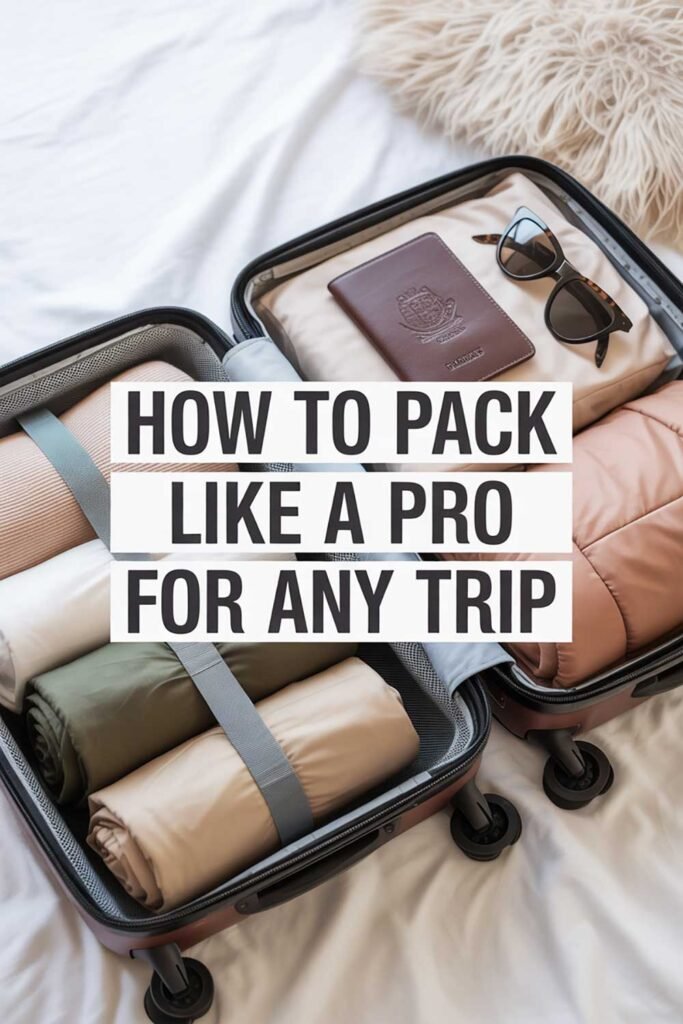
Travel Document Hacks for Stress-Free Trips
Your travel documents are the most important things you will pack and the ones most travelers treat as an afterthought until something goes wrong. The traveler who never panics at the airport is the one who organized their documents before they ever left the driveway. This article shows you exactly how to be that traveler on every trip from now on.
Grab Our Travel Packing Checklist
Documents are the first category on our packing checklist for a reason. Passport, copies, digital backups, travel insurance, visa documentation, and every supporting document most travelers forget to prepare until they are standing at a check-in counter wishing they had. Print it once and use it before every trip.
Get the Free ChecklistA physical photocopy of your passport is the backup that works when everything else fails. No phone battery required. No internet connection needed. No app login necessary. A printed copy held separately from your original passport gives you usable identification information at the exact moments when the original is unavailable, under inspection, or in a worst-case scenario, lost or stolen.
Make two printed copies of your passport photo page before every international trip. Keep one in your travel document wallet in a location separate from where you carry your actual passport. Keep a second copy in your checked luggage in a zippered inner pocket. If your carry-on is lost, the copy in your checked bag survives. If your checked bag is lost, the copy in your carry-on survives. The two-copy, two-location strategy ensures that a document backup exists regardless of which bag has a bad travel day.
Beyond your passport, print copies of your travel insurance policy summary with the emergency contact number, your hotel confirmations for the first and last nights of your trip, your flight itinerary with confirmation numbers, and any visa documentation required for your destination. These printed copies are not for daily use. They are for the specific scenario where your phone is dead, stolen, or broken at the exact moment an airline agent, a hotel front desk, or an immigration officer asks for information you need to produce immediately.
Store printed copies in a slim, waterproof document sleeve rather than loose in a bag pocket. A waterproof sleeve protects the copies from the water bottle leak, the rain caught on the way between vehicles, and the humidity of a tropical destination that turns unprotected paper into soft, illegible versions of itself within a day or two. A basic waterproof document sleeve costs $3 to $8 and keeps every paper copy in readable condition for the full trip duration.
The traveler who never panics at the airport is the one who organized their documents before they ever left the driveway.
A printed passport copy costs nothing and works everywhere. It is the backup that requires no battery, no signal, and no password to access.
When you make your passport copies, photograph your passport photo page on your phone at the same time and text or email the photo to a trusted contact at home. If you need your passport information communicated to someone while your copies are inaccessible, your contact at home can read the details to you over the phone. A passport number and issue date communicated verbally is enough for an airline to begin the rebooking process in most situations. This thirty-second step before any international trip creates a human backup layer that no physical copy or cloud folder fully replaces.
Let Us Plan Your Next Trip
A well-organized document system works best when the trip behind it was planned just as carefully. Tell us where you want to go, your dates, and your travel style. We will handle the booking confirmations, the itinerary details, and the planning so your document system has everything it needs to work perfectly. Real travel agents, real results.
Plan Our EscapeEmail is the most universally accessible digital backup system available to any traveler. Every major airport, every hotel lobby, and the vast majority of public spaces in any travel destination have internet access. A borrowed phone, a hotel computer, or an internet cafe can open your email without requiring a specific app, a specific device, or a specific password manager. Email your documents to yourself and they are retrievable from anywhere on earth with a browser and your login credentials.
Email yourself clear photographs or scans of your passport photo page and any visa pages. Email every booking confirmation you have for the trip, organizing them in a dedicated folder labeled with the trip name. Email your travel insurance policy summary and the 24-hour emergency contact number. Email a photo of the front and back of every card in your travel wallet. Email your accommodation addresses for every night of the trip. Email the contact details of your nearest embassy or consulate at each destination.
The dedicated trip email folder is the organizational step that turns a useful backup into an instantly useful backup. Without a folder, your travel emails are scattered across your inbox mixed with everything else and finding a specific confirmation under pressure takes longer than it should. A folder named something as simple as Paris April or Mexico Family Trip consolidates every relevant email in one place that you can navigate directly to in a single click rather than searching through an inbox while stressed.
Save key information as screenshots to your phone’s camera roll as a secondary digital backup. Your boarding passes, your hotel addresses, your accommodation check-in details, and your insurance emergency number as saved screenshots are accessible even when your phone has no cellular or Wi-Fi signal. A saved screenshot does not require connectivity to display. A screenshot of your hotel address in the local script, taken at home before departure, can be shown to a taxi driver at any destination without any internet or translation app required.
Forward all your trip confirmation emails to a trusted person at home before departure, ideally a family member or close friend who knows you are traveling. This person holds the full set of your travel documents in their inbox independently of you. If your phone is stolen, your email account is somehow inaccessible, and your printed copies are in the lost bag, your contact at home can read you every booking number, every address, and every confirmation detail you need over the phone. This human backup is the last layer of the document system and the one that never fails because it requires only a phone call to access.
Passport expiration is the most consistently underestimated travel document problem and the most avoidable one. The traveler who discovers their passport expired three months ago at the airport check-in counter on departure day is the traveler who did not look at the expiration date when booking the trip six months earlier. The traveler who checks their passport at booking has three to six months to renew it comfortably and inexpensively. The cost of the lesson is the same. The timing determines whether it is a minor administrative task or a trip-cancelling crisis.
Check your passport expiration date the moment you book any international trip regardless of how recently you believe you renewed it. Dates are easy to misremember. A passport renewed in 2018 that you remember as recent is now approaching the age where six-month validity rules begin to matter. The six-month check is the habit that catches this problem when there is still time to solve it.
The six-month validity rule exists because many countries, particularly throughout Southeast Asia, Africa, the Middle East, and parts of South America, require your passport to be valid for at least six months beyond your intended departure date from their country. An airline may refuse to board you for a destination with this rule if your passport will expire within six months of your departure date even if the passport has not technically expired at the time of travel. This is not a rare or edge-case rule. It affects a significant portion of popular international travel destinations.
Passport renewal timelines vary by country and season. In the United States, standard renewal through the mail takes six to eight weeks. Expedited service costs an additional fee and takes three to five weeks. Urgent appointments at a passport agency for travel within two weeks are available but require documentation of imminent travel and are subject to availability. The window of comfortable, low-cost renewal closes quickly as departure approaches. Checking six months out keeps the window fully open.
Set a calendar reminder twelve months before your passport expiration date and a second reminder at the six-month mark. Not when you are planning a trip. Annually. A passport expiration reminder twelve months out gives you the full renewal window without any urgency premium. It also catches the scenario where a last-minute trip opportunity arises and you check your passport only to discover it was already in the renewal window before the trip was even considered. Passport expiration is the only travel document problem that requires advance action on a fixed timeline. The calendar reminder costs nothing and eliminates the problem entirely.
The Document Gear We Travel With
The slim travel document wallet that keeps every paper in one organized location, the waterproof document sleeve that has protected our copies through everything, and the travel journal that doubles as our document log and trip memory keeper. Real document organization picks from real trips of every destination and length.
DND FavoritesTravel insurance is the purchase that feels unnecessary on every trip where nothing goes wrong and essential on every trip where something does. Most travelers purchase it, put the policy documents somewhere in their email, and give it no further thought. The traveler whose system works in an emergency is the one who knows their policy number, their emergency contact line, and the basic scope of their coverage before they ever need to use it.
Keep your travel insurance card or a printed summary in the front of your travel document wallet on every trip. The card should show your policy number, the 24-hour emergency assistance line, the policyholder name, and the basic coverage categories. If you have a medical emergency abroad, if your flight is cancelled and you need to know whether your delay coverage applies, or if your luggage is stolen and you need to file a claim, the card in your wallet gives you the information you need immediately rather than requiring a document search at the worst possible time.
Understand your coverage before you travel, not after an incident occurs. Know whether your policy covers pre-existing conditions. Know the waiting period for a delay claim before you can start accumulating claimable expenses. Know whether your medical coverage requires pre-authorization for non-emergency treatment. Know your policy’s coverage limits for medical evacuation, which is the most important and most expensive category on any international travel insurance policy. A medical evacuation from a remote location to an appropriate facility or home can cost tens of thousands of dollars without coverage. Knowing your policy covers it and at what limit gives you the confidence to travel to destinations where the healthcare infrastructure may not meet Western standards.
Buy travel insurance at the time of booking, not the week before departure. Most policies include a pre-existing condition waiver only if purchased within a specific window of your initial trip deposit, typically 14 to 21 days. Buying early also covers you if the trip needs to be cancelled before departure for a covered reason. A policy purchased the week before departure provides coverage during the trip but not for the cancellation scenarios that can arise between booking and departure.
Save your travel insurance emergency line as a contact in your phone before every trip. Label it clearly, Travel Insurance Emergency, and put it alongside your other emergency contacts. In a medical emergency, you or someone helping you will search your contacts for an emergency number, not scroll through insurance policy emails. The contact takes thirty seconds to add and means the most important phone number for a crisis abroad is findable by anyone holding your phone, whether or not they know you.
A slim travel document wallet is the physical anchor of an organized document system. It is the single location that holds every piece of paper and card needed throughout the journey, organized in a way that makes finding anything take seconds rather than minutes. When every document has a specific location and the wallet is in a consistent spot in your bag, the entire document layer of your travel system runs on autopilot.
Your travel wallet organization from front to back: the daily-use section at the front holds your boarding passes, your current destination’s local currency, and the one credit card you use for daily purchases. The mid-section holds your passport in its own clear sleeve, your backup credit card, and your travel insurance card. The back section holds your printed document copies, your emergency information card, and any reservation confirmations for the current or next day of the trip.
The travel wallet lives in one place on every trip. The outer zip pocket of your carry-on for transit and flights. The inside pocket of a jacket or a hidden inner bag pocket at destinations where pickpocketing is a concern. The front desk safe at the accommodation for evenings when you are not traveling. The consistency of its location means reaching for it is automatic rather than a searching process at every checkpoint of the journey.
Your everyday wallet stays home or is stored deep in your checked luggage. You carry only what the trip requires in the travel wallet. A backup card, daily currency, your travel insurance card, and your passport. Your primary home credit cards, your loyalty cards, your gym membership card, and everything else that constitutes your daily financial life stays home. The travel wallet that is lost or stolen on a trip produces a manageable disruption. The main wallet of a lifetime that is lost or stolen abroad produces a significantly larger one.
Add a small index card to the back of your travel wallet on every international trip with the following information written in ink: your full name, your passport number, your travel insurance policy number and emergency line, your accommodation address for the current night, and one trusted emergency contact with a phone number. If you are ever in a situation where you cannot communicate verbally or access your phone, the card provides a first responder or a helpful stranger with every piece of information they need to help you. Write it in a clear hand, protect it in a card sleeve, and replace it at each destination with updated accommodation information.
The Passport That Almost Ended the Trip Before It Started
Nadia had been planning her first solo international trip for eight months. She had the flights. She had the hotels. She had the itinerary printed and the packing list complete. She had the taxi booked to the airport for 5 a.m. and she arrived at the check-in counter at 6 a.m. feeling prepared in a way she had worked toward for months.
The check-in agent asked for her passport. She handed it across the counter. The agent looked at the photo page, looked at the expiration date, and looked up. She told Nadia that the airline could not board her for this destination because her passport expired in three months and the destination required six months of validity beyond the departure date. Nadia’s passport was technically valid. She just could not travel on it.
Nadia had not looked at the expiration date when she booked the trip eight months earlier. She had not looked at it when she packed. She looked at it now, standing at a check-in counter at 6 a.m. with a flight departing in ninety minutes, and saw that the expiration date she had thought of as comfortably in the future was three months away. The trip she had planned for eight months was three months too late to use the passport she had.
She missed the flight. She spent the morning on the phone with an expedited passport service. She rebooked for three weeks later with a rush fee on top of the rebooking fee. The trip happened. It was everything she had planned for it to be. But the 5 a.m. check-in counter conversation is the first thing she tells every traveler she meets when the subject of international travel comes up. Check the expiration date when you book. Not the week before. When you book. The six months go faster than any travel planning feels like it will.
A document checklist completed before every trip converts document preparation from an anxiety-producing mental exercise into a repeatable routine that takes about twenty minutes and produces complete confidence in your document readiness before departure day arrives. Run through this list at least one week before any trip to leave enough time to address anything that needs attention.
Passport: confirm expiration date is valid for at least six months beyond your return date. Confirm all pages are undamaged. Make two printed copies. Photograph the photo page and save it in your phone and email it to yourself and to your trusted contact at home.
Visas: confirm whether your destination requires a visa. If yes, confirm whether it is obtained in advance or on arrival. If in advance, confirm the visa has been approved and is in your passport or in your documents. If on arrival, confirm the fee amount and payment method required at the destination border.
Travel insurance: confirm the policy is active for your travel dates. Locate the emergency contact number. Print or photograph the policy summary card. Save the emergency number as a phone contact. Know whether your coverage requires any pre-authorization for non-emergency treatment at your destination.
Booking confirmations: print or screenshot the first night hotel confirmation with the address in local script if applicable. Screenshot all flight confirmations with confirmation numbers. Screenshot all tour, transfer, and activity bookings. Email all of the above to yourself in a dedicated trip folder. Forward the folder contents to your trusted contact at home.
Research your destination’s specific entry requirements through your government’s official travel advisory website at least one month before departure, not at the time of booking. Entry requirements, health documentation requirements, vaccination certificates, and visa regulations change and occasionally change with short notice. Many travelers book a trip under one set of entry requirements and discover different requirements have been introduced before departure. A final entry requirement check one month before departure and again one week before departure catches any changes with enough time to address them before you are standing at the border.
Book Your Trip With Document Support Built In
When you book through our travel agents, every confirmation and itinerary detail arrives organized and ready to drop into your document system. No hunting through booking sites for confirmation numbers. No piecing together the itinerary from five different email threads. One agent, one itinerary, every confirmation in one place. That is how organized travel starts.
Book A TripCommon Travel Document Mistakes to Avoid
Most travel document problems are entirely preventable and follow the same patterns. These are the most consistent ones and what to do differently before your next departure.
Not checking passport expiration until the week before travel
Passport expiration problems discovered at booking become administrative tasks. Passport expiration problems discovered at the airport become crises. The six-month validity requirement enforced by airlines for many international destinations means a technically valid passport can be an unusable one for your specific flight. Check the expiration date the moment you book any international trip. Set annual calendar reminders at the twelve-month and six-month marks before your passport expires regardless of any planned travel so you are never in the renewal window without knowing it.
Keeping all documents in the same bag with no backups
A single bag containing your original passport, your printed copies, your travel insurance, your booking confirmations, and your cards is one lost or stolen bag away from a complete document emergency. Original documents travel in your carry-on. Printed copies travel in a separate location from the originals, ideally in a second bag or in a different section of the same bag. Digital copies travel in your email and in screenshots on your phone. A trusted contact at home holds the full set independently. Four layers of access to any critical document means no single loss event creates complete inaccessibility.
No digital backup of critical documents
Documents backed up only physically are protected against only physical document loss. A phone that dies takes digital copies stored only on that phone. A laptop left in the hotel room takes digital copies stored only on that laptop. Documents emailed to yourself are accessible from any internet-connected browser on any device anywhere in the world without requiring a specific app, a specific device, or an app store login. Email is the most universally accessible digital backup platform available. Using it for document backup costs nothing and takes ten minutes.
Travel insurance policy buried in email with no card in the wallet
Travel insurance that is purchased but not accessible at the moment of a claim is insurance that provides delayed rather than immediate help in a situation where immediacy matters. The emergency line for your travel insurance should be in your phone as a saved contact, in your travel wallet as a printed card, and in your email folder. A medical emergency abroad where you or a travel companion needs immediate assistance requires the emergency number to be available in seconds, not after a ten-minute inbox search on a low-battery phone in a hospital waiting room.
Not researching entry requirements before departure
Entry requirements including visa requirements, health documentation, vaccination certificates, and passport validity rules vary by destination and by your specific citizenship and change more frequently than most travelers expect. Discovering at the airport that you needed a visa you do not have, or that your destination requires a health certificate you did not obtain, or that your passport needs to have at least one blank page and you have none left, are all entirely avoidable problems with one month of advance checking. Use your government’s official travel advisory website rather than a travel blog or a forum for entry requirement information since government sites reflect current official requirements.
Buying travel insurance too close to departure to benefit from cancellation coverage
Travel insurance purchased the day before or the week before departure provides trip protection only for the travel days themselves. Most policies include a cancellation coverage window that applies only if the policy was purchased within a certain number of days of the initial trip deposit, typically 14 to 21 days. If you need to cancel the trip for a covered reason before departure, insurance purchased too late does not cover the cancellation. Buy travel insurance when you make your first non-refundable trip payment. It costs the same at booking as it does the week before departure. The protection it provides is significantly broader.
Help Other Travelers Arrive Prepared
If making sure travelers have every document, every confirmation, and every piece of preparation they need before they ever leave home sounds like the work you were made for, becoming a home-based travel agent might be exactly the right next step. Earn commissions, get insider travel perks, and build a real business from anywhere. See how it works.
Become An AgentFrequently Asked Questions
These are the questions travelers ask most often about managing travel documents. Real answers from real travel experience.
How far in advance should I renew my passport?
The practical answer for most travelers is renew your passport when it has nine to twelve months remaining, not when it expires. The six-month validity requirement at many destinations makes a passport functionally unusable for international travel for the last six months of its valid period. Add the standard renewal processing time of six to eight weeks in many countries and a passport that hits twelve months remaining is already entering the window where renewal should be on your radar. Processing times fluctuate seasonally and can extend significantly during periods of high demand. Expedited processing costs additional fees and urgent same-week appointments are subject to limited availability. Renewing at the twelve-month mark is comfortable. Renewing at the six-month mark is possible but may require expedited fees. Renewing at the two-month mark requires urgent in-person appointments and premium fees. The earlier the renewal, the lower the cost and the lower the stress.
What documents do I need for international travel beyond a passport?
Beyond a valid passport, international travel requirements vary significantly by destination, your citizenship, the purpose of your visit, and current entry regulations. Standard additional documentation categories include visas, which may be required in advance or available on arrival depending on your passport and destination. Return or onward travel proof showing you have a booked departure from the destination, which some countries require at border control to confirm you do not intend to overstay. Sufficient funds evidence in some countries, typically demonstrated by bank statements or cash. Travel insurance proof in countries that require it for entry, which some nations including several European Schengen countries require for certain visa categories. Accommodation confirmations showing where you will stay. Vaccination or health certificates at destinations with specific health entry requirements. Always verify current requirements for your specific passport and destination through official government sources before travel since requirements change and vary by circumstance.
What should I do if my passport is lost or stolen abroad?
Report the theft or loss to local police immediately and obtain a police report. The police report is required for both travel insurance claims and emergency passport processing in most countries. Contact your nearest embassy or consulate immediately after filing the police report. They issue emergency travel documents to citizens who have lost their passports and can begin the process immediately when you arrive with identification, a police report, a passport photo, and any backup documentation including copies or digital photographs of your original passport. Emergency document processing timelines vary by embassy from same-day for genuine emergencies to several business days for standard processing. Your printed and digital copies of your passport accelerate the verification process significantly. Without any backup documentation, proving your identity and citizenship takes longer and may require additional steps. This is the moment the preparation in this article pays its most significant dividend.
Is digital travel insurance proof sufficient or do I need a printed card?
Digital proof on a phone is sufficient in most situations and is what most travelers present when insurance documentation is required. The limitation of digital-only is that phones run out of battery, get stolen, and lose connectivity at the moments when they are most needed. A printed card or a printed policy summary page in your travel wallet provides access to your policy number and emergency line regardless of your phone’s status. For routine situations like delayed flights or lost bags where you have time to access your email or app, digital is entirely adequate. For emergency medical situations where you or someone helping you may need the information immediately in a stressful environment, a physical card with the number visible without unlocking a phone provides faster access. Carry both and the question resolves itself.
How do I know if a country requires a visa for my specific passport?
The most reliable source for visa requirements is your own government’s official travel advisory or foreign affairs website, which maintains current entry requirement information for your specific citizenship traveling to specific destinations. Secondary sources include the destination country’s official embassy or consulate website for your home country. Tools like IATA Travel Centre and similar professional travel databases are used by airlines and travel agents to verify visa requirements and are accurate but may not reflect regulatory changes as immediately as government sources. Third-party travel blogs and forums are not reliable sources for visa requirement information since they may be outdated and the consequences of incorrect information are significant. Verify through official sources, verify again closer to departure, and if uncertain contact the destination country’s embassy directly for confirmation.
What should I do with original documents at my accommodation?
Store your original passport in the room safe when your accommodation has one. If no room safe is available, inquire at the front desk about secure document storage. Many hotels will hold documents in the front office safe for guests. If neither option is available, keep the original passport on your body in a hidden pocket wallet or neck pouch when in public and in a secure zippered inner compartment of your luggage when in the room. Carry your printed photocopy for day-to-day situations where identification may be requested rather than the original. Many destinations allow photocopies as valid identification for routine purposes while the original is stored securely. Check the specific requirements of your destination since some countries require you to carry your original passport at all times. Knowing the rules for your specific destination before you arrive means the question of what to carry and what to store is already answered.
The traveler who never panics at the airport is always the most organized one. The document system that produces calm takes twenty minutes to build and works perfectly on every trip after it.
Picture Your Next International Departure
Your passport is valid for eighteen months. The expiration date reminder is set in your calendar for next year. Your document copies are in the waterproof sleeve in your travel wallet. Your digital backups are in your email folder, your phone screenshots, and your trusted contact’s inbox at home. Your travel insurance card is in the front of your travel wallet with the emergency number already saved in your phone. Your booking confirmations are organized and one scroll away. You walk to the check-in counter. The agent asks for your passport. Your hand goes to exactly the right pocket without thinking. You hand it across with complete confidence. That is the document system working exactly as it was built to work. That is every departure from now on.
One More Thing Before You Pack
Print our free Travel Packing Checklist and complete the documents section before you pack anything else. Passport validity confirmed. Copies made. Digital backup sent. Travel insurance card in the wallet. Every document category covered before a single piece of clothing goes into the suitcase. The same checklist we use before every trip we take.
Get the Free ChecklistExplore Our Top Picks for a Better Trip
From the slim travel document wallet that keeps every paper organized and accessible to the waterproof document sleeve that has protected our copies through every trip condition imaginable, see the document organization products and travel resources we actually use and recommend. Real picks from real trips, tested and trusted over years of global travel together.
See Our Top PicksTravel Prints and Printables From Our Shop
Visit Premier Print Works for travel journals, trip planners, document organizers, packing list printables, and wall art that makes every trip a little more beautiful and a lot more organized from the first document prepared to the last memory made.
Visit Premier Print WorksDisclaimer
The information shared in this article is provided by Don and Diana’s Travels for general informational, educational, and inspirational purposes only. It reflects our personal experiences, opinions, and the experiences of travelers we have worked with. It is not professional travel, legal, financial, or insurance advice, and it should not be relied on as such.
Travel Documents, Visas, and Entry Requirements
Passport validity rules, visa requirements, entry requirements, health documentation requirements, and related travel regulations change frequently and vary significantly by destination country, your citizenship, and current government policies. The information in this article reflects general industry standards and common requirements at the time of writing and may not reflect current requirements for your specific travel situation. Always verify current passport validity rules, visa requirements, and entry documentation requirements through your government’s official travel advisory website and the destination country’s official embassy or consulate before booking and before travel. Never rely on third-party sources including this article as your definitive source for visa or entry requirement information. We make no guarantee that any regulatory information in this article is current, complete, or applicable to your specific journey.
Travel Insurance Information
Any information in this article about travel insurance, coverage types, cancellation windows, pre-existing condition waivers, medical evacuation coverage, and related topics is general educational content only and not professional insurance advice. Travel insurance policies vary significantly between providers, plans, and individual circumstances. Always read your specific policy documents in full, understand your coverage limits and exclusions, and consult a qualified insurance professional if you have questions about your specific coverage needs. The mention of typical pre-existing condition waiver windows is general industry information and does not apply to all policies or providers. We are not insurance agents or brokers and are not responsible for any outcome related to insurance decisions made based on information in this article.
Affiliate and Partner Links
This article may contain affiliate links, partner links, referral links, and links to products or services that pay us a commission. If you click a link and book a trip, make a purchase, sign up for a service, or complete any qualifying action, we may earn a small commission at no extra cost to you. This includes but is not limited to links to our travel booking platform, host agency, recommended products, the Premier Print Works shop, and any third-party retailers or service providers mentioned in the article. Our recommendations are based on real use and genuine belief in the products and services we share. Commissions help support the cost of running this site and producing free content for our readers.
Third-Party Websites and Services
We may link to third-party websites, services, and resources for your convenience. We do not control these sites and are not responsible for their content, terms of service, privacy practices, pricing, availability, accuracy, customer service, refund policies, or any product or service they sell. Your use of any third-party site is entirely at your own risk and subject to that site’s own terms and policies.
Health, Safety, and Personal Responsibility
Travel involves personal risk. You are solely responsible for your own health, safety, travel insurance, medications, vaccinations, documentation, financial decisions, and choices while planning or taking any trip. We strongly recommend purchasing comprehensive travel insurance for every trip. Don and Diana’s Travels, its owners, employees, contractors, and affiliates accept no liability for any loss, injury, illness, denied boarding, missed flight, documentation problem, entry refusal, financial loss, delay, cancellation, theft, or inconvenience arising from your use of the information in this article or from any travel decisions you make.
Composite Stories and Characters
Some stories, examples, and traveler experiences shared on this site are composites. They are drawn from the real experiences of Don, Diana, clients, friends, and travelers we have worked with over the years. Names, identifying details, locations, and circumstances may be combined, changed, or fictionalized to protect privacy and to better illustrate a point. Any resemblance to a specific real person beyond the composite portrayal is unintentional.
No Guarantees
We do not guarantee any specific result, outcome, savings, experience, or financial return from using the information, tips, services, or products mentioned in this article. Your results depend on many personal factors, including your own choices, effort, circumstances, and external conditions outside of our control.
Copyright and Use
All content in this article, including text, images, graphics, design, and original stories, is the copyrighted property of Don and Diana’s Travels unless otherwise noted. You may not copy, republish, redistribute, modify, sell, or reuse our content in whole or in part without our prior written permission. You are welcome to share a direct link to this article with proper credit.
By reading and using the information in this article, you acknowledge that you have read, understood, and agree to this disclaimer in full.