27 Carry-On Hacks for Avoiding Luggage Fees
Checked bag fees are one of the most consistently avoidable travel costs there is — and yet they catch millions of travelers every year because the habits that prevent them are never quite built before the departure morning when it is already too late to do anything about it. The fee paid at the check-in counter is almost never the result of genuinely needing a checked bag. It is almost always the result of a bag that was packed without the specific knowledge, techniques, or preparation that would have kept it carry-on sized.
These twenty-seven hacks cover every stage of the process — knowing the rules before you pack, building the bag correctly, handling the airport correctly, and maintaining the habits that mean the luggage fee conversation never comes up again. None of these are complicated. All of them are the kind of thing that pays back on every trip that uses them, and the cumulative saving across a year of travel is significant enough to matter.
Free Download: Our Travel Packing Checklist
The carry-on that stays within limits starts with the right packing checklist. Ours covers every category, every weight consideration, and every pre-departure confirmation that keeps the bag right before it ever reaches the airport. Download it free.
Get the Free ChecklistBook A Trip
Book the next trip with a travel agent who knows every airline’s baggage policy, picks the right carrier for your route, and plans the whole thing so the only fee you pay is the one you chose to.
Book A TripKnow the Rules Before You Pack a Single Item
The checked bag fee paid at the airport is almost always the result of not knowing the specific rules before the packing session began. Carry-on limits vary more significantly than most travelers realize — between carriers, between fare classes on the same carrier, between the outbound and connecting legs of the same itinerary, and between domestic and international routes on the same airline. The rules researched before the bag is opened are the rules that can still be packed within. The rules discovered at the check-in counter are the rules that cost money to address.
1. Look up the exact carry-on size and weight limit for every carrier on the itinerary
A full-service carrier may allow a twenty-two-inch carry-on at ten kilograms. The budget carrier on the connecting leg may allow a forty-centimeter bag at seven kilograms. Both legs are on the same ticket. The bag that boards the first flight gets gate-checked at the second. The only way to avoid this is to look up both carriers’ specific limits before packing and pack within the most restrictive one. Carrier baggage policy pages are publicly available and take five minutes to read. Read them before the first item goes in the bag.
2. Know the difference between a carry-on and a personal item — and use both
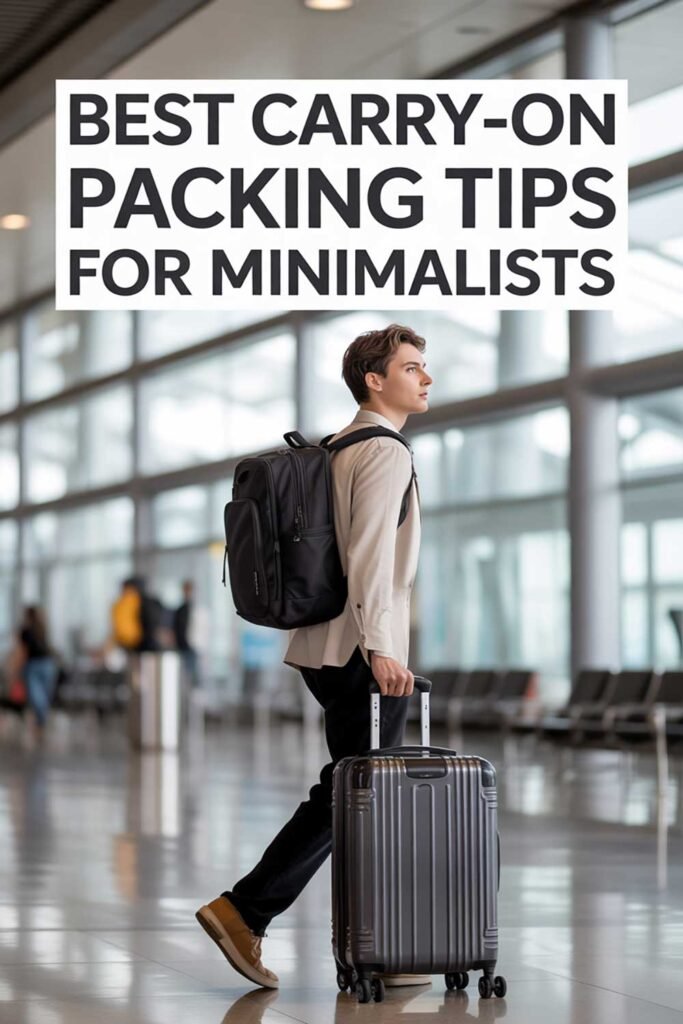
Most airlines allow two items in the cabin: a carry-on for the overhead bin and a personal item — a smaller backpack, tote, or bag — for under the seat. Both are typically included in the base fare at no additional cost. The traveler who brings only a carry-on is using one of the two allowed items. The traveler who brings both is using the full allowance. The personal item is not an afterthought — it is the second carry-on. A well-chosen personal item adds meaningful capacity to a carry-on-only travel system without triggering any additional fee.
3. Check whether the fare class includes carry-on baggage — not all do
Basic economy and light fare classes on many carriers do not include carry-on bin access — only a personal item under the seat. This is not buried information; it is in the fare conditions at booking. The traveler who buys a basic fare without reading the baggage conditions and arrives at the gate with an overhead bin carry-on pays the gate-check fee that the fare’s conditions specified. Read the fare conditions at booking. The carry-on fee built into the itinerary is the only one that cannot be avoided after purchase.
4. Understand that budget airline carry-on limits are strictly enforced at the gate
Full-service carriers typically enforce carry-on size limits inconsistently — an oversized bag that makes it through check-in and security usually makes it onto the aircraft. Budget carriers on short-haul routes frequently enforce size limits at the gate with measurement gauges and charge gate-check fees that are significantly higher than the pre-booked checked bag fee would have been. Know the carrier. If the route is operated by a budget airline, the size and weight limits are real constraints rather than suggestions, and the gate is not the place to discover that the bag does not fit.
5. Weigh and measure the carry-on at home before every departure
The bathroom scale weigh-in — step on while holding the bag, subtract personal weight, compare to the carrier’s limit — is the sixty-second habit whose entire value is in its timing. At home, removing items to reduce weight costs nothing and takes two minutes. At the check-in counter, reducing weight costs the overweight fee or a public repack. Measure the bag’s dimensions against the carrier’s size gauge if the bag’s fit is uncertain. Both checks take under two minutes at home and prevent the specific discovery that produces the most avoidable travel cost in the airport.
6. Look up the baggage policy after booking a flight, not before it
This tip is intentionally counterintuitive. Most travelers look up baggage policies before booking to factor the cost into the fare comparison — which is correct. But the policy lookup should also happen after booking, in the final days before departure, because airline baggage policies change and the policy confirmed at booking may not be the policy in effect at departure. A quick confirmation of the current policy before packing begins ensures the bag is packed for the rules that will be applied at the airport rather than the rules that were in effect six weeks ago when the ticket was purchased.
“The luggage fee is never a surprise to the airline. It is always a surprise to the traveler. The preparation that prevents it costs less time than the fee costs money.”
Plan Our Escape
Let us choose the right carrier, the right fare class, and the right baggage setup for the trip — so the only costs are the ones that were planned for. Tell us where you want to go.
Plan Our EscapePacking Techniques That Keep the Bag Within Limits
Knowing the rules is the first half of avoiding the fee. Packing within them is the second. The carry-on that exceeds the weight limit is almost never full of items that genuinely require excess weight — it is full of items whose packing method, selection, and distribution added weight that better technique would have prevented. These hacks address every variable in the packed bag whose change produces a meaningfully lighter result.
7. Wear the heaviest items on travel day — shoes, jacket, and anything else that adds weight
Every item worn on the body on travel day is an item not contributing to the bag’s weight or size. The heaviest shoes in the trip’s wardrobe, the thickest jacket or layer, and any other heavy or bulky items worn through the airport cost nothing to the bag’s weight allowance while covering the travel day’s outfit requirement. This is the single most consistently effective weight reduction available to any traveler at any trip length. Wear the heavy. Pack the light. The bag that boards within its limit often achieves that margin here alone.
8. Use packing cubes to compress and organize simultaneously
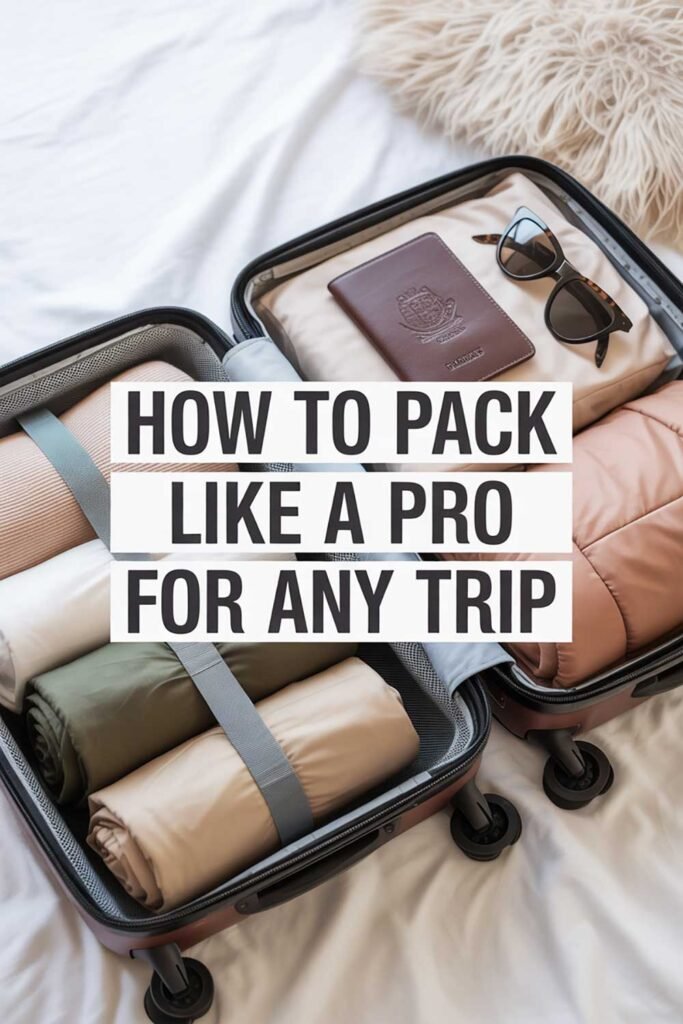
Packing cubes compress rolled clothing to the smallest practical volume, keep the bag organized throughout the trip, and make every item findable without a full excavation of the main compartment. The compression each cube applies to its contents produces a bag that holds more than the same items packed loosely into the same volume — which means the same trip’s wardrobe fits in a smaller, lighter bag. Compression cubes with a secondary zipper take this further for the trip’s bulkiest soft items. One compression cube for the fleece or down jacket recovers more bag space than almost any other single addition to the packing system.
9. Roll every soft item into tight cylinders
A rolled t-shirt occupies roughly one-third of the space of the same shirt folded flat. The carry-on whose clothing is entirely rolled holds measurably more than the same bag packed by flat-folding — which means the trip’s full wardrobe fits in a lighter, smaller bag rather than requiring a larger one that triggers the fee. Roll every soft item. Stand every roll upright in the packing cube for maximum space efficiency and individual item visibility. The bag that closes on the first attempt almost always contains rolled clothing.
10. Pack by occasion type, not by day count
The bag whose size is determined by the number of days is the bag that consistently exceeds carry-on limits on trips longer than five days. The bag whose size is determined by the number of distinct occasion types — casual days, one elevated dinner, one active day — is the bag that fits in a carry-on regardless of whether the trip is seven days or ten. Count the confirmed distinct occasions in the itinerary. Pack for those. The day count is not the packing unit. The occasion type is — and the carry-on that results is almost always within limits.
11. Apply the two-partner rule to every clothing item before it stays in the bag
Every clothing item in the carry-on must pair with at least two other items already confirmed to be in the bag. The item with one partner is carried for the full trip for one wearing. The item with three partners is carried for the full trip for three wearings at the same weight cost. The single-partner item is the clearest indicator of an item that does not belong in a carry-on-only packing system. Remove every single-partner item before the bag closes. The weight removed from a carry-on by a consistent partner check is the weight that most often produces the bag that boards without a fee.
12. Fill every gap in the bag with the lightest items before closing
The spaces in the carry-on — the corners at the frame, the curves at the base, the gaps between packing cubes — are capacity that exists at no additional weight cost if filled with light items rather than left empty or filled with heavy ones. Rolled socks in shoe cavities, a lightweight scarf in the corner between cubes, folded documents in the side taper — these placements use every cubic centimeter of the carry-on’s allowed volume without adding meaningful weight. The carry-on that uses its full volume for light items while keeping heavy items to a minimum is the carry-on most likely to be both within size limits and within weight limits simultaneously.
13. Leave a deliberate quarter of the bag empty for the return journey
The carry-on packed to absolute capacity on the outbound journey has no answer for the destination purchase whose weight on the return journey pushes the bag over the limit. Packing to approximately seventy-five percent of the carry-on’s capacity on departure leaves the return margin available for what the trip produces — the market find, the local product, the small souvenir — without triggering the gate-check fee on the return. The bag that boards as a carry-on in both directions was packed with the return journey in mind from the start.
DND Resources
Our travel resources page has official airline policy links, packing guides, and trusted tools for every stage of trip preparation — including the baggage information that matters before the first item goes in the bag.
DND ResourcesToiletries, Shoes, and the Categories That Tip the Scale
For many travelers the clothing system is reasonably managed and the excess weight that triggers the fee lives in the supporting categories — the toiletry bag whose bottles are filled to capacity, the three pairs of shoes for a five-day trip, the full-size backup products packed alongside travel-size versions of the same thing. These hacks address the specific categories that add weight fastest and whose solutions are often simpler than the weight problem suggests.
14. Fill toiletry bottles to trip-length amounts — not to the bottle’s capacity
A sixty-milliliter travel bottle filled to capacity for a five-day trip carries forty milliliters of unnecessary weight. Filled to twenty-five milliliters — the daily-use amount for five days — it carries exactly what the trip requires at a fraction of the weight. Apply this calculation to every bottle in the toiletry kit before every departure. The kit whose bottles are all filled accurately is lighter than the alternative by a meaningful total across six or eight bottles — and lighter enough, on many trips, to be the difference between the bag within the weight limit and the bag that is not.
15. Swap liquid products for solid bars wherever possible
Solid shampoo, conditioner, and body wash bars are not liquids, are not subject to the quart-bag rule, weigh less than the travel bottles they replace, and last longer per gram of product than liquid equivalents. The switch recovers the quart bag’s limited volume for liquids with no solid alternative, removes the heaviest items in the typical toiletry kit from the liquids calculation, and reduces the toiletry kit’s total weight meaningfully. The TSA quart bag freed by solid bars is the quart bag available for the items that genuinely need it.
16. Limit shoes to two pairs and wear the heavier pair on travel day
Shoes are the heaviest, least compressible, most space-inefficient category in any bag. Two pairs — one worn on travel day, one in the bag — is the number that keeps the carry-on manageable for most trips. Both should be chosen for comfort and style so that neither requires a third pair for any confirmed occasion the trip holds. Every additional pair requires a specific confirmed occasion that the first two cannot cover before its weight earns a place in a carry-on where every gram matters.
17. Check accommodation amenities before packing what they already provide
The hair dryer, the shampoo, the body wash, the iron — most hotels and many vacation rentals provide these items. Two minutes checking the accommodation’s listed amenities before packing removes every item the destination supplies at no cost. For the traveler whose carry-on is consistently close to the weight limit, the accommodation items removed from the kit are frequently the margin between a bag within limits and a bag that triggers the fee at check-in. Check first. Pack only what the accommodation does not have.
18. Never pack a full-size backup of anything already in the bag in travel size
The full-size backup packed alongside the travel-size primary is weight carried for the full trip against the possibility of running out — which almost never happens when the fill amount was calculated correctly. Pack the travel-size version at the trip-length amount. Leave the full-size backup at home. The destination has pharmacies. The local pharmacy is always cheaper than the luggage fee whose cause was the backup product that traveled unused in a bag that was two kilograms over the limit.
How Maren Stopped Paying Luggage Fees Permanently
Maren had paid a checked bag fee on eleven of her last fourteen trips. Not because she wanted to check a bag — she had tried carry-on only several times and failed in ways that were consistent enough to be instructive. The bag was always too heavy. The carry-on she owned was good. The rolling was happening. The cubes were there. The weight was still wrong and she could not fully identify why.
The diagnosis came from a simple audit after the fourteenth fee. She emptied the bag on the bed and weighed every category separately. The clothing was fine — three kilograms for a seven-day trip, entirely manageable. The toiletry kit was the problem: four hundred milliliter bottles filled to capacity, a full-size backup of three products already in travel size, and a hairdryer that every hotel she had ever stayed at had provided. The toiletry kit alone was two and a half kilograms. The bag’s total weight was eight kilograms. The carrier’s limit was seven.
The fix was not more discipline about clothing. It was one trip to the bathroom cabinet with a measuring cup, a calculator, and the decision to stop carrying the backup products and the hairdryer. The toiletry kit on the next trip weighed nine hundred grams. The bag weighed five and a half kilograms. It went in the overhead bin without a second thought. The checked bag fee has not been paid since. These twenty-seven hacks are the complete version of what the audit produced. The fee is almost never about the clothes. It is almost always about the category nobody thought to weigh.
Become An Agent
Love helping travelers avoid fees, pack smarter, and get more out of every trip? See how to turn that into a home-based travel business.
Become An AgentAt the Airport: Handling the Carry-On Correctly
The packing is done correctly and the bag is within limits — but the airport still presents specific scenarios where the carry-on system can be disrupted. These hacks cover the airport-side decisions that protect the carry-on status of a bag that was packed to maintain it.
19. Board as early in the group sequence as the ticket allows
Overhead bin space fills from front to back as the aircraft boards. The traveler who boards in the last group on a full flight may find no overhead bin space remaining near their seat and be required to gate-check the bag — for free on most carriers but not all, and always at the cost of the baggage claim wait on arrival. Boarding earlier preserves overhead bin access. On routes and carriers where early boarding requires an upgrade or an additional fee, weigh the cost against the value of guaranteed overhead bin access for the specific flight. On most trips, the group sequence on the existing ticket is sufficient when the bag is genuinely carry-on sized.
20. Use the personal item to hold heavy items when the carry-on approaches the weight limit
The personal item under the seat typically has no weight limit specified — only a size limit. When the carry-on is close to the overhead bin weight limit, moving the heaviest items from the carry-on to the personal item reduces the carry-on’s measured weight without removing those items from the trip. The laptop, the portable charger, the heavy toiletry kit — all of these can travel under the seat in the personal item rather than in the overhead bin in the carry-on. The weight distribution between the two bags is a legitimate tool for managing the carry-on’s measured weight at the check-in counter.
21. Know which items to wear through the airport if the bag is close to the limit
The jacket, the heaviest layer, the boots, the belt, and any heavy accessory worn through the airport rather than packed in the carry-on can reduce the bag’s weight by a meaningful amount when the difference between within-limit and over-limit is small. This is not a deceptive practice — wearing clothing through an airport is entirely normal and expected. It is a weight management decision made before reaching the check-in counter rather than at it. The traveler who arrives wearing everything heavy and carrying a light bag is the traveler who boards without a fee.
22. Avoid packing the carry-on at the gate or in the boarding queue
The traveler who rearranges the carry-on at the gate — pulling items from the personal item into the carry-on to make the personal item appear smaller, or reorganizing the carry-on’s contents in the boarding queue — attracts gate agent attention in the specific scenario where gate agents are looking for oversized carry-ons. Pack correctly at home. Arrive at the gate with both bags already organized in the configuration they will be in for the flight. The bag assessed by the gate agent in the boarding queue is assessed as it presents, not as it was before the queue reorganization.
23. If gate-check is unavoidable, confirm it is free before accepting it
On full flights, gate agents occasionally request that passengers with full-sized carry-ons check them at the gate to facilitate boarding. On most full-service carriers this gate-check is free and the bag is returned at the jetway on arrival. On some budget carriers and some routes, the gate-check fee applies even when the gate agent initiates the request. Before handing over a bag at the gate, confirm whether the gate-check is free. The confirmation takes thirty seconds and prevents the specific scenario where a fee is charged for a gate-check that the passenger did not initiate and did not know would cost anything.
The Habits That Mean the Fee Never Comes Up Again
The hacks that prevent luggage fees permanently are not the ones applied once on a single trip. They are the habits built into the preparation process — the list updated after every trip, the bag reset within twenty-four hours of returning, the policy lookup done before the first item is selected — that make the carry-on-only outcome automatic rather than effortful. These are the maintenance habits whose consistent application converts a single fee-free trip into a permanent way of traveling.
24. Reset the carry-on system within twenty-four hours of returning home
The bag reset on the evening of returning home — laundry out, cubes emptied and replaced, toiletry kit restocked to trip-length amounts, everything confirmed in its position — is the preparation that makes the next trip’s packing session a thirty-minute confirmation rather than a rebuild from scratch. The traveler whose bag is always reset is the traveler who packs within limits consistently because the system that produces that result is always maintained rather than assembled under departure pressure.
25. Update the permanent packing list after every trip with honest feedback
The items that came home untouched. The toiletry bottles that ran out on day four of a seven-day trip and need a larger fill amount. The accommodation that provided the hairdryer that was packed unnecessarily. These details are most specific in the twenty-four hours after returning. Apply them to the permanent packing list before the memory fades. The list updated from honest post-trip feedback is the list that produces a bag within limits on the next trip without requiring the same editing effort to arrive at the same conclusion.
26. Photograph the packed bag before every departure and compare to the checkout inventory
The photograph of the packed bag before departure is the visual record of what went in. The honest count of what came home untouched is the feedback. The gap between the two is the weight reduction available on the next trip without any sacrifice of the trip’s actual requirements. The items in the departure photograph that were in the untouched pile at checkout are the items to remove from the next trip’s pack — specifically, by name, permanently. This comparison applied consistently is the habit that produces the carry-on whose weight decreases trip by trip until it reliably boards without a fee.
27. Trust that the trip is fine with less than the bag currently holds
The most consistent source of the luggage fee is not bad packing technique. It is the belief, held before every packing session, that this specific trip requires more than previous trips confirmed was necessary. The items added by this belief are the items that produce the overweight bag and the fee. The trust that the trip is fine with what the confirmed system produces — the permanent list, the outfit-first selection, the occasion-type count, the partner check, the final edit — is the belief that makes the carry-on-only outcome permanent rather than occasional. The system is right. The bag is right when the system says it is. The fee is the cost of not trusting that.
Picture This
The carrier’s limits were looked up before the bag was opened — seven kilograms, forty by thirty by twenty centimeters for the budget connecting leg. Every item selected was weighed against those numbers before the packing session began. The heaviest shoes were on the feet. The thick jacket was on the body. The toiletry bottles were filled to trip-length amounts rather than capacity. The hair dryer stayed home because the accommodation confirmed it was provided. The compression cube held the fleece at the footprint of a folded t-shirt. Every soft item was rolled upright in the packing cube. The partner check removed two items. The final edit removed one more.
The bathroom scale confirmed five point eight kilograms. The tape measure confirmed the bag fit within the carrier’s size gauge. The personal item held the laptop and the portable charger so the carry-on’s measured weight stayed below seven. At check-in, the bag went in the overhead bin. At the connecting airport, it went in the overhead bin again. At the return gate, it went in the overhead bin a third time. No fee. No gate-check. No counter negotiation. No overweight sticker. Just the specific quiet satisfaction of a bag that was right before it left home and stayed right through every airport on the itinerary. That is twenty-seven hacks. That is the trip where the luggage fee was never part of the story.
Before the Next Trip: Grab the Free Packing Checklist
Our free Travel Packing Checklist is the foundation of the carry-on system these twenty-seven hacks describe — every category, every weight consideration, and every final check that keeps the bag within limits before it ever reaches the airport.
Get the Free ChecklistExplore Our Top Picks for a Better Trip
After years of carry-on-only travel together, these are the booking platforms and travel services we personally rely on — tested, trusted, and recommended because they have consistently made every part of the journey smoother.
See Our Top PicksTravel Printables at Premier Print Works
Visit Premier Print Works for packing checklists, weight trackers, carry-on guides, and travel organization printables that make every departure lighter, smarter, and fee-free from the moment the bag is packed.
Visit Premier Print WorksDisclaimer
The information shared in this article is provided by Don and Diana’s Travels for general informational, educational, and inspirational purposes only. It reflects our personal experiences, opinions, and the experiences of travelers we have worked with. It is not professional travel, legal, or financial advice.
Airline carry-on size limits, weight allowances, personal item policies, fare class baggage inclusions, and gate-check procedures vary significantly by carrier, route, fare class, and date and are subject to change without notice. Always confirm current requirements directly with your specific airline before traveling. We are not responsible for any fees, charges, or outcomes arising from reliance on baggage information in this article.
This article may contain affiliate and partner links that pay us a commission at no extra cost to you. Our recommendations are based on real use and genuine belief in the products and services we share. Stories on this site combine real experiences from Don, Diana, clients, and travelers we have worked with. Details may be adjusted for privacy and narrative clarity. All content is the copyrighted property of Don and Diana’s Travels. You may not copy or republish our content without prior written permission. By reading this article you acknowledge that you have read and agree to this disclaimer.