30 Packing Tips for Keeping Clothes Fresh While Traveling
The outfit that looked perfect in the wardrobe at home and arrived at the destination as a wrinkled, compressed, slightly damp version of itself is one of the most consistent and most preventable travel frustrations there is. It happens not because something went wrong but because the specific combination of fabric choice, packing method, bag conditions, and destination habits that keeps clothes fresh while traveling was never quite assembled into a complete system.
These thirty tips cover every stage of that system — from choosing the right fabrics before the trip to handling garments correctly at the destination and throughout the journey home. The result is the travel wardrobe that arrives looking as good as it did when the bag closed, stays that way through the full trip, and comes home ready to wear rather than ready for a full laundry cycle and a long session with the iron.
Free Download: Our Travel Packing Checklist
Before the bag closes, our free Travel Packing Checklist confirms every garment is in the right position, every protection is in place, and every pre-departure step is done. Download it free and use it before the next trip.
Get the Free ChecklistBook A Trip
Book the next trip with a travel agent who handles the planning so every day at the destination can be spent in clothes that look as good as the destination deserves.
Book A TripStart With the Right Fabrics
The single most impactful decision for keeping clothes fresh while traveling is made before the bag is opened — the fabric selection. The garment that resists wrinkles, dries quickly, and handles the compression and humidity of transit differently than the one that does not. Choosing travel-appropriate fabrics is not a compromise on style or quality. It is the foundation that makes every other tip in this article more effective.
1. Choose fabrics with natural wrinkle resistance for the bulk of the travel wardrobe
Merino wool, jersey knit, ponte, travel-weight crepe, modal, and most quality synthetic travel blends resist the wrinkles that transit compression produces in ways that pure linen, untreated cotton, and stiff poplin do not. The same outfit in a wrinkle-resistant fabric and in a cotton version arrives looking fundamentally different after twelve hours in a packed bag. This does not mean avoiding beautiful fabrics — it means choosing wrinkle-resistant versions of them where available, or understanding which garments will require steaming after arrival and planning accordingly.
2. Prioritize quick-dry fabrics for any item that will be washed mid-trip
The garment that dries overnight in a hotel bathroom enables the mid-trip laundry strategy that allows a shorter packing list for a longer trip. Merino wool, performance synthetic blends, and dedicated travel fabrics dry in two to four hours in most conditions. Standard cotton dries in twelve to twenty-four hours in humid environments — long enough to disrupt the laundry plan that the overnight dry was built around. If mid-trip laundry is part of the packing strategy, the fabrics in the bag need to support it.
3. Pack merino wool as the most versatile travel fabric available
Merino wool is the fabric that most consistently earns the description “travel-friendly” because it addresses every travel clothing challenge simultaneously: it is naturally wrinkle-resistant, dries quickly, regulates temperature across a wide range, resists odor across multiple wearings, packs compactly, and maintains its appearance after rolling and compression in a way that few other fabrics match. A merino base layer, a merino t-shirt, or a merino mid-layer in the travel wardrobe is the item that earns more wearings per gram of bag weight than almost anything else that could occupy the same space.
4. Understand which of your fabrics will wrinkle badly before they go in the bag
Linen wrinkles dramatically under compression and humidity. Untreated cotton holds fold lines pressed in by the bag’s weight. Silk charmeuse creases at the point of contact with anything. Stiff poplin develops sharp wrinkles that require steaming to address. Knowing which fabrics in the travel wardrobe have these properties before packing allows the specific protection techniques — the dry cleaning bag, the flat top-layer position, the garment bag — to be applied to the right items rather than discovered as necessary at the destination after the damage is done.
5. Test new travel fabrics at home before the trip that needs them
The travel fabric whose performance has not been tested before the trip that depends on it is the fabric that may or may not behave as advertised in the specific conditions of the specific journey. Fold a new garment tightly, leave it compressed for several hours, and inspect it before the trip confirms whether it is genuinely wrinkle-resistant in practice rather than in description. The test takes an afternoon and prevents the specific disappointment of arriving at the destination with the elevated dinner outfit that was expected to be wrinkle-free and is not.
“The clothes that arrive looking fresh were almost never packed by accident. They were packed in the right position, in the right protection, from the right fabric — and the system was built before the bag was opened.”
Plan Our Escape
Let us plan the trip that gives every carefully chosen outfit somewhere genuinely worth wearing it — from the first day to the last.
Plan Our EscapeHow to Pack Clothes to Minimize Wrinkles
Even with the right fabrics, the packing method determines whether garments arrive in a wearable state or require intervention before the first wearing. The techniques in this section address how each garment type should be packed — which items roll, which lie flat, which need protection, and how the bag should be loaded to minimize the pressure and moisture conditions that wrinkles thrive in.
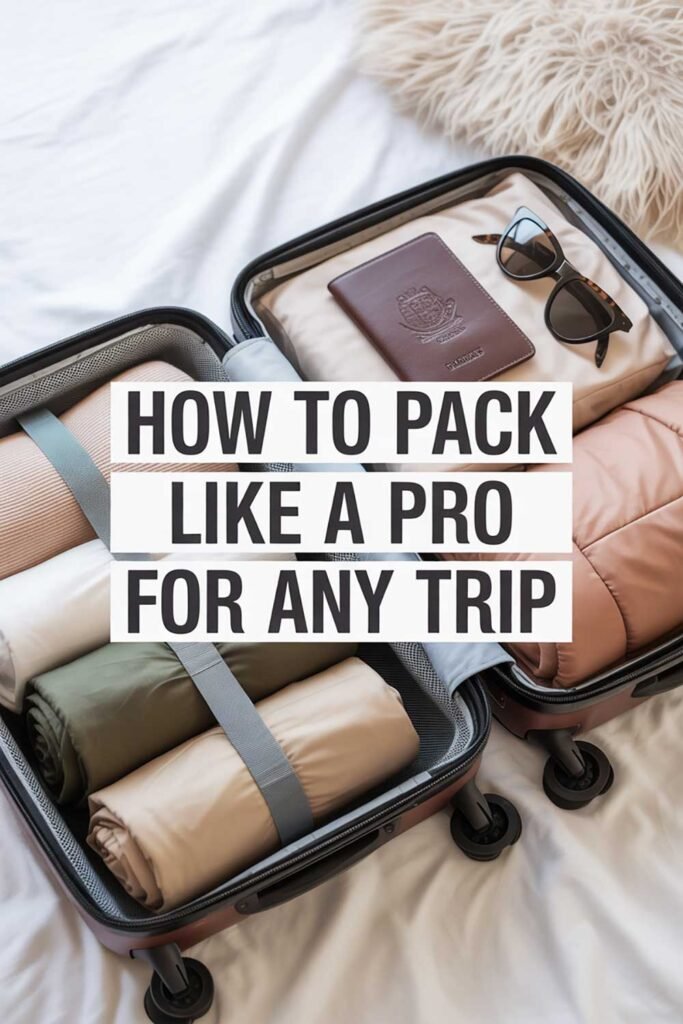
6. Roll soft casual items — never fold them flat
A rolled soft garment distributes wrinkle pressure evenly across the fabric as it compresses rather than concentrating it at a single fold line. The wrinkles that result from rolling are soft, distributed, and resolve within minutes of hanging — unlike the sharp fold line that flat packing presses into the same garment under the weight of everything above it for the full transit duration. Roll every t-shirt, casual trouser, knitwear, underwear, and any other soft casual item. The rolled garment arrives with the soft wrinkles that hanging addresses. The flat-folded one arrives with the set crease that steaming is required for.
7. Stand rolled items upright in packing cubes like books on a shelf
Rolled items stacked flat in a packing cube produce the same compression problem as flat-folded items — the items at the bottom bear the full weight of the items above them throughout the transit. Rolled items stood upright in the cube distribute the compression laterally rather than vertically, with each roll bearing only its own weight. Upright rolling also produces the secondary benefit of every item being visible from above and retrievable with one reach without disturbing anything else — which means the cube stays organized and the items stay in the right position throughout the trip rather than collapsing into a compressed stack by day two.
8. Lay structured garments flat in a dry cleaning bag at the top of the bag
The blazer, the formal trousers, the tailored shirt, the structured dress — any garment whose fabric relies on its form to look right — should not be rolled. It should be folded along its natural fold lines, placed inside a lightweight dry cleaning bag, and laid flat at the top layer of the main bag where it bears the least weight from items above it. The dry cleaning bag is the protection that allows the fabric to shift and redistribute under compression rather than holding a fixed, set crease. Dry cleaning bags are available free from any dry cleaner and add zero meaningful weight or volume to the bag.
9. Use a packing folder for shirts and formal trousers that must arrive unwrinkled
A packing folder — a rigid board around which garments are folded — creates one precise fold line rather than the multiple irregular creases that freehand folding in a packed bag produces. The single fold down the center of a dress shirt is addressable with a few seconds of hand-smoothing. The multiple random creases produced by freehand folding require steaming. For trips with confirmed formal occasions where the specific garment’s appearance at arrival matters, a packing folder is the most reliable way to achieve the single-crease result without relying on the hotel’s laundry service or a travel steamer.
10. Pack the heaviest items at the bottom — away from the garments that wrinkle easily
The heavy items at the bottom of the bag — shoes, toiletry kit, electronics — compress the garments above them throughout the transit. Packing the garments most likely to wrinkle — the structured pieces, the delicate fabrics — at the top of the bag, furthest from the heaviest items, minimizes the compression they experience. The bag packed from heaviest at the base to lightest at the top is the bag whose most wrinkle-prone items spent the transit under the least weight. The bag packed in the reverse order delivered the maximum weight directly to the items least able to handle it.
11. Keep the bag as dry as possible — moisture accelerates wrinkles in transit
Humidity in the bag — from damp swimwear returned without fully drying, from wet toiletry items not fully sealed, from the moisture the bag absorbed in a humid outdoor environment — accelerates wrinkle formation in fabric under compression. A damp item placed in the bag creates the specific conditions that produce the most set, difficult-to-remove wrinkles across the items it contacts. Never pack damp items in the main bag. Use a separate waterproof bag for anything wet. Keep the bag away from wet surfaces. The dry bag is the bag whose clothes arrive as they were packed.
12. Do not overpack — compression beyond the bag’s natural capacity forces wrinkles into everything
The overpacked bag compresses its contents beyond the point that rolling, dry cleaning bags, and careful positioning can address. When the bag must be sat on to close, the garments inside it are under continuous maximum compression for the full transit duration — and the wrinkles that result are set into the fabric in ways that reflect that compression. Pack to approximately eighty percent of the bag’s volume. The space left by not overpacking is not wasted — it is the buffer that allows the fabric to exist at natural compression rather than forced compression throughout the journey.
DND Resources
Our travel resources page has trusted tools and planning guides for every stage of the trip — including destination-specific information that helps plan what to pack and how to pack it.
DND ResourcesFreshness During the Trip
Keeping clothes fresh does not end when the bag closes. The habits at the destination — how garments are unpacked, stored, handled, and maintained across the trip’s duration — determine whether the travel wardrobe stays in the condition it arrived in or degrades progressively through a combination of re-wearing, humidity, and disorganization. These tips cover the destination habits that maintain the bag’s freshness from arrival to checkout.
13. Hang or steam clothes immediately on arrival before wearing anything
The five minutes spent hanging every garment in the wardrobe or on the bathroom hook immediately on arrival allows the fabric to relax and release the soft wrinkles that transit compression produces — before those wrinkles are worn into the fabric by being put on directly. Hanging in a steamy bathroom — run the hot shower for a few minutes with the garments hanging nearby — accelerates this release for most fabrics without requiring a steamer. The garment hung for two hours before wearing looks notably better than the garment pulled directly from the bag and worn immediately.
14. Bring a compact travel steamer for garments that matter
A handheld travel steamer — slightly larger than a large cosmetics bottle — addresses the wrinkles that hanging and bathroom steam do not fully resolve in the pieces that matter most. Used for under five minutes on the evening dress, the structured blazer, or the shirt for the important occasion, the travel steamer converts the transit-wrinkled garment into the freshly pressed one without the hotel laundry service delay or cost. For the traveler whose trip includes one or two occasions where a specific garment’s appearance matters, the travel steamer earns its space on those occasions alone.
15. Use steamer sheets as a lightweight alternative to a travel steamer
Steamer sheets — single-use woven sheets that remove wrinkles when pressed against fabric with a warm hand — are the ultralight alternative to the travel steamer for the traveler whose wrinkle treatment needs are occasional rather than daily. A small pouch of steamer sheets in the toiletry kit covers the one or two occasions per trip where a quick wrinkle treatment is needed without the steamer’s weight, volume, or water-fill requirement. Available from travel retailers. Under twenty grams for a ten-sheet pack.
16. Unpack into the wardrobe and drawers for stays of two nights or more
The bag used as a daily wardrobe — opened and searched each morning, items returned to approximate positions — is the bag whose garments experience repeated compression cycles across the stay as items are replaced less carefully than they were packed. For any stay of two nights or more, unpacking into the room’s drawers and hanging structured items in the wardrobe maintains the garments’ freshness without any active management. The garment in the drawer stays flat and accessible. The garment in the compressed bag worsens with every interaction.
17. Separate clean clothes from worn ones with a laundry bag from the first evening
The worn garment returned to the main bag or the packing cube alongside clean items introduces body heat, moisture, and odor to items that have not yet been worn — and in a compressed bag, that transfer happens across the full contact surface. A lightweight laundry bag — the mesh pouch or the compression cube designated for worn items — placed in the bag before departure is the separation that prevents this. Every worn garment goes into the laundry bag from the first evening. Every clean garment stays in its cube. The clean clothes stay fresh throughout the trip because the system that protects them was in place before it was needed.
18. Air worn garments overnight before deciding whether they need washing
Many garments — particularly merino wool and quality synthetic blends — refresh significantly when aired overnight rather than requiring a full wash after every wearing. Hanging a worn merino t-shirt on the bathroom hook overnight releases body heat and moisture and allows the fabric’s natural odor-resistance to reset. This is not applicable to heavily soiled or saturated garments, but for the lightly worn item whose second wearing would be fine after an airing, it is the habit that extends the wardrobe’s effective range without adding a laundry session.
19. Wash delicate items by hand and quick-dry fabrics in the sink mid-trip
The mid-trip sink wash — a small amount of travel laundry soap or shampoo, a gentle hand wash, a gentle squeeze rather than a twist or wring, and a hang-dry overnight — refreshes the quick-dry fabrics and delicate items that would benefit from a mid-trip wash without requiring a laundromat or a hotel laundry service. This is only effective for fabrics that dry within the available window before the next wearing. Know which items in the travel wardrobe support overnight drying before the trip that depends on it.
20. Use a small amount of travel fabric spray on garments between wearings
A travel-size fabric refresher spray — applied lightly to worn garments hanging overnight — removes light odors and refreshes fabric in the way that airing alone sometimes cannot for garments worn in warmer conditions or higher-activity environments. Under one hundred milliliters, within the quart-bag limit, and usable across the full trip. Not a substitute for washing when washing is genuinely required, but a meaningful extension of the interval between washes for garments that are not heavily soiled and whose fabric supports this approach.
How Ines Built a Travel Wardrobe That Always Arrived Ready to Wear
Ines traveled four or five times a year for a combination of work and personal trips and had a specific post-arrival routine that she had never thought to question: arrive at the accommodation, open the bag, assess the wrinkle situation, decide what needed immediate steaming before it could be worn, and spend the first forty-five minutes of the trip managing garments rather than starting it. It was not a disaster. It was just time that consistently went to the bag rather than the destination.
The change began with one observation during a packing session: she was rolling soft items and laying structured ones flat, which was correct, but the structured items were being placed mid-bag rather than at the top, which meant they had spent the transit under the weight of everything packed above them. Moving the blazer, the formal shirt, and the tailored trousers to the top layer — in dry cleaning bags, laid flat — was a three-minute change to the packing order that produced a meaningfully different arrival condition for the specific garments that had been requiring the most steaming.
The second change was the bathroom steam habit: hot shower running, garments hanging on the hook, ten minutes before unpacking anything else. Not because every garment needed it but because the ones that had spent twelve hours in a bag benefited from it before they were assessed. The combination of the two changes reduced the arrival wrinkle management from forty-five minutes to under ten. The third change — merino wool for the casual day items that had previously been cotton — removed the daily items from the wrinkle conversation entirely. These thirty tips are the complete system that those three changes belong to. The first forty-five minutes at the destination are now always the destination.
Become An Agent
Love helping travelers arrive at every destination looking as good as the trip deserves? See how to turn that passion into a home-based travel business.
Become An AgentThe Journey Home: Keeping Clothes Fresh for the Return
The return journey presents the fresh-clothes challenge in its most complex form: the wardrobe now contains a mix of clean unworn items, worn but fresh items that were aired or washed mid-trip, and worn items ready for the laundry — all needing to return home in a state that is organized, protected, and as fresh as the individual item’s condition allows. These tips manage the return journey’s specific challenges.
21. Repack for the return journey the evening before the final checkout
The return repack done the evening before checkout — when the trip is not competing with the taxi’s arrival time — is the repack with the time and calm to apply every protection correctly. The structured garments go back in their dry cleaning bags at the top of the bag. The clean rolled items go back upright in their cubes. The worn items go in the laundry bag at the base. The evening repack is also the room sweep that finds the item on the bathroom hook before the taxi confirms it rather than after.
22. Keep clean and worn items completely separate for the return journey
The return bag whose clean and worn items are mixed is the bag that introduces the worn items’ condition to the clean items across the full return transit — in exactly the same way that mixing them at the accommodation mid-trip does, but for the duration of the return journey rather than just overnight. The laundry bag maintained from the first evening of the trip is the system that keeps this separation intact through the return without any additional effort at checkout. The clean items arrive home clean. The worn items arrive home in the laundry bag ready for the wash.
23. Roll the return journey’s clean items and protect the structured garments exactly as for the outbound
The return journey is the same length as the outbound. The compression, humidity, and handling conditions are the same. The protections that kept the garments fresh on the outbound journey are the protections that keep them fresh on the return. Dry cleaning bags for structured items. Upright rolls for casual items. Top layer for the most wrinkle-prone pieces. The return bag packed with the same intentionality as the departure bag arrives home in the same condition as the departure bag left — which is the condition the wardrobe was in before the trip began.
24. Hang or steam purchased items from the destination before packing them for the return
The garment purchased at the destination — the market find, the local textile, the piece that became the trip’s best clothing discovery — may have been folded or rolled in the market bag, the shop bag, or wherever it was stored between purchase and packing. Before it goes in the return bag, hang it briefly and assess its condition. The item that needs a steam before packing is the item that arrives home fresh rather than needing immediate attention. The item packed directly from the shop bag in whatever condition it was in may compound wrinkles across the return transit in ways that were avoidable.
The Reset That Keeps the System Working
The fresh-clothes system does not maintain itself automatically between trips. It is maintained by the habits applied in the twenty-four hours after returning home — the laundry processed, the items inspected, the system notes updated. These habits are the reason the next trip’s wardrobe starts from a fresh, organized position rather than from the aftermath of the last one.
25. Process the laundry bag immediately on returning home
The worn items in the laundry bag from the trip go directly to the wash on the evening of returning home — before they have spent additional time compressed in the laundry bag whose conditions continue the wrinkle-setting process that the transit began. Fresh items go back to their designated storage. The wardrobe is restored to its pre-trip state before the week’s normal rhythm resumes and the laundry becomes the task that keeps getting deferred.
26. Inspect every garment for stains, damage, or fabric issues after the trip
The stain addressed on the day of returning home is the stain treated while it is still fresh and most responsive to treatment. The stain discovered three weeks later when the item is needed for the next trip is the stain that may have set permanently during the wash and dry cycle it went through without the specific treatment it required. Inspect every garment returned from the trip before it goes in the wash. Treat anything that needs treatment. Note anything that needs repair. The item whose issue was addressed immediately is the item ready for the next trip without any pre-trip remediation required.
27. Note which garments wrinkled badly in transit and adjust the packing method for next time
The blazer that arrived at the last destination with worse wrinkles than expected. The shirt that was placed mid-bag and bore more compression weight than the top-layer position would have produced. These are the specific packing method improvements available from honest post-trip feedback. Note the garments and the specific protection adjustments that would address the result. Apply those adjustments to the next trip’s packing before the packing session begins. The packing system updated from the specific feedback of the last trip’s arrival condition is the system that improves the next trip’s result.
28. Update the permanent packing list with fabric and protection notes per garment
The permanent packing list is more useful when it includes not just which garments to pack but how each one should be packed: “blazer — top layer, dry cleaning bag,” “merino t-shirts — rolled upright,” “linen trousers — not for long transit, substitute with ponte.” These notes convert the packing list from a selection guide into a packing instruction guide — the specific method for each item confirmed by experience rather than decided fresh at each packing session. The list updated with these notes after every trip produces the packing session that applies the best known method for every garment automatically rather than rediscovering it each time.
29. Replace fabrics that consistently perform poorly in transit with better travel alternatives
The garment that requires steaming after every trip it takes, that holds compression wrinkles in ways the dry cleaning bag cannot fully address, or that loses its shape after a single transit is the garment worth replacing for travel purposes with a better-performing equivalent. This does not mean replacing it in the home wardrobe — it means identifying a travel-specific version in a fabric whose transit performance matches what the trip requires. The investment in one travel-appropriate equivalent of a frequently packed but consistently under-performing garment pays back on every subsequent trip that uses it.
30. Reset the travel wardrobe system within twenty-four hours of returning home
The dry cleaning bags folded and returned to the packing system. The packing cubes emptied, inspected, and returned to their positions. The steamer or steamer sheets restocked. The travel laundry soap replaced. The permanent packing list updated with any method notes from the trip. The wardrobe restored to its ready state. Fifteen minutes on the evening of returning home. The next trip’s fresh-clothes system starts from the best available position — fully maintained, fully stocked, and improved by the honest feedback of the trip just completed — rather than from the scattered aftermath of the last one.
Picture This
The fabrics in the bag were chosen for transit performance before the first item was selected. The casual items were rolled upright in their cubes. The blazer and the dinner dress were in dry cleaning bags at the top layer under nothing heavier than a light scarf. The bag closed at eighty percent capacity. At the destination, the hot shower ran for ten minutes with every garment hanging on the bathroom hook before anything was unpacked. The blazer relaxed completely. The dinner dress needed thirty seconds with the steamer sheet. The casual items needed nothing.
The laundry bag collected every worn item from the first evening. The merino t-shirts were aired overnight on day three and worn again on day four without a wash. The mid-trip sink wash handled the quick-dry base layer overnight and it was dry by morning. Every outfit worn across the trip looked as good on the day it was worn as it did when the bag was packed. At the final checkout, the clean items went back in their cubes with the same protections applied as the outbound journey. The worn items were in the laundry bag at the base.
At home the same evening, the laundry bag was processed, the garments were inspected, the system notes were updated, and the bag was reset. The next trip’s wardrobe starts from there — fresh, organized, and improved by one specific note about the linen trousers that had required more steaming than expected and whose ponte equivalent is already in the wardrobe waiting for the next packing session. That is thirty tips. That is the travel wardrobe that arrives looking the way it was packed to look.
Before the Next Trip: Grab the Free Packing Checklist
Our free Travel Packing Checklist is the confirmation step that makes sure every garment is in the right position, every protection is in place, and every pre-departure step is done before the bag closes. Download it and use it before the next trip.
Get the Free ChecklistExplore Our Top Picks for a Better Trip
After years of travel together, these are the booking platforms and travel services we personally rely on — tested, trusted, and recommended because they have consistently made our own trips smoother and more enjoyable.
See Our Top PicksTravel Printables at Premier Print Works
Visit Premier Print Works for packing checklists, garment care guides, travel wardrobe planners, and organization printables that make every departure better prepared and every arrival fresher than the one before it.
Visit Premier Print WorksDisclaimer
The information shared in this article is provided by Don and Diana’s Travels for general informational, educational, and inspirational purposes only. It reflects our personal experiences, opinions, and the experiences of travelers we have worked with. It is not professional fabric care, garment care, or travel advice.
Fabric performance, wrinkle resistance, and care requirements vary by specific garment, fabric blend, and care instructions. Always follow the individual care label on each garment. Results from the packing and care techniques described in this article will vary depending on the specific fabric, garment construction, transit conditions, and destination humidity. We are not responsible for any garment damage arising from reliance on information in this article.
This article may contain affiliate and partner links that pay us a commission at no extra cost to you. Our recommendations are based on real use and genuine belief in the products and services we share. Stories on this site combine real experiences from Don, Diana, clients, and travelers we have worked with. Details may be adjusted for privacy and narrative clarity. All content is the copyrighted property of Don and Diana’s Travels. You may not copy or republish our content without prior written permission. By reading this article you acknowledge that you have read and agree to this disclaimer.