Economy class is completely survivable when you pack the right things and set the right expectations. The most comfortable economy traveler is never the one who paid the least — they are the one who prepared the most. This article builds the preparation that makes any economy seat, on any long-haul flight, on any airline, the starting point of a great trip rather than the thing the trip has to recover from.

Best For
Long-Haul Economy Travelers
Vibe
Comfortable and Arrival-Ready
Read Time
12 Minutes
Walk Away With
The Complete Economy Comfort Kit
Free Download

Grab Our Travel Packing Checklist

Our free packing checklist includes a flight comfort section covering every item in the economy class kit this article describes — snacks, compression socks, headphones, eye mask, and all the small items that make long flights genuinely manageable. Print it before your next long-haul and use the flight comfort section as the pre-departure kit confirmation.

Get the Free Checklist

Bring Your Own Snacks

The economy class meal service on most long-haul flights produces one or two meals across eight to fourteen hours, timed to the airline’s schedule rather than the traveler’s hunger, with a menu range of two to three options that may include the traveler’s preference or may not by the time the cart reaches the back of the cabin. The traveler who relies entirely on the airline’s meal service for the flight’s nutrition is the traveler who is hungry at hour six when the next meal service is three hours away, eating the remaining option at hour nine because the preferred option was unavailable, and arriving at the destination with the specific mild depletion that a nutritionally inconsistent fourteen-hour period produces.

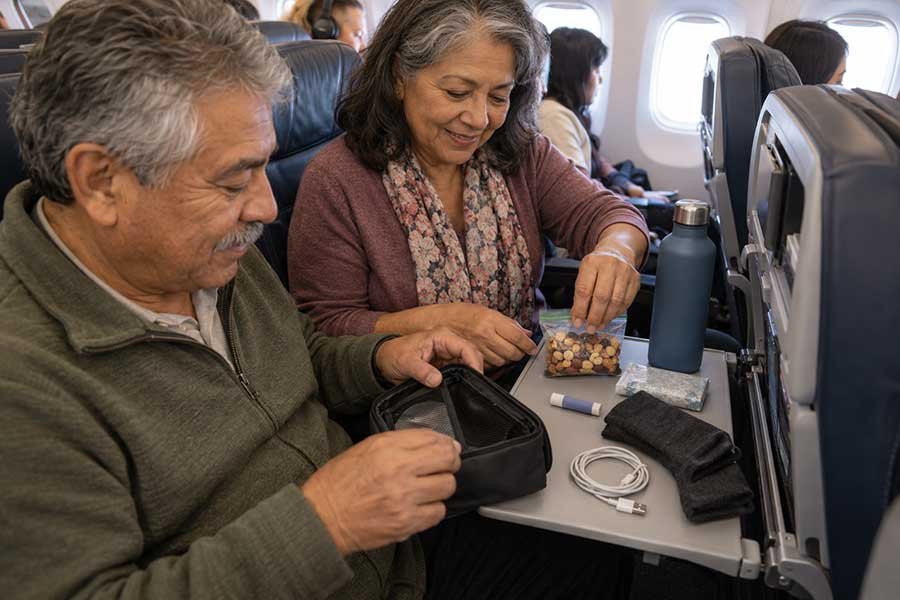
Bringing snacks from home for a long-haul economy flight is not a supplement to the airline’s meal — it is the flight’s nutritional foundation that the meal service supplements. The economy class snack kit: two to three high-protein, high-satiety options that manage hunger over a three-to-four-hour period without requiring refrigeration or preparation. Mixed nuts, a protein bar, dark chocolate, dried fruit, a small amount of nut butter with individual portion crackers, and a savory snack option for the traveler whose appetite runs more savory than sweet across extended time periods. The combination provides continuous access to food from the moment of boarding through the final descent regardless of meal service timing, airline option availability, or the specific dietary preferences the airline meal’s limited selection may not accommodate.

The airport food option, available after security at most major airports, provides the meal-quality snack for the departure wait and the early flight period. A proper sit-down airport meal before boarding reduces the in-flight hunger that makes the airline’s snack selection feel more appealing than it is and provides the initial nutrition that the personal snack kit then extends through the flight’s remaining hours. The combination of a proper pre-boarding airport meal and a personal snack kit for the in-flight period produces the most consistent nutrition across the full travel day at a cost significantly lower than the in-flight premium food purchase options available on some carriers.

The most comfortable economy traveler is never the one who paid the least — they are the one who prepared the most.

Economy class is completely survivable when you pack the right things and set the right expectations. The right things take thirty minutes to assemble. The expectations take thirty seconds to set.

Insider Note

Pack snacks that satisfy without producing the specific post-eating heaviness that makes sleeping on a long-haul flight harder. The high-sugar snack option that provides immediate energy produces the energy crash two hours later that disrupts the sleep attempt during the flight’s natural rest window. Mixed nuts, a small amount of dark chocolate, and a protein bar provide sustained energy without the crash cycle. Avoid bringing strong-smelling foods into the cabin as a courtesy to the nearby passengers sharing the same enclosed air for the next twelve hours: the confined aircraft cabin intensifies food smells significantly, and the aromatic lunch that would be entirely unremarkable in an outdoor setting becomes a presence that the nearby passengers spend the flight being aware of.

Book the Trip Worth Surviving Economy For

Let Us Find You the Destination That Makes Every Economy Seat Worth It

The economy flight survival system works best on the trip that the destination justifies. Tell us where you want to go and what kind of experience you are looking for. We will build the trip. You build the comfort kit.

Plan Our Escape

Wear Compression Socks on Anything Over Four Hours

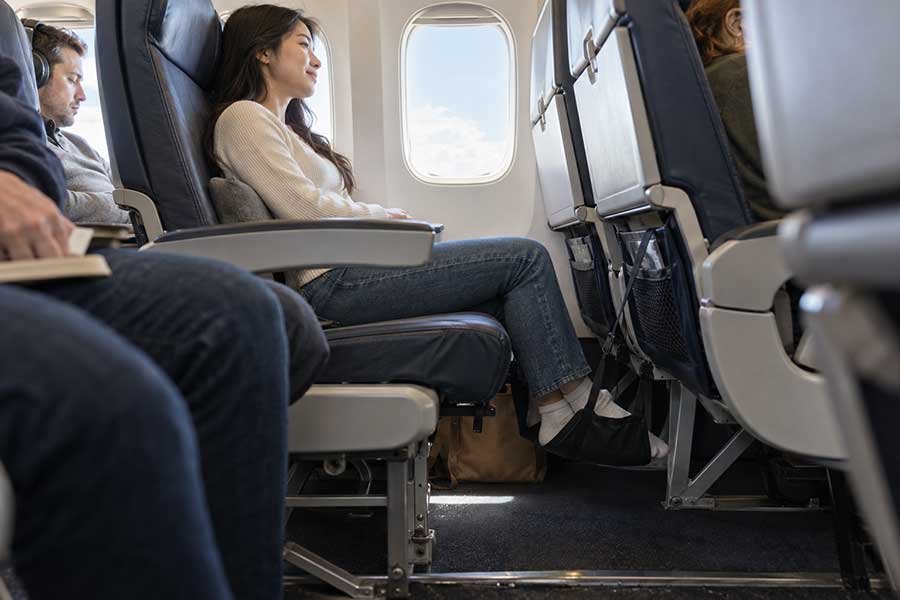
Extended periods of sitting with limited leg movement, which describes most long-haul economy flights accurately, can cause blood to pool in the lower legs and feet due to the effect of gravity and the reduction in leg muscle activity that normally helps pump blood back toward the heart during everyday movement. The result for many travelers is the swollen feet and ankles that make removing and replacing shoes uncomfortable at the destination, the heavy-leg feeling that persists through the first evening at the destination, and in some cases more significant circulatory concerns. Compression socks apply graduated pressure to the lower leg, with the highest pressure at the ankle decreasing upward toward the calf, which supports the leg’s venous return — the process of blood moving back up from the feet — during extended periods of seated immobility.

The four-hour threshold in this article’s recommendation reflects the general guidance that extended periods of inactivity in a seated position become meaningfully more relevant to leg comfort at flight durations above this range. Travelers with specific health considerations — cardiovascular conditions, a history of blood clots, pregnancy, recent surgery, or other circulatory concerns — should consult a healthcare provider before any long-haul flight and discuss whether compression garments or other measures are appropriate for their specific circumstances. The information in this article is general wellness guidance for typical travelers and is not a substitute for professional medical advice.

Travel compression socks are available in a range of compression levels, typically described in millimeters of mercury (mmHg), with mild compression (15-20 mmHg) and moderate compression (20-30 mmHg) being the most commonly used for travel purposes. Compression socks sized appropriately for the specific traveler provide comfort throughout the flight and are removed comfortably at the destination. Socks that are sized too tight produce discomfort and should be replaced with a correctly sized pair before the next flight. For most travelers, wearing compression socks from the departure gate through the destination arrival and removing them once movement and circulation are restored at the accommodation produces the best outcome for foot and leg comfort across the full travel day.

Insider Note

Put the compression socks on before boarding rather than on the aircraft after takeoff. The compression sock that is put on a leg that has already been seated for two hours of boarding, taxi, and climb is being applied after the swelling has already begun in some travelers. The compression sock put on at home or at the airport before boarding is providing its support from the start of the travel day through the destination arrival rather than from the second hour of the flight onward. Pair the compression socks with the slip-on travel day shoes for the most convenient management: the compression sock goes on at home, the slip-on shoe goes on over it, and both are present throughout the travel day without any sock-on-sock adjustment at the aircraft seat.

Noise-Canceling Headphones Are Worth Every Penny

The aircraft cabin’s ambient noise during a long-haul flight combines the continuous engine roar at approximately eighty to eighty-five decibels with air conditioning systems, intercom announcements, nearby passengers’ conversations, crying infants, and the audiovisual content from adjacent seatback screens at volumes calibrated for the cabin’s noise level. This combined sound environment is the single largest contributor to the specific fatigue that economy travelers accumulate across a twelve-hour flight — not the seat’s recline, not the meal quality, not the air pressure — but the relentless exposure to a moderate-to-high-decibel noise environment across the entire flight duration. Noise-canceling headphones, which use active noise cancellation technology to reduce the low-frequency continuous noise of the engine and air systems by generating opposing sound waves, convert the aircraft cabin’s ambient sound environment from a continuous exhaustion source into a manageable background that allows sleep, concentration, and entertainment at genuinely comfortable audio levels.

The worth-every-penny case for noise-canceling headphones is most easily made for long-haul travelers specifically. On a two-hour domestic flight, standard earbuds provide adequate audio comfort at a fraction of the noise-canceling headphone’s cost. On an eleven-hour transatlantic or fourteen-hour transpacific flight, the engine noise level that standard earbuds do not reduce is the noise level present for every sleeping attempt, every entertainment session, and every hour of the journey when no content is playing and the sound environment is the flight itself. The noise-canceling headphone’s primary benefit on a long flight is not better audio quality during entertainment. It is the forty to eighty percent reduction in the ambient cabin noise that is present whether or not any content is playing, which produces measurably less fatigue across a long flight compared to the same flight without noise cancellation.

The travel headphone choice for economy class: over-ear noise-canceling headphones provide the most complete noise cancellation because the ear cup’s physical coverage of the ear adds passive isolation on top of the active cancellation. In-ear noise-canceling earbuds provide nearly equivalent active noise cancellation in a significantly smaller form factor that stores in the personal item’s top pocket without the over-ear headphone’s volume requirement. The choice between them depends on comfort preference for extended wearing periods — some travelers find in-ear earbuds uncomfortable after four or more hours while others find the over-ear headphone’s weight and ear cup pressure uncomfortable across the same period. Test the specific model for extended wearing comfort before the first long-haul flight rather than discovering the discomfort at hour six over the Atlantic.

Insider Note

Bring the aircraft’s standard 3.5mm jack adapter in addition to the noise-canceling headphones for any long-haul flight. Most noise-canceling headphones connect via Bluetooth to personal devices and also include a 3.5mm cable option for connection to the aircraft’s seatback entertainment system. Some aircraft have transitioned their seatback audio to USB or Bluetooth output, but the majority of economy class seatback entertainment systems on long-haul aircraft still use the standard 3.5mm dual-prong or single-prong headphone jack. The adapter that connects the personal headphones to the aircraft system allows the seatback entertainment content to be heard through the noise-canceling headphones rather than the airline’s provided headphones, which provide no noise cancellation and are almost universally described as low audio quality by travelers who have experienced both. The adapter weighs eight grams and fits in the cable organizer alongside the charger.

Helpful for Your Journey

Find Booking Ideas and Travel Essentials on Our Favorites Page

Our favorites page has helpful booking ideas and travel essentials we have found genuinely useful across many long-haul flights. Whether you are planning your next trip or looking for resources that make economy class more comfortable, it is worth a browse.

DND Favorites

Move Every Two Hours

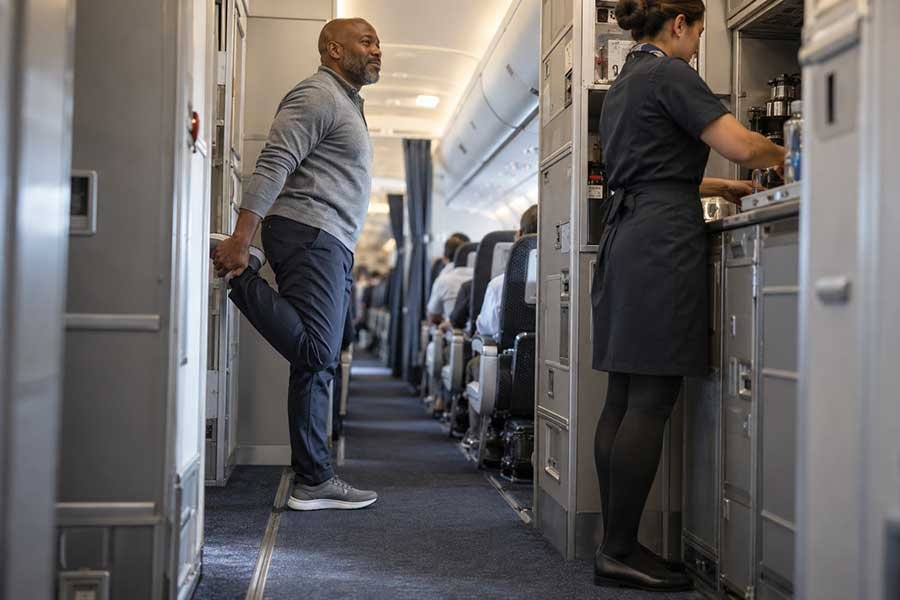
The two-hour movement standard for long-haul economy flights addresses the same circulatory concern as the compression socks but through the complementary mechanism of leg muscle activation rather than external pressure. Leg muscles, when contracting during walking and standing, function as a pump that actively assists blood return from the lower extremities toward the heart. During extended seated immobility, this muscle pump is inactive and blood return is reduced to the passive mechanisms — gravity, venous pressure, and respiration — that are significantly less effective than the active muscle pump at managing venous return. Regular movement activates the leg muscle pump and reduces the progressive accumulation of lower-leg swelling and heaviness that extended seated immobility produces over a long flight.

The two-hour movement interval on a long-haul flight: stand, walk to the galley area or the rear of the aircraft if the galley is occupied, perform ten to fifteen gentle calf raises, walk the aircraft’s aisle length once, and return to the seat. The full movement session takes three to five minutes and activates the leg muscle pump significantly relative to the immobile seated position. Most flight attendants are familiar with and accommodating of passengers walking the aisle for movement purposes during the non-service periods of the flight, and the galley area at the rear of many aircraft provides standing space for brief movement without blocking the aisle.

In-seat movement provides circulation support during the periods when standing and walking is not possible — during the seatbelt sign illumination, during meal service when the aisle is occupied by the cart, and during the taxi and ascent periods when standing is not permitted. Ankle circles, ten circles in each direction, performed while seated activate the calf muscle and the ankle’s circulatory network. Alternating heel lifts and toe presses, performed with the feet flat on the floor and raising the heel and pressing the toe alternately, provide a lower-intensity version of the calf raise’s muscle activation. These in-seat movements are visible to the traveler performing them and minimally visible to surrounding passengers, and are available at any point during the flight regardless of whether standing is possible at that moment.

Insider Note

Set a phone timer for two hours at the start of each flight segment rather than relying on noticing when two hours have passed. The timer converts the two-hour movement interval from an intention that the immersive activity of the flight — the film, the sleep, the meal, the conversation — consistently displaces into an external prompt that fires regardless of what is happening in the seat. The timer also establishes the movement routine as a scheduled flight activity rather than an interruption of whatever is currently happening, which produces a different relationship to the movement than the reluctant interruption of a film. Set the timer at boarding. When it fires, stand, move, reset. The three minutes of movement every two hours is the most effective per-minute wellness investment available on any long-haul flight.

Drink Twice as Much Water as You Think You Need

The aircraft cabin is the most dehydrating environment most travelers encounter in daily life. Commercial aircraft cabins are pressurized to an altitude equivalent of approximately six thousand to eight thousand feet, which is significantly lower pressure than sea level and correspondingly lower humidity — typically ten to twenty percent relative humidity in the aircraft cabin compared to thirty to sixty percent in most indoor environments. At ten to twenty percent humidity, the body loses moisture through respiration and skin evaporation at a meaningfully higher rate than at normal indoor humidity levels. The result is the specific dry-mouth, dry-eyes, and mild-headache constellation that many travelers associate with long flights and attribute to poor sleep or the general discomfort of the flight experience, but that is primarily a dehydration effect produced by the low-humidity environment.

Drinking twice as much water as feels intuitively appropriate addresses the dehydration in advance of its symptoms rather than responding to thirst, which typically indicates dehydration has already developed. Thirst is a lagging indicator: by the time the body signals thirst, a mild dehydration state has already been present for some time. In the low-humidity aircraft cabin, proactive hydration rather than reactive hydration maintains the body’s fluid balance across the flight rather than allowing it to decline and then attempting to recover it at the destination.

The practical water approach for long-haul economy: a reusable water bottle filled after security and carried in the personal item’s most accessible exterior pocket, refilled at the galley when the flight attendant is available for requests, and supplemented by accepting every water service the flight crew offers. The airline’s water service provides water at intervals that are adequate for short flights and insufficient for long-haul hydration. The combination of the personal water bottle plus the airline’s service produces continuous hydration access throughout the flight at an adequate volume for the cabin’s dehydrating environment. The personal water bottle also eliminates the dependence on the service cart’s timing for water availability — particularly important during the flight’s sleep period when the service cart may not be available for several hours.

A specific note on alcohol during long-haul flights: alcohol is a diuretic that increases fluid loss and amplifies the cabin’s dehydrating effect. The glass of wine at the start of the long-haul flight may contribute to the specific destination-arrival dehydration that the twice-as-much-water approach is intended to prevent. This is not a prohibition but an awareness: the dehydration budget that the proactive water approach is managing is drawn on more quickly with alcohol consumption, and the water volume needed to maintain adequate hydration rises proportionally. If the in-flight glass of wine is part of the long-haul ritual that makes the flight more enjoyable, drinking a full glass of water alongside it maintains the hydration baseline that the cabin’s environment alone would otherwise have been reducing.

Insider Note

Pack a facial mist spray in the carry-on’s personal item — a small spray bottle of water or a travel-size facial mist — and use it every two hours alongside the movement interval. The cabin’s low humidity dehydrates through the skin as well as through respiration, and the skin’s dryness and tightness that many travelers notice during long flights is the visible external result of the same low-humidity effect that is happening internally. The facial mist addresses the external hydration directly and provides the immediate sensory reset of a cool spray of water on the face at the two-hour movement interval that consistently reads as refreshing regardless of flight hour. A thirty-milliliter facial mist weighs under fifty grams, fits in the personal item’s exterior zip, and provides approximately forty to fifty applications across the flight. Ensure the bottle is within the carry-on liquids rule’s 100-milliliter container limit before packing it.

The Complete Economy Comfort Kit

The complete economy comfort kit for long-haul flights organizes the five core hacks into a physical kit that is assembled once, stored in the personal item, and confirms that every comfort element is present before the aircraft door closes.

The nutrition layer: personal snack kit with two to three high-protein, high-satiety options sufficient for the flight’s duration between meal services, assembled from home and stored in a small zippered pouch in the personal item’s exterior pocket. Reusable water bottle, empty through security and filled at the terminal water station or the airport food purchase before boarding.

The circulation layer: compression socks worn from the gate — not put on at the seat — for any flight over four hours. The two-hour movement timer set on the phone at boarding for the flight’s duration, reset after each movement session.

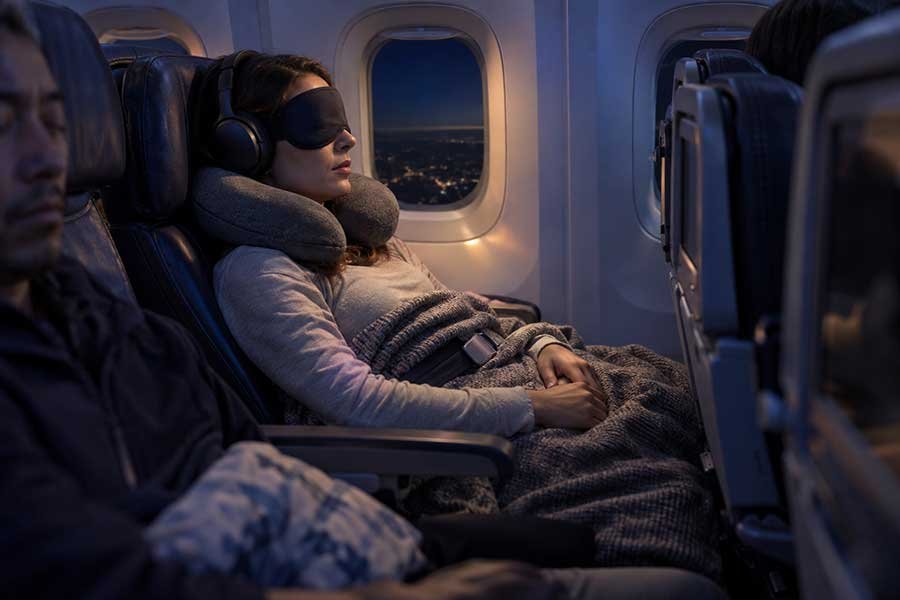
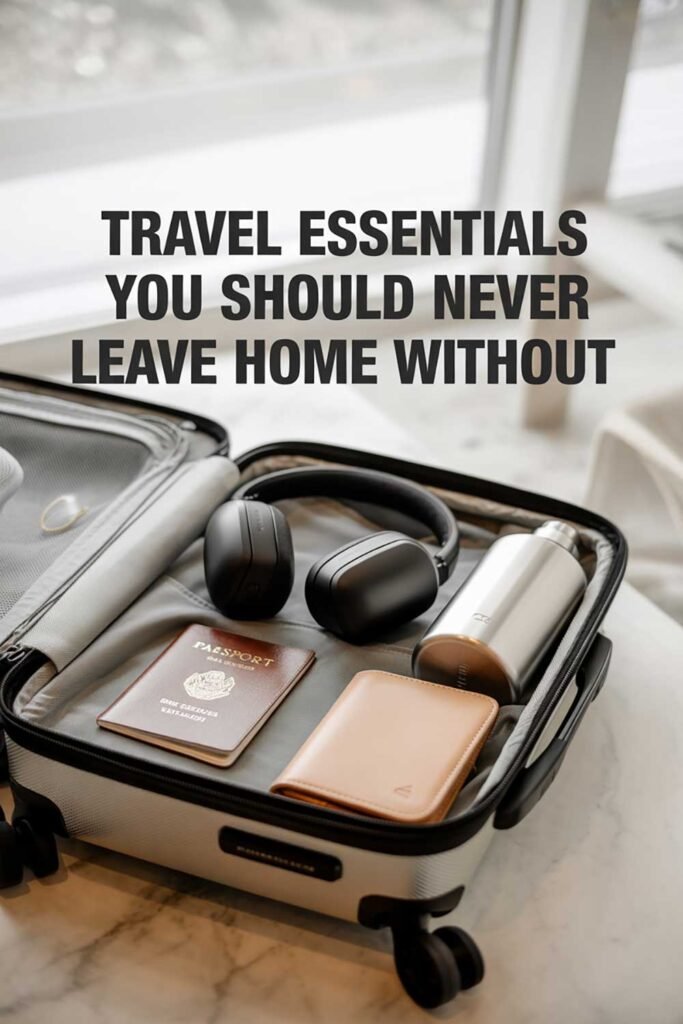
The sensory comfort layer: noise-canceling headphones at the very top of the personal item, on the ears before the aircraft door closes. Eye mask in the personal item’s interior zip for the sleep segment of the flight. Neck pillow, if used, in the compression sack format that clips to the outside of the personal item rather than occupying its interior. Facial mist in the personal item’s exterior zip alongside the liquids bag.

The additional comfort layer: a change of socks and a clean t-shirt in the personal item for flights over ten hours, for the landing morning refresh that converts the arrival from the physically accumulated fourteen hours of travel into the beginning of the destination day. A small toothbrush and travel-size toothpaste in the personal item for the same purpose. Light layers for the cabin temperature management — the aircraft cabin is typically cool and sometimes cold, and the blanket provided in economy class on most carriers, while present, is frequently insufficient for a traveler who runs cold in normal environments.

Insider Note

The economy comfort kit’s most important element is the mindset shift the brief describes: setting the right expectations. The expectation that economy class should be comfortable in the way that business class is comfortable produces the specific version of the long-haul economy experience that is defined by its deficiencies. The expectation that economy class is a functional transportation environment that requires active management to be comfortable produces the version that is defined by the specific comforts that preparation provides. The seat is small. The noise is real. The service is limited. All of these are true and all of them are addressable by preparation that adds two pounds to the personal item and thirty minutes to the departure preparation. The prepared economy traveler and the unprepared economy traveler are in the same seat. They arrive at the same destination in completely different condition.

The Honeymoon Flight That Ate the First Day and What They Changed on the Way Back

Mia and Carlos had saved for their honeymoon for two years. They had researched the destination for six months. They had booked the specific hotels, the specific restaurants, and the specific experiences in advance. They had packed perfectly: the right clothes, the right shoes, the right combination of outfits for every occasion the trip included. They had not thought about the eleven-hour economy flight to get there as something that required its own preparation. The flight was just the way you got there.

They boarded without snacks because they had eaten at the airport. The airport meal was four hours before landing. The airline’s meal service was two hours after boarding, which produced one meal in the first two hours and then nothing until the breakfast service two hours before landing. Between hour three and hour nine, they were hungry in the way that a long-haul flight without personal food produces: not the hunger of having skipped a meal but the diffuse mild hunger of a nutritional gap that there is nothing available to close without pressing the call button for crackers. They pressed it once. Both of them. The crackers were small.

Carlos did not move from his seat for the full eleven hours because he had the window seat and did not want to wake Mia every time he stood. His feet were swollen enough on arrival that his shoes required effort to put back on at the destination airport. Mia had a persistent headache from the moment of landing that she attributed to the altitude change and that was almost certainly dehydration. Neither of them had brought a water bottle because the flight served drinks. The flight served drinks at two meal services and one mid-flight pass. Neither of them had the noise-canceling earbuds because the airline provided headphones. The provided headphones had the specific audio quality of a school computer from many years ago, and the engine noise behind every film made the volume dial a negotiation between hearing the audio and hearing too much of everything else.

The first afternoon of the honeymoon was spent at the hotel. Not because it was a good place to be — it was, and they were glad to be there — but because neither of them had the energy for the first afternoon’s plans. They had checked in, lay on the bed, and been asleep within twenty minutes of horizontal. They woke for dinner. The honeymoon began at dinner rather than at the airport arrival, which was the arrival they had planned and paid for and traveled eleven hours to experience.

On the return flight, with eleven hours back ahead of them and the first-flight’s lessons fresh in memory, they built the kit. Mia assembled a snack bag from the airport’s options: mixed nuts, two protein bars, dark chocolate, a bag of crackers with individual nut butter packets. Carlos bought a large water bottle at the terminal and filled it again at the galley during boarding. They had both bought noise-canceling earbuds before the trip home. Mia had compression socks from the hotel gift shop. Carlos set a two-hour movement timer on his phone. The first time it fired he climbed over Mia’s sleeping form with genuine apology and stood at the galley for four minutes doing calf raises while the flight attendant watched with cheerful acceptance. He did it every two hours. His feet were normal-sized on arrival. Mia’s headache did not develop. They arrived at the home airport at 6 a.m. and both agreed they felt better than they had after the outbound eleven hours. This article is the kit they built from the afternoon nap they had not planned to take on the first day of their honeymoon.

Six More Economy Class Hacks That Make Long Flights Better

Beyond the five core economy class comfort principles and the complete kit, these six additional approaches address the specific long-haul economy scenarios that the core kit does not fully cover.

Choose the aisle seat for any long-haul flight where the window seat is not a priority for the specific experience it provides. The window seat produces the specific experience of watching the destination approach from above and provides the cabin wall to lean against for sleep. The aisle seat produces the specific experience of standing, walking, and using the restroom without climbing over anyone at two-hour intervals for eleven hours. For a flight whose primary purpose is transportation rather than aerial scenery, the aisle seat’s operational freedom across the full flight is the seat selection that makes the movement routine possible without the social difficulty of the window-to-aisle climb at every two-hour interval. Select the seat at booking rather than at check-in for the highest probability of the preferred seat type being available.

Bring a travel pillow specifically for neck support rather than assuming the aircraft’s headrest, the folded jacket, or the personal item pressed against the window provides the same support. The neck is the specific body part most consistently cited in post-long-haul-flight stiffness reports, and the sleep posture in an economy seat without neck support — the forward head drop, the side roll against a hard headrest, the specific overnight flight awakening of a neck at a wrong angle — is the posture that produces the stiff neck that accompanies the arrival’s first day. A compact inflatable travel pillow or a memory foam travel pillow in a compression sack provides the neck support that the aircraft’s headrest does not across the sleep segment of any long-haul overnight flight.

Pack a light, packable layer specifically for the aircraft cabin temperature, separate from the outerwear worn on the travel day. The aircraft cabin temperature is set for passenger comfort at the median of the cabin’s full range of passengers, which means it is frequently too cold for passengers who run cold in normal environments and manageable for those who run warm. The packable layer in the personal item — a fine merino cardigan, a lightweight fleece, or the large wool scarf that serves multiple purposes — is accessible in thirty seconds and converts the cabin’s cool environment into a comfortable one without requiring the overhead bin access that the travel day’s heavier jacket would need. The airline’s blanket is available in economy but is a single thin cotton layer that provides limited thermal comfort for passengers who need meaningful warmth for eight to ten hours of sleep.

Use the aircraft’s individual reading light rather than the overhead cabin lighting during the periods when the cabin’s main lights are dimmed. The cabin light dimming on overnight long-haul flights is a deliberate signal to the body’s circadian system that the local time equivalent is night and sleep is appropriate. Using the bright overhead lighting during the dimmed cabin period sends the opposite signal and delays the sleep onset that the dimming was intended to facilitate. The individual reading light provides adequate illumination for any activity that requires light — reading, writing, or eating — without the circadian disruption of bright overhead exposure during the designated sleep window of the flight.

Sync the watch to the destination time zone at boarding rather than mid-flight. The psychological shift of treating the current time as the destination’s time — eating when it is dinner time at the destination, attempting sleep when it is night at the destination, and framing the flight’s activities within the destination’s daily rhythm — helps the body begin the time zone transition during the flight rather than at arrival. For eastward long-haul flights with significant time zone changes, this approach is more challenging because it typically requires attempting sleep during a period when the body’s current time zone is still indicating daytime. For westward long-haul flights or shorter time zone changes, syncing at boarding is the most effective jet lag management available within the flight itself.

Moisturize the hands and face during the flight using a small amount of travel-size moisturizer applied at the two-hour movement interval. The cabin’s ten to twenty percent humidity that produces internal dehydration produces the same effect on skin’s moisture barrier. The travel-size moisturizer in the personal item’s exterior zip, applied at the same two-hour interval as the facial mist, maintains the skin’s comfort level across the flight and contributes to the arrival-ready appearance that the fully prepared economy traveler achieves and the unprepared traveler does not. Both items are in the personal item, both are used at the movement interval, and together they address the internal and external effects of the cabin’s specific humidity environment.

Insider Note

The pre-flight rest before any overnight long-haul departure is among the most impactful economy class comfort preparations and one of the most frequently overlooked because the departure day’s activities typically make it difficult to implement. Arriving at the overnight flight well-rested rather than at the end of a full active day means the sleep debt at boarding is lower and the sleep onset in the economy seat during the flight’s natural rest window is faster and higher quality. Where the trip planning allows for a low-key departure day that preserves energy for the overnight flight, treating the departure afternoon as a rest period rather than a final activity window produces a measurable difference in the long-haul flight experience. Where the departure day cannot be low-key, the other items in this article’s comfort kit compensate for the depletion that a full departure day produces. But the well-rested departure is, when available, the single economy class upgrade that costs nothing and produces the most significant return.

Book With Us

Book the Long-Haul Trip That Makes the Economy Class Preparation Worth Every Minute

The economy flight that arrives at a destination worth arriving at is the economy flight that the preparation in this article was built for. Our travel agents book the trips worth taking the long way to reach. Let us plan yours.

Book A Trip

Common Economy Class Mistakes That Make Flights Harder Than They Need to Be

These are the decisions that convert a survivable long-haul economy flight into an exhausting one. Each is entirely preventable with the preparation this article describes.

1

Relying entirely on the airline’s meal service for nutrition across a twelve-hour flight

The airline’s economy meal service provides two meals and occasionally a mid-flight snack service across a flight that spans twelve to fourteen waking and sleeping hours. The periods between meal services — three to five hours in most cases — are nutritional gaps that produce the specific mid-flight low-energy state that makes the next meal service’s limited options seem more appealing than they genuinely are and contributes to the arrival fatigue that a personal snack kit directly addresses. Pack the snack kit. The hunger that develops at hour seven of a twelve-hour flight that was managed by planning at home is not the hunger that characterizes the unprepared version of the same flight.

2

Not wearing compression socks on long-haul flights out of unfamiliarity with them

Compression socks are the economy class comfort item most consistently underused by infrequent long-haul travelers not because they are uncomfortable or ineffective but because they are unfamiliar as a travel item to travelers who have not encountered them in a travel context before. The swollen feet and heavy legs that many travelers attribute to long flights in general are primarily the circulatory effect of extended seated immobility that compression socks specifically address. Travelers with any relevant health consideration should consult a healthcare provider before using compression garments. For typical travelers without specific circulatory contraindications, wearing correctly sized compression socks on flights over four hours is the single most impactful physical comfort decision available in economy class.

3

Using the airline’s provided headphones for a twelve-hour flight

The airline’s economy headphones are almost universally the thinnest audio experience available for the price of a long-haul economy ticket, which is significant because the price includes them. They provide no noise cancellation, and at the cabin’s eighty-to-eighty-five-decibel engine and air system noise level, the volume required to hear any content clearly enough to enjoy it across twelve hours of ambient noise is the volume that produces the specific ear fatigue that adds to the arrival exhaustion. Personal noise-canceling headphones of any quality level above the airline’s offering provide a meaningfully different twelve-hour audio experience. The noise-canceling headphone purchase is amortized across every long-haul flight for the life of the product.

4

Sitting immobile for the full flight duration to avoid disturbing seatmates

The courtesy of not climbing over seatmates repeatedly is a real and appreciated courtesy. The two-hour movement interval that produces the need for this courtesy is also a real and non-optional wellness practice for long-haul flights. The resolution is the aisle seat selection that eliminates the climb-over requirement entirely, and for window seat travelers, the pre-flight conversation with the seatmate that establishes the movement plan and the mutual courtesy arrangement in advance rather than the apologetic disruption at every two-hour interval. The immobile window seat passenger who does not want to climb over anyone arrives at the destination with the swollen feet, heavy legs, and stiff neck that the movement routine prevents.

5

Drinking alcohol or caffeine in place of water during long-haul flights

Both alcohol and caffeine are diuretics that increase fluid loss and amplify the cabin’s dehydrating effect. The in-flight drink service that offers coffee, tea, wine, and beer alongside water and juice is offering a range of options some of which actively worsen the dehydration the cabin’s low humidity is producing. This is not an argument against the enjoyable glass of in-flight wine. It is the awareness that each diuretic beverage requires a proportional increase in water consumption to maintain the hydration baseline that the cabin’s humidity is already drawing down. The practical approach: drink the wine, drink the coffee, and drink an additional full glass of water alongside each diuretic beverage rather than in place of it.

6

Expecting economy class to be comfortable without any preparation and being disappointed when it is not

The most impactful economy class hack in this article is the one that has no weight and takes up no bag space: setting the expectation that economy class is a functional transportation environment that requires active management to be comfortable rather than a comfortable environment that sometimes disappoints. The economy class seat is small. The noise is continuous. The air is dry. The service is limited and shared among many passengers. These are the correct baseline expectations for economy class on any carrier, and they are manageable baseline conditions for any traveler with the preparation this article describes. The traveler who boards with the snack kit, the compression socks, the noise-canceling headphones, the water bottle, and the movement timer arrives at the destination having been managed rather than endured. The economy class experience and the traveler’s experience of it are two different things, and only the second is within the traveler’s control.

Turn Travel Into Income

Love Helping Travelers Experience Every Part of the Journey Better?

The traveler who arrives at a destination prepared and energized rather than depleted is the traveler whose trip begins at the airport arrival rather than the hotel check-in. If becoming a home-based travel agent who helps people plan and travel better from takeoff to landing sounds like the right next step, see how the TravelPreneur system works. Earn commissions and build a real business from anywhere.

Become An Agent

Frequently Asked Questions

These are the questions travelers ask most often about economy class comfort. Real answers from real long-haul travel experience across carriers, cabin types, and flight durations.

Is there a way to get more legroom in economy without upgrading to a different fare class?

Several approaches produce more legroom in economy without a full fare class upgrade. Exit row seats and bulkhead seats typically offer significantly more legroom than standard economy seats. Exit row seats are often available for a fee in the seat selection process at booking or at check-in, and some airlines release these seats for free at check-in for passengers who have not already paid for them. Bulkhead seats — the front row of an economy section — have no seat in front of them and therefore no forward seat’s recline encroachment, though they typically have no under-seat storage during takeoff and landing. Seats in the premium economy section, where available and within the booking budget, provide meaningfully more legroom than standard economy along with improved meal service and other amenities for a cost below a full business class upgrade. Checking in as early as possible, when the airline releases any unsold exit row and premium seat availability, and requesting a specific seat preference through the airline’s customer service or at the gate for elite status holders are the most reliable approaches. Specific legroom measurements for every seat type on most commercial aircraft models are available on SeatGuru and similar seat review platforms, which provide the cabin map for the specific aircraft operating any given flight and allow the most legroom-efficient economy seat to be identified and selected before departure.

What is the best way to sleep on a long-haul economy flight?

Sleeping on a long-haul economy flight is genuinely difficult in a standard economy seat and significantly more manageable with the right preparation. The specific sleep-enabling preparation: noise-canceling headphones or high-quality earplugs to reduce the cabin’s ambient noise to a level compatible with sleep onset; an eye mask that blocks the cabin’s lighting, the seatback screen of the neighboring passenger, and the light from the overhead panel; a neck pillow that prevents the head’s forward drop or side roll during sleep, which is the specific sleeping posture that produces the mid-flight awakening with a stiff neck; and the cabin temperature management layer — the packable cardigan or the large wool scarf — that provides the warmth the airline’s thin economy blanket does not. Syncing the watch to the destination time zone and attempting sleep during the local night equivalent at the destination helps the body’s circadian clock begin the adjustment during the flight. Avoiding caffeine for several hours before the designated sleep segment and timing the movement interval to complete one session immediately before attempting sleep activates the leg muscles enough to allow comfortable settling into the sleep posture. None of this produces business class sleep quality in economy class. All of it produces meaningfully better sleep than the same flight without any preparation, and the difference between two hours of genuine rest and two hours of uncomfortable failed sleep attempts is significant in the arrival-day energy level.

How do you manage jet lag after a long-haul economy flight?

Jet lag management after a long-haul economy flight is most effectively begun during the flight rather than at the destination. The approaches with the most consistent evidence for jet lag reduction: light exposure at the appropriate times for the destination time zone, which means maximizing bright light exposure during the destination’s daytime hours and avoiding it during the destination’s nighttime hours. Melatonin taken at the destination’s bedtime has evidence for helping accelerate circadian adaptation, though the specific timing, dosage, and appropriateness for individual circumstances should be discussed with a healthcare provider. Staying awake until the local bedtime at the destination rather than napping upon arrival is generally recommended for eastward travel where the time zone change advances the local time, making the first night’s bedtime arrive before the body’s circadian clock is ready for it. Hydration management during the flight, as described in this article, reduces the dehydration component of jet lag fatigue that is often conflated with the circadian disruption component. Physical activity at the destination — a walk in natural light on the arrival day — combines the light exposure and physical movement elements that accelerate circadian adjustment more effectively than sedentary indoor rest. Jet lag management is a gradual process that no single intervention fully resolves, and the degree of disruption is generally proportional to the number of time zones crossed and the direction of travel.

Are compression socks safe for everyone to wear on flights?

Compression socks are a general wellness travel product used by a broad range of travelers for long-haul flights, and for most healthy travelers they are comfortable and safe when sized and worn correctly. However, compression garments are not appropriate for everyone. Individuals with certain conditions including peripheral artery disease, certain types of peripheral neuropathy, significant heart failure, certain skin conditions, or other conditions affecting blood flow or sensation in the lower legs should consult a healthcare provider before wearing compression socks. Incorrectly sized compression socks that are too tight can restrict circulation rather than supporting it. Travelers with any relevant health condition, any uncertainty about whether compression socks are appropriate for their specific health situation, or any discomfort when wearing compression socks should consult a qualified healthcare provider before using them. The information in this article is general wellness guidance for typical healthy travelers and is not a substitute for professional medical advice tailored to an individual’s specific health circumstances.

What should I bring to make an overnight economy flight more comfortable?

An overnight economy flight, where the flight’s duration spans the destination’s or the departure point’s nighttime hours and sleep is the most important in-flight activity, benefits from the full comfort kit in this article plus specific emphasis on the sleep-enabling items. The complete overnight economy kit: noise-canceling headphones or high-quality earplugs; a quality eye mask; a neck pillow; the packable warm layer (merino cardigan or large wool scarf) for the cabin’s cool temperature during the sleep segment; the personal snack kit for the pre-sleep and post-sleep hunger that the airline’s overnight meal service timing may not align with; compression socks worn from boarding; the water bottle with proactive hydration across the full flight; the two-hour movement timer; a small toothbrush and travel toothpaste for the pre-sleep freshening that the lavatory provides; a facial moisturizer and eye drops for the cabin’s dehydrating overnight effect on skin and eyes; and an empty plastic bag in the personal item for any lavatory items used and returned to the kit rather than left in the personal item. The overnight economy traveler who boards with these items and the expectation that eight hours of economy seat sleep is limited but manageable with the right tools will arrive significantly more refreshed than the overnight economy traveler who boards hoping the flight will somehow be comfortable without any of them.

Is there a best airline or specific aircraft for economy class comfort on long haul flights?

Economy class cabin comfort varies meaningfully between airlines and between aircraft models, and the research to identify the best option for a specific route is worthwhile for any traveler spending twelve or more hours in economy. The specific factors that produce the most comfort variation between economy products: seat pitch, which is the distance from one seat’s reference point to the same point on the seat ahead, and which determines the effective legroom available; seat width, which varies between aircraft models and between carriers on the same aircraft; the seatback entertainment system’s screen quality and content library; the meal service quality and options; the cabin humidity level, which some newer aircraft including the Boeing 787 Dreamliner and the Airbus A350 maintain at higher levels than older aircraft, producing less cabin dehydration; and the aircraft’s in-flight Wi-Fi availability and quality. SeatGuru, airline review platforms, and aviation enthusiast communities that review economy class products by route and carrier provide the specific and current information about economy cabin comparison for any given route. The best economy class experience for a specific journey is the one on the aircraft that scores best on the specific criteria most relevant to the traveler’s priorities, identified before booking rather than discovered at the seat.

The traveler who walks off a twelve-hour economy flight ready to begin the trip did not travel in a better seat. They traveled with a better kit and better expectations. That is available to everyone on every flight.

Picture the Last Hour of the Long-Haul Flight

The snacks have covered the gaps between meal services. The feet are comfortable in the compression socks. The noise-canceling headphones have been on the ears since boarding and the engine has been a background hum rather than a presence for twelve hours. The movement timer has fired five times and you have stood and walked and returned each time. The water bottle has been refilled twice at the galley. You watched two films, read for two hours, and slept for four. You are at hour eleven of a twelve-hour flight and you are not depleted. You are ready. The seat belt sign illuminates for final descent. You put the headphones in the personal item at the top. The descent begins. The destination is outside the window. You are going to walk off this aircraft and begin the trip that all of this was for. That is the economy class that preparation produces.

Free Download

One More Thing Before Your Next Long-Haul Flight

Print our free Travel Packing Checklist and use the flight comfort section to confirm every economy class kit item is in the personal item before the aircraft door closes. The snack kit, compression socks, headphones, eye mask, water bottle, and everything else this article describes in one organized checklist that takes three minutes to confirm and makes the next twelve hours significantly more comfortable than the last ones.

Get the Free Checklist

Explore Our Top Picks for a Better Trip

Visit our favorites page for helpful booking ideas and travel essentials that we have found genuinely useful across many long-haul flights and trips. Whether you are planning your next long-haul adventure or looking for resources that make economy class more comfortable from snacks to headphones to compression socks, it is worth exploring.

See Our Top Picks

Travel Prints and Printables From Our Shop

Visit Premier Print Works for flight comfort checklists, long-haul travel planners, packing list printables, travel journals, and wall art that makes every trip a little more beautiful and a lot more organized from the afternoon the economy kit is assembled to the morning the long-haul flight lands at the destination that made it worth every one of those twelve hours.

Visit Premier Print Works

Disclaimer

The information shared in this article is provided by Don and Diana’s Travels for general informational, educational, and inspirational purposes only. It reflects our personal experiences, opinions, and the experiences of travelers we have worked with. It is not professional medical, health, legal, or travel safety advice, and it should not be relied on as such.

Medical and Health Information

This article discusses compression socks, in-flight movement, hydration, and other general wellness practices for long-haul flight comfort. This information is general educational content for typical healthy travelers and is not professional medical advice. Travelers with cardiovascular conditions, a history of blood clots, pregnancy, recent surgery, peripheral artery disease, peripheral neuropathy, or any other health condition that may be relevant to flight wellness or compression garment use should consult a qualified healthcare provider before any long-haul flight and before using compression garments. We are not responsible for any health outcome arising from information in this article. Always seek professional medical advice for any specific health concern related to travel.

Jet Lag and Sleep Information

The jet lag and sleep guidance in this article is general educational information only and not medical advice. Melatonin and other sleep supplements have individual responses and interactions that vary by person and health circumstances. Always consult a healthcare provider before using any supplement or medication for sleep or jet lag management.

Airline Policies and Services

Airline policies, seat availability, meal service, in-flight entertainment, and all related services change frequently and vary by airline, route, aircraft type, and fare class. Always confirm current policies and services with the specific airline for the specific booking. We are not responsible for any airline service outcome based on information in this article.

Affiliate and Partner Links

This article may contain affiliate links, partner links, referral links, and links to products or services that pay us a commission. If you click a link and make a purchase or complete any qualifying action, we may earn a small commission at no extra cost to you. Our recommendations are based on real use and genuine belief in the products and services we share.

Third-Party Websites and Services

We may link to third-party websites, services, and resources for your convenience. We do not control these sites and are not responsible for their content, terms of service, pricing, availability, or any product or service they sell. Your use of any third-party site is entirely at your own risk.

Health, Safety, and Personal Responsibility

Travel involves personal risk. You are solely responsible for your own health, safety, travel insurance, medications, vaccinations, documentation, financial decisions, and choices while planning or taking any trip. We strongly recommend purchasing comprehensive travel insurance for every trip. Don and Diana’s Travels, its owners, employees, contractors, and affiliates accept no liability for any loss, injury, illness, delay, cancellation, damage, theft, or inconvenience arising from your use of the information in this article or from any travel decisions you make.

Composite Stories and Characters

Some stories, examples, and traveler experiences shared on this site are composites drawn from the real experiences of Don, Diana, clients, friends, and travelers we have worked with over the years. Names, identifying details, locations, and circumstances may be combined, changed, or fictionalized to protect privacy. Any resemblance to a specific real person beyond the composite portrayal is unintentional.

No Guarantees

We do not guarantee any specific result, outcome, savings, or experience from using the information, tips, services, or products mentioned in this article. Your results depend on many personal factors including your own choices, effort, circumstances, and external conditions outside of our control.

Copyright and Use

All content in this article is the copyrighted property of Don and Diana’s Travels unless otherwise noted. You may not copy, republish, redistribute, modify, sell, or reuse our content without our prior written permission. You are welcome to share a direct link to this article with proper credit.

By reading and using the information in this article, you acknowledge that you have read, understood, and agree to this disclaimer in full.