Suitcase Packing Tips for Organized Travel
An organized suitcase is the difference between a trip that flows and a trip that frustrates. The most organized traveler in any airport did not pack the night before. They built a system once and used it on every trip after that. This article gives you that system from the first packing cube to the foldable bag waiting for the journey home.
Grab Our Travel Packing Checklist
The best packing system starts with the best packing checklist. Ours walks you through every category, every essential, and the order to pack everything for maximum organization and minimum stress. Print it once and use it on every trip from now on.
Get the Free ChecklistPacking cubes are the single most impactful organizational upgrade available for any traveler at any budget, and the difference between using them by category versus using them by person is the difference between a suitcase you can navigate and a suitcase you have to unpack to find anything.
Organizing by category means one cube for tops, one for bottoms, one for underwear and socks, one for sleep clothes, and one for any specialty items like swimwear or workout gear. When you need a specific category of clothing, you pull out the one cube that holds it, find what you need in seconds, and put the cube back. No other section of the suitcase is disturbed. No other items are moved. You can do this in a dark hotel room at 5 a.m. without waking a sleeping travel companion.
Organizing by person, which is the natural instinct for couples and families, seems logical until you try to find a specific item at the end of a travel day when both people’s things are compressed together and nothing is visible. By category keeps every type of item in one clear location across the entire suitcase regardless of whose clothing it belongs to. If you travel with a partner, assign different cube colors to each person and organize each person’s cubes by category rather than putting all of one person’s items in one area of the bag.
Choose packing cube sizes that match your typical packing habits. A large cube for bulkier items like jeans and sweaters. Medium cubes for tops and shorts. Small cubes for underwear, socks, and accessories. A compression cube for the bulkiest item you cannot leave behind on cold-weather trips. A full set of three to four cubes costs $20 to $35 and lasts for years. Every dollar spent on quality packing cubes returns in time saved, frustration avoided, and the quiet satisfaction of opening a suitcase that looks exactly the same as when you closed it at home.
The most organized traveler in any airport did not pack the night before. They built a system once and have used it on every trip since.
Packing cubes by category is not a system for neat people. It is a system for people who want to find things quickly in a dark hotel room at any hour.
Label the outside of each packing cube with its category using an iron-on label, a small luggage tag, or a permanent marker on a tag. When you are repacking quickly at checkout in a hurry, labeled cubes go back to the right suitcase zone automatically. On shared luggage for couples and families, add a color indicator or a name tag to each cube so the right items go to the right person at unpacking time without anyone needing to ask.
Let Us Plan Your Next Trip
A beautifully organized suitcase deserves a beautifully planned trip to take it on. Tell us where you want to go, your travel dates, and what kind of experience you are looking for. We will handle the planning while you handle the packing. Real travel agents, real results.
Plan Our EscapeThe rolling versus folding debate has a clear answer that most experienced travelers have landed on through trial and error. Roll soft items. Fold structured ones. The distinction matters because the two techniques produce different results on different fabrics and different garment constructions, and using the wrong technique produces the wrong result.
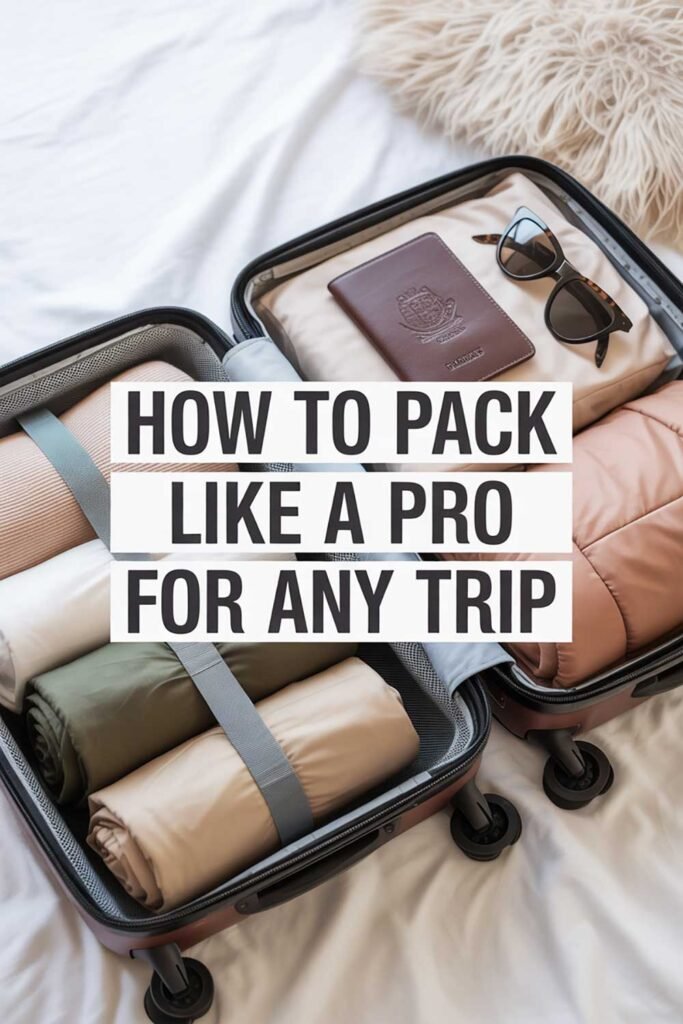
Soft, flexible garments benefit from rolling. T-shirts, casual tops, lightweight trousers, jeans, knitwear, activewear, swimwear, underwear, and socks all roll tightly into compact cylinders that take up 20 to 30 percent less space than folding flat and produce fewer wrinkles because the pressure is distributed evenly across the roll rather than concentrated at fold creases. Roll from the bottom hem up, keep it tight, and the result is a stable cylinder that fits efficiently into a packing cube and stays organized without shifting.
Structured garments benefit from folding. Blazers, dress shirts, button-up shirts, structured trousers, and tailored items all have seams, padding, or construction elements designed to hold a specific shape. Rolling a blazer crushes the shoulder padding and creates wrinkles along the seams that do not fall out easily. Folding a blazer flat, inside-out with the arms folded in, preserves the construction and produces minimal creasing. Folded structured garments go at the top of the suitcase in a flat layer where nothing compresses them further.
A middle ground technique called the bundle packing method works well for travelers who have a significant number of wrinkle-prone structured pieces. Lay one large garment flat in the suitcase, pack everything else in the center, and wrap the outer garment around the bundle like a cocoon. The clothes cushion each other and the outer garment has no fold lines because the bundle fills its shape. This method takes more time to execute but produces the least wrinkling of any approach for a bag heavy in structured clothing.
Stuff socks, underwear, and small accessories inside shoes before placing the shoes in the suitcase. Shoes take up the most awkward, irregular shaped space in any suitcase. Filling them with small items uses every cubic inch of available space, keeps small items together rather than scattered loose in the bag, and prevents the shoes from collapsing inward during transit. Place shoes in a shoe bag or a shower cap to keep them from transferring sole dirt to clothing.
Where you place the heaviest items in your suitcase determines how the bag handles when it is being rolled, lifted, and moved through airports, up stairs, and across uneven surfaces. Get the weight distribution wrong and your suitcase tips over when you stop rolling it, strains to lift, and shifts uncomfortably when carried. Get it right and the bag rolls stably, lifts evenly, and behaves like an extension of your movement rather than an obstacle to it.
The wheel end of the suitcase is the bottom when the bag is standing upright and rolling. This is where your heaviest items belong. Shoes. Toiletry bags with full bottles inside. Heavy books or electronics. Dense knit sweaters and jeans. When these items sit at the wheel end, the bag’s center of gravity sits low and stable. It rolls without tipping. It stands upright without leaning. When you lift it, the weight is distributed evenly because it is closest to the wheels and the telescoping handle base rather than piled at the top of the bag.
Medium-weight items go in the middle. Folded structured garments, packing cubes with tops and lighter clothing, and medium-weight accessories sit in the main body of the suitcase above the heavy base layer. The lightest items, pajamas, thin layers, empty bags, and soft accessories, go at the top closest to the zipper. This means when you open the suitcase horizontally on a bed or a luggage rack, the order is logical. The lightest things are at the top where you reach in first. The heavy things at the wheel end are the last things you need to access.
Use a small portable luggage scale before every trip. Most airlines charge $50 to $100 or more for overweight checked bags and the weight limit, typically 50 pounds for US domestic and 50 to 70 pounds for international, is enforced without exception. A luggage scale costs $8 to $15, hangs from any bag handle, and gives you the exact weight in ten seconds. Weighing your bag at home before departure is the only way to know for certain that you are within the limit and eliminates the airport check-in anxiety of hoping the scale says something acceptable.
The Packing Gear We Actually Use
The packing cube set that has been in our suitcases for years, the luggage scale that has saved us from overweight fees more times than we can count, the compression cube for our bulkiest items, and the foldable tote that goes in the bottom of every bag we pack. Real packing gear from real trips.
DND FavoritesA well-organized suitcase is packed in deliberate layers that correspond to how you will use the bag throughout the trip. Not all at once and not randomly. Layer by layer, with the items you need most often at the most accessible position and the items you will rarely touch deepest in the bag.
Layer one is the wheel-end foundation. This is where your shoes go, heels facing the wheel end and toes pointing toward the zipper. Socks and underwear stuffed inside. Shoes separated in individual shoe bags or shower caps. Dense heavy items like your toiletry kit and any books or electronics not going in your carry-on sit alongside the shoes in this layer.
Layer two is the main clothing section. Packing cubes stand upright in this layer like files in a drawer rather than lying flat like pancakes. When cubes stand upright, you can see every cube label from above when you open the bag, which means finding any category of clothing takes two seconds rather than lifting and moving everything. Roll everything inside the cubes before loading them. Pack the cubes tightly enough that they do not shift during transit but not so tightly that the zipper strains.
Layer three is the accessible top layer. Structured garments folded flat. Any items you will need on arrival night without fully unpacking, your toiletry bag if it is not in the bottom layer, your pajamas, your phone charger. A flat mesh or zip pocket layer across the top of the suitcase, which some bags include as an integrated feature, gives this layer a defined home separate from the packed cubes below.
Pack a thin layer of tissue paper between folded structured garments in the top layer of your suitcase. Tissue paper between layers reduces the friction between garments that causes wrinkles, absorbs moisture that can set creases, and adds almost no weight while providing a measurable wrinkle reduction for business travel and any trip where arriving in pressed clothing matters. Dry cleaner bags used flat between garments serve the same purpose and are often available for free.
The return packing situation is almost always different from the departure packing situation, and ignoring this reality is one of the most consistent suitcase packing oversights experienced by travelers at every level. You arrive at your destination with a well-organized suitcase and a clear system. You leave with dirty laundry, purchases, souvenirs, gifts, and the general accumulation that any real trip produces. The bag that zipped perfectly at home may not zip without strain at the hotel on the last morning.
A foldable bag packed inside your main luggage at departure solves this problem entirely. A lightweight nylon tote, a packable duffle, or a foldable backpack that weighs under two ounces and compresses into a pouch the size of your fist gives you a complete extra bag on the return journey when you need it most. Everything purchased during the trip that does not fit in the original packing goes into the foldable bag, which becomes your personal item or your second checked bag depending on your needs.
The foldable bag also handles the dirty laundry separation problem on multi-day trips. A mesh laundry bag takes up almost no space and keeps worn clothing separated from clean clothing throughout the trip. When you are repacking at each accommodation stop, worn items go into the mesh bag, clean items stay in their packing cubes, and you never arrive at your next destination unsure whether something in your suitcase is clean or worn. The system maintains itself once it is set up because every evening you put worn items in the laundry bag and every morning you have clear visibility of what is clean and what needs washing.
Wear your heaviest and bulkiest items on the return journey rather than packing them. The heavy boots that took space in the suitcase on the way out go on your feet for the flight home. The thick sweater worn through the airport takes up zero bag space. The jacket stuffed in the overhead bin weighs nothing in the suitcase. This approach on the return journey consistently frees two to four kilos of capacity in a suitcase that has accumulated purchases and souvenir weight during the trip, making the difference between a bag that zips easily and one that requires assistance.
The Trip We Finally Packed Like a Team
For years, Leon packed by throwing everything in the suitcase in roughly the order it occurred to him. Shoes on top because they were the last things he thought of. No system. No cubes. The suitcase was a chaotic archive of the trip that produced a different surprise every time he opened it. He was never stressed about packing. He was frequently stressed about finding things once he arrived.
His partner Adaeze was the opposite. She had a specific folding method for every garment. A designated section of the suitcase for every category. She packed three days in advance, unpacked and repacked once to confirm everything fit correctly, and arrived everywhere with a bag that looked like a boutique display. She was occasionally stressed about packing and never stressed about finding anything once she arrived.
Neither system worked well for the two of them sharing luggage on longer trips. Leon’s chaos and Adaeze’s architecture could not coexist in one suitcase without creating conflict about whose approach was right. On a trip that required one shared checked bag, they sat down the week before and built a combined system using the principles in this article. Leon agreed to use packing cubes by category. Adaeze agreed to let him roll his items his own way as long as they went into the right cube. The heavy items went in first, near the wheels. The cubes went in upright like files. The foldable tote went in the bottom for the return journey.
They opened the suitcase on the first evening of the trip and found everything in thirty seconds. They repacked at every accommodation stop in under ten minutes. They came home with the tote full of purchases and the main bag still organized. They have not had a packing disagreement since. The system was not a compromise. It was simply better than either of their individual approaches, and they both knew it the first time they used it.
The most organized traveler in any airport did not pack the night before. This is not a personality trait. It is a habit with specific practical benefits that accumulate in the days between packing and departure in ways that night-before packers never experience.
Packing three days before departure gives you time to notice what is missing. The charger that you realize you do not know the location of. The prescription medication that has two pills left and needs a refill. The shoes you planned to bring that you discover have a broken strap when you test them. The weather forecast that shifted and requires a different layer than you had planned. None of these discoveries are catastrophic when you have three days to address them. All of them are stressful when you have two hours.
Packing three days before also gives you time to do the try-on test for your outfit plan. Lay out everything you intend to pack and put together each combination you have planned. What looks like a matching outfit on a hanger may not work as well as you expected when worn together in good light. What seemed like a comfortable pair of shoes on the shelf may pinch slightly when you wear them for ten minutes around the house. Catching these things three days before departure means you adjust the plan and leave with clothes that actually work rather than packing the version of the plan you thought you had.
Pack non-essential items three days before and reserve the last morning for fresh items only. Phone, charger, any medication taken that morning, last-minute food items for the cooler if applicable. Everything that can go in three days before should go in three days before. Your departure morning becomes fifteen minutes of calm final additions rather than two hours of organized chaos with everyone watching and waiting.
Create a packing list specific to your travel style and the type of trip you most often take and save it permanently. Not a new list every time. A refined, tested list that captures every item your specific travel habits require, from the specific toiletry brands you use to the charging cables for your exact device lineup to the medication you always forget to pack until you are at the airport. A permanent list reviewed and refined after each trip becomes a perfect map of what your travel self actually needs, which is far more useful than any generic packing article including this one.
Book the Trip That Deserves a Perfectly Packed Bag
A well-organized suitcase deserves a well-organized trip. Our trusted booking platform lets you reserve flights, hotels, vacation rentals, and packages in one place, with real travel agents who know the destinations, the accommodations worth booking, and the details that make the difference between a good trip and a great one.
Book A TripCommon Suitcase Packing Mistakes to Avoid
Most packing frustrations come from the same consistent set of avoidable habits. These are the ones that come up most often, along with exactly what to do differently before you close the suitcase next time.
Packing the night before departure
Night-before packing produces night-before packing results. Forgotten items that there is no time to acquire. Outfits thrown together without being tested. Medication bottles discovered empty at 11 p.m. Chargers left behind because they were in use until the last moment. Packing three days before departure converts every one of these from a crisis to a manageable item on a checklist. The most organized travelers are not naturally more organized. They simply give themselves more time and the preparation takes care of itself.
No packing cubes or organizing system
A suitcase without any organizational system is a container that becomes progressively harder to use with each day of the trip. Items migrate. Clean and worn clothing mix. Finding anything requires moving everything. Packing cubes by category cost $20 to $35 for a complete set, last for years, and fundamentally change how usable a suitcase is from day one of the trip to arrival home. They are not a luxury item for frequent travelers. They are the basic infrastructure of any packing system that is worth having.
Heavy items at the top of the suitcase
A suitcase with heavy items at the top tips over when it stops rolling, requires more force to maneuver, and strains the telescoping handle when lifted. All of this is solved by placing heavy items at the wheel end of the bag which becomes the bottom when the bag is upright and rolling. The bag finds its center of gravity at the base, rolls stably, stands without leaning, and lifts evenly. This change takes zero additional time and makes every physical interaction with the suitcase smoother from the moment you leave home.
No foldable return bag
Travelers who pack their suitcase exactly to capacity at home have no room for the things that come home with them. A foldable tote that weighs under two ounces and takes up the space of a small fist in the bottom of the bag adds a complete extra bag’s worth of capacity for the return journey. Every trip produces some accumulation of purchases, gifts, and souvenirs. The traveler with the foldable bag handles this comfortably. The traveler without it either pays for an extra checked bag or leaves things behind.
Not weighing the bag before leaving home
Overweight baggage fees range from $50 to $200 per bag depending on the airline and the degree of excess. The only way to know whether your bag is within the limit before you reach the check-in counter is to weigh it at home. A luggage scale costs $8 to $15 and pays for itself the first time it prevents an overweight fee. Travelers who have been hit with an overweight fee at the airport almost universally own a luggage scale after that experience. Own it before the experience.
Packing by person rather than by category when sharing luggage
When two people share a suitcase and each person’s items occupy their own section of the bag, finding any specific item requires knowing whose section it is in and then searching through that section. When the bag is organized by category, both people’s tops are in the tops cube, both people’s underwear is in the underwear cube, and finding anything is a one-step process regardless of whose item it is. Add color-coded cubes or labels for each person within the category system and the best of both approaches is preserved.
Love Helping People Travel Better?
If the idea of helping other travelers plan better trips, pack smarter, and arrive more prepared sounds like the work you were made for, becoming a home-based travel agent might be exactly the right next step. Earn commissions, get insider travel perks, and build a real business from anywhere in the world. See how it works.
Become An AgentFrequently Asked Questions
These are the packing questions travelers ask most often. Real answers from real packing experience.
How do you prevent wrinkles in clothing during a long flight or transit?
The most effective wrinkle prevention combination is wrinkle-resistant fabrics packed using the right technique for each garment type. Merino wool, jersey knit, and most synthetic performance fabrics resist wrinkles naturally and can be rolled without producing creases that need ironing. Structured garments like blazers and dress shirts benefit from being placed on top of the packed suitcase in a folded flat position with tissue paper or dry cleaner bags between layers. For the most wrinkle-prone items, the bundle packing technique, wrapping clothes around a central bundle so they cushion each other without hard fold lines, produces the least wrinkled result. Upon arrival, hanging garments in the bathroom while you take a hot shower allows steam to release most transit wrinkles without any ironing.
What is the best way to pack shoes in a suitcase?
Pack shoes sole to sole, which means turning one shoe to face the other direction and nesting them together so the two soles face outward and protect clothing from sole contact. Place each pair in a shoe bag, a shower cap, or a large zip-seal bag to prevent sole dirt from transferring to clothing. Stuff socks, underwear, or chargers inside the shoes to fill the space and prevent them from collapsing during transit. Position shoes at the wheel end of the suitcase as part of the heavy base layer. For very bulky boots or shoes, wearing them through the airport removes them from the packing equation entirely and saves the space and weight for everything else.
How many packing cubes do I actually need?
For a solo traveler packing for a one to two week trip, three to four cubes handles the typical wardrobe comfortably. One large cube for bottoms and bulky items. One medium cube for tops. One small cube for underwear and socks. One extra cube for sleepwear, swimwear, or specialty clothing. A compression cube is worth adding for any trip that includes cold-weather clothing or bulky knits that need to be reduced in size. For couples sharing a suitcase, six cubes provides two sets of the basic three-cube system, with each person’s cubes in a different color. Add one more for shared specialty items. Quality matters more than quantity. A set of three good cubes with strong zippers and defined shapes outperforms six cheap cubes that compress unevenly and lose their shape after a few uses.
Should I use a hard shell or soft shell suitcase?
Both have genuine advantages and the right choice depends on what you prioritize. Hard shell suitcases protect contents better from impact, compression, and water. They are the better choice if you pack fragile items, if your bag is frequently rough-handled, or if you travel in wet conditions frequently. Soft shell suitcases flex to fit in tight overhead bins and trunk spaces, often have external pockets for quick access to frequently needed items, and can expand slightly if you overpack. They are lighter than hard shells of the same size, which matters if you are close to airline weight limits. Hard shells hold their shape better over time. Soft shells show wear and dirt more easily. For most travel scenarios, a quality soft shell with four spinner wheels handles the widest range of travel types most comfortably.
How do you keep a suitcase organized throughout a multi-day trip when you are repacking repeatedly?
The packing cube system maintains itself on multi-day trips if you commit to returning items to their correct cube every time you repack rather than letting things migrate into available spaces. Worn items go into the laundry bag or a dedicated worn-clothing cube every evening. Clean items stay in their category cubes. At each repacking point, the cubes go back into the suitcase in the same zone order they arrived in, heavy at the base, cubes upright in the middle, flat items and accessible items on top. The five minutes it takes to repack properly at each accommodation stop maintains the system for the full trip and means you arrive home with a bag you can unpack in fifteen minutes rather than one that needs full excavation before the washing machine cycle can begin.
What is the right suitcase size for different trip lengths?
A carry-on sized bag, typically 22 by 14 by 9 inches, handles trips of up to one week comfortably when packed with a capsule wardrobe and a disciplined packing system. It is the maximum size allowed in the overhead bin on most airlines and eliminates checked bag fees entirely. A medium checked bag, typically 25 to 26 inches, handles trips of one to two weeks and allows for slightly more flexibility in clothing choices and shoe quantity. A large checked bag, 28 to 30 inches, is warranted for trips of three weeks or more, for trips requiring specialty equipment or formal clothing, and for family travel where multiple people’s items share one bag. The most common suitcase mistake is using a bag that is too large for the trip length, which leads to overpacking because the space exists to fill rather than because the items are needed.
The most organized suitcase is not the fullest one. It is the one where every item earned its place and every item can be found in the dark.
Picture Your Next Departure Morning
You packed three days ago. The suitcase is closed and waiting by the door. Everything is in its cube. The heavy items are at the wheel end. The foldable tote is in the bottom, waiting for the return journey. The carry-on has your documents and your essentials. This morning all you add is your phone, your charger, and the coffee you will drink on the way to the airport. You lift the suitcase. It rolls smoothly. You walk through the airport and it follows perfectly behind you. When you arrive, you find everything in seconds. When you come home, the tote is full and the system still holds. That is what a real packing system feels like every time you use it.
One More Thing Before You Pack
Print our free Travel Packing Checklist before your next trip. Every category covered, every essential included, and built to work alongside the packing cube system in this article for maximum organization and minimum last-minute stress. The same checklist we use before every single trip we take.
Get the Free ChecklistExplore Our Top Picks for a Better Trip
From the packing cube set that has been in our suitcases for years to the luggage scale that has saved us from overweight fees trip after trip, see the packing products and travel resources we actually use and recommend. Real picks from real trips, tested and trusted over years of organized travel together.
See Our Top PicksTravel Prints and Printables From Our Shop
Visit Premier Print Works for travel journals, packing planners, trip organizers, wall art, and printable goodies that make every trip a little more beautiful and a lot more organized from the first item packed to the last souvenir unpacked.
Visit Premier Print WorksDisclaimer
The information shared in this article is provided by Don and Diana’s Travels for general informational, educational, and inspirational purposes only. It reflects our personal experiences, opinions, and the experiences of travelers we have worked with. It is not professional travel, legal, or financial advice, and it should not be relied on as such.
Travel Information and Booking
Airline baggage policies, carry-on size restrictions, weight limits, baggage fees, and related travel regulations change often and vary significantly between airlines, routes, and booking classes. Always confirm current baggage policies directly with your specific airline before travel. We make no guarantee that any information in this article is accurate, complete, or up to date at the time you read it.
Affiliate and Partner Links
This article may contain affiliate links, partner links, referral links, and links to products or services that pay us a commission. If you click a link and book a trip, make a purchase, sign up for a service, or complete any qualifying action, we may earn a small commission at no extra cost to you. This includes but is not limited to links to our travel booking platform, host agency, recommended products, the Premier Print Works shop, and any third-party retailers or service providers mentioned in the article. Our recommendations are based on real use and genuine belief in the products and services we share. Commissions help support the cost of running this site and producing free content for our readers.
Third-Party Websites and Services
We may link to third-party websites, services, and resources for your convenience. We do not control these sites and are not responsible for their content, terms of service, privacy practices, pricing, availability, accuracy, customer service, refund policies, or any product or service they sell. Your use of any third-party site is entirely at your own risk and subject to that site’s own terms and policies.
Health, Safety, and Personal Responsibility
Travel involves personal risk. You are solely responsible for your own health, safety, travel insurance, medications, vaccinations, documentation, financial decisions, and choices while planning or taking any trip. We strongly recommend purchasing comprehensive travel insurance for every trip. Don and Diana’s Travels, its owners, employees, contractors, and affiliates accept no liability for any loss, injury, illness, delay, cancellation, damage, theft, baggage fee, or inconvenience arising from your use of the information in this article or from any travel decisions you make.
Composite Stories and Characters
Some stories, examples, and traveler experiences shared on this site are composites. They are drawn from the real experiences of Don, Diana, clients, friends, and travelers we have worked with over the years. Names, identifying details, locations, and circumstances may be combined, changed, or fictionalized to protect privacy and to better illustrate a point. Any resemblance to a specific real person beyond the composite portrayal is unintentional.
No Guarantees
We do not guarantee any specific result, outcome, savings, experience, or financial return from using the information, tips, services, or products mentioned in this article. Your results depend on many personal factors, including your own choices, effort, circumstances, and external conditions outside of our control.
Copyright and Use
All content in this article, including text, images, graphics, design, and original stories, is the copyrighted property of Don and Diana’s Travels unless otherwise noted. You may not copy, republish, redistribute, modify, sell, or reuse our content in whole or in part without our prior written permission. You are welcome to share a direct link to this article with proper credit.
By reading and using the information in this article, you acknowledge that you have read, understood, and agree to this disclaimer in full.