Packing Tips for Moms Planning a Trip
The best packing tip for moms is the one nobody says out loud: pack for yourself first, then the kids, then check the list twice. The mom who packs herself last always arrives wishing she had packed herself first. This article changes that pattern before the next trip is packed. Color-coded cubes, a master checklist, a personal item bag that is entirely yours, and the one treat item that makes the journey feel like it includes you. Because it should.
Grab Our Travel Packing Checklist
Our free packing checklist is the foundation for the master checklist this article helps you build. Every category covered, every family member included, and the mom-specific section that most family packing lists leave out entirely. Print it once as your starting template, customize it for your family, and use the result on every trip from here. Because a checklist that actually works should not have to be rebuilt from scratch before every vacation.
Get the Free ChecklistThe instruction nobody says out loud to traveling moms is the one that changes everything when it is finally followed: pack for yourself first. Not last. Not in the gaps between everyone else’s items. Not with whatever energy and attention remain after the children’s bags are fully packed and checked and the family bag is organized and the document wallet is assembled. First. With the same deliberate thought and unhurried attention that the children’s packing receives, applied to the person whose comfort, confidence, and enjoyment of the trip matters just as much as everyone else’s.
The practical reason is simple and consistent. When a mom packs herself last, she packs under time pressure and residual mental load. She grabs what is at the front of the drawer rather than choosing what is right for the trip. She skips the skincare step because the bag is already heavy. She leaves the one nice piece she would have loved to wear because she is not sure it goes with what else she threw in. She arrives at the destination with everything the family needs and a collection of her own items that feel like leftovers from the packing session rather than choices she is happy with.
When a mom packs herself first, she makes the choices she would make with full attention and full energy. The neutral capsule palette she intended to build gets built. The skincare routine she actually uses gets packed in the decant containers she prepared. The one nicer piece she wanted for evenings gets considered and included or excluded as a genuine decision rather than as a casualty of a rushed final pass. She arrives at the destination with her own bag feeling considered rather than accumulated.
Packing for yourself first is not selfishness. It is sequencing. The children’s bags will get packed. The family system will be assembled. All of it will happen with the same thoroughness it always has. The only change is the order in which it happens, and the only beneficiary of that order change, in practice, is the mom who arrives at the destination feeling like someone packed well for her too.
The mom who packs herself last always arrives wishing she had packed herself first.
Pack for yourself first, then the kids, then check the list twice. The order is the whole system in one sentence.
Schedule the packing in two sessions rather than one. Session one, two days before departure, is yours only. Open your bag, choose your palette, build your capsule, pack your toiletry decants, select your accessories, and close your bag. Done. Session two, the day before departure, is the family system: children’s color-coded bags, family carry-on essentials, document wallet, snack pouches. When you arrive at session two your own packing is already complete and you bring your full attention to the family system rather than splitting it between yourself and everything else simultaneously. The two-session approach is the structural guarantee that packing yourself first actually happens rather than being the intention that gets displaced by the logistics of packing everyone else.
Let Us Plan the Family Trip You Deserve to Enjoy
You pack better for a trip you are genuinely excited about. Tell us where you want to go as a family, your travel dates, the ages of your children, and what would make this trip feel like a genuine vacation for you as well as for them. We will find the trip that delivers for everyone. Real travel agents, real results, real family vacations worth every item on the packing list.
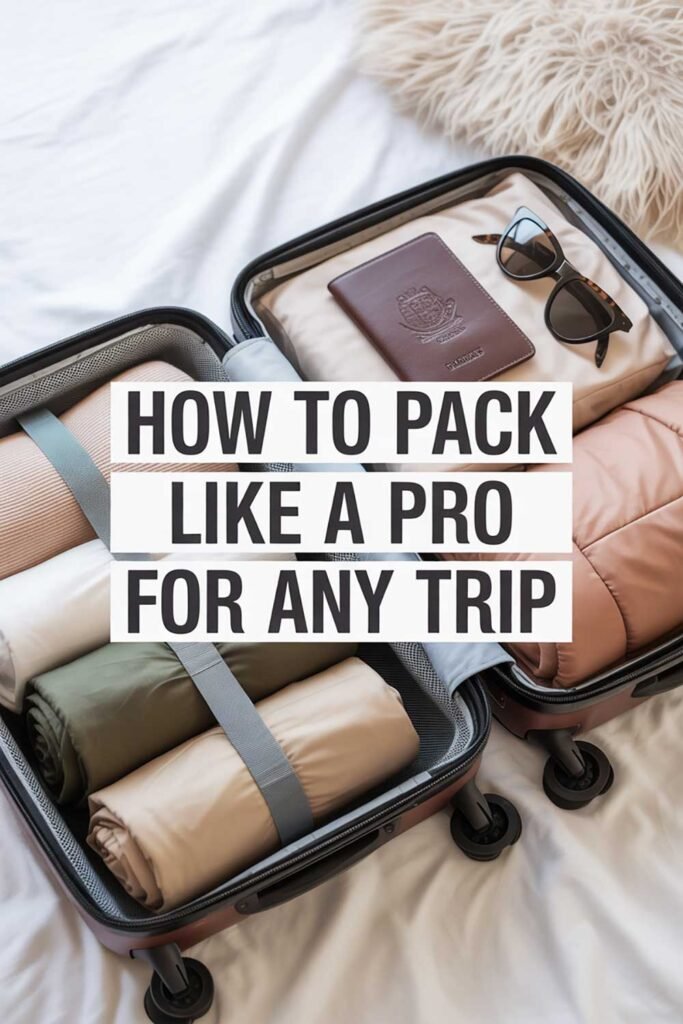
Plan Our EscapeColor-coded packing cubes are the family travel organization tool that addresses every packing problem specific to managing multiple people’s items across shared bags and multiple travel days simultaneously. Each family member is assigned a color. All their items, in every bag they are distributed across, share that color. The navy cubes are the oldest child. The coral cubes are the middle child. The green cubes are the youngest. The gray or cream cubes are the mom. The cube system converts a suitcase from a shared pile of family items into an organized library where every item is in its assigned location and is immediately findable by the color of its container.
For the mom specifically, the color-coded cube system provides the organizational clarity that the family packing without a system rarely achieves. When your cubes are in your color, your items are yours regardless of which bag they are distributed across. The gray skincare cube in the family carry-on is yours. The gray clothing cube in the shared suitcase is yours. At the accommodation, your cubes go to your designated space and unpacking is immediate rather than a sorting exercise through the combined contents of a bag everyone shared.
Packing cubes in a neutral or slightly elevated color for the mom communicates something beyond organization. It communicates that the mom’s items are a distinct and complete category in the family packing system rather than items distributed wherever space allows after everyone else’s things are in. The visual distinction reinforces the sequencing principle: mom’s items are a category, not an afterthought, and their dedicated container proves it.
Choose packing cube sets with at least three sizes: a large cube for clothing, a medium cube for second-layer items and sleepwear, and a small cube for accessories and undergarments. A compression cube that reduces the volume of bulkier items significantly is worth adding for any trip where the mom’s clothing includes thicker fabrics or multiple layers. The full cube set per family member typically fits within a medium suitcase with room remaining, and the organization benefit persists across the entire trip rather than degrading by day three as an unorganized bag always does.
Label each cube’s color assignment to the family member it belongs to in the first week of using the system, until the color association is fully internalized by every family member. A simple luggage tag with the family member’s name attached to the outside of each cube set eliminates the color confusion that the first trip using the system occasionally produces. By the second trip, the labels are unnecessary. By the third, every family member knows their color without thinking about it and the system runs on its own organizational momentum rather than requiring any management to maintain.
A master family packing checklist built once and reused on every trip is the most time-saving single investment a mom can make in her family’s travel routine. The mental load of rebuilding a packing list before every family trip, holding every category for every family member in working memory while simultaneously managing departure logistics, is a significant and consistent source of pre-trip exhaustion that a saved, refined, and reused checklist eliminates completely.
Build the master checklist in the notes app on your phone in a format that is easy to navigate. Organize it by person and then by category within each person’s section. Mom: clothing, skincare, toiletries, medications, accessories, personal item items, treat items. Each child by name: clothing by day count, undergarments, toiletries, entertainment items, comfort item, medications, school-age organizational items. Family shared: document wallet contents, carry-on essentials, snack bag, first aid kit contents, tech and charging. The structure of the list is the investment. Once it exists, it is the starting point for every subsequent trip rather than something created under time pressure before every departure.
After each trip, update the master checklist during the return journey or in the first evening home. Add the items that were needed and not packed. Remove the items that came home unused across multiple trips and belong on a separate just-in-case list rather than the standard one. Update the quantities for any item where the amount packed proved wrong. The checklist that is updated after each trip becomes progressively more accurate to this specific family’s actual travel needs rather than remaining a generalized starting point that requires the same editorial decisions before each trip.
The master checklist also serves as the delegation tool for family packing. An older child given access to their section of the master checklist and asked to verify their own packing against it is a child who has been given a structured, family-system task rather than a vague instruction to check that they have everything. The checklist converts delegation from hopeful to accountable. The child who checked their section of the master checklist is the child whose items are present at the destination because the verification process was specific rather than general.
Build a separate short checklist for the departure morning specifically. Not the full master packing list, which was completed two days before. A ten to fifteen item departure morning checklist covering only the items added or verified in the final hours: passports in the family wallet, devices fully charged, personal item snacks added, any refrigerated medications transferred from the refrigerator to the bag, house keys, and anything that could not be packed until the morning of departure. The departure morning checklist is the two-minute verification that nothing was forgotten in the final rush rather than a repeat of the full packing process. The full packing list and the departure morning list are different documents serving different purposes, and having both prevents both types of packing failures independently.
The Mom Travel Gear That Made Every Family Trip Better
The color-coded packing cube set that converted the shared suitcase from chaos to order on the first trip it was used. The slim travel journal that holds the master checklist, the trip itinerary, and space for notes on every destination. And the one skincare product that made every arrival feel like an arrival rather than a recovery. Real mom travel picks from real family trips worth taking again.
DND FavoritesThe personal item bag that a mom brings to the airport on a family trip is almost always the family overflow bag. The extra snacks that did not fit in the family carry-on. The younger child’s comfort item and the older child’s activity book and the baby wipes and the travel first aid pouch and the document wallet and the family chargers. The bag that the mom carries is often the bag that holds everything the family needs during the transit and very little that the mom needs for herself.
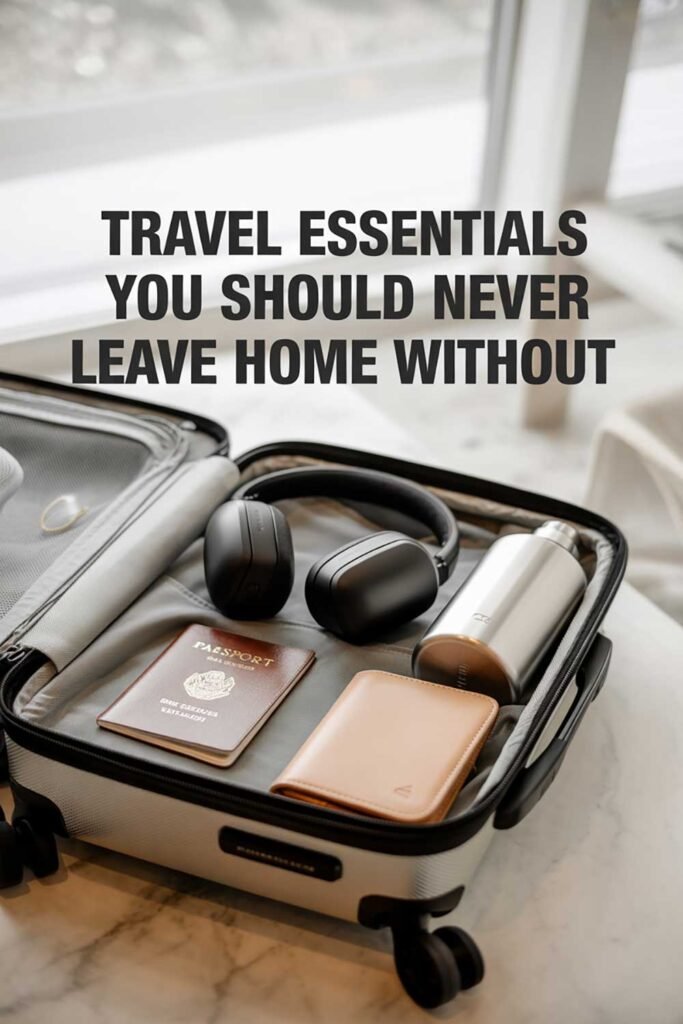
A personal item bag that is entirely the mom’s is a bag organized around her needs during the journey. Her phone and its charger. Her headphones. Her in-flight comfort items, the lip balm, the hand cream, the moisturizer, the eye drops. Her snack. Her water bottle. Her entertainment, the book she has been meaning to read, the podcast downloaded, the show she started. Her documents. One comfort item that is specifically hers and that she reaches for because she chose it rather than because it was the last available space in the family carry-on system.
The practical mechanism that makes this possible is the family carry-on system taking responsibility for the family’s shared in-transit needs rather than distributing them into the mom’s personal item by default. When the family carry-on holds the children’s entertainment, the snack pouches, the first aid kit, and the changes of clothes, those items are not competing for space in the mom’s personal item. The mom’s personal item is available for its intended purpose: her in-journey needs, organized around her comfort and her experience of the transit.
For the transit, the personal item that is entirely the mom’s produces a specific experience difference. The parent who reaches into their bag for something they chose and packed for themselves, rather than reaching in for a child’s item and finding their own things underneath it, is a parent having a slightly more complete travel experience than the one who spent the entire transit distributing the family’s needs from their own bag. The personal item belongs to the person carrying it. That principle is worth applying to the mom as well as to everyone else.
Choose a personal item bag whose internal organization matches how you actually use a bag rather than how its designer imagined you would use it. The best mom travel personal item has one outer zip pocket that holds only documents and a lip balm, an inner accessible pocket for the comfort items pouch, a main compartment with enough structure to maintain its organization when compressed under an airline seat, and a top carry handle that allows one-handed retrieval from under the seat without disturbing a sleeping child beside you. These are specific requirements rather than general bag preferences, and identifying them before purchasing eliminates the organizational friction that a beautiful but functionally mismatched bag produces across every trip it is used on.
The treat item is the category that most family packing lists for moms do not include and that makes the largest difference to how the trip feels for the person who organized all of it. One thing in the bag that was chosen specifically because it makes the mom happy, comfortable, or excited. Not a useful item that happens to also be enjoyable. Not an item that serves double duty as entertainment for the children. One item whose sole purpose is making the journey feel, at some specific moment, like it includes the person who did all the planning.
The treat item is different for every mom and that is the point. It is the specific thing that this specific person looks forward to. A particular face mask saved for the hotel’s first evening. A novel by a favorite author whose next book finally came out. A beautiful travel journal with a nice pen for writing down observations rather than lists. A small bag of a specific chocolate that she bought at the specialty shop and does not share. A single gorgeous candle or room spray that converts any accommodation’s bathroom into a briefly personal space. A sleep mask in a fabric she loves that was bought specifically for this trip. These are not large purchases or significant additions to the bag weight. They are the items that communicate to the person who carries them that someone considered their enjoyment when packing. That someone is also the mom herself, and the choice to include the treat item is the most direct expression of the pack-yourself-first principle.
The resistance many moms feel about including a treat item is worth examining. It is often a version of the same reasoning that produces packing themselves last: a sense that the trip’s purpose is the family’s enjoyment and their own is a secondary or even inappropriate consideration. This reasoning is both wrong and counterproductive. A mom who is enjoying the trip is a better travel companion, a more present parent at the destination, and a person who comes home having had a genuine vacation rather than having facilitated one for everyone else while not quite having one themselves. The treat item is not indulgence. It is permission, packed into the bag as a physical object so the permission cannot be forgotten or deprioritized when the trip is underway.
Write the treat item on the master packing checklist as a specific line item with a designated category: Mom’s Trip Treat. Not as a reminder to add something nice. As a permanent feature of the family packing list that appears on every iteration of the checklist from the first trip it is included on. The item in that line changes from trip to trip: the novel this time, the face mask last time, the specialty chocolate the time before. The line itself stays. It is the structural guarantee that the permission gets given before the packing session ends rather than being omitted because everything else was prioritized first. Put it on the list. Treat it like the first aid kit: not optional, not deprioritized, always there.
The Trip Where She Finally Appeared in Her Own Bag
Sienna had been packing for her family’s annual summer trip for six years. She was thorough and competent and genuinely good at it. Every child had everything they needed, fully organized, labeled, and distributed exactly where it needed to be. The family carry-on was assembled the same way each time: first aid at the top, snack bag in the front pocket, document wallet in the outer zip, changes of clothes in labeled clear bags. The system worked. It had always worked.
What she noticed at the sixth destination, sitting in the hotel bathroom on the first evening and doing a mental inventory of what she had packed for herself, was that her own bag had the same collection of items it always had. The functional skincare rather than the one she had been meaning to try. The shirts she grabbed because they were at the front of the drawer rather than the two she had specifically thought would be nice for evenings. The flat sandals she had had for three years rather than the new ones she had bought and not packed because she was not sure they were broken in. The lip balm she had had on the bathroom shelf for eight months rather than the new one she had bought at the travel shop and not put in the bag because she was packing the children’s bags when she thought of it.
She had been packing for herself in the margins of packing for everyone else for six years and it showed in every item she had with her.
The seventh trip she followed the two-session approach. Session one, entirely hers, two days before departure. She built her neutral capsule in the colors she had been thinking about. She packed the decanted skincare she actually wanted to use. She included the new sandals with a blister kit alongside them as a contingency. She put the small box of her favorite chocolate on top of her cube as the treat item. She wrote the treat item as a permanent line on her master checklist before closing the notes app. Session two, the following day, was the family system: every child’s color-coded cubes, the family carry-on, the document wallet, the snack pouches. All of it went just as smoothly as it always had.
At the seventh destination, in the hotel bathroom on the first evening, she opened her bag and had everything she had chosen. Not everything she had reached for in the gaps. Everything she had chosen. It was the same destination. The same family. The same trip budget. The only difference was the order in which the bags had been packed. She had arrived in her own bag, finally, along with everyone else.
The complete mom’s family trip packing system integrates all five principles into a single pre-trip sequence that is predictable, repeatable, and expandable as the family grows and the trip types change. The sequence: two days before departure, pack your own bag first and completely. The day before departure, run the family system: children’s color-coded cubes, family carry-on essentials, document wallet, snack pouches, first aid kit verification. The morning of departure, complete the departure morning checklist covering only items that could not be packed earlier. Close every bag and weigh each carry-on before leaving the house.
The mom’s bag contains her ten-piece capsule in her chosen palette, her skincare and toiletry decants in her color-coded cube, her accessories and jewelry in a flat organizer, her treat item visible at the top rather than buried under everything else, and her personal item bag staged with her documents, comfort items, entertainment, and snack pouch before everything is taken to the car. Her bag is the first bag packed and the last bag that needs any attention before departure.
The family system is built on the color-coded cube foundation with each child’s section of the master checklist verified by the child themselves where age allows. The family carry-on holds the shared in-transit essentials: snack pouches, first aid kit, changes of clothes in labeled clear bags, chargers and power bank, family document wallet. The family carry-on is not the mom’s bag. It is a shared resource managed by the family’s system, not by the mom’s personal space.
On the return journey, before you unpack, take five minutes to update the master checklist. What was not packed that was needed? What came home completely unused that should be removed from the standard list? What quantity was wrong in either direction? The update takes five minutes at home while the trip is still fresh and produces a checklist that is measurably more accurate to this family’s actual needs on the next trip. The master checklist that is updated after every trip is the checklist that eventually requires almost no pre-trip editing because it already reflects exactly what this specific family needs based on the evidence of every trip they have taken. That is the compounding return on the five minutes of post-trip maintenance that most families skip and that transforms a generic template into a family-specific intelligence tool.
Book the Family Trip You Packed Yourself For
A mom who packed herself first deserves a trip planned as carefully as she packed it. Our travel agents specialize in family vacations that genuinely work for the whole family, including the adults. The right destination, the right property, the right itinerary. Let us build the trip. You bring the treat item.
Book A TripCommon Mom Packing Mistakes to Avoid
Most family trip packing regret for moms comes from the same consistent patterns. These are the most common ones and what to do differently before the next family trip is packed.
Packing yourself last with whatever energy and time remain
A packing session that begins with the children and ends with the mom is a packing session that gives the mom the residual attention, energy, and time rather than a deliberate allocation of all three. The items chosen for the mom at the end of a family packing session are the items chosen under time pressure, cognitive load, and the specific tiredness that comes from having already made dozens of packing decisions. The items chosen for the mom at the beginning of the session, when attention is full and choices are deliberate, are systematically better in every respect. The sequence is the intervention. Pack yourself first.
Treating the personal item as the family overflow bag
A personal item bag that holds the family’s shared in-transit needs leaves no space for the mom’s in-journey needs and converts the one bag the mom carries into a service bag rather than a personal one. When the family carry-on holds the shared essentials, the mom’s personal item is available for its intended function: her comfort, her entertainment, her documents, and her experience of the journey. The family carry-on is the shared resource. The personal item is the mom’s. These two categories belong in different bags and the clarity of that distinction determines whether the mom’s transit experience includes her or only serves everyone else.
No color-coded system and sharing a bag across family members
A family bag where every family member’s items are mixed produces a daily search exercise at the destination where finding any specific item requires disturbing the entire shared contents. The color-coded cube system converts the same shared suitcase into an organized library where every item is in its assigned location and findable in under fifteen seconds by the color of its container. The investment in one set of cubes per family member produces an organizational benefit that persists across every day of the trip and across every subsequent trip where the same system is used. It is a one-time decision that pays its return on every trip the family takes together.
Rebuilding the packing list from scratch before every trip
A family packing list rebuilt from memory before every trip relies on the mom’s working memory to hold every category for every family member under pre-departure time pressure. It is a process that produces the same editorial decisions on every trip, forgets the same items on every trip, and exhausts the same cognitive resources that the trip itself should be conserving. A master checklist built once, saved, and updated after every trip eliminates every one of these costs. The first trip that produces a saved and updated checklist reduces the pre-trip packing load on every subsequent trip for as long as the family travels together.
No treat item and no permission to include one
The mom who does not include a treat item for herself on a family trip is the mom whose bag contains everything useful and nothing that communicates to her that her enjoyment of the trip was considered when it was packed. The treat item is not a large or expensive addition to the bag. It is the specific object that communicates the same message that the pack-yourself-first principle communicates: that the person doing all the planning is also a person on the trip who deserves to have something nice. Put it on the list. Pack it with the same certainty as the first aid kit. It is not optional.
Not delegating age-appropriate packing tasks to older children
A family packing session where the mom packs every family member’s bag independently is a packing session where one person carries the cognitive and physical load of organizing the entire family’s travel. Children old enough to verify their own packing against their section of the master checklist are children who should be doing exactly that. The checklist provides the structure. The task provides the ownership. The verification provides the accountability. A mom who delegates age-appropriate packing tasks reduces her own pre-trip load while building the travel competence and ownership in her children that makes every future family trip a more collaborative and less centralized experience.
Love Helping Families Travel Well Together?
If planning family trips that genuinely work for everyone, recommending the destinations that deliver for parents as much as for kids, and helping moms arrive at their vacations feeling like they were included in the planning as a traveler rather than just as the planner sounds like work you were made for, becoming a home-based travel agent might be exactly the right next step. Earn commissions, get insider travel perks, and build a real business from anywhere. See how it works.
Become An AgentFrequently Asked Questions
These are the questions moms ask most often about packing well for a family trip. Real answers from real family travel experience across every family size and trip type.
How do you pack light as a mom when the family’s needs keep expanding the bag?
The family pack-light approach separates genuinely family-specific items that must come from home, prescription medications, specific age-specific foods for very young children, custom medical supplies, from items that feel essential at home but are available at any actual travel destination. Most children’s clothing, most toiletries, most sunscreen, most over-the-counter medications, and most entertainment items are available at destinations at comparable prices. The practice of asking for each family item whether it is genuinely unavailable at the destination or simply familiar and convenient removes a significant portion of the weight from most family bags without reducing genuine preparedness. Additionally, the color-coded cube system with one cube set per family member produces a bag where every item is visible and accountable rather than a bag that accumulates items because no one is sure whether a specific thing is already packed. Cubes prevent duplication as well as disorganization.
What are the most important items moms forget to pack for themselves specifically?
The items most consistently absent from a mom’s bag when she packs herself last are the comfort and enjoyment items rather than the functional ones. Functional items, clothing, toiletries, medications, are usually present because they are visible needs. The items most often missing are the ones that make the trip feel good rather than merely functional: her preferred skincare routine rather than a grab from the bathroom shelf, the one nicer piece she wanted for an evening out, her entertainment for the flight rather than the family’s entertainment she will be distributing, her own snack for the transit rather than the children’s snack bag she will be managing, and a personal comfort item for the journey that is specifically hers. These are the items packing yourself first most reliably ensures are present, because they require deliberate thought to include and deliberate thought is what the two-session approach specifically protects for the mom’s own packing time.
How do you build a master checklist that actually stays current and useful?
A master checklist stays current through post-trip maintenance rather than pre-trip creation. The checklist built once from a comprehensive starting template and then updated after every trip becomes progressively more accurate to this specific family’s actual needs. The update takes five minutes at home in the first evening after return while the trip’s gaps are still specific and remembered. Add items that were needed and not packed. Remove items that came home unused on two or more consecutive trips. Update quantities that proved wrong. The checklist that receives this five-minute maintenance after every trip is the checklist that requires almost no pre-trip editing by the fourth or fifth trip because it already reflects this family’s genuine packing needs based on accumulated evidence rather than advance estimation. A shared notes app on your phone is the most accessible format for this document since it is always with you, easily edited, and shareable with a partner or older child who should have access to their section.
How do you handle packing for a solo mom trip versus a family trip?
A solo mom trip is the specific travel context where packing herself first is the entire framework rather than the first step in a larger family packing system. For a solo trip, the entire bag belongs to the mom. The treat item gets a more central position in the packing since the bag’s purpose is the mom’s experience rather than the family’s collective needs. The pack-light principle applies most cleanly since there are no children’s essential items expanding the bag’s scope. The ten-piece capsule in a chosen neutral palette, the skincare and toiletry decants, the personal item organized for her comfort and enjoyment, and the treat item that makes the trip feel like a deliberate gift to herself rather than a logistical exercise. The solo mom trip is worth taking, worth planning well, and worth packing as thoroughly and as personally as any family trip the same mom organizes for everyone else.
What is the best treat item to pack and how do you choose one?
The best treat item is the specific thing this specific mom genuinely looks forward to rather than any generalized suggestion. The frame for choosing it is a single question: what is the one thing in the bag that I packed specifically because it makes me happy rather than because anyone needed it? If the answer to that question is nothing, the treat item has been forgotten. The form it takes varies entirely by person and trip type: a skincare product saved for the destination’s climate, a novel by a favorite author, a beautiful travel journal with a pen that writes well, a specific food from a specialty shop, a silk eye mask in a color she loves, a small scent that is hers specifically. The category matters more than the specific item: something chosen for enjoyment, present in the bag by deliberate decision rather than by accident, and treated with the same certainty as any functional item on the list. It is not what it is. It is that it is there.
How do you get the rest of the family involved in packing so the mom is not doing it all?
Family packing involvement is built on structure, age-appropriateness, and explicit expectation rather than hope or general instruction. The master checklist is the structure. Each family member’s section of the checklist is specific enough to convert a vague packing instruction into a verifiable task. An older child asked to check their section of the master checklist and confirm every item is in their cube is a child who has been given a specific, completable task rather than the general instruction to make sure they have everything. A partner with access to their section of the checklist is a partner who can verify their own packing independently rather than requiring direction for every item. The youngest children participate in choosing between options you present rather than choosing freely. The setup meeting two days before departure where every family member checks their own section converts packing from a mom-only logistical burden into a shared family process where the mom’s role is system manager rather than sole packer. The role change does not happen immediately on the first trip. It builds across several trips as each family member develops confidence in their section of the checklist and ownership of their color-coded cube system.
The mom who packs herself well is not the mom who packs herself instead of everyone else. She is the mom who finally understood that everyone includes her.
Picture Opening Your Bag at the Destination
You are in the hotel room on the first evening. The family system is unpacked. Each child’s color-coded cubes are in their designated space. The family carry-on essentials are in the bathroom. You open your bag. The gray cubes are yours. The capsule you chose is in there. The skincare you actually wanted is in the decant containers you prepared in session one. The treat item is on top, exactly where you put it. Your personal item has your comfort kit, your entertainment for tomorrow’s travel, and your lip balm in the outer zip where it has been since you staged it at home. You packed yourself first. It shows. That is the system. That is every family trip from here.
One More Thing Before You Pack
Print our free Travel Packing Checklist and use it as the starting template for your family’s master checklist. Every category is already there. Your job is adding the treat item line and your family’s specific items, then saving it and updating it after every trip. The checklist that starts as our template and becomes yours through one trip at a time is the most useful packing document you will ever own for your family’s travel life.
Get the Free ChecklistExplore Our Top Picks for a Better Trip
From the color-coded packing cube sets that converted the shared suitcase into an organized library on the first trip to the slim travel journal that holds the master checklist and the trip notes in one always-accessible location, see the mom travel products and resources we actually use and recommend. Real picks from real family trips built around the system in this article.
See Our Top PicksTravel Prints and Printables From Our Shop
Visit Premier Print Works for family travel journals, packing planners, master checklist templates, trip organizers, and wall art that makes every family adventure a little more beautiful and a lot more organized from the first packing session to the last memory made together. Including the mom’s.
Visit Premier Print WorksDisclaimer
The information shared in this article is provided by Don and Diana’s Travels for general informational, educational, and inspirational purposes only. It reflects our personal experiences, opinions, and the experiences of travelers we have worked with. It is not professional travel, legal, financial, or medical advice, and it should not be relied on as such.
Travel Information and Airline Policies
Airline baggage policies, carry-on size requirements, personal item dimensions, and related travel regulations change frequently and vary between airlines, routes, and fare classes. Always confirm current baggage requirements with your specific airline before travel. We make no guarantee that any airline policy information in this article is current, complete, or applicable to your specific travel situation.
Affiliate and Partner Links
This article may contain affiliate links, partner links, referral links, and links to products or services that pay us a commission. If you click a link and book a trip, make a purchase, sign up for a service, or complete any qualifying action, we may earn a small commission at no extra cost to you. This includes but is not limited to links to our travel booking platform, host agency, recommended products, the Premier Print Works shop, and any third-party retailers or service providers mentioned in the article. Our recommendations are based on real use and genuine belief in the products and services we share. Commissions help support the cost of running this site and producing free content for our readers.
Third-Party Websites and Services
We may link to third-party websites, services, and resources for your convenience. We do not control these sites and are not responsible for their content, terms of service, privacy practices, pricing, availability, accuracy, customer service, refund policies, or any product or service they sell. Your use of any third-party site is entirely at your own risk and subject to that site’s own terms and policies.
Health, Safety, and Personal Responsibility
Travel involves personal risk. You are solely responsible for your own health, safety, travel insurance, medications, vaccinations, documentation, financial decisions, and choices while planning or taking any trip. We strongly recommend purchasing comprehensive travel insurance for every trip. Don and Diana’s Travels, its owners, employees, contractors, and affiliates accept no liability for any loss, injury, illness, delay, cancellation, damage, theft, or inconvenience arising from your use of the information in this article or from any travel decisions you make.
Composite Stories and Characters
Some stories, examples, and traveler experiences shared on this site are composites. They are drawn from the real experiences of Don, Diana, clients, friends, and travelers we have worked with over the years. Names, identifying details, locations, and circumstances may be combined, changed, or fictionalized to protect privacy and to better illustrate a point. Any resemblance to a specific real person beyond the composite portrayal is unintentional.
No Guarantees
We do not guarantee any specific result, outcome, savings, experience, or financial return from using the information, tips, services, or products mentioned in this article. Your results depend on many personal factors, including your own choices, effort, circumstances, and external conditions outside of our control.
Copyright and Use
All content in this article, including text, images, graphics, design, and original stories, is the copyrighted property of Don and Diana’s Travels unless otherwise noted. You may not copy, republish, redistribute, modify, sell, or reuse our content in whole or in part without our prior written permission. You are welcome to share a direct link to this article with proper credit.
By reading and using the information in this article, you acknowledge that you have read, understood, and agree to this disclaimer in full.