29 Travel Hacks for a More Relaxing Travel Day
The travel day does not have to be the part of the trip that needs recovering from. For many travelers it is — the early alarm, the rushed departure, the security scramble, the gate sprint, the dehydrated landing — and the trip’s first destination day is spent catching up on the rest and composure the travel day spent rather than beginning the experience that was planned and paid for. It does not have to work that way.
The most relaxing travel days are not the ones where everything went right by chance. They are the ones where the preparation removed every avoidable source of stress before the departure morning began — and where the habits applied at each stage of the day kept the calm that the preparation created. These twenty-nine hacks build that preparation and those habits from the evening before departure all the way through to the arrival that starts the trip on the right footing.
Free Download: Our Travel Packing Checklist
The relaxing travel day starts with the bag ready and every pre-departure step confirmed. Our free Travel Packing Checklist does exactly that — every item, every document, every confirmation before the morning requires it. Download it free.
Get the Free ChecklistThe Night Before: Where the Relaxing Travel Day Is Built
The travel day that feels relaxed was almost never assembled on the morning it was needed. It was built the evening before — in the thirty minutes of preparation that removed every avoidable unknown before the departure morning could produce them under time pressure. These hacks cover the specific preparations that convert the stressful travel day into the calm one before the alarm has even been set.
1. Check in online and screenshot the boarding pass before sleeping
Online check-in opens twenty-four hours before most departures. Completing it the evening before produces the boarding pass in the camera roll, the check-in desk removed from the travel day entirely, and the preferred available seat secured before the morning crowd selects what remains. Screenshot the boarding pass immediately and confirm it opens on airplane mode. The boarding pass that opens in one tap at the security ID check, the gate, and the jetway is the boarding pass that never introduces the specific stress of the loading app at the moment it is most needed. This one preparation removes more departure morning anxiety than almost anything else on this list.
2. Organize the carry-on for security before leaving home
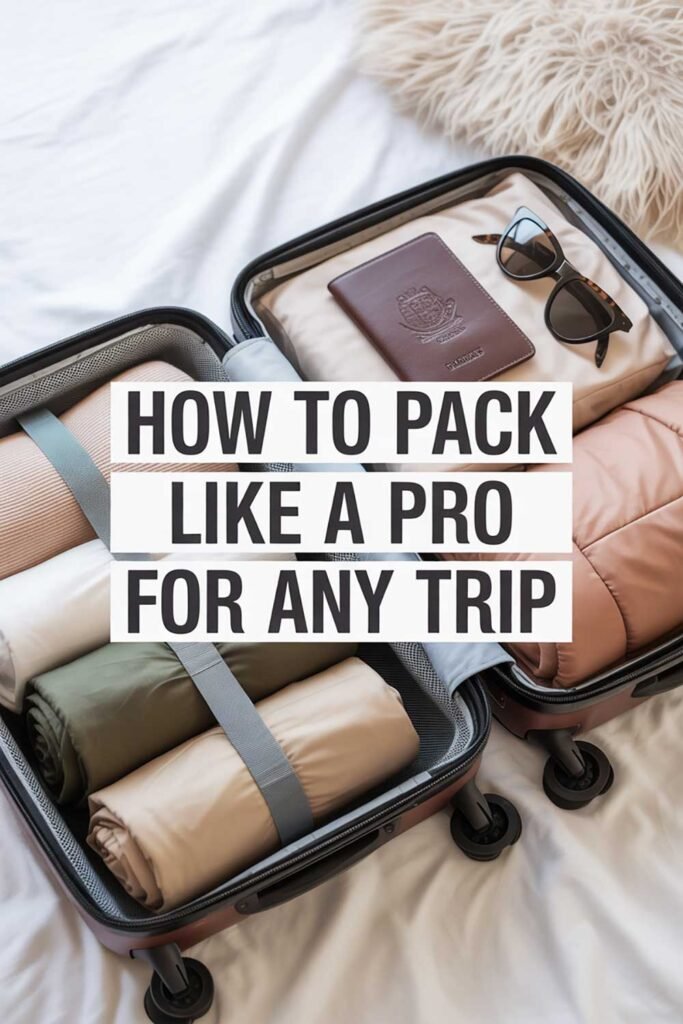
The liquids bag in the outermost front pocket. The laptop in its dedicated outer sleeve. The belt and watch in the bag rather than on the body. Every item that must come out at security positioned for one-motion removal the night before departure. The security interaction prepared for at home is the security interaction that takes ninety seconds rather than four minutes — and the specific calmness of moving through a busy security lane with everything already in position rather than reorganizing under observation is one of the travel day’s most underrated relaxation improvements.
3. Confirm every booking and download offline maps
The accommodation check-in details, the ground transport booking, the tour pickup time — all confirmed the evening before departure. The offline map for the destination’s arrival area downloaded before the connection drops on the descent. The traveler who steps off the aircraft at the destination with every detail confirmed and the offline map ready is the traveler whose arrival is a smooth transition into the trip rather than a connectivity-dependent scramble for information that should have been available before landing.
4. Eat a proper meal and go to bed at a reasonable hour
The pre-departure evening that ends with a decent meal and a reasonable bedtime is the pre-departure evening that produces the travel day from an adequate starting point rather than from a deficit. The specific fatigue of the travel day that began from a poor night’s sleep compounds across every subsequent stage — the security interaction that requires more patience than the tired traveler has available, the gate wait that feels longer than it is, the flight that produces less rest because the exhaustion was already present before boarding. Eat. Sleep. The travel day works better from a full starting position.
5. Set two alarms and do a home walkthrough thirty minutes before leaving
Two alarms at staggered intervals convert the alarm system from a single point of failure into a confirmed safety net and remove the specific pre-sleep anxiety of wondering whether the alarm will fire. The home walkthrough thirty minutes before departure — room by room, outlet by outlet, surface by surface — catches the charger still plugged in, the passport on the kitchen counter, and the medication in the bathroom cabinet rather than the travel wallet. Both preparations together remove the two most consistent sources of departure morning anxiety before the morning requires managing them.
Book A Trip
Book the next trip with a travel agent who handles every booking, every confirmation, and every routing decision — so the only thing left to prepare for is a relaxing travel day getting there.
Book A TripThe Morning Of: Leaving the House Without the Rush
The departure morning whose preparation happened the night before is the departure morning with the specific quality of calm that comes from confirmation rather than assembly. Everything is already done. The morning is for executing rather than preparing. These hacks protect that calm through every stage of the departure morning.
6. Build fifteen extra minutes into every transport plan to the airport
The transport plan to the airport built to exact minimum time is the plan that works perfectly when every variable cooperates and fails when any single one does not. Fifteen extra minutes built into every transport estimate converts these variables from a threat to a managed margin. The journey that goes smoothly arrives early with time to settle. The journey that encounters a delay arrives on time rather than behind it. The fifteen minutes unused is the fifteen minutes that eliminated the most consistent source of departure morning travel anxiety: the transport that was planned for the best case.
7. Eat before leaving home
The airport is not a reliable meal plan for the departure morning. The departure whose only food plan is the terminal café produces the specific combination of hunger and time pressure that makes every airport decision harder and every wait more unpleasant. A simple meal at home — whatever the kitchen holds that takes five minutes — provides the blood sugar stability that makes the departure morning’s logistics manageable without the cumulative irritability that hunger adds to every friction point that follows. Leave on a full stomach. The airport’s food is there if it is needed. The home kitchen is only available for this specific window.
8. Dress comfortably and practically for the travel day
The travel day outfit is not a destination outfit. It is the outfit worn for the security interaction, the gate wait, the flight, and the arrival transit — a sequence of environments whose temperature, comfort requirements, and physical demands are different from any destination occasion. Comfortable, layerable clothing whose removal and replacement at security is straightforward; shoes that come off easily; a layer for the cold cabin and one that can be removed for the warm terminal. The travel day outfit chosen for the journey rather than the destination makes every stage of it measurably more comfortable.
9. Confirm the phone is fully charged and the boarding pass opens offline before leaving
The phone at forty percent battery at the departure door is the phone that may reach the gate at fifteen percent with the boarding pass requiring a data connection to load. Both confirmations take thirty seconds at the door: the battery percentage on the lock screen, the camera roll opened and the boarding pass screenshot confirmed tappable without connectivity. If either fails, the resolution at home is simple and free. The same problems discovered at the gate cost significantly more of both time and calm.
Plan Our Escape
Let us plan the destination that makes every relaxing travel day genuinely worth arriving at. Tell us where you want to go and we will handle the rest.
Plan Our EscapeThe Airport: Moving Through Calmly
The airport is the stage of the travel day that produces the most stress for the most travelers — and the stage whose stress is most directly proportional to the preparation that preceded it. The traveler who arrives at a busy airport prepared for every stage of it does not experience the same airport as the one who arrives unprepared. They are in the same building. They are having a fundamentally different experience of it.
10. Arrive with enough time to move at a calm pace
Two hours before a domestic flight and three hours before an international one is the buffer that allows the entire airport process — check-in if needed, security, gate finding, settling — to happen at a walking pace rather than a running one. The sprint through the terminal is one of the most reliably stress-producing travel day experiences and one of the most entirely preventable. The extra thirty minutes built into the airport arrival time costs nothing except a slightly longer gate wait, which is time that can be used productively. The sprint costs significantly more.
11. Use TSA PreCheck or Global Entry on every eligible departure
The PreCheck lane at a busy airport removes shoes, laptops, and liquids from every domestic security interaction entirely — the three steps that create the most friction at standard security. For the traveler who flies more than twice a year, the eighty-five dollar enrollment fee for five years is one of the highest-return investments in travel calm available. The security interaction that takes sixty seconds in the PreCheck lane versus three to five minutes in the standard lane is not a small difference on a travel day where every friction point accumulates.
12. Go straight to the gate after clearing security
The gate confirmed before the coffee, the food, and the phone charging is the gate whose distance to every terminal feature is known before any terminal time is committed. Walk to the gate first. Confirm the flight on the display. Note the return distance to everything needed for the wait. Then use the terminal time with the full knowledge of the boarding buffer actually available. The specific calm of sitting at a terminal café knowing the gate is a four-minute walk back is a meaningfully different experience from the specific anxiety of not knowing whether the gate is a four-minute walk or a twelve-minute one.
13. Charge the phone at the gate outlet before boarding
The gate wait is the last powered opportunity before the flight and the most reliable one. The aircraft seat’s USB port provides a slow partial charge whose completeness depends on available time and connection reliability. The gate outlet provides a full charge in the time available before boarding. Plug in as soon as a seat with an outlet is found. Start the flight from a full battery. The first hour at the destination uses the phone for the offline map and the accommodation confirmation rather than managing its remaining charge from the partial in-flight top-up.
14. Bring snacks from home in the personal item
Familiar, reliable snacks in the personal item cover the hunger that arrives between service cart passes on a long flight, the delayed connection whose only food option is an overpriced terminal sandwich, and the first two hours at a new destination before the nearest market is located. The snack that a hungry traveler accepts without complaint at hour five of a seven-hour journey is worth more than the space it occupied in the personal item for the previous four. Keep enough for the full transit duration plus a generous buffer for delays.
15. Do not check the departures board compulsively — check it once and trust it
The gate confirmed on the departures board after clearing security is the gate that is current. Checking it again at the coffee shop, again at the gate seating area, and again before boarding is the habit that keeps the travel day’s anxiety slightly elevated rather than resolved. Enable airline app push notifications — they will deliver any gate change the moment it happens — and then stop watching the board. The notification arrives when it matters. The continuous check does not produce information faster than the notification. It produces anxiety instead.
16. Board when your group is called and sit down immediately
The boarding process is not improved by joining the queue early or by standing at the gate’s edge waiting for the announcement. Stay seated. Be comfortable. Stand and join the queue when the specific boarding group is called. Place the carry-on in the overhead bin, the personal item under the seat, and sit down. The aisle clears faster for everyone because the bin interaction happened without hesitation. The seat is occupied and the travel day’s airport stage is complete. Everything from this point is the flight itself.
The Flight: Making Every Hour Count
The flight is either the most restful or the most depleting stage of the travel day depending almost entirely on how it is approached. The same twelve-hour flight is a different experience for the traveler who boards prepared for sleep with the right equipment, the right hydration plan, and the right relationship to the hours ahead than for the one who boards with none of these. These hacks make the flight — short or long — work for the traveler rather than against them.
17. Hydrate consistently throughout every flight
The cabin’s humidity runs between ten and twenty percent — drier than most deserts — and dehydration accumulates across a long flight faster than the suppressed thirst response reveals. Eight ounces of water per hour, accepted at every service pass and requested between them, replaces what the cabin continuously removes. The landing from a well-hydrated flight feels measurably different from the landing of the dehydrated one — sharper, less fatigued, and ready for the arrival rather than requiring the destination’s first hour to recover from the transit. Drink the water at every pass. Request it between them.
18. Skip alcohol on flights over four hours
Alcohol at altitude dehydrates at a faster rate than at ground level, disrupts the quality of the sleep the flight allows, and produces the arrival fatigue whose source the traveler cannot always identify because it arrived gradually rather than in a single identifiable moment. On a short domestic hop, the trade-off may be acceptable. On anything over four hours where arrival condition matters, skipping alcohol is the single dietary decision with the most consistent positive impact on the landing experience. The drink at the destination is the drink that costs nothing to the arrival’s quality.
19. Use a sleep mask, noise-cancelling headphones, and a neck pillow on overnight flights
Three items whose combined weight is under four hundred grams and whose combined effect on overnight flight sleep quality is the difference between three hours of dozing and six hours of actual rest. The sleep mask achieves the darkness whose absence keeps the brain in a lighter sleep state regardless of tiredness. The noise-cancelling headphones reduce the cabin’s engine drone from a persistent sleep disruptor to a quiet background. The neck pillow positioned at the side of the neck prevents the head from falling forward whose recovery wakes a sleeping traveler. All three together. Every overnight flight. The arrival condition they produce is the trip’s first day.
20. Move and stretch every two hours on long flights
The circulation restriction, joint stiffness, and lower back tension that prolonged seated immobility produces in the aircraft seat accumulates progressively across a long flight and lands as the specific physical tiredness that the arrival day’s first activities have to overcome. Standing and walking the aisle for two minutes every two hours, performing ankle circles and seated stretches at the seat between walks, and wearing compression socks from boarding keep the physical condition of the body at arrival meaningfully better than the same flight spent entirely seated. The body that deplaned having moved regularly is the body ready for the destination.
21. Keep the seat area organized and the personal item accessible throughout
The personal item under the seat should hold everything needed for the flight’s duration — headphones, snacks, lip balm, sleep mask, neck pillow — accessible without standing to open the overhead bin. Organized at boarding with the flight’s needs in mind, the seat area stays navigable throughout: everything needed is within reach, nothing requires standing, and the specific calm of having what is needed where it can be found is the calm that makes the flight’s hours pass more easily than the flight spent searching for the specific item in the bag that is somewhere in the overhead but not quite remembered where.
22. Set a destination arrival mindset before landing
In the final hour before landing, close the laptop, put away whatever was being worked on, and shift the mental focus to the destination rather than the transit. Look at the first day’s plan. Review the accommodation’s address. Note the offline map area already downloaded. The traveler who lands having mentally transitioned from transit to destination in the final approach is the traveler who deplanes with the trip already begun rather than the one who deplanes still mentally in the seat. The transition is a decision. Make it in the final hour. The destination is already waiting.
How Sloane Stopped Arriving at Destinations Already Tired
Sloane traveled six or seven times a year and had a pattern she had noticed but never quite addressed: she arrived at destinations tired. Not dramatically so — not the bone-deep exhaustion of a genuinely terrible travel day — but consistently more depleted than the people she was traveling with, in a way that meant the first evening at the destination was recovery rather than celebration, and the first full day sometimes had to account for the tiredness the travel day had accumulated.
The first change was the water. She had always accepted the in-flight drinks that were offered and nothing else, which on a nine-hour flight with two service passes meant perhaps twenty ounces of water across the full transit. She started requesting water between service passes and keeping the reusable bottle filled at the gate outlet before boarding. The landing from the first hydrated long-haul flight was noticeably different — not dramatically, but the specific dull-headache-and-heavy-limbs feeling that had followed every previous long-haul arrival was absent. The first evening at the destination was the destination rather than the recovery.
The second change was the preparation. She had been assembling the boarding pass at the security ID check for years — opening the app, waiting for it to load, finding the right flight while the agent waited. Moving to the screenshot the night before was a thirty-second change that made the security interaction feel entirely different: one tap, one scan, one step through. The specific low-grade tension of the loading app at the worst possible moment had been present at every departure for years and was simply gone. These twenty-nine hacks are the complete version of the two changes that started with hydration and a screenshot. The arrivals are different now. The first evening is the trip.
Become An Agent
Love helping travelers arrive at every destination rested, ready, and genuinely excited for what comes next? See how to turn that into a home-based travel business.
Become An AgentThe Arrival: Landing Well and Starting the Trip Right
The arrival is the travel day’s final stage and the one whose quality determines whether the trip begins from a position of energy and readiness or from a position of depletion and catch-up. These hacks cover the specific decisions at and after landing that protect the arrival condition the rest of the travel day’s preparation worked to produce.
23. Stay seated until the seatbelt sign goes off — the rest follows naturally
The taxi to the gate from the runway takes between five and twenty minutes. Standing in the aisle during this time provides a time advantage of approximately zero since the door cannot open until the aircraft is fully docked. Stay seated. Use the time to collect the personal item from under the seat, check the seat area for anything left behind, put on the jacket, confirm the offline map is open, and prepare for the deplane rather than standing in the aisle waiting for the door to open. Arriving at the jetway fully collected and immediately mobile is faster than the alternative.
24. Do a complete seat check before standing
The seat pocket in front — where phones, earbuds, and boarding passes most commonly disappear during the flight. The floor under the seat — where items fall without being noticed. The overhead bin above the row — where jackets and items removed after boarding are most commonly left behind. Thirty seconds before standing produces the arrival where every item brought onto the aircraft comes off it. The item found by this check comes home. The item not found starts a lost property process at a foreign airport whose outcome is uncertain.
25. Follow arrival signs continuously from the jetway without stopping to orient
Every major airport signs the route from the gate to immigration, baggage claim, and ground transport continuously from the jetway exit. The traveler who follows the signs without stopping to orient — overhead arrow from the gate corridor to the main terminal, immigration indicator to the correct level, baggage claim number confirmed from the arrival display — moves from gate to exit in a straight line rather than the stopping-and-reassessing path that unfamiliarity produces. At a large international hub, following the signs continuously is the arrival navigation that loses the least time and energy to orientation.
26. Get outside or to natural light as soon as possible after landing
Natural light on arrival is the most effective single input for resetting the body’s circadian rhythm to the destination’s time zone. The traveler who exits the airport and gets into natural light within the first hour of landing — even briefly, even just in the taxi queue or the walk to the ground transport — sends the strongest available signal to the body’s internal clock that the new time zone is now the relevant one. For trips with meaningful time zone changes, the arrival day’s natural light exposure is the intervention that most directly affects the quality of the first night’s sleep at the destination.
27. Eat a proper meal at the destination before doing anything else
The arrival meal — eaten at the destination rather than skipped in favor of checking in and collapsing — is the meal that refuels the travel day’s expenditure and bridges the body from transit to destination mode. It does not need to be elaborate. A simple meal whose content is familiar enough to be comforting and nutritious enough to restore the energy the travel day spent is the arrival meal that makes the first evening at the destination feel like the beginning of the trip rather than the continuation of the transit. Eat first. The accommodation and everything else is still there after.
28. Give yourself the first evening to settle rather than to accomplish
The first evening at the destination is not the first full day of the trip. It is the transition — the unpacking, the walk to find the nearest essentials, the meal, the early sleep. The traveler who arrives and immediately tries to fit the first full day’s activities into the arrival evening ends the first day more depleted than the travel day already left them. Plan the first evening as a settling evening. The trip begins properly tomorrow. The rest taken tonight is the fuel for the days that follow.
29. Reset the travel mindset — the journey is over and the trip has started
The travel day ends the moment the accommodation door closes on the first evening. The bag is down. The transit is done. Whatever the travel day produced — the delay, the middle seat, the terminal sprint, the turbulence — is complete. The trip ahead is the trip that was planned and paid for and looked forward to, and it starts from whatever condition the travel day delivered. The deliberate decision to close the travel day — to mentally mark the transition from transit to destination — is the reset that allows the trip to begin cleanly rather than carrying the travel day’s residual stress into the first full morning. The journey is over. The trip has started. That is what the travel day was for.
Picture This
The boarding pass was in the camera roll before the departure morning started. The carry-on was organized for security with the liquids bag in the outer pocket. A proper meal was eaten before leaving home. Two alarms had fired. The home walkthrough found the charger in the outlet and put it in the outer pocket. The transport left with fifteen minutes of buffer built in and used none of it. Security cleared in ninety seconds.
The gate was found before the coffee. The phone was fully charged at the gate outlet before boarding. The snacks were in the personal item’s top compartment. On the overnight flight, the sleep mask achieved genuine darkness, the noise-cancelling headphones reduced the engine drone to a background hum, and the neck pillow held the head at the window through four and a half hours of actual sleep. Water was requested between every service pass. No alcohol. Compression socks from boarding.
At the destination, the seat check found the earbuds in the seat pocket. The arrival signs led directly from the jetway. The offline map was already open. Natural light arrived within twenty minutes of landing. The first meal at the destination was eaten before check-in. The first evening was for settling. The first morning began from a full night’s sleep in the right time zone, with no travel day tiredness carried forward and nothing to recover from. That is twenty-nine hacks. That is the travel day that ended where the trip was supposed to begin.
Before the Next Trip: Grab the Free Packing Checklist
Our free Travel Packing Checklist confirms every pre-departure step is done before the travel day begins — so the bag is right, the documents are confirmed, and the only thing left is a relaxing travel day getting to the destination.
Get the Free ChecklistExplore Our Top Picks for a Better Trip
After years of relaxing travel days and destinations around the world, these are the booking platforms and travel services we personally rely on — tested, trusted, and recommended because they have consistently made every part of the journey better.
See Our Top PicksTravel Printables at Premier Print Works
Visit Premier Print Works for departure day checklists, travel day planners, flight comfort guides, and organization printables that make every travel day calmer and every arrival better than the one before it.
Visit Premier Print WorksDisclaimer
The information shared in this article is provided by Don and Diana’s Travels for general informational, educational, and inspirational purposes only. It reflects our personal experiences, opinions, and the experiences of travelers we have worked with. It is not professional travel, medical, legal, or health advice.
References to hydration, compression socks, sleep, and physical wellness during travel are general educational information only. Always consult a qualified healthcare provider for advice specific to your health circumstances before making changes to your travel health practices. Airline policies, security procedures, and airport processes vary by carrier, airport, and country and are subject to change without notice. Always confirm current requirements before traveling. We are not responsible for any outcome arising from reliance on information in this article.
This article may contain affiliate and partner links that pay us a commission at no extra cost to you. Our recommendations are based on real use and genuine belief in the products and services we share. Stories on this site combine real experiences from Don, Diana, clients, and travelers we have worked with. Details may be adjusted for privacy and narrative clarity. All content is the copyrighted property of Don and Diana’s Travels. You may not copy or republish our content without prior written permission. By reading this article you acknowledge that you have read and agree to this disclaimer.