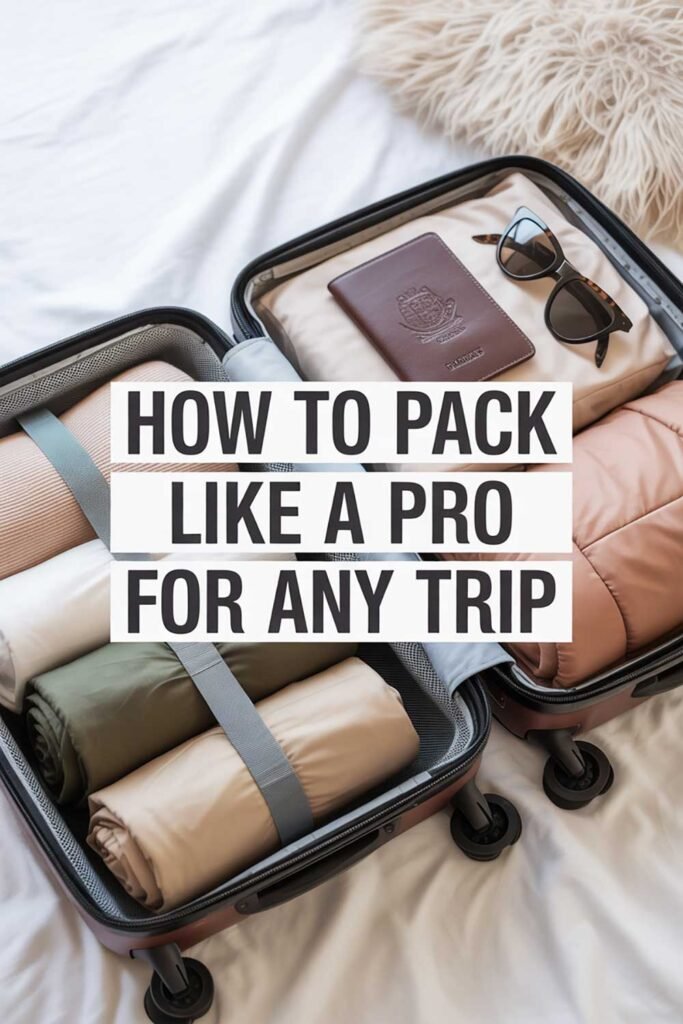
31 Vacation Organization Tips That Make Travel Less Chaotic
Chaotic travel is almost never the result of bad luck. It is almost always the result of missing systems — the booking confirmation that cannot be found at check-in, the bag that was packed without a list and arrived missing the one specific thing the trip needed, the checkout morning that turned into a scramble because the room was never quite maintained across the stay. Every source of travel chaos has a specific organizational fix, and most of those fixes take less time to build than the chaos they prevent takes to manage.
These thirty-one tips build the complete organization system for a vacation — from the first booking to the final reset at home. They are not complicated. They are the habits that the most consistently organized travelers have built over time and that anyone can build in the course of one or two trips. The vacation that runs smoothly was organized before it started. This is how that organization works.
Free Download: Our Travel Packing Checklist
The organized vacation starts with the right checklist. Ours confirms every item, every document, and every pre-departure step so nothing gets left behind and nothing important gets left to memory. Download it free before the next trip.
Get the Free ChecklistBefore the Trip: The Organization That Prevents the Chaos
The most effective vacation organization happens before the departure date, when there is still time to address every gap, confirm every booking, and build every system that the trip will rely on. The traveler who arrives at the airport with every confirmation in the camera roll, every document in the travel wallet, and every bag packed from a permanent list did not have a lucky departure morning. They had a prepared one.
1. Create a dedicated trip folder before any booking is made
A single folder — a Google Drive folder, a Notes document, or a physical envelope — that holds every confirmation, every address, every booking reference, and every piece of travel-related information for the specific trip is the organizational infrastructure that makes every trip-related question answerable in one place. The accommodation confirmation is in the folder. The tour booking reference is in the folder. The airline’s luggage policy for the specific carrier is in the folder. Nothing requires searching through email threads at the airport because everything was placed in one location when it arrived.
2. Screenshot every confirmation and save it to a camera roll album labeled by trip
Every booking confirmation screenshotted and saved to a dedicated camera roll album — created at the time of the first booking — produces the document that opens in one second at the check-in desk, the tour meeting point, and the accommodation lobby regardless of connectivity or battery level. Create the album when the first booking is made. Add every subsequent confirmation to it before the confirmation email is archived. The trip’s entire document set is in one swipe-to-access location before the departure day arrives.
3. Confirm every booking in the week before departure
The booking confirmed at the time of purchase and not revisited until arrival is the booking that may have changed — updated check-in times, moved meeting points, adjusted policies, or in rare cases been affected by scheduling changes the provider did not communicate proactively. A confirmation check in the week before departure — opening each booking and verifying the current details — catches the accommodation whose check-in moved to 4pm, the tour whose meeting point changed, and the restaurant reservation the system quietly cancelled. Five minutes. Every booking. Every trip.
4. Build a permanent packing list and update it after every trip
The packing list assembled from memory before each trip rediscovers the same items every time and misses the same ones. A permanent list — built once, updated after every trip with honest feedback about what was used and what was not — is the starting point that makes every subsequent pack faster and more accurate. The item forgotten on the last trip gets added. The item that came home untouched for the third time gets removed. After five or six trips the list is a near-perfect reflection of what the traveler actually needs rather than what they imagine they might.
Book A Trip
Book the next vacation with a travel agent who handles every booking, every confirmation, and every detail — so the only organization left is the bag and the departure morning.
Book A Trip5. Organize every travel document in a dedicated travel wallet before leaving home
The passport, the travel insurance card, the backup payment card, the boarding pass, and the local currency all belong in one travel wallet whose slots are assigned permanently and never change. The passport is always in the same slot. The boarding pass is always in the same slot. The backup card is always in the same slot. The traveler who reaches into the travel wallet at any checkpoint produces the right document in one motion because the system knows where everything is even when time pressure makes thinking harder.
6. Notify the bank for international travel at least twenty-four hours before departure
The bank’s fraud detection system flags unfamiliar foreign transactions as suspicious when no travel notification is on file. A five-minute notification — destination countries, travel dates, primary and backup cards covered — converts the card from a frozen liability at the worst possible moment into a confirmed working tool at every payment terminal and ATM across the trip. Five minutes. Twenty-four hours before departure. Every international trip without exception.
7. Pack two days before departure and do the final edit the day before
The packing session two days before departure has the calm required for honest editing and — critically — the twenty-four-hour gap that produces the subconscious realization of the forgotten item while the closet is still accessible and the solution is simple. The packing session the night before departure happens under time pressure and departure anxiety where every “maybe I should bring this” becomes a yes. Pack early. Edit the next day. Close the bag on the morning of departure with the confidence of a decision made without urgency.
Plan Our Escape
Let us plan the trip so every confirmation is in place and every detail is handled before the first bag is packed. Tell us where you want to go.
Plan Our EscapePacking Organization: The System Inside the Bag
The organized bag is not the most carefully packed bag. It is the bag whose structure was decided before the first item went in and maintained throughout the trip without requiring active effort to sustain it. These tips build the internal structure of the bag — the system that keeps every item findable, every category separated, and the bag as organized at the destination checkout as it was when it closed at home.
8. Use packing cubes with one permanent category assigned to each
Packing cubes without category assignments are containers. Packing cubes with permanent category assignments are a system. The tops cube is always tops. The bottoms cube is always bottoms. The underwear cube is always underwear. The assignment never changes between trips. After three or four trips the category is automatic — the cube opened to find a top is always the same cube, found without reading the label. The organized bag that stays organized throughout the trip was organized by a system, not by effort applied daily to maintain it.
9. Roll soft clothing and stand rolls upright in the cube
Rolled soft clothing stood upright in the packing cube — visible from above like books on a shelf — produces every item findable with one reach without disturbing anything else, and the cube holds roughly three times the clothing it holds with flat-folded items at the same compression. Roll every soft item. Stand every roll upright. The morning routine at the accommodation becomes a scan and a single reach rather than a rummage through a compressed stack whose bottom layer requires unpacking the top to access.
10. Pack structured garments flat in dry cleaning bags at the top layer
The blazer, the formal trousers, the tailored shirt — any garment whose fabric relies on its form — should be folded along its natural fold lines, placed inside a lightweight dry cleaning bag, and laid flat at the top layer of the main bag where it bears the least weight. The dry cleaning bag allows the fabric to shift under compression rather than holding a fixed crease. The top-layer position minimizes the compression from items above. Both together produce the structured garment that arrives at the destination in a wearable state rather than requiring immediate steaming.
11. Keep a small electronics organizer pouch with permanent contents
All cables, adapters, earbuds, and small electronics in one flat zippered pouch that lives in the same position in the carry-on on every trip. The cable needed at the gate outlet is in the pouch. The adapter needed at the hotel is in the pouch. The pouch is where they go back after every use. The traveler who knows where every cable is at any point in the trip is the traveler whose electronics pouch has never changed position between trips — and whose departure morning never includes a search for the specific charging cable that was definitely somewhere in the bag.
12. Use a dedicated laundry bag from the first evening at every destination
A lightweight mesh laundry bag placed in the main bag before departure is the clean/dirty boundary that maintains the cube system’s integrity across the trip’s full duration. Every worn item goes into the laundry bag from the first evening. Every clean item stays in its cube. The bags return home with a clear separation whose post-trip laundry is straightforward and whose departure repack at checkout is a five-minute confirmed sort rather than a mixed-content excavation. Under twenty grams. Packs flat. Earns its space on every trip longer than one night.
13. Photograph the packed bag before closing it
The photograph before departure is the visual inventory for any lost bag claim and the post-trip comparison that produces the packing list’s most useful improvements. The photograph taken with the bag open and every cube visible is the record of what went in. The honest count of untouched items at the final checkout is the record of what did not need to. The gap between the two produces specific, actionable packing list updates that improve the next trip rather than the same approximate adjustments made from a faded general memory months later.
DND Resources
Our travel resources page has trusted tools and official sources for every stage of the trip — from the first booking to the last checkout. Everything in one place.
DND ResourcesAt the Destination: Staying Organized Through the Vacation
The organized departure produces a disorganized vacation if the habits that maintain the system at the destination are not applied consistently. The bag that arrives organized and is used as a daily wardrobe — opened and searched, items returned to approximate positions — loses its structure by day two and requires a full repack before the return journey. These tips maintain the organization through the vacation’s full duration.
14. Unpack into drawers and the wardrobe for stays of two nights or more
For any stay of two nights or more, ten minutes unpacking the packing cubes into the room’s drawers and hanging structured items in the wardrobe maintains the organization without requiring any active daily management. The daily routine accesses a drawer rather than a compressed bag. The departure repack takes five minutes because everything is in organized drawers rather than distributed through a bag that has been opened and imperfectly closed repeatedly. Unpack at two nights. Leave it packed for one.
15. Designate one spot for all valuables at every accommodation — the same spot every time
The passport, the travel wallet, the room key, the spare cash — all in one designated spot at every accommodation, always the same spot: the bedside table drawer, the safe, the specific interior pocket of the main bag. The valuable that is always in its designated position is found without searching at every checkout, every departure, and every moment it is needed under time pressure. Choose the spot before the first trip that uses it. Use it at every accommodation after it. Never make an exception.
16. Do a five-minute room tidy before leaving the accommodation each morning
The room maintained by a daily five-minute tidy — charger back in its pocket, clothes back in their drawer, surfaces cleared of the previous evening’s distributions — stays organized throughout the stay without any single dedicated reorganization session. The checkout that follows a maintained room is a five-minute confirmation sweep. The checkout from a room that drifted for five days is a fifteen-minute sort-and-search that still occasionally misses something. Tidy before leaving each morning. The checkout earns its speed from the days that preceded it.
17. Keep a running notes document throughout the trip
One running notes document — a phone note, a shared Google Doc, whatever is already used daily — serves as the trip’s operational reference and record simultaneously: the restaurant name the host recommended, the local cash amount remaining, the market opening time confirmed that morning, the thing noticed on day two worth revisiting on day four. The same document is the two-sentence daily journal whose entries are specific enough to be recoverable months after the trip when the general memory has faded into a pleasant impression. Start it before the trip. Add to it daily. The trip’s most useful practical information and its best specific memories live in the same place.
18. Confirm the next day’s plans the evening before each destination day
The activity booking, the restaurant reservation, the tour pickup time, the transport to the next destination — confirmed the evening before the day that requires them. The confirmation the evening before is the preparation that finds the changed opening time, the cancelled reservation, and the transport booking whose details were different from what was remembered — while there is still time to address each one without disrupting the day. The traveler who confirms the next day’s plans the evening before never starts a destination day with an organizational surprise.
19. Keep all receipts and any important local documents in one designated pouch
The duty-free receipt, the museum ticket stub, the local pharmacy receipt for the travel insurance claim, the parking confirmation — all in one small designated pouch in the bag’s interior rather than distributed across trouser pockets, bag compartments, and accommodation surfaces. The organized traveler who needs a receipt for a travel insurance claim or a return has it in the pouch in ten seconds. The disorganized one needs twenty minutes and occasionally cannot find it at all. One pouch. Everything in it from the moment it is received. Empty it at home.
How Wren’s Vacations Stopped Feeling Like Logistics Problems
Wren took two or three vacations a year and described the experience of traveling with a specific qualifier that had become consistent enough to notice: the trips were good but they always felt like they were being managed from slightly behind. Not significantly behind — never the missed flight or the lost passport — but the accommodation check-in that required searching through three email pages for the booking reference, the checkout morning that started with twenty minutes of locating items distributed across the room, the mid-trip realization that the specific item she had been sure was packed was not there. The vacation was fine. The organization was quietly wrong in small ways throughout it.
The change started with one addition and one habit. The addition was the trip folder — a single Google Drive folder whose first document was created the day the first flight was booked and into which every subsequent confirmation was pasted as a link before the confirmation email was archived. The check-in booking reference at the hotel was in the folder in four seconds. The tour confirmation whose meeting point had changed was in the folder, and the change was caught during the pre-departure confirmation check rather than at the meeting point on the morning of the tour.
The habit was the five-minute morning tidy — surfaces cleared, charger in its pocket, clothes back in their drawer before leaving the accommodation each day. The checkout on the fifth morning took six minutes. The charger was already in the outer pocket. The room had been maintained rather than left to drift. The booking reference was in the folder. The travel wallet had every document in its assigned slot. The vacation that had been managed from slightly behind was, for the first time, being experienced from exactly where it was happening. These thirty-one tips are the complete system that the one addition and the one habit belong to.
Become An Agent
Love helping travelers build the organization systems that make every vacation run smoothly? See how to turn that into a home-based travel business.
Become An AgentThe Return and the Reset: Finishing the Trip Right
The way a vacation ends determines how the next one begins. The traveler who resets the system within twenty-four hours of returning home starts every subsequent trip from the best possible position. These tips cover the return journey organization and the reset habits that keep the system improving rather than resetting to the same starting point before every trip.
20. Repack for the return journey the evening before the final checkout
The return repack done the evening before the final checkout — when the trip is not competing with the taxi’s arrival time — is the repack with the time and calm to apply every protection correctly. The structured garments go back in their dry cleaning bags at the top of the bag. The clean rolled items go back upright in their cubes. The worn items go in the laundry bag at the base. The electronics pouch is confirmed complete. The evening repack is also the advance room sweep that finds the item on the bathroom hook before the taxi rather than after it.
21. Do a systematic room check before every checkout — every surface, every outlet
The outlet by the bed where the phone charged overnight. The bathroom counter where the toiletry kit was last used. The safe whose contents were accessed the previous evening. The desk where the laptop was open. The wardrobe hooks. The floor under the bed. Three minutes, every surface confirmed clear, before picking up the bags. The items found by this sweep come home. The items not found by it do not. Three minutes at checkout cost nothing. The recovery process for the item found by housekeeping after departure costs significantly more.
22. Process the return journey’s organization the same as the outbound
The clean items in their cubes, protected as they were packed. The worn items in the laundry bag. The structured garments in their dry cleaning bags at the top layer. The electronics pouch confirmed complete. The travel wallet confirmed with every document in its assigned slot. The return journey is the same length as the outbound and the same organizational standards apply to it. The bag that arrives home in the same organized state it left in is the bag whose reset takes fifteen minutes rather than an hour of sorting and searching.
23. Reset every bag within twenty-four hours of returning home
The laundry out and to the wash. The cubes emptied and returned to their positions. The toiletry kit restocked with whatever ran low. The electronics pouch confirmed complete. The charger back in its outer pocket. The travel wallet reviewed and refreshed. The bag closed in its ready state. Fifteen minutes on the evening of returning home. The next trip announced next week starts from a bag that is already organized rather than from the aftermath of the last one that was never reset.
24. Update the permanent packing list within twenty-four hours of returning
The item wished for and not there. The item that came home untouched. The accommodation that provided the hair dryer that was packed unnecessarily. These details are most specific in the twenty-four hours after returning and fade quickly into the general memory of a good trip. Update the list before the bags are fully put away. The list updated from the honest feedback of the trip just completed is more accurate than the list built from the previous trip’s memory. Each update makes the next trip’s pack faster and more complete.
25. Note every organizational improvement from the trip before the memory fades
The better position for a specific item in the bag. The confirmation that the hotel’s check-in was at 3pm rather than 2pm and the booking notes should reflect that for the next stay at the same property. The discovery that downloading the destination’s airport app before landing saved ten minutes at the arrival. These specific improvements are available only in the hours after they occurred and applied to the permanent system only if they are noted before the specific memory dissolves into the general sense that the trip went well. Note the improvement. Apply it before the next trip needs it.
“The vacation that felt effortless was almost never the lucky one. It was the one where someone built the system before the trip started and maintained it through every day until the bag was reset at home.”
The Habits That Make Every Vacation Less Chaotic Over Time
The organization tips that reduce vacation chaos the most permanently are not the ones applied once on a single trip. They are the ones that become reflexive — built into the pre-departure evening, the daily accommodation tidy, and the post-trip reset until they stop requiring active thought and start being simply how travel works. These final tips are the habits that make the whole system compound.
26. Build a pre-departure evening routine and use it before every trip
The pre-departure evening routine — boarding pass screenshotted, documents in the travel wallet, carry-on organized for security, bag by the door, two alarms set, bank notified, home walkthrough completed — is the thirty-minute preparation that removes every avoidable unknown from the travel day before it begins. Do it in the same order before every departure. After three or four trips the routine is automatic and the departure morning is simply the execution of a preparation that was already done.
27. Keep the travel wallet organized with assigned slots that never change
The passport in one slot, the boarding pass in one slot, the backup card in one slot, the local currency in one slot — permanently assigned, never shuffled. The travel wallet opened at any checkpoint produces the right document in one reach because the system knows where it is even when time pressure makes thinking harder. Organize the wallet once. Keep the assignments permanently. The checkpoint that produces the right document in two seconds was organized months ago.
28. Use the same bag positioning system on every trip
The electronics pouch always in the outer pocket. The toiletry kit always in the top compartment. The travel wallet always in the interior zip pocket. The laundry bag always at the base. The positioning that never changes between trips is the positioning that never requires active management during the trip. Every item is in its position because it is always in its position. The search for the specific item in the bag that the organized traveler never has is the search the disorganized one has multiple times per day across every trip.
29. Photograph the accommodation room on check-in
A quick photograph of the room on arrival — the layout, the key surface positions, the wardrobe, the bathroom counter — produces the before image whose comparison to the room at checkout confirms every surface has been cleared. The photograph taken at check-in is the specific reference that makes the checkout sweep systematic rather than approximate. Every surface in the photograph, confirmed clear before picking up the bags. Nothing left behind that was in the photograph and should be in the bag.
30. Tell one trusted person the full itinerary before every departure
The full itinerary shared with one trusted person at home — every flight number, every accommodation address and phone number, every contact number for the travel insurance and the emergency contact at the destination — is the safety net whose value is proportional to the scenarios it addresses. The family member who needs to reach a traveler in an urgent situation. The missed communication whose last known itinerary position allows action with accurate information. One person. The full itinerary. A forwarded email or a shared document. Before the door closes. Every trip.
31. Trust the system and let the vacation be the vacation
The organized traveler’s greatest benefit is not the time saved or the fees avoided — it is the mental space recovered. The vacation that is managed from a position of confidence rather than from a position of catch-up is the vacation that is fully experienced rather than partially managed. The system built from these thirty-one tips is the system that produces that confidence — not because nothing ever goes wrong, but because the things that can be prepared for were prepared for, and the things that cannot be are encountered from a position of calm rather than chaos. Trust the system. Let the vacation be what it was planned to be. That is what all of this is for.
Picture This
The trip folder was created the day the first booking was made. Every confirmation was in it before the confirmation email was archived. The pre-departure confirmation check caught the accommodation’s updated check-in time three days before departure. The packing list was opened, updated with one item from the last trip, and used as the session’s starting point. The bag closed two days before departure. The evening before, the boarding pass was screenshotted, the travel wallet was confirmed complete, the carry-on was organized for security, and both alarms were set.
At the destination, the cubes went into the drawers within ten minutes of check-in. The travel wallet went to the bedside table drawer — same spot as every accommodation before it. The laundry bag went to the base of the emptied main bag. The five-minute morning tidy happened before leaving the room each day. The notes document collected the restaurant recommendation, the market timing, and two sentences about the best afternoon of the trip. The evening before checkout, the return repack applied every protection correctly. The checkout sweep took four minutes and found the phone charger in the outlet. The bag arrived home organized. The reset was done by nine that evening. The next trip starts from there.
That is thirty-one tips working as a single system. That is the vacation that felt effortless from the first day to the last — not because of luck, but because every source of chaos was addressed before it could become one.
Before the Next Trip: Grab the Free Packing Checklist
Our free Travel Packing Checklist is the foundation of the organization system these thirty-one tips describe — every category, every pre-departure confirmation, and every final check built in. Download it and use it before the next trip.
Get the Free ChecklistExplore Our Top Picks for a Better Trip
After years of organized travel together, these are the booking platforms and travel services we personally rely on — tested, trusted, and recommended because they have consistently made our own vacations smoother and more memorable.
See Our Top PicksTravel Printables at Premier Print Works
Visit Premier Print Works for packing checklists, trip planners, organization guides, and travel printables that make every departure more organized and every vacation less chaotic from the first day to the last checkout.
Visit Premier Print WorksDisclaimer
The information shared in this article is provided by Don and Diana’s Travels for general informational, educational, and inspirational purposes only. It reflects our personal experiences, opinions, and the experiences of travelers we have worked with. It is not professional travel, legal, financial, or organizational advice.
Travel conditions, airline policies, accommodation check-in procedures, and related details vary by destination, carrier, and provider and are subject to change without notice. Always confirm current requirements and policies directly with the relevant parties before traveling. We are not responsible for any outcome arising from reliance on information in this article.
This article may contain affiliate and partner links that pay us a commission at no extra cost to you. Our recommendations are based on real use and genuine belief in the products and services we share. Stories on this site combine real experiences from Don, Diana, clients, and travelers we have worked with. Details may be adjusted for privacy and narrative clarity. All content is the copyrighted property of Don and Diana’s Travels. You may not copy or republish our content without prior written permission. By reading this article you acknowledge that you have read and agree to this disclaimer.