25 Travel Hacks for Getting Through Busy Airports Faster
The busy airport is the same airport every other traveler is navigating — but the experience of moving through it ranges from calm and efficient to frantic and exhausting depending almost entirely on the preparation and habits the traveler brought to it. The traveler who clears security in under two minutes at a major hub on a Monday morning is not lucky. They are prepared. The traveler who spends twenty minutes at the check-in desk, four minutes at the security belt, and fifteen minutes looking for a gate that moved is also not unlucky. They are unprepared in specific, fixable ways.
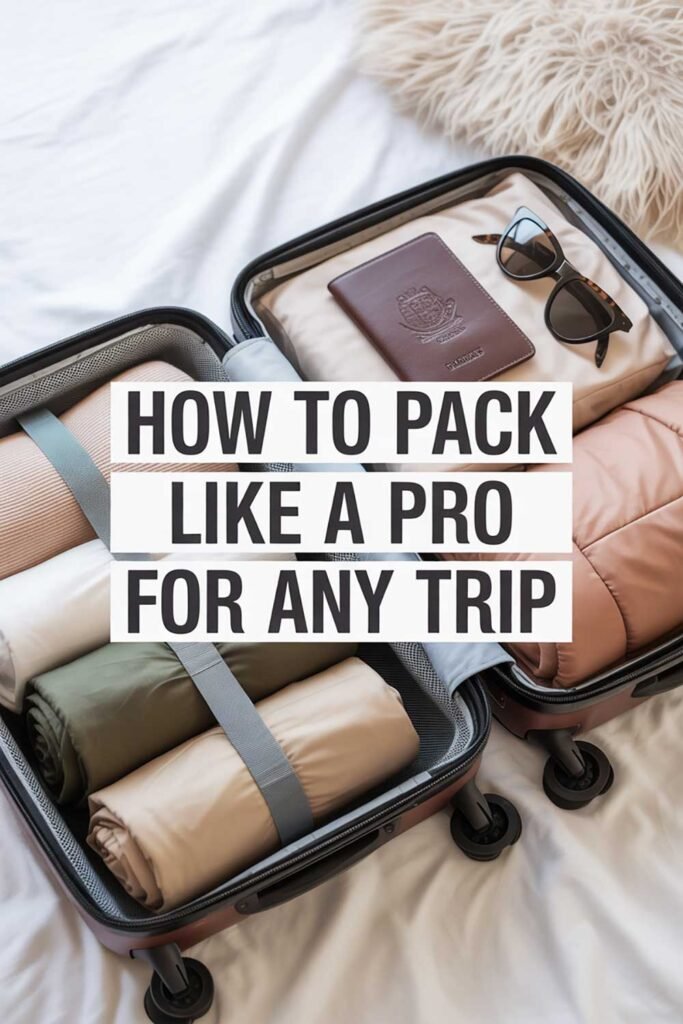
These twenty-five hacks exist to close every gap between the unprepared airport experience and the efficient one. They cover the night before, the departure morning, security, the gate, connections, and the arrival — and every one of them is the kind of small preparation that compounds across every airport day that uses it.
Free Download: Our Travel Packing Checklist
The efficient airport day starts with the bag organized correctly the night before. Our free Travel Packing Checklist confirms every pre-departure step is done so the only thing left on travel day is getting to the airport and moving through it.
Get the Free ChecklistThe Night Before: Where the Fast Airport Day Actually Starts
Every minute saved at a busy airport on the travel day was almost always saved the evening before. The boarding pass that opens in one tap. The carry-on organized specifically for the security belt. The gate confirmed before the coffee. None of these require anything more than thirty minutes the night before — and every one of them pays back in minutes rather than seconds on a busy travel day when those minutes are the most valuable they will ever be.
1. Complete online check-in the moment the window opens and screenshot the boarding pass
Online check-in opens twenty-four hours before most departures. Completing it the evening before produces the boarding pass in the camera roll, the check-in desk removed from the travel day entirely, and the preferred available seat secured before the morning crowd. Screenshot the boarding pass immediately and confirm it opens on airplane mode. At a busy airport, the boarding pass that opens in one tap at the ID check, the security lane, and the gate is the boarding pass that never produces the specific delay of the loading app at the worst possible moment.
2. Organize the carry-on specifically for security before leaving home
The liquids bag in the outermost front pocket. The laptop in the dedicated outer sleeve. The belt, watch, and any metal items in the bag’s outer pocket rather than on the body. The phone in the personal item rather than a trouser pocket. Every item that must come out at security positioned for one-motion removal the night before departure means arriving at the belt already prepared rather than reorganizing under time pressure with a queue behind. At a busy airport security lane, the sixty seconds this preparation saves is the difference between moving efficiently and creating the backup the people behind are waiting on.
3. Confirm the current gate and departure status the evening before
Gate assignments can change between booking and departure. The airline app, the carrier’s website, and most online check-in confirmations show the current gate assignment. A check the evening before catches any reassignment with enough time to update the plan before the departure morning. The traveler who arrives at a busy airport knowing the current gate walks directly to security rather than to the information desk.
4. Set two alarms for early departures and confirm both before sleeping
At a busy airport, the buffer between arriving on time and missing the flight is smaller than at a quiet regional one — queues are longer, terminals are larger, and the recovery window for any delay is shorter. Two alarms at staggered intervals on two separate devices converts the alarm system from a single point of failure into a confirmed backup. The departure morning that begins on time at a busy airport has a manageable path through it. The one that begins thirty minutes late does not.
5. Look up the terminal map and security lane positions for the departure terminal
Every major busy airport publishes detailed terminal maps online and in the airline app. The five-minute map check the evening before — where is security, how far are the gates from the security exit, which corridor leads to the specific gate range — converts the busy airport from a navigation challenge into a confirmed route whose key distances are already known before a single step is taken inside it.
Book A Trip
Book the next trip with a travel agent who picks the right carrier, the right routing, and the right connection times — so the airport is the easiest part of the journey rather than the most stressful.
Book A Trip“The traveler who gets through a busy airport the fastest is almost never moving faster than everyone else. They are moving with less friction — and the friction was removed the night before.”
Security: Under Two Minutes When Every Habit Is in Place
Security is the stage of the busy airport where preparation has the highest and most immediate return. The traveler who is fully prepared moves through the busiest security lane in under two minutes. The traveler who is not prepared adds time to their own process and to every lane position behind them. These hacks make the security interaction as fast as the preparation behind them earns.
6. Enroll in TSA PreCheck or Global Entry if you fly more than twice a year
The PreCheck lane at a busy airport removes shoes, laptops, and liquids from every domestic security interaction entirely. The application takes under an hour. Processing takes a few weeks. The cost is eighty-five dollars for five years. At a major hub on a Monday morning, the PreCheck lane processes passengers in under sixty seconds while the standard lane queues extend past the stanchions. The single highest-return investment in airport efficiency available to any regular traveler.
7. Wear slip-on shoes on every travel day without exception
At standard security, shoes must come off and go in a tray. Slip-ons remove in three seconds and go back on in three. Lace-ups require kneeling, unlacing, and re-lacing — sixty seconds that compounds across a busy security queue whose efficiency depends on every traveler moving at the pace the process allows. At a major hub with two hundred people in the security queue, the sixty seconds from every lace-up shoe-wearer is a visible, consistently avoidable contribution to everyone’s wait. Wear the slip-ons. Every time.
8. Remove metal items before the security queue — not at the bin
The belt removal at the security bin — pulled through trouser loops while the tray loads and the queue watches — is sixty seconds of avoidable procedure that is significantly faster performed before the queue at the entry point where time pressure is absent. Belt in the outer pocket before the queue. Watch in the outer pocket. Everything metal confirmed in the bag. Arrive at the bin with nothing left to remove.
9. Confirm every pocket is empty before the body scanner
The body scanner detects everything in pockets. Any item detected produces a secondary check — step back, remove the item, rescan, wait. At a busy airport this takes three to five minutes in front of a full queue. Empty every pocket before the scanner and arrive with the specific confidence that nothing will trigger the secondary check. Five seconds of pocket confirmation before the scanner prevents the three minutes after it.
10. Move away from the security belt before reorganizing
After collecting the tray at the security belt exit, pick up everything and walk to the first available bench or open wall space past the security area before reorganizing. At a busy airport, stopping at the belt exit to replace the laptop and put on the shoes backs up the busiest point of the security process for every traveler whose tray is behind. The reorganization takes the same time three steps from the belt. It just costs no one else anything from that position.
11. Use the correct security lane for the boarding pass
At a busy airport, security lanes are differentiated — TSA PreCheck, standard screening, Global Entry, international arrivals. Joining the wrong lane produces either a fee for a program lane not on the boarding pass or a standard lane wait for a PreCheck holder. Check the boarding pass for the TSA Pre designation before choosing the lane. At a major hub where the difference between lanes can be twenty minutes, the thirty seconds to confirm the right lane before joining it is the most efficient thirty seconds the security area offers.
Plan Our Escape
Let us handle the routing, the connections, and every booking decision that determines how the airport day feels. You handle the packing — we handle the rest.
Plan Our EscapeThe Terminal: Moving Through Without Losing Time
After security, the busy airport presents the navigation challenge in its full form — large, loud, dense with people moving in every direction. These hacks keep the efficient traveler moving in the right direction at the right time through every stage of the terminal.
12. Check the departures board immediately after clearing security
The departures board updates in real time. Gate changes, delays, and status updates at a busy airport are reflected on the board before gate signage is updated at the physical gate. The thirty-second check immediately after clearing security catches the gate change before the walk to the wrong gate begins. At a major hub where a gate change can mean a fifteen-minute walk in the wrong direction, this check is the most time-efficient thirty seconds the terminal offers.
13. Go straight to the gate before anything else
The gate confirmed before the coffee, the food, and the phone charging is the gate whose distance to every terminal feature is known before any of them are visited. Walk to the gate first. Confirm the flight on the gate display. Note the return distance to the nearest food and outlets. Then use the terminal time with full knowledge of the boarding buffer available. At a busy airport where gate changes are more common and distances are greater, the gate confirmed first is the gate that will not be scrambled toward from the wrong end of the terminal.
14. Enable airline app push notifications for gate changes and boarding alerts
Gate change notifications pushed to the phone arrive before the departures board is updated at the physical gate — sometimes by several minutes, which is the window between a calm response and an urgent one at a busy airport with long gate distances. Enable flight notifications for every trip in the airline app settings. The notification that arrives while seated at the gate café with fifteen minutes to walk to the new gate is the notification that saves the boarding.
15. Use the airport app or offline map to navigate between gates on tight connections
At a busy multi-terminal airport, the connection between an arriving gate and a departing gate may cross terminals, require a train, or involve distances that are not apparent from the gate numbers alone. Most major airports have dedicated apps with indoor navigation. Download the destination airport’s app or offline map before the connecting flight departs. The traveler who deplanes at Gate C22 knowing Gate A14 requires a ten-minute train ride has already decided to move immediately rather than discovering the distance when the time to cover it has already shortened.
16. Know which exit to use at the arrival airport before the wheels touch down
The efficient exit from a busy arrival airport — the right baggage carousel, the correct ground transport level, the exit nearest the taxi rank or train — is available from the airport’s website and app before landing. The five minutes used to look this up during the descent converts the arrival from a navigation exercise under fatigue into a confirmed route. At a major international airport where the distance from gate to ground transport is meaningful, knowing the route in advance saves ten to twenty minutes of orientation that the unprepared arrival spends in the wrong corridor.
DND Resources
Our travel resources page has official tools and trusted guides for every stage of the airport day — including TSA information, airport maps, and arrival resources for destinations around the world.
DND ResourcesHow Theo Stopped Finding Busy Airports Exhausting
Theo flew eight to ten times a year on a mix of business and personal travel and had a consistent description of major hub airports: exhausting. Not stressful in the way a missed connection is stressful — just consistently more draining than the same journey through a smaller airport, in ways that accumulated across the travel day into the fatigue of someone who had been navigating a complex system under sustained low-grade friction for four hours.
The diagnosis came from comparing two consecutive trips through the same airport. The first was the standard version: boarding pass loaded at the ID check while the agent waited, laptop in the main compartment requiring full excavation at the belt, standard lane because the PreCheck enrollment had been deferred for two years, twenty minutes at the gate realizing the gate had changed — something the airline app would have delivered while he was still at the coffee shop. The second trip used six of the hacks in this article. PreCheck had finally happened. The boarding pass was a screenshot. The liquids bag and laptop were in the outer pockets. The departures board check caught the gate change before he walked to the original gate.
The second trip through the same airport took forty-five minutes less than the first. Not because the airport was less busy — it was busier. Because the preparation had removed every source of friction before the airport was entered. The airport had not changed. The experience of moving through it had. These twenty-five hacks are the complete version of the six that changed Theo’s second trip. The word he uses to describe major hub airports now is different: manageable.
Become An Agent
Love helping travelers move through airports more efficiently and enjoy every part of the journey? See how to turn that into a home-based travel business.
Become An AgentConnections, Boarding, and Arrivals
The connection, the boarding process, and the arrival are the final stages of the airport day where preparation continues to pay back. These hacks cover the decisions at each stage that save time, protect the connection, and produce the arrival that begins the trip rather than extending the transit.
17. Build a meaningful buffer into every connection at booking time
The minimum connection time at a busy hub is the time that works when every variable cooperates. Real busy-airport connections add late inbounds, gate changes that extend the walking distance, and security re-clearance for international connections. A sixty-to-ninety-minute buffer beyond the airline’s minimum converts the tight connection from continuous anxiety into a managed scenario. Build the buffer at booking when the schedule is still a preference rather than a fixed constraint.
18. Know the connection gate before the inbound flight lands
The connecting flight’s current gate — available in the airline app, on the seatback entertainment system, or from the flight attendant — determines the deplane strategy before the aircraft door opens. The connection whose gate is known before landing produces immediate directed movement on deplaning rather than the departures board search that costs the first two minutes of the connection window. At a busy hub where the window may be forty-five minutes and the gate distance may be fifteen minutes on foot, those two minutes matter.
19. Sit as far forward in the cabin as the ticket allows on tight connections
Deplaning runs front to back. The difference between row four and row thirty-two on a full narrow-body aircraft can be ten to fifteen minutes at a busy hub. Select the most forward available seat at booking when the itinerary includes a tight connection. Board forward. Deplane early. Walk to the connection gate rather than run to it.
20. Do not stand in the boarding queue before the group is called
At a busy airport, the boarding queue forms early and grows large. Standing in it for twenty minutes before a group is called adds twenty minutes of standing to a travel day that already involves significant standing. Stay seated near the gate until the specific boarding group is announced. The aircraft does not depart until every group has boarded. The seat is the same seat regardless of when in the boarding sequence it is occupied.
21. Organize the carry-on for the overhead bin before entering the jetway
The overhead bin interaction at a busy airport on a full flight is the most consistent source of boarding aisle backup. Organize the carry-on before boarding the jetway: the seat item moved to the personal item, the bag oriented handle-first for the most efficient fit. Lift, place, sit. The aisle clears for the passengers behind because the preparation happened before it was needed.
22. Stay seated until the seatbelt sign goes off at arrival
Standing in the aisle during taxi at a busy arrival airport provides a time advantage of approximately zero — the door cannot open until the aircraft is docked regardless. Stay seated until the sign goes off. Deplane in the row sequence the aircraft uses. The passenger who remained seated arrives at the gate at the same time as the one who stood for the full taxi and arrives there more comfortably.
23. Do a seat check before standing up at every arrival
The seat pocket, the armrests, the floor under the seat, the overhead bin above the row. At a busy arrival airport where the pace of deplaning is faster, the item left at the seat is the item least likely to be recovered. Thirty seconds before standing. Every arrival. Every flight. The item found by this check comes home. The one not found starts a process whose outcome is uncertain.
24. Follow baggage claim signs from the jetway without stopping to orient
Every major busy airport signs the route from the gates to baggage claim continuously from the jetway exit. The traveler who follows the signs without stopping to orient moves from gate to carousel in a straight line rather than the stopping-and-reassessing path that unfamiliarity produces. At a large international hub, following the signs continuously is the navigation strategy that loses the least time to orientation.
25. Use mobile boarding passes for every airport interaction where they are accepted
The mobile boarding pass eliminates the check-in desk and replaces the printed boarding pass at every checkpoint. At a busy airport where every desk interaction adds queue time, the mobile boarding pass is the tool that converts every checkpoint from a document search into a phone tap. Use it at every interaction where it is accepted. The one-tap checkpoint is always faster than the document-search checkpoint at a major hub on a busy day.
Picture This
The boarding pass was in the camera roll before the departure morning. The gate was confirmed the night before from the airline app — Gate B22, same as booking. The carry-on was organized for security with the liquids bag in the outer pocket and the laptop in its sleeve. The slip-ons were on. The belt was in the outer pocket. Both alarms had fired. The terminal map had been checked and Gate B22 was known to be past the central hub on the left.
The PreCheck lane at the busiest security checkpoint in the terminal had a six-person queue. The boarding pass opened in one tap. The laptop stayed in the bag. The shoes stayed on. Security cleared in fifty-eight seconds. The departures board showed Gate B22 confirmed and on time. The gate was reached in four minutes. The phone was plugged in at the armrest outlet. The boarding group was called and the queue was joined. The overhead bin received the carry-on in one lift and one placement. The connection at the hub was made walking — not running — because the forward seat and the pre-confirmed gate had together produced nine extra minutes. The seat check at arrival found the earbuds in the seat pocket. The baggage claim signs led directly from the jetway. The bag appeared on the belt eleven minutes after landing.
That is twenty-five hacks working as a system. That is the busy airport that stopped feeling exhausting because the friction was removed before it was ever entered.
Before the Next Airport Day: Grab the Free Packing Checklist
Our free Travel Packing Checklist confirms every pre-departure step is done before the travel day begins — the carry-on organized for security, the boarding pass confirmed, and every preparation in place that makes the busy airport fast rather than exhausting.
Get the Free ChecklistExplore Our Top Picks for a Better Trip
After years of busy airports and destinations around the world, these are the booking platforms and travel services we personally rely on — tested, trusted, and recommended because they have consistently made our own journeys smoother.
See Our Top PicksTravel Printables at Premier Print Works
Visit Premier Print Works for departure day checklists, airport preparation guides, connection planners, and travel organization printables that make every airport day faster and every departure morning calmer.
Visit Premier Print WorksDisclaimer
The information shared in this article is provided by Don and Diana’s Travels for general informational, educational, and inspirational purposes only. It reflects our personal experiences, opinions, and the experiences of travelers we have worked with. It is not professional travel, legal, or financial advice.
Airport security procedures, TSA PreCheck and Global Entry program details, check-in policies, boarding processes, gate change procedures, and connection time guidance vary by carrier, airport, country, and date and are subject to change without notice. Always confirm current requirements with your specific airline and the relevant authorities before traveling. TSA PreCheck and Global Entry are programs administered by U.S. government agencies — visit tsa.gov and cbp.gov for current enrollment information, fees, and eligibility. We are not responsible for any outcome arising from reliance on information in this article.
This article may contain affiliate and partner links that pay us a commission at no extra cost to you. Our recommendations are based on real use and genuine belief in the products and services we share. Stories on this site combine real experiences from Don, Diana, clients, and travelers we have worked with. Details may be adjusted for privacy and narrative clarity. All content is the copyrighted property of Don and Diana’s Travels. You may not copy or republish our content without prior written permission. By reading this article you acknowledge that you have read and agree to this disclaimer.