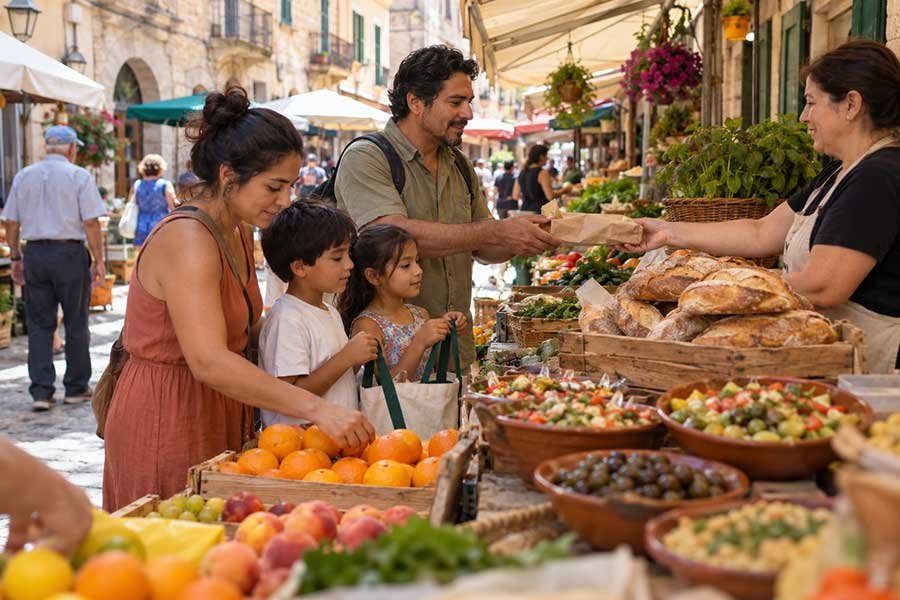
The hacks that actually make a vacation better are almost never complicated — they are just small habits most travelers never think to build until after a trip that could have gone smoother. Twenty-one simple travel hacks for the traveler who wants their next vacation to feel genuinely better than the last one, built from the small decisions that find what most tourists walk right past.

Best For
Every Traveler Who Wants Their Next Vacation to Feel Better Than the Last
Hacks Count
21 Vacation Experience Hacks
Read Time
10 Minutes
Walk Away With
The Small Decisions That Make a Vacation Genuinely Great
Free Download

Grab Our Travel Packing Checklist

Our free packing checklist is the pre-departure foundation for the better vacation experience these twenty-one hacks build — every item confirmed before you leave home so none of the energy at the destination goes to the things that could have been sorted before the trip began. The better vacation experience starts before the trip does.

Get the Free Checklist

The best vacation experiences almost never come from the most expensive plans — they come from the small decisions made by someone paying close enough attention to find what most tourists walk right past.

The hacks that actually make a vacation better are almost never complicated — they are just small habits most travelers never think to build until after a trip that could have gone smoother.

Before the Day Starts: The Four Morning Habits That Shape Every Day at the Destination

01

Download offline maps for the day’s area before you leave the accommodation each morning

The offline map downloaded at the accommodation before the day begins is available for the full day regardless of where the day goes — in the narrow alley with no signal, in the underground market with intermittent connectivity, in the taxi whose driver takes a route the live map would flag as unexpected. Downloading maps while still connected to the accommodation’s Wi-Fi costs under three minutes, uses no data, and produces the navigation tool that operates from local storage rather than from a live network request. Most mapping applications allow per-region offline download at no cost. Download the day’s area specifically before leaving — the neighborhood on the day’s plan, the route to the afternoon’s destination, the return route from the evening. The traveler who navigates from offline maps uses no foreign data, pays no roaming charge for navigation, and is never the traveler standing on a corner with a spinning map waiting for the signal to load while the day waits.

02

Confirm the day’s bookings and reservations before leaving the accommodation each morning

The tour whose meeting point changed since the booking was made, the restaurant whose opening time on Tuesdays is different from the rest of the week, the attraction whose timed entry was for the afternoon not the morning — these are the discoveries that the morning’s two-minute confirmation prevents and the arrival at the confirmed address discovers instead. Before leaving the accommodation each morning, open every reservation or booking for the current day and confirm: the correct time, the current meeting point, and any update that may have been sent since the booking was completed. This habit takes two minutes at the accommodation’s table and prevents the forty-minute discovery at the wrong address. It also extends to asking the hotel concierge or accommodation host whether there is anything about the day’s plans that the local context would change. Confirm before you leave. The day planned from confirmed information goes as planned.

03

Check the day’s weather and adapt the plan around it rather than push through

The plan built around weather conditions that no longer apply at the day’s start — the outdoor market scheduled for the morning that is now raining heavily, the scenic route planned for the afternoon that is currently under a heat advisory — is a plan whose execution is possible and whose enjoyment is reduced by the conditions the plan did not account for. Checking the local forecast each morning and making the minor adjustments that the weather genuinely warrants — moving the indoor museum to the rainy morning and the outdoor walk to the afternoon’s clearing — produces the same itinerary’s experiences in the conditions that serve them best. This is not reactive anxiety management. It is the small flexibility that turns a miserable morning queue in the rain into the specific museum visit whose indoor warmth was perfect for the weather. Check the forecast. Adjust the order when the weather makes the adjustment obvious. The same day, better experienced.

04

Leave at least one afternoon in every two days completely unplanned and open

The vacation whose every moment is accounted for is the vacation that encounters the best unplanned thing and cannot stop for it because the next booking starts in twenty minutes. The open afternoon is the planning decision that makes the best unplanned discoveries possible: the street followed out of curiosity that opens onto the thing that becomes the trip’s best story, the conversation with the market vendor that leads to the neighborhood restaurant that no review site would have found, the second visit to the morning’s highlight because the afternoon had room for it. Build the open afternoon into the itinerary as deliberately as the bookings — not as a gap in the schedule but as a feature of it, planned for its openness rather than its specific content. Every trip has two or three of these moments. They almost always happen in the open time. They almost never happen in the scheduled time. Leave the space. Let the destination fill it.

We Build the Trip Worth Paying Attention To

Let Us Plan the Vacation That Gives Every Small Decision Somewhere Worth Making It

The small decisions that find what most tourists walk past are most rewarding at a destination planned well enough to give them room. Tell us where you want to go and we will build the itinerary with the right structure, the right anchors, and the right open time for the discoveries the plan cannot anticipate.

Plan Our Escape

Finding What Most Tourists Miss: The Small Decisions That Change the Whole Experience

05

Ask a local where they actually eat — not a review site — and go there

The review site’s top restaurant at any destination is the restaurant that the destination’s most engaged tourists and the platform’s most active reviewers have collectively elevated to the top of a list whose primary audience is visitors rather than residents. The restaurant the local where you are staying or working actually goes to is the restaurant that has earned its reputation through the quality of the experience rather than the volume of the reviews it has attracted. Ask the accommodation host, the market vendor, the taxi driver, the shopkeeper — not “what’s a good restaurant nearby?” but “where do you actually go for dinner?” — and go where they say. The result is almost always: better food, lower prices, a genuinely local experience, and the specific satisfaction of having found something the review site’s top ten does not include. This is the single highest-return question available to any traveler at any destination. Ask it every trip. Use the answer every time.

06

Confirm every booking the day before you arrive at each destination — not when a problem occurs

The confirmation made the day before arrival is the confirmation that catches the changed check-in time, the moved tour meeting point, the restaurant that is unexpectedly closed for a private event, and the attraction whose timed tickets were automatically cancelled when the booking system updated — all with enough time to respond before the problem becomes an arrival-day discovery. A quick message or email to every accommodation and major booking the day before reaching each destination takes five minutes and converts potential first-day disruptions into pre-arrival adjustments. This habit is the difference between the arrival that goes as planned and the arrival where the first hour is spent resolving a situation that a five-minute message the day before would have caught or prevented entirely. Confirm before you arrive. The first day of every destination is too valuable to spend reorganizing around something that was knowable the day before.

07

Walk one neighborhood past the tourist center before deciding you have seen the destination

The tourist center of any destination is optimized for visitors: the souvenir shops, the tourist-priced restaurants, the attractions on the map, and the infrastructure designed to serve the volume of people who stay within it. One neighborhood further — one street past the concentration of menus in ten languages, one block where the pedestrian density drops and the residents outnumber the visitors — is the destination as it actually lives rather than as it presents itself to travelers. This does not require research or planning. It requires walking past the point where the tourist infrastructure thins and noticing what is on the other side. The neighborhood’s daily life: the bakery the residents use, the park the families come to in the afternoon, the street that looks like the destination rather than the version of it the tourist infrastructure reflects. Walk past the edge. The best version of almost every destination is just outside the boundary most visitors stay within.

08

Visit the headline attraction at opening time or in the final hour of the day

The headline attraction at midday — the museum, the monument, the viewpoint, the historic site — is the attraction at its maximum crowd. The same attraction at the opening hour or the final hour before closing is a meaningfully different experience: the light is different, the crowd is a fraction of the midday size, and the space has the quality that photographs from it suggest and that the midday visit with a hundred other visitors does not deliver. Arriving at opening requires being among the first through the doors rather than among the morning’s second wave. Arriving in the final hour requires accepting that the day’s other plans end before the attraction does. Both adjustments are small. The difference in experience is not small. The attraction experienced at opening light with a manageable crowd is the same physical place visited at midday but a different quality of encounter with it. Plan the headline attraction at the edges of the day. The experience is worth the timing adjustment.

09

Find the local market before you find the restaurant district

The local market — the morning produce market, the covered food hall, the neighborhood market that operates two or three mornings a week — is the destination’s food culture in its unmediated form: the ingredients, the flavors, the producers, the local products, and the specific food items that the restaurant district serves to visitors in a form adjusted for visitors’ expectations. The market shows what the destination actually eats and what it actually sells. It is almost always cheaper than the restaurant district, almost always more interesting, and almost always the context in which the traveler who asked a local where to eat was told to go. Find the market in the first day or two at every destination with one. Walk through it without a purchase agenda first. Return to buy. The market orientation shapes how the destination is understood and experienced across the rest of the trip in ways that the restaurant district entrance, however enjoyable, does not.

Money and Practicalities: The Small Habits That Keep the Day Moving

10

Always carry a small amount of local cash even when you plan to use a card for everything

The destination that accepts cards everywhere is the destination the traveler has never actually explored — because the market stall, the street food vendor, the small bakery, the neighborhood café, the local transport whose reader is currently not working, and the parking or entry fee whose payment terminal is cash only are all situations that card-only travel encounters regularly outside the tourist center where card infrastructure is most reliably present. A small daily cash amount — enough for three or four small transactions — covers every cash-only situation without requiring an ATM hunt at the moment the situation occurs. It also makes the small purchase that the card produces a fee for a frictionless decision rather than a fee calculation. Carry the equivalent of twenty to thirty dollars or euros in local currency as a daily baseline. Replenish it from an ATM rather than the exchange kiosk. The cash that covered the market transaction and the neighborhood café is the cash that made both of them possible without a second thought.

11

Always pay in local currency at every card terminal abroad — decline dynamic currency conversion every time

The card terminal at any international destination that offers to process the transaction in the traveler’s home currency rather than the local one is offering dynamic currency conversion — a convenience whose cost is the spread between the card network’s standard rate and the merchant’s payment processor’s rate, which consistently favors the merchant rather than the traveler. The difference on a single dinner is a few dollars or euros. Across a two-week trip with daily card transactions, the cumulative cost is the equivalent of a good meal paid for extra. The correct answer at every international card terminal that presents this option is local currency — every time, regardless of how the screen phrases the question or how many confirmation prompts follow the initial refusal. The card network’s rate is the interbank rate. The dynamic conversion rate is the merchant’s rate. They are not the same thing. Pay in local currency. Always. Without exception.

12

Know the destination’s transport options and day pass pricing before the first morning

The destination’s transport system — its metro, its tram, its bus network, its day pass and multi-trip card options — is infrastructure that rewards advance knowledge disproportionately on the trip’s first day, when the city is least familiar and the navigation choices are made under the most uncertainty. Researching the transport options and their pricing the evening before the first full day at a new destination takes fifteen minutes and produces: the knowledge that the day pass breaks even at three journeys, that the multi-trip card is available from the airport, that the metro covers the day’s planned areas and the tram covers the evening’s return. This preparation converts the first day’s transport from a series of one-off ticket decisions into a single day pass purchase that covers all of it and costs less in aggregate than the individual tickets would have. Know the system before the day requires using it. The first morning at a new destination goes better when the transport is already understood.

13

Screenshot every address, reservation, and detail before leaving the accommodation each morning

The accommodation address that is needed at the end of an evening when the phone battery is low, the restaurant booking reference that is required at the door, the tour meeting point address that was in the confirmation email — these are the details whose availability from the camera roll rather than from a loading email app or a live search determines whether the transition between places is smooth or interrupted. A thirty-second screenshot of every relevant address and detail for the day before stepping outside produces the information available at any moment without connectivity, without battery anxiety, and without the specific delay of a live search at the moment the address is needed. Screenshot the accommodation address — for telling a taxi where to return to at the end of the day. Screenshot the evening’s restaurant confirmation. Screenshot the meeting point address for any booked activity. The camera roll version of every piece of navigational and logistical information is always the most reliably accessible one.

Reed’s Trip That Was Better Because of Twenty-One Small Decisions, Not One Big One

Reed had taken good vacations and returned from them with a specific observation that he never quite resolved: the trips were good, but they were not as good as the places themselves seemed to promise they could be. The food was fine. The sights were impressive. The photos were accurate. But there was a persistent sense of having been adjacent to the destination rather than inside it — of having visited the version of the place that the tourist infrastructure presented rather than the version the place actually was. He could not have said precisely what he was missing. He just knew he was missing something.

The trip that changed his understanding of what was missing was one where he asked the accommodation host where she actually went for dinner. She told him a name, gave him an address two streets from the main restaurant district, and said it was where she took her parents when they visited. He went. The meal was thirty percent cheaper than the restaurant he would have found through the review site, noticeably better, and occupied by a mix of residents and travelers who had also found it through a local recommendation rather than a search. He sat at the table next to a couple who had been coming to the same place for four years running. He stayed two hours because the evening had no schedule pressing against it — the open afternoon had extended naturally into an open evening.

He began building the other habits across subsequent days: the offline maps downloaded before leaving the accommodation each morning, the day’s bookings confirmed with a two-minute check before stepping outside, the morning visit to the headline attraction before the crowd arrived. He took the slower route back from the market visit and discovered the neighborhood that the offline map showed as a residential area and that turned out to contain the thing he photographed more than anything else on the trip. He wrote two sentences in his phone about the day’s best moment before sleeping — a habit that started because he had noticed the previous morning that he had almost forgotten the market find of two days before, and that produced a record of the trip that was more accurate to the experience than any photograph.

None of these were dramatic changes in how he traveled. Each one was a small decision whose return was a noticeably better day. The accumulated effect of twenty-one small decisions across a ten-day trip was the vacation that felt genuinely different from every trip before it — not more expensive, not more planned, just more actually experienced. The twenty-one hacks in this article are the decisions that produced that difference. Not one of them cost money. Most of them cost only the intention to make them.

The Mindset Habits: Pay Close Enough Attention to Find What Most Tourists Miss

14

Eat on the local mealtime schedule rather than your home timezone’s hunger pattern

The traveler eating dinner at six because that is when dinner is at home arrives at the destination’s restaurant district at the hour when it is populated by other tourists eating at six and the local residents are still at work. At eight or nine, when the destination’s residents begin their evening meal, the same restaurant is a different place — occupied by the people it was built for, producing the service and atmosphere that its usual evening looks like, and offering the specific experience the local restaurant recommendation was made in the context of. Adjusting meal timing to the local schedule is also the most effective non-pharmaceutical jet lag mitigation: eating when the destination’s residents eat rather than when the home timezone says to eat anchors the body’s schedule to the local one faster than any other behavioral adjustment. Eat at the local time. The restaurant is better for it and the adjustment is faster for it.

15

Say yes to one recommendation per day that you were not planning to act on

Every destination produces recommendations from the people the traveler interacts with — the accommodation host’s suggestion, the shopkeeper’s mention of something nearby, the fellow traveler at the café who described a place they found. Most of these recommendations are noted and not followed because the itinerary already has a plan and the recommendation represents a deviation from it. One per day, deliberately acted on — even when the plan had something else scheduled, even when the deviation requires minor rescheduling — produces the specific category of experience that the most memorable travel moments almost always belong to: the thing that was not planned, was recommended by someone with no interest in the recommendation’s commercial outcome, and turned out to be exactly right for that specific day at that specific destination. One recommendation per day. Actually acted on. The itinerary survives the deviation. The trip benefits from it consistently.

16

Take the slower route back when the day has room for it

The return from the day’s activity to the accommodation offers a choice between the direct route and any other route — and the direct route is the choice that reflects transit rather than travel, the movement from one confirmed point to another with no attention to what is between them. The slower route back is the choice that makes the return part of the day rather than an appendix to it: the longer street, the canal path, the market alley that was passed on the way to the attraction and had something in it that did not have time for a stop. The day whose return is a route chosen for what it goes through rather than for how quickly it gets back is the day that continues producing discoveries past the point where the scheduled portion ended. Take the slower route when the evening is not pressing against the return. The accommodation will still be there. The street the return passed through will be different at evening than at the morning’s passing, and the difference will be worth noticing.

17

Build one genuinely slow day into every trip — no agenda, nowhere to be, nothing confirmed

The slow day — no bookings, no specific destination, no time pressure, nothing more scheduled than the intention to be present in the place — is the day whose results are least predictable and whose experience is most consistently among the trip’s best. The slow day produces the neighborhood exploration that the scheduled days did not have time for, the extended morning at the café whose conversation produced the afternoon’s direction, and the afternoon visit to the place that was noticed on the first day’s walk and has been deferred to a later day that finally arrived. The slow day is not a rest day — it is a discovery day whose discovery method is presence and openness rather than itinerary execution. Build one into every trip regardless of the trip’s length. The slow day is often where the trip’s best story comes from. It cannot be planned. It can only be made available by keeping the day clear and showing up to it without a schedule.

Travel Resources

Our Curated Collection of Trusted Tools and Official Sources

Everything we use to plan, prepare, and travel with confidence — from official government travel tools to practical planning aids. We have pulled together the resources we trust most so every trip you take is better informed, better prepared, and a lot less stressful from start to finish.

DND Resources

Closing the Day and the Trip: The Habits That End Every Vacation the Right Way

18

Write two sentences about the day’s best moment before going to sleep

The vacation’s best moments are also the ones most vulnerable to the compression effect of memory — the way that a ten-day trip, without any recording, condenses into three or four anchor memories and a general impression by the time it is two weeks past. Two sentences written before sleeping each night — the market find, the specific thing the local at the restaurant said, the light on the water at a particular moment on the afternoon walk — capture the texture of the day in the form closest to how it was experienced. The record they produce is not a journal and does not require journal-level effort: two sentences, the best moment, what specifically made it what it was. The trip recorded this way comes home as a collection of specific, recoverable experiences rather than a general impression whose details are already beginning to blur. The two sentences cost three minutes per evening and preserve the experiences that the photographs capture the appearance of but not the feeling of.

19

Plan the last evening of every trip around something worth ending on

The last evening of the vacation has a specific weight: it is the impression the trip ends on, the final context from which the return journey begins, and the experience whose quality shapes the mood of the departure morning. A last evening allowed to drift — no particular plan, finishing whatever the day left unfinished — produces a closing that is fine rather than a closing that is right. The last evening planned for something specifically good — the dinner at the restaurant the local recommended, the walk to the viewpoint whose timing was right for evening, the return to the place from the first day that earned a second visit — produces a closing that is the trip’s earned final note rather than its accidental one. The last evening deserves the same intention the first one received. What is the best way to end this specific trip at this specific destination? Plan for that. The vacation ends better for the answer being deliberate rather than whatever happened to be available.

20

Do a deliberate, thorough room check before every checkout — not a quick glance

The item left at an accommodation is the item most difficult to recover — found by housekeeping after the next guest has checked in, processed through the accommodation’s lost property system, and available for collection from a process that works well for some items and not reliably for others. A deliberate room check — the charger outlet by the bed, the safe, the bathroom surfaces, the wardrobe hooks, the desk, the area around the nightstand, and any surface where an item was placed at any point during the stay — takes three minutes and recovers the items the quick glance misses. Do it with the same systematic attention applied to the final check of the packing bag: not a general impression that nothing is left but a specific confirmation that each surface has been checked. The item found by the deliberate check comes home. The item missed by the quick glance starts a lost property process. Three minutes and the deliberate method. Every checkout, without exception.

21

Build a buffer between the trip’s last activity and the return journey’s departure

The return journey booked for the evening of the last activity is the return that depends on the activity ending on time, the transit to the departure point running as planned, and the departure process having no complications — a sequence of dependent events each of which is probable and whose combination is less so. One last-night stay after the trip’s final day converts this sequence from a chain of dependencies into a planned separation: the last evening at the destination after the last activity ends at a natural pace, the following morning’s departure from the accommodation after a calm checkout, and the return journey beginning from a rested starting point rather than from the compressed conclusion of the trip’s final hour. The extra night costs something. The quality of the return journey, the final evening, and the departure morning are worth more than the cost of the separation. End the trip the night after the last day ends. The return is better and so is the last day it follows.

Book With Us

Book the Vacation Where Every Small Decision Has Somewhere Worth Making It

The small decisions that make a vacation genuinely better are most rewarding at a destination planned well enough to give them room — the open afternoon, the slow day, the last evening worth ending on, and the itinerary whose structure supports the discoveries that cannot be planned. Our travel agents build the trips that make every small attention worth paying.

Book A Trip

The offline maps were downloaded before stepping outside. The local recommendation led one street from the tourist district to the meal worth the whole trip. The open afternoon found the thing the itinerary could not have planned. The day’s best moment was written down before sleeping and was still specific two weeks later. That is twenty-one hacks. That is the vacation that felt genuinely better than the last one.

Picture the Vacation That Felt Like the Place Instead of a Tour of It

The offline maps were downloaded at the accommodation before the first step outside. The day’s bookings were confirmed over breakfast. The weather check moved the afternoon market visit to the morning and the gallery to the cooler afternoon and both were better for the adjustment. The accommodation host was asked where she actually ate and the answer was one street from the tourist district, at a table next to a couple who had been coming for four years, and the meal was thirty percent cheaper and noticeably better than the review site’s top option. The open afternoon wandered past the tourist center’s edge and found the neighborhood the locals lived in and the bakery they used and the park the families came to at four. The local currency covered the market stall without a second thought. The slower route back from the afternoon passed the courtyard that was noticed on the first morning and now had the evening light that the morning could not have produced. Two sentences were written before sleeping and the best moment of that day was the courtyard light. The last evening was the restaurant from the recommendation and ended without a schedule pressing against it. The departure morning was from the accommodation after the last day had ended, without the trip’s final hour competing with the flight. Twenty-one hacks. The vacation that felt like the place instead of a visit to it.

Free Download

One More Thing Before the Vacation Begins

Print our free Travel Packing Checklist and use it to confirm that every pre-departure task is complete before the trip begins — so none of the energy at the destination goes to the things that could have been handled at home, and all of it goes to the small decisions that find what most tourists walk right past.

Get the Free Checklist

Explore Our Top Picks for a Better Trip

After years of exploring the globe together, these are the exact tools, platforms, and services we rely on for every single trip — personally tested, traveler approved, all in one place. We don’t recommend anything we wouldn’t use ourselves, and this is the collection of booking platforms and travel tools that have made our adventures smoother, smarter, and more memorable.

See Our Top Picks
Turn Travel Into Income

Love Helping Travelers Have Vacation Experiences That Feel Genuinely Great?

Helping a traveler find the small decisions that make a vacation genuinely better — and booking the destination those decisions are worth making at — is the kind of practical care that makes a home-based travel agent genuinely worth coming back to. If turning your love of travel into a business sounds like the right next move, see how the TravelPreneur system works.

Become An Agent

Travel Experience Printables at Premier Print Works

Visit Premier Print Works for travel journals, vacation planners, daily itinerary sheets, and travel printables that help capture and organize the small decisions and the best moments — from the two sentences written before sleeping each night to the last evening’s earned ending that made the whole trip worth remembering.

Visit Premier Print Works

Disclaimer

The information shared in this article is provided by Don and Diana’s Travels for general informational, educational, and inspirational purposes only. It reflects our personal experiences, opinions, and the experiences of travelers we have worked with. It is not professional travel, legal, or financial advice.

Financial Information

Information about currency, ATM use, card payments, and dynamic currency conversion in this article is general educational content. Always confirm current terms and policies with your financial institution. We are not licensed financial advisors.

Local Recommendations

Suggestions to seek local restaurant and activity recommendations are general travel advice. Travelers are responsible for their own safety and due diligence when acting on recommendations from individuals they meet during travel.

Travel Planning

Booking confirmation and planning suggestions in this article are general guidance. Availability, policies, and details vary by accommodation, activity, and destination and are subject to change. Always confirm directly with the relevant party before making decisions based on prior bookings.

Affiliate and Partner Links

This article may contain affiliate and partner links that pay us a commission at no extra cost to you. Our recommendations are based on real use and genuine belief in the products and services we share.

Composite Stories

Stories on this site combine real experiences from Don, Diana, clients, and travelers we have worked with. Details may be adjusted for privacy and narrative clarity.

No Guarantees

We do not guarantee any specific travel experience or outcome from using the information in this article. Travel involves inherent uncertainty and personal responsibility.

Copyright and Use

All content is the copyrighted property of Don and Diana’s Travels. You may not copy or republish our content without prior written permission. You are welcome to share a direct link with proper credit.

By reading this article, you acknowledge that you have read and agree to this disclaimer.