Carry-On Packing Tips for Men
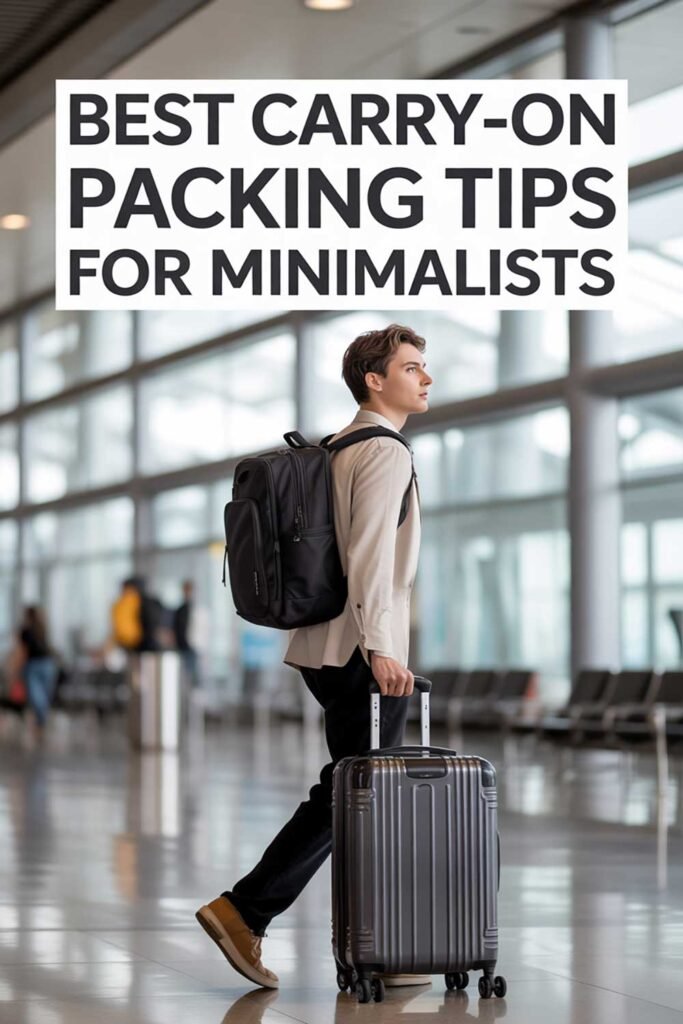
Men who master the carry-on travel light, skip baggage claim, and move through airports with the kind of effortless confidence that only comes from knowing exactly what is in their bag. The man who travels carry-on only arrives everywhere first and leaves every airport already ahead. This article builds the five-piece system that makes that possible for any trip, any destination, any duration.
Grab Our Travel Packing Checklist
Our free packing checklist is organized by the category system that carry-on packing requires — clothing, toiletries, electronics, documents — rather than by scenario or day count, which is the structural foundation that prevents the overpacking that keeps the checked bag on the scale. Print it before the next packing session.
Get the Free ChecklistThe men’s travel wardrobe challenge is simpler than most men treat it and more important than most men acknowledge. It is simpler because the men’s wardrobe category for travel is smaller than the equivalent women’s category — fewer occasion-specific items, fewer shoes, fewer accessories — and a well-chosen five-piece neutral capsule covers the complete range of any typical trip’s occasions from the first morning to the last evening. It is more important than most men acknowledge because the five pieces that work together produce ten to fifteen distinct combinations, while the twelve pieces pulled from the closet without a system produce the same five combinations that get worn and seven pieces that come home in the same folded position they left in.
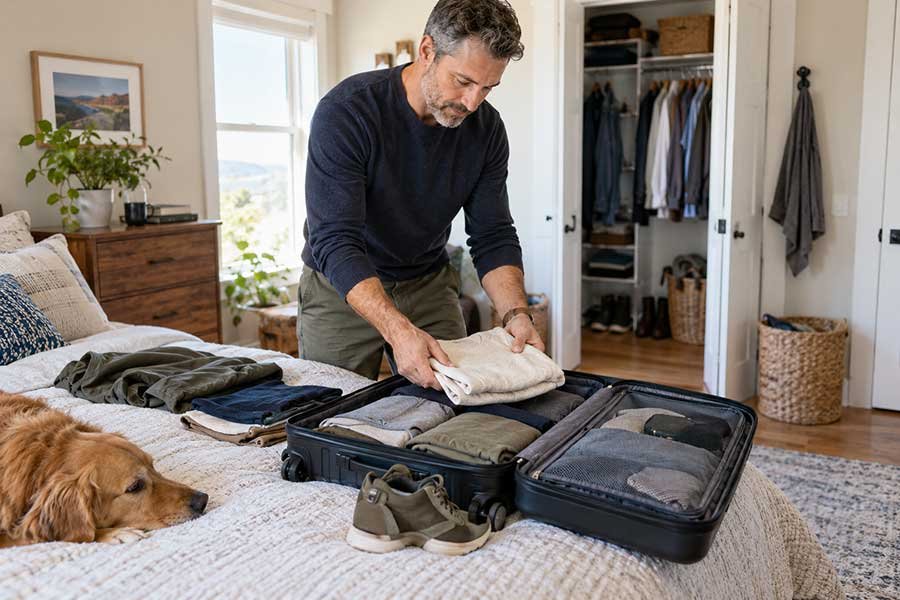
The five-piece men’s travel capsule wardrobe in neutrals: one pair of dark-wash jeans or slim chinos in a neutral tone (navy, grey, or olive); one pair of lightweight travel trousers or casual shorts depending on the destination’s climate and the trip’s activity range; two versatile tops — one smart-casual collared shirt in a neutral (white, light blue, or grey) that elevates to a dinner register with the right shoes and reads as a relaxed daytime shirt untucked with casual footwear; one solid crew-neck or v-neck t-shirt in a quality fabric for the casual day activities; and one mid-layer — a merino wool quarter-zip, a clean minimal crewneck sweatshirt, or a lightweight bomber jacket — that works over both tops in the casual register and over the collared shirt in the smart-casual register as a layering piece rather than a second outfit category.
Every piece in the five-piece capsule is in a neutral that coordinates with every other piece by design. Navy jeans work with the white shirt, the grey t-shirt, and the charcoal mid-layer. Grey chinos work with the light blue shirt, the white t-shirt, and the navy bomber. The accessories — a single belt in a neutral leather, a minimal watch — are chosen once and work with every combination in the capsule. The capsule’s visual variety across the trip comes from the combination sequencing and the shoe selection rather than from multiple outfit categories. Five pieces, ten combinations, one bag that weighs under seven kilos and fits in the overhead bin without compromise.
The man who travels carry-on only arrives everywhere first and leaves every airport already ahead.
Men who master the carry-on travel light, skip baggage claim, and move through airports with the kind of effortless confidence that only comes from knowing exactly what is in their bag.
Invest in one quality merino wool travel t-shirt for the capsule rather than the cotton equivalent. The merino travel t-shirt is indistinguishable from a quality cotton t-shirt in appearance, manages odor through two to three wearings without washing, regulates temperature across the indoor and outdoor range the trip produces, and packs to a third of the cotton equivalent’s volume. For the carry-on traveler doing a seven-day trip with one mid-trip laundry session, two merino t-shirts cover the full trip at half the packing volume and a third of the laundry frequency of two cotton t-shirts. The merino fabric upgrade is the single most impactful per-item packing change available to the men’s carry-on traveler.
Let Us Book the Trip the Five-Piece Capsule Was Built For
The carry-on system works best on the trip worth traveling to without the overhead of a checked bag. Tell us where you want to go. We will build the itinerary and the trip brief that tells you exactly what the five pieces need to cover. You pack the bag. You arrive first.
Plan Our EscapeRolling clothing for packing is not a trick or a packing aesthetic preference — it is a volume reduction technique with specific benefits for the carry-on traveler that flat-folding does not provide. A flat-folded garment occupies a rectangular volume equal to the garment’s surface area at folded dimensions multiplied by the folded stack’s height. A rolled garment occupies a cylindrical volume that is typically twenty to thirty percent smaller than the flat-folded equivalent and that fills the carry-on’s contoured interior volume more efficiently because cylinders pack against each other and against the bag’s walls without the air gaps that flat-folded stacks leave at corners and bag curves.
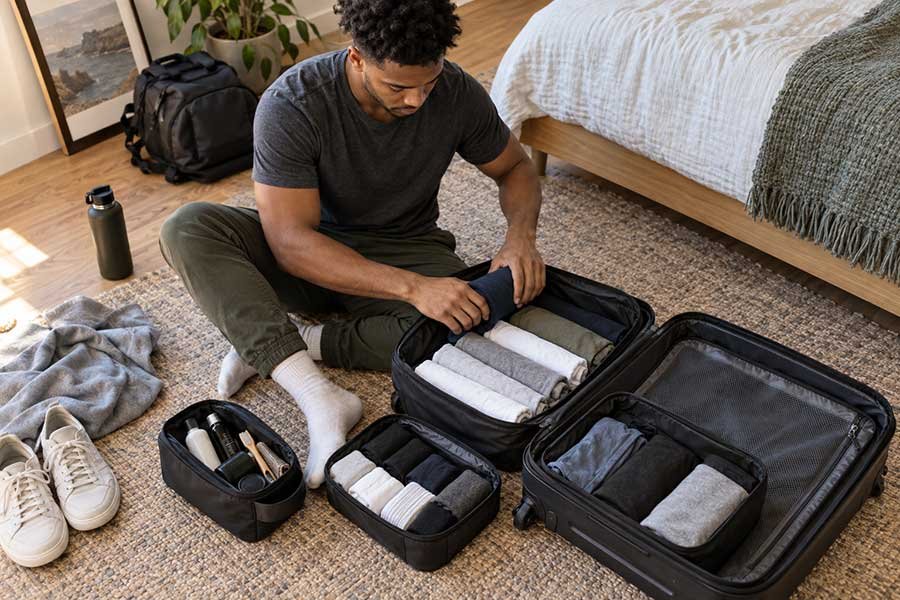
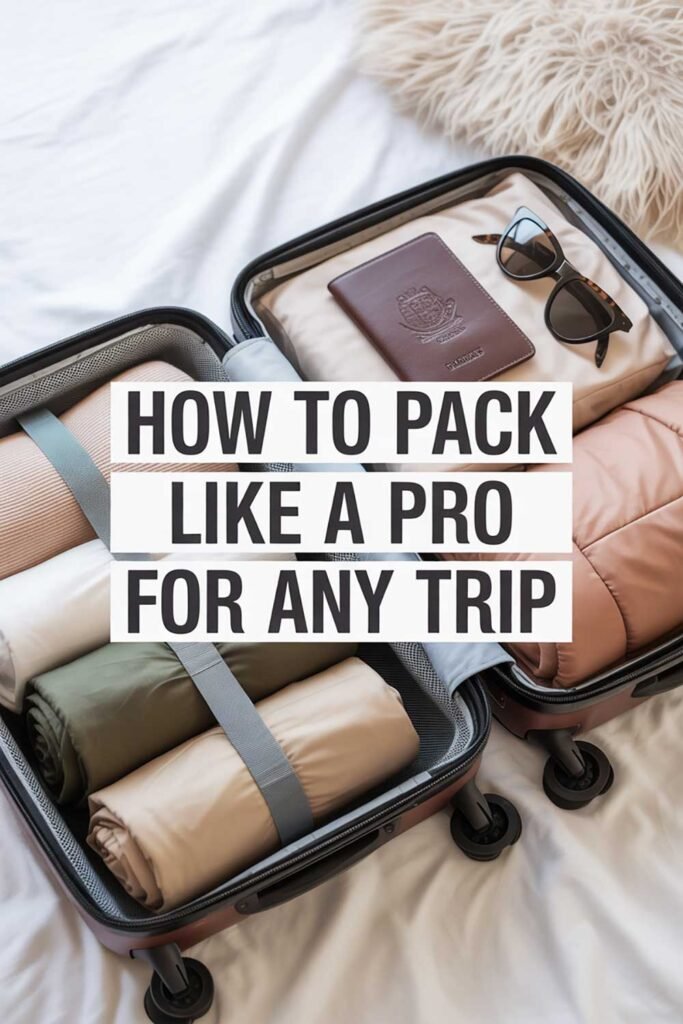
The ranger roll, which starts at the garment’s hem and rolls tightly toward the collar, compresses the air from the fabric as it rolls and produces the tightest, most stable roll of any rolling technique. A ranger-rolled t-shirt is approximately the size of a tennis ball. A ranger-rolled pair of boxers is the size of a golf ball. A ranger-rolled casual shirt is the size of a softball. A carry-on packed with ranger-rolled garments fits more clothing in the same volume than the flat-folded equivalent while being easier to load, easier to unload at the accommodation, and easier to search through for the specific item without disturbing everything else in the bag.
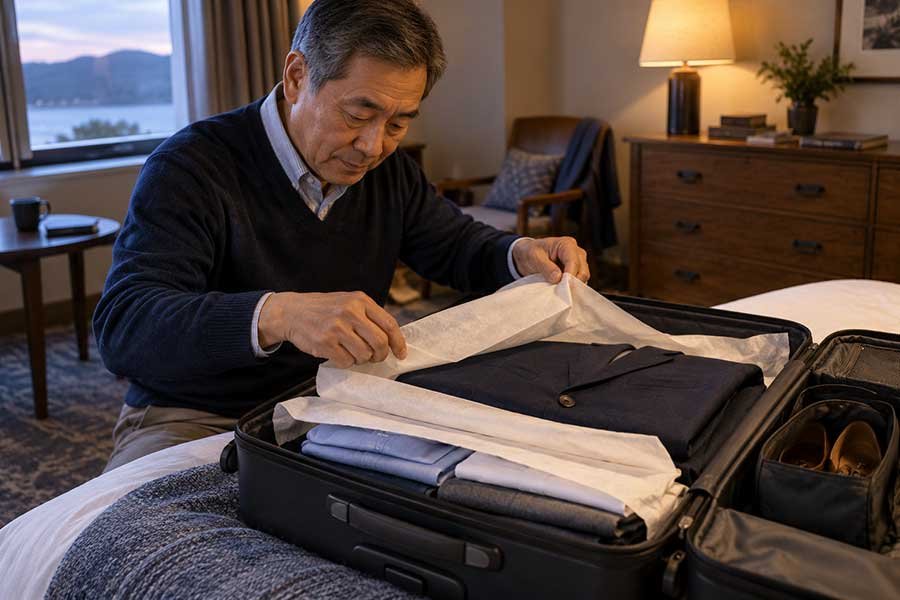
The one category of garments that the rolling technique does not serve well is structured wovens — dress shirts, chinos with a sharp crease, and any garment whose presentation depends on a specific fold line being maintained rather than a general wrinkle-free appearance. For the five-piece men’s capsule wardrobe as described in this article, the casual shirt and the t-shirt roll successfully, the dark-wash jeans roll into a compact cylinder, and the mid-layer rolls or folds flat with equal results. Any structured items, a blazer for a trip that warrants one, or a dress shirt in a crisp poplin, are better placed in a flat-fold compression bag or laid flat in the carry-on rather than rolled, since the rolling technique produces wrinkles in structured wovens that the flat fold’s specific crease structure does not.
Pack rolled clothing in packing cubes organized by type — tops in one cube, bottoms in another — rather than loose in the carry-on. The packing cube containing rolled tops holds its organization throughout the trip, allows any specific item to be retrieved by opening one cube rather than unpacking the full carry-on, and maintains the rolled configuration rather than allowing rolls to unfurl against the bag’s interior during transit. The packing cube also makes the accommodation’s drawer and shelf organization effortless: the cube comes out of the bag, opens on the dresser, and functions as an organized drawer without any unpacking required. The carry-on traveler who unpacks with packing cubes is the traveler who is ready in three minutes and whose bag is ready to repack in three minutes at the end of the stay.
The men’s toiletry kit for travel is the category most consistently over-assembled relative to the trip’s actual requirements. A full-size shampoo bottle, a full-size conditioner, a full-size body wash, a full-size deodorant, a full-size face wash, and individual travel versions of every other bathroom product from the home routine occupies a significant portion of the carry-on’s remaining volume after the clothing is loaded and frequently forces the toiletry kit into the checked bag category by weight alone. The carry-on toiletry approach eliminates this through two mechanisms: the decant-to-trip-size principle (travel bottles filled to the trip’s actual consumption rather than to maximum capacity) and the shared toiletry principle for travelers with a partner.
When traveling with a partner, the toiletry overlap between two people’s kits is significant. Shampoo and conditioner are typically shared products. Body wash is typically a shared product or one partner’s body wash is adequate for both. Sunscreen is typically shared. Toothpaste is shared. The items that are genuinely individual — personal medications, specific skincare products used by one person, a specific shaving product that the other partner does not use — are packed individually and are typically smaller-volume items than the shared products. The shared toiletry approach: one partner carries the shared products in the carry-on’s liquids bag while the other carries the individual products. Total toiletry volume across both carry-ons is reduced, and the combined liquids bag contents are distributed across two people’s liquids bag allowances rather than concentrated in one bag that may exceed the quart-bag capacity at the checkpoint.
For solo male travelers, the decant-to-trip-size principle alone produces the toiletry kit that fits comfortably in the carry-on’s liquids bag. The decant calculation: two milliliters of shampoo per wash multiplied by the number of washes planned gives the correct travel bottle fill for shampoo. The same calculation applied to every liquid and semi-liquid personal care product produces a toiletry kit whose individual products are sized for the trip’s actual consumption rather than for the product’s maximum capacity. A week of actual shampoo consumption is approximately twelve to fifteen milliliters — a fraction of the smallest travel bottle’s capacity and an even smaller fraction of the full-size product that the traveler would otherwise carry.
Build and maintain a permanent travel toiletry kit — a small zippered pouch with pre-filled travel bottles of every product used on trips — that lives in a drawer between trips rather than being assembled from the home bathroom before each departure. After each trip, refill any depleted bottles immediately while the kit is still out. The permanent kit is confirmed ready for the next trip in three minutes rather than assembled in thirty. For male travelers whose toiletry routine is relatively minimal, the permanent travel kit typically contains four to six items in total: a travel-sized combined shampoo and conditioner, a small body wash, a travel deodorant, a travel toothpaste, and any individual skincare products. The entire kit weighs under three hundred grams and fits in the carry-on’s liquids bag with room to spare.
Find Booking Ideas and Travel Essentials on Our Favorites Page
Our favorites page has helpful booking ideas and travel essentials that we have found genuinely useful for men who travel light. Whether you are planning your next trip or looking for resources that make carry-on travel easier and more efficient, it is worth a look.
DND FavoritesThe shoe category is the carry-on’s single heaviest and most voluminous item category, and it is the category most consistently handled incorrectly by men transitioning from checked bag to carry-on travel. The carry-on traveler who packs two pairs of shoes in the bag is the carry-on traveler whose shoe category occupies the bottom quarter of the carry-on and whose clothing packs around the shoe shapes rather than filling the bag’s volume efficiently. The carry-on traveler who wears the bulkiest pair on the travel day and packs the smaller or lighter pair carries both shoes’ utility at the cost of only one shoe pair’s bag volume.
The two-shoe approach for men’s carry-on travel: one versatile everyday shoe that handles the daytime walking and the casual evening — a clean leather sneaker, a minimal Chelsea boot, or a leather loafer that reads as intentional in any context from the walking day to the dinner reservation — and one athletic or activity-specific shoe for any trip component that the versatile shoe does not adequately cover. The athletic shoe goes in the bag. The versatile leather shoe goes on the body on the travel day. The bag contains one shoe pair. The body carries the other. The overhead bin sees the equivalent of one shoe pair’s volume in the bag, and the destination receives both shoe options without the carry-on’s available volume being compromised by the bulkier shoe’s dimensions.
For trips where the two-shoe approach produces a bag that still does not fit the carry-on comfortably, reconsider whether the second shoe pair is genuinely required. Most men’s trips of seven days or fewer are navigated in one pair of shoes — the versatile everyday shoe worn on the travel day and throughout the trip. The athletic shoe required for a specific trip activity (a hiking trail on day three, a gym session at the hotel) is a case where the specific activity drives the specific shoe requirement. In the absence of a specific activity requirement, the default men’s travel shoe setup is one pair of versatile footwear that handles the full trip at the full freedom of a bag with no shoes in it.
Choose the versatile everyday travel shoe in a color and style that genuinely transitions from the daytime to the evening without a register change that requires explanation. A clean white leather sneaker transitions from the museum day to the casual dinner without comment. A navy suede Chelsea boot handles the day walking and the evening restaurant in any city that is not requiring formal dress. The test for the single versatile travel shoe: if the travel companion saw the shoe at the museum and at the dinner table on the same day and did not register a mismatch, the shoe passes the transition test. If the same shoe would be visibly incongruous at either context, a more versatile choice is warranted.
The default for a trip that could be packed in either a carry-on or a checked bag is the carry-on. Always. The checked bag’s specific costs — the checked bag fee on most carriers, the check-in counter stop and queue that carry-on travelers bypass, the baggage claim wait at the destination, the specific anxiety of a delayed or lost bag, and the return journey’s identical costs applied again — compound across every trip into a significant annual travel overhead that the carry-on traveler does not pay in money, time, or anxiety. For a couple taking four trips per year with one checked bag each on each flight, the annual checked bag fee on budget carriers alone represents a meaningful sum, to which the accumulated baggage claim wait time, the check-in counter time, and the specific disruption of the one trip in thirty where the checked bag arrives at the wrong destination adds further cost that never appears on a receipt.
The carry-on will do for more trips than the checked-bag traveler assumes. A week-long leisure trip in the five-piece capsule wardrobe with one mid-trip laundry session fits in a standard carry-on with room for the toiletry kit, the electronics, and a collapsible bag for the return. A two-week trip in the same capsule with two laundry sessions fits in the same carry-on. A business trip of five days with one suit requirement can be packed carry-on with the suit bag inside the carry-on or the suit jacket worn on the travel day and the trousers in the carry-on. The specific trip types that genuinely require a checked bag are narrower than the checked-bag habit’s automatic response to departure planning suggests: extended adventure travel with specialized equipment, trips to multiple climate zones in a single itinerary, and specific professional requirements with formal dress across multiple distinct occasions. These represent a minority of most men’s annual trip portfolio. The majority — the leisure weekends, the city breaks, the beach trips, the short business trips — are carry-on trips that the checked-bag habit has been packing as checked-bag trips because the carry-on standard was never applied before the bag was opened.
The carry-on standard to apply before every departure: is there any trip-specific requirement that the five-piece capsule wardrobe, the decanted toiletry kit, and the electronics in the personal item cannot accommodate in the carry-on? If not, it is a carry-on trip. The specific items that most consistently push a trip from carry-on to checked are multiple formal outfit requirements, multiple shoe pairs beyond two, and an over-assembled toiletry kit that does not fit within the liquids rule in carry-on format. All three are addressed by the other four hacks in this article. If the five hacks are applied and the bag still exceeds carry-on dimensions, the trip is a genuine checked-bag trip. If the five hacks are applied and the bag fits the carry-on, the carry-on is the right choice regardless of the trip duration.
Confirm the specific carry-on size limit for every airline and fare class before packing, rather than assuming the standard twenty-two by fourteen by nine inch limit applies. Budget carriers and regional airlines frequently have smaller carry-on limits than legacy carriers, and basic economy fares on legacy carriers sometimes restrict carry-on to the personal item under the seat rather than the overhead bin carry-on. The carry-on packed to twenty-two by fourteen by nine inches may not fit the specific airline’s limit and may be gate-checked with its contents inaccessible for the flight. The five minutes of checking the specific airline’s current carry-on policy for the specific fare class on the specific booking confirms the bag will fit before the gate is reached rather than at it.
The complete men’s carry-on system assembles the five hacks into a packing session that produces a bag under seven kilos that fits in the overhead bin of any commercial aircraft and passes the carry test before the front door closes.
The clothing layer: the five-piece capsule wardrobe in the two-color neutral palette, ranger-rolled and organized in two packing cubes — tops cube and bottoms cube. Underwear and socks rolled and stuffed inside the shoe in the bag or in a small accessories cube. The total clothing volume in the carry-on at this stage is approximately forty to fifty percent of the available space. The remainder accommodates everything else with room remaining for the return.
The toiletry layer: the permanent travel kit in the zippered pouch, pre-filled and confirmed at the liquids bag’s top position in the carry-on or in the most accessible exterior pocket. Combined weight under three hundred grams. The liquids bag confirmed within the 3.4-ounce container and quart-bag limits if the trip involves a US or equivalent security standard.
The electronics layer: the phone charger and cable in the cable organizer in the personal item’s interior zip. The laptop in the carry-on’s dedicated spine sleeve or exterior compartment for security checkpoint accessibility. Any additional electronics — earphones, watch charger, portable battery — in the cable organizer. The electronics layer adds approximately five to eight hundred grams to the total, depending on whether a laptop is included.
The shoe position: the athletic or secondary shoe in the carry-on’s bottom section, heel-to-toe along one side, with rolled socks packed inside to use the shoe’s interior volume rather than waste it. The versatile everyday shoe on the body for the travel day. The carry test applied with the carry-on packed and the personal item attached to the carry-on’s luggage sleeve: if the total is uncomfortable to carry from the bedroom to the front door, something needs to come out before the door closes.
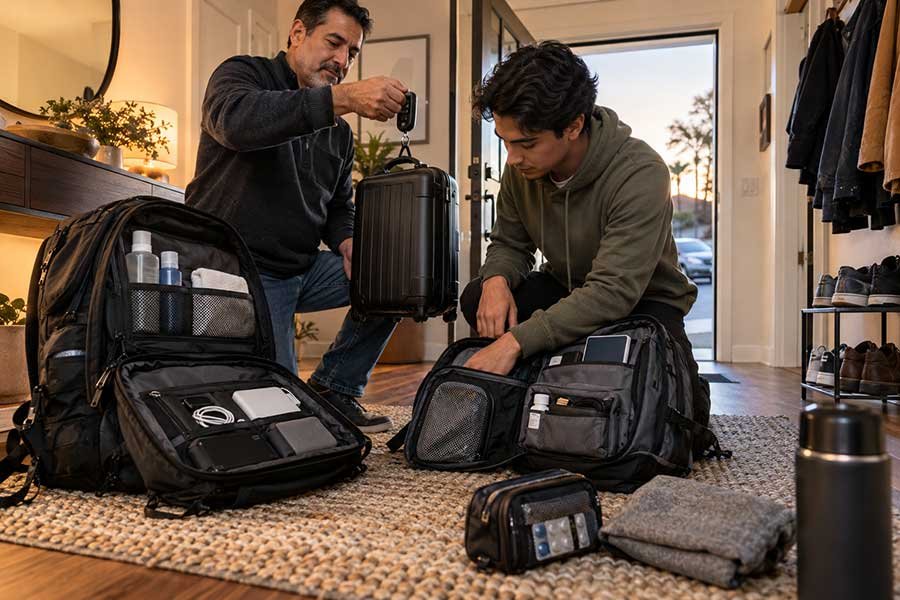
The personal item — the backpack or small bag that travels under the seat — is the carry-on system’s second bag and should be packed with the same intentionality as the carry-on itself. The personal item carries the flight essentials (headphones, charger, snacks, documents, the laptop if the trip requires one), the items needed at the destination’s first hour before the carry-on is accessible at the accommodation, and any overflow from the carry-on that fits the personal item’s dimensions without compromising the flight’s comfort. The personal item packed with intentionality is accessible throughout the entire flight without overhead bin access. The personal item packed as overflow from a too-full carry-on is neither organized for flight access nor effectively managed as a second travel bag. Pack the personal item with the same system as the carry-on: know what is in it, where each item is, and confirm it is accessible in under ten seconds for the security tray.
The Baggage Claim Belt That Finally Convinced Him
Leon and Adaeze had opposite packing styles for years. Adaeze traveled carry-on only on every trip. Leon checked a bag on every trip. Their travel dynamic at every destination arrival was the same: Adaeze walked from the aircraft to the exit in twelve minutes. Leon walked from the aircraft to baggage claim, waited eighteen minutes at the belt, walked to the exit, and found Adaeze in the taxi queue reading a book on her phone with the patience of someone who had been waiting for eighteen minutes without being inconvenienced by them. She was always in the same position: ahead, unburdened, already starting the trip.
Leon had a legitimate justification for each bag: the business trip needed the suit in a garment bag. The beach trip needed the snorkeling gear and the extra towel and the three pairs of shoes. The city break needed two pairs of boots for the weather and the formal option for the dinner reservation they had booked. Each justification was genuine in the moment. Each justification was also a problem that a different approach to the same trip would have solved without the checked bag: the suit worn on the travel day and the trousers and shoes packed in the carry-on. The snorkeling gear rented at the beach rather than transported from home. One pair of versatile boots on the body on the travel day and one casual shoe in the carry-on. The formal option eliminated by the versatile boot’s transition capability.
The specific trip that produced the change was not the worst baggage incident he had experienced. It was the most ordinary one. Routine arrival. Routine baggage claim. Eighteen minutes. Belt stop. Belt restart. Belt stop again. One bag circling. Not his. His came at minute twenty-three. He collected it, walked to the exit, found Adaeze in the taxi already, and spent the taxi ride from the airport doing a mental inventory of why the trip required the checked bag. He could not identify a specific item in the bag that could not have been in the carry-on or that could not have been handled differently at the destination. The bag had been checked because that was what he did when packing, not because the trip required it.
He built the system on the next trip. Five pieces, all in navy and grey. The Chelsea boot worn on the travel day. The clean leather sneaker in the carry-on. The permanent travel toiletry kit Adaeze had been recommending for three years, already assembled in a pouch. The cable organizer in the personal item. The carry test before the front door closed: comfortable from the bedroom to the street. At the destination, he walked from the aircraft to the exit in eleven minutes. Adaeze was in the taxi queue. He arrived before she did. She looked up from her phone. He sat down next to her. He had beaten her by about ninety seconds. He has never checked a bag since. This article is the system he built from the twenty-three minutes at the baggage claim belt and the taxi ride that finally produced the honest answer to whether the trip had required the checked bag.
Beyond the five core carry-on principles and the complete system, these six additional approaches address the specific male carry-on packing challenges that the five hacks do not fully resolve for every trip type.
Pack a dress shirt for any trip requiring one in a compression bag rather than folded or rolled. The dress shirt is the one men’s carry-on clothing item that rolling and standard flat-folding both handle inadequately: rolling produces collar and cuff creases incompatible with a dress shirt’s presentable appearance, and standard flat-folding fills too much of the carry-on’s available space. A compression bag specifically designed for dress shirts — which folds the shirt flat, aligns the collar and cuffs, and removes the air — reduces the dress shirt’s packed volume significantly while maintaining the fold lines that the shirt’s structured woven fabric requires. One dress shirt in a compression bag adds approximately four hundred milliliters of volume to the carry-on and arrives presentable rather than creased.
Use a separate slim laptop sleeve or the carry-on’s dedicated laptop compartment rather than packing the laptop loose in the main compartment. The laptop accessed from the main compartment at the security checkpoint requires a full carry-on excavation. The laptop in the dedicated exterior sleeve is out and in the tray in five seconds. For the carry-on traveler whose bag is already efficiently packed, the security checkpoint excavation also disturbs the packing organization that took thirty minutes to establish. The dedicated laptop sleeve preserves both the security checkpoint efficiency and the packing organization for the full journey.
Research the destination’s pharmacy and supermarket availability before deciding whether to pack a full travel toiletry kit. Major destination cities in most developed countries have the equivalent of every toiletry product available at pharmacies and supermarkets at local prices. A male traveler in a European city can purchase shampoo, body wash, deodorant, and toothpaste within a ten-minute walk of virtually any accommodation at a cost that is lower than the checked bag fee the same products would have forced. For trips over ten days where the carry-on liquids allowance is genuinely insufficient for the trip’s toiletry requirements, purchasing toiletry refills at the destination rather than packing the full trip’s supply from home is the carry-on extension that makes longer trips possible in the same bag.
Wear the outfit that travels least well. Any item in the carry-on that wrinkles significantly in the bag, takes up more than its fair share of volume, or adds weight disproportionate to its trip utility is an item that is better worn on the travel day than packed. The blazer worn on the travel day and stowed in the overhead bin after boarding costs zero bag volume and zero bag weight. The same blazer in the carry-on occupies a significant portion of the available volume and absorbs the transit-induced creasing that the hanging bag in the overhead bin avoids. The travel day outfit, chosen for the items that pack least well rather than the items that compress most efficiently, removes the most problematic carry-on items from the bag at the exact moment the bag’s contents are most scrutinized: the security check, the overhead bin fit confirmation, and the airline scale if one is applied.
Pack one neutral scarf or light wrap in the carry-on rather than multiple layering items. The scarf in the men’s carry-on wardrobe serves the same multi-function role as in the women’s wardrobe: neck warmth in the cold environment, a layer over the t-shirt in a temperature-managed indoor space, an aircraft cabin warmth layer in the absence of an airline blanket, and a travel day comfort item that weighs under two hundred grams and occupies the space of a balled-up t-shirt. The scarf does not replace the mid-layer in the five-piece capsule — it supplements it for the specific contexts where the mid-layer is in the bag and a light layer is needed on the body. A merino wool scarf in the neutral palette coordinates with every combination in the capsule and handles every temperature management need the trip produces that the five-piece system does not already address.
Track what was not worn after every trip. The post-trip unused items list is the carry-on traveler’s most accurate available information about which items the packing intuition consistently overestimates the need for. The dress shirt packed for the dinner reservation that became a casual evening. The athletic shoes packed for the gym session that the trip schedule did not produce. The extra layer for the cold spell that never arrived. Each unused item is a specific data point for the next trip’s packing session that is more specific and more reliable than the general intention to pack lighter. After three trips of tracking unused items, the carry-on traveler’s packing accuracy improves to the point where everything packed is used and every carry-on trip ends with a bag as useful on the last day as the first.
A mid-trip quick rinse of the t-shirts and underwear in the accommodation’s bathroom sink — wrung out, hung in the bathroom overnight — handles a seven-day trip in the five-piece capsule without requiring a laundromat visit. The merino wool t-shirts and moisture-wicking underwear that form the carry-on traveler’s clothing foundation dry overnight from a hand wash, are ready for the next day in the morning, and maintain this performance for the trip’s duration. The mid-trip sink rinse is not about maintaining full laundry freshness for every item — it is the specific maintenance of the two most regularly worn items that allows the five-piece capsule to cover seven days without either requiring a laundromat or requiring a second t-shirt in the bag. Five minutes, every three days. The carry-on traveler’s laundry system.
Book the Trip Worth Arriving at First
The carry-on system earns its full return when the destination is worth the twelve minutes from aircraft to taxi. Our travel agents book the trips worth getting to quickly. Let us plan yours.
Book A TripCommon Men’s Packing Mistakes That Keep the Checked Bag on the Belt
These are the specific decisions that prevent the transition from checked bag to carry-on. Each is solvable with the system in this article.
Packing separate outfits for each day rather than a shared-palette capsule wardrobe
Separate daily outfits produce a bag whose clothing category is sized by the number of days rather than the number of versatile pieces required to cover those days. Seven separate daily outfits for seven days produce seven tops, seven bottoms, and potentially seven shoe pairs at seven times the bag volume of the five-piece capsule that covers the same seven days through combination. The capsule wardrobe does not produce less variety than the daily-outfit approach. It produces the same visual variety at a fraction of the bag volume because the variety comes from the combination sequencing rather than the item count.
Flat-folding everything rather than rolling
Flat-folded clothing fills the carry-on’s rectangular volume efficiently but does not fill the carry-on’s contoured interior — the curved corners, the tapered sections, and the uneven surface that the bag’s walls and existing contents create. Rolled clothing fills these spaces more efficiently because cylinders pack against each other and against curved surfaces without air gaps. A carry-on packed with ranger-rolled clothing consistently fits twenty to thirty percent more clothing in the same volume than the flat-folded equivalent, which is often the difference between the five-piece capsule fitting comfortably and requiring the half-measures of a partially checked bag approach.
Packing full-size toiletry products when travel-size or decanted equivalents are what the trip requires
A full-size shampoo bottle for a seven-day trip contains approximately ninety times the volume of shampoo the trip will use, weighs approximately nine times more than the correctly decanted equivalent, and takes up approximately nine times the toiletry bag volume. The same problem applies to every full-size liquid product in the travel kit. Decanting every product to the trip’s actual consumption volume keeps the toiletry kit within the carry-on’s liquids rule limits and removes the single largest weight and volume contributor to the checked bag decision from the equation entirely.
Packing the bulkiest shoes in the bag rather than wearing them on the travel day
The bulkiest, heaviest shoe in the travel kit, packed in the carry-on, occupies the bottom quarter of the available volume and adds the most weight to the bag’s total from a single item. The same shoe worn on the travel day contributes zero bag volume and zero bag weight at the one moment when both are most consequential: the airline size and weight check, the overhead bin fit, and the security checkpoint layout. Wear the bulkiest shoe. Pack the lighter shoe. The overhead bin sees one shoe pair’s volume in the bag and none on the floor below the seat.
Defaulting to a checked bag without applying the carry-on standard
The checked bag default is the decision that is never reviewed because it has never been questioned. The traveler who has always checked a bag for every trip has never applied the carry-on standard — is there a trip-specific requirement that the five-piece capsule, the decanted toiletry kit, and the electronics in the personal item cannot accommodate in the carry-on? — and has therefore never identified which trips were genuinely checked-bag trips and which were carry-on trips traveling in a checked bag because the question was never asked. Ask the question before every packing session. Most trips will answer no. Those are carry-on trips.
Not confirming the specific airline’s carry-on size limit before packing
A carry-on packed to the standard twenty-two by fourteen by nine-inch domestic US specification may exceed the specific airline’s carry-on limit for the specific booking. Budget carriers and regional airlines often enforce carry-on limits smaller than the US domestic standard. Basic economy fares on legacy carriers sometimes restrict carry-on to the personal item under the seat. A bag gate-checked because it exceeded the specific airline’s carry-on limit contains everything the traveler intended to keep accessible for the flight. Confirming the specific limit takes five minutes and is the one check that converts the carry-on standard from a plan into a confirmed outcome.
Love Helping Travelers Pack Smarter and Move Through Every Airport Like They Own It?
The traveler who arrives at the destination before everyone else, no checked bag in hand and no baggage claim in the itinerary, is the traveler who packed right. If becoming a home-based travel agent who helps people plan and travel better from the packing session to the arrival sounds like the right next step, see how the TravelPreneur system works. Earn commissions and build a real business from anywhere.
Become An AgentFrequently Asked Questions
These are the questions men ask most often about transitioning to carry-on-only travel. Real answers from real carry-on experience across trip types and durations.
Can you do a two-week trip in a carry-on?
Yes. A two-week trip in a carry-on requires the five-piece capsule wardrobe, merino wool for the t-shirts and base layers, two planned laundry sessions across the trip (either a destination laundromat or an accommodation laundry service for a mid-trip and end-of-trip wash), the decanted toiletry kit replenished mid-trip at the destination’s pharmacy if needed, and the two-shoe approach with the bulkiest shoe worn on the travel day. The total clothing count for a two-week trip with two laundry sessions is the same five pieces rather than fourteen days of separate items, because each item is worn three to four times across the fourteen days with intervening washes. The only trip type that genuinely challenges the two-week carry-on standard is the two-week trip to multiple climate zones in a single itinerary — tropical coast followed by mountain hiking followed by formal city evenings — where the climate and occasion range requires items that the five-piece single-climate capsule does not cover. For any single-climate two-week trip, the carry-on with two planned laundry sessions is entirely manageable.
How do you pack a suit for a business trip in a carry-on?
Packing a suit in a carry-on is manageable with either of two approaches depending on the trip’s formality requirements and the specific carry-on’s dimensions. The first approach: wear the suit jacket on the travel day and pack only the suit trousers in the carry-on. The jacket, worn boarding and stowed in the overhead bin hanging from the hook provided in most business class and first-row economy overhead bins, or folded collar-to-collar in the overhead bin on standard economy seats, arrives at the destination in acceptable condition for most business contexts and eliminates the jacket’s volume from the carry-on entirely. The suit trousers are packed flat in the carry-on alongside a dress shirt in a compression bag. The second approach: use a carry-on garment bag specifically designed for suit transport — a slim folding garment bag that meets the carry-on size standard and provides a hanging position for the suit within the overhead bin. Both approaches assume the suit is a single suit for multiple occasions rather than multiple suits for separate occasions. The multiple-suit business trip is the specific trip type where the checked bag’s use is genuinely justified rather than habitual.
What is the best carry-on bag for men?
The best carry-on bag for any individual man is the bag that fits the specific airline’s carry-on limit for the routes most frequently traveled, has a dedicated laptop sleeve accessible from the exterior for security checkpoint efficiency, has a flat base or structured sides that allow it to stand upright rather than collapsing when opened at the accommodation, and fits the specific traveler’s packing style — hard-shell for travelers whose bag sustains rough handling in overhead bins, soft-shell for travelers who need the compression flexibility to fit the bag into overhead bins with limited remaining space. The specific bag that best meets these criteria changes as products enter and exit the market and as specific airlines update their carry-on policies. Researching current carry-on bag reviews on travel-focused platforms rather than general retail product pages provides the most current information on which specific products perform best in the actual carry-on travel context. We are not in a position to recommend specific products in this article as carry-on bag options change frequently and the best recommendation depends on individual travel patterns and airline use.
How do you handle buying things at the destination when traveling carry-on only?
The carry-on traveler’s return journey with destination purchases is the most common reason the return bag exceeds the departure bag’s dimensions. The pre-departure solution: pack the carry-on with twenty percent intentional empty space at departure for the trip’s expected discoveries, and include a lightweight collapsible duffle or an oversized reusable bag compressed flat in the carry-on’s interior for overflow. For significant purchases — a piece of art, a substantial clothing purchase, fragile items — shipping from the destination is available from most tourist-level destination cities at a cost that is typically lower than the anxiety and risk of carry-on transport for fragile or oversized items. For purchases that fit within the carry-on’s remaining space, the twenty percent departure buffer and the collapsible duffle together handle most trip’s acquisition volume without requiring a checked bag for the return.
What is the fastest way to develop a reliable carry-on packing routine?
The fastest way to develop a reliable carry-on routine is to commit to the carry-on on the next trip and track what was not worn or used on the return. The single trip’s worth of real data — what the five-piece capsule actually covered, what the toiletry kit actually required, whether the two-shoe approach was genuinely sufficient for the trip’s specific occasions — is more useful than any amount of pre-trip theorizing about what might be needed. The gap between what was packed and what was used is the specific information that calibrates the next trip’s packing to the carry-on standard more accurately than any abstract intention to pack lighter. After three carry-on trips with post-trip tracking, most male travelers find that the carry-on routine is established: the palette is familiar, the five-piece count feels sufficient rather than inadequate, and the checked bag feels like an overhead that the carry-on has permanently removed from the travel equation.
Are there trips where the checked bag is genuinely the right choice?
Yes. The carry-on standard’s honest answer to some trips is that the carry-on is not the right bag. Extended adventure travel with specialized equipment — surfboards, ski equipment, climbing gear — is equipment that no carry-on accommodates and that most destinations’ rental infrastructure does not reliably provide at the specific standard required. Long-duration travel across multiple distinct climate zones with formal occasion requirements in each — a three-week trip that includes tropical, winter mountain, and formal city contexts — may genuinely exceed the five-piece capsule’s climate and occasion range. Specific professional requirements with multiple days of distinct formal occasions — a week-long conference circuit with multiple black-tie evening events — may require the suit count that the carry-on cannot accommodate. These are genuine checked-bag trips and the checked bag is the right choice for them. The carry-on standard’s purpose is not to eliminate the checked bag from every trip but to identify which trips are genuinely checked-bag trips and which are carry-on trips that the checked-bag habit has been treating as checked-bag trips because the question was never asked. Most trips, for most men, are carry-on trips. The ones that are not are the ones where the specific requirements listed above are present in the itinerary.
The man with the carry-on cleared baggage claim twelve minutes ago. He is in the taxi. He is already at the hotel. The destination started when the aircraft door opened. That is the carry-on advantage. That is what the five-piece system produces.
Picture the Arrival at the Destination
The five pieces are in the carry-on. The Chelsea boot is on the body. The toiletry kit is under fifty grams in the exterior zip. The laptop is in the spine sleeve. The carry test passed before the door closed. The aircraft door opens. You walk off the aircraft. You walk through the terminal. You walk past baggage claim without stopping. The exit is twelve minutes from the aircraft door. The taxi is waiting. The destination has already started. You did not wait. You did not watch the belt. You did not wonder whether the bag with the blue ribbon arrived. You arrived. That is the carry-on. That is every trip from here.
One More Thing Before the Next Packing Session
Print our free Travel Packing Checklist and use the category structure — clothing, toiletries, electronics, documents — as the carry-on session’s organizational framework. The checklist’s category order builds the carry-on from the lightest, most essential items first and confirms the bag’s total before the heaviest or most voluminous items are added. The same checklist we recommend before every trip we pack for carry-on.
Get the Free ChecklistExplore Our Top Picks for a Better Trip
Visit our favorites page for helpful booking ideas and travel essentials that we have found genuinely useful for carry-on travel and every kind of trip. Whether you are planning your next adventure or looking for resources that make traveling lighter and more efficient, it is worth exploring.
See Our Top PicksTravel Prints and Printables From Our Shop
Visit Premier Print Works for carry-on packing list printables, capsule wardrobe planners, trip preparation guides, travel journals, and wall art that makes every trip a little more beautiful and a lot more organized from the afternoon the five-piece capsule is laid out on the bed to the morning the carry test passes and the carry-on goes in the overhead bin.
Visit Premier Print WorksDisclaimer
The information shared in this article is provided by Don and Diana’s Travels for general informational, educational, and inspirational purposes only. It reflects our personal experiences, opinions, and the experiences of travelers we have worked with. It is not professional travel, legal, financial, or fashion advice, and it should not be relied on as such.
Airline Baggage Policies
Airline baggage policies, carry-on size and weight limits, personal item dimensions, checked bag fees, and all related policies change frequently and vary by airline, fare class, route, and booking conditions. Always confirm current baggage policies with the specific airline for the specific booking before every trip. We are not responsible for any baggage fee, gate check, or baggage-related outcome arising from information in this article.
Affiliate and Partner Links
This article may contain affiliate links, partner links, referral links, and links to products or services that pay us a commission. If you click a link and make a purchase or complete any qualifying action, we may earn a small commission at no extra cost to you. Our recommendations are based on real use and genuine belief in the products and services we share.
Third-Party Websites and Services
We may link to third-party websites, services, and resources for your convenience. We do not control these sites and are not responsible for their content, terms of service, pricing, availability, or any product or service they sell. Your use of any third-party site is entirely at your own risk.
Health, Safety, and Personal Responsibility
Travel involves personal risk. You are solely responsible for your own health, safety, travel insurance, medications, vaccinations, documentation, financial decisions, and choices while planning or taking any trip. We strongly recommend purchasing comprehensive travel insurance for every trip. Don and Diana’s Travels, its owners, employees, contractors, and affiliates accept no liability for any loss, injury, illness, delay, cancellation, damage, theft, or inconvenience arising from your use of the information in this article or from any travel decisions you make.
Composite Stories and Characters
Some stories, examples, and traveler experiences shared on this site are composites drawn from the real experiences of Don, Diana, clients, friends, and travelers we have worked with over the years. Names, identifying details, locations, and circumstances may be combined, changed, or fictionalized to protect privacy. Any resemblance to a specific real person beyond the composite portrayal is unintentional.
No Guarantees
We do not guarantee any specific result, outcome, savings, or experience from using the information, tips, services, or products mentioned in this article. Your results depend on many personal factors including your own choices, effort, circumstances, and external conditions outside of our control.
Copyright and Use
All content in this article is the copyrighted property of Don and Diana’s Travels unless otherwise noted. You may not copy, republish, redistribute, modify, sell, or reuse our content without our prior written permission. You are welcome to share a direct link to this article with proper credit.
By reading and using the information in this article, you acknowledge that you have read, understood, and agree to this disclaimer in full.