Beginner Travel Hacks for Stress-Free Trips
Every confident traveler was once a nervous beginner standing in an airport with too much luggage and not enough information — and every single one of them is glad they went anyway. The best travel hack for beginners is simply this: start. Everything else is learnable on the road. This article gives you the five things that make the starting easier.
Grab Our Travel Packing Checklist
Our free packing checklist is the starting point for the pack light principle in this article. It is organized by category, designed to be checked and reset for every trip, and built specifically to prevent both overpacking and forgetting. Print it before your first trip and every trip after it. It is one of the most useful documents you will have for a very long time.
Get the Free ChecklistThe single most consistent piece of advice that experienced travelers give to beginners, regardless of destination, trip type, or personal style, is this: pack less than you think you need. Not because the destination will not require the items that were left home. Because almost every destination has a pharmacy, a clothing store, and a supermarket that can handle whatever was not packed, and the freedom that a lighter bag produces — the overnight train that the rolling suitcase could not navigate, the cobblestone old town that the wheeled bag fought for every meter, the spontaneous extra day that was possible because the bag was already light enough to stay — is worth the inconvenience of the occasional forgotten item significantly more than the insurance of the overpacked bag is worth its weight.
For a first trip, the packing anxiety is genuine and the tendency is to overpack for it. Every possible scenario is considered — what if it rains, what if there is a nicer restaurant, what if the weather is colder than expected — and each scenario adds an item until the bag is the comprehensive solution to every problem the trip might produce. The experienced traveler’s answer to this anxiety is not to resolve every scenario before packing but to trust the destination to handle what was not anticipated. The pharmacy at the destination handles the forgotten medicine. The local market handles the forgotten snack preferences. The hotel can almost always lend an umbrella. The specific item left home because the bag was light is almost never the item that determines the quality of the trip. The weight of the bag carried for the full duration is.
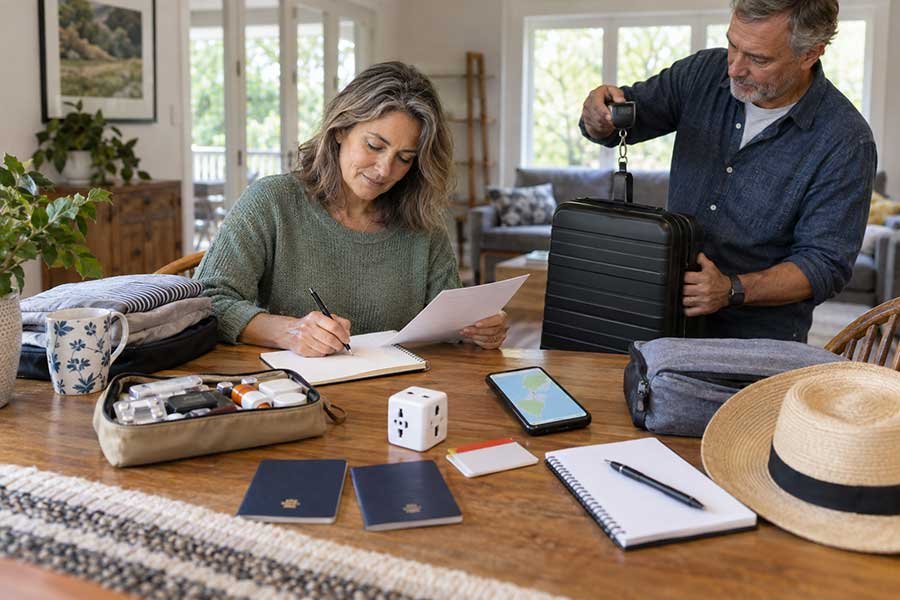
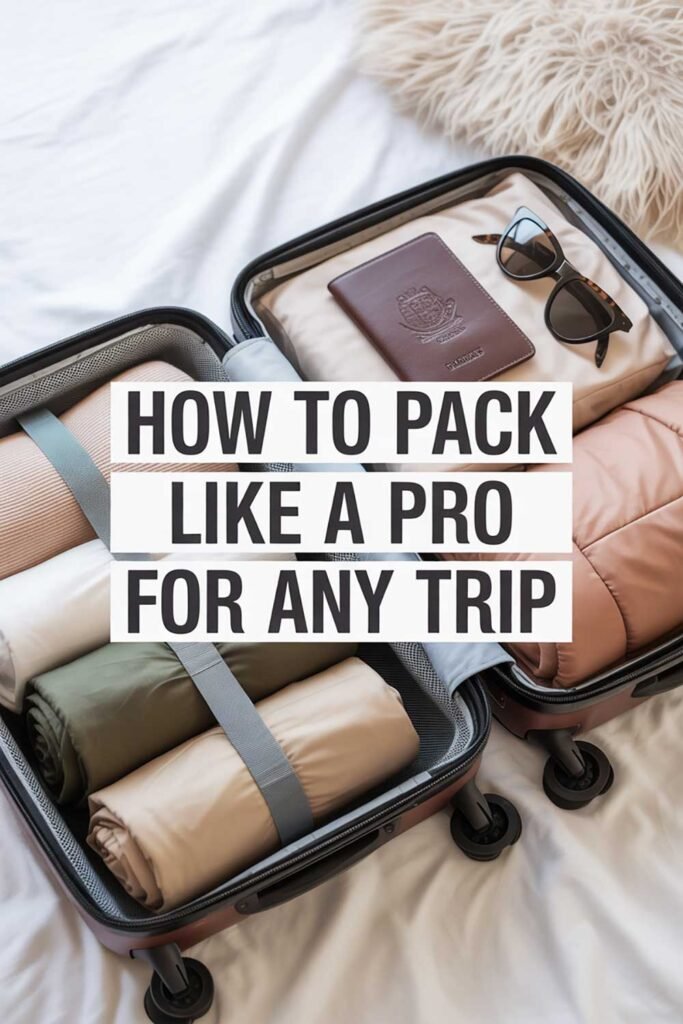
The practical packing light standard for a first trip: lay out everything intended for the bag and then remove a third of it before anything goes in. Not the items that are clearly not needed. A third of the total. The specific items removed in that third are almost always the scenario-coverage items that will not be worn or used. The items that remain are almost always everything the trip actually requires. After the trip, note what was not used. The pattern will be the same as every experienced traveler’s pattern: the items removed before the trip was the right third to remove, and the items used was the subset that remained.
The best travel hack for beginners is simply this — start. Everything else is learnable on the road.
Every confident traveler was once a nervous beginner standing in an airport with too much luggage and not enough information — and every single one of them is glad they went anyway.
The beginner’s specific packing anxiety about forgetting something is better addressed by a short packing checklist than by packing more. The checklist for a first trip does not need to be the comprehensive master checklist that multiple trips produce. It needs to cover the five highest-consequence categories: documents (passport and any required visa, boarding pass, accommodation confirmation), medications and health items (any prescription medication, basic pain reliever and antihistamine), chargers and electronics (phone charger and the phone), money and cards (the primary card and a backup, local currency if needed), and basic clothing and toiletries calibrated to the trip duration. Everything else is addable at the destination if needed and missing from the bag if not.
Let Us Help You Book the Trip That Starts Everything
The trip you are thinking about taking but have not booked yet is the trip this article was written for. Tell us where you want to go and what kind of experience you are looking for. We will help you find the destination, plan the itinerary, and book the trip that starts a lifetime of travel. Working with a travel agent for a first international trip provides the specific guidance and support that makes the first trip the beginning of many rather than a one-time experience.
Plan Our EscapeEvery experienced traveler has a version of the story where they almost missed the flight. Almost every one of those stories has the same cause: they knew the departure time, they knew the airport’s approximate transit time from home, and they calculated the departure time from home as the latest possible rather than the comfortable one. The difference between the latest possible departure time and the comfortable departure time is twenty to thirty minutes, and those minutes are the difference between the gate arrival that produces the boarding call standing and the gate arrival that produces the boarding call sprinting.
For a first-time traveler, arriving early at the airport is more important than for the experienced traveler who knows the specific security checkpoint’s typical queue length, the specific terminal’s layout, the specific airline’s check-in desk location, and how long each step typically takes. The first-time traveler does not know any of these things and is learning them in real time on the travel day while managing the anxiety of not knowing what they do not know. Extra time at the airport converts the first-time travel day from an obstacle course navigated at speed into a system explored at pace. Security has time to be confusing and then not. The gate has time to be found and then arrived at with room to sit. The boarding process has time to be watched and understood before it is participated in. Arriving early is the specific travel day preparation that converts the first trip from stressful to educational.
The first-time traveler’s airport arrival guideline: two hours before departure for domestic flights, three hours for international. These are the same guidelines experienced travelers apply, and they are correct for the same reason: the travel day consistently produces one unexpected event that absorbs the buffer time, and the traveler who has no buffer time has no time to absorb it. For a first-time traveler, the likelihood of the unexpected event is higher because everything is new and therefore every step takes longer than the estimate, not because anything goes wrong but because the estimate was based on a process that had never been performed before.
The early arrival at the destination accommodation is equally important for a first trip. An accommodation check-in at 3 p.m. after a morning arrival flight is a day that begins with an exploration of the destination rather than a wait at the accommodation’s lobby. Many accommodations offer luggage storage for guests who arrive before check-in, allowing the bags to be stored safely and the day to begin without waiting. The early destination arrival is the travel day that produces the first destination experience rather than the travel day that produces the arrival and the accommodation and nothing else before exhaustion ends the day.
The airport’s extra time, the buffer between arriving early and the boarding call, is one of the best parts of a first travel day if it is treated as part of the trip rather than as waiting time. The airport terminal is a specific and interesting environment: people in transit between everywhere, carrying everything they thought they needed for wherever they are going, in a thousand different states of departure and arrival anxiety. A coffee at the airport from a specific terminal cafe, a slow walk to the gate without the anxiety of possibly missing the boarding, a first entry in the travel journal, and the watching of a departure board that shows every possible destination the world contains: these twenty to thirty minutes before the boarding call is announced are the beginning of the trip, and the traveler who arrives early enough to experience them is the traveler for whom the trip began at the airport rather than at the destination.
The two specific tools that the first-time traveler’s phone needs to function independently of any local connectivity are Google Maps with offline maps for the destination and Google Translate with offline language packs for the destination’s primary language. These two tools downloaded before departure provide navigation and communication capabilities from the moment of landing through the full trip without any dependency on local Wi-Fi, local cellular data, or any connectivity infrastructure at the destination. Together they take under twenty minutes to download on home Wi-Fi and they work fully in airplane mode. Neither is useful at the destination if they were not downloaded before departure, because the download at the destination requires the connectivity they are intended to replace.
For a first-time traveler, the offline maps download is the specific preparation that prevents the specific airport-arrival scenario of standing outside the terminal with an international destination’s address and a phone showing the spinning connectivity indicator. The offline map works from the aircraft door. It shows the public transit route from the airport to the accommodation, the walking route from the transit stop to the door, and every turn along the way, without requiring any local connectivity that the traveler does not yet have. The confidence of knowing how to get from the airport to the accommodation before the plane lands is the specific confidence that the offline maps download provides to the first-time traveler who has never done this before and cannot rely on experience to bridge the connectivity gap.
The offline translate camera function, which shows a real-time translation overlay on any text viewed through the phone camera, is the specific tool that converts the first-time traveler’s language anxiety into a navigable inconvenience. The restaurant menu in a language the traveler cannot read becomes readable in three seconds by pointing the camera at it. The street sign, the transit map, the check-in desk notice, and the customs declaration form all become readable in the same way. Language is one of the most significant sources of first-time traveler anxiety, and the offline translate function addresses it completely for every written text interaction, which is the majority of language interactions a first-time traveler encounters. Download it before departure. Use it with genuine curiosity rather than embarrassment. It is what the phone is for.
Download the offline maps for a larger geographic region than the itinerary strictly requires. A first-time traveler’s itinerary is the planned version of the trip. The actual trip will produce one or two additions, detours, or changes of plan that take the route outside the downloaded region. A download that covers the full destination region rather than the specific city blocks of the planned stops provides offline navigation for the unplanned moments that the first trip consistently produces and that are often the trip’s best discoveries. The larger download takes an additional two minutes on home Wi-Fi and provides the offline coverage for the spontaneous yes that a first trip teaches the traveler to say.
Find Booking Ideas and Travel Essentials on Our Favorites Page
Our favorites page has helpful booking ideas and travel essentials that we think are genuinely worth knowing about, especially for travelers who are planning their first significant trip. Whether you are looking for booking resources or helpful travel information to get started, take a look when you have a moment.
DND FavoritesFor a first-time traveler, the document category carries a specific weight that subsequent trips reduce as familiarity with the process builds confidence that the process will work. The first immigration checkpoint, the first hotel check-in, and the first boarding gate inspection all feel like potential failure points to the traveler who has not been through them before, and the most effective preparation for all of them is the same: have every document needed for each interaction in a single known location that is accessible in thirty seconds and does not require searching through a bag at the counter.
The beginner’s document system does not need to be elaborate. It needs to be in one place. A travel document wallet or a dedicated section of the carry-on where the passport, the boarding pass, the accommodation confirmation with the address, and any required visa or entry authorization are kept together and are retrieved together at every official interaction is the document system that works for the first trip and scales into every subsequent trip with the same simplicity. The document that is in the jacket pocket, the accommodation confirmation that is in the email on the phone, the boarding pass that is on the other phone screen, and the cash that is in the wallet in the checked bag: this distribution of critical travel documents across four different locations is the document system that produces the immigration desk fumble, the check-in counter email scroll, and the taxi driver wait while the accommodation address is searched for in a phone whose battery is at 12 percent.
The three document essentials for a first trip: the passport always in the document wallet when not physically in official hands. The accommodation address written or saved offline in a format that can be shown to a taxi driver without internet connectivity — a screenshot, a written card, or a saved offline note with the destination address in the local language if the destination uses a different script. The booking confirmation for the accommodation with the check-in time and the confirmation number, accessible without needing to search through an email inbox. These three items in one accessible location handle every document interaction the first trip’s arrival produces.
Email yourself every critical document before the trip: passport data page photograph, accommodation confirmation, flight details, and the accommodation address. The email backup is accessible from any internet-connected device at any point during the trip and provides the reference information needed if the physical documents are lost or stolen. For a first-time traveler who is already managing more uncertainty than the experienced traveler, the knowledge that a complete document backup exists in an email accessible from any device at any destination is a genuine and significant source of calm. Send the email before departure. Give the email a clear subject line. Know it is there. Let it be the background security that makes every official interaction less anxiety-provoking because the worst outcome of a lost document, while genuinely serious, is survivable with the backup.
The most paralyzing belief for a first-time traveler is the belief that experienced travelers have travel figured out — that there is a specific set of competencies, knowledge, and confidence that must be assembled before the first trip is taken. This belief produces the specific pre-trip anxiety of not yet knowing what one does not yet know, and the specific departure hesitation of not feeling ready, and the specific indefinite postponement of the trip that was going to be taken after the following trip milestone, which recedes as it approaches and is never quite reached.
The truth about experienced travelers is simpler and more useful than the preparation-first belief suggests. Experienced travelers did not acquire their experience before traveling. They acquired it during travel. The first trip taught them the airport’s system. The second trip taught them the accommodation check-in’s patterns. The third trip taught them what to pack and what to leave home. The confidence that makes experienced travelers look competent at the airport is entirely the product of having been at airports before, not of having studied airports until competent. The specific knowledge that makes the second trip easier than the first is the knowledge that the first trip produces by being taken rather than the knowledge that could have been assembled before taking it.
Giving yourself permission to not have everything figured out is not the same as going unprepared. The five hacks in this article — packing light, arriving early, downloading offline tools, keeping documents organized, and this final one — are genuine preparation that makes the first trip significantly better than the first trip without them. The permission is not to skip preparation. It is to go with the preparation that is possible and trust the trip to teach the rest. Every first-time traveler lands at their first destination not knowing the transit system, the tipping culture, the currency conversion, and several dozen other things that experience teaches easily and that no amount of pre-departure research fully replaces. Every experienced traveler was in the same position at their first destination. None of them wished they had stayed home and researched more.
The beginner travel hack that every experienced traveler passes down is a version of the same message: the trip you are most afraid to take is usually the trip that changes the most things. The preparation in this article gets you to the gate. The trip gets you the rest of the way. Go.
When something goes wrong on a first trip — and something small will, because something small always does on every trip for every traveler — notice how it actually ends. The taxi that takes the wrong route ends with arriving at the destination. The restaurant where the order goes wrong ends with a meal. The flight that is slightly delayed ends with boarding. The accommodation that is not quite what the photos suggested ends with a sleep and a morning at the destination. Most travel inconveniences resolve into stories within twenty-four hours of occurring. The experienced traveler’s ability to stay calm when things go slightly sideways is not a personality characteristic. It is the accumulated evidence of many travel inconveniences that all resolved. The first trip contributes its first entries to that evidence bank. Every trip after it builds on them.
The Trip She Almost Talked Herself Out of Taking
Renee had been thinking about taking a solo international trip for three years before she booked it. Each year something felt not quite ready. Her passport was not renewed yet. Then it was renewed but the trip felt too ambitious for someone who had only traveled domestically. Then the domestic travel felt like adequate preparation except for the language at the destination. Then she started learning the language and realized she needed more than three months of a language app to feel ready. Then she booked it, because she recognized the pattern: the readiness she was waiting for was the readiness that the trip would produce, not the readiness that would allow the trip to be taken.
She packed for every possible version of the two-week trip. The bag weighed twenty-four kilos. She paid an overweight fee. At the departure airport, she arrived forty-five minutes before her flight, which she had calculated was sufficient based on her domestic travel experience. The international check-in line was longer than any domestic check-in she had encountered. The document processing for international departure took longer than she had allocated. She made the flight. She was the last person to board. The gate agent was holding the door for her when she arrived. It was not the calm departure she had imagined for the trip she had planned for three years.
At the destination, her phone showed no local data. She had not downloaded offline maps because she had planned to get a local SIM at the airport. The SIM kiosk had a queue. The taxi queue was faster. The taxi driver spoke no English and she spoke no of his language. She had the accommodation address on her phone but the phone required internet to load the booking app where the address was stored. She described the general area of the city she was heading to, which the driver recognized from the hotel’s name, and they arrived. It was not the smooth arrival she had imagined either.
But she arrived. And the accommodation was exactly as photographed. And the breakfast the next morning included one specific local item she had read about before the trip and had quietly been looking forward to for three years of planning. And the first day at the destination, once the arrival’s rough edges had smoothed in the morning’s sleep, was genuinely and completely what she had planned the trip to be: new, interesting, occasionally confusing, and entirely worth having gone. She had not needed to have everything figured out. She had needed to go. The trip taught her everything the three years of preparation had not, and it took two weeks rather than the three years she had spent not taking it.
Her next trip: she downloaded the offline maps and offline translate the night before departure. She arrived at the airport three hours before the international flight. The bag weighed eight kilos. The accommodation address was in her phone’s notes app, accessible offline, in the local script. The check-in was smooth. The gate was reached with time to sit. The destination arrival was the calm beginning the first trip had not been. This article is the list of hacks that the first trip taught her and the second trip confirmed. If you are in the three-year planning loop she was in, this is the article that is trying to tell you the same thing the trip itself eventually told her: go.
Beyond the five core beginner travel foundations, these six additional hacks address the specific first-trip experiences and anxieties that the five core hacks do not fully cover.
Tell someone at home the complete details of the trip: where you are going, where you are staying, the flight numbers, and the accommodation address and phone number. Not because anything is likely to go wrong but because the knowledge that someone at home knows where you are provides the specific background security that makes unfamiliar environments feel less isolating. The trusted person at home who has the trip details and a check-in agreement — a quick message when you land, a brief check-in every few days — is the safety infrastructure that first-time solo travelers in particular benefit from having in place, and that costs the trip nothing except the five minutes of sharing the information before departure.
Learn five to ten phrases in the destination’s language before you go, regardless of how basic they are and how imperfectly they will be pronounced. Please, thank you, excuse me, do you speak English, where is, how much does this cost: these six phrases in the local language, spoken with genuine effort even if the accent is nowhere near accurate, communicate respect for the destination’s culture and consistently receive warmer, more helpful responses from local people than the English-only approach that assumes the destination will accommodate the traveler’s language rather than the other way around. Language apps make these learnable in one to two hours. The goodwill they produce at every human interaction of the trip is consistent and genuine and is one of the clearest distinguishers between the traveler who is at the destination and the traveler who is of the moment they are in.
Book the first night’s accommodation in advance and the others more flexibly if flexibility is part of the trip’s appeal. The first-night accommodation confirmed in advance means the arrival produces a known destination rather than the additional task of finding accommodation while managing arrival logistics. Subsequent nights can be as flexible as the travel style and the destination’s accommodation infrastructure allows. For a first trip, the first night pre-booked is the specific preparation that makes the arrival the beginning of the trip rather than the continuation of the travel day’s logistics.
Get the local currency before or at the destination rather than relying entirely on cards for every transaction. Most major international cities have cashless infrastructure adequate for card-only travel, but a small amount of local cash covers the taxi that does not take cards, the market stall that operates cash only, the public restroom that requires a coin, and the tip at the restaurant where the card terminal is card-only but the service was exceptional and a cash tip is the appropriate acknowledgment. The amount does not need to be significant: the equivalent of fifty to one hundred US dollars in local currency provides the specific first-trip cash coverage that prevents the specific moment of needing cash and not having any.
Use the accommodation’s front desk or concierge as the first source of local information rather than only relying on travel apps and review platforms. The front desk staff at most accommodations have specific, current, local knowledge about what is worth visiting, what is not worth the queue time, which neighborhoods are interesting for walking, which restaurants the locals actually go to rather than the ones the tourist review platforms have surfaced, and what is happening in the city during the specific days of the stay. This knowledge is available at the accommodation and requires only asking. It produces the trip experience that feels like insider access and is actually just the product of talking to someone who lives there about where to go.
Give yourself one morning or afternoon that is entirely unplanned. The first-time traveler’s tendency is to fill every hour of a trip with pre-planned activities out of the anxiety of missing something. The unplanned half-day produces the specific trip memory that the planned itinerary cannot: the cafe discovered by wandering past it at the right hour, the conversation that started because of sitting at the same bench in the park, the gallery that was entered because the door was open and the light was interesting. Every experienced traveler’s most treasured travel stories come from the unplanned hours. The first trip deserves at least one of them. Leave one morning or afternoon on the itinerary as a blank. The destination will fill it better than the planning could have.
Write something about the first trip while it is happening: a journal entry, a voice memo, a detailed message to a friend. The first trip’s specific textures — the smell of the arrival airport, the quality of the light at the first destination morning, the specific slightly-wrong translation in the hotel menu that produced the best laugh of the trip — are the details that the second and subsequent trips’ accumulating experience eventually smoothes over. The first trip is the one that is still genuinely new in a way no subsequent trip entirely is, and the record of its specific newness is worth keeping in whatever format requires the least effort and produces the most authentic capture. The journal entry written in the cafe on day two is the travel memory that the experienced traveler returning to the same destination five years later reads and recognizes as the person they were before travel became something they knew how to do.
Book the First Trip With Someone Who Has Done This Before
A travel agent who specializes in first-time international travel provides the specific knowledge, the entry requirement confirmation, the accommodation guidance, and the support infrastructure that makes the first trip genuinely manageable rather than an improvised adventure. Let us help you book it right the first time. The trip you have been thinking about is closer to booked than it feels.
Book A TripCommon Beginner Travel Mistakes — and Why They Are Also Fine
Every experienced traveler made these mistakes on their first trips. They are mistakes worth knowing about and also mistakes worth making, because each one teaches something that no article can teach as well as the experience does.
Overpacking for the first trip
Almost every first-time traveler overpacks. The insight that the overpacked bag is heavier than necessary and lighter than the experienced traveler’s bag would be for the same trip is an insight that the first trip’s physical experience produces more effectively than any pre-trip advice. After the first trip, the items that were not used are known specifically rather than theoretically, and the second trip’s bag is lighter for it. Overpack the first time if the anxiety requires it. Note what was not used. Pack less the second time. The system improves from experience, and the first trip is the first experience.
Arriving at the airport too late
The close-call first-trip airport experience — the gate arrived at while the boarding is closing, the security line that was longer than anticipated, the check-in queue that added twenty minutes to the departure-morning timeline — is the experience that calibrates every subsequent travel day’s departure timing. It is a genuinely unpleasant experience while it is happening and a genuinely useful experience once it is over. Arrive early to avoid it. If it happens anyway, know that it teaches the specific and permanent lesson that no description of the lesson teaches as effectively. The first-trip airport run is the last one most travelers ever have.
Struggling with connectivity at the destination
The first destination arrival without offline maps or local data is the navigation experience that makes every subsequent traveler’s first pre-departure action the offline maps download. It is manageable in the way that most travel difficulties are manageable: the taxi driver knew the hotel name, the kind stranger pointed at the map, the hotel lobby had Wi-Fi once the door was reached. It also produces the specific motivation to download everything offline before every subsequent departure that no pre-trip reminder produces as reliably. Download offline maps and translate before you go. If you forget and navigate from memory and kindness, know that it works and also know that the download is easier next time.
Losing or misplacing a document momentarily
The first-trip document heart-stopping moment — the passport not in the jacket pocket where it was last seen, the boarding pass not loading on the phone, the accommodation confirmation apparently in a different email folder — produces the specific and permanent habit of keeping all documents in one place that the recommendation of doing so does not. The moment resolves: the passport was in the bag’s interior zip not the jacket pocket. The boarding pass loaded on the second attempt. The confirmation was in the promotional folder rather than the main inbox. The trip continued. The document wallet purchased the following week was used on every trip after it.
Over-planning the itinerary until there is no room for the destination to surprise you
The over-planned first trip is the trip that produces the most Instagram documentation and the fewest stories. The specific anxiety of missing something at the destination produces the hour-by-hour itinerary that leaves the trip no room to become something the planning could not have imagined. The discovery that the best travel experiences are almost always the ones that were not planned is a discovery the first trip can teach if the itinerary has one open morning in it. Leave the space. The destination will use it better than the planning would have.
Waiting until everything is perfect before going
The most expensive beginner travel mistake is the one that does not produce a travel story because the trip was never taken. The passport that was not renewed when the trip was first imagined. The language that was not learned enough. The money that was not quite saved enough. The confidence that was not quite assembled enough. Every one of these resolves on a specific timeline that is shorter than three years if the trip is booked rather than planned. Book the trip. The preparation follows the booking more reliably than the booking follows the preparation. The best travel hack for beginners is simply this: start.
Love Helping First-Time Travelers Take the Trip That Changes Everything?
The first trip is the most important one a travel agent can help someone take, because it determines whether travel becomes a part of a person’s life or remains a thing they thought about once. If becoming a home-based travel agent who helps people take their first trips and every trip after it sounds like the right next step, see how the TravelPreneur system works. Earn commissions and build a real business from anywhere in the world.
Become An AgentFrequently Asked Questions
These are the questions first-time travelers ask most often before their first trip. Real answers from real travel experience, addressed to the person who is about to change their life with a plane ticket.
Is it safe to travel alone as a first-time traveler?
Solo travel as a first-time traveler is both genuinely safe for the majority of destinations and genuinely different from traveling with companions in ways that are mostly advantages: the pace is entirely self-determined, every decision is entirely personal, and the openness to conversation with other travelers and local people is significantly higher when traveling alone than when traveling in a group whose social infrastructure provides the companionship that the solo traveler finds in the environment. The specific safety practices that make solo travel safe for any traveler — letting someone at home know the trip details, keeping documents secure, staying in well-reviewed accommodations in the area the trip’s research identified as appropriate, avoiding late-night solo navigation in unfamiliar neighborhoods, trusting the specific judgment that something does not feel right — are the same practices for a first-time solo traveler as for an experienced one. The specific risk assessment for any destination is available from the home country’s foreign ministry travel advisory service, which provides current safety ratings and specific guidance for every destination. Always check this before any international trip.
How much money do I need for a first international trip?
The budget for a first international trip depends entirely on the destination, the duration, the accommodation style, and the travel approach. Providing a specific number without these factors would produce a figure that is misleading for most readers. What is useful is the budget framework: flights and accommodation are the two costs that determine the majority of the trip’s total budget and should be researched specifically for the destination and dates before any other planning. Daily spending at the destination varies enormously by country: a day in Southeast Asia costs a fraction of a day in Western Europe or Japan. Research the specific destination’s typical daily budget for the accommodation style and activity level you plan to travel at, using a combination of recent travel forums, destination-specific travel blogs, and current price checking rather than guidebook figures that may be outdated. Add a twenty to thirty percent buffer to the researched daily budget to account for the unexpected opportunities, the additional nights from a schedule change, and the specific local things that turn out to be worth the spending. The first trip’s budget is almost always slightly exceeded, not because the planning was wrong but because the destination produced things worth spending on that the planning had not anticipated.
What should I do if something goes wrong on my first trip?
The first thing that goes wrong on a first trip is almost always significantly less serious than the anticipatory anxiety about what might go wrong suggested it would be. The specific most useful response to any travel difficulty is the same regardless of the nature of the difficulty: stay calm, assess what is actually needed, and take the first specific action that addresses the specific problem rather than the general sense of difficulty. A lost item requires retracing the steps to the last place it was seen. A missed connection requires finding the airline’s service desk immediately rather than waiting. An accommodation problem requires speaking to the front desk rather than processing the problem in the room. Travel difficulties are almost universally solvable by a specific action that the problem itself makes obvious when the anxiety of the problem does not prevent the identification of the action. Travel insurance purchased before the trip covers the financial consequences of the specific events it covers and should be the first phone call for any event large enough to warrant a claim. The trusted person at home who has the trip details is the second call for any event that requires a human connection and a calm voice.
What is the best first international destination for a beginner traveler?
There is no universal best first international destination because the best destination depends entirely on the specific traveler’s interests, language comfort, budget, available time, and the specific experience they are looking for from the trip. What is useful is the framework for a first destination choice: a destination with good tourist infrastructure means the logistics of getting around, finding accommodation, and navigating official interactions are more straightforward than in less-developed tourism destinations. A destination where English is widely spoken or where the language barrier is specifically interesting to the traveler rather than anxiety-provoking reduces one of the most common sources of first-trip stress. A destination that is neither so culturally familiar that it feels like not really traveling nor so culturally unfamiliar that every daily interaction feels overwhelming produces the first-trip experience of genuine discovery at a level of challenge that teaches without overwhelming. Beyond these framework considerations, the specific destination that has been on the list the longest, that keeps appearing in the thoughts and the saved posts and the conversations about where to go someday, is the right first destination for the traveler who has been building toward it. The trip that is taken for genuine personal reasons produces the experience that motivates the second trip. The trip taken for logical framework reasons sometimes does too, but the one taken for the real reason the traveler wanted to go there is always the better story.
Do I need travel insurance for my first trip?
Travel insurance for any international trip, first or subsequent, is a genuine recommendation rather than an optional enhancement. The specific coverage that makes travel insurance most valuable for a first-time international traveler: medical coverage for treatment abroad, since the cost of medical care in many countries, particularly the United States when visited from abroad, can be financially significant without insurance; medical evacuation coverage for the scenario where the destination’s local medical care is insufficient for the specific emergency; trip cancellation and interruption coverage for the non-refundable costs of flights and accommodation if the trip cannot be taken or must be ended early; and baggage loss and delay coverage for the replacement cost of items in lost or significantly delayed luggage. The cost of travel insurance is typically two to ten percent of the trip’s total cost, varies by coverage level, destination, and traveler age and health, and is available from multiple providers whose current terms and pricing should be compared using a current comparison service before purchase. Always read the specific coverage exclusions before purchasing. The pre-existing condition clause, the adventure sports exclusion, and the specific cancellation reasons covered are the three terms most likely to be relevant to a first-time traveler and most commonly discovered only when a claim is filed rather than when the policy was purchased.
How do I deal with the anxiety before a first big trip?
Pre-trip anxiety for a first trip is normal, appropriate, and shared by essentially every first-time traveler including the ones who appear calm at the departure gate. It is also a reliable indicator that the trip is genuinely significant and worth the anxiety: the experiences that do not produce anxiety in anticipation are usually the experiences that do not change anything. The most productive response to pre-trip anxiety is the preparation this article describes: pack, arrive early, download the offline tools, organize the documents, and then accept that the remaining uncertainty is the uncertainty of anything new and unfamiliar, which resolves by being experienced rather than by being resolved before departure. The specific anxieties that have a preparation response should be addressed with preparation. The anxiety that remains after preparation is the normal uncertainty of something new, and its presence at the departure gate is the appropriate emotional state for the beginning of something genuinely significant. It does not mean the trip is not ready to be taken. It means the trip is worth taking. Go anyway. The confident traveler standing calmly at the departure gate next to you felt exactly this the first time they stood at a departure gate. They went. You will too.
The trip you are about to take for the first time is the trip that changes what is possible. Everything after it is a traveler who knows what it means to go somewhere new and come back different from leaving.
Picture the Moment the Plane Lands
The offline map is loaded. The documents are in the wallet. The bag is lighter than you thought it could be and heavier than next time. The accommodation address is in the notes app in the local script. You practiced the six phrases in the language app on the flight. You have a small amount of local currency in the inside pocket. You land. The immigration officer stamps the passport and hands it back. You walk through the terminal with the offline map showing the transit route to the accommodation. You arrive. You unpack in twenty minutes. You are in a new place for the first time, having done a thing you were nervous about doing, and it turns out it was always this possible. That is the first trip. That is every trip from here.
Start With the Checklist Before You Start With the Bag
Print our free Travel Packing Checklist before your first trip and use it as the packing light system this article describes. Check every item before it goes in the bag. Remove a third of the total after the layout. Arrive at the departure morning with a bag that is already closed, a checklist that is already confirmed, and the specific calm of a traveler who prepared rather than hoped. It is free. Use it every trip from this one forward.
Get the Free ChecklistExplore Our Top Picks for a Better Trip
Visit our favorites page for helpful booking ideas and travel essentials that we have found genuinely useful across many trips, including the ones that were first trips for us. Whether you are planning your first international adventure or getting ready to go somewhere new, there is helpful information there worth exploring.
See Our Top PicksTravel Prints and Printables From Our Shop
Visit Premier Print Works for packing list printables, first trip planners, travel journals for the traveler who wants to record what the first trip produces, and wall art that makes every trip a little more beautiful and a lot more memorable from the first journal entry at the departure gate to the last one at the final destination before the flight home.
Visit Premier Print WorksDisclaimer
The information shared in this article is provided by Don and Diana’s Travels for general informational, educational, and inspirational purposes only. It reflects our personal experiences, opinions, and the experiences of travelers we have worked with. It is not professional travel, legal, financial, medical, or safety advice, and it should not be relied on as such.
Travel Safety and Security
Travel safety conditions vary by destination, time of year, and individual circumstances. Always consult your home country’s official foreign ministry travel advisory service for current safety information for any international destination before travel. The safety guidance in this article is general educational information only and not a substitute for official travel advisories or professional security guidance.
Travel Documentation and Entry Requirements
Visa requirements, passport validity requirements, electronic travel authorization requirements, and related entry requirements change frequently and vary by traveler citizenship and destination. Always confirm current entry requirements with official government or embassy sources before every international trip.
Travel Insurance Information
Travel insurance terms, coverage, exclusions, pricing, and availability change frequently and vary by provider, traveler circumstances, and destination. Always read the complete policy terms before purchasing any travel insurance product. The travel insurance information in this article is general educational guidance only and not a recommendation of any specific policy or provider.
Financial Information
The budget guidance in this article is general educational information only and not professional financial advice. Travel costs vary significantly by destination, travel style, and individual circumstances. Always research current costs from reliable current sources before any travel financial planning.
Affiliate and Partner Links
This article may contain affiliate links, partner links, referral links, and links to products or services that pay us a commission. If you click a link and make a purchase or complete any qualifying action, we may earn a small commission at no extra cost to you. Our recommendations are based on real use and genuine belief in the products and services we share.
Third-Party Websites and Services
We may link to third-party websites, services, and resources for your convenience. We do not control these sites and are not responsible for their content, terms of service, pricing, availability, or any product or service they sell. Your use of any third-party site is entirely at your own risk.
Health, Safety, and Personal Responsibility
Travel involves personal risk. You are solely responsible for your own health, safety, travel insurance, medications, vaccinations, documentation, financial decisions, and choices while planning or taking any trip. We strongly recommend purchasing comprehensive travel insurance for every international trip. Don and Diana’s Travels, its owners, employees, contractors, and affiliates accept no liability for any loss, injury, illness, delay, cancellation, damage, theft, or inconvenience arising from your use of the information in this article or from any travel decisions you make.
Composite Stories and Characters
Some stories, examples, and traveler experiences shared on this site are composites drawn from the real experiences of Don, Diana, clients, friends, and travelers we have worked with over the years. Names, identifying details, locations, and circumstances may be combined, changed, or fictionalized to protect privacy. Any resemblance to a specific real person beyond the composite portrayal is unintentional.
No Guarantees
We do not guarantee any specific result, outcome, savings, or experience from using the information, tips, services, or products mentioned in this article. Your results depend on many personal factors including your own choices, effort, circumstances, and external conditions outside of our control.
Copyright and Use
All content in this article is the copyrighted property of Don and Diana’s Travels unless otherwise noted. You may not copy, republish, redistribute, modify, sell, or reuse our content without our prior written permission. You are welcome to share a direct link to this article with proper credit.
By reading and using the information in this article, you acknowledge that you have read, understood, and agree to this disclaimer in full.