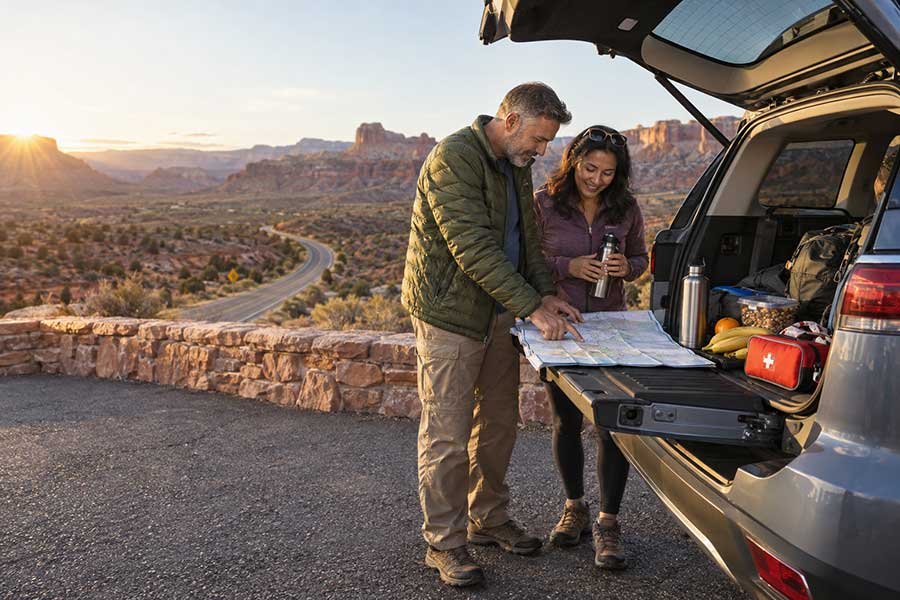
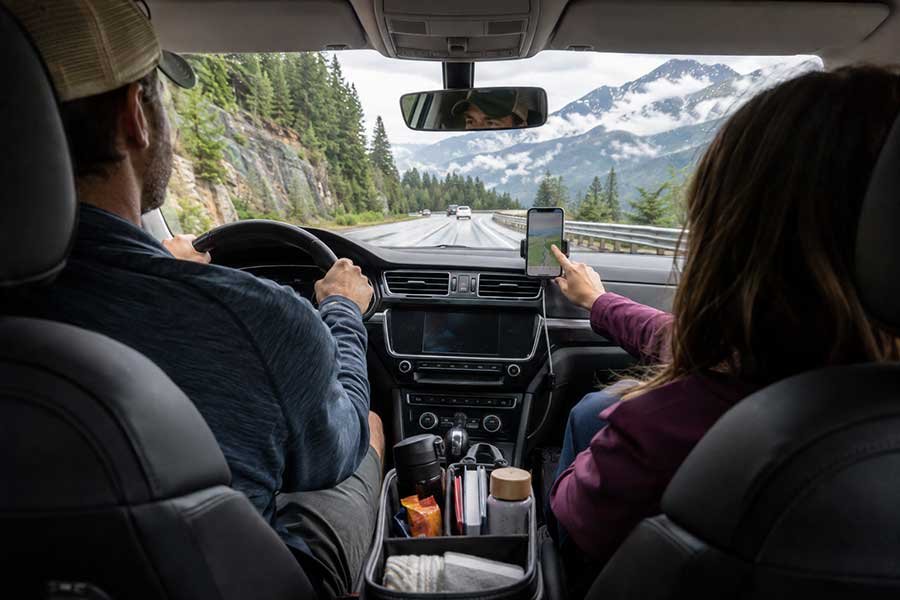
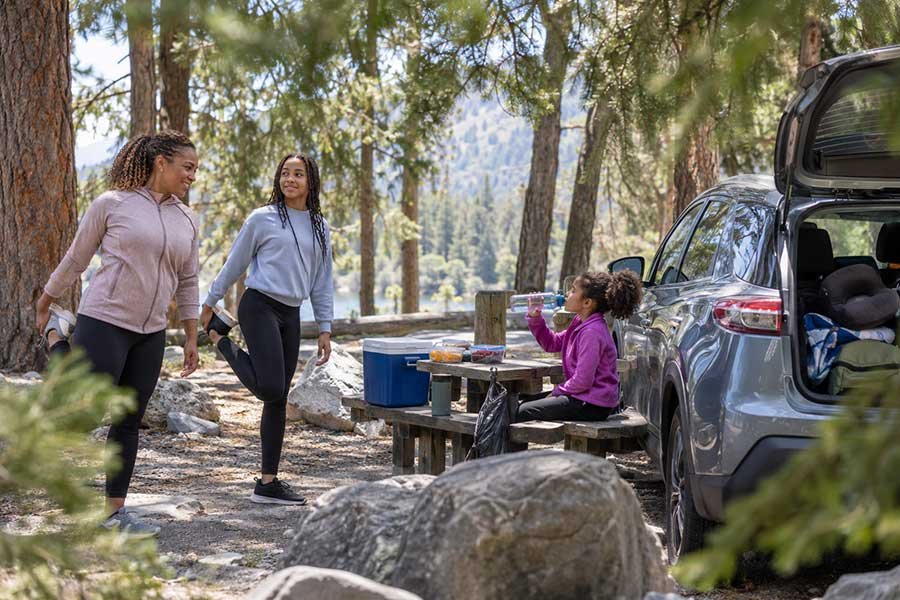
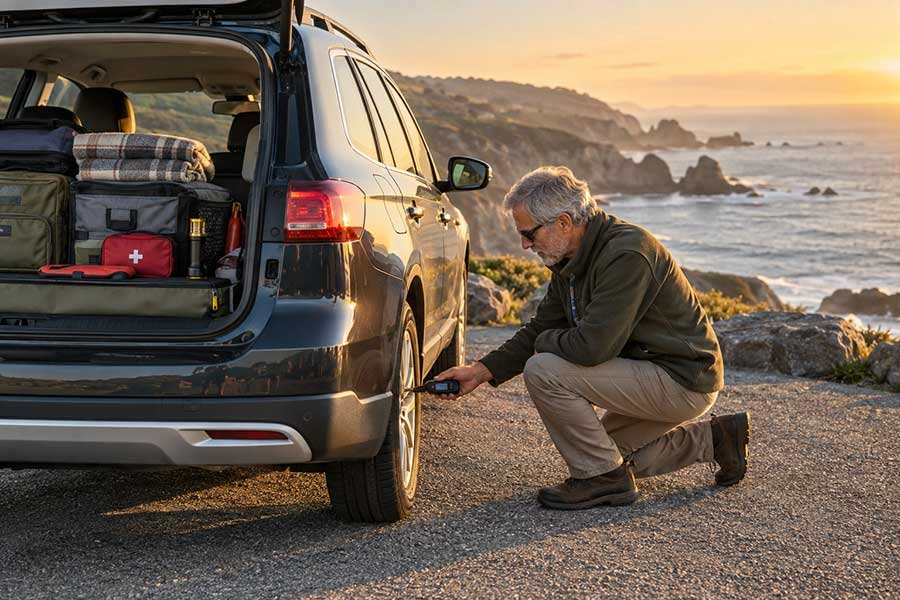
The best road trips are not the ones with the most miles. They are the ones with the best snacks, the right playlist, and a loose enough itinerary to stop when something beautiful appears beside the road. The road trip hack nobody talks about is leaving an hour earlier than planned and arriving exactly on time for everything. This article gives you the full system.

Best For
Road Trip Travelers
Vibe
Relaxed and Ready
Read Time
12 Minutes
Walk Away With
The Complete Road Trip System
Free Download

Grab Our Travel Packing Checklist

A great road trip starts with a well-packed car. Our free checklist walks you through every road trip essential from the cooler contents to the car emergency kit to the small items most road trippers forget until they are two hours from home wishing they had them. Print it once and use it on every drive.

Get the Free Checklist

Download Offline Maps Before You Leave

Cell service on a road trip is less reliable than most drivers expect until they lose it at the worst possible moment. A missed exit in an unfamiliar area. A route change when a highway is closed. A gas station search in a rural stretch where the last phone signal was twenty miles ago. Downloaded offline maps solve every one of these scenarios completely and cost nothing beyond the two minutes it takes to download them before you leave home.

Google Maps and Apple Maps both allow offline map downloads for specific regions. Open your navigation app before the trip, select your route corridor, and download the offline map that covers everything from your departure point to your destination with a generous buffer on either side. For a multi-day road trip covering several states or regions, download each section separately. Most offline map downloads take under five minutes on Wi-Fi and take up about one to three gigabytes of storage depending on the area.

For international road trips or driving in countries where your phone plan does not include data, offline maps are essential rather than optional. Apps like Maps.me specialize in offline navigation worldwide and provide detailed maps including roads, trails, and points of interest even in remote areas where online mapping services have limited coverage. Download the country or region map before you leave your accommodation each morning and you are covered regardless of cell coverage for the day.

As a secondary backup, screenshot your route at key junctions and the names and addresses of your accommodation for each night. Save them to your camera roll. Even if your phone loses all connectivity and your offline maps fail, a screenshot of the route and the destination address provides enough information to navigate with a local gas station attendant’s help if needed.

The road trip hack nobody talks about is leaving an hour earlier than planned and arriving exactly on time for everything.

Download the maps. Pack the cooler. Leave early. The rest of a great road trip takes care of itself.

Insider Note

Download a gas price app like GasBuddy before your road trip. It shows real-time gas prices at stations along your route and helps you decide when to fill up versus waiting for a cheaper station ahead. On a long road trip covering several fill-ups, this habit can save $15 to $30 in fuel costs over the course of the drive, which is more than the cost of most road trip snacks.

Ready to Go

Let Us Help Plan Your Road Trip Escape

The best road trips combine the freedom of the open road with the comfort of pre-booked accommodation at the right stops. Let us help you identify the best route, the right places to stay, and the destinations worth the detour along the way. Real travel agents who know the roads and love the journey.

Plan Our Escape

The Cooler That Changes Your Whole Road Trip

A well-packed cooler is one of the most impactful road trip upgrades you can make and one of the most consistently skipped by first-time road trippers who underestimate how much of a road trip budget disappears at gas station convenience stores and fast food drive-throughs. The math is simple. A $50 cooler and $40 of groceries covers two days of food and drinks for two people. The same two days of gas station stops and fast food costs $80 to $120 and produces food that makes you feel worse rather than better for the drive ahead.

Pack your cooler the night before departure with cold items already chilled rather than trying to cool warm items with ice once you are on the road. Pre-chilled cooler contents stay cold significantly longer than room-temperature items placed on ice. Line the bottom with ice packs or a layer of ice, add your cold items, and finish with a top layer of ice or additional ice packs against the lid which is where the most heat transfer occurs.

The best cooler contents for a road trip: a container of sliced fruit for freshness, hard boiled eggs for protein, cheese and whole grain crackers, sandwich ingredients for a rest stop lunch, hummus and cut vegetables, yogurt pouches, energy bars that do not require cold storage but benefit from it, and cold water bottles. For drinks, fill a separate small soft cooler with water, sparkling water, and one or two special drinks that make the car feel festive rather than just functional.

Stop for food at local diners, small-town restaurants, and roadside spots rather than chain fast food whenever you have the time to do so. The diner off the highway exit that has been open for forty years makes a better breakfast than any chain restaurant and gives you a story to tell. The gas station stop that you do make is for fuel and a bathroom break, not for a $12 bag of trail mix that you could have packed yourself for $3.

Insider Note

Use block ice instead of crushed ice in your main cooler. Block ice melts significantly slower than crushed ice and keeps a well-insulated cooler cold for 24 to 48 hours versus 8 to 12 hours for crushed ice. You can make your own block ice by filling a container with water and freezing it overnight, or buy it at most grocery stores for about $2. Your cooler will still be cold at the end of day two without any ice replacement stops.

Always Have Cash for Toll Roads

Toll roads catch unprepared road trippers in one of the most annoying and occasionally expensive ways. An unmanned cash-only toll booth with a line of cars behind you and no cash in the car. An electronic toll system that bills your rental car company at a premium administrative fee for processing. A toll road bypass that adds forty-five minutes and thirty miles to avoid a $4 toll you do not have change for.

Keep $20 to $30 in small bills specifically for toll roads in a dedicated spot in the car, ideally in the center console cup holder or a door pocket where it is immediately accessible without opening a bag or wallet. Research your route for toll roads before you leave and know roughly how much cash you will need. Most state-by-state toll information is searchable online and takes about five minutes to check for a multi-state road trip route.

For frequent road trippers in the United States, an E-ZPass or the equivalent electronic toll transponder for your region saves time, reduces per-toll costs on most toll roads, and eliminates the cash-on-hand requirement for covered roads. Transponders typically cost $25 to $35 with an associated account deposit and pay for themselves quickly on any drive that covers toll-heavy corridors in the Northeast or major metropolitan areas.

For rental cars on road trips, be especially careful about toll roads. Rental car companies charge significant daily administrative fees for processing tolls incurred by renters who do not have their own transponder. A $4 toll processed through a rental company’s toll pass program often costs $10 to $15 when the administrative fee is added. Cash pays the actual toll amount at the booth. Alternatively, ask the rental company about their toll transponder rental option, which is sometimes cheaper than the per-toll processing fee on heavy-toll routes.

Insider Note

Keep a small emergency cash envelope in your glove box on every road trip. Include $40 to $60 in mixed bills. This is not your toll money or your spending money. It is strictly for genuine roadside emergencies where you need cash immediately and cannot access an ATM. Tipping a breakdown service, covering a small repair at a rural mechanic, or paying for an unexpected night at the only available motel when a planned accommodation falls through. The envelope has bailed out more road trippers than any roadside assistance app.

Our Real Favorites

The Road Trip Gear We Actually Use

The insulated cooler that keeps food cold for two days, the car mount that holds the phone at eye level for navigation, the portable car vacuum that handles road trip crumbs, and the travel pillow that makes passenger naps actually comfortable. Real road trip gear from real long drives.

DND Favorites

Leave an Hour Earlier Than Planned

This is the road trip hack that sounds like the most obvious advice in the world and is still the most consistently ignored. Leave an hour earlier than you planned. Not thirty minutes. An hour. The drivers who build a genuine hour of buffer into their departure time arrive relaxed, on schedule, and with energy for the adventure waiting at the other end. The ones who leave on time arrive tense, late, and tired from trying to make up miles.

The extra hour is not wasted time. It is spent on the things that make a road trip memorable rather than functional. The roadside overlook that appears forty miles from home that you actually stop at because you have time. The small-town bakery that the gas station attendant told you about at the first fuel stop that you can actually visit because you have thirty minutes in hand. The decision to take the scenic route for the last two hours because you are ahead of schedule rather than behind it.

Beat morning rush hour traffic by leaving early. Most major cities and highway arteries experience peak congestion between 7 a.m. and 9 a.m. Leaving an hour earlier means you clear the urban traffic before it builds, gain 20 to 45 minutes of clean highway driving that the people who left at 8 a.m. spent sitting in stop-and-go, and arrive at your midday stop with time for a proper lunch rather than a drive-through eaten with one hand at 70 miles per hour.

For overnight drives or very early morning starts, the one-hour-early habit produces even greater dividends. The roads before 6 a.m. on most routes are quieter, smoother, and significantly more enjoyable than the same roads at 8 a.m. You arrive at your accommodation earlier, check in sooner, and have genuine afternoon and evening time at your destination rather than just dinner and sleep.

Insider Note

Pack the car completely the night before your departure. Load the cooler, the luggage, the road trip bag, the emergency kit, and anything that does not need to go in the morning. When you wake up on departure day, the only remaining tasks are the last-minute fresh items like the coffee you make at home and the items that lived in your bedroom overnight. You are in the car and moving within fifteen minutes of waking up instead of spending an hour loading while everyone else waits impatiently in the driveway.

The Playlist and Podcast System That Makes Miles Disappear

The audio environment in a car on a long drive is one of the most underrated road trip variables. The right playlist or podcast transforms a six-hour drive from something you endure into something you actually enjoy. The wrong audio environment makes every mile feel longer and every passenger feel more irritable. Building your audio plan before you leave is as important as building your route.

Create a dedicated road trip playlist for each trip. Not a random mix. A curated sequence that starts with energizing music for the first two hours, transitions to something more varied and conversational in the middle of the drive, and ends with something relaxed and scenic for the last stretch when everyone is a bit tired and just needs the miles to feel easy. Share the playlist with everyone in the car before departure so there is collective ownership rather than one person controlling the aux cord to everyone else’s frustration.

Download everything before you leave. Offline playlists, downloaded podcasts, downloaded audiobooks. Cell service dead zones exist on almost every road trip of significant length and there is nothing more deflating than a buffering spinning wheel on the best stretch of drive. One downloaded audiobook or podcast series provides four to twelve hours of uninterrupted audio that carries you across the longest driving days without any connectivity dependency.

For families and groups with varied taste, a road trip audio rotation works better than one person’s choice for the whole day. An agreed rotation where each person picks one album, one podcast episode, or one playlist section gives everyone ownership of part of the drive and makes the audio environment a shared experience rather than a negotiation. Twenty minutes per person is long enough to enjoy and short enough not to alienate everyone else in the car.

Insider Note

Download a road trip specific podcast series before you leave. History podcasts about the region you are driving through, true crime series for the long night stretches, comedy podcasts that make the driver laugh and stay alert, or narrative travel podcasts that celebrate the road trip as a form of adventure. The right podcast turns dead driving time into something genuinely engaging and makes the whole group more animated and connected than silence or repetitive music ever does.

The Drive That Became Their Favorite Trip

For their first road trip together, Eli and Cass planned everything tightly. Departure at 8 a.m. specific arrival times at each stop, restaurant reservations for lunch and dinner, a hotel check-in at 3 p.m. They had no cooler. They planned to stop for food. They had no offline maps. They had no cash for tolls. And they left at 9:15 a.m. because the morning was slower than expected.

They hit rush hour traffic leaving the city that cost them 45 minutes. They missed their lunch reservation because they were behind. They stopped at a gas station for lunch and spent $28 on food neither of them wanted. They got to a cash-only toll booth with no cash and had to pull into a parking area and find an ATM. They arrived at the hotel at 6 p.m. exhausted and slightly annoyed at each other. The trip itself was fine. The drive was a day they wanted behind them.

Their second road trip started differently. They packed the car the night before. The cooler was loaded with food they had actually chosen. They had offline maps downloaded, a toll app checked, and $40 in small bills in the center console. They left at 7 a.m., an hour earlier than planned. They cleared the city before rush hour. At mile 85, Cass saw a hand-painted sign for a vineyard two miles off the main road. Because they were ahead of schedule, they stopped. They spent an hour at a small family winery they never would have found if they had not had time to take the detour.

They arrived at their destination two hours before check-in time, walked to a local restaurant for the best meal of the whole trip, and sat on a porch with cold drinks watching the afternoon light. They still talk about that road trip as the best one they have taken. The difference between the two trips was not the destination or the scenery. It was the system they built before they left home the second time.

The Loose Itinerary That Makes Everything Better

The tightly scheduled road trip is the most common source of road trip stress. When every stop has a specific time, every restaurant has a reservation, and every arrival is locked to a check-in window, the drive stops being a journey and becomes a race. One traffic slowdown, one unexpected roadwork zone, one child who needs an unplanned bathroom stop, and the whole day tilts into catch-up mode.

A loose itinerary gives you anchor points, not a schedule. Know where you are sleeping each night. Know one or two things you want to see or do at each major stop. Leave everything else open. The drive between those anchors is where the road trip actually happens. The roadside produce stand. The lookout point you pulled over for on impulse. The small town main street that was more interesting than anything you had planned to see that day.

Research the route in advance for worthwhile stops but do not book all of them. Make a shortlist of places that interest you along the way and treat them as options rather than obligations. If you pass the overlook and the light is perfect, stop. If you pass it and you are in a great conversation and the music is right, drive on. The road trip that lets you say yes to what appears is almost always better than the one that insists you stay on schedule.

Leave buffer time between your departure and your check-in rather than between your departure and the activities at your destination. The accommodation is the anchor. Everything before it is the road trip. A check-in window of 3 p.m. to 9 p.m. is not a problem if you planned to arrive by 3 p.m. It is an opportunity if you left an hour early and the afternoon opened up unexpectedly.

Insider Note

Keep a road trip journal or a shared notes file where everyone in the car can add the unexpected discoveries as they happen. The name of the vineyard they stopped at. The diner where the peach pie was inexplicably the best dessert they had eaten in years. The swimming hole a local mentioned at a gas station. The route home that took thirty minutes longer and was completely worth it. These notes become the travel story that the rigid itinerary never could have written.

Book With Us

Book Your Road Trip Accommodation the Smart Way

The right accommodation at the right stops makes every road trip run smoother. Our trusted booking platform lets you reserve hotels, vacation rentals, and bed and breakfasts along your route in one place, with real travel agents who know which properties are worth the stop and which ones to drive past. Book the anchors, leave the rest loose.

Book A Trip

Common Road Trip Mistakes to Avoid

Most road trip frustrations come from the same set of avoidable mistakes. These are the ones that come up most consistently, along with exactly what to do differently before you pull out of the driveway.

1

No offline maps and no backup navigation

Cell service disappears on a road trip at the most inconvenient possible moments. Rural stretches, mountain passes, tunnel roads, and dead zone corridors exist on almost every significant drive. A downloaded offline map takes under five minutes to set up and eliminates every navigation emergency that relying on live data creates. Download the full route corridor before departure and have it ready as your default navigation rather than the backup you switch to after you have already missed the turn.

2

Relying on gas stations and fast food for all meals

A road trip diet of gas station snacks and fast food is expensive, nutritionally poor, and consistently unsatisfying. It also means stopping more frequently since the energy from processed food drops faster than the energy from real food. A well-packed cooler with fruit, protein, and real food reduces stops, reduces costs by 50 to 70 percent compared to roadside food purchasing, and keeps the whole car feeling better across a full driving day. Pack the cooler the night before. It takes twenty minutes and saves you from making sad food choices at a convenience store when you are hungry and tired.

3

Over-scheduling every stop and every hour

A road trip with every hour accounted for is not a road trip. It is a race between appointments. The best road trips happen in the space between the planned stops. The vineyards, the lookout points, the small town diners, and the swimming holes that appear without warning and become the best memories of the trip. Schedule your accommodation anchors and leave everything in between deliberately open. A loose itinerary is not a lazy one. It is the one that lets the road actually show you what it has.

4

Leaving without cash for tolls and emergencies

A cash-only toll booth with a line of cars behind you and no cash in the car is one of the most stressful and avoidable road trip moments. Keep $40 to $60 in small bills specifically for toll roads and emergencies in a dedicated spot in the car that every passenger knows about. Check your route for toll roads before departure. Know approximately how much cash the route requires. The two-minute preparation eliminates the moment of panic entirely.

5

Not packing a basic car emergency kit

A road trip car without a basic emergency kit is a car that is one flat tire or one dead battery away from a very long wait on a shoulder. A compact emergency kit includes jumper cables or a portable jump starter, a tire inflator or a can of tire sealant for slow leaks, a basic first aid kit, a flashlight, a reflective vest, and a small tool kit. The whole setup costs $40 to $70, fits in one small bag in your trunk, and is ignored on every trip where nothing goes wrong and profoundly appreciated on the one trip where it does.

6

Not building driver rest stops into the route

Driver fatigue is one of the most dangerous road trip mistakes and one of the most commonly minimized. Most safety recommendations suggest stopping for at least fifteen minutes every two hours of driving and never driving more than eight to ten hours in a single day. A fifteen-minute stop at a rest area to walk around, eat a snack from the cooler, and genuinely rest resets alertness and attention significantly. Planning your rest stops into the route rather than skipping them to make better time is not a loss of efficiency. It is the difference between arriving safely and not arriving safely at all.

Turn Travel Into Income

Love Road Trips? Make Travel Your Business

If planning routes, discovering the best stops, and helping other travelers find the joy in the journey sounds like the work you were meant to do, becoming a home-based travel agent might be the perfect next step. Earn commissions, get insider travel perks, and build a real business from anywhere in the world. See how it works.

Become An Agent

Frequently Asked Questions

These are the questions road trip travelers ask most often before hitting the road. Real answers built from real long-drive experience.

How do you stay comfortable and alert on a very long drive?

The most effective combination for long-drive alertness and comfort is consistent hydration, real food every three to four hours, a genuine fifteen-minute stop every two hours to move your body, and a rotating passenger co-pilot role where someone stays actively engaged with the driver in conversation or navigation. Cold water is more alerting than any caffeinated beverage and does not produce the energy crash that coffee and energy drinks cause. Audiobooks and podcasts that require light mental engagement keep the brain alert better than music alone. Seat position matters significantly on long drives. Adjust your seat height, lumbar support, and distance from the wheel at the start of each driving segment and readjust every two hours when you stop. Physical discomfort produces fatigue faster than almost anything else on a long drive.

What should go in a road trip car emergency kit?

A complete road trip car emergency kit includes a portable jump starter with enough charge to start a standard car battery two to three times without an external power source, a tire inflator or compressor for slow leaks, a reflective warning triangle or road flares, a high-visibility reflective vest for roadside stops at night, a basic first aid kit with bandages, antiseptic, pain reliever, and any personal medications, a flashlight with fresh batteries or a hand-crank version, a multi-tool or basic tool kit, a USB car charger for keeping phones powered, a basic phone signal mirror for remote emergencies, and the roadside assistance contact number for your car insurance provider or a separate roadside assistance membership. The whole kit fits in one compact bag in the trunk and covers the majority of non-mechanical roadside emergencies a driver is likely to encounter.

How do you handle road trip navigation for international driving?

For international road trips, download offline maps for the full country or region before you arrive since roaming data costs make live navigation expensive and unreliable. Research driving rules for your destination country before you go since rules of the road, signage conventions, speed limit units, and road etiquette vary significantly between countries. Check whether your driver’s license is valid in your destination country and whether an International Driving Permit is required. Research toll systems since many European countries use electronic toll systems on highways that require a vignette sticker purchased at the border or at gas stations rather than cash payments at booths. Look up local emergency numbers since 911 does not work in most countries outside North America.

What are the best road trip snacks that hold up over a full day of driving?

The best road trip snacks provide sustained energy, do not require refrigeration, do not produce strong smells in a closed car, and do not create crumbs or mess that make the car miserable to spend eight hours in. Top choices: individual nut butter packets with apple slices or whole grain crackers, trail mix with nuts, seeds, and minimal chocolate, protein bars without coating that melts, beef jerky or turkey sticks, individual cheese portions, whole grain pretzels, roasted chickpeas, fresh fruit that travels well like grapes, apples, and oranges, and baby carrots with a small hummus container from the cooler. Avoid chips that fill the car with smell, anything chocolate-coated in warm weather, overly sweet candy that causes energy crashes, and any food that requires two hands or a fork to eat while driving.

How should you plan accommodation for a multi-day road trip?

Book accommodation at your overnight stops well in advance, particularly in summer, on holiday weekends, and in popular destinations. Road trip routes through national parks, coastal highways, and scenic corridors fill accommodation months in advance during peak seasons. Know your approximate daily driving target, typically 300 to 500 miles per day for a comfortable pace, and identify one or two accommodation options at each overnight stop. Book refundable rates where possible since road trip timing is fluid and arrival times shift. For multi-week road trips, a mix of hotels, vacation rentals, and campgrounds both reduces cost and adds variety to the experience. Always have a backup accommodation option in mind for each night in case your primary choice falls through.

How do you keep kids entertained on a long road trip?

The most effective kid entertainment system for road trips uses a layered approach across different attention span lengths. For the first hour when energy is high, involve children in the trip by giving them a simple map to follow, a bingo card of things to spot on the road, or a road trip journal to draw and write in. For hours two and three, tablets with downloaded shows, movies, and games provide the longest engagement. Rotate between screen time and audio activities like audiobooks, story podcasts for children, or family-friendly music that everyone sings along to. Plan a genuine stop every two hours at a rest area, a park, or any space where children can run for fifteen minutes. Moving their bodies resets their patience better than any in-car entertainment can. Pack dedicated road trip snacks in a small bag accessible from the back seat so children can manage their own snacking without the driver stopping or reaching backward.

The road trip is not the getting there. The road trip is the hours in between, when you leave an hour early, take the detour, and stop for the thing that appeared beside the road.

Picture Your Next Departure Morning

The car was packed last night. The cooler is full of food you actually chose. Offline maps are downloaded. You have $40 in small bills in the center console. You leave an hour before your planned departure time. The city traffic is thin at this hour. The highway opens up. Someone picks the first playlist. You pass the overlook at mile 45 and pull over because you have time. The light on the valley below is something you will not forget. You are already ahead of schedule and the day is barely started. That is a road trip built right.

Free Download

One More Thing Before You Hit the Road

Print our free Travel Packing Checklist before your next road trip. It covers your cooler contents, your car emergency kit, your navigation prep, your toll cash, and the small items most road trippers forget until they are two hours from home. The same checklist we bring out the night before every long drive we take.

Get the Free Checklist

Explore Our Top Picks for a Better Trip

From the insulated cooler that keeps food cold for two days to the portable jump starter we keep in every car we drive on a road trip, see the road trip products and resources we actually use and recommend. Real picks from real long drives, tested and trusted over years of hitting the open road together.

See Our Top Picks

Travel Prints and Printables From Our Shop

Visit Premier Print Works for road trip journals, route planners, travel wall art, and printable goodies that make every drive a little more beautiful and a lot more organized from the first mile to the last exit.

Visit Premier Print Works

Disclaimer

The information shared in this article is provided by Don and Diana’s Travels for general informational, educational, and inspirational purposes only. It reflects our personal experiences, opinions, and the experiences of travelers we have worked with. It is not professional travel, legal, financial, mechanical, or safety advice, and it should not be relied on as such.

Driving Safety and Road Information

Road conditions, traffic laws, toll requirements, driving regulations, road closures, and safety advisories change frequently and vary significantly by location, state, country, and season. Always obey local traffic laws and posted road signs. Never drive while fatigued, distracted, or impaired in any way. Follow all road safety guidelines from official transportation and highway authorities for your specific route and destination. The driving advice in this article is general guidance only and not a substitute for your own judgment, safe driving practices, or the guidance of official road safety authorities. We accept no liability for any accident, injury, fine, damage, or loss arising from driving decisions made based on the information in this article.

Travel Information and Booking

Travel conditions, accommodation availability, pricing, toll structures, driving requirements for international destinations, and safety advisories change often and without notice. Before traveling, always confirm current details directly with your accommodation providers, local transportation authorities, and government travel advisory offices for your destination and route. We make no guarantee that any information in this article is accurate, complete, or up to date at the time you read it.

Affiliate and Partner Links

This article may contain affiliate links, partner links, referral links, and links to products or services that pay us a commission. If you click a link and book a trip, make a purchase, sign up for a service, or complete any qualifying action, we may earn a small commission at no extra cost to you. This includes but is not limited to links to our travel booking platform, host agency, recommended products, the Premier Print Works shop, and any third-party retailers or service providers mentioned in the article. Our recommendations are based on real use and genuine belief in the products and services we share. Commissions help support the cost of running this site and producing free content for our readers.

Third-Party Websites and Services

We may link to third-party websites, services, and resources for your convenience. We do not control these sites and are not responsible for their content, terms of service, privacy practices, pricing, availability, accuracy, customer service, refund policies, or any product or service they sell. Your use of any third-party site is entirely at your own risk and subject to that site’s own terms and policies.

Health, Safety, and Personal Responsibility

Travel involves personal risk. You are solely responsible for your own health, safety, travel insurance, vehicle condition, documentation, financial decisions, and choices while planning or taking any trip. We strongly recommend purchasing comprehensive travel insurance for every trip and ensuring your vehicle is properly maintained before any long road trip. Don and Diana’s Travels, its owners, employees, contractors, and affiliates accept no liability for any loss, injury, illness, accident, vehicle breakdown, delay, cancellation, damage, theft, or inconvenience arising from your use of the information in this article or from any travel decisions you make.

Composite Stories and Characters

Some stories, examples, and traveler experiences shared on this site are composites. They are drawn from the real experiences of Don, Diana, clients, friends, and travelers we have worked with over the years. Names, identifying details, locations, and circumstances may be combined, changed, or fictionalized to protect privacy and to better illustrate a point. Any resemblance to a specific real person beyond the composite portrayal is unintentional.

No Guarantees

We do not guarantee any specific result, outcome, savings, experience, or financial return from using the information, tips, services, or products mentioned in this article. Your results depend on many personal factors, including your own choices, effort, circumstances, road conditions, and external factors outside of our control.

Copyright and Use

All content in this article, including text, images, graphics, design, and original stories, is the copyrighted property of Don and Diana’s Travels unless otherwise noted. You may not copy, republish, redistribute, modify, sell, or reuse our content in whole or in part without our prior written permission. You are welcome to share a direct link to this article with proper credit.

By reading and using the information in this article, you acknowledge that you have read, understood, and agree to this disclaimer in full.