Road Trip Packing Tips for Families
Family road trips run smoothest when every person has their own zone and every item has its own place. The families who enjoy road trips most are the ones who packed the car like they meant it. Not the families with the newest gear or the biggest SUV. The ones with the best system. This article is that system, built from real family drives and refined until every mile felt easier.
Grab Our Travel Packing Checklist
Family road trip packing covers more categories than almost any other kind of travel. Activity backpacks, snack systems, trunk organization, emergency gear, and the small items most families forget until they are an hour down the highway. Our free checklist walks you through every category so nothing gets left behind.
Get the Free ChecklistThe most impactful family road trip packing upgrade is also the simplest. Give every child their own dedicated activity backpack and make it their road trip companion from the moment you pull out of the driveway. Not a piece of the shared family bag. Their own bag with their own things that they are responsible for managing in the back seat.
The activity backpack belongs to the journey itself, not the destination. It is packed with travel-only items that only come out on road trips and are put away when the trip is over. That sense of specialness is what makes children engage with it longer than they engage with toys they see every day. The novelty factor of a bag that only appears when the car does is a genuine behavioral difference that experienced road trip parents learn early and first-time road trip parents discover on the highway when their children are bored by hour two of a six-hour drive.
What goes in the activity backpack depends on age. For children under five, include a small coloring book and fat crayons, a few sticker sheets, two or three small familiar toys, a comfort item like a stuffed animal, and a downloaded show on a child-safe tablet. For children aged five to ten, add a chapter book or activity book, a travel-size board game or card game, headphones for their own audio content, a journal or drawing pad, and a small collection of activity materials that were chosen specifically for the trip. For older children, a book they wanted, their phone or music device, a small notebook for road trip observations, and a few items they packed themselves with some guidance from you.
The physical weight limit for children’s backpacks is important. A bag should not exceed about ten percent of a child’s body weight for extended carrying. For the road trip context where the bag sits on a seat or in a lap rather than being carried for long stretches, slightly more is fine for short transitions, but keep it comfortable enough that the child does not resist carrying it through rest stops and into accommodation.
The families who enjoy road trips most are the ones who packed the car like they meant it.
A child with their own bag and their own responsibility is a calmer child for the first hundred miles than one who is waiting to be entertained.
Add two or three surprise items to each child’s activity backpack that they discover after you leave the driveway. Small wrapped items or sealed zip-seal bags with something new inside add genuine excitement to the early hours of the drive. Dollar store finds, small packs of stickers, a favorite candy, or a new small toy all work beautifully. The discovery moment creates a positive association with the start of the trip that sets the tone for the whole drive.
Let Us Plan Your Family Road Trip Escape
The best family road trips combine the freedom of the open road with the right accommodation stops along the way. Let us help you find the best routes, the most family-friendly places to stay, and the destinations worth the detour. Real travel agents who know what families actually need from a road trip.
Plan Our EscapeHunger is the fastest route to a family road trip meltdown and the most entirely preventable one. The moment a child announces they are hungry from the back seat, the window to prevent a full meltdown is already closing. The families who manage this best do not wait for the announcement. They have a snack caddy accessible to the back seat passengers without requiring the driver to stop, reach backward, or open the trunk.
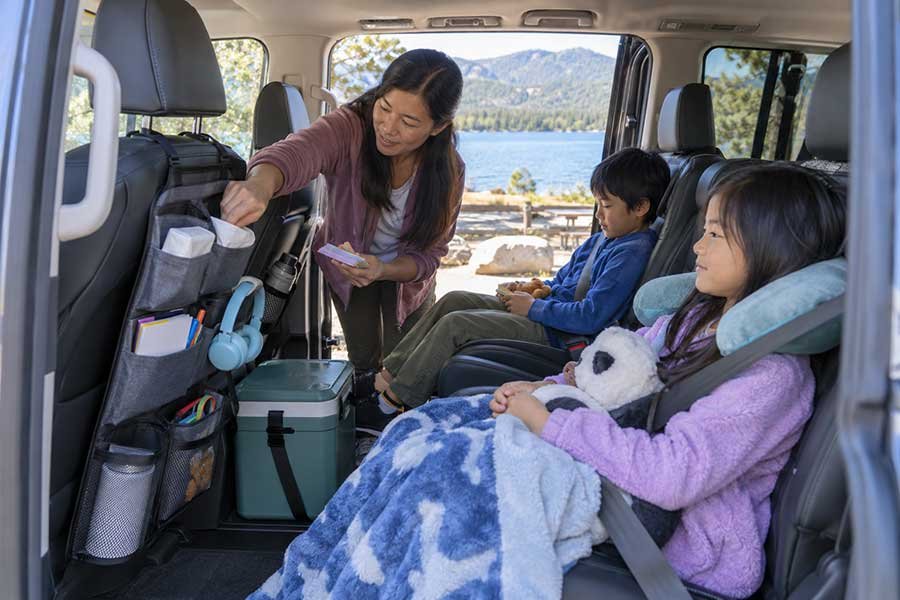
A snack caddy is a small fabric organizer, a car seat back organizer with pockets, or even a well-organized soft cooler bag placed in the center console area or on the back seat floor within reach of the children. It stays stocked with snacks that do not require cold storage and do not create a mess in a moving car. The children can serve themselves when they are hungry without disrupting the driver or creating a stop-for-food conversation that derails the drive’s momentum.
The best road trip snack caddy contents: individual nut butter packets, whole grain crackers in a resealable bag, trail mix portioned into individual small bags or pouches, string cheese if the caddy has a small cool pack inside it, dried fruit, granola bars without messy coatings, rice cakes, and a small reusable water bottle per person within reach. Avoid crumbly items that coat the upholstery, strongly scented foods that fill the car with smell, and anything that requires two hands or a surface to eat.
Restock the snack caddy every evening at your accommodation and every morning before departure. A ten-minute snack restock is the family road trip equivalent of a pilot’s pre-flight checklist. It prevents the mid-highway discovery that the caddy is empty just as someone announces they are starving between exits with no services for twenty miles.
Keep a separate small insulated cooler bag in the back seat footwell specifically for cold snacks and drinks. Pre-fill it from your main trunk cooler each morning. This means cold water, fruit, cheese, and drinks are accessible from the back seat throughout the day without opening the trunk at every stop. The back seat cooler is the snack caddy’s cold companion and together they cover every snacking need for a full driving day without a single convenience store stop.
The family road trip trunk organized by person is the trunk that gets completely unpacked at every accommodation stop because nobody can find what they need without moving everything else. The trunk organized by category is the trunk where finding anything takes under thirty seconds because you know exactly which zone it lives in regardless of whose belongings are whose.
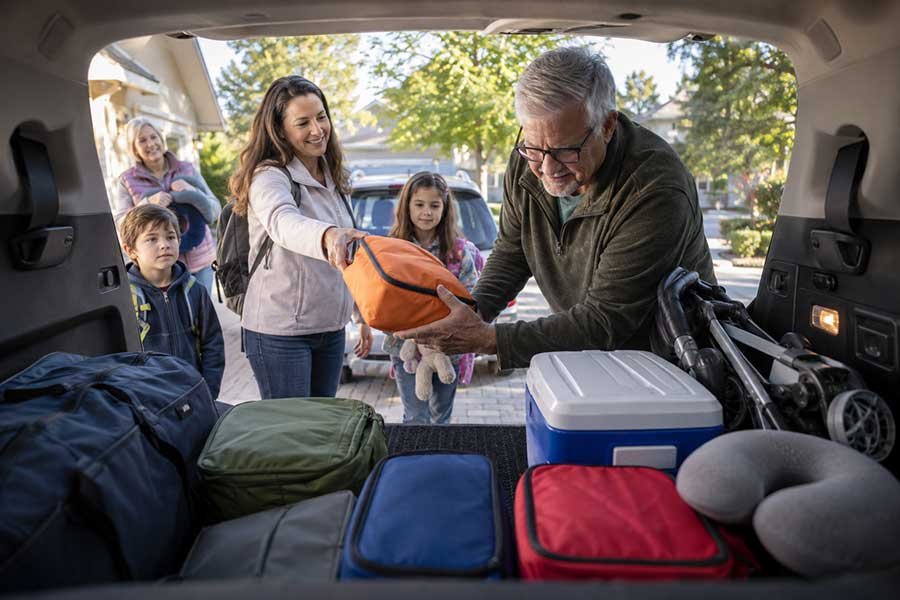
Divide the trunk into clear zones. The main luggage zone holds each family member’s suitcase or bag, stacked in reverse departure order meaning the bag you will need first at your destination goes in last so it comes out first. The food and cooler zone holds the main cooler, a bag of non-refrigerated snacks, and any dry food for the trip. The equipment zone holds beach gear, sports items, stroller, or whatever activity-specific items the trip requires. The easy-access zone at the very top or most accessible position holds the emergency bag, the first night bag, and anything you will need at the first stop without unpacking everything else.
Label everything. A small label on each bag, each box, and each zone means any adult or older child can find anything without asking the person who packed it. Particularly useful when you arrive at accommodation after a long day and everyone is tired and wants the right thing quickly. A labeled system eliminates the trunk archaeology that turns a five-minute unpack into a twenty-minute frustration.
Use collapsible crates or trunk organizers to define zones physically rather than relying on everyone to maintain the system through memory alone. A $20 to $30 collapsible crate from any home goods store keeps the food zone defined, prevents items from migrating across the trunk during sharp turns, and means the system stays intact even on driving days when stops are rushed and things go back in quickly.
Pack a foldable reusable shopping bag at the very top of the easy-access zone. Every time you stop at a rest area, a grocery store, or a farm stand, the bag is immediately available for any purchases without hunting for something to carry them in. On the return trip it handles souvenirs, market finds, and any items purchased during the trip that need a home for the drive home. It weighs almost nothing and handles a surprisingly large amount of the spontaneous shopping that happens on a road trip with children who find something they must have at every stop.
The Family Road Trip Gear We Trust
The car seat back organizer that keeps the back seat manageable, the collapsible trunk crate that defines zones without adding weight, the insulated back-seat cooler bag, and the activity backpacks sized right for real kids. Real family road trip gear from real long drives with the whole crew.
DND FavoritesEvery family road trip needs one bag that is always at the top of the trunk, always accessible without moving anything else, and always stocked with everything needed for the unexpected moments that road trips with children reliably produce. Not emergencies in the dramatic sense. Emergencies in the family travel sense. The spilled drink at mile 200. The fever that starts two hours before you reach the hotel. The muddy rest stop that sends the youngest back to the car looking like they rolled through a field. These are the moments the easy access emergency bag exists for.
Your family road trip emergency bag contents: one full change of clothes for each child and a spare shirt for each adult, a complete first aid kit including children’s pain reliever in the right dosage, antinausea medication for any child who experiences car sickness, antihistamine, blister plasters, antiseptic wipes, and bandages in multiple sizes. Add wet wipes in a resealable pack for the inevitable mess situations, a small package of tissues, hand sanitizer, a portable car sick bag for any child who needs one without warning, sunscreen for any outdoor stops, and each person’s daily medications in clearly labeled containers.
The change of clothes deserves particular emphasis. Pack dark colors for children since dark-colored clothing hides dirt, food stains, and sunscreen marks significantly better than light colors on a day when children are in and out of rest stops, farm stands, and playgrounds. Pack them in a compression pouch or rolled tight so the whole family’s changes fit in one manageable bag. The moment a child needs that change of clothes and it is immediately available in the top of the trunk rather than buried under four suitcases, every second of effort it took to pack it correctly feels completely worth it.
Add a small emergency cash envelope to your road trip emergency bag with $40 to $60 in mixed small bills. Keep it separate from your regular travel wallet. This is for genuine roadside emergencies only. Tipping a breakdown service, paying a rural mechanic for a small repair, covering an unexpected overnight stop when your accommodation falls through. The envelope has a specific purpose and everyone in the car knows what it is for. On the trips where you do not use it, it just travels quietly in the bag. On the trip where you need it, it is one of the best things you ever packed.
The family car on a road trip is a small shared space with very different needs across its zones. The driver zone needs clarity and calm. The front passenger zone serves as navigation, communication, and co-pilot support. The back seat passenger zone needs entertainment, snacks, comfort, and enough defined personal space that children feel settled rather than competing for territory. When each zone is set up intentionally before departure, everyone knows what lives where and the car manages itself better than any set of rules you could state out loud.
The driver zone is the simplest. Phone mount at eye level for navigation. Toll cash and a phone charger in the center console. A single water bottle in the cup holder. No loose items on the dashboard or floor. The driver’s comfort and clarity of attention is the most important thing in any moving car and their zone should reflect that without compromise.
The front passenger zone serves the whole car. Snack caddy accessible to the back. Navigation backup. Music and audio management. First line of response when someone needs something from the back. A car seat back organizer on the front passenger seat holds items the rear passengers need access to without reaching between or around the seat. Tissues, hand sanitizer, an extra pen, the charging cable that gets passed backward. Small things that reduce the number of times the passenger has to turn around.
The back seat zone works best with each child having a defined side and their activity backpack in their own area. A car seat back organizer on each front seat back holds the items specific to the child behind it. Their tablet pocket, their water bottle holder, their snack pocket. This means each child’s zone is self-sufficient for at least two hours without any adult intervention, which is the actual goal of a well-set-up family car.
Use a privacy sunshade on the rear side windows on sun-heavy driving days. Children who are in direct afternoon sun through car windows get hot, uncomfortable, and significantly more irritable than children sitting in shade. A simple static-cling or suction-cup sunshade on each rear window costs about $5 to $10 per window, takes thirty seconds to attach, and makes a measurable difference in back seat comfort and mood on any driving day with afternoon western sun exposure.
The Drive That Made Us Build the System
Early in our road trip years, we packed the car the way most families do. Everything went in the trunk in whatever order it fit. Snacks were in a bag somewhere in the back seat or possibly the trunk, nobody was entirely sure. The children did not have their own bags and depended on us to find entertainment and snacks for them. We left on time, meaning we were already slightly late and stressed before we hit the first highway on-ramp.
By hour two, one child needed a snack that was at the bottom of the trunk under two suitcases. We pulled over. By hour four, we stopped for gas station food because the cooler was packed in a way that made accessing anything without fully unpacking it feel like a project. By hour six, we arrived at the accommodation and spent forty-five minutes finding the right bags to bring inside because everything was mixed together with no system.
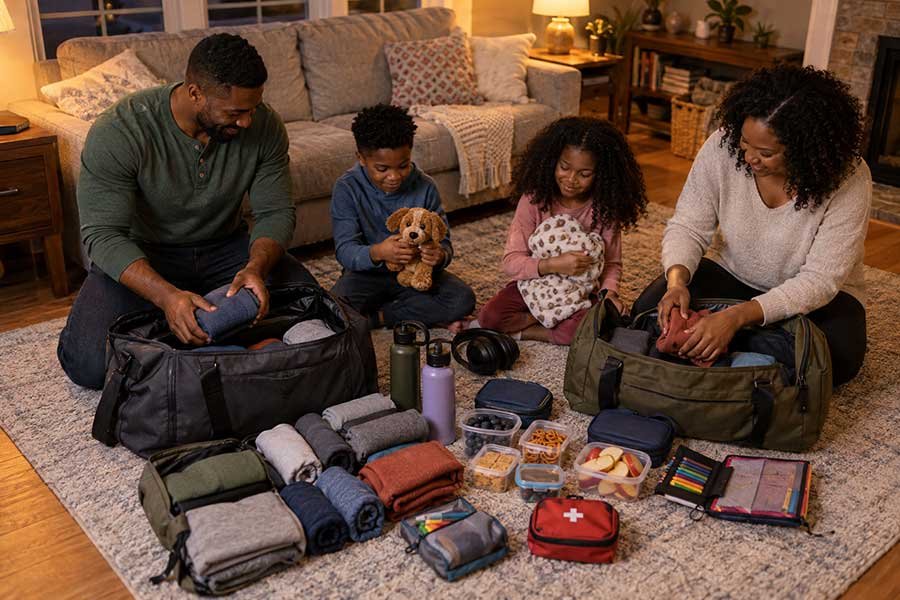
We sat down that evening and built the system you are reading in this article. Every child gets their own activity backpack packed the night before. The snack caddy goes in the back seat accessible to the children. The trunk is organized in zones by category with labels. The emergency bag lives at the top of everything. The car gets packed the night before so departure morning is fifteen minutes, not two hours.
We used it on the next trip and the difference was immediate. We left on time. The first two hours were almost quiet. Nobody needed anything from the trunk before our first planned stop. We arrived at our accommodation, pulled the right bags from the right zone, and were inside and settled in under twenty minutes. The families who enjoy road trips most really are the ones who packed the car like they meant it. We know because we were the family who did not, and then became the family who did.
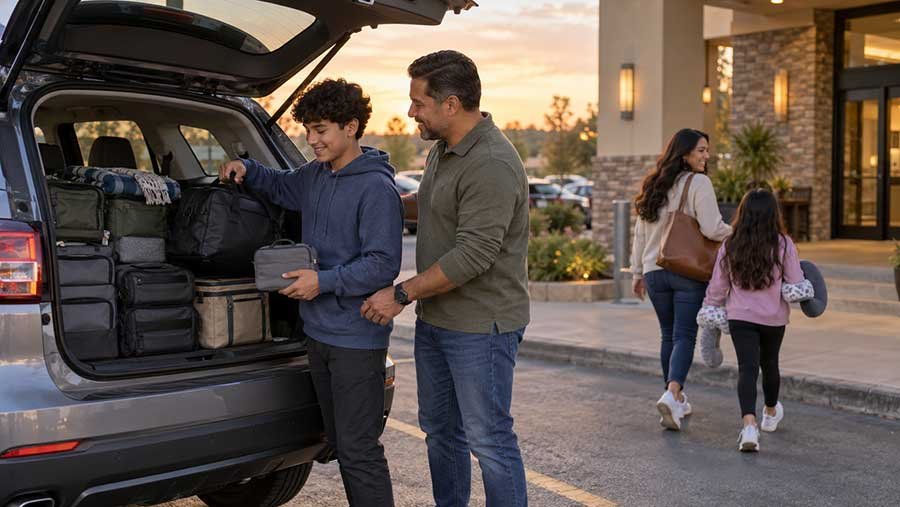
Packing the car the night before departure is the family road trip habit that changes the energy of the entire first morning. Everything that does not need to go in the morning gets loaded into the car the evening before. Luggage, the cooler, the activity backpacks, the trunk organizers, the emergency bag, the entertainment equipment, the sports gear. Everything except what sleeps with you or needs to be fresh in the morning.
The morning of departure becomes remarkably simple when the car is already loaded. Coffee, the last-minute fresh items like the lunch you made, the medications you take in the morning, and the items that could not go in the car overnight. Then you get in and leave. The departure morning that used to take two hours of loading, searching, relocating, and arguing about who forgot what becomes fifteen to twenty minutes of calm final preparation.
Pack the car in zone order. Trunk items go in first in the correct zone arrangement. Emergency bag goes in last so it stays at the top. Activity backpacks go in the back seat the night before rather than in the morning when children may want to access them before departure. The snack caddy goes in last thing in the morning when it is freshly stocked.
Conduct a departure checklist walk-through the night before packing, not the morning of departure. Go room by room looking for anything that belongs in the car and has not been packed. Check the charging station for all devices and chargers. Check the bathroom for toiletries. Check the kitchen for any cooler items that need to go in cold overnight. Finding what you forgot at 9 p.m. the night before is a minor inconvenience. Finding it at 7 a.m. when the car is running and the children are buckled is a fifteen-minute delay and a genuinely stressful start to the trip.
Keep a physical road trip checklist that lives with your travel documents and gets used on every family road trip. Not a new list every time. The same list, refined after each trip based on what you forgot or what you brought and never used. Over two or three trips, a family road trip checklist becomes an exact map of what your specific family needs for a specific type of trip, which is far more useful than any generic packing list from the internet including this one. Start with this list and make it yours.
Book Your Family Road Trip Accommodation
The right places to stop overnight make a family road trip feel planned rather than exhausting. Our trusted booking platform lets you reserve family-friendly hotels, vacation rentals, and accommodations along your route in one place, with real travel agents who know which properties are worth the stop and have what families actually need.
Book A TripCommon Family Road Trip Packing Mistakes to Avoid
Most family road trip frustrations trace back to the same set of packing mistakes. Here is what goes wrong most often and exactly what to do differently before you pull out of the driveway.
No activity backpacks for children
Children without their own entertainment zone depend on the adults to manage their boredom throughout the drive. Adults managing child boredom while navigating and driving are distracted adults. Activity backpacks give children a self-sufficient entertainment zone in the back seat that requires minimal adult management for the first two to three hours of any drive. They also give children ownership of part of the road trip experience, which produces measurably better behavior than children who feel like passengers in someone else’s journey.
Snacks inaccessible from the back seat
Snacks buried in the trunk or in the front seat where children cannot reach them require the driver to either stop or reach backward every time a child is hungry. A snack caddy within reach of back seat passengers removes this from the driving equation entirely. Children who can access snacks independently when genuinely hungry are calmer passengers than children who must announce hunger and wait for an adult response. It also means the driver stays focused on driving rather than on snack distribution.
Trunk packed by person rather than by category
A trunk packed by person requires unpacking multiple bags to find any specific item because everything one person owns is in one bag rather than similar items being grouped together. Organizing by category means the snacks are always in the food zone, the first aid items are always in the emergency bag, and the clothing is always in the luggage zone. Arrival at accommodation becomes faster because you know exactly which bag to bring in for the first night without moving everything to reach it.
No easy access emergency bag
The emergency bag buried under three suitcases is not an emergency bag. It is luggage with aspirations. The emergency bag that lives at the very top of the trunk accessible without moving anything else is the one that actually functions as an emergency resource when a child needs a change of clothes at a rest stop, when someone has a fever an hour from the hotel, or when the unexpected happens and you need the first aid kit right now rather than after a five-minute unloading session on a highway shoulder.
Packing the morning of departure instead of the night before
Morning-of packing with children is chaotic packing. Children are energetic, curious, and will find ways to complicate any systematic loading process while you are trying to execute it before everyone loses patience. Packing the car the night before reduces the departure morning to a fifteen-minute final check rather than a two-hour family project. The car is ready. The system is in place. Everyone gets in the car and you leave on time for possibly the first time in your road trip history.
No plan for charging devices during the drive
Tablets, phones, and handheld gaming devices that run out of battery during a long drive are a family morale event that is entirely preventable. Pack a multi-port USB car charger in the center console and a charging cable for every device that will be used in the car. Plug everything in for the first leg of the drive before the battery drops rather than waiting until devices are at 20 percent. A tablet charged to 100 percent at departure provides six to eight hours of entertainment. A tablet that starts the drive at 60 percent from overnight and is not plugged in will be dead before lunch on a long driving day.
Help Other Families Travel Better
If helping families find the right routes, the right stops, and the right accommodation for their road trip style sounds like work you would genuinely love doing, becoming a home-based travel agent might be exactly the right next step. Build a real business that works around your own family’s schedule. See how it works.
Become An AgentFrequently Asked Questions
These are the questions families ask most often about packing for road trips with children. Real answers from real family road trip experience.
How do you handle different entertainment needs for children of very different ages?
The most effective approach for mixed-age children is the individual activity backpack tailored to each child’s specific age and interests rather than a shared entertainment system. A four-year-old and a twelve-year-old need entirely different things from a road trip entertainment zone. The toddler needs tactile, visual, and simple activities with frequent adult engagement. The preteen needs longer engagement media, social connectivity at rest stops, and a sense that their experience is not being constrained by the youngest child’s schedule. Headphones for everyone above toddler age are the single most effective tool for managing different audio preferences in one car simultaneously. Individual screens with downloaded content for each child eliminate the shared screen negotiation entirely. Each child in their own entertainment zone with their own content is genuinely more peaceful than any compromise solution involving shared media.
What is the best way to handle car sickness on a road trip?
Prevention is significantly more effective than treatment for car sickness. Children prone to motion sickness should always ride in a position where they can see the horizon through the front windshield rather than a side window, which means the center rear seat or a front seat for older children. Avoid letting car-sick-prone children read, use screens, or focus on close objects during the drive since these activities accelerate motion sickness onset significantly. Keep the car well-ventilated and cooler rather than warm. Ginger in any form, ginger candies, ginger chews, or ginger ale, genuinely reduces nausea for many motion-sensitive travelers. Pack anti-nausea medication in your emergency bag and have a car sick bag accessible in each area of the back seat rather than only in the front. A car sick bag that takes thirty seconds to find is thirty seconds too long for a child in the acute phase.
How do you keep the car clean and organized throughout a multi-day road trip?
A ten-minute car reset at every accommodation stop is the most effective maintenance habit for multi-day family road trips. When you arrive at your overnight stop, take everything out of the car that belongs in the accommodation, shake out the floor mats, collect all trash into a bag, wipe down the back seat with a damp cloth if needed, restock the snack caddy from your cooler, and recharge all devices overnight so they start the next day at full battery. This ten-minute reset means you start each driving day in a clean, organized car rather than accumulating the previous day’s chaos into the next. A small car trash bag hanging from the back of the front headrest gives children a specific place for wrappers and tissues throughout the drive and dramatically reduces the floor crumbs that make a family car feel chaotic by day two.
How do you pack for both the road trip driving days and the destination activities?
The most practical separation is between driving-day gear, which lives in the accessible zones and gets used in the car, and destination gear, which lives in luggage and comes out at the accommodation. Children’s activity backpacks serve the drive. Suitcases or bags serve the destination. The cooler serves the drive and transitions to the accommodation refrigerator at each stop. Equipment for destination activities like beach gear, hiking items, or sports equipment lives in its own trunk zone and never migrates into the back seat during driving days. Clear separation between what is for the drive and what is for the destination prevents the trunk archaeology problem where driving-day items and destination-day items become mixed and nothing can be found quickly.
How far should a family drive per day on a road trip?
The comfortable daily driving target for a family with young children is significantly shorter than for a couple or solo driver. A good planning standard is three to four hours of driving maximum per day for families with children under seven, with genuine breaks every ninety minutes where children can physically move, run, and reset. For families with older children, four to six hours of driving per day is manageable with two to three genuine stops rather than drive-through bathroom stops. Planning your daily distance around the stop pattern rather than the mileage produces a better experience. The question is not how many miles can we cover but how many good stops can we build into today that the children will remember. A four-hour drive day with two great stops at interesting places produces more trip satisfaction than a seven-hour push to gain extra miles.
What should go in a family road trip first aid kit specifically for children?
A family road trip first aid kit with children in mind should include children’s pain reliever and fever reducer in the correct weight-based dosage for each child, children’s antihistamine for allergic reactions, anti-nausea or motion sickness medication, blister plasters in multiple sizes since children get blisters from rest stop and activity stops in unfamiliar shoes, antiseptic wipes and spray, adhesive bandages in multiple sizes including knuckle and fingertip bandages that children regularly need, sterile gauze pads, medical tape, tweezers for splinters and small debris, a digital thermometer, eye wash solution, and any prescription medications each child requires in clearly labeled containers with enough supply for the full trip plus a buffer of several extra days. A small notebook with each child’s medication allergies and current prescriptions is worth adding for any emergency where you need to communicate this information quickly to an unfamiliar provider.
The family road trip that runs on a system runs on joy. Pack the car like you mean it the night before and the morning belongs to the open road.
Picture Your Next Family Departure Morning
The car was loaded last night. Every zone is set. The activity backpacks are in the back seat, each with a small wrapped surprise waiting to be discovered. The snack caddy is stocked and accessible. The emergency bag is at the top of the trunk. You make coffee. You do the five-minute final check. Everyone gets in. You pull out of the driveway on time and the first thirty miles are almost peaceful. The children find their surprises. Someone picks the first song. The road opens up. This is a family road trip that was packed like it was meant to go right from the first mile.
One More Thing Before You Pack
Print our free Travel Packing Checklist before your next family road trip. It covers every category from activity backpacks to snack caddies to trunk zones to emergency bag contents. The same checklist we bring out the night before every family road trip we take.
Get the Free ChecklistExplore Our Top Picks for a Better Trip
From the car seat back organizers that changed how our back seat works to the collapsible trunk crate that keeps every zone defined, see the family road trip products and resources we actually use and recommend. Real picks tested on real long family drives.
See Our Top PicksTravel Prints and Printables From Our Shop
Visit Premier Print Works for road trip journals for kids, family travel planners, route maps to color in, wall art, and printable goodies that make every family drive a little more beautiful and a lot more organized from the first mile to the last exit.
Visit Premier Print WorksDisclaimer
The information shared in this article is provided by Don and Diana’s Travels for general informational, educational, and inspirational purposes only. It reflects our personal experiences, opinions, and the experiences of travelers we have worked with. It is not professional travel, legal, financial, medical, or safety advice, and it should not be relied on as such.
Driving Safety and Road Information
Road conditions, traffic laws, driving regulations, road closures, and safety advisories change frequently and vary significantly by location, state, and country. Always obey local traffic laws and posted road signs. Never drive while fatigued, distracted, or impaired in any way. The driving and packing advice in this article is general guidance only and not a substitute for your own judgment, safe driving practices, or the guidance of official road safety authorities. We accept no liability for any accident, injury, fine, damage, or loss arising from driving or packing decisions made based on the information in this article.
Child Safety and Medical Information
Any information about children’s health, medications, car sickness, weight limits for bags, and child safety in vehicles in this article is general educational guidance only and not professional medical or childcare advice. Always follow current child car seat laws and safety guidelines for your jurisdiction and your child’s age, weight, and height. Consult a licensed physician regarding your child’s health needs, medications, and any specific health conditions before travel. Bag weight recommendations for children are general guidelines only and should be adjusted based on each child’s individual age, size, strength, and health. We are not responsible for any outcome related to decisions made based on the information in this article.
Affiliate and Partner Links
This article may contain affiliate links, partner links, referral links, and links to products or services that pay us a commission. If you click a link and book a trip, make a purchase, sign up for a service, or complete any qualifying action, we may earn a small commission at no extra cost to you. This includes but is not limited to links to our travel booking platform, host agency, recommended products, the Premier Print Works shop, and any third-party retailers or service providers mentioned in the article. Our recommendations are based on real use and genuine belief in the products and services we share. Commissions help support the cost of running this site and producing free content for our readers.
Third-Party Websites and Services
We may link to third-party websites, services, and resources for your convenience. We do not control these sites and are not responsible for their content, terms of service, privacy practices, pricing, availability, accuracy, customer service, refund policies, or any product or service they sell. Your use of any third-party site is entirely at your own risk and subject to that site’s own terms and policies.
Health, Safety, and Personal Responsibility
Travel involves personal risk. You are solely responsible for your own health, safety, and the health and safety of any minor children in your care, including travel insurance, medications, vaccinations, documentation, vehicle safety and maintenance, financial decisions, and choices while planning or taking any trip. We strongly recommend purchasing comprehensive travel insurance that covers all family members for every trip and ensuring your vehicle is properly maintained before any long road trip. Don and Diana’s Travels, its owners, employees, contractors, and affiliates accept no liability for any loss, injury, illness, accident, vehicle breakdown, delay, cancellation, damage, theft, or inconvenience arising from your use of the information in this article or from any travel decisions you make.
Composite Stories and Characters
Some stories, examples, and traveler experiences shared on this site are composites. They are drawn from the real experiences of Don, Diana, clients, friends, and travelers we have worked with over the years. Names, identifying details, locations, and circumstances may be combined, changed, or fictionalized to protect privacy and to better illustrate a point. Any resemblance to a specific real person beyond the composite portrayal is unintentional.
No Guarantees
We do not guarantee any specific result, outcome, savings, experience, or financial return from using the information, tips, services, or products mentioned in this article. Your results depend on many personal factors, including your own choices, effort, circumstances, road conditions, and external factors outside of our control.
Copyright and Use
All content in this article, including text, images, graphics, design, and original stories, is the copyrighted property of Don and Diana’s Travels unless otherwise noted. You may not copy, republish, redistribute, modify, sell, or reuse our content in whole or in part without our prior written permission. You are welcome to share a direct link to this article with proper credit.
By reading and using the information in this article, you acknowledge that you have read, understood, and agree to this disclaimer in full.