35 Carry-On Packing Ideas for Travelers Who Hate Checking Bags
Once you figure out how to fit everything you need into a carry-on, you will never pay a checked bag fee or wait at a baggage carousel again. Thirty-five carry-on packing ideas for the traveler who is ready to walk off every flight with everything they need already on their shoulder and never look back at the baggage belt.
Grab Our Travel Packing Checklist
Our free packing checklist is built around carry-on travel — every category organized, solid swaps noted, and the outfit-by-color system laid out so the first carry-on packing session is the one that works and every trip after it gets a little more effortless. Use it before the next departure and leave the checked bag fee behind permanently.
Get the Free ChecklistThe moment you walk off a flight with everything you need already on your shoulder is the moment carry-on only travel stops feeling like a compromise.
Once you figure out how to fit everything you need into a carry-on, you will never pay a checked bag fee or wait at a baggage carousel again.
The Mindset and the Bag: Commit Before You Pack a Single Thing
Commit to carry-on only and let the bag’s hard limits be the editor
The most effective packing decision happens before a single item is chosen: commit to carry-on only travel and let the bag’s finite dimensions do the hard work of deciding what makes the cut. The traveler who packs with a checked bag available is the traveler who fills the checked bag, every time, because the space exists and the natural tendency to prepare for every eventuality expands to fill whatever container is available. The carry-on’s physical limit is the only packing discipline that reliably overrides this tendency — not because it forces sacrifice, but because it forces honesty. When the bag is full, the decision has been made. The items that did not fit were the items the trip did not actually need. Commit to the bag first. Let the bag make the decisions that every other packing strategy requires willpower to make alone.
Choose the right carry-on size for your most common airline
Carry-on sizes are not standardized — what qualifies as a carry-on on one carrier is an oversized item requiring gate check on another, and the traveler whose carry-on fits perfectly on every full-service airline may find it exceeding the budget carrier’s more restrictive allowance on a connecting leg. Choose the primary carry-on based on the airlines most frequently flown and their specific dimensions, erring toward the slightly more conservative size that sails through every carrier’s allowance rather than the maximum size that technically fits most carriers but produces concern on the occasional budget leg. A bag that fits everywhere is the bag that never produces the surprise gate check — the one that undermines the entire premise of carry-on only travel at the specific airport where the budget carrier measures at the jetway.
Know the exact carry-on dimensions and weight limit for every carrier on the trip
The five minutes spent checking every carrier’s specific carry-on allowance before packing begins is the five minutes that prevents the gate check, the overweight fee, and the last-minute carry-on shuffle at the jetway. Look up each carrier’s published carry-on dimensions and weight limits — particularly for budget carriers, whose allowances differ meaningfully from full-service standards and are enforced more consistently. Note the strictest limit across the entire journey and pack within it. A multi-leg trip that includes one budget carrier leg constrains the entire trip’s carry-on to the strictest standard on any leg, because the bag that boards with the full-service carrier must also board with the budget one. Know the limits before the bag is opened. Pack within the most restrictive of them and every leg boards without incident.
Use the carry-on’s size constraint as the packing editor rather than fighting it
The carry-on that is almost full is the carry-on with a natural stopping point — the moment the remaining items compete for the remaining space and the honest comparison between them produces the right decision. Use this constraint actively. When the carry-on is full before the intended packing list is complete, treat it as the correct signal rather than a problem to solve with compression: something in the bag is worth less than what is not in it. Swap the two. The carry-on that closes cleanly on the first attempt is the one whose contents were edited by the constraint rather than forced through it. The bag is not an opponent to overcome — it is the most honest editor the packing process has. When it says full, the list is done.
Think of carry-on only travel as a skill that gets better with every trip — not a sacrifice
The first carry-on only trip rarely feels as freeing as the fifth one, because the first trip is still running the mental calculations of what a checked bag would have held and the specific anxiety of whether everything fits. By the fifth trip, those calculations no longer run — the packing system is known, the capsule wardrobe is established, the solid toiletry bars are already in the bag, and the carry-on closes with room to spare without any of the tension the first trip produced. Carry-on only travel is a learnable skill whose return on investment compounds across every trip that refines the system. The traveler who found the first attempt limiting finds the tenth attempt liberating, and the tenth is built on the small improvements the nine before it produced. Start. Refine. Let the skill develop across the trips that teach it.
Weigh the packed carry-on at home before you leave for the airport
Some airlines enforce carry-on weight limits as firmly as checked bag weight limits, and the scale at home is the right place to discover where the carry-on lands before the airline’s scale is the alternative. Step on the bathroom scale while holding the packed carry-on, subtract personal weight, and compare the number to the allowance for the strictest carrier on the trip. If the bag is within limits, board with confidence. If it is over, the closet is still available and the decision can be made without a fee, without an audience, and without the time pressure of a check-in queue. The home weigh-in takes sixty seconds and removes one of the potential friction points from the departure morning entirely. Know the number at home. Arrive at the airport with nothing left to discover about the bag’s weight.
Check the carry-on allowance for every airline on a multi-carrier trip before packing
A journey involving two or more carriers is a journey whose carry-on allowance is determined by the strictest carrier on any leg — not the most generous one. The full-service transatlantic carrier may allow a standard carry-on and a personal item with a generous weight limit. The budget regional connector on the final leg may allow a significantly smaller carry-on and a specific weight limit that the full-service bag exceeds. Packing to the full-service standard and discovering the budget connector’s limit at the connecting airport produces the specific outcome carry-on only travel is designed to prevent: the forced check and the potential fee at the airport rather than a choice made at home. Check every carrier. Pack within the tightest limit the journey includes. Every leg boards on carry-on terms throughout the whole trip.
Let Us Build the Destination Worth Packing a Carry-On For
The carry-on travel system works best when the destination is well-planned and the trip is built around the experience rather than the logistics. Tell us where you want to go and we will plan the trip that makes every item in the bag earn its place — and leaves the baggage carousel permanently behind.
Plan Our EscapeClothing Strategy: Build a Capsule That Fits and Mixes
Build every trip’s wardrobe around two or three colors that all mix and match
The capsule color palette is the structural principle that makes carry-on clothing work — two or three colors chosen so that every top works with every bottom, every layer works with every outfit, and a small number of packed items produces a much larger number of complete, wearable combinations. A neutral base — navy, black, olive, or khaki — paired with one or two complementary colors that also work together means the outfit options multiply across combinations rather than being fixed by specific pairings. The bag packed outside a capsule palette contains beautiful individual pieces that each have only one or two partners, which is why it needs to be large. The bag packed within a capsule palette contains fewer pieces that all work together, which is why it can be a carry-on. Choose the palette before laying out any clothes. Pack only within it. The outfit flexibility that results makes the constraint feel less like a constraint every trip.
Pack by complete outfit rather than by category so nothing arrives without a partner
Packing by category — all tops together, all bottoms together — is the method that produces the arrival where five tops and three bottoms do not all pair correctly, and the shoes that work with two of the outfits and not the third. Packing by outfit assembles each complete look before anything goes in the bag: the top, the bottom, the layer, the shoes, and any accessory that completes the occasion. Every item confirmed against its full outfit before it is packed. Every item that lacks a complete outfit is removed before the bag is closed. The carry-on packed by outfit contains exactly the pieces needed for the outfits it holds and nothing that arrived without a match. The carry-on packed by category contains the general population of individual garments whose outfit chemistry is assumed rather than confirmed and whose gaps appear at the destination rather than at the packing session.
Roll soft clothes to fit more and arrive with fewer wrinkles
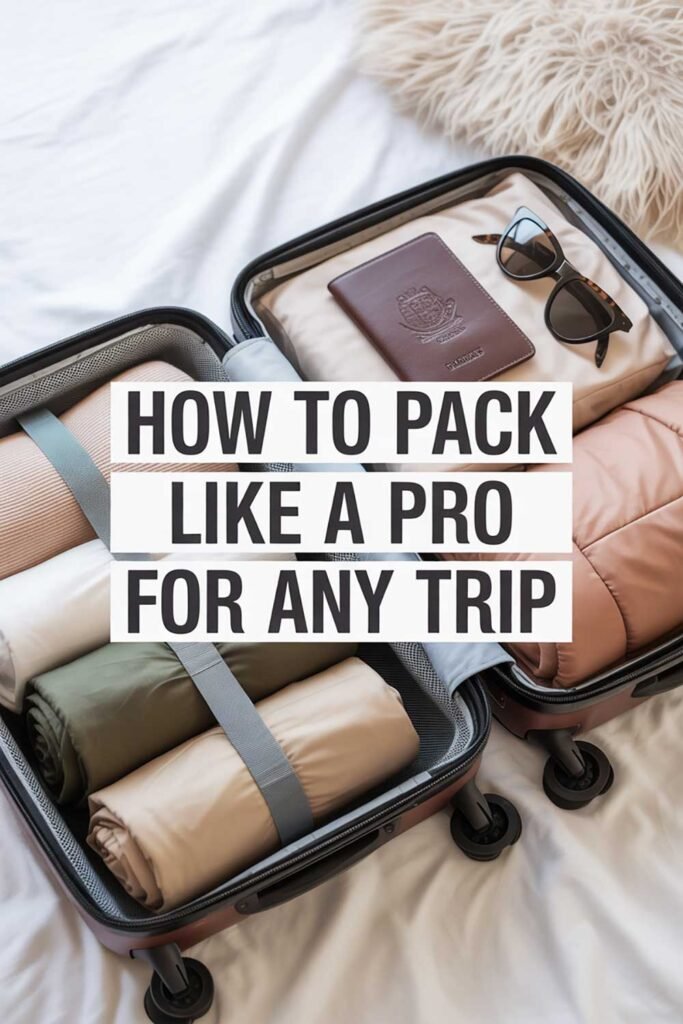
Rolling is the carry-on packer’s most consistently useful technique — the one that converts a suitcase habit into a carry-on habit by recovering the space that flat-folded stacks waste in air gaps and by fitting rolled items into the corners, curves, and gaps of the carry-on’s frame that flat items cannot reach. A t-shirt rolled to a cylinder the width of the carry-on’s interior occupies one-third of the space that the same shirt occupies flat. A carry-on of rolled soft items holds meaningfully more clothing than the same bag packed by flat folding. Rolling also produces different wrinkles than folding — softer and more distributed, resolving quickly on a hanger compared to the sharp, repeated fold lines that packing the same garment flat produces across the same fold line every trip. Roll the soft items. Fold the structured ones. The carry-on that holds more clothes than expected is almost always the one whose packer rolled.
Fold structured items that will wrinkle badly if rolled
Rolling is not the right technique for every garment, and applying it universally to the carry-on produces the wrinkle outcome it is supposed to prevent on the items whose structure does not accommodate rolling. Blazers, formal trousers, linen shirts, structured dresses, and any garment with a defined shape that relies on the fabric holding its form should be folded flat, preferably inside a dry cleaning bag to allow the fabric to shift and redistribute during transit rather than holding a fixed crease. Place these items at the top layer of the carry-on, in the layer accessed last, and if the trip requires them in perfect condition, use a packing folder whose rigid board produces a consistent fold along the garment’s natural fold lines. Roll the casual. Fold the structured. The carry-on that applies both techniques correctly to the right garments arrives with everything looking the way it needs to.
Choose quick-dry fabrics that work in the destination and dry overnight in a sink
The fabric choice is the decision that determines whether the carry-on holds five days of clothing or ten days of clothing — because the quick-dry fabric washed in a hotel sink and hung overnight is dry and ready by morning, while the cotton shirt washed at the same sink requires a full day to dry and is typically not washed at all, which means five days requires five shirts in the bag. Merino wool and most technical-blend fabrics resist odor, resist wrinkles, dry quickly, and travel well across a range of temperatures, making a single item functional across multiple days and rewearable after an overnight rinse. Choosing fabrics with these properties when building the carry-on wardrobe multiplies the bag’s effective capacity beyond what its physical dimensions suggest. The fabric that lets one item serve two days is the fabric that halves the clothing needed for any trip of any length.
Limit shoes to two pairs maximum and choose them carefully
Shoes are the largest, heaviest, most space-inefficient category of carry-on packing and the category where the most meaningful single-decision savings are available. Two pairs covers nearly every travel scenario: one comfortable walking pair used for the majority of days and one that works for any occasion requiring something different — a nicer dinner, a beach day, a different activity type. The third pair, if it exists in the plan, requires a genuine justification against the space and weight it consumes. Choose the two pairs that cover the trip’s actual confirmed activities, not its imagined ones. Wear the bulkier of the two on the travel day so it never enters the bag. The carry-on that boards with only the shoes that genuinely belong in it boards with significantly more room for everything else the trip requires.
Wear the bulkiest shoes and jacket onto the plane — they never need to be in the bag
Every item worn on the body on travel day is an item that does not occupy carry-on space or contribute to the carry-on’s weight — and the bulkiest items produce the most dramatic carry-on relief when worn rather than packed. The heaviest shoes, the thickest jacket or coat, and the most insulating layer are the items whose presence in the carry-on most frequently tips a borderline bag over the size or weight limit and whose absence makes the same bag effortless. Wearing them through the airport costs nothing beyond a warm departure-hall experience and produces a carry-on that boards with significantly more space and less weight than the same bag carrying all of these items inside. Wear the heavy. Pack the light. This is the single biggest carry-on space-saving decision available at zero additional cost to anything except the outfit choice on travel day.
Toiletries: Cut the Liquids Weight and Reclaim the Space
Swap shampoo and conditioner for solid bars
Solid shampoo and conditioner bars are the carry-on toiletry swap with the highest return per item swapped. A standard bottle of shampoo in the quart bag occupies roughly a third of the quart bag’s available volume and a meaningful share of its permitted total. The solid shampoo bar occupies zero quart bag space — it is not subject to the TSA’s liquids rule at all because it is not a liquid — and typically performs as well as or better than its bottled equivalent while lasting significantly longer per gram of product. Most travelers who make this switch describe it as one of the small carry-on improvements they wished they had made earlier and one they return to on every subsequent trip. Swap the bottles. Free the quart bag space for the liquids that genuinely have no solid alternative. The shampoo bar is the carry-on toiletry upgrade that improves both the bag’s weight and its TSA experience in one step.
Switch to a solid face wash or cleansing bar
The face wash in the quart bag is one of the larger liquid occupants in most travelers’ toiletry routines — a squeeze or pump bottle that takes up a meaningful portion of the quart bag’s permitted contents and whose liquid format means it must compete with every other liquid for the same fixed space. A solid face wash bar or cleansing bar eliminates the competition entirely: it lives outside the quart bag, takes up no liquid allowance, weighs a fraction of the bottled version, and travels without any risk of leaking onto the garments in the bag beside it. The cleanser bar swap is the second most commonly recommended solid toiletry conversion after the shampoo bar, and many travelers find options that perform as well as their liquid equivalents with the first try. Swap the bottle. The quart bag gains a slot. The bag gains a few freed grams on every trip from here.
Try toothpaste tablets instead of a tube
Toothpaste is the toiletry whose tube form creates a specific carry-on problem: it is a liquid under TSA rules and therefore occupies the quart bag, it must remain within the three-point-four ounce limit that a full-size tube exceeds, and it is often packed as a nearly full-size tube that takes up more of the quart bag than the actual trip’s use requires. Toothpaste tablets — small, solid, chewable tabs that activate with saliva during brushing — are not liquids, do not require quart bag space, and pack in a small tin or bag that fits in any corner of the toiletry kit. They work similarly to standard toothpaste for most users and are available widely online and at travel retailers. One tin holds enough tablets for a long trip, weighs grams, and occupies the space of a matchbox. Try them once. The quart bag slot they free up is available for the liquid that has no tablet equivalent.
Switch to a solid moisturizer in a small tin
Solid moisturizers — balm-format face moisturizers and body butters in compact tins — are the quieter cousin of the shampoo bar in the solid toiletry family, less well-known but equally useful for the carry-on packer whose skincare routine is the primary occupant of the quart bag after shampoo and conditioner are addressed. A compact tin of solid moisturizer takes up no quart bag space, weighs almost nothing, and provides the same fundamental function as the pump bottle it replaces. Not every solid moisturizer suits every skin type, and the right approach is to try one before a trip rather than switching mid-journey — but most travelers who find one that works for their skin describe the switch as straightforward. The quart bag that previously held three to four liquids with the moisturizer included may now hold three to four with the moisturizer gone and more room for the liquids with no solid alternative.
Transfer any remaining liquids into small reusable travel-size bottles
The liquids that genuinely have no solid alternative and must travel in the quart bag belong in reusable travel-size bottles filled to the trip-length amount rather than in full-size containers or fixed travel-size purchases. A set of small silicone bottles — one to two ounce capacity — labeled with their contents and filled from the full-size product at home provides exactly the amount the trip requires rather than a fixed commercial quantity that may be too much, occupying more quart bag volume than the trip needs. Fill each bottle to the daily-use amount multiplied by the trip length plus a small margin. Return home with the bottles close to empty — an indicator that the fill was calibrated correctly. Restock before the next trip. The reusable set built once serves every subsequent trip without the recurring cost and space consumption of fixed travel-size purchases.
Buy bulky toiletries at the destination instead of packing them from home
Sunscreen is the most common example of a large, heavy toiletry that is available in full-size form at pharmacies near virtually every travel destination — and that most carry-on packers pack in a travel-size version that consumes meaningful quart bag space when the same product could be purchased at destination prices for less total disruption to the carry-on than carrying it from home. The same principle applies to shampoo, conditioner, and body wash at destinations where the hotel does not provide them, and to any other bulky toiletry that is readily available at the destination. Add a small toiletry purchase budget to the trip’s daily cost calculation. Remove the corresponding items from the carry-on packing list. The carry-on that boards lighter because three toiletries are being purchased at the destination rather than carried from home is the carry-on whose remaining items fit more comfortably because of it.
Keep the quart bag permanently packed and restocked after every trip
The quart bag that is rebuilt from scratch before every trip is the quart bag that is missing something on every other trip — the bottle that ran empty and was not replaced, the product that did not make it back in after the last unpack, the label that fell off and was never reapplied. Keep the quart bag in a permanent home with the travel gear and restock it the day after every trip, while the memory of what was used, what ran low, and what was unnecessary is still accurate. The next trip’s toiletry preparation is the addition of the trip-specific items on top of a permanent base that is already correctly configured. The five minutes of restocking after every return means the pre-trip toiletry preparation is a confirmation rather than an assembly, and the carry-on packer whose quart bag is always ready is the one who never discovers at the airport that the moisturizer is still on the bathroom shelf.
Brooke’s Last Checked Bag and the Three Trips It Took to Never Go Back
Brooke had paid a checked bag fee on thirty-one of the last thirty-two flights she had taken, the exception being a domestic one-night trip for which she had specifically bought a bag small enough to carry on and discovered at the gate that it technically exceeded the airline’s personal item dimensions and was asked to check it anyway. The fees had never felt optional. The bag had always been full of things she needed or might need, and the carry-on had always felt like a constraint she could not meet without leaving something behind that she would probably want.
The first carry-on attempt did not fully work. She had the right size bag — measured against the airline’s published dimensions — but she had packed it in her normal way: category by category, filling as she went, discovering when the bag was full that the shoes were still on the floor and the jacket was still on the hook, and solving this by wearing both through the airport in a way that was technically successful and personally uncomfortable. The quart bag was too full — three bottles she had transferred from full-size at the last minute, none quite within the three-point-four-ounce limit she had misremembered as four ounces — and the security bin involved a quiet conversation with the officer that ended with two bottles in the disposal tray and a specific determination to fix the toiletry situation before the next trip.
The second trip she bought her first solid shampoo bar. She moved the remaining liquids into the small silicone bottles she ordered for twelve dollars and labeled with a permanent marker. She wore the boots and the heavy jacket on the flight and experienced the specific freedom of walking through security without managing a coat and the specific warmth of a terminal in May that she chose to accept as the price of a carry-on that closed without incident. The bag was lighter than the last trip by a measurable amount. She stood at the baggage carousel waiting for a colleague who had checked a bag and felt, for the first time, the specific clarity of the person who has already collected everything they brought.
The third trip the system was complete enough that she stopped thinking about it. Two colors in the capsule. Outfit by outfit laid out before packing. Solid bars for the hair routine. Tablets for the teeth. Travel-size bottles for the two liquids that had no solid alternative. Packing cubes. Shoes at the base with socks inside them. Jacket and boots worn on every flight since. She has paid zero checked bag fees in the twenty-two trips that followed. The thirty-five ideas in this article are the system she assembled across those three trips. The only question they leave is what took so long to start.
The Packing System: Organize Every Inch of the Carry-On
Use packing cubes and assign one per clothing category
Packing cubes transform a carry-on from a single space where everything competes for position into an organized system where every category has a container, every container has a location, and every item is findable in the time it takes to open one cube rather than search an entire bag. Assign one cube per category — tops, bottoms, underwear, layers — and maintain these assignments on every trip so the system is consistent and automatic rather than rebuilt from decision each time. The carry-on packed with cubes repacks at every hotel checkout in the time it takes to fold each cube closed. The carry-on without cubes repacks in the time it takes to find everything first. For the carry-on traveler specifically, the cubes provide the additional compression benefit that shrinks soft clothing to the smallest practical volume — making the physical limits of the bag feel less limiting every trip that uses them.
Tuck socks and small items inside shoes to reclaim dead space
The inside of each shoe packed in the carry-on is a hollow space already committed to the bag’s volume and weight — it travels in the bag regardless of whether it is occupied. Rolling socks and tucking them inside the shoes’ cavity, alongside small items that fit the space — a compact charger, a folded belt, a small accessories pouch — uses space that is otherwise air. In the context of a carry-on’s tight dimensional limits, this is meaningful: a pair of shoes whose interior holds three pairs of socks and a charging adapter has consolidated six separate items into the space of one and freed the corresponding carry-on volume for something else. The practice takes thirty extra seconds per shoe at packing time and produces a noticeably different amount of available space in the carry-on that receives it. Fill the shoes before they go in. Every inch of the carry-on is already being paid for.
Place shoes sole-to-sole in shoe bags along the carry-on’s base frame
Shoes packed sole-to-sole — one shoe facing each direction, soles between them — fit into the carry-on’s frame channels along the base more efficiently than shoes packed in any other configuration, because the sole-to-sole pair is roughly the same profile as the available space along the bag’s rigid perimeter. A lightweight shoe bag for each pair contains the sole’s grime and keeps it isolated from the clothing packed in the same layer. Place the shoe-bagged, sole-to-sole pairs at the base of the carry-on first, along the frame, before the packing cubes go in. Build the rest of the carry-on around the shoes’ established footprint. The shoes that go in first create the foundation for everything packed above them, and the foundation placed correctly produces a carry-on that uses its base layer space efficiently rather than leaving it partially occupied by shoes positioned without intent.
Pack the heaviest items closest to the wheels for a balanced carry-on
A carry-on whose heaviest items sit at the top or toward the handle end is a carry-on that tips against the handle when rolled and requires extra effort to keep upright on the flat airport floor — an effect that is minor across a short distance and noticeable across a long terminal. Pack the heaviest items — shoes, toiletry kit, electronics — at the wheel end of the carry-on, the side that faces the ground when rolling. These items sit at the center of gravity and produce a bag that rolls naturally upright, balances on the handle without resistance, and maneuvers through airports with significantly less physical effort than the same bag loaded with the heavy items at the wrong end. The heaviest items go in first, at the base. The lighter items layer in above them. The carry-on that boards well is the one that was organized from the floor up before the wheels left the ground.
Fill every gap, corner, and curve — dead space is capacity the carry-on is not using
A carry-on packed with neat cubes and well-organized layers still contains a meaningful amount of unused space in the corners that square cubes cannot fill, the curves at the bag’s base frame, the taper along its sides, and the gaps between cubes of unequal size. These spaces are the carry-on’s recovered capacity — the room for items that cannot justify their own cube but have a definite place in the bag: a rolled scarf that fills the corner between two cubes, a small flat electronics pouch that slides into the gap at the bag’s side, a pair of sandals whose flat sole fits along the taper. Look at the bag from above after the primary cubes are in place and identify every gap. Fill each one deliberately. The carry-on that uses its full three-dimensional volume rather than just the volume the cubes occupy holds meaningfully more than the same bag with its gaps left empty.
Use compression cubes for bulky soft layers and insulating items
Compression cubes — those with a secondary zipper that compresses the cube’s contents after the first zip closes — are the carry-on packer’s tool for the category of items that would otherwise make carry-on only travel impractical: bulky fleece layers, packable down jackets, thick hoodies, and any other insulating garment that is essential for the destination and takes up a disproportionate share of the carry-on’s volume before compression. A medium compression cube containing a compressed fleece layer occupies the space of a folded t-shirt stack rather than the third of the carry-on the uncompressed fleece would claim. Use compression cubes specifically for the soft, air-filled items whose bulk is compressible and standard cubes for everything else. The two systems working together extend the carry-on’s effective capacity to cover the trip types that most people assume require a checked bag.
Use the carry-on’s lid pocket for security and in-flight essentials
The carry-on’s lid pocket — the zippered compartment inside the bag’s top flap — is the most accessible space in the bag when it is opened: the first thing visible, reachable without moving the main compartment’s contents, and positioned for the items that need to come out most quickly in the most time-pressured contexts. Use it specifically for items needed at security — the liquids bag, the laptop, any other item the TSA requires removed — and for items needed immediately on boarding: the in-flight comfort essentials that belong in the personal item but whose confirmation before the carry-on goes overhead is part of the boarding routine. This configuration means the carry-on’s most frequently accessed space is used for the items most frequently needed, rather than for whatever was on top when the packing was finished. The lid pocket with a consistent purpose is the lid pocket that serves every flight without a search.
Our Curated Collection of Trusted Tools and Official Sources
Everything we use to plan, prepare, and travel with confidence — from official government travel tools to practical planning aids. We have pulled together the resources we trust most so every trip you take is better informed, better prepared, and a lot less stressful from start to finish.
DND ResourcesSmart Habits: Keep the Carry-On System Working Trip After Trip
Pack a packable tote bag folded flat inside the carry-on
A lightweight packable tote folded flat inside the carry-on’s base or lid pocket is the item that earns its place from the first moment of the trip and continues earning it through every day that follows. It becomes the day bag when the carry-on goes to the accommodation before check-in and the exploration begins before the room is available. It becomes the beach bag, the market bag, the overflow carrier for the return journey’s purchases, and the grocery run bag for the self-catering accommodation that does not provide one. Most packable totes fold to the size of a folded letter and weigh under a hundred grams — a negligible carry-on investment that replaces the first-arrival suitcase drag, the souvenir-overflow problem, and the destination airport bag purchase that is always more expensive than it needs to be. Pack one on every trip. Use it on every day it is useful. Fold it back into the carry-on when it is not.
Always keep all medications in the carry-on — every trip, without exception
The only bag that is definitively available at the destination is the one that traveled in the cabin rather than the hold. The carry-on that goes overhead with the traveler is the carry-on that arrives at the same destination, at the same time, under the traveler’s direct observation. The checked bag checked at the same counter has a different and less certain relationship to this outcome. Every medication the traveler requires — prescription, daily supplement, over-the-counter essential — belongs in the carry-on because the consequences of a delayed or lost bag without the medication on board are the specific consequences that no amount of insurance or airline compensation resolves quickly enough to matter at the time. For the carry-on only traveler, this is already the default — everything is in the carry-on, including the medication. The carry-on system handles this automatically. For the traveler transitioning to carry-on only, it is the first and non-negotiable category.
Never put chargers, documents, or valuables in a checked bag — and since you’re not checking one, this is already handled
The list of items that experienced carry-on travelers are occasionally asked why they check a bag for — chargers, documents, cameras, laptops, items of personal significance — is the list of items whose presence in a checked bag creates the specific risk that the carry-on system eliminates: the delayed bag without the charger, the diverted suitcase without the passport copy, the lost luggage report filed for the camera that was in the hold rather than overhead. For the carry-on only traveler, this category of risk does not exist, because all of these items travel in the bag that travels in the cabin. This is one of the carry-on system’s least-discussed benefits and one of its most consistent ones: the things that would have been the most distressing items to lose in a checked bag are in the carry-on, under the seat, for the entire journey.
Pack the personal item for the flight, not as an overflow bag for the carry-on
The personal item — the smaller bag that goes under the seat — is most useful when it is packed for the flight rather than stuffed with whatever did not fit in the carry-on. The personal item packed for the flight contains the charger and cable for the in-flight device charge, the snacks, the neck pillow and sleep mask, the document wallet with the boarding pass and travel insurance card, and the comfort items needed between takeoff and landing. The personal item packed as carry-on overflow contains items that belong overhead, makes the under-seat space feel cramped, and produces the flight where the item needed mid-flight is in the wrong bag. Pack the personal item with the flight in mind before the departure morning. The carry-on goes overhead with the trip’s clothing and organization. The personal item stays under the seat with the flight’s comfort system. Both do exactly the job they are designed for.
Do a final edit and deliberately remove three items before closing the carry-on
Once the carry-on is fully packed and the system appears complete, open it one more time and remove three items. Not the obvious essentials — three of the borderline items that were talked into the bag: the fourth outfit assembled for an occasion the itinerary contains only as a possibility, the backup pair of shoes that the two confirmed pairs render unnecessary, the what-if item whose what-if scenario would be resolvable without it. Almost every packed carry-on contains at least three such items, and removing them before the trip is the action that makes the carry-on feel like a well-edited bag rather than a bag packed to its limit. The items removed in the final edit will not be missed. They would have been carried the full trip, used zero times, and confirmed at the final checkout as the items that came home unused. Remove them at home where the decision is easy, not at the destination where it is too late.
Photograph the packed carry-on before zipping it for departure and return
Two thirty-second photographs — one of the carry-on before the outbound departure and one before the return. The outbound photograph documents the contents before transit, providing the visual inventory that any lost or delayed bag claim requires if the carry-on is unexpectedly checked at the gate. The return photograph is the checkout completeness confirmation: the visual check that every item packed for the trip is in the bag before the accommodation is left, catching the charger in the outlet and the sunglasses on the bathroom shelf before the door closes rather than after. Both photographs are timestamped automatically in the camera roll. Neither requires any organization beyond taking them at the right moment. The habit costs one minute per trip and produces documentation that most trips never need and some trips urgently do.
Reset and restock the carry-on within twenty-four hours of arriving home
The carry-on reset within twenty-four hours of every return is the habit that keeps the carry-on system ready for the next trip without the rebuild that the neglected return eventually requires. The laundry comes out and goes to the wash. The toiletry kit is restocked where items ran low. The quart bag is confirmed complete. The packing cubes are emptied and returned to their storage position. The packable tote is refolded and placed back in the lid pocket. The permanent always-in-the-carry-on items — the adapter, the shoe bags, the laundry bag — are confirmed present and returned to their designated spots. The whole reset takes fifteen minutes. The carry-on that is reset after every trip is the carry-on that requires no rebuilding before the next one — only the addition of the trip-specific clothing and the confirmation that the permanent base is complete. That is the carry-on only system in its final form: always ready, always organized, never requiring a checked bag to be complete.
Book the Trip That Proves a Carry-On Is All You Ever Needed
The carry-on only system works best when the trip is planned with the same intention the bag is packed with. Our travel agents plan the destinations that make every item in the carry-on earn its place — and leave the checked bag fee behind on every trip from here.
Book A TripThe shampoo bar was not in the quart bag because it was never a liquid. The jacket and boots were on. Two colors in the bag and every outfit had a match. The cubes were assigned and the corners were full. The carry-on closed on the first try. The carousel was not visited. The fee was not paid. That is thirty-five ideas. That is walking off every flight with everything you need already on your shoulder.
Picture Walking Off Every Flight Without Looking Back at the Carousel
The carry-on is sized for the strictest carrier on the journey. The capsule is two colors. Every outfit was laid out flat before packing and every item has a complete partner. The shampoo and conditioner are bars. The toothpaste is tablets. The moisturizer is in a tin. The three remaining liquids are in small silicone bottles in the quart bag that was last restocked the day after the previous trip. The shoes are sole-to-sole at the base with socks inside them. The jacket and the boots boarded on the body. The packing cubes are assigned and every gap and corner is used. The lid pocket holds the liquids bag and the laptop. The final edit removed three items that were never going to be worn. The bag was photographed before the zip closed. The carry-on goes overhead. The personal item is packed for the flight and stays under the seat for all of it. At the destination, the deplaning is immediate: no carousel, no belt, no wait, no fee. Everything needed is already on the shoulder. That is thirty-five ideas. That is the moment carry-on only travel stops feeling like a compromise.
One More Thing Before the Carry-On Is Packed
Print our free Travel Packing Checklist and use it as the foundation for every carry-on packing session from here — capsule colors, outfit assignments, solid swaps confirmed, quart bag restocked, and the final three items identified and removed before the zip closes. The same checklist we use before every carry-on trip we take.
Get the Free ChecklistExplore Our Top Picks for a Better Trip
After years of exploring the globe together, these are the exact tools, platforms, and services we rely on for every single trip — personally tested, traveler approved, all in one place. We don’t recommend anything we wouldn’t use ourselves, and this is the collection of booking platforms and travel tools that have made our adventures smoother, smarter, and more memorable.
See Our Top PicksLove Helping Travelers Arrive With Less and Experience More?
Helping a traveler build the carry-on system that frees them from checked bags, checked bag fees, and baggage carousel waits is the kind of practical expertise that makes a home-based travel agent genuinely useful to their clients. If turning your love of travel into a business sounds like the right next move, see how the TravelPreneur system works.
Become An AgentCarry-On Packing Printables at Premier Print Works
Visit Premier Print Works for carry-on packing checklists, capsule wardrobe planners, solid toiletry swap guides, and travel printables that make every departure lighter, more organized, and one more trip without a checked bag fee — from the outfit laid out on the bed to the carry-on photographed before the zip closes.
Visit Premier Print WorksDisclaimer
The information shared in this article is provided by Don and Diana’s Travels for general informational, educational, and inspirational purposes only. It reflects our personal experiences, opinions, and the experiences of travelers we have worked with. It is not professional travel, medical, legal, or financial advice.
Airline and Baggage Policies
Carry-on size limits, weight allowances, personal item policies, and all related airline rules vary by carrier and are subject to change without notice. Always confirm current requirements directly with your specific airline and every carrier on a multi-leg journey before traveling. We are not responsible for any fees, gate checks, or outcomes arising from reliance on baggage information in this article.
TSA and Security Regulations
TSA liquids rules, security screening procedures, and international security regulations are subject to change and vary by country and airport. Always confirm current requirements at tsa.gov and from the relevant security authorities before departure.
Medical and Health Information
References to medications in this article are general informational content only. Always keep medications in the most appropriate and secure location for your specific health needs. Consult a qualified healthcare provider for advice specific to your medical circumstances.
Product Recommendations
References to solid toiletry bars, tablets, and other specific product formats are general informational suggestions based on our experience. Individual results vary based on product, personal preference, skin type, and hair type. Try any new product before a trip rather than switching for the first time while traveling.
Affiliate and Partner Links
This article may contain affiliate and partner links that pay us a commission at no extra cost to you. Our recommendations are based on real use and genuine belief in the products and services we share.
Composite Stories
Stories on this site combine real experiences from Don, Diana, clients, and travelers we have worked with. Details may be adjusted for privacy and narrative clarity.
No Guarantees
We do not guarantee any specific packing, travel, or airline experience from using the information in this article. Results vary by traveler, destination, carrier, and trip type.
Copyright and Use
All content is the copyrighted property of Don and Diana’s Travels. You may not copy or republish our content without prior written permission. You are welcome to share a direct link with proper credit.
By reading this article, you acknowledge that you have read and agree to this disclaimer.