33 Travel Hacks for Families Who Want an Easier Trip
Family travel is one of the most rewarding things you can do together and one of the most logistically complex. The gap between a family trip that runs smoothly and one that feels like it is constantly on the edge of falling apart is almost never about the destination. It is almost always about the habits, systems, and small decisions that happen before the airport, at the airport, on the plane, and at every stage of the destination itself.
These thirty-three hacks are built for the families who want to spend less of their trip managing the trip. Less time at the baggage carousel. Less time searching for the specific snack in the bottom of the wrong bag. Less time at the gate with a tired child and a boarding pass that will not load. More time actually being on the vacation that was planned and paid for and looked forward to. Every hack here is a small decision that pays back in family travel ease across every trip that uses it.
Free Download: Our Travel Packing Checklist
Before the next family trip starts, use our free Travel Packing Checklist to make sure every family member’s bag is confirmed complete, every travel-day essential is in the right place, and nothing gets left behind in the rush of a family departure morning.
Get the Free ChecklistFamily Packing: One System for Everyone in the Group
Family packing is not solo packing multiplied by the number of people in the group. It is a coordination challenge whose difficulty scales with the number of people, the age range of the children, and the number of bags being managed across a departure morning that is rarely as calm as the plan assumed it would be. The habits that make family packing manageable are the ones that distribute the responsibility, confirm the contents, and ensure nothing critical ends up in the wrong bag or no bag at all.
1. Give every family member their own color-coded packing cube set
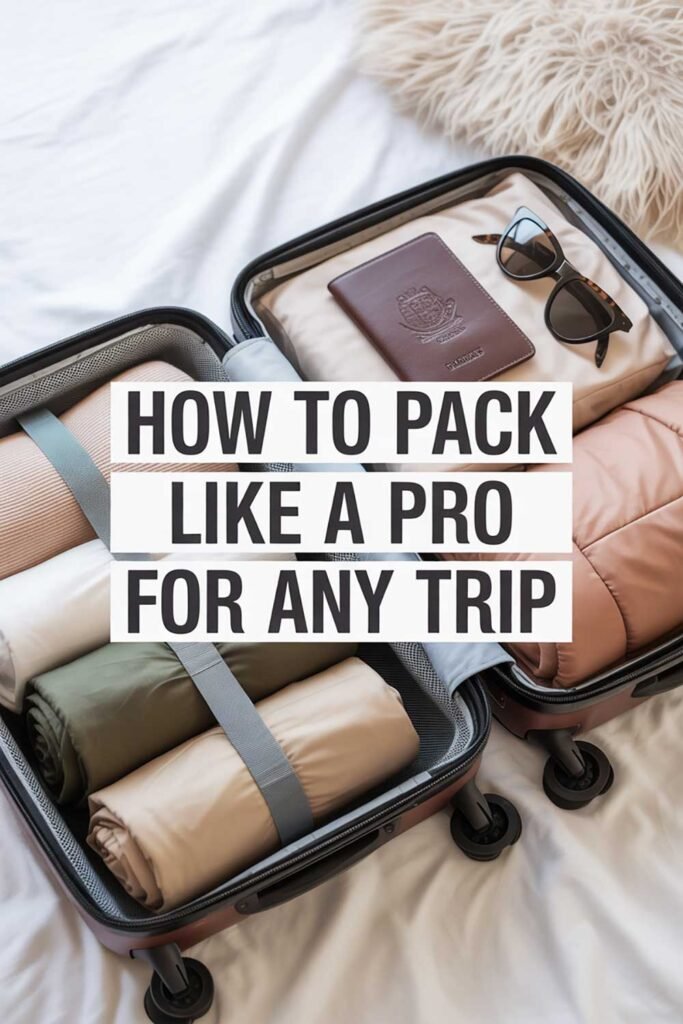
One color per person — blue for the youngest, green for the middle child, grey for the adults — means the family suitcase is navigable at a glance rather than a combined mystery whose individual items require a full excavation to locate. The blue cube opened produces the youngest child’s tops. The green cube produces the middle child’s bottoms. No guessing, no sorting, no searching. Color-code once and keep the assignments permanently so every subsequent family pack starts from a known system rather than an invented one.
2. Build a separate packing list for every family member
The single family packing list produces the departure morning uncertainty about whether the specific item was packed for the specific person and which bag it is in. A separate list per family member — maintained permanently and updated after every trip — produces clarity: this person’s items are confirmed on this list, packed in this bag, checked off at the final review. Older children with their own lists can confirm their own items. The parent’s final review is a check against a known standard rather than an assembly from memory.
3. Pack every child’s medications and one complete outfit change in the family personal item
The personal item that travels under the seat is the one bag that is never gate-checked and never delayed. Every child’s medications — daily prescriptions, pain reliever, antihistamines, anything time-sensitive — and one complete outfit change per child in the personal item means a gate-checked overhead bag costs nothing to the trip’s first day. The child’s medication is accessible. The outfit change is available if needed. The trip continues regardless of where the checked or overhead bags are.
4. Photograph every packed bag before closing it
A photograph of each packed bag before closure — taken with the child present for their own bag — serves as the visual inventory for any lost bag claim and as the return-journey completeness check at every checkout. The photograph is the list of what was packed. The room sweep at checkout compares reality to the photograph. The item in the photo that is not in the bag is found before the taxi leaves, not after. One minute per bag. Every departure. Every trip.
5. Wear the family’s heaviest items on the travel day
Every item worn on the body on travel day is an item not occupying bag space or adding to bag weight. The children’s heaviest shoes, the adults’ thickest layers, and any bulky items worn through the airport cost nothing to the bags’ weight while covering every family member’s travel day outfit. On a family trip where the aggregate bag weight is a genuine constraint, the travel day outfit is often the margin between bags that board within limits and bags that require weight redistribution at the check-in counter.
6. Roll every child’s clothing to recover space and keep cubes visible
Children’s clothing rolled upright in their color-coded cubes produces the specific benefit that matters most for family travel: every item visible from above without disturbing anything else. The morning outfit retrieval for a young child is a top-down scan followed by one reach rather than a rummage through a compressed stack. The space recovered by rolling children’s clothing — whose small size makes the rolled cylinder especially efficient — is often meaningful for families managing multiple bags against size and weight constraints.
7. Check accommodation amenities before packing what they already provide
Most family-friendly hotels and vacation rentals provide cots and high chairs for young children, hairdryers, shampoo, body wash, and sometimes beach towels or pool towels. Two minutes checking the accommodation’s listed amenities before packing removes every item the destination provides at no additional cost. For families whose aggregate bag weight is consistently a challenge, the accommodation items removed from the packing list are frequently the margin between bags within limits and bags that require a fee at check-in.
“The family trips that feel the most effortless are almost never the ones with the biggest budgets — they are the ones where someone decided to build a system before the first bag was opened.”
The Family Airport Day: Managing Every Stage Without the Stress
The family airport day is the most logistically complex stage of any family trip and the one whose smooth execution depends most heavily on preparation done at home rather than management done at the terminal. Every parent who has navigated a security line with three children, a stroller, and a carry-on that needed reorganization at the belt knows exactly which five minutes of the previous evening would have prevented the specific chaos that followed. These hacks exist to close those gaps before the airport requires them.
8. Check in online for every family member at the twenty-four-hour mark
Online check-in for the full family — completed the evening before departure — produces boarding passes in the camera roll for every family member, seat assignments confirmed across the group, and the check-in desk interaction removed from the departure morning entirely. Screenshot every boarding pass immediately after check-in and confirm each opens on airplane mode. The family whose boarding passes are all in the camera roll before the departure morning begins is the family that goes directly to security rather than to the check-in queue with children who have already been in the car for forty-five minutes.
9. Set two alarms for every early family departure
The family alarm that fails on the morning of an early flight is not a single person’s disruption — it is the disruption of every person whose preparation depends on the morning starting on time. Two alarms at staggered intervals, on two different devices if possible, provide the redundancy that converts the alarm system from a single point of failure into a confirmed backup. Set both alarms the night before. Confirm both are set before sleeping. The family departure morning that begins on time began with the second alarm that confirmed the first.
10. Pack the travel day pouch in the personal item the evening before
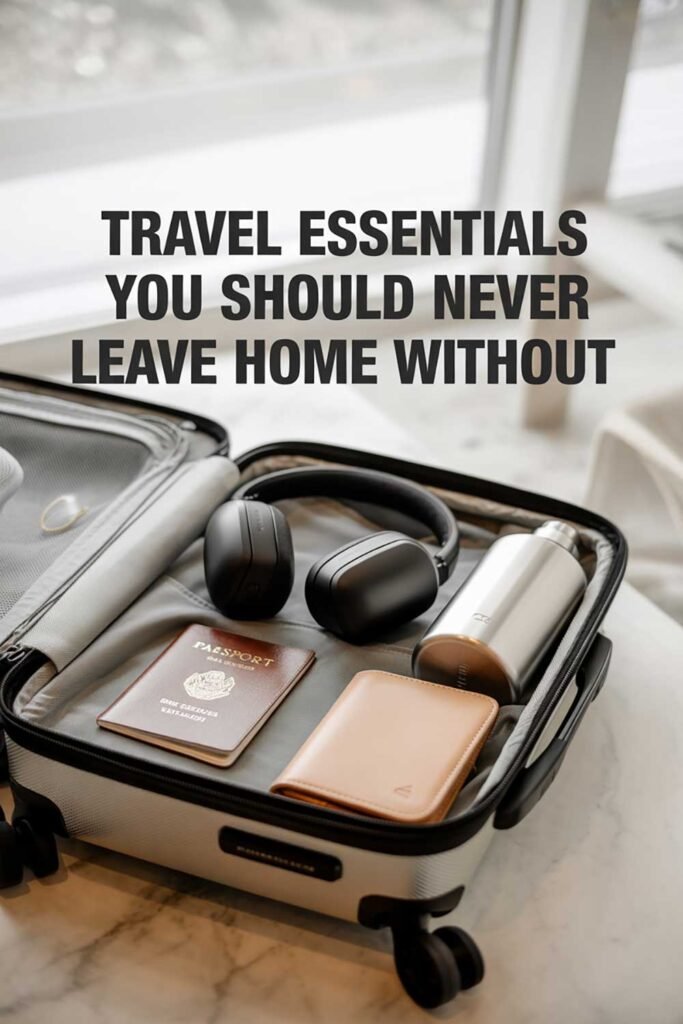
A dedicated travel day pouch — every child’s snacks, every child’s entertainment, every medication for the journey, the lip balm, the wipes, the small comfort items — assembled and in the personal item the evening before departure means the travel day’s most frequent needs are in one reachable location rather than distributed across bags that may end up in the overhead. The travel day pouch produced at the gate, mid-flight, and at the arrival is the pouch opened in one reach. The travel day without it is the search through three bags at the worst possible moments.
11. Have each child carry their own small backpack with their personal travel day items
The child with their own small backpack — appropriately sized for their age and strength — has a defined space whose contents are theirs and whose location is theirs to manage. The backpack holds the items most personal and immediate to the child: their entertainment, their specific snack, their comfort item. It also distributes the family’s aggregate carry-on load across more shoulders and reduces the single parent’s physical burden through every terminal corridor. The child who packed their own backpack knows where everything in it is and does not need to ask.
12. Wear slip-on shoes for every family member on travel days
Shoes come off at standard security for every person, and the time cost of lace-up shoes multiplied across a family of four or five is a meaningful contribution to the security belt backup. Slip-on shoes for every family member on travel days reduces the security interaction for the whole group to the time required for the items that cannot be simplified. Save the lace-up shoes for the destination. The security lane moves faster for every family behind the one whose members are all back in their shoes in six seconds.
13. Put all metal items in the bags before joining the security queue — not at the belt
Belts, watches, hair clips, and anything else that will trigger the scanner removed from every family member’s body before the queue — rather than at the bin where the time cost is shared with everyone behind — produces the security interaction that takes seconds rather than minutes. Brief every family member before arriving at the security entrance. The child who has put their coins in their backpack and the adult who has put their watch in the carry-on outer pocket before the queue begins are the family whose security clearance takes the time the preparation earned rather than the time the unpreparation costs.
14. Find the gate before food, coffee, or anything else after clearing security
The gate confirmed before anything else after security is the gate whose distance to the coffee shop, the food court, and the family seating area is known before any of them are visited. The gate discovered wrong after thirty minutes of terminal exploration with children is discovered at the worst possible time. Walk to the gate first. Confirm the flight on the gate display. Note the distance to every terminal feature needed for the wait. Then and only then are those features used with the knowledge of the return walk time and the boarding buffer available.
Plan Our Escape
Let us plan the family trip that takes the logistics off your plate entirely. Tell us where you want to go and we will build the itinerary, the bookings, and the family-specific details from the ground up.
Plan Our EscapeKeeping Kids Comfortable: The Flight, the Drive, and the Long Transit
The long transit with children is the stage of family travel that produces the most pre-trip anxiety and the most post-trip relief when it goes well. It rarely goes perfectly. But the difference between a long transit that is managed and one that is survived is almost always the preparation done before boarding — the entertainment confirmed charged, the snacks at the right accessibility level, the schedule aligned to the child’s natural rhythms rather than fought against them.
15. Load every child’s device with offline content before the flight
Streaming on a flight depends on connectivity whose reliability varies by route, carrier, and altitude. Downloaded content plays from local storage regardless of any of these variables. Download the specific shows, movies, audiobooks, and games each child will actually use on this specific flight — not a general library, but the content confirmed to hold their attention for the flight’s duration — the evening before departure. Confirm each download plays offline before the device goes in the travel day pouch. The entertainment that works at thirty thousand feet is the entertainment that was confirmed working the night before at sea level.
16. Bring more snacks than seems necessary — and keep them in the travel day pouch
The snack quantity for a family travel day should be calculated for the confirmed transit duration plus a generous buffer for delays, extended boarding, and the child who is hungry between the timing the snack plan assumed. Individual portions of familiar, reliable foods that each child will accept without negotiation are more valuable than novel or complex snack options whose rejection wastes the supply when the service cart was equally rejected. Keep every snack in the travel day pouch rather than across multiple bags. The snack needed at the specific moment is the snack found in one opening of one pouch.
17. Align the flight’s schedule with the children’s natural sleep rhythms where possible
The overnight flight that departs at bedtime and arrives at the destination’s morning is the flight that works with the children’s circadian systems rather than against them. The daytime flight that cuts across a nap window is the flight that produces the over-tired, overstimulated child whose second half of the journey is harder for everyone. Seat selection and booking time investment at the planning stage to choose the departure time that best aligns with the children’s natural sleep windows is the thirty-minute planning decision whose return is paid across the full transit.
18. Give each child a travel day responsibility — even a small one
The child with a specific responsibility on the travel day — carrying their own backpack, keeping the boarding passes for the family, being in charge of the snack pouch, tracking the family’s gate on the departures board — is engaged in the process of the transit rather than waiting for it to be over. The engagement reduces the specific boredom-driven friction that long waits and transitions produce in children who have nothing to do but notice that the journey is taking a long time. The responsibility appropriate to the age is the responsibility that produces the most engaged, most cooperative traveling child.
19. Book seats together at purchase — not at check-in
Seat selection at booking produces the family seated together at a cost that is sometimes modest and occasionally zero on carriers whose family seating policy assigns adjacent seats at check-in. Seat selection at check-in produces whatever is available, which on a full flight may be scattered single seats across the cabin. The family separated across a flight is a significantly harder transit than the family seated together in every dimension: supervision, comfort, passing items, emergency response, and the basic parenting interaction that adjacent seats make possible. Book the seats together. Do it at purchase. Do not assume the airline will manage it.
20. Build activity envelopes for each child to open at specific transit milestones
A small envelope per child — a sticker sheet, a small puzzle, a folded activity page, a note from home — opened at the boarding gate, after takeoff, at the flight’s midpoint, and at landing produces four specific moments of novelty and engagement across the journey that the continuous entertainment stream cannot replicate. The envelope is inexpensive, lightweight, and provides the specific forward-looking anticipation that “another envelope at the halfway point” produces in a child who has been sitting for three hours. Build them the evening before. Label them clearly. Hand them out at the right moments.
DND Resources
Our travel resources page has trusted tools, planning guides, and official sources for family trips of every type and every destination.
DND ResourcesAt the Destination: Family Travel Hacks That Make Every Day Easier
The destination is where the trip actually happens, and the family hacks that make it easier are the ones that reduce the daily friction of managing a group across unfamiliar environments. The child who knows where the meeting point is. The family whose accommodation is in the right neighborhood. The day whose schedule has the right amount of structure and the right amount of openness. These are not complicated interventions — they are the small operational decisions whose cumulative effect is the family trip that felt manageable rather than the one that felt like it was constantly at capacity.
21. Choose accommodation based on family logistics first, price second
The cheapest accommodation in the wrong neighborhood — far from public transport, far from the activities the trip is built around, requiring long daily commutes with children and strollers and bags — is more expensive in time, energy, and family patience than the slightly pricier option that is walkable to everything the trip requires. Family accommodation research should start with the map: where are the activities, what is the walk distance, is the neighborhood manageable with children, is there a park or open space within walking distance for the unscheduled afternoon. The right neighborhood is the trip’s daily infrastructure. It is worth the research time.
22. Establish a clear family meeting point at every destination and review it with every child on arrival
The family meeting point — a specific, visually distinctive landmark at every major venue, attraction, and destination area — is the instruction that converts a separated child from a crisis into a managed situation. Review it with every child old enough to act on it at each new location: the red umbrella café at the market entrance, the fountain at the park’s center, the hotel lobby desk. The child who knows the meeting point and the procedure for getting there is the child whose separation from the group is resolved rather than escalated. Establish the meeting point before the family enters every new environment.
23. Build one unplanned afternoon into every two days of the family itinerary
The family itinerary booked solid from morning to evening leaves no room for the child who needs to sit still for an hour, the spontaneous discovery that the whole family wants to stay longer at, or the afternoon that simply needs to be slower than the schedule allows. One open afternoon per two days is the planning decision that makes the family trip feel like a vacation rather than a performance. It is not a gap in the plan — it is the plan’s most valuable feature, available to be filled by whatever the destination and the family’s actual energy on that day produces.
24. Carry a compact first aid kit in the family personal item at all times
The family first aid kit — children’s pain reliever in the correct dosage, adhesive bandages in multiple sizes, antiseptic wipes, antihistamine, any family-specific items — in the personal item at all times is the kit that earns its space on the trip where a child scrapes a knee before the nearest pharmacy opens, a blister forms on the second walking day, or an unexpected allergic response needs an antihistamine before it escalates. Pre-assemble the kit, keep it permanently stocked, and restock it immediately after every trip that draws from it.
25. Eat one meal per day at a local restaurant away from the main tourist area
The restaurant one street from the tourist zone — the one where the menus are in one language and the families at neighboring tables are local families — is almost always better food at a lower price with a more genuine experience than the tourist-center equivalent. For families specifically, eating where local families eat also produces a more relaxed service environment: the spilled drink is not a catastrophe, the child’s noise is not unusual, and the pace of the meal accommodates the family rather than the restaurant’s table-turn ambitions. One meal per day in the local neighborhood. The family trip’s best meal is almost always there.
26. Use a carrier or compact stroller for younger children at destinations with significant walking
The destination that involves significant walking — cobblestone streets, market corridors, long museum galleries — is the destination where the child who begins walking independently for three hours and ends being carried by a tired parent is the entirely predictable outcome of not bringing the carrier or the compact stroller. Assess the destination’s walking terrain before departure. A lightweight carrier or a compact travel stroller whose folded size fits in the overhead bin is the equipment investment that makes the walking destination genuinely walkable for the whole family for the whole day.
How the Okafor Family’s Trips Stopped Feeling Like Survival Exercises
The Okafor family — two parents, three children aged four, seven, and ten — had taken several family trips whose pattern was consistent enough that the parents had started describing them with a specific phrase: “It was great, but we need a vacation from the vacation.” The trips themselves were good. The destinations were right. The memories were worth the effort. But the effort was consistently higher than it felt like it should be, and the source of it was rarely a single dramatic problem — it was the accumulation of small frictions that a better system would have prevented.
The change began with the color-coded cubes, which the seven-year-old chose himself — insisting on orange — and which meant that the morning outfit retrieval at the accommodation took thirty seconds because the orange cube contained his items and was immediately visible from above. The travel day pouch, assembled the evening before, meant the first two hours of every flight happened without a single bag being opened from the overhead. The activity envelopes, laughed at initially by the ten-year-old and opened ahead of schedule by the four-year-old, produced four specific moments of family calm across a nine-hour flight that the parents had quietly dreaded.
The meeting point habit — established at every new venue — was used once, at a crowded market, when the seven-year-old walked in the wrong direction for four minutes before self-correcting and returning to the agreed fountain. The parents did not know he had been separated until he described it over dinner that evening. The system had worked exactly as designed, without requiring any parental intervention at all. These thirty-three hacks are the complete version of what the Okafor family built across two trips. The phrase “vacation from the vacation” has not been used since.
Coming Home: The Family Reset That Makes the Next Trip Easier
The return from a family trip is the stage most often handled with whatever energy remains after the trip itself — which is frequently not much. But the family reset done well in the twenty-four hours after returning home is the investment that pays forward to every subsequent family trip. The bags restored, the lists updated, the lessons applied. The next family trip starts from a position of readiness rather than from the aftermath of the last one.
27. Do a systematic room check with every child before every accommodation checkout
Assign each child a zone of the room to check: the bathroom counter, the area around their sleeping space, the desk, the floor under the bed. The child responsible for their zone is engaged in the process and produces a distributed check whose coverage is more thorough than the single-parent sweep. The charger in the outlet found by the seven-year-old assigned to the bedside area comes home. The toy found by the four-year-old assigned to the floor under their bed comes home. The checkout sweep that distributed the responsibility found the items that the single-parent sweep was too tired to find.
28. Separate dirty laundry from clean items from the first evening at every accommodation
A lightweight laundry bag per child — or one shared family laundry bag at the base of the main suitcase — is the clean/dirty boundary that keeps the packing cubes’ category integrity intact throughout the trip. Every worn item from every family member goes into the laundry bag from the first evening. Every clean item stays in its color-coded cube. The return repack at checkout is a five-minute confirmed sort rather than the mixed-content excavation that the trip without a laundry bag consistently produces.
29. Repack for departure the evening before the final checkout — not the morning of
The family repack the evening before the final checkout is the repack without time pressure, without a taxi waiting, and without the specific distraction of children who are ready to go and cannot understand why the bags are not also ready. Every cube back in its suitcase. Every pouch confirmed in its position. The checkout morning is the morning of confirming the room sweep found everything and leaving — not the morning of assembling everything while managing every child simultaneously.
30. Reset every family bag within twenty-four hours of returning home
The laundry comes out and goes directly to the wash. Every cube is emptied and returned to its position. The travel day pouch is restocked. The first aid kit is checked and any depleted items replaced. The color-coded cubes are confirmed back in their correct bags. The whole family reset takes thirty minutes and produces the bags that are ready for the next trip rather than the bags that need to be rebuilt from a dismantled state before the next trip can begin.
31. Update every child’s packing list immediately after the trip while the memory is specific
The item each child wished for and did not have. The item that traveled in their cube and was never opened. The clothing size that has changed since the list was last updated. These details are most accessible in the twenty-four hours after returning and fade quickly into the general memory of the trip. Update every family member’s list before the bags are fully put away. The list updated from the honest feedback of the trip just completed is more accurate than the list that was built from the previous trip’s memory. Each update makes the next pack faster and more complete.
32. Debrief the trip with the children and note what they loved most
The family debrief — a simple dinner table conversation in the first few days after returning, asking each child what they loved most, what they would change, and what they want to do again — produces the planning intelligence for every future family trip. The four-year-old who loved the market more than any planned activity. The ten-year-old who found the museum tour too long. The seven-year-old who wants the accommodation with the pool next time. This information, noted and applied to the next trip’s planning, produces the family itinerary that was built from what the specific family actually enjoys rather than what seemed like a reasonable family itinerary from the outside.
33. Book the next family trip before the memory of this one fades
The family trip planning energy is highest in the days after returning — when the memories are fresh, the children are still talking about the highlights, and the next destination feels like a natural continuation of the experience rather than a new undertaking. The family who books the next trip in this window books it with the specific intelligence of the trip just completed: the right trip length, the right destination type, the right accommodation style, the right balance of structured and unscheduled time. The family trip booked while the last one is still vivid is almost always a better fit than the one planned from a cold start six months later when the specific lessons have faded. Book it. The next easy family trip starts with the momentum of this one.
Book A Trip
Book your next family trip with a travel agent who specializes in making family travel genuinely easier from the first booking to the last checkout.
Book A TripPicture This
The bags were packed two days before departure. Every family member’s list was confirmed against their color-coded cube. The medications and one outfit change per child were in the personal item. The travel day pouch was assembled the evening before: every child’s snacks, every child’s entertainment downloaded and confirmed offline, the activity envelopes labeled and stacked. The boarding passes were screenshotted for every family member. The two alarms were set.
At the airport, the children’s slip-ons came off and went back on in seconds. The travel day pouch produced the snack, the headphones, and the first activity envelope at exactly the right moments across the flight. The meeting point was established at the destination’s market on day three and used once, successfully, without the parents ever knowing it was needed until dinner. The unplanned afternoon on day four produced the thing the whole family still talks about. The checkout sweep assigned to each child found the charger and the small toy and the sunscreen on the bathroom shelf.
The reset happened the evening of returning home. Every list was updated. The four-year-old’s cube notes said “more sticker books.” The next trip was booked ten days later with the specific knowledge of what had made this one work. That is thirty-three hacks. That is the family trip that was worth every bag that was packed for it.
Before the Next Family Trip: Grab the Free Packing Checklist
Our free Travel Packing Checklist is the foundation of the family packing system these thirty-three hacks describe. Every category, every family member, every pre-departure confirmation. Download it and use it before the next trip.
Get the Free ChecklistExplore Our Top Picks for a Better Trip
After years of family travel and working with families around the world, these are the booking platforms and travel services we personally rely on — tested, trusted, and recommended because they have made our own trips and our clients’ trips consistently better.
See Our Top PicksTravel Printables at Premier Print Works
Visit Premier Print Works for family packing checklists, per-child packing lists, travel day pouches guides, activity envelope templates, and family trip planners that make every family departure more organized and every destination more enjoyable.
Visit Premier Print WorksBecome An Agent
Love helping families travel easier and enjoy more of every trip they take? See how to turn that passion into a home-based travel business.
Become An AgentDisclaimer
The information shared in this article is provided by Don and Diana’s Travels for general informational, educational, and inspirational purposes only. It reflects our personal experiences, opinions, and the experiences of travelers and families we have worked with. It is not professional travel, medical, legal, or parenting advice.
All decisions about children’s bags, responsibilities, and participation in travel activities should be based on each child’s individual age, maturity, and capabilities. Medical references including first aid, medications, and health-related travel items are general educational information only. Always consult a qualified healthcare provider for advice specific to your family’s health needs. Airline policies, baggage rules, and security procedures vary by carrier, airport, and country and are subject to change. Always confirm current requirements before traveling.
This article may contain affiliate and partner links that pay us a commission at no extra cost to you. Our recommendations are based on real use and genuine belief in the products and services we share. Stories on this site combine real experiences from Don, Diana, clients, and travelers we have worked with. Details may be adjusted for privacy and narrative clarity. All content is the copyrighted property of Don and Diana’s Travels. You may not copy or republish our content without prior written permission. By reading this article you acknowledge that you have read and agree to this disclaimer.