30 Genius Packing Tips That Make Vacation So Much Easier
The best packing tips are not complicated. They are the hard lessons of experienced travelers handed to you before you have to learn them yourself. Thirty trips later every seasoned traveler packs the same way: light, intentional, and always with a system. This is that system, in thirty tips.
Grab Our Travel Packing Checklist
The 30 tips in this article are most powerful when used alongside a structured packing checklist that organizes the categories these tips address. Our free checklist is that structure. Print it before your next trip, work through it using the tips in this article, and experience the packing session that experienced travelers have been having for years.
Get the Free ChecklistThe packing session starts earlier than the bag. The travelers who pack best are the ones who think before they pack, and the five tips in this section happen before a single item leaves the closet.
Build a master checklist once and use it forever
The most valuable hour a frequent traveler ever spends is the afternoon they sit down and build a master packing checklist from their actual travel history: every item they have genuinely used, in every category, organized by type. This checklist is not built from a generic travel website’s list. It is built from the traveler’s own trips, adjusted for their own needs, and refined trip by trip until it is accurate enough to replace memory entirely for the packing confirmation step. A checklist that takes forty minutes to build the first time takes five minutes to use before every trip and eliminates the specific airport discovery of the item that was definitely packed and was not. Build it once. Use it for every trip that follows.
Research the destination’s weather, context, and activity range before packing a single item
The packing session that begins without a clear picture of the trip’s actual daily context is a packing session that defaults to covering every scenario the traveler can imagine rather than the scenarios the trip will actually produce. Five minutes of research before packing answers the specific questions that govern every category decision: what is the temperature range for the trip dates, what is the formality level of the planned evenings, what specific activities are planned that require specific equipment, and what is the typical walking distance from the accommodation to the primary daily destinations. The answers to these five questions produce the packing brief that governs every decision in the session and prevents the scenario-coverage overpacking that the unresearched session consistently produces.
Lay everything out before it goes into the bag
Packing directly from closets and drawers into the suitcase is packing without a visual inventory of the total. The seventh pair of shoes goes in because the drawer is open and the shoes are there, not because the total of six pairs already in the bag is visible when the decision is made. Laying everything intended for the bag on a flat surface — bed, table, or floor — before any item goes into the bag provides the complete visual inventory that makes the total count obvious, the orphaned items visible, and the fifty-percent reduction possible from a position of information rather than intuition. Document the layout with a phone photograph before beginning the reduction. The photograph is the reference for future packing sessions and the comparison point that shows how far the system has progressed.
Pack the evening before departure, never the morning of
The morning-of packing session competes with departure preparation, meals, and the accumulated anxiety of imminent departure for the cognitive bandwidth that good packing decisions require. Items are added under time pressure that the calmer evening session would have declined. Reductions are not made because there is no time to reconsider. The bag closes at whatever size it reached because there is no time to reopen it. The evening-before session has none of these pressures. The departure is tomorrow rather than in three hours, and the decisions made at that calm temporal distance are consistently better, lighter, and more accurately calibrated to what the trip actually requires. Pack the night before. Do not reopen the bag in the morning except to confirm the items needed for travel day — documents, chargers, medication — are in the carry-on.
Choose the bag size before packing rather than after
The bag selected after the items are already assembled will always be the bag large enough to hold the current collection before any reduction has been applied. The bag selected before packing imposes an external physical constraint that the reduction process must meet. A carry-on selected as the target bag before the packing session begins produces a packing session where the question is which items fit within the carry-on rather than the session where the carry-on was already abandoned for the large checked bag because the collection outgrew it before the first item-by-item evaluation was made. Choose the bag. Pack to it. The bag size should be determined by the trip’s genuine requirements, not by how much the imagination suggested the trip might require.
Thirty trips later every seasoned traveler packs the same way — light, intentional, and always with a system.
The best packing tips are not complicated. They are just the hard lessons of experienced travelers handed to you before you have to learn them yourself.
Let Us Book the Trip That Makes Every One of These Tips Worth Applying
The trip worth packing smartly for is the trip worth taking. Tell us where you want to go and when you can travel. We will build the itinerary. You apply the system.
Plan Our EscapeClothing is the category where overpacking is most consistent and where the returns from a better approach are most immediately visible in the bag’s weight and the traveler’s daily experience at the destination.
Pack only what passes the combination test
Every item in the travel wardrobe earns its place by pairing with at least two other items in the bag to form a complete outfit. A top that pairs with one bottom is a top whose packing utility is one outfit. A top that pairs with three bottoms is a top whose packing utility is three outfits. Both take the same bag space. Only one of them earns it. Hold each item against every other item in the collection and count the outfit combinations. Items with high combination counts stay. Items with one combination count are returned to the closet unless they serve a specific critical function that no other item in the bag can serve. The combination test applied to a typical overpacked wardrobe consistently removes four to seven items that felt essential during the imagination stage and were never worn at the destination.
Build the wardrobe around a neutral palette
A wardrobe of five different color families requires a separate set of shoes, a separate bag, and a separate accessory combination for each family to coordinate successfully. A wardrobe built on a shared neutral palette, navy and cream and black and camel, requires one shoe pair for daytime, one shoe pair for evenings, one day bag, one evening bag, and two to three accessory combinations that work across every clothing piece. The palette coordination produces more outfit variety from fewer items by ensuring every top works with every bottom and every layer works over every outfit. The specific pieces can have texture, print, and visual interest within the palette. The palette itself is the organizational foundation that makes a twelve-piece wardrobe feel like thirty outfits rather than twelve repetitions of the same look.
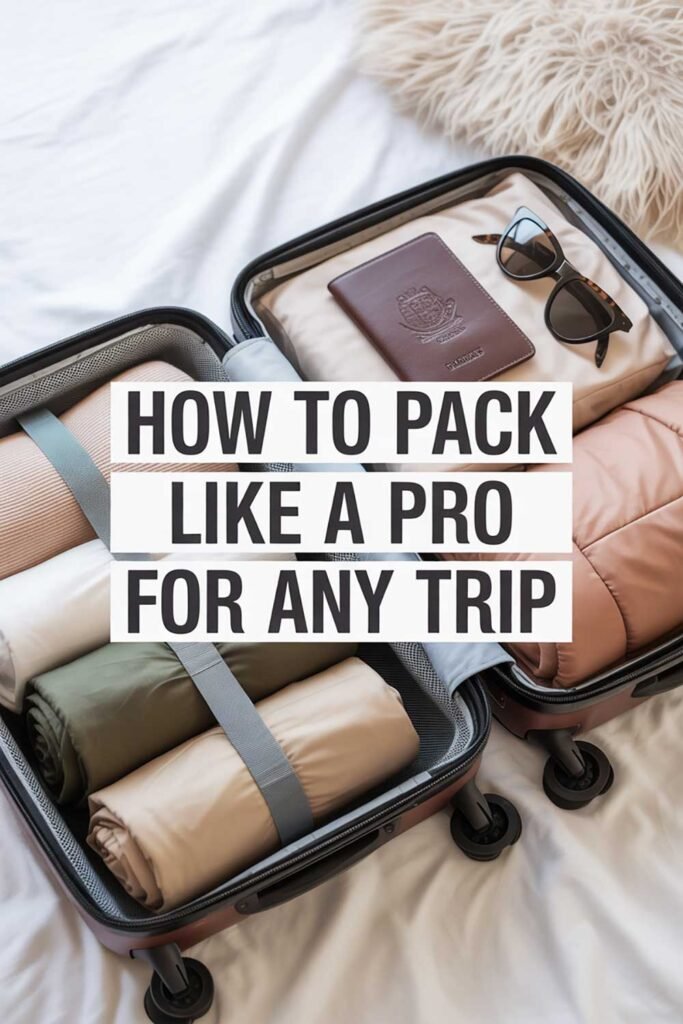
Roll the clothes
Rolling clothing rather than flat-folding it produces two specific benefits in the packed bag. The first is volume reduction: a rolled garment occupies a smaller footprint in the bag than the same garment flat-folded, and a bag packed with rolled garments consistently fits more clothing at the same total weight than the flat-folded equivalent. The second is crease reduction for certain fabric types: jersey knits, casual cotton, and similar fabrics that fold along predictable lines when flat-packed arrive wrinkle-free from a roll. The roll technique that produces the best results is the ranger roll, which starts at the hem and rolls tightly upward to the collar, creating a self-contained cylinder that does not unroll during transit. Structured woven fabrics that require specific fold lines to remain presentable are better flat-folded and placed in a flat-fold packing cube rather than rolled.
Wear the heaviest items on the flight
The heaviest items in the travel wardrobe are almost always wearable on any flight: the boots, the leather jacket, the heavy sweater, the jeans, the structured blazer. Wearing these on the departure day removes them from the bag weight entirely for the airline’s weigh-in and from the bag’s volume for the overhead bin or checked bag measurement. A traveler who boards wearing the leather jacket, the boots, the heaviest sweater, and the jeans has transported those items at zero bag cost. The items can be removed and stowed in the overhead bin after boarding if the cabin temperature makes them uncomfortable for the flight. The same principle applies on the return journey, when the bag frequently weighs more than it did at departure due to purchases and souvenirs. Wearing the heaviest items home creates the return bag weight margin that the souvenirs need.
Pack merino wool for any trip longer than three days
Merino wool is the travel fabric that justifies its typically higher price point through the specific advantages it provides in the travel context. It regulates temperature across a wider range than any other natural fiber, managing both cold outdoor environments and warm indoor spaces without requiring a complete clothing change between contexts. It wicks moisture away from the skin rather than holding it. It resists odor through two to three days of wear without washing, which is the specific quality that allows a merino wardrobe to travel further on fewer pieces because each piece covers more days before requiring laundering. It hand-washes quickly and dries overnight. And it emerges from the packed bag with fewer wrinkles than comparable cotton, synthetic, or standard wool garments. For any trip where laundry access is limited and the clothing needs to look good on day five as it did on day one, merino wool is the fabric investment that produces the most reliable return.
Toiletries are the second most consistent overpacking category after clothing, and the second most significant source of security checkpoint delays for the carry-on traveler. These five tips address both problems.
Pack the toiletry bag before the clothes, not after
The toiletry bag packed after the clothing is the toiletry bag that goes into whatever space remains after the clothes have claimed their portion of the bag. This approach consistently produces a toiletry bag that is either too large for the remaining space or too compressed to be useful. Pack the toiletry bag first, confirm its contents are correct and within the carry-on liquids rule, and place it at the top of the carry-on’s main compartment or in the most accessible exterior pocket. The clothing packs around the toiletry bag rather than the toiletry bag adapting to whatever space the clothing left. This sequence also ensures the toiletry bag is the first item confirmed in the packing session rather than an afterthought that prompts the departure morning discovery of missing items.
Decant everything into travel-size bottles sized for the trip duration
The full-size shampoo that lasts four months at home contains approximately ninety times the volume needed for a one-week trip. Decanting every liquid and semi-liquid personal care product into travel-size silicone squeeze bottles sized specifically for the trip’s actual consumption eliminates the volume and weight disproportion of full-size products while providing the exact same product in the exact amount needed. The quantity calculation takes less than two minutes: five milliliters per shampoo application multiplied by the number of washes planned gives the correct bottle fill level. A travel bottle filled for the trip’s actual consumption rather than filled to the brim just in case is the toiletry approach that fits every product in the carry-on’s liquids bag with room to spare.
Switch as many products as possible to solid format
Every liquid or gel product converted to a solid equivalent removes one container from the carry-on liquids bag. Solid shampoo bars eliminate the shampoo bottle and the liquids bag space it occupies. Solid deodorant eliminates the gel deodorant. Solid perfume eliminates the glass bottle that is the highest-risk breakage item in any toiletry bag. Solid sunscreen sticks eliminate the spray or lotion container. A toiletry kit that has converted every practical product to solid format has no liquids bag requirement at all for those products, passes through security without any clear bag assembly, and weighs significantly less than the liquid-product equivalent because solid products contain no water weight. Test any new solid product at home before the trip. The in-flight discovery that the solid shampoo bar does not work well for a specific hair type is the product discovery that should have happened in the home shower two weeks before departure.
Keep the clear liquids bag at the absolute top of the carry-on
The clear liquids bag buried at the bottom of the carry-on requires a full bag excavation at the security checkpoint that holds up the queue, delays the traveler, and begins the trip with a minor public inconvenience that is entirely preventable with a single packing order decision made at home. The clear bag is packed last and placed at the very top of the carry-on every single time, on every single trip, without exception. This position takes five seconds to establish and provides the specific security checkpoint efficiency of a traveler who removes the bag from the carry-on in three seconds, places it in the tray, and is through security before the traveler behind them has finished rearranging their bag after the excavation.
Build a permanent travel toiletry kit and maintain it between trips
The toiletry bag rebuilt from the home bathroom before every trip is the toiletry bag that takes forty-five minutes to assemble, forgets something on a regular basis, and is heavier than necessary because the assembly-from-the-full-bathroom approach has no governing constraint on how much goes in. The permanent travel toiletry kit, a small bag or case with pre-filled travel bottles of every product regularly used on trips, kept filled and ready rather than emptied after each trip and rebuilt from scratch before the next, reduces pre-departure toiletry preparation to a ten-minute confirmation that the kit is adequately stocked. After each trip, refill any depleted travel bottles immediately while the kit is still unpacked, so the kit is always at least seventy percent filled and ready to go with a top-off rather than a full rebuild.
See What We Recommend on Our Favorites Page
We have put together a favorites page with some of the things we love and use for travel. No promises, just things we genuinely enjoy and think you might too. Take a look when you have a moment.
DND FavoritesHow the items go into the bag is as important as which items go in. These five technique tips address the physical organization that makes the bag work during the trip rather than just at departure.
Use packing cubes and organize by category, not by day
Packing cubes organized by category — tops in one cube, bottoms in another, underlayers in a third — produce a bag that remains organized on day five of a ten-day trip as it was on day one, because the category organization is maintained by returning each item to its category cube after use rather than to wherever there is space. Packing cubes organized by day produce a bag that works when the trip goes exactly as planned and fails the moment any item is needed from a day that has not been reached in the planned sequence. The category system provides access to any single item by opening exactly one cube, leaving every other item in the bag undisturbed. The day system requires four cubes to find the one item that is in the wrong day’s cube.
Use a compression cube for bulky items
The compression packing cube, which has a secondary zip layer that compresses the contents to a fraction of their uncompressed volume, addresses the specific packing challenge of bulky items like fleece layers, knitwear, athletic wear, and down puffer jackets that occupy disproportionate bag space relative to their weight. The compression does not damage compressible fabrics — jersey knits, fleece, down, casual cotton — because these fabrics recover their loft and drape within minutes of removal. Structured woven fabrics, formal wear, and anything that relies on its shape for its presentation should not go in the compression cube. The compression cube for the bulky-but-casual items and standard flat-fold cubes for the presentation-sensitive items together produce a bag organization that minimizes volume without sacrificing the items that need to arrive wrinkle-free.
Stuff socks inside shoes to use the dead space
The interior of a packed shoe is dead space in most travel bags: a fixed volume of empty air that the shoe’s rigid shape creates and that nothing else can occupy. Stuffing rolled socks, a belt coiled flat, small accessories, or any other soft item that needs a contained space inside the shoe fills this dead space with storage that adds no bag volume and keeps the shoe’s shape during transit. A pair of shoes stuffed with two pairs of socks is a pair of shoes that arrived with its shape maintained and freed the socks from their own cube space. Scale this approach to every rigid-shape item in the bag: any item with an interior cavity that accommodates another item without damaging either is an opportunity to reclaim dead space that loose packing leaves empty.
Pack the heaviest items closest to the bag’s wheels or spine
The physical organization of weight within the bag affects how the bag moves, how comfortable it is to carry, and whether the bag’s contents shift and disturb the organization during transit. In a rolling suitcase, heavy items — shoes, toiletry bag, electronics — packed closest to the wheel side of the bag create a stable rolling base that keeps the bag upright and prevents the tipping that a top-heavy bag produces. In a backpack, heavy items packed closest to the back panel and the spine produce a load that stays close to the body’s center of gravity rather than pulling backward. In a duffel, heavy items centered and balanced on both sides produce a bag that carries without listing to one side. The specific arrangement differs by bag type. The principle is the same: heavy at the base, lighter at the top.
Intentionally leave twenty percent of the bag empty
A bag packed to capacity before departure has decided what the trip will contain before the trip has produced anything. The market discovery, the found souvenir, the spontaneous clothing purchase, and the good bottle of wine from the local vineyard that needs to travel home safely all require space in the bag that a completely packed bag cannot provide. The deliberate twenty percent empty space is the physical commitment to saying yes to whatever the trip offers that deserves a yes. It is also the practical buffer that accommodates the return journey’s reality: clothes take more space after wearing and washing than they do in the pristine folded packing of departure, and the return bag that was packed to capacity at departure is the return bag that requires sitting on the lid to close.
The Family That Packed for Every Version of the Trip Except the One That Happened
Priya and Marcus had been traveling with their two children for six years before they acknowledged that their packing approach had never improved. Every trip began the same way: a week before departure Priya would start a mental list that grew throughout the week. Marcus would pack the morning of departure by gathering whatever was accessible and seemed relevant. The children’s bags were assembled from the clothing currently on top of their respective drawer stacks. No one used a checklist. No one laid anything out first. The bags were packed to capacity at departure and inevitably came home heavier than they left because the twenty percent empty space the departure bags did not have was provided by the purchases and the gifts and the five things each family member acquired on the trip that now needed to fit somewhere.
The specific trip that produced the reckoning was a nine-day family vacation that required four checked bags, each at or near the airline’s weight limit, for a trip that involved one coastal city and one mountain resort. The checked bag fee for the four bags was significant. The overweight fee for two of the four bags was additional. At the coastal city, two of the four bags contained the ski gear that could not be used at the coastal city and would not be needed until day five at the mountain resort. The ski gear occupied the bags that the coastal city activities required the other clothing from, which meant daily repacking to access the items needed beneath the ski gear. At the mountain resort, the bags that had been primarily clothing-optimized for the coastal city now contained items that were over-warm for indoor resort environments and under-warm for the specific activities the mountain produced that the packing had not anticipated.
On the return flight, Marcus counted the items in the four bags that had not been used across the nine days. The number was twenty-three. He showed Priya. She asked what percentage of the total packed volume that represented. They calculated. It was approximately thirty percent: thirty percent of what they had paid to transport, carried through four airports, repacked around seventeen times, and returned home unworn and unused.
They built the system. Priya built the master checklist from the items they had actually used across the six years of family trips rather than from what they thought they might need. Marcus built the bag layout with the category cubes and the compression cube for the bulky items. They agreed on the twenty percent empty space rule before any departure. They committed to the evening-before packing session rather than the morning-of. On the next family trip they checked two bags instead of four. The bags were under the weight limit. At the destination the items needed were in the category cubes where they were expected to be. The twenty percent empty space that departed empty came home full of the things they chose rather than empty of the space they had not left. The thirty tips in this article are the system they built from twenty-three unused items and four checked bags. Every trip since has been packed differently. Every trip since has arrived at the destination ready, rather than over-committed to a version of the trip that did not materialize.
The airport and the flight are the environments where preparation’s return is most immediately felt. These five tips address the specific moments between the front door and the destination seat where packing decisions produce their most visible results.
Pack all flight essentials in the personal item under the seat, not the overhead bin
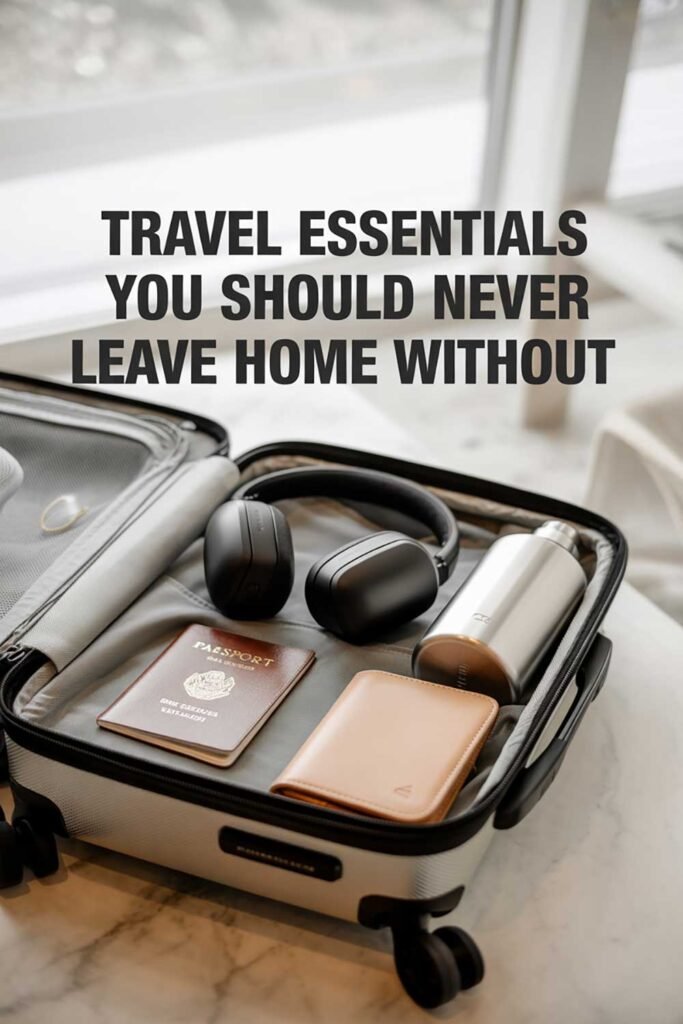
The overhead bin is physically inaccessible during boarding before the bin closes, during taxi and takeoff, during turbulence, during meal service when the cart blocks the aisle, and during any portion of the flight where standing would disturb sleeping seatmates. Everything needed during the flight — entertainment, charger, power bank, snacks, water bottle, neck pillow, eye mask, documents, and a change of clothes as insurance — belongs in the personal item under the seat where it is accessible in thirty seconds at any point in the flight regardless of cabin status. The carry-on in the overhead bin holds everything needed at the destination. The personal item under the seat holds everything needed for the journey. Packing to this distinction means a gate-checked carry-on is a significant inconvenience and not a flight-ruining event, because nothing in it was needed before landing.
Download entertainment offline before every flight
The airline’s seatback screen is available when functional, shows the airline’s current library, and is absent on aircraft configured for in-flight Wi-Fi rather than individual screens. A downloaded personal entertainment library plays any content the traveler chose, is available on every flight regardless of aircraft configuration, and functions fully in airplane mode without any connectivity dependency. The download session takes fifteen minutes the evening before departure on home Wi-Fi. It covers the full flight duration from a one-hour connection to a twelve-hour long-haul. It never freezes, never runs out of content, and never shows a library that was last updated six months ago. Download the entertainment. Every flight after it is the better for it.
Board with every device fully charged
The seat power outlet on economy class flights is not available on every aircraft, not functional at every seat, and not at full charging rate when it is functional and available. A device that boards at 60 percent with the expectation of reaching 100 percent at the seat outlet may arrive at the destination at 80 percent if the outlet underperforms. A device that boards at 100 percent with a fully charged power bank as backup arrives with its power needs covered regardless of seat outlet availability. Charge every device to 100 percent at whatever charging opportunity exists before the gate: the airport lounge, the terminal charging station, the restaurant outlet near the gate. The full battery at boarding is the power management decision that makes the power bank a backup rather than the primary source for the flight.
Know your bag’s measurements and the airline’s limits before you arrive at the gate
The gate is the worst place to discover that the carry-on exceeds the airline’s size limit for that specific flight. The gate agent’s size gauge, the full flight whose overhead bins are already claimed, and the gate check fee or forced checked bag fee are the specific outcomes that the five-minute pre-departure bag measurement confirmation prevents. Confirm the specific airline’s carry-on size limit for the specific fare class on the specific booking before packing. Most carry-on size limits are smaller than travelers assume, particularly on regional and low-cost carriers where the limit may be 20 by 14 by 8 inches rather than the 22 by 14 by 9 inch standard of major carriers. Measure the packed bag against the specific limit. If the bag exceeds it, address the excess at home rather than at the gate.
Always carry a change of clothes and one night’s essentials in the personal item
The checked bag or gate-checked carry-on that is delayed, misrouted, or lost at the destination produces one of two outcomes depending on what is in the personal item: either the traveler has a complete outfit change and the essential overnight items and the delayed bag is an inconvenience, or the traveler has only their laptop and phone and the delayed bag is a crisis. The change of clothes in the personal item is the insurance that converts every delayed bag scenario from a crisis into a manageable disruption. Pack one complete outfit change, one set of underwear, the essential overnight toiletries, any required medication, and the charger in the personal item for every flight that involves a checked bag. It fits. It weighs under a kilogram. Its presence on the one trip in thirty where the checked bag does not arrive is the difference between the trip continuing normally and the trip spending its first evening at a hotel gift shop.
Book the Trip Worth Packing All 30 of These Tips For
A well-packed bag is the beginning of a better trip. The right destination, the right itinerary, and the right booking are the rest of it. Our travel agents make the trip happen. You pack it right. Let us handle our part.
Book A TripThe return journey is the packing test that most travelers fail because they only pack for the departure. These five tips address the specific challenges of the bag that needs to come home heavier than it left.
Always leave room for what you bring home
A bag packed to capacity at departure has no room for anything the trip discovers. The market find, the souvenir that was too good to leave, the local product that cannot be found at home, and the generous gift from a person met along the way all need bag space that a fully packed bag cannot provide. The deliberate empty space at departure is the physical philosophy that distinguishes the traveler who packs expecting the trip to produce something worth bringing home from the traveler who packs as if the trip’s only purpose is to arrive and return with exactly what they left with. Leave room. The trip will fill it.
Pack a collapsible duffle or large reusable bag specifically for the return
A lightweight collapsible duffle or an oversized reusable shopping bag packed flat in the travel bag before departure takes up almost no space and provides the specific solution for the return journey where the bag that was efficiently packed for departure now needs to hold the departure contents plus the trip’s acquisitions. The collapsible duffle deployed for the return journey carries the overflow — the market purchases, the extra wine, the items that were shipped to the accommodation during the trip — without requiring the traveler to check an additional bag or compress the departure contents into an impossible arrangement. It folds flat in the main bag, adds under one hundred grams, and converts the return packing challenge from a puzzle into a simply divided contents-across-two-bags exercise.
Keep a separate laundry bag or mesh cube for worn items throughout the trip
The worn clothing that returns to the main clothing cubes or the suitcase floor during the trip is the clothing that mixes the clean and worn items in a way that undermines the organized bag’s cleanliness and produces the specific accommodation morning of pulling out what is believed to be a clean shirt and discovering it was worn three days ago. A dedicated mesh laundry bag or mesh packing cube that receives every worn item, kept separate from the clean clothing cubes, maintains the clean-worn distinction throughout the trip without any special effort beyond dropping worn items in the laundry bag rather than wherever is convenient. The laundry bag also communicates visually the trip’s progress: full mesh and depleted clean cubes means a laundry session is due. Empty mesh and full clean cubes means the system is working.
Do a systematic room sweep before every checkout
The hotel room item left behind is among the most consistent travel losses and the most preventable. A systematic room sweep before every checkout, following a fixed route through every room space that travel items occupy, catches the charger on the nightstand from overnight charging, the toiletry item on the bathroom counter, the sunglasses on the desk, and the book on the bedside table that were all confirmed packed before the bag was zipped and were then used between the final packing and the departure moment. The sweep route: bedroom nightstand, bedroom floor, bathroom counter and shower, bathroom medicine cabinet, desk, window ledge, any drawers checked-in items were placed in, and the safe if one was used. Three minutes. Every checkout. The charger left behind at the accommodation that requires an airport shop replacement is a charger whose absence the three-minute sweep would have caught.
Update the master checklist after every trip
The master checklist that was built from the first trip’s packing becomes the calibrated packing tool of the fifteenth trip through consistent post-trip maintenance. After every trip, spend five minutes reviewing the checklist against what was actually used: add any item that was genuinely needed and not on the list, remove any item that was on the list and consistently packed but never used across three or more trips, and note any quantity that was consistently wrong in either direction. After ten trips with this maintenance habit, the master checklist is a highly accurate document that reflects the actual travel pattern of its specific owner rather than a generic travel inventory, and the packing session it governs takes less than half the time of the session done without it. The checklist is not a static document. It is a living record of what the traveler actually needs, refined trip by trip until it is the most reliable packing tool they have.
The single packing habit with the highest return on effort for a first-time system adopter is not any individual tip in this list. It is the combination of tip three, lay everything out first, and tip four, pack the evening before. These two habits together produce the visual inventory that makes tip one through thirty possible to execute. Without the layout, the reduction (tip three’s implicit outcome) cannot happen. Without the evening-before timing, the calm that good reduction decisions require is not available. Start there. Build the rest from the foundation those two habits create.
Love Helping Travelers Pack Smarter and Travel Better?
The traveler who packs well travels better in every measurable way. If becoming a home-based travel agent who helps people plan better trips from the bag outward sounds like the right next step, see how the TravelPreneur system works. Earn commissions and build a real business from anywhere.
Become An AgentCommon Packing Mistakes These 30 Tips Prevent
Every tip in this article exists because a real traveler made the mistake it addresses. These are the six most consistent ones and the specific tips that prevent each.
Packing from memory rather than from a system
Memory during packing is the specific cognitive context where the most consistently used items at home are most consistently forgotten on the road, because automatic daily habits do not surface as items requiring conscious packing attention. Tips 1, 3, and 30 address this directly: the master checklist replaces memory, the layout makes the collection visible, and the post-trip update keeps the checklist accurate. A traveler who packs from a well-maintained master checklist after a complete layout has offloaded the memory task entirely and converted packing from a recall exercise into a confirmation exercise.
Packing outfits rather than a wardrobe system
A wardrobe of ten complete individual outfits for a ten-day trip is ten separate systems that share no pieces, produce no flexibility, and weigh and volume significantly more than a wardrobe of twelve coordinating pieces that produce thirty combinations. Tips 6 and 7 address this at the foundation level. The combination test reduces the wardrobe to its highest-utility pieces. The neutral palette ensures every piece coordinates with every other piece. The result is a wardrobe that produces more variety from fewer items at less weight than the outfit-by-outfit approach at any trip duration.
Filling the bag to capacity at departure
The departure bag that has no empty space has no capacity for what the trip produces. Tips 20 and 26 address this from two directions: the deliberate empty space principle and the always-leave-room-for-what-you-bring-home mindset. A bag filled to capacity at departure arrives at the destination without the margin that every trip eventually needs and returns home either unable to close or missing the purchases that the departure capacity foreclosed. Pack to seventy to eighty percent of comfortable capacity. The remaining twenty to thirty percent is reserved, not wasted.
Putting flight essentials in the overhead bin
The overhead bin is inaccessible during multiple portions of every flight. Every item needed during the flight that is in the overhead bin is an item that is not available during those portions. Tip 21 addresses this with the specific distinction between the overhead bin’s purpose (destination items) and the under-seat personal item’s purpose (journey items). A gate-checked carry-on is an inconvenience for the traveler who packed to this distinction and a genuine disruption for the traveler who did not. Pack the flight and the destination separately. Every flight confirms the value of this separation.
Rebuilding the toiletry bag from the home bathroom before every trip
The toiletry bag rebuilt from scratch before every trip takes longer, forgets more, weighs more, and exceeds the carry-on liquids rule more frequently than the permanent pre-filled travel kit maintained between trips. Tips 12, 13, and 15 address this: decant to the correct volume for the trip duration, convert products to solid format where possible, and maintain the permanent travel kit so every trip begins with a confirmed-ready toiletry bag rather than a forty-five-minute assembly from the full bathroom cabinet. The permanent kit is built once and maintained in five minutes after each trip. Its return on that maintenance is every subsequent trip’s packing session being twenty minutes shorter and more complete.
Skipping the room sweep at checkout
The hotel room item left behind is preventable with three minutes of systematic searching that follows the same route through the room at every checkout. Tip 29 defines that route. The traveler who does the sweep catches the charger, the sunglasses, and the medication that were used between the packed bag’s closing and the departure moment. The traveler who trusts the packed bag is complete without a sweep discovers the missing item at the airport, the next accommodation, or the destination pharmacy at the price point of an emergency replacement.
Frequently Asked Questions
These are the questions travelers ask most often about packing smarter. Real answers from real packing experience across trip types, bag sizes, and destination categories.
Which of the 30 tips makes the most immediate difference for someone who has never used a system?
The two tips with the highest combined immediate return for a first-time system adopter are tip three, lay everything out before it goes in the bag, and tip four, pack the evening before departure. These two habits produce a visual inventory that makes every subsequent decision in the packing session possible, and the departure-minus-one-day timing provides the calm that good packing decisions require and that the morning-of session consistently lacks. A traveler who has never laid out their full collection before packing almost always discovers that the collection is larger than they thought, which surfaces the reduction decision that produces a lighter bag before any other tip has been applied. Start with these two. The others build naturally from the foundation they create.
How do you apply these tips when packing for multiple people, such as a family?
The core tips apply to multi-person packing with one structural modification: each person in the group should have their own category-organized packing cube set within either their own bag or their designated section of a shared bag, so that accessing any one person’s items requires opening that person’s specific cube rather than searching through a communal pool of everyone’s clothing. The master checklist becomes a family master checklist with each person’s items organized by category within the shared document. The layout tip applies to each person’s collection separately before the bags are assembled together, since a family collection laid out all at once can become overwhelming rather than clarifying. The twenty percent empty space tip is most critical for family packing where the combined departure weight is highest and the margin for return-trip acquisitions is smallest. Apply the tips per person and then assemble the full family bag.
How do you balance packing light with packing for every possible weather scenario?
The weather scenario anxiety that produces overpacking is best addressed by the layering principle rather than by the scenario-coverage principle. The scenario-coverage approach packs a complete separate outfit for every weather scenario the destination might produce. The layering approach packs a core wardrobe in versatile fabrics and adds two to three lightweight layering pieces that handle the full temperature range the destination’s forecast window covers. A packable down jacket, a lightweight shell, a fine merino mid layer, and a compact umbrella handle the full weather range of most travel destinations in a total packed volume smaller than one heavy winter coat. Research the destination’s actual typical weather range for the specific travel dates from a reliable weather history source rather than packing for the destination’s worst-ever recorded weather, which is the specific overcoverage that most weather-anxiety packing produces.
What is the best way to handle fragile or breakable items like souvenirs on the return journey?
Fragile souvenir packing on the return journey is a challenge that rewards pre-trip preparation rather than improvisation at the destination. Before departure, pack a small roll of bubble wrap or a set of reusable packing pouches in the bag’s base specifically for the return journey’s potential fragile items. This small pre-trip preparation means the fragile market purchase or the wine bottle from the vineyard can be wrapped and protected immediately at the point of purchase rather than being improvised with clothing at the accommodation packing session. For items too fragile to travel safely in luggage regardless of wrapping, shipping the item home from the destination is often available at a cost that is lower than the anxiety and risk of carry-on or checked bag transit. Most tourist destinations at the level where travelers are purchasing fragile souvenirs have reliable shipping infrastructure that handles the specific challenge of protecting the purchased item for the journey home.
Do these tips work equally well for carry-on only travel and checked bag travel?
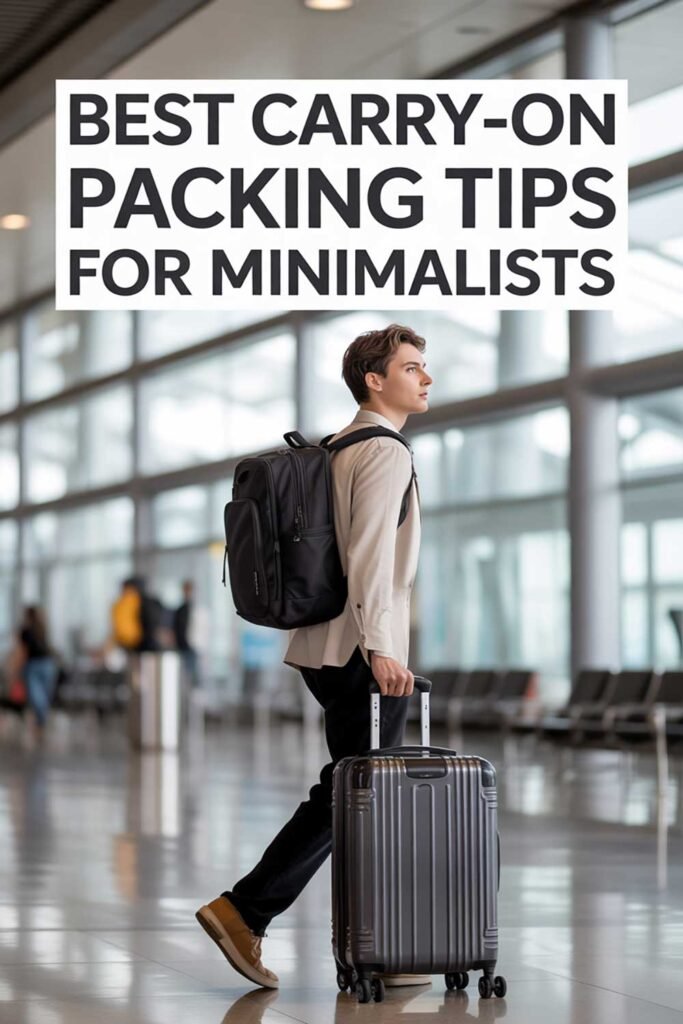
The core tips apply equally to both formats. The specific tips that produce the highest additional return for carry-on only travel are the ones that address volume and liquids rule compliance: tip twelve on decanting to trip-duration quantities, tip thirteen on solid product conversion, tip fourteen on clear bag position, and tip five on choosing the bag size before packing. The specific tips that produce the highest additional return for checked bag travel are the ones that address the checked bag’s specific risks: tip twenty-five on packing flight essentials in the personal item independent of the checked bag, tip twenty-seven on the collapsible duffle for the return journey, and tip twenty-eight on the laundry bag for worn items. Both formats benefit from the full thirty tips. The emphasis shifts based on the specific challenges each format introduces.
How long does it actually take to pack using these tips compared to packing without them?
The first packing session using the full system takes longer than the habitual session it replaces, because the layout, the reduction, the category cube organization, and the checklist confirmation each add deliberate steps to what was previously an unstructured grab-and-go process. Most travelers report that the first fully systematic packing session takes sixty to ninety minutes, which may be longer than their typical session. From the second trip onward, with a maintained master checklist, a pre-filled permanent toiletry kit, and an established packing cube layout, the session shortens progressively as the system becomes habit rather than deliberate process. By the fifth trip, most travelers using the full system complete the packing session in thirty to forty-five minutes and arrive at the destination with a more organized, more appropriate, and lighter bag than the ninety-minute unstructured session ever produced. The investment is in the first session. The return is every session that follows.
The best packing session is the one where the last item placed in the bag was the item that proved the system works: it fit, it was needed, it was in the right place on arrival, and there was room in the bag for what the trip produced along the way.
Picture the Bag the Night Before Your Next Trip
The master checklist is open. Everything is laid out on the bed. The collection is smaller than it used to be because the combination test was applied and three items came out. The packing cubes are organized by category. The compression cube holds the bulky layer at half its uncompressed volume. The toiletry bag is packed and at the top of the carry-on. The clear bag will come out in three seconds at security. The personal item has the flight essentials. The bag has twenty percent empty space. It is 9 p.m. and the bag is done. You are not thinking about the bag. You are thinking about where you are going. That is the system. That is every trip from here.
One More Thing Before You Apply These 30 Tips
Print our free Travel Packing Checklist and use it as the foundation document that tip one of this article describes. It is already organized by category. It is already designed to be checked and reset for each trip. It is the starting point for the master checklist the system requires. Use it for the next trip and every trip after it.
Get the Free ChecklistExplore Our Top Picks for a Better Trip
Stop by our favorites page when you have a moment. We have put together some things we genuinely love and use when we travel. No promises about what you will find — just a curated collection from our own travels that we think is worth a look.
See Our Top PicksTravel Prints and Printables From Our Shop
Visit Premier Print Works for packing list printables, trip preparation planners, travel journals, and wall art that makes every trip a little more beautiful and a lot more organized from the evening the checklist is opened to the morning the door closes on the most prepared departure yet.
Visit Premier Print WorksDisclaimer
The information shared in this article is provided by Don and Diana’s Travels for general informational, educational, and inspirational purposes only. It reflects our personal experiences, opinions, and the experiences of travelers we have worked with. It is not professional travel, legal, financial, or medical advice, and it should not be relied on as such.
Airline Baggage Policies
Airline baggage policies, carry-on size and weight limits, checked bag fees, and security screening requirements change frequently and vary by airline, fare class, route, airport, and country. Always confirm current baggage policies with the specific airline for the specific booking and follow all security screening instructions at every checkpoint. We are not responsible for any baggage fee, security outcome, or baggage-related result arising from information in this article.
Affiliate and Partner Links
This article may contain affiliate links, partner links, referral links, and links to products or services that pay us a commission. If you click a link and make a purchase or complete any qualifying action, we may earn a small commission at no extra cost to you. Our recommendations are based on real use and genuine belief in the products and services we share.
Third-Party Websites and Services
We may link to third-party websites, services, and resources for your convenience. We do not control these sites and are not responsible for their content, terms of service, pricing, availability, or any product or service they sell. Your use of any third-party site is entirely at your own risk.
Health, Safety, and Personal Responsibility
Travel involves personal risk. You are solely responsible for your own health, safety, travel insurance, medications, vaccinations, documentation, financial decisions, and choices while planning or taking any trip. We strongly recommend purchasing comprehensive travel insurance for every trip. Don and Diana’s Travels, its owners, employees, contractors, and affiliates accept no liability for any loss, injury, illness, delay, cancellation, damage, theft, or inconvenience arising from your use of the information in this article or from any travel decisions you make.
Composite Stories and Characters
Some stories, examples, and traveler experiences shared on this site are composites drawn from the real experiences of Don, Diana, clients, friends, and travelers we have worked with over the years. Names, identifying details, locations, and circumstances may be combined, changed, or fictionalized to protect privacy. Any resemblance to a specific real person beyond the composite portrayal is unintentional.
No Guarantees
We do not guarantee any specific result, outcome, savings, or experience from using the information, tips, services, or products mentioned in this article. Your results depend on many personal factors including your own choices, effort, circumstances, and external conditions outside of our control.
Copyright and Use
All content in this article is the copyrighted property of Don and Diana’s Travels unless otherwise noted. You may not copy, republish, redistribute, modify, sell, or reuse our content without our prior written permission. You are welcome to share a direct link to this article with proper credit.
By reading and using the information in this article, you acknowledge that you have read, understood, and agree to this disclaimer in full.