Travel days feel easier when you stop treating them as something to survive and start treating them as the first hour of your adventure. The most relaxed traveler in any airport left the house twenty minutes earlier than everyone else. This article builds the travel day system that makes that traveler you.

Best For
All Travelers
Vibe
Calm and In Control
Read Time
12 Minutes
Walk Away With
The Complete Travel Day System
Free Download

Grab Our Travel Packing Checklist

The travel day system in this article works best when the bag is already organized before the travel day begins. Our free packing checklist builds that organization from the departure preparation through the personal item essentials to the documentation that every travel day requires. Print it before your next trip and arrive at the airport with the organization that makes every other travel day hack work.

Get the Free Checklist

Wear Your Most Comfortable Outfit

The travel day outfit decision is the one clothing decision with the most direct relationship to the quality of the day’s physical experience, and it is the decision most consistently made with the wrong criteria. The outfit chosen because it looks good at the destination’s first impression, because it photographs well at the gate, or because it matches the luggage involves a trade-off that only becomes apparent at hour six of a ten-hour travel day: the waistband that was fine for two hours is not fine for ten, the material that was presentable when fresh looks and feels worn after a long-haul flight’s humidity and dryness, and the shoes that were chosen for the destination’s first-day aesthetic have produced the specific blisters that greet the destination with a limp rather than enthusiasm.

The travel day outfit is optimized for one criterion above every other: comfort across the full duration of the travel day. For most travelers, this means a soft jersey or stretch fabric that does not restrict movement when seated for extended periods, shoes that have been worn long enough that their fit is confirmed comfortable for hours of airport walking and standing, and a layering system that handles the transition from the home’s temperature to the airport’s temperature to the aircraft cabin’s temperature without requiring a full outfit change at any point in the journey. The specific items depend on the traveler’s personal style and comfort preferences. The criterion does not: comfort for ten hours in one outfit and one pair of shoes, without waistband restriction, heel discomfort, fabric friction, or temperature management failure at any point in the day.

The comfort-versus-presentation tension in the travel day outfit is largely false. A well-fitted pair of dark ponte trousers with a soft jersey top and a leather sneaker or a low-heeled ankle boot is an outfit that a reasonable person would not describe as casual in any negative sense, that manages temperature across the airport-to-aircraft transition through a light layer added or removed, and that arrives at the destination looking as if it was worn for two hours rather than twelve. The outfit that makes the travel day physically comfortable is almost always an outfit that looks intentional at the destination. The outfit that photographs well at the gate is the outfit that feels like a mistake at hour eight.

Choose the travel day outfit the evening before departure at the same time the personal item is being packed. Laying it out, confirming it is clean and pressed, and confirming the shoes are by the door converts the departure morning from a what-do-I-wear decision made under time pressure into a get-dressed moment where every item is already confirmed and waiting. The departure morning has enough logistics competing for attention without adding an outfit decision to the list.

The most relaxed traveler in any airport left the house twenty minutes earlier than everyone else.

Travel days feel easier when you stop treating them as something to survive and start treating them as the first hour of your adventure.

Insider Note

Build a designated travel day outfit into the wardrobe as a semi-permanent item rather than selecting a new combination before each trip. The traveler who has a specific outfit they consistently wear on travel days — the specific jersey trouser and soft top and leather sneaker combination that has been confirmed comfortable across multiple travel days — reduces the travel day outfit decision to a confirmation that those items are clean and available rather than a fresh style decision made under departure pressure. The outfit does not need to be the same on every trip, but having a small set of confirmed-comfortable travel day items that are worn specifically for this purpose eliminates the decision fatigue and the risk of a first-time outfit choice that reveals its discomfort at altitude.

We Plan, You Travel

Let Us Book the Trip That Makes This Travel Day System Worth Building

A great travel day system is best tested on a trip worth traveling to. Tell us where you want to go. We will build the itinerary, book the flights, and handle the planning that makes the destination worth the system. You show up comfortable, organized, and twenty minutes early.

Plan Our Escape

Pack Your Personal Item the Night Before

The personal item packed the morning of departure is the personal item that was packed under departure pressure, which means it was packed in whatever order items were thought of, which means the charger is at the bottom under the snacks under the neck pillow under the documents that needed to come out at security and were placed on top of everything else at the security tray and then repacked in the order they were available rather than the order they would be needed. The personal item packed the evening before departure is packed deliberately, in a known layout that has been confirmed by the previous travel day’s use, with every item in its category location and the items most frequently needed at the top.

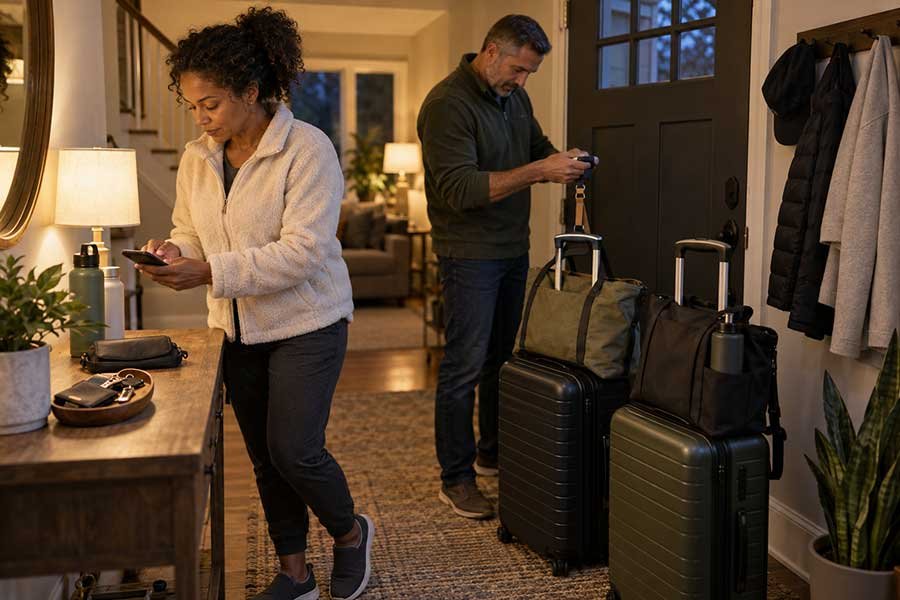
The personal item packing session the evening before is most productively done alongside the outfit selection and the final bag confirmation, as part of a structured twenty-minute departure evening routine rather than as a separate task. The complete departure evening routine: confirm the checked bag or carry-on is packed and organized. Lay out the travel day outfit. Pack the personal item in its standard layout. Confirm the documents wallet is in the personal item’s interior zip. Confirm the charger and power bank are in the right exterior pocket at 100 percent charge. Confirm the snacks and filled water bottle are in the left exterior pocket. Confirm the entertainment downloads are complete. Confirm the clear liquids bag is at the top of the carry-on. Set the phone alarm for the departure morning timeline. This routine takes twenty minutes. It replaces the departure morning’s thirty to forty-five minutes of anxious preparation with a five-minute confirmation that the previous evening’s work is intact.

The personal item’s consistent layout across every travel day is the organizational habit that makes the night-before packing productive rather than anxiety-generating. A personal item packed in the same layout on every trip is a personal item where every item is in its known location, retrievable in the dark at 3 a.m. in the overhead bin’s shadow, available at the security tray in three seconds, and accessible in mid-flight without disturbing the seatmate. The consistent layout is established once and maintained by the habit of returning every item to its location after use. The departure morning’s five-minute confirmation is the final check on a system that was built to not require confirmation, and produces the calm of a traveler who knows everything is where it should be rather than the anxiety of a traveler who is trying to remember whether it is.

Insider Note

Include a small zippered travel wallet in the personal item for the departure morning’s most-used items: boarding pass (digital or physical), ID or passport, credit card for the airport coffee, the phone, and the earbuds. These five items are accessed more frequently in the first two hours of the travel day than in all the hours between them, and having them in one small wallet in the personal item’s most accessible exterior pocket converts every airport interaction from a bag excavation into a wallet retrieval. The travel wallet also provides a natural consolidation point for the destination’s local currency when the trip involves cash, so the cash, the card, and the boarding pass are always in the same location rather than distributed between a jacket pocket, a wallet, and wherever the boarding pass was most recently seen.

Download Entertainment Before You Leave Home

The in-flight entertainment system that depends on streaming is the system that works until the connectivity fails, which it does on virtually every flight at some point and on all flights in the portions of the journey before the Wi-Fi is activated, during the takeoff and landing periods when the cabin is in airplane mode, and throughout the taxi and ascent when the aircraft’s in-flight Wi-Fi system has not yet reached operational altitude. The downloaded content that plays in airplane mode without any connectivity is available from the moment the seatbelt sign illuminates at the gate through the final descent, regardless of the aircraft’s connectivity status and regardless of whether the in-flight Wi-Fi was activated, stable, or affordable.

The entertainment download session takes fifteen minutes on a home Wi-Fi connection and covers the full duration of any flight from a one-hour domestic hop to a fourteen-hour long-haul. The specific downloads: one to two episodes of the series currently being watched, one feature film for the longer flight segment where the series runs out before the descent begins, one podcast episode or two in the format that suits the flight’s length and listening context, and one audiobook chapter or download for the reader who prefers audio to screen during flight. These downloads on a single device produce more entertainment hours than any single flight requires, and they play without a signal bar, without a buffering indicator, and without the specific in-flight frustration of a streaming service that loads the title card and then pauses for twenty seconds before loading nothing.

The offline download applies with equal importance to navigation and translation for international travel days. The Google Maps offline region download for the destination and every connection airport confirms navigation from the aircraft door to the accommodation without any local connectivity dependency. The Google Translate offline language pack for the destination confirms translation capability at the customs declaration form on the aircraft, the immigration officer’s questions, and the taxi driver’s request for the destination address, all before the destination’s local SIM or Wi-Fi is connected. These downloads take under twenty minutes combined and provide the complete connectivity-independent digital toolkit that converts the arrival in an unfamiliar destination from a connectivity-anxious scramble to a calm and informed entry.

Insider Note

Download a transit and map app for the destination city as well as Google Maps offline. Many cities have dedicated transit apps that provide real-time transit information, ticket purchasing, and route planning for the local bus, metro, and train systems in a format that is more accurate and more useful for local navigation than Google Maps’ transit layer. Research the specific transit app used by locals at the destination before departure and download it on home Wi-Fi. A traveler who arrives at an unfamiliar city’s transit system with the local app already downloaded and configured is a traveler who boards the correct train at the airport rather than the traveler who is reading a sign in a language they do not speak while the correct train departs from the adjacent platform.

Helpful for Your Journey

Find Booking Ideas and Travel Essentials on Our Favorites Page

We have put together a favorites page with resources and helpful information for booking and travel essentials that we think can genuinely improve the travel day and everything after it. Whether you are planning your next trip or looking for ideas to make travel easier, it is worth a browse.

DND Favorites

Build Buffer Time Into Every Connection

The tight connection, chosen because it minimizes the total journey time or because it was the cheapest itinerary option, is the connection that makes the travel day feel like a sprint from the moment the first flight lands. The buffer connection, chosen because the next segment of the journey does not begin until there is time to walk at a normal pace, use the restroom, eat something that is not whatever was available at the gate’s single food option, and confirm the departure gate without running, is the connection that produces the travel day experience of a journey rather than a logistics emergency. The fifteen to thirty minutes of additional total journey time that a comfortable connection adds is the time that converts every travel day’s middle section from anxiety-driven to relaxed.

The minimum connection time for a domestic same-airport connection at a major hub is typically ninety minutes to two hours for a traveler without checked bags who knows the airport layout and is prepared for the security re-entry that some domestic connections require. For an international connection that requires clearing customs and immigration at the connection point, re-entering security, and navigating an unfamiliar terminal, three hours is a more honest minimum that accounts for the specific unpredictability of the customs and immigration process, which can take twenty minutes on a good day and two hours on a day when the arriving aircraft was delayed and every passenger from every flight that was supposed to land before it has queued at the same immigration booths. Book the connection that provides this buffer rather than the connection that provides the minimum time the booking platform’s algorithm considers feasible. The algorithm does not know about the delayed inbound flight, the slow immigration officer, or the concourse that requires a shuttle bus.

The buffer time philosophy extends from the connection window to the departure morning timeline. The traveler who calculates the latest possible departure time from home and leaves at that time is the traveler who arrives at the check-in counter with exactly zero minutes to absorb the specific unexpected event that travel days consistently produce: the traffic incident that added twenty minutes to the route, the parking structure that was full and required the overflow lot, the security line that was longer than the TSA wait time app suggested, and the gate that was changed between the app’s last update and the boarding call. The traveler who left twenty minutes earlier than the latest possible time has absorbed all of these without running and arrives at the gate with enough time to use the restroom before boarding. That is the specific experience that the extra twenty minutes purchases. It is the best twenty-minute investment in any travel day’s quality.

Plan the departure morning timeline by working backward from the flight’s boarding time. Boarding typically begins thirty to forty-five minutes before the scheduled departure. Security requires a minimum of thirty minutes at most major airports and significantly more at peak times, international departures, and airports with known congestion. Check-in and bag drop require fifteen to thirty minutes. Transit from home to the airport requires the confirmed travel time plus a buffer for the specific delays that departure morning transit consistently encounters. Add these segments and the result is the time the departure from home must occur for the boarding call to be heard at the gate rather than at the security line. This is always earlier than intuition suggests, because intuition consistently underestimates every segment.

Insider Note

Set a phone reminder titled LEAVE NOW that fires at the calculated departure time from home rather than at the flight’s boarding time. The boarding time reminder produces the response of checking how much time is available before the boarding call, which consistently produces the assessment that there is still time, which consistently produces the departure ten minutes later than the LEAVE NOW reminder would have produced. The LEAVE NOW reminder at the calculated departure time is the boundary that the departure morning’s optimistic time-management cannot push through, because the action it requires is leaving the house rather than checking whether it is time to think about leaving the house. The twenty minutes of buffer time the article describes is only available if the LEAVE NOW time is calculated to include it and the LEAVE NOW reminder fires at that time rather than at the time that was most convenient when setting the alarm the night before.

The Travel Day as the First Hour of the Adventure

The travel day experienced as an ordeal to survive before the real trip begins is a day of compressed waiting, managed anxiety, and endured inconvenience that arrives at the destination already depleted. The travel day experienced as the first chapter of the trip is the same sequence of events — the drive to the airport, the security line, the gate wait, the boarding, the flight — with a different internal frame that converts the waiting into anticipation, the security line into the last moment of ordinary life before something interesting begins, and the flight into the first real time in weeks that no one needs anything from the traveler and the destination is getting closer at five hundred miles per hour.

The specific practices that support the travel day as adventure-opening rather than ordeal-preceding: bring one item to the airport that is specifically for the airport experience rather than the destination. A good book that is started on the departure morning and only read during travel, so it is associated in the mind with the specific pleasure of being in transit. A specific coffee order from the airport’s coffee shop that is a travel day ritual rather than a daily habit. A travel journal that receives the first entry of the trip in the gate area, recording the specific details of departure that the excitement and the exhaustion of arrival at the destination typically obliterates from memory: the departure gate’s specific light, the conversation overheard at the adjacent seat, the way the runway looks from the terminal window on a specific morning in a specific season. These rituals are small. Their effect on the travel day’s emotional experience is not.

The buffer time, the comfortable outfit, the pre-packed personal item, and the downloaded entertainment are the practical infrastructure of the travel day. The travel journal, the travel ritual coffee, the specific book kept for transit: these are the experiential infrastructure that converts the identical practical infrastructure into an experience rather than a transaction. Both matter. The practical infrastructure prevents the stress. The experiential infrastructure provides the pleasure that makes the travel day a memory rather than a gap in the trip between the home and the destination.

Insider Note

Write the first travel day journal entry in the gate area rather than at the destination. The gate area is the specific moment when the trip has irrevocably begun, the home environment is behind, the destination is ahead, and the traveler is in the in-between space that belongs entirely to neither. The details of this moment, the specific terminal architecture, the adjacent gate’s destination board, the mix of nervous first-time flyers and bored frequent travelers sharing the same gate seats, are details that the arrival destination’s excitement erases from memory. A gate entry written in ten minutes while the boarding group numbers are being called is the travel day record that the trip narrative otherwise lacks: the moment between home and there, recorded while it was still the present rather than reconstructed as a distant yesterday from the first destination hotel room.

The Travel Day That Was Ten Hours of Everything Going Wrong, and the One After It That Was Not

Nadia had never particularly enjoyed travel days. She had accepted this as a fact of travel rather than a problem with a solution, the way some people accept that they do not enjoy the drive to a destination even when they love the destination. The travel day was the thing to get through. The trip was what came after.

On a trip that required a connection, Nadia’s travel day produced the specific sequence that occasional travelers know as a story and frequent travelers recognize as the avoidable version: she had packed the personal item the morning of departure and discovered in the taxi that the phone charger was on the kitchen counter. The outfit she had chosen because it looked good for the destination’s first impression had produced the waistband problem by hour three and the shoe blister by hour five. The airline’s seatback screen on the first flight was functional but the content library had nothing she wanted to watch, and the streaming app she opened on her phone required a signal that disappeared when the aircraft reached altitude. The connection was ninety minutes, which the booking platform had assessed as sufficient. The inbound flight was delayed by twenty-two minutes. The connection became sixty-eight minutes. She ran the last two hundred meters to the gate and boarded as the gate agent was reaching for the door handle.

At the destination she was not arriving at the beginning of the trip. She was arriving at the end of a day that had required everything she had and left her with nothing for the evening’s plans. She sat on the hotel bed for forty minutes before she could engage with the destination she had been looking forward to for three months.

On the return journey two weeks later, she applied every principle she had been thinking about during the trip. She chose the jersey trousers and the soft ankle boot and the lightweight wrap that had been the most comfortable outfit of the entire trip, not the most photogenic. She packed the personal item the evening before, confirmed the charger was in the right pocket, confirmed the power bank was at 100 percent. She downloaded two episodes of her current series and a film before going to bed. She set the LEAVE NOW reminder twenty minutes earlier than she would have set it before. At the connection airport she had two hours and forty minutes. She had a proper meal and read forty pages of the book she had brought specifically for transit. She boarded the second flight rested, fed, and with the film still unwatched if she wanted it. She arrived home not depleted. She arrived home the way the outbound journey should have ended: still in the trip, still at full capacity, still enjoying the experience of being a traveler rather than relieved that the travel was over.

The next outbound travel day was the one where she applied everything for the first time at departure rather than only at return. Nothing went wrong in a way that mattered. The twenty-minute departure buffer absorbed the longer security line. The comfortable outfit was still comfortable at hour nine. The downloaded content played through the altitude where streaming had failed before. The two-hour-forty-minute connection produced the gate arrival with time to spare. She was the most relaxed traveler in the airport. She had left the house twenty minutes earlier than everyone else. This article is the system she built from the travel day that had been ten hours of everything going wrong and then the one after it that was not.

Six More Travel Day Hacks That Make the Journey as Good as the Destination

Beyond the four core principles and the travel day mindset shift, these six additional approaches address the specific friction points that accumulate across a travel day and that prepared travelers have already resolved before the journey begins.

Check in online the evening before departure and download or screenshot the boarding pass rather than relying on the airline’s app to load it at the gate. The boarding pass downloaded in advance, available in the phone’s photo library without any app loading or cellular connectivity, is the boarding pass available at the gate without the specific phone-screen-tap-wait-loading-spinner interaction that adds thirty seconds to every gate interaction and fails entirely in the rare but specific scenario where the airline’s app does not load at full gate speed. A screenshot of the boarding pass in the photo library loads in one tap regardless of connectivity and is the boarding pass available at every interaction from the taxi to the gate counter to the jetway scan without any app dependency.

Pack a small travel day snack kit in the personal item that is better than the airport’s options rather than supplementary to them. The airport food environment combines premium pricing with limited quality and limited dietary accommodation, and the traveler whose only snack plan is whatever is available between security and the gate is at the mercy of whatever that airport’s specific concession situation provides. A small kit of mixed nuts, a protein bar, a piece of fruit, and dark chocolate in the personal item’s exterior pocket is available from the moment the car leaves the driveway and costs a fraction of the airport equivalent. The traveler who arrives at the gate not hungry is the traveler who boards without the specific mild irritability that hunger adds to the travel day’s accumulated minor stresses.

Use a reusable water bottle filled at the terminal water station after security for the full travel day’s hydration rather than purchasing individual bottles at airport prices or waiting for the flight attendant’s service round. Airport water costs three to four times the non-airport equivalent, in-flight service rounds provide one cup at a time at intervals the traveler does not control, and the aircraft’s cabin dehydration environment requires significantly more water than a typical day of sedentary activity. A filled water bottle at the gate is the hydration infrastructure that the travel day requires at a cost of finding the post-security water station, which is present at every major airport. The two minutes of finding the station convert into a fully hydrated arrival at the destination rather than the mild dehydration headache that begins somewhere over the Atlantic.

Bring a light but genuinely warm layer specifically for the aircraft’s cabin temperature in the personal item rather than in the overhead bin. Aircraft cabins are deliberately kept cool, and the traveler who boarded in a comfortable summer outfit with the warm layer in the checked bag or the overhead bin is the traveler who either endures the cold for the full flight or disrupts the seatmate by standing to retrieve the overhead bin item at the moment they want it, which is never the moment between boarding and the seatbelt sign’s illumination when overhead access would be unobtrusive. The layer in the personal item is under the seat, reachable without standing, available at the moment the cold is felt rather than at the next opportunity to stand without inconveniencing anyone.

Load the day’s itinerary, the accommodation address, and all confirmation numbers into a single offline-accessible note on the phone before departure. The traveler who arrives at the destination and opens a note with the accommodation address, the check-in confirmation number, and the restaurant reservation for the first evening has eliminated the arrival phone-search that most travelers perform at the airport, which involves loading the email app, finding the confirmation email from six weeks ago with the subject line that required three search attempts, and extracting the address while the taxi line moves forward without the passenger in it. A ten-minute note preparation before departure converts every arrival interaction from an email archaeology exercise into a three-second reference.

Pack noise-canceling earbuds or headphones at the very top of the personal item rather than at the bottom. Noise-canceling headphones are the in-flight comfort upgrade with the most significant impact on the quality of the flying hours for any flight over two hours, and they are the item most consistently packed at the personal item’s bottom and retrieved at the moment of boarding when the personal item is being stowed and reopening it requires a performance. At the top of the personal item, they are on the ears in thirty seconds of sitting down, the cabin’s ambient noise is replaced with the downloaded content, and the next six hours are the experience the journey can be rather than the endurance the cabin environment imposes. Pack them last. Access them first.

Insider Note

Establish a travel day shutdown routine for the home before leaving. The departure anxiety that most travelers feel on travel days is partly generated by the open loops left at home: did I lock the back door, did I turn off the coffee maker, did I set the thermostat, is the plant watered. A standard departure checklist for the home, walked consistently before every departure, closes these loops before the front door closes rather than generating the mid-flight mental check-ins that prevent the travel day from transitioning fully into the trip’s beginning. Locks confirmed, appliances addressed, mail and deliveries handled, plants watered, a note left for whoever needs to know: five minutes of systematic home departure produces the specific peace of mind that allows the car ride to the airport to be the trip’s beginning rather than the window where the home’s open loops are mentally inventoried.

Book With Us

Book the Destination That Makes a Great Travel Day Even Better

The best travel day ends at the destination worth arriving at. Our travel agents plan the trips that make every system, every buffer, and every prepared personal item pay off in the experience waiting at the other end. Let us book yours.

Book A Trip

Common Travel Day Mistakes to Recognize and Reverse

Most travel day stress comes from the same consistent decisions made the morning of departure rather than the evening before. These are the most reliable ones and what to do differently.

1

Choosing the travel day outfit for the destination’s first impression rather than the journey’s comfort

The outfit that looks good at the destination’s arrival has been worn for ten to fourteen hours of transit before that arrival photograph is taken. The waistband discomfort that began at hour three, the shoe blister that arrived at hour five, and the fabric friction that produced the specific irritability of hour eight are all present in the destination arrival that the outfit was chosen for. The comfortable outfit that arrives at the destination looking intentional rather than photographically designed produces a traveler who is ready for the destination rather than recovering from the transit.

2

Packing the personal item the morning of departure

The personal item packed the morning of departure is packed in whatever order is available under departure time pressure, which produces a charger at the bottom and a snack at the top and a documents wallet in whichever pocket felt right at 5:30 a.m., and which consistently produces the airport discovery that the one item needed immediately is at the bottom of the bag that is now stowed under the seat. The personal item packed the evening before is packed in the deliberate layout confirmed by use, with every item in its known location, ready for the security tray and the boarding gate and the mid-flight reach without any of the archaeology that the morning-of version produces.

3

Leaving entertainment to streaming rather than downloading offline in advance

Streaming requires connectivity. Connectivity is not guaranteed at takeoff, at altitude before the in-flight Wi-Fi activates, during the periods when the aircraft’s Wi-Fi is unavailable, and on the aircraft configurations that do not offer in-flight Wi-Fi at all. Downloaded content plays in airplane mode from the moment of boarding through the final descent without any connectivity dependency. The fifteen-minute download session the evening before eliminates the specific in-flight frustration of the entertainment system that buffers, pauses, and fails at the specific moment when the noise and the hours have made good entertainment the most needed item in the personal item.

4

Booking the tightest possible connection to minimize total travel time

The tight connection that is achievable on a normal day is the tight connection that is not achievable on the day the inbound flight is delayed by twenty minutes, the gate is at the furthest terminal, the immigration line is longer than projected, or any of the other specific unpredictable events that travel days consistently produce. The buffer connection absorbs every one of these without a gate run, a missed boarding, and a travel day that extends by four hours at the connection airport while the next available flight is located. The additional thirty to forty-five minutes of total travel time the buffer connection adds is the most reliably valuable time investment in any multi-leg travel day.

5

Calculating the departure time from home as the latest possible rather than the comfortable one

The latest possible departure time from home is the departure time that works when everything on the travel day goes exactly as expected, which is a subset of travel days rather than their standard. The comfortable departure time is the latest possible time plus twenty minutes, which is the time that works when the traffic incident, the longer security line, the parking structure issue, and the gate change are collectively one of the specific unexpected events that travel days produce. The extra twenty minutes costs nothing beyond waking up slightly earlier or leaving slightly sooner. Its return is the gate arrival without running and the boarding call heard at a gate seat rather than a security line.

6

Packing the noise-canceling headphones at the bottom of the personal item

The noise-canceling headphones packed at the bottom of the personal item are the noise-canceling headphones that are retrieved after boarding is complete and the personal item is partially stowed, in the awkward reach-and-dig sequence that disturbs the seatmate and the row. The same headphones at the top of the personal item are on the ears in thirty seconds of sitting down. The difference in the in-flight experience of six hours with noise-canceling headphones from the moment of taxi versus six hours with noise-canceling headphones from thirty minutes after takeoff is not trivial for the traveler who uses them. Pack them last. They belong at the top.

Turn Travel Into Income

Love Helping Travelers Make Every Part of the Journey Better?

The travel day that feels like the adventure’s beginning rather than its obstacle is the travel day that was planned right. If becoming a home-based travel agent who helps travelers plan every aspect of their trips with confidence sounds like the right next step, see how the TravelPreneur system works. Earn commissions and build a real business from anywhere.

Become An Agent

Frequently Asked Questions

These are the questions travelers ask most often about making travel days feel better. Real answers from real frequent travel day experience across airports, connections, and journey lengths.

What is the most impactful single change for making travel days feel easier?

The single change with the most immediate and consistent impact on travel day quality is leaving twenty minutes earlier than feels necessary. Every other travel day improvement — the comfortable outfit, the pre-packed personal item, the downloaded entertainment, the buffer connection — is most effective in the specific environment that the early departure creates: the security line that feels manageable rather than desperate, the gate arrival with time to settle rather than time to run, and the boarding that is experienced as the trip’s beginning rather than the sprint’s end. The twenty extra minutes cost nothing except a slightly earlier alarm, and they return a fundamentally different travel day experience at every airport, on every journey, regardless of the destination, the airline, or the specific conditions of that particular travel day.

How do you make a long travel day with multiple connections less exhausting?

A long travel day with multiple connections is made meaningfully less exhausting by three specific approaches applied together rather than individually. First, the buffer connection between each leg so no single connection requires running and the cumulative connection anxiety that multiple tight connections produce is eliminated across the full day. Second, a structured nutrition and hydration plan for the full day: a real meal at each connection airport rather than a succession of snack options, the water bottle filled at every post-security terminal water station, and the snack kit in the personal item for the segments when the connection timing does not allow a sit-down meal. Third, a sleep intention on any overnight or significant time-difference connection: the eye mask and earplugs deployed at the segment intended for sleep, regardless of the cabin environment, with the intent to sleep rather than the passive hope that sleep might happen. A long travel day that was planned for comfort at each segment, fed properly, hydrated continuously, and slept intentionally at the segment designed for it arrives at the destination having been managed rather than endured.

How do you handle airport anxiety or travel day stress?

Airport anxiety and travel day stress are most effectively addressed at the preparation stage rather than the experience stage, because the specific conditions that produce airport anxiety, the time pressure, the unpredictability, the unfamiliar environment, and the high-stakes consequences of missed flights, are all reduced by the preparation approach described in this article. The buffer time eliminates the time pressure. The pre-packed personal item in a known layout eliminates the uncertainty about what is where. The downloaded entertainment provides a consistent and chosen sensory environment regardless of the airport’s ambient conditions. The early departure absorbs the unpredictability. For travelers who experience anxiety in airports independent of preparation factors, the specific practices of arriving early enough to do something deliberately calming before the boarding call — a coffee at a specific terminal spot, a chapter of the travel book, the gate journal entry — provide the behavioral anchoring that converts the airport from an anxiety environment into a beginning-of-adventure environment through the deliberate association of the airport with specific pleasurable rituals rather than with the rushed and anxious arrival that most travelers experience.

What is the best way to dress for a long-haul international flight?

The optimal long-haul flight outfit balances comfort across the full flight duration with the practical requirements of the specific journey. The most comfortable and functional long-haul flight outfit for most travelers includes a soft, non-restrictive trouser or legging in a wrinkle-resistant fabric that does not bind when seated for twelve or more hours, a soft layer top that breathes and moves without restriction, a medium-weight zip or button layer that can be added for the cold cabin and removed for the warm arrival zone, comfortable slip-on shoes that can be removed and put back on without bending during the flight and that do not require tying, and the merino wool or cashmere blend socks that replace thin cotton for the warmth and comfort difference. Compression socks are a specific consideration for flights of eight or more hours for travelers prone to leg swelling or with any cardiovascular consideration. Always consult a healthcare provider for advice on compression wear for any medical consideration before assuming the standard travel compression sock is appropriate for a specific health situation.

What do you do when a flight is delayed or cancelled on a travel day?

A delayed or cancelled flight is the specific travel day scenario where the buffer time and the preparation mindset produce their most significant return, because the buffer connection and the early departure that were not strictly necessary on a normal day become the resources that prevent the delay from cascading across the full itinerary. When a delay or cancellation is announced, the specific sequence that produces the best outcome: notify the airline immediately through the airline’s app or the customer service number rather than joining the gate agent queue, which is simultaneously the slowest and most physically exhausting way to address a flight disruption. The airline’s app rebooking or the customer service phone line typically produces a rebooked itinerary faster than waiting for gate agent availability. If rebooking is required, knowing the alternative available flights, which the airline’s app typically displays, allows a specific rebook request rather than the passive acceptance of whatever the agent offers. Travel insurance that includes trip interruption coverage typically covers the additional costs of accommodation and meals during significant delays. Contacting the insurance provider immediately when a significant delay is confirmed initiates the coverage claim process that most travelers delay until after the disruption has been resolved, which is after most of the reimbursable costs have already been incurred.

How early should you arrive at the airport for a domestic versus an international flight?

The general guidance of two hours before domestic departure and three hours before international departure reflects reasonable minimums for typical conditions at major airports. These minimums should be extended rather than compressed at certain airports and circumstances: airports known for long security lines at peak hours, airports undergoing construction or reconfiguration, peak travel dates including major holidays and school vacation periods, first-time flyers or travelers unfamiliar with the specific airport, and international departures that require customs or immigration processing or check-in procedures with specific documentation requirements. The additional hour or more that the extended arrival produces is paid in the currency of calm rather than anxiety, and the specific use of that hour, a sit-down meal, a gate journal entry, a chapter of the travel book, the airport coffee ritual, is entirely within the traveler’s control. The two or three hours minimum is the lower bound. The additional twenty minutes beyond it is the buffer. Both are appropriate. Together they are the standard departure preparation that the most relaxed traveler in any airport consistently practices.

The travel day that ends at the destination with energy left for the first evening is not the lucky one. It is the one that was prepared for rather than merely survived.

Picture the Morning of Your Next Departure

The personal item was packed last night. The outfit is on the chair. The LEAVE NOW reminder fires twenty minutes before the latest possible departure time. You get dressed. You pick up the personal item. You walk through the home departure checklist in four minutes and close the door. In the car, the trip has already begun. At security the clear bag comes out in three seconds. At the gate you have time for a coffee. You open the travel book. The boarding call comes while you are mid-paragraph. You board without rushing. The headphones are at the top of the personal item. They are on your ears before the door closes. The downloaded content starts. The trip is underway. It has been underway since you left the house. That is the travel day done right. That is every departure from here.

Free Download

One More Thing Before Your Next Travel Day

Print our free Travel Packing Checklist and use it the evening before departure as the complete departure preparation guide that this article describes. The bag confirmation, the personal item layout, the document check, the entertainment download confirmation: all of it in one checklist that takes twenty minutes the night before and replaces the forty-five minutes of departure morning anxiety with the specific calm of a traveler who knows everything is ready. The same checklist we use before every travel day we take.

Get the Free Checklist

Explore Our Top Picks for a Better Trip

Visit our favorites page for helpful booking ideas and travel essentials we have found genuinely useful across many trips. Whether you are in the planning stage or looking for ways to make the journey itself more comfortable, there is plenty worth exploring.

See Our Top Picks

Travel Prints and Printables From Our Shop

Visit Premier Print Works for travel day planners, packing checklists, trip journal printables, itinerary organizers, and wall art that makes every trip a little more beautiful and a lot more organized from the evening the travel day outfit is laid out to the morning the gate is reached with time to sit down before the boarding call.

Visit Premier Print Works

Disclaimer

The information shared in this article is provided by Don and Diana’s Travels for general informational, educational, and inspirational purposes only. It reflects our personal experiences, opinions, and the experiences of travelers we have worked with. It is not professional travel, legal, financial, or medical advice, and it should not be relied on as such.

Airline Schedules and Connection Times

Airline schedules, minimum connection times, airport layouts, security procedures, and related travel infrastructure change frequently and vary by airline, airport, route, and travel date. The connection time guidance in this article reflects general educational recommendations and may not apply to every airport, airline, or itinerary. Always confirm minimum connection times and airport-specific requirements with the airline and the relevant airport authority before booking. We are not responsible for any missed connection, travel disruption, or airline-related outcome arising from information in this article.

Health Information

The reference to compression socks in this article is general educational information only and not professional medical advice. Always consult a qualified healthcare provider before using compression garments if you have any cardiovascular, circulatory, or other health condition that may be relevant. We are not responsible for any health outcome arising from the use of compression or other travel health products based on information in this article.

Affiliate and Partner Links

This article may contain affiliate links, partner links, referral links, and links to products or services that pay us a commission. If you click a link and make a purchase or complete any qualifying action, we may earn a small commission at no extra cost to you. Our recommendations are based on real use and genuine belief in the products and services we share.

Third-Party Websites and Services

We may link to third-party websites, services, and resources for your convenience. We do not control these sites and are not responsible for their content, terms of service, pricing, availability, or any product or service they sell. Your use of any third-party site is entirely at your own risk.

Health, Safety, and Personal Responsibility

Travel involves personal risk. You are solely responsible for your own health, safety, travel insurance, medications, vaccinations, documentation, financial decisions, and choices while planning or taking any trip. We strongly recommend purchasing comprehensive travel insurance for every trip. Don and Diana’s Travels, its owners, employees, contractors, and affiliates accept no liability for any loss, injury, illness, delay, cancellation, damage, theft, or inconvenience arising from your use of the information in this article or from any travel decisions you make.

Composite Stories and Characters

Some stories, examples, and traveler experiences shared on this site are composites drawn from the real experiences of Don, Diana, clients, friends, and travelers we have worked with over the years. Names, identifying details, locations, and circumstances may be combined, changed, or fictionalized to protect privacy. Any resemblance to a specific real person beyond the composite portrayal is unintentional.

No Guarantees

We do not guarantee any specific result, outcome, savings, or experience from using the information, tips, services, or products mentioned in this article. Your results depend on many personal factors including your own choices, effort, circumstances, and external conditions outside of our control.

Copyright and Use

All content in this article is the copyrighted property of Don and Diana’s Travels unless otherwise noted. You may not copy, republish, redistribute, modify, sell, or reuse our content without our prior written permission. You are welcome to share a direct link to this article with proper credit.

By reading and using the information in this article, you acknowledge that you have read, understood, and agree to this disclaimer in full.