The “Lay It All Out” Method: Visualizing Your Packing Before You Pack
Why Most Travelers Pack the Wrong Way — And How One Simple Habit Changes Everything
Have you ever been standing in your hotel room, thousands of miles from home, and suddenly realized you forgot something important? Maybe it was your phone charger. Maybe it was your favorite pair of walking shoes. Or maybe it was that one outfit you had planned for a special dinner. Whatever it was, that sinking feeling in your stomach is something almost every traveler has experienced at least once.
Here is the good news. There is a dead-simple method that experienced travelers, flight attendants, and professional travel bloggers swear by. It is called the “Lay It All Out” method, and it can completely transform the way you pack for any trip. Whether you are heading out for a weekend road trip or flying across the world for a two-week vacation, this one habit will save you time, money, stress, and suitcase space.
The idea is beautifully simple. Before a single item goes into your suitcase, you lay everything out where you can see it. Every shirt. Every pair of socks. Every toiletry. Every gadget. Everything gets placed on your bed, your floor, or any large flat surface so you can look at it all at once. Then, and only then, do you start making decisions about what actually makes the cut.
Let’s dive deep into why this works, how to do it the right way, and how real people have used this method to become smarter, lighter, and happier travelers.
What Exactly Is the “Lay It All Out” Method?
The “Lay It All Out” method is exactly what it sounds like. It is the practice of physically pulling out every single item you think you might want to bring on a trip and spreading it all out in one visible space before you pack. No folding. No rolling. No stuffing things into bags yet. Just a big, honest visual of everything you are considering.
Think of it like a bird’s-eye view of your entire trip. When you can see everything at once, your brain starts working differently. You notice patterns. You see duplicates. You realize you pulled out five t-shirts when you really only need three. You spot the things that are missing. And most importantly, you give yourself the chance to edit before you commit.
This is not just a packing trick. It is a decision-making strategy. And it works because human beings are visual creatures. We process images and spatial layouts much faster than mental checklists. When you try to pack by just thinking about what you need, your brain has to juggle dozens of items in your memory at the same time. That is where mistakes happen. But when you lay it all out, you offload that mental work onto a physical space and let your eyes do the thinking.
Why This Method Works So Well
It Forces You to Confront What You Actually Need
One of the biggest reasons people overpack is because they pack based on fear. “What if it rains?” “What if I need a nicer outfit?” “What if I get cold?” These are all reasonable thoughts, but they lead to stuffing your bag with items you probably will never touch.
When everything is laid out in front of you, those “what if” items become very real. You can physically see that you have packed for three different weather scenarios, two formal events that are not on your itinerary, and enough socks to last a month. Seeing it all forces you to have an honest conversation with yourself. Do you really need all of this?
It Reveals Gaps and Duplicates Instantly
When your clothes are still hanging in your closet and your toiletries are tucked away in drawers, it is really hard to know what you are missing or what you have too much of. But when everything is on your bed, you can see at a glance that you forgot a belt, that you grabbed two nearly identical black shirts, or that you have no outfit for the hiking day on your itinerary.
It Gives You a System to Edit
The “Lay It All Out” method naturally leads to a second step that experienced travelers call “the edit.” Once everything is out, you go through it with a critical eye and remove anything that does not earn its place. A good rule of thumb is to remove at least 20 to 30 percent of what you initially pulled out. If you started with 10 shirts, challenge yourself to bring 7. If you pulled out four pairs of shoes, see if you can get it down to two.
It Reduces Stress Before and During the Trip
Packing anxiety is real. Many travelers feel rushed, overwhelmed, or worried that they are going to forget something critical. But when you lay everything out, you create a calm and controlled process. You can see your entire trip in front of you. You can match outfits to days. You can double-check essentials. And when you finally zip up that suitcase, you do it with confidence instead of doubt.
How to Use the “Lay It All Out” Method Step by Step
Step 1: Choose Your Surface
Find the biggest flat surface you have. Your bed is the classic choice, but a clean floor, a dining table, or even a large countertop can work. The key is having enough room to spread everything out without stacking or overlapping items.
Step 2: Pull Out Everything You Think You Might Need
Go through your closet, your drawers, your bathroom, and your tech drawer. Pull out anything and everything that crosses your mind as a potential packing item. Do not hold back at this stage. If you think there is even a small chance you might want it, lay it out. This is the brainstorming phase. Editing comes later.
Step 3: Group Items by Category
Once everything is out, organize it into groups. Clothes in one section. Toiletries in another. Electronics in their own area. Documents and travel essentials together. This grouping makes it much easier to spot what is missing and what you have too much of.
Step 4: Match Outfits to Days and Activities
This is where the magic really happens. Think about your itinerary day by day. What are you doing on Monday? What about Tuesday? Match specific outfits to specific days and activities. Look for pieces that can do double duty. A pair of dark jeans can work for a casual dinner and a city walking day. A lightweight jacket can serve as your airplane layer and your evening cover-up.
Step 5: Start the Edit
Now comes the hard but rewarding part. Start removing items. Ask yourself these questions for every single thing on that surface. Have I worn this on my last three trips? Can another item I am already bringing do this job? Will I realistically use this, or am I packing it “just in case?” If an item does not pass the test, put it back in your closet.
Step 6: Take a Photo Before You Pack
Here is a bonus tip that many experienced travelers love. Before you start putting things into your suitcase, take a photo of your final layout with your phone. This gives you a visual packing list that you can reference later. If you need to repack during your trip, you have a picture of exactly how everything was organized. It also helps if you need to file a lost luggage claim, because you will have a visual record of what was in your bag.
Step 7: Pack With Purpose
Now that you have your final, edited selection, start packing. Because you have already done all the hard thinking, this part goes fast. You know exactly what is going in the bag, where it belongs, and why it earned its spot.
Real-Life Examples of the “Lay It All Out” Method in Action
Maria’s Family Vacation to Orlando
Maria is a mother of three from Dallas, Texas. Every year, her family takes a week-long trip to Orlando for the theme parks. For years, Maria would pack the night before, throwing clothes into suitcases in a panic. She always brought too much, and they always ended up paying extra baggage fees.
Last year, Maria tried the “Lay It All Out” method. Two days before the trip, she laid out clothes for every family member on the guest room bed. She matched outfits to each day at the parks, set aside swimwear for the hotel pool, and created a separate pile for pajamas and travel day clothes. She was shocked to see how much she had pulled out initially and ended up removing nearly a third of it. The family traveled with one fewer suitcase, saved almost $70 in baggage fees, and Maria said she felt less stressed than she had in years.
James and His Carry-On-Only Business Trips
James is a sales consultant from Chicago who flies two to three times a month for work. He used to check a large suitcase every trip, which meant waiting at baggage claim and sometimes dealing with delayed luggage. A colleague told him about the “Lay It All Out” method, and James decided to try packing carry-on only for a five-day trip to San Francisco.
He laid out everything on his bed and was stunned at how many duplicate items he had. Three dress shirts in similar colors. Two pairs of nearly identical dress shoes. A full-size bottle of shampoo when a travel-size one would do. After editing, he fit everything into a carry-on and a small personal item. He has not checked a bag in over a year.
Priya’s Solo Backpacking Trip Through Southeast Asia
Priya is a 26-year-old from Seattle who saved up for a month-long solo trip through Thailand, Vietnam, and Cambodia. She was terrified of overpacking because she would be carrying everything on her back. She used the “Lay It All Out” method on her living room floor and even color-coded her items by climate and activity type.
She realized she had packed way too many “just in case” items like a heavy rain jacket she could replace with a lightweight poncho and three books she could swap for a single e-reader. Her final pack weighed under 15 pounds, and she said it made her entire trip more enjoyable because she was never weighed down.
Carlos and Elena’s Honeymoon Packing Strategy
Carlos and Elena from Miami were packing for a two-week honeymoon that included beach days in the Maldives and city exploration in Tokyo. The challenge was packing for two completely different climates and dress codes in the same trip.
They used the “Lay It All Out” method together, dedicating one side of their bedroom to beach and resort items and the other side to city and temple-appropriate clothing. By visually separating the two halves of their trip, they could see exactly what each segment required. They found several items that worked for both settings, which saved a ton of suitcase space. They packed one medium suitcase each and had room to spare for souvenirs on the way home.
Pro Tips to Make the Method Even More Effective
Use Packing Cubes After You Lay It Out
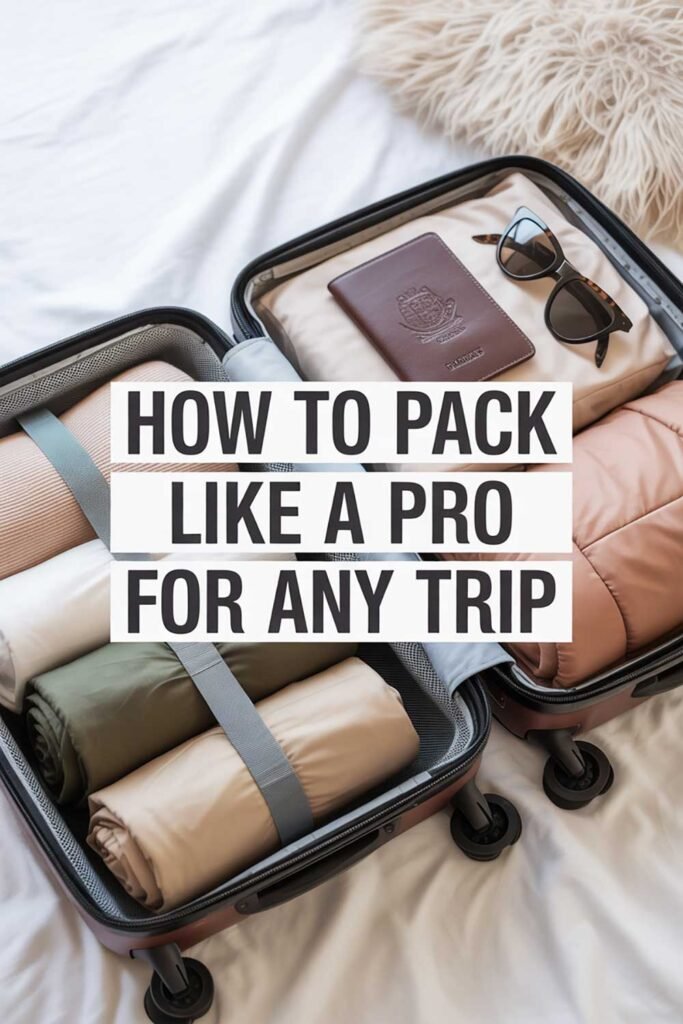
Once your final selection is ready, pack your grouped categories into packing cubes. This keeps your suitcase organized and makes it easy to find what you need without digging through everything.
Create a Reusable Checklist From Your Layout
After a few trips using this method, you will start to notice patterns. You always bring the same basic items. Write these down or save them in a note on your phone. Over time, you will build a personalized packing checklist that makes future trips even faster.
Practice the One-In-One-Out Rule
If you realize during your trip that you bought a new shirt at a local market, challenge yourself to leave behind or donate a shirt you brought. This keeps your bag the same weight and prevents the classic problem of your suitcase being harder to close on the way home than it was on the way there.
Consider the 5-4-3-2-1 Packing Rule
Many experienced travelers combine the “Lay It All Out” method with the 5-4-3-2-1 rule. This means packing no more than 5 sets of socks and underwear, 4 tops, 3 bottoms, 2 pairs of shoes, and 1 hat or accessory. When you lay everything out, use this as your target number and edit down to hit it.
Check the Weather One More Time
Right before you do your final edit, pull up the weather forecast for your destination. This lets you make last-minute swaps based on actual conditions rather than assumptions. You might be able to ditch that heavy sweater or add a light rain layer you almost left behind.
Why This Method Is Perfect for Every Type of Traveler
Whether you are a minimalist backpacker or a luxury resort traveler, this method scales to fit your style. Backpackers use it to shave every unnecessary ounce. Family travelers use it to coordinate outfits and avoid packing doubles. Business travelers use it to streamline their carry-on. Cruise travelers use it to plan outfits for formal nights and shore excursions. No matter how you travel, the core benefit is the same. You see everything, you think clearly, and you pack smarter.
20 Powerful and Uplifting Quotes About Packing, Travel, and Preparation
- “A well-packed bag is a well-planned adventure waiting to begin.”
- “The less you carry, the more you experience.”
- “Packing light is not about doing without. It is about making room for what matters.”
- “When you can see everything clearly, you choose everything wisely.”
- “Travel teaches you that you need far less than you think.”
- “A cluttered suitcase is a cluttered mind. Simplify both.”
- “The best trips are not measured by what you bring but by what you bring back in your heart.”
- “Preparation is the bridge between dreaming about a trip and truly enjoying one.”
- “Pack for the trip you are taking, not the trip you are afraid of.”
- “Freedom on the road begins with freedom in your suitcase.”
- “Every item you remove from your bag is a weight lifted from your shoulders and your mind.”
- “Smart packing is not a skill you are born with. It is a habit you build one trip at a time.”
- “When you lay it all out, you lay out your intentions. Travel with purpose.”
- “The world rewards the traveler who moves through it lightly.”
- “You do not need more stuff. You need more moments.”
- “Packing is the first chapter of your travel story. Write it well.”
- “Simplicity is the ultimate travel companion.”
- “An organized bag opens the door to an organized adventure.”
- “Trust yourself enough to leave behind what you do not need.”
- “The journey of a thousand miles begins with a single, well-packed bag.”
Picture This
Close your eyes for a moment and imagine this. It is the night before your trip, and instead of frantically throwing things into a suitcase while your stomach churns with anxiety, you are standing calmly in front of your bed. Everything you plan to bring is laid out in neat, organized groups. You can see every outfit matched to every day. Your toiletries are lined up and ready to go into their bag. Your chargers, adapters, and headphones are right there where you can count them.
You look at the full picture and smile because nothing is missing and nothing is extra. You grab your phone and snap a quick photo. Then, in about 15 minutes, you pack everything into your suitcase with ease. It zips closed without a fight. You roll it to the door, set your alarm, and go to bed feeling something most travelers never feel the night before a trip — peace.
The next morning, you walk through the airport with confidence. Your bag is light. Your mind is clear. You are not worried about what you forgot because you saw everything before it went in. And when you land at your destination, you hit the ground running. No stress. No regrets. No wasted time or money. Just the pure, joyful freedom of a trip that started right — because you took five minutes to lay it all out.
That is what this method gives you. Not just a better suitcase, but a better start to every single trip you take.
Share This Article
Did this article help you think about packing in a new way? Share it with a friend, a family member, or anyone you know who could use a little less stress on their next trip. Post it on Facebook, send it in a group chat, pin it on Pinterest, or share it on X. You never know whose next vacation you might make a little easier just by passing along a simple idea. Great travel tips are meant to be shared!
Disclaimer
This article is provided for informational and entertainment purposes only. The tips, strategies, and suggestions shared here are based on general travel knowledge and past experiences of everyday travelers. Results may vary depending on individual travel needs, destinations, airline policies, and personal preferences. DND Travels does not guarantee specific outcomes from following the advice in this article and is not responsible for any lost, forgotten, or damaged items, additional travel expenses, or any other issues that may arise during your trip. Always verify airline baggage requirements, travel regulations, and destination-specific guidelines before your departure. Travel decisions are made at your own risk and discretion.