The First-Timer’s Timeline: When to Book, Plan, and Prepare for Your First Cruise
First-time cruisers face a unique planning challenge. Unlike a hotel booking where you choose dates and a room, a cruise involves dozens of decisions spread across months: when to book the sailing, when to choose a cabin category, when to research shore excursions, when to make dining reservations, when to purchase travel insurance, when to start packing. Each decision has an optimal window – too early wastes effort on things that might change, too late limits options or costs more money.
The problem is that nobody tells you the timeline. You know you want to cruise. You might even know when and where. But the sequence of steps between “I want to go on a cruise” and “I’m walking up the gangway” is opaque, and the anxiety of not knowing what to do when causes many first-timers to either over-prepare months early or scramble in the final weeks.
This is the timeline. Every phase, every decision, every task, placed in the window where it matters most and will produce the best results.
12-9 Months Before: The Decision Phase
This is when the major structural decisions should happen. Not the details. The framework.
Choose Your Timeframe
Decide which month you want to sail. This seems obvious but it drives everything that follows. Your timeframe determines which itineraries are available, what pricing looks like, what weather to expect, and how crowded the ship and ports will be.
What to consider: School schedules if children are involved. Work calendars and blackout periods. Peak versus shoulder versus off-season pricing. Weather at your intended destination during your intended month. Holiday conflicts that affect pricing and availability.
The first-timer advantage of booking early: Popular sailings – school holidays, major destinations in peak season, new ships on inaugural voyages – sell out or sell down to undesirable cabin categories months in advance. Booking nine to twelve months out provides the widest selection of cabin locations, categories, and pricing.
Choose Your Cruise Line and Ship
Research broadly before committing. The cruise line matters more than the specific ship for first-timers because each line has a distinct personality, demographic, formality level, and inclusion philosophy. A cruise on the wrong line in the right cabin is a worse experience than a cruise on the right line in an average cabin.
What to evaluate: Included versus additional-cost dining and beverages. Ship size and the experience it creates. Onboard atmosphere from formal to casual. Target demographic and whether it matches your travel style. Itinerary options from that line for your timeframe.
What not to do: Don’t book based solely on price. The cheapest fare often means the line whose personality is the worst match for your preferences. A hundred dollars more per person on the right line produces a dramatically better first experience than saving money on the wrong one.
Book the Cruise
Once you’ve chosen a line, ship, and sailing date, book it. Early booking provides the best cabin selection and often the best pricing. Many lines offer early-booking promotions – onboard credit, beverage packages, specialty dining credits, or reduced deposits – that aren’t available closer to sailing.
The deposit: Most cruise lines require a deposit at booking, typically $100-500 per person depending on the line and cabin category. The balance isn’t due until the final payment deadline, usually seventy-five to ninety days before sailing.
Booking through a travel advisor versus direct: Travel advisors who specialize in cruises often have access to group rates, additional perks, and expertise that the cruise line’s direct booking doesn’t provide. For first-timers, an experienced cruise advisor can prevent costly mistakes and match you to the right experience. Their service is typically free to you – they’re paid by the cruise line.
Purchase Travel Insurance
Buy travel insurance within fourteen to twenty-one days of your initial deposit to access the broadest coverage terms. Many comprehensive policies require purchase within this window to cover pre-existing medical conditions.
What cruise travel insurance should cover: Trip cancellation and interruption. Medical expenses and emergency evacuation, including from the ship to shore. Missed port of departure. Baggage loss or delay. These coverages are particularly important for cruises because the ship departs on schedule regardless of your personal circumstances.
What the cruise line’s insurance typically covers versus independent policies: The cruise line’s own cancellation protection usually provides future cruise credits rather than cash refunds and has more limited coverage terms. Independent travel insurance policies from established providers generally offer broader coverage and cash reimbursement.
9-6 Months Before: The Research Phase
The booking is made. The deposit is paid. This is the window for informed research without time pressure.
Research Your Ports
Learn about each port on your itinerary. Not exhaustively – you don’t need to become an expert. But understand the basics: how far the port terminal is from the main town, what the must-see attractions are, what the local transportation options include, and whether independent exploration is practical or whether a guided excursion is recommended.
Why now: This research informs your excursion decisions later. Understanding the port layout helps you decide whether you need a ship-organized excursion (which guarantees the ship waits for you if the excursion runs late) or whether independent exploration is safe and practical.
How much research: Two to three hours total across all ports is sufficient for a first cruise. Read a summary article about each port. Look at a map showing the terminal location relative to attractions. Note one or two things you definitely want to see and one or two things you’d enjoy if time permits.
Join the Cruise Line’s Online Community
Most cruise lines have official apps and many sailings have unofficial social media groups where passengers on the same sailing connect beforehand. These communities provide real-time information about ship conditions, recent port experiences, and practical tips from recent passengers.
What to gain: Current information about your specific ship and itinerary. Answers to first-timer questions from experienced cruisers. Potential social connections before boarding.
What to avoid: Getting overwhelmed by the volume of opinions. Experienced cruisers sometimes have strong views that don’t apply to first-timers. Take practical information. Leave subjective arguments.
Research Dining Options
Understand the dining structure on your ship. Most ships offer a main dining room (included), a buffet (included), and specialty restaurants (additional charge). Some offer flexible dining times and others offer fixed early and late seatings.
What to decide now: Whether you prefer fixed or flexible dining in the main dining room. Whether any specialty restaurants appeal enough to warrant the additional charge. Whether a beverage package makes financial sense for your drinking habits.
Why now matters: Popular specialty restaurants and preferred dining times can fill up. Early research gives you time to make informed decisions rather than scrambling at the online check-in window.
6-3 Months Before: The Planning Phase
Research converts to decisions during this window.
Book Shore Excursions
This is the optimal window for excursion booking. Ship-organized excursions with limited capacity begin selling out three to six months before popular sailings. Independent excursion companies also have availability windows.
Ship excursions versus independent: Ship-organized excursions cost more but provide the guarantee that the ship will wait if the excursion returns late. Independent excursions are typically cheaper and often more personalized, but returning late is entirely your responsibility – the ship will leave without you.
First-timer recommendation: For your first cruise, book at least one ship-organized excursion to understand the format, and consider independent options for ports where the terminal is close to the main attractions and time management is straightforward.
Budget note: Excursions are one of the largest additional costs of cruising. Budget $50-150 per person per port for organized excursions. Budget less for independent exploration. Budget zero for ports where you plan to walk and explore on your own.
Make Specialty Dining Reservations
If your ship offers pre-cruise specialty dining reservations, make them during this window. Popular restaurants on popular sailings fill up, particularly for prime evening time slots.
How many: One or two specialty dinners during a seven-night cruise is typical for first-timers. This provides the elevated experience without excessive additional cost and leaves most evenings for the included main dining room, which is itself an excellent experience.
Finalize Beverage Package Decision
If your cruise line offers beverage packages, decide by this point whether to purchase one. The math is straightforward: estimate your daily drink consumption across alcoholic beverages, specialty coffee, bottled water, and fresh juice. Compare the total à la carte cost against the package price.
The general rule: If you’ll drink five or more priced beverages per day, the package typically pays for itself. If you’ll drink fewer than three, paying per drink is cheaper. Between three and five is the gray zone where personal preference matters more than pure math.
90-45 Days Before: The Preparation Phase
Make Final Payment
Your cruise balance is due seventy-five to ninety days before sailing, depending on the line. Mark this date and ensure payment is processed on time. Missing the final payment deadline can result in cancellation of your booking.
Complete Online Check-In
Most cruise lines open online check-in forty-five to ninety days before sailing. Complete this as early as possible. Online check-in involves uploading identification documents, providing emergency contact information, selecting boarding time, and sometimes linking a credit card for onboard purchases.
Why early matters: Earlier check-in often provides earlier boarding time selection. Boarding in the first group means accessing the ship before crowds, with full availability of pool deck seating, spa appointment times, and first-day specialty dining.
Arrange Transportation
Book flights, ground transportation, and pre-cruise hotel if needed. For first-timers, arriving the day before embarkation is strongly recommended. A flight delay on embarkation day can mean missing the ship, and the ship will sail without you.
The pre-cruise hotel: Arriving the night before in the departure city eliminates the risk of travel delays causing you to miss the ship. It also allows you to arrive at the port rested and relaxed rather than rushed from a morning flight.
Port transportation: Research how to get from your hotel or airport to the cruise terminal. Many cruise ports have straightforward taxi or rideshare access. Some require specific shuttles.
45-14 Days Before: The Detail Phase
Organize Documents
Gather every document you’ll need: passport (valid for at least six months beyond your return date for international sailings), cruise booking confirmation, travel insurance documentation, boarding pass from online check-in, identification, and any required visa documentation.
Create a document folder: Physical or digital, containing copies of everything. Email copies to yourself as backup. Share copies with an emergency contact at home.
Plan Your Packing
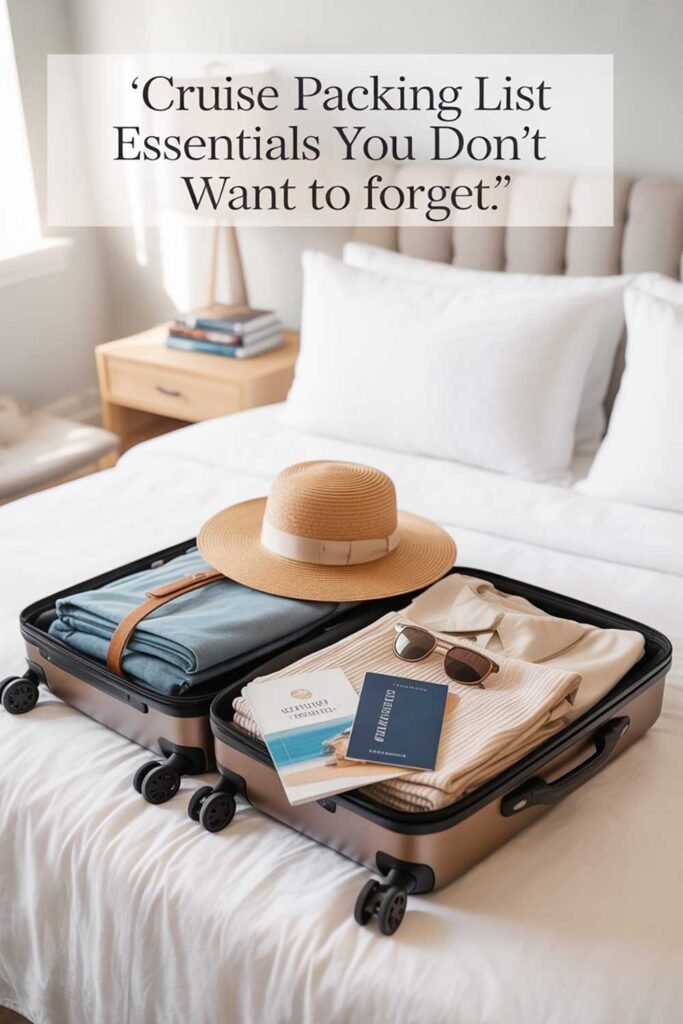
Start your packing list. Not packing yet – listing. Note the ship’s dress code for formal nights if applicable. Check the weather forecast range for your ports. Consider what activities you’ve planned and what clothing they require.
First-timer packing essentials often overlooked: A lanyard for your cruise card, which functions as your room key, payment card, and identification onboard. Magnetic hooks for cabin organization since cabin walls are metal. A small power strip or USB hub since cabins have limited outlets. Dramamine or seasickness remedy even if you don’t expect to need it. A light sweater or jacket for aggressively air-conditioned dining rooms and theaters.
Make Spa Reservations
If you plan to use the spa, book treatments during this window. Embarkation day and sea day spa appointments fill up earliest.
The embarkation day strategy: Many experienced cruisers book spa treatments on embarkation afternoon. While most passengers are exploring the ship and crowding the pool deck and buffet, you’re in a quiet spa being pampered. The ship sails while you’re mid-massage. It’s a luxury way to begin the cruise.
14-3 Days Before: The Final Phase
Pack
Pack based on your list. Use the 72-hour rule if you can – pack three days before departure and live with the packed bag, making adjustments as you notice items missing or unnecessary.
Weight consideration: There is no weight limit for cruise luggage. Unlike flying, you can bring multiple bags without penalty. However, your cabin is small and storage is limited. Pack what you need, not what you can.
Formal night reality check: “Formal night” on most mainstream lines means a range from tuxedos to dark jeans with a collared shirt for men, and from evening gowns to a nice dress or dressy pants for women. The standard has relaxed significantly. Pack something a step above your everyday wear and you’ll be appropriately dressed.
Download the Cruise Line’s App
Most major cruise lines have onboard apps that function as your daily schedule, restaurant reservation system, onboard messaging tool, and navigation guide. Download it before you board and familiarize yourself with the interface.
Confirm All Reservations
Review and confirm: specialty dining reservations, shore excursion bookings, spa appointments, beverage packages, any pre-purchased add-ons. Print confirmations or ensure they’re accessible offline on your phone.
Prepare Your Carry-On Day Bag
Pack a bag with everything you’ll need between arriving at the port and accessing your cabin. Your checked luggage goes to porters at the terminal and may not arrive at your cabin for several hours after boarding.
Day bag essentials: Medication, swimsuit (pools open immediately), change of clothes if desired, sunscreen, valuables, documents, phone charger, and a light layer for air conditioning. Assume you won’t see your suitcase until late afternoon or early evening.
Embarkation Day: The Arrival
The Morning
Eat a solid breakfast. The embarkation process can take one to three hours depending on your arrival time and the line’s efficiency. You may not eat again until you board and find the buffet, which could be early afternoon.
Arrive at the port during your assigned boarding window. Earlier within your window is generally better. Have documents accessible. Expect security screening similar to an airport.
The First Two Hours Aboard
Resist the urge to do everything immediately. The ship isn’t leaving for several hours. Eat lunch if you’re hungry – the buffet is open. Explore the ship casually rather than systematically. Find your muster station for the safety drill, which is mandatory and typically occurs before or shortly after departure.
Sailaway
Be on an outside deck for departure. Watching the port recede as the ship moves to open water is one of the most memorable moments of any cruise, and particularly of a first cruise. This is the moment where the anticipation that began nine to twelve months ago converts into reality.
You planned for this. You prepared for this. Now experience it.
Real-Life Timeline Experiences
Jennifer booked nine months early and secured an aft balcony cabin on a popular Caribbean sailing that sold out four months later. Her early booking also included a promotional beverage package that wasn’t available at later booking dates. The timeline investment of booking early saved her approximately $400 and provided the cabin location she most wanted.
Marcus booked three months before departure and found limited cabin availability, no promotional offers, and only late-evening fixed dining available. The cruise was still enjoyable, but every locked-out option was a reminder that the timeline works better when followed earlier.
The Thompson family completed online check-in the day it opened and selected the earliest boarding time. They boarded at 11:30 AM while most passengers arrived between 1 and 3 PM. They ate lunch in an uncrowded buffet, claimed poolside chairs with no competition, and had the waterslide to themselves for an hour. By the time the ship was at full population, they’d already settled in.
Sarah purchased travel insurance within the fourteen-day window for pre-existing condition coverage. When a medical issue required her to cancel two months before sailing, her policy reimbursed the full cruise cost. Without the insurance purchased in the correct window, the pre-existing condition exclusion would have denied the claim.
Tom arrived at the departure city the morning of embarkation. His flight was delayed ninety minutes. He reached the terminal forty-five minutes before the ship’s scheduled departure, went through an expedited security process with palpable stress, and boarded the ship as final boarding calls were being announced. His wife, who had advocated for arriving the night before, did not need to say anything. Her expression said it. Every subsequent cruise, they arrived the night before.
20 Powerful and Uplifting Quotes About Cruise Planning Timelines
- “Every decision has an optimal window. Too early wastes effort. Too late limits options.”
- “The anxiety of not knowing what to do when causes more stress than any individual task.”
- “Booking nine to twelve months out provides the widest selection of cabins, pricing, and promotions.”
- “A cruise on the wrong line in the right cabin is worse than the right line in an average cabin.”
- “Buy travel insurance within fourteen to twenty-one days of deposit. The window matters more than the price.”
- “Two to three hours of port research total is sufficient for a first cruise. Enough to inform, not enough to overwhelm.”
- “Book at least one ship excursion to understand the format. Consider independent options for walkable ports.”
- “Earlier online check-in often means earlier boarding, which means first access to the uncrowded ship.”
- “Arriving the day before embarkation isn’t cautious. It’s essential.”
- “There’s no weight limit for cruise luggage, but your cabin is small and storage is limited.”
- “Formal night means a step above everyday wear. The standard has relaxed significantly.”
- “Pack a carry-on day bag. Your suitcase may not arrive at your cabin for hours.”
- “The ship departs on schedule regardless of your personal circumstances. Plan accordingly.”
- “Eat breakfast before arriving at the port. The embarkation process can take one to three hours.”
- “Be on deck for sailaway. Watching the port recede is one of cruising’s most memorable moments.”
- “The pre-cruise hotel eliminates the risk of missing the ship entirely.”
- “Excursions are the largest additional cost. Budget $50-150 per person per port.”
- “The beverage package math is simple: five or more drinks per day, the package wins.”
- “Research converts to decisions at the three-to-six-month mark. Before that, gather information.”
- “You planned for this. You prepared for this. Now experience it.”
Picture This
Imagine two first-time cruisers preparing for the same seven-night Caribbean sailing on the same ship departing the same Saturday in February. Same cruise. Same opportunity. Different timelines.
Cruiser A: The Timeline Follower
Eleven months out, she books during a wave-season sale. She gets a mid-ship balcony cabin on deck eight – the location she wanted – with an included beverage package worth $700. Deposit: $250. She purchases travel insurance on day twelve, qualifying for pre-existing condition coverage. Total time invested: about three hours across two evenings.
Seven months out, she spends an evening reading about her four ports. She learns that port two has a fantastic beach a five-minute walk from the terminal and port three’s main town is a thirty-minute bus ride from the industrial dock. She books a ship excursion for port three – the bus logistics make independent exploration stressful for a first-timer – and plans to walk independently at the other three. She reserves a specialty steakhouse for night five, her anniversary. Total time: two hours across a weekend.
Seventy-five days out, she makes final payment. The price for her cabin category has increased $200 per person since she booked. She’s unaffected because she locked her rate eleven months ago.
Sixty days out, she completes online check-in the morning it opens and selects an 11:30 AM boarding time. She books a spa appointment for embarkation afternoon. She downloads the app and browses the daily activity schedule from a recent sailing to understand the rhythm.
Three weeks out, she makes a packing list referencing the weather forecast and her activity plans. She notes that formal nights are Tuesday and Thursday. She already owns appropriate clothing.
Three days out, she packs. The bag sits by the door for seventy-two hours. On day two, she removes a pair of shoes she’d added from habit and adds the Dramamine she almost forgot. She packs a day bag with swimsuit, sunscreen, her book, and documents.
Friday evening, she checks into a hotel four miles from the port. She eats a relaxed dinner. She sleeps soundly.
Saturday morning, she eats breakfast at the hotel, takes a ten-minute rideshare to the terminal, and arrives at 11:15 AM. Security and check-in take twenty minutes. She boards at 11:40 AM. The ship is quiet. She eats lunch at the buffet with a window seat. She finds a lounge chair by the pool with no competition. At 2 PM, she walks to her spa appointment. At 3:30 PM, she’s on her balcony, wrapped in a robe, watching the port begin to slide away. The sky is golden. The ship is moving.
Her preparation is complete. Her experience is beginning. The transition feels seamless because the timeline made it so.
Cruiser B: The Last-Minute Scrambler
Three months out, she decides to cruise. The same mid-ship balcony on deck eight is sold out. She books an inside cabin on deck two. No promotions are available. No beverage package included. She doesn’t purchase travel insurance because she’s focused on the booking itself and forgets.
Six weeks out, she realizes she hasn’t researched ports. She spends an anxious evening reading about all four ports, feeling overwhelmed by the volume of excursion options. She books a ship excursion for every port because she doesn’t have enough information to know which ones she could explore independently. Total excursion cost: $560, versus Cruiser A’s $120 for one excursion and three independent explorations.
Four weeks out, she completes online check-in. The earliest available boarding time is 2 PM. The spa is fully booked for embarkation day.
One week out, she realizes she hasn’t thought about formal nights. She buys a new outfit at full price. She packs the night before, anxious and rushed. The bag is heavy because uncertainty drives overpacking.
Saturday morning, she flies in on a 7 AM departure. The flight is uneventful, but the airport, the flight, the baggage claim, the rideshare, and the terminal process compress into a four-hour blur that leaves her arriving at the port at 1:45 PM, flustered and hungry.
She boards at 2:20 PM. The ship is fully populated. The buffet is crowded. The pool deck is packed. She finds her inside cabin on deck two, smaller and darker than she’d imagined. Her checked luggage hasn’t arrived. She has no swimsuit to access the pool and no book to read on deck. She sits in her cabin waiting for her suitcase, scrolling her phone, listening to the muffled sounds of thousands of people above her having the experience she hasn’t started yet.
At 4 PM, her luggage arrives. At 4:30, she finds a spot on the crowded pool deck. At 5 PM, the ship departs. She watches from behind three rows of occupied deck chairs, standing, holding a drink she paid full price for because she doesn’t have a beverage package.
The same ship. The same sailing. The same seven nights ahead. But her first four hours felt chaotic where Cruiser A’s felt calm. Her cabin is darker and lower than the one that was available eleven months ago. Her excursion spending is four times higher. Her beverage costs will be triple. Her embarkation afternoon was spent waiting for luggage in an interior cabin rather than in a spa robe on a balcony.
Nothing about Cruiser B’s experience is ruined. The cruise will still be wonderful. The ports will still be beautiful. The sea days will still be restorative. But the gap between the two experiences – the calm start versus the frantic one, the balcony versus the inside cabin, the included package versus the per-drink charges – was created entirely by timeline.
Not money. Not luck. Not connections. Timeline.
Eleven months of preparation produced a first-cruise experience that began with a spa massage and a balcony sunset.
Three months of preparation produced the same cruise that began with a crowded buffet and a wait for luggage.
The timeline was free. The difference was not.
Share This Article
Know someone who’s booked or considering their first cruise and doesn’t know what to do when? Share this article with first-time cruisers at any stage of planning who need a clear sequence from booking to boarding, friends who tend to plan last-minute and might benefit from seeing what the timeline costs them, anyone feeling overwhelmed by cruise preparation who needs it organized into manageable phases, or experienced cruisers who want to send their first-timer friends a definitive guide! The right preparation at the right time transforms a stressful first cruise into a seamless one. Share it on Facebook, Instagram, Twitter, Pinterest, or send it directly to someone who just booked their first sailing and needs to know what happens next. Your share is the first step in someone’s perfect cruise timeline!
Disclaimer
This article is provided for informational and educational purposes only and is based on general cruise industry booking patterns and common first-timer preparation timelines. The information contained in this article is not intended to be specific guidance for any particular cruise line, ship, or sailing.
Booking windows, pricing patterns, and availability timelines vary by cruise line, destination, season, and market conditions. The timelines described represent general recommendations, not guarantees.
The author and publisher of this article are not responsible for any booking decisions, financial outcomes, or cruise experiences. Readers assume all responsibility for their own vacation planning.
Travel insurance recommendations are general guidance. Verify specific coverage terms, purchase windows, and pre-existing condition provisions with insurance providers. This article does not recommend specific insurance providers or policies.
Final payment deadlines, online check-in windows, and boarding procedures vary by cruise line. Verify specific dates and requirements with your cruise line.
Pricing estimates for excursions, specialty dining, and beverage packages are approximate generalizations. Verify current pricing with your cruise line.
By using the information in this article, you acknowledge that you do so at your own risk and release the author and publisher from any liability related to your cruise planning and booking decisions.