Rolling vs. Folding vs. Bundle Wrapping: Which Packing Method Actually Saves Space?
The great packing debate has raged among travelers for decades. Rolling enthusiasts swear they fit twice as much in their suitcases. Folding purists insist traditional methods prevent wrinkles better. Bundle wrapping devotees claim their technique is the only method that truly works. Travel blogs, packing videos, and well-meaning friends offer conflicting advice, leaving travelers more confused than when they started.
The truth is more nuanced than any single method’s advocates admit. Each technique has genuine strengths, specific weaknesses, and ideal use cases. The real answer to “which method saves the most space?” depends on what you’re packing, what kind of bag you’re using, and what outcomes matter most to you. This complete guide tests each method objectively, explains the science behind the claims, and helps you choose the right technique – or combination of techniques – for your specific packing needs.
Understanding the Three Main Methods
Before comparing results, let’s define exactly what each technique involves.
The Rolling Method
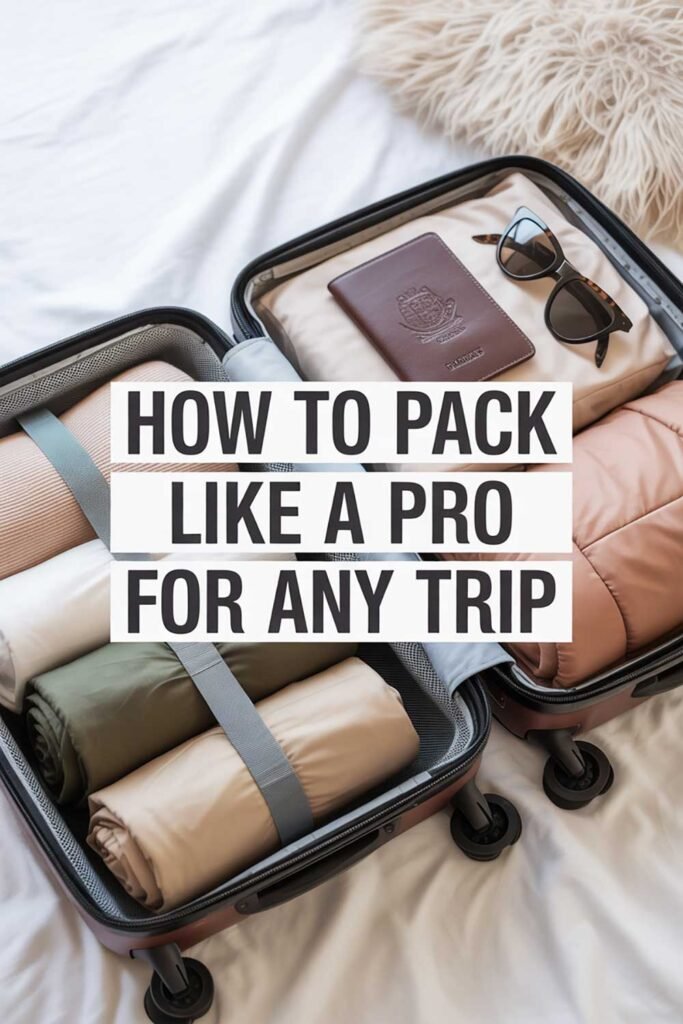
Rolling involves laying clothing flat, folding in sleeves or edges to create a rectangle, then rolling tightly from bottom to top into a cylinder shape.
Basic rolling technique:
- Lay the garment flat, smoothing out wrinkles
- Fold in sleeves or sides to create a rough rectangle
- Starting at the bottom, roll tightly toward the top
- Place rolled items in luggage standing upright or packed horizontally
Tight rolling variation: Roll even more tightly, sometimes tucking the end into the roll to prevent unraveling.
Ranger rolling (military roll): Fold the bottom hem up several inches before rolling, then fold the hem pocket over the finished roll to secure it.
The Folding Method
Traditional folding involves creasing clothing along natural lines and stacking flat items in the suitcase.
Basic folding technique:
- Lay the garment flat
- Fold along natural seams – sleeves in, then body folded in thirds or halves
- Stack folded items flat in the suitcase
KonMari folding: Fold into small rectangles that stand upright in drawers or packing cubes, allowing visibility of all items.
Flat stacking: Traditional method of layering folded clothes flat on top of each other.
The Bundle Wrapping Method
Bundle wrapping involves wrapping clothing around a central core object (often a packing cube or pouch containing smaller items), creating layers that prevent creasing through tension rather than compression.
Basic bundle technique:
- Create a core bundle from underwear, socks, or a packing cube
- Lay jacket or largest item flat, place core in center
- Wrap jacket around core
- Layer next largest item, wrap around growing bundle
- Continue with progressively smaller items, each wrapping around the previous layer
- The final bundle is a single wrapped package
The technique creates tension that holds clothes smooth rather than compressed into fold lines.
The Space Savings Question: What Science Says
The claim that rolling saves more space than folding is so widespread it’s accepted as fact. But is it true?
The Physics of Compression
Clothing volume is primarily determined by fabric and air. Any packing method that removes air reduces volume. Here’s where the methods differ:
Rolling compresses air out as you roll tightly. The cylinder shape also eliminates some dead space between items when packed correctly.
Folding traps air in pockets created by creases. Stacked flat items leave more dead space, particularly in curved suitcase corners.
Bundle wrapping doesn’t primarily compress – it maintains tension. Volume reduction is minimal compared to the other methods.
Actual Space Comparison Tests
Multiple packing experiments (including those by travel gear companies, bloggers, and consumer testing organizations) have produced surprisingly consistent results:
Rolling typically saves 20-30% more space than traditional flat folding when packing the same items in the same bag. The savings come from eliminated dead space and air removal.
Tight rolling and ranger rolling save slightly more than loose rolling – perhaps an additional 5-10% – because compression increases.
Bundle wrapping uses approximately the same space as flat folding and sometimes more, because the technique prioritizes wrinkle prevention over compression.
KonMari-style upright folding saves space comparable to rolling by eliminating stacking dead space, though slightly less than tight rolling.
Why Rolling Wins on Pure Space
Rolling’s space advantage comes from:
Cylinder efficiency: Rolled items pack together with minimal gaps, especially when stood upright in packing cubes.
Air elimination: The rolling motion squeezes air out of fabric more effectively than folding.
Corner filling: Rolled items can be arranged to fill curved suitcase spaces that flat-folded stacks leave empty.
Flexibility: Rolled items can be rearranged and adjusted to fill odd spaces without disrupting entire stacks.
The Wrinkle Question: What Actually Prevents Creasing?
Space savings mean nothing if you arrive with unwearable wrinkled clothing. Here’s how the methods compare for wrinkle prevention.
Why Clothes Wrinkle
Wrinkles form when fabric is compressed along fold lines, especially with heat and moisture (like luggage sitting on hot tarmac or in humid cargo holds). The longer compression lasts and the sharper the fold, the deeper the wrinkle sets.
Rolling and Wrinkles
Rolling creates curved compression rather than sharp fold lines. Fabrics that wrinkle along hard creases often emerge from rolls with minimal wrinkling because no sharp fold line existed.
However, rolling compresses fabric against itself. Delicate fabrics can crease where the roll is tightest, and some materials emerge with tube-shaped wrinkles.
Best for rolling: Knits, synthetic fabrics, casual cotton, athletic wear, jeans Worst for rolling: Linen, silk, structured blazers, dress shirts
Folding and Wrinkles
Folding creates deliberate crease lines that often correspond to natural garment lines (down the center of shirts, along trouser creases). Well-executed folding can actually maintain desired creases.
However, fold lines become wrinkle lines when compression sets them. Multiple fold lines multiply wrinkle problems.
Best for folding: Dress shirts (when folded properly), trousers (along natural crease), structured garments Worst for folding: Knits (which develop fold marks), casual clothes (unnecessary creases)
Bundle Wrapping and Wrinkles
Bundle wrapping genuinely minimizes wrinkles for wrinkle-prone garments. The technique works through tension – clothes are stretched around the core bundle rather than compressed or folded.
The tradeoff is space efficiency and convenience. Bundles are cumbersome, must be completely unwrapped to access any single item, and require repacking after each access.
Best for bundle wrapping: Blazers, dress clothes, linen, silk, anything wrinkle-prone Worst for bundle wrapping: Casual trips where you need quick access to items
Practical Considerations Beyond Space and Wrinkles
Real-world packing involves factors beyond pure efficiency metrics.
Organization and Accessibility
Rolling excels at organization. Rolled items in packing cubes are visible and accessible without disturbing other items. You can see everything and grab what you need.
Folding in stacks means accessing bottom items requires moving everything above. Organization suffers unless you know exactly what you’ll need and pack accordingly.
Bundle wrapping fails at accessibility. The entire bundle must be unwrapped to access anything, then rewrapped afterward. For trips with multiple destinations or frequent repacking, this becomes impractical.
Packing Speed
Rolling is relatively fast once you’ve learned the technique. Each item is handled once.
Folding is faster for those accustomed to it – the familiar motions require little thought.
Bundle wrapping is slow and deliberate. Building the bundle correctly takes time, and repacking multiplies that time investment.
Suitcase Shape Utilization
Rolling adapts to any suitcase shape. Rolled items fill corners, curves, and irregular spaces effectively.
Folding works best in rectangular spaces. Curved suitcase edges create dead space that flat-folded items can’t fill.
Bundle wrapping creates a single large bundle that may or may not fit your suitcase shape efficiently.
Unpacking at Destination
Rolling unpacks quickly – rolls transfer directly to drawers or can remain in packing cubes.
Folding unpacks quickly into drawers designed for folded items.
Bundle wrapping requires complete unwrapping at destination, which takes time but does ensure items are hung or properly stored immediately.
The Hybrid Approach: Best of All Methods
Experienced packers rarely use a single method exclusively. The optimal approach combines techniques based on what each item needs.
Roll These Items
- T-shirts and casual tops
- Jeans and casual pants
- Underwear and socks
- Pajamas and loungewear
- Synthetic and athletic clothing
- Swimwear
- Knit dresses and skirts
These items benefit from rolling’s space efficiency and don’t wrinkle significantly from the technique.
Fold These Items
- Dress shirts (using proper shirt folding technique)
- Dress pants (along the natural crease)
- Structured blazers (when bundle wrapping isn’t practical)
- Items you want creased in specific ways
These items have natural fold lines that folding respects, or structures that rolling would distort.
Bundle Wrap These Items
- Blazers and suit jackets for important events
- Linen garments
- Silk blouses or dresses
- Anything you absolutely cannot have wrinkled
Reserve bundle wrapping for high-stakes items where wrinkle prevention justifies the effort and space tradeoffs.
Use Packing Cubes for Everything
Regardless of rolling versus folding, packing cubes improve organization and compression:
Compression cubes squeeze air out of rolled or folded items, maximizing space savings from either technique.
Standard cubes contain items by category, making organization easy regardless of internal packing method.
The combination of rolling plus compression cubes typically yields maximum space efficiency.
Testing the Methods Yourself
The best packing method depends on your specific clothes, luggage, and priorities. Here’s how to test for yourself.
The Simple Comparison Test
Pack the same items three times using each method:
- Pack everything using your current default method. Note how full the bag is.
- Repack everything using tight rolling. Compare fullness.
- Repack using bundle wrapping. Compare again.
Photograph each version for objective comparison. Most people find rolling fits noticeably more than their previous method.
The Wrinkle Test
For a more thorough test:
- Pack using each method
- Leave packed for 24-48 hours (simulating travel time)
- Unpack and hang items
- Photograph and compare wrinkle levels after hanging for 30 minutes
This reveals which methods your specific fabrics tolerate best.
The Real Trip Test
On an actual trip, try hybrid packing:
- Roll casual items
- Fold or bundle dress items
- Use packing cubes throughout
Evaluate at your destination what worked and what didn’t, then refine for future trips.
Common Packing Method Mistakes
Each technique fails when executed poorly. Avoid these common errors.
Rolling Mistakes
Rolling too loosely leaves air trapped and eliminates space benefits. Roll tightly.
Not folding before rolling creates bulky, uneven rolls. Always create a rectangle first.
Rolling structured items that should be folded or bundled leads to distorted shapes.
Overstuffing rolled items until compression crushes them can create worse wrinkles than folding.
Folding Mistakes
Creating too many fold lines multiplies wrinkle opportunities. Minimize folds.
Folding casually rather than along natural garment lines creates random creases.
Stacking too high crushes bottom items under weight of the stack.
Ignoring dead space in suitcase corners wastes the space rolling would capture.
Bundle Wrapping Mistakes
Using the wrong core – too small creates insufficient tension, too large wastes space.
Wrapping in wrong order – largest items should be outermost, smallest innermost.
Not maintaining tension while wrapping allows wrinkles to form.
Over-handling the bundle – once wrapped, the bundle should be placed and left undisturbed.
Real-Life Packing Method Experiences
Maria was a devoted folder until a friend demonstrated rolling. She fit her usual two-week wardrobe into a carry-on for the first time. Now she rolls everything except blazers, which she bundle wraps for important meetings.
The Johnson family of four switched to rolling with packing cubes and eliminated checked baggage for the first time. They estimate they pack 40% more efficiently than their previous flat-folding method.
Marcus insisted bundle wrapping was the only proper method until a trip requiring frequent repacking exhausted him. He now reserves bundle wrapping for his one suit jacket and rolls everything else.
Sarah experimented with all three methods for a month-long trip with multiple climates. Her conclusion: rolling for 80% of items, folding for dress shirts, bundle wrapping for her two linen pieces. The hybrid approach outperformed any single method.
The Verdict: Which Method Wins?
After examining the evidence:
For Pure Space Savings
Rolling wins clearly. The 20-30% space improvement over flat folding is consistent across testing scenarios. Combined with compression packing cubes, rolling maximizes what fits in your luggage.
For Wrinkle Prevention
Bundle wrapping wins for wrinkle-prone items. Nothing matches the tension-based approach for keeping blazers, linen, and silk crease-free. For casual items, rolling and folding perform similarly – neither creates significant wrinkles in forgiving fabrics.
For Organization and Accessibility
Rolling wins decisively. Rolled items in packing cubes are visible, accessible, and don’t require disturbing other items. Bundle wrapping fails completely on accessibility.
For Overall Practical Packing
A hybrid approach wins. Roll casual items, fold dress items appropriately, bundle wrap the few truly wrinkle-critical pieces, and use packing cubes throughout. This combination captures rolling’s space efficiency while respecting garment-specific needs.
20 Powerful and Uplifting Quotes About Packing Methods
- “Rolling versus folding isn’t about dogma – it’s about choosing the right technique for each specific item.”
- “The 20-30% space savings from rolling over folding can mean the difference between carry-on and checked baggage.”
- “Bundle wrapping exists for a reason – some garments genuinely need its wrinkle prevention, even at the cost of convenience.”
- “Experienced packers don’t choose one method; they choose the right method for each item.”
- “The best packing technique is the one you’ll actually use correctly and consistently.”
- “Rolling’s space savings come from physics, not magic – eliminated air and dead space explain the results.”
- “Packing cubes enhance any method, making organization achievable regardless of rolling versus folding.”
- “The wrinkle-free arrival matters more than the space savings if you’re heading to an important meeting.”
- “Testing methods with your actual clothes reveals truths that general advice cannot provide.”
- “Hybrid packing combines the strengths of each method while avoiding their individual weaknesses.”
- “The time invested in learning proper rolling technique pays dividends on every future trip.”
- “Bundle wrapping requires commitment – half-hearted bundling provides neither space efficiency nor wrinkle prevention.”
- “Compression packing cubes paired with rolling create the maximum possible space efficiency.”
- “Folding isn’t wrong – it’s simply less space-efficient and more wrinkle-prone than rolling for most items.”
- “Your grandmother’s folding method was designed for dresser drawers, not maximum suitcase efficiency.”
- “The rolled-versus-folded debate ends when you try both and measure results with your own clothes.”
- “Perfect rolling technique matters – loose rolls lose the space benefits that make rolling worthwhile.”
- “Packing method mastery transforms luggage from constraint into liberation.”
- “The best packers think about each garment individually rather than applying one method universally.”
- “Space savings aren’t the only goal – accessibility, organization, and wrinkle prevention matter for real-world travel.”
Picture This
Imagine yourself the night before a ten-day trip, facing the familiar challenge of fitting everything into your carry-on suitcase. But tonight is different – you’re going to test what you’ve learned about packing methods.
You divide your clothes into three piles: casual items, dress items, and your one linen blazer that always arrives wrinkled.
Starting with the casual pile – t-shirts, jeans, shorts, underwear, socks, a casual dress – you roll each item tightly. Lay flat, fold in sleeves or edges to form a rectangle, then roll from bottom to top as tightly as possible. Each rolled item becomes a neat cylinder.
You place the rolls in compression packing cubes, standing them upright so you can see each item. When the cube zips closed and you compress out the air, the volume shrinks noticeably. This pile that normally fills half your suitcase now fits in a single medium cube.
The dress items – two button-down shirts and nice trousers – you fold carefully. The shirts fold following the natural shoulder lines, tucked into themselves to minimize crease points. The trousers fold along their natural crease, the fold line reinforcing rather than fighting the trouser’s structure.
These folded items go in a second packing cube, laid flat as their shape requires.
Finally, the linen blazer. You know from past disasters that this item arrives hopelessly wrinkled unless handled correctly. You create a bundle core from your underwear rolled inside a packing cube. You lay the blazer flat on your bed, place the core on the chest, and carefully wrap the blazer around it – first one side, then the other, then the bottom, then the top. You maintain tension throughout, stretching rather than compressing.
The wrapped blazer goes in the suitcase first, protected by surrounding items.
When you’re finished packing, you step back and look at your suitcase. It’s not full. Ten days of clothing, properly packed using the right method for each item, fits with room to spare. You add your toiletry bag, electronics, and a pair of shoes. Still room.
You think about previous versions of this packing session – the overstuffed suitcase you had to sit on to close, the wrinkled blazer you wore to a client meeting, the items you couldn’t find without unpacking everything.
None of that tonight. The rolled casual items are visible in their compression cube – you can see exactly where your favorite blue t-shirt is without disturbing anything. The folded dress shirts lay flat and protected. The bundled blazer is secure.
Ten days later, you arrive at your final destination and unpack. The casual items emerge from their rolls slightly rumpled but ready to wear within minutes. The dress shirts show minimal creasing along the fold lines – exactly where creasing is acceptable on dress shirts. And the linen blazer, which you need for tomorrow’s important lunch meeting, emerges nearly wrinkle-free.
The bundle wrapping worked.
You’ve proven to yourself what works for your clothes, your luggage, and your travel style. Rolling for most items – the space savings are real and significant. Folding for structured dress items that have natural fold lines. Bundle wrapping for the few pieces that absolutely cannot wrinkle.
This hybrid approach, refined through experimentation, now becomes your standard packing method. Not because a blog told you to do it this way, but because you tested the alternatives and found what actually works.
This is packing method mastery – understanding the options, testing the claims, and building a personal system that delivers results trip after trip.
Share This Article
Confused about the best way to pack or know someone who’s always fighting overstuffed suitcases? Share this article with chronic overpackers, debate-settlers, or anyone who’s wondered whether rolling really works! This guide tests each method objectively so travelers can finally know which technique actually saves space. Share it on Facebook, Instagram, Twitter, Pinterest, or send it directly to travel companions. Help spread the word that the rolling versus folding debate has real answers – and that the best approach combines methods based on what each item needs. Your share might help someone finally fit everything in their carry-on!
Disclaimer
This article is provided for informational and educational purposes only and is based on general packing principles, common testing results, and practical experience. The information contained in this article is not intended to be comprehensive fabric science or guaranteed results for all situations.
Packing results vary based on specific fabrics, garment construction, luggage shape, packing execution, and environmental factors during travel. Space savings percentages cited reflect typical ranges from various tests but may differ in individual circumstances.
The author and publisher of this article are not responsible for any packing outcomes, wrinkled clothing, space limitations, or problems that may occur. Travelers assume all responsibility for their own packing decisions.
Fabric wrinkle behavior varies significantly by material type, weave, and construction. Test methods with your specific garments rather than relying solely on general guidelines.
Packing cube recommendations assume quality products. Damaged, overstuffed, or poorly designed packing cubes may not deliver described benefits.
Garment care recommendations in this article are general guidelines. Check specific garment care labels for individual item requirements.
Bundle wrapping effectiveness depends on proper execution. Improperly wrapped bundles may provide neither space efficiency nor wrinkle prevention.
This article does not endorse specific packing products, brands, or retailers. Mentions are for illustrative purposes only.
By using the information in this article, you acknowledge that you do so at your own risk and release the author and publisher from any liability related to your packing decisions and outcomes.