Planning Your First Solo Trip: A Step-by-Step Guide
Everything You Need to Know to Confidently Plan, Book, and Enjoy Your Very First Adventure Alone
Introduction: Why Solo Travel Might Be the Best Decision You Ever Make
There is a moment that every solo traveler remembers for the rest of their life. It is the moment you step off the plane, walk through the airport, and realize that everything that happens next is entirely up to you. There is no one else’s schedule to follow. No one else’s preferences to accommodate. No compromise on where to eat, what to see, or how long to stay. It is just you, your curiosity, and a world full of possibilities waiting to unfold at your own pace.
If that idea excites you, even just a little bit, then solo travel might be one of the best experiences you ever give yourself. And if that idea also makes you a little nervous, that is completely normal too. In fact, that mix of excitement and nervousness is exactly what makes the first solo trip so powerful. It pushes you just far enough outside your comfort zone to discover things about yourself that you never knew were there.
But here is the thing that stops most people from ever taking that first solo trip. It is not the money. It is not the time off work. It is not even the fear of being alone. It is the overwhelm. They do not know where to start. They do not know how to plan a trip by themselves. They do not know what to think about, what to prepare for, or what mistakes to avoid. And so the idea stays stuck in the dreaming phase forever, never making it to the doing phase.
That is exactly why we created this step-by-step guide. We are going to walk you through the entire process of planning your first solo trip from start to finish. Every decision, every booking, every preparation, every safety consideration, and every confidence-building strategy is covered right here. By the time you finish reading this article, you will not just want to take a solo trip. You will know exactly how to make it happen.
Step 1: Decide Why You Want to Travel Solo
Before you pick a destination or book a flight, take a moment to think about why you want to travel solo in the first place. This might sound like an unnecessary step, but it is actually one of the most important ones because your reason for traveling solo will shape every other decision you make.
Some people want to travel solo because they crave independence and freedom. They are tired of waiting for friends or partners to be available and they want to see the world on their own terms. If this is you, your trip should prioritize flexibility and spontaneity, with a loose itinerary that gives you room to change plans on a whim.
Some people want to travel solo for personal growth. They see it as a challenge, a way to build confidence, resilience, and self-reliance. If this is you, your trip should include at least a few experiences that push you slightly outside your comfort zone, like navigating a foreign city, trying a new activity, or eating at a restaurant alone for the first time.
Some people want to travel solo for rest and recovery. They are burned out, stressed, or going through a difficult life transition and they need time and space to recharge. If this is you, your trip should lean toward relaxation, with comfortable accommodations, low-pressure activities, and plenty of unstructured time to just be.
And some people want to travel solo simply because they want to visit a specific destination and no one else in their life is available or interested. If this is you, your trip should be built around the experiences and attractions that drew you to that destination in the first place.
There is no wrong reason to travel solo. But knowing your reason helps you make better choices about where to go, how long to stay, what to do, and how much to spend.
Step 2: Choose the Right Destination for Your First Solo Trip
Choosing the right destination for your first solo trip is one of the biggest decisions you will make, and it can make or break your experience. The key is to choose a destination that matches your comfort level, your interests, and your budget.
Start With a Destination That Feels Manageable
If this is your very first time traveling alone, you do not need to start with a remote village on the other side of the planet. There is absolutely nothing wrong with starting small. A solo weekend trip to a city a few hours from home can be just as rewarding and confidence-building as an international adventure. The goal of your first solo trip is not to prove anything to anyone. It is to prove to yourself that you can do it and enjoy it.
Consider Language and Communication
If you are not comfortable navigating a place where you do not speak the language, start with a destination where your primary language is widely spoken. This removes a major source of stress and allows you to focus on enjoying the experience rather than struggling to communicate basic needs. As your solo travel confidence grows, you can gradually expand to destinations with different languages and cultures.
Research Safety for Solo Travelers
Safety should be a factor in your destination choice, especially for your first trip. Some cities and countries are more solo-traveler-friendly than others, with well-developed public transportation, low crime rates, and a culture that is welcoming to visitors. Research your potential destination’s safety reputation by reading recent travel blogs, checking government travel advisories, and looking for reviews from other solo travelers, particularly those who share your demographic.
Match the Destination to Your Interests
This is your trip and yours alone, so choose a destination that genuinely excites you. If you love food, pick a city known for its culinary scene. If you love history, choose a destination rich with museums and historical sites. If you love nature, head to a place with stunning hiking trails, beaches, or national parks. When the destination aligns with your passions, you will never feel bored or lonely because you will be too busy doing things you love.
Great Destinations for First-Time Solo Travelers
While the best destination is the one that excites you most, there are some places that consistently rank as excellent choices for first-time solo travelers. Cities like Lisbon, Tokyo, Melbourne, Vancouver, Dublin, Copenhagen, and Barcelona are all known for being safe, easy to navigate, and welcoming to solo visitors. Domestically, cities like Portland, Austin, Savannah, San Diego, and Asheville offer incredible solo travel experiences without the complexity of international logistics.
Step 3: Set Your Budget and Plan Your Finances
Money is one of the biggest concerns people have about solo travel, and for good reason. When you travel with someone else, you can split the cost of hotel rooms, rental cars, and sometimes even meals. When you travel solo, every cost is on you alone. But with smart planning, solo travel can be surprisingly affordable.
Determine Your Total Budget First
Before you start pricing out flights and hotels, decide on a total budget for the entire trip. This should be an amount you can comfortably afford without going into debt or causing financial stress when you return home. Having a firm total budget keeps you grounded and prevents you from overspending on one category at the expense of another.
Break Your Budget Into Categories
Once you have a total budget, break it into categories: transportation (flights, trains, local transit), accommodation, food, activities and attractions, and a miscellaneous emergency fund. A common breakdown is 30 percent for transportation, 30 percent for accommodation, 20 percent for food, 10 percent for activities, and 10 percent for emergencies. Adjust these percentages based on your destination and priorities.
Save Money on Accommodation
As a solo traveler, accommodation is the category where you feel the single-occupancy penalty most. A hotel room costs the same whether one person or two people sleep in it. To counter this, consider alternatives like hostels with private rooms, guesthouses, vacation rentals, or budget-friendly hotel chains. Many hostels now offer private rooms that give you the privacy of a hotel at a fraction of the cost. Some also have social common areas where you can meet other travelers if you want company.
Build an Emergency Fund Into Your Budget
Always set aside at least 10 percent of your total budget as an emergency fund. This money is there for unexpected situations like a missed connection, a medical issue, a lost item that needs replacing, or a sudden change of plans. When you are traveling alone, having a financial safety net gives you peace of mind and the confidence to handle whatever comes your way.
Step 4: Book Your Transportation
With your destination chosen and your budget set, it is time to book your transportation. This is where the trip starts to feel real.
Finding Affordable Flights
If your destination requires flying, use flight comparison tools to search for the best fares. Be flexible with your travel dates if possible, as shifting your departure or return by even a day or two can sometimes save you a significant amount of money. Setting up price alerts for your desired route is a great way to track fares over time and pounce on a deal when one appears.
Consider Alternative Airports
Sometimes flying into a smaller or less popular airport near your destination can save you a substantial amount compared to flying into the main hub. Check nearby airports and factor in the cost and time of getting from the alternative airport to your final destination. In many cases, the savings on the flight more than make up for the extra ground transportation.
Ground Transportation at Your Destination
Research your destination’s public transportation options before you arrive. Many solo-traveler-friendly cities have excellent bus, subway, and train systems that make getting around easy and affordable. Download transit apps, purchase multi-day transit passes if they offer a discount, and familiarize yourself with the routes you are most likely to use.
If public transit is limited, consider whether you will need a rental car. Renting a car as a solo traveler gives you maximum flexibility but adds costs for the rental, gas, parking, and tolls. Weigh the convenience against the expense based on your specific destination and itinerary.
Step 5: Choose and Book Your Accommodation
Where you stay on your solo trip has a huge impact on your overall experience. Here are the key factors to consider.
Location Is Everything
As a solo traveler, choosing accommodation in a safe, central, and well-connected location is more important than saving a few dollars by staying somewhere remote. Being centrally located means you can walk to attractions, find restaurants easily, and get back to your accommodation quickly if you need to. It also means you are less reliant on transportation late at night, which is a safety consideration worth prioritizing.
Read Reviews From Solo Travelers
When researching hotels, hostels, or rentals, filter reviews by solo travelers if the platform allows it. Solo travelers have different priorities than couples or families, and their reviews will give you a much more accurate picture of what your experience will be like. Pay attention to comments about safety, neighborhood quality, front desk responsiveness, and overall vibe.
Consider Social Accommodation Options
If you are worried about feeling lonely on your solo trip, consider staying at a social hostel, a boutique hotel with a communal atmosphere, or a guesthouse that hosts group activities. Many hostels organize walking tours, pub crawls, cooking classes, and other group events specifically designed to help solo travelers meet each other. These can be a wonderful way to enjoy social interaction without committing to traveling with someone else.
Have a Backup Plan
Always have a backup accommodation option in mind in case your first choice does not work out. Things like overbookings, maintenance issues, or simply not feeling comfortable in a space can happen. Knowing that you have an alternative gives you the confidence to advocate for yourself and make a change if needed.
Step 6: Plan Your Itinerary With Flexibility
One of the greatest joys of solo travel is the freedom to do whatever you want, whenever you want. But that does not mean you should show up at your destination with zero plan. The sweet spot is a flexible itinerary that gives you structure without making you feel locked in.
Create a Loose Daily Framework
Instead of scheduling every hour of every day, create a loose framework with one or two anchor activities per day. An anchor activity is the main thing you want to do or see that day, whether it is visiting a museum, hiking a trail, exploring a neighborhood, or taking a food tour. Everything else around that anchor is flexible. This approach gives your days a sense of purpose while leaving plenty of room for spontaneity and unexpected discoveries.
Build in Free Time
Do not overschedule your trip. One of the most common mistakes first-time solo travelers make is trying to see and do everything, which leads to exhaustion and burnout. Build in at least a few hours of free time each day where you have nothing planned. Use that time to wander, rest, people-watch from a café, or follow a spontaneous whim. Some of the best travel memories come from unplanned moments.
Research Dining Options in Advance
Eating alone is one of the things that makes first-time solo travelers the most nervous. The best way to overcome that anxiety is to research restaurant options in advance. Look for restaurants with bar seating or communal tables, which feel much more natural for solo diners than sitting alone at a table for two. Also look for food markets, street food stalls, and casual eateries where solo dining is completely normal and nobody gives it a second thought.
Keep a List of Backup Activities
Create a list of backup activities for each day in case your primary plans fall through due to weather, closures, or a simple change of heart. Having alternatives ready means you are never stuck wondering what to do. It also takes the pressure off each individual activity because you know you have plenty of other great options waiting.
Step 7: Prepare for Safety and Peace of Mind
Safety is a valid concern for solo travelers, and taking a few precautions before and during your trip can make a world of difference in your confidence and peace of mind.
Share Your Itinerary With Someone You Trust
Before you leave, share your full itinerary with a trusted friend or family member. Include your flight details, accommodation addresses, and a rough daily plan. Set up regular check-ins, whether it is a nightly text message, a shared location on your phone, or a quick call every couple of days. This ensures that someone always knows approximately where you are.
Keep Digital and Physical Copies of Important Documents
Make digital copies of your passport, ID, travel insurance documents, booking confirmations, and emergency contacts. Store them in a secure cloud folder that you can access from any device. Also carry physical copies in a separate location from the originals. If your phone is lost or stolen, you will still have access to everything you need.
Learn Basic Safety Awareness
Trust your instincts. If a situation or a person makes you feel uncomfortable, remove yourself immediately. Stay aware of your surroundings, especially in crowded areas where pickpocketing is common. Avoid displaying expensive jewelry, electronics, or large amounts of cash. Keep your bag in front of you or secured to your body in busy areas. These are simple habits that dramatically reduce your risk.
Get Travel Insurance
Travel insurance is not optional for solo travelers. It is essential. A comprehensive travel insurance policy covers medical emergencies, trip cancellations, lost luggage, and emergency evacuations. When you are traveling alone, you do not have a partner to help you navigate a medical emergency or a stolen wallet. Travel insurance ensures that you have professional support and financial coverage if something goes wrong.
Know the Local Emergency Numbers
Before you arrive at your destination, look up the local emergency phone numbers for police, medical services, and your country’s nearest embassy or consulate. Save these numbers in your phone and write them down on a card in your wallet. In an emergency, you want this information at your fingertips, not buried in a Google search.
Step 8: Pack Smart for Solo Travel
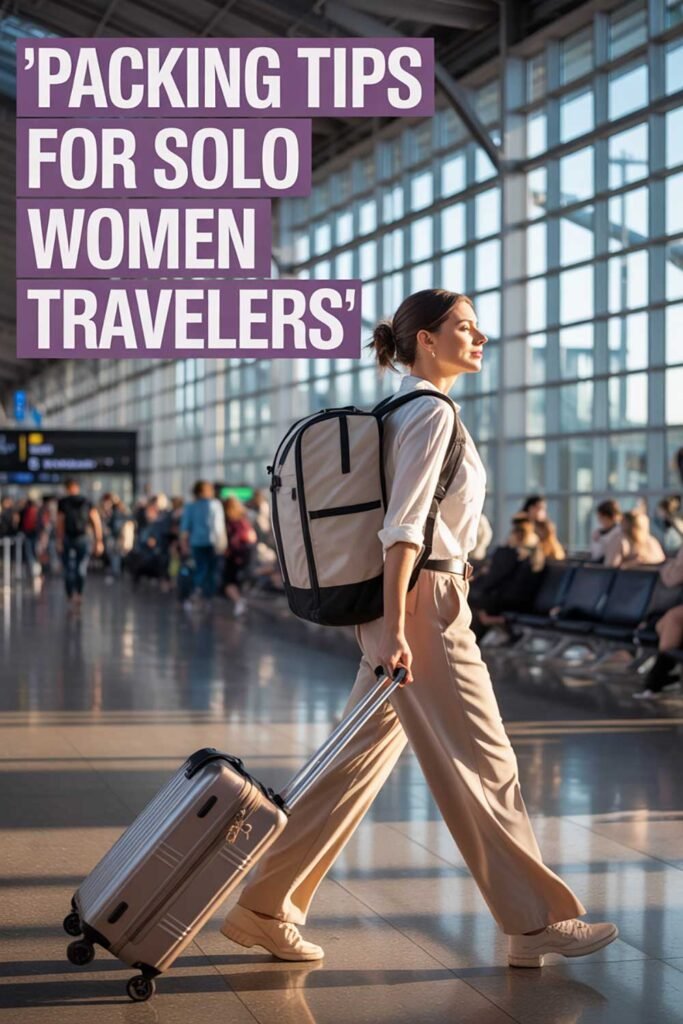
Packing for a solo trip is different from packing for a group trip because you are the only one carrying your bags. There is no partner to share the load with and no one to watch your luggage while you run to the restroom. Every item you pack is an item you have to manage on your own, so packing light is not just a preference. It is a strategy.
Stick to a Carry-On If Possible
If your trip is a week or less, challenge yourself to fit everything in a carry-on bag and a personal item. This eliminates the risk of lost checked luggage, speeds up your airport experience, and makes it much easier to navigate public transit, walk to your accommodation, and move freely throughout your trip. You will be amazed at how little you actually need when you pack intentionally.
Pack Versatile Clothing
Choose clothing that can be mixed and matched to create multiple outfits from a small number of pieces. Stick to a neutral color palette so everything coordinates. Pack fabrics that are lightweight, wrinkle-resistant, and quick-drying so you can wash items in your hotel sink if needed. Layering pieces are essential for destinations with variable weather.
Bring Essential Solo Travel Gear
There are a few items that are especially useful for solo travelers. A portable phone charger ensures you always have battery life for navigation and communication. A money belt or hidden pouch keeps your valuables secure. A small padlock is useful for hostel lockers. A lightweight daypack gives you a hands-free option for daily exploring. And a good pair of walking shoes is arguably the most important item you will pack.
Leave Room for Souvenirs
Do not pack your bag to full capacity. Leave some extra space for souvenirs, gifts, or items you might pick up along the way. If your bag is already bursting at the seams before you leave home, you will have no room for the treasures you discover during your trip.
Real-Life Examples: First-Time Solo Travelers Share Their Stories
Rachel’s Weekend in Savannah
Rachel is a 31-year-old nurse from Charlotte who had never traveled alone before. She was nervous about the idea but decided to start small with a weekend trip to Savannah, Georgia, just a four-hour drive from home. She booked a boutique hotel in the historic district, planned two anchor activities per day, and built in plenty of free time for exploring on foot.
On her first evening alone, Rachel sat at the bar of a well-reviewed restaurant and struck up a conversation with the bartender, who recommended a hidden jazz club nearby. She spent the rest of the evening listening to live music and chatting with other patrons. By the time she drove home on Sunday, Rachel felt more confident and more at peace than she had in months. She has since taken solo trips to New Orleans, Portland, and Key West, and she credits that first weekend in Savannah with changing her entire perspective on traveling alone.
James’s Solo Backpacking Adventure
James is a 26-year-old teacher from Minneapolis who had always traveled with friends or family. After a difficult breakup, he decided to take a solo backpacking trip through Portugal as a way to reset. He was terrified at first. He had never navigated a foreign country alone, never stayed in a hostel, and never eaten at a restaurant by himself.
Within 48 hours of arriving in Lisbon, all of that fear had melted away. He met fellow travelers at his hostel, joined a walking tour that turned into an afternoon of exploring with a group of strangers who quickly became friends, and discovered that eating alone at a small café while journaling was one of the most peaceful experiences of his life. James says his solo trip to Portugal taught him that being alone and being lonely are not the same thing, and that he is more capable and resilient than he ever gave himself credit for.
Maria’s Mother-Daughter Solo Trip Tradition
Maria is a 45-year-old accountant from Miami who started taking solo trips after her daughter left for college. The empty nest hit her hard, and she realized she had spent two decades putting everyone else’s needs before her own. Her first solo trip was a week in San Diego, where she spent her days visiting the zoo, walking along the beach, reading in coffee shops, and taking a sunset sailing tour.
The trip was so transformative that Maria now takes one solo trip every single year. She calls it her “recharge week” and says it makes her a better mother, a better employee, and a better version of herself. Her daughter, now in her twenties, has started taking her own solo trips inspired by her mother’s example. Maria says the greatest gift solo travel gave her was the reminder that she is allowed to prioritize herself.
Tom’s Business Trip Extension
Tom is a 38-year-old consultant from Denver who frequently travels for work but always flies home immediately after his meetings end. On a whim, he decided to extend a business trip to Austin by two extra days and explore the city on his own. He had no plans, no itinerary, and no expectations.
Those two unplanned days turned out to be the highlight of his entire month. He discovered a live music venue on a side street that became his favorite spot in any city. He took a guided food tour through the east side and tasted dishes he still talks about. He rented a bike and rode along the river trail at sunset, completely alone and completely content. Tom now extends at least one business trip per quarter into a mini solo adventure, and he says those extra days of solo exploration have made him fall in love with travel all over again.
Overcoming the Most Common Solo Travel Fears
Fear of Eating Alone
This is the number one fear for first-time solo travelers, and it is also one of the easiest to overcome. Start by choosing restaurants with bar seating, which feels completely natural for solo diners. Bring a book, a journal, or your phone if you need something to do with your hands. Within a meal or two, you will realize that nobody is looking at you, nobody is judging you, and eating alone is actually a deeply enjoyable and relaxing experience.
Fear of Loneliness
There is a difference between being alone and being lonely. Solo travel is about being alone by choice, and that choice comes with incredible freedom. But if you do crave social interaction, it is remarkably easy to find. Stay at social hostels, join group tours or classes, sit at communal tables, or use apps designed to connect travelers. You will be surprised how quickly you can go from solo to social and back again, all on your own terms.
Fear of Getting Lost
Getting lost is not a travel failure. It is a travel experience. Some of the best discoveries happen when you wander off the planned route. But if the idea truly stresses you, download offline maps before your trip, screenshot key directions, and keep your accommodation’s address written down in your pocket at all times. With modern navigation tools, getting truly lost is almost impossible. And even when it happens, it makes a great story later.
Fear of Something Going Wrong
Things go wrong on every trip, solo or not. Flights get delayed, reservations get lost, weather changes plans. The difference with solo travel is that you have to handle it yourself, and that is actually a good thing. Every problem you solve on your own builds confidence and proves that you are more resourceful than you thought. Travel insurance, a backup plan, and a positive attitude are the three best tools for handling the unexpected.
20 Powerful and Uplifting Travel Quotes to Inspire Your Next Journey
- “The world is a book, and those who do not travel read only one page.” — Saint Augustine
- “Travel is the only thing you buy that makes you richer.” — Anonymous
- “Adventure is worthwhile in itself.” — Amelia Earhart
- “Not all those who wander are lost.” — J.R.R. Tolkien
- “Life is short and the world is wide.” — Simon Raven
- “To travel is to live.” — Hans Christian Andersen
- “Take only memories, leave only footprints.” — Chief Seattle
- “The journey of a thousand miles begins with a single step.” — Lao Tzu
- “Traveling – it leaves you speechless, then turns you into a storyteller.” — Ibn Battuta
- “Once a year, go someplace you’ve never been before.” — Dalai Lama
- “We travel not to escape life, but for life not to escape us.” — Anonymous
- “Jobs fill your pocket, but adventures fill your soul.” — Jaime Lyn Beatty
- “Travel makes one modest. You see what a tiny place you occupy in the world.” — Gustave Flaubert
- “The real voyage of discovery consists not in seeking new landscapes, but in having new eyes.” — Marcel Proust
- “Don’t tell me how educated you are, tell me how much you have traveled.” — Mohammed
- “Travel far enough, you meet yourself.” — David Mitchell
- “Life begins at the end of your comfort zone.” — Neale Donald Walsch
- “A journey is best measured in friends, rather than miles.” — Tim Cahill
- “Own only what you can always carry with you.” — Alexander Solzhenitsyn
- “Wherever you go, go with all your heart.” — Confucius
Picture This
Let yourself drift into this moment for a minute. Let your mind go there completely.
It is early morning in a city you have never been to before. You wake up in a cozy hotel room to the soft glow of sunlight peeking through the curtains. There is no alarm blaring. No one else’s schedule to follow. No one knocking on the bathroom door or asking where you want to eat breakfast. Just quiet. Just peace. Just you.
You stretch, take a long hot shower, and get dressed in an outfit you picked out just for this trip. You grab your daypack, slip your room key into your pocket, and step out onto the street. The air smells different here. It smells like fresh bread from a nearby bakery and something floral you cannot quite identify. The city is just waking up around you, and you have the rare and beautiful privilege of watching it happen at your own pace.
You follow your nose to a small café on the corner. You sit at a table by the window, order a coffee and a pastry, and just watch. You watch the locals walking to work, the shopkeepers opening their doors, the pigeons hopping between cobblestones. You pull out your journal and write a few lines about how you feel. The word that keeps coming back is free. You feel completely, entirely, wonderfully free.
After breakfast, you walk to the museum you have been wanting to visit for years. You take your time. You stand in front of the paintings that move you and skip the ones that do not. You linger in the gift shop and buy a small print that you know will look perfect in your living room. No one rushes you. No one suggests moving on to the next thing. You move through the space exactly as you want to.
In the afternoon, you stumble upon a neighborhood you did not have on your itinerary. There is a street market with handmade jewelry, local spices, and a musician playing guitar on a bench. You buy a small bracelet as a souvenir, not because it is expensive or fancy, but because you were there when you found it and it will always remind you of this moment. You sit on a bench near the musician and eat a sandwich you grabbed from a street vendor. It is one of the best meals of the trip, and it cost almost nothing.
As the sun starts to set, you find a spot along the waterfront and sit down to watch the sky turn from blue to orange to pink. Your phone buzzes with a text from a friend back home asking how the trip is going. You smile and type back a simple message: “I should have done this years ago.” And you mean every word.
That evening, you dress up a little and walk to a restaurant you found during your research. You sit at the bar, order something you have never tried before, and end up having a wonderful conversation with the person sitting next to you. They are a solo traveler too. You swap stories, laugh, and exchange recommendations for tomorrow. You walk back to your hotel under the streetlights feeling something you have not felt in a long time. You feel proud of yourself. You feel capable. You feel alive.
And as you lie in bed that night replaying the day in your mind, you realize something that changes everything. You do not need anyone else to have an incredible experience. You do not need permission to explore, to rest, to wander, to eat alone, to sit in silence, or to start a conversation with a stranger. You have everything you need already. It was inside you the whole time. Solo travel just helped you find it.
That is what is waiting for you on the other side of your first solo trip. Not just a vacation. A version of yourself you have not met yet. And trust us, you are going to love that person.
Share This Article
If this article made you feel even a tiny spark of excitement about solo travel, imagine what it could do for someone else you know. Think about that friend who has been saying for months that they need a vacation but cannot find anyone to go with. Think about your sister or brother who just went through a big life change and could use something to look forward to. Think about your parent who has spent decades taking care of everyone else and has never done something just for themselves. Think about that coworker who always talks about the places they want to visit but never actually books the trip.
This article could be the nudge that turns their dream into a plan. And that plan could become the most meaningful experience of their life.
Share it on Facebook and tag the person you know who needs to read it. Send it in a text message with a simple note that says “this made me think of you.” Post it on X (formerly Twitter) so your followers can discover the joy of solo travel. Pin it to your travel board on Pinterest so it is ready and waiting when the time is right. Email it to your family group thread as inspiration for everyone to step outside their comfort zone. Drop it in your favorite online community or group chat where people support each other’s growth.
Every share is more than just a link. It is an invitation. An invitation to be brave, to try something new, and to discover that the world is a lot less scary and a lot more beautiful when you have the courage to explore it on your own. Be the person who sends that invitation today.
Visit us at DNDTRAVELS.COM for more travel tips, guides, and inspiration that help you explore the world with confidence, whether you are traveling solo or with a group.
Disclaimer
The information provided in this article is for general informational and educational purposes only and should not be interpreted as professional travel, financial, legal, medical, or safety advice. All solo travel tips, strategies, destination recommendations, safety suggestions, and packing guidelines described in this article are based on publicly available information, general travel knowledge, and the past experiences of real travelers. These recommendations are general in nature and may not account for your specific personal circumstances, health conditions, financial situation, travel experience level, or the unique conditions of your chosen destination.
DNDTRAVELS.COM and the authors of this article make no guarantees or warranties, expressed or implied, regarding the accuracy, completeness, reliability, suitability, or timeliness of the information presented. We are not affiliated with, endorsed by, or officially connected to any airline, hotel chain, hostel network, travel insurance provider, tourism board, or other business or organization mentioned in this article unless explicitly stated otherwise. The mention of any destination, company, product, or service does not constitute an endorsement, recommendation, or guarantee of safety.
Solo travel involves inherent risks that vary based on destination, individual circumstances, and factors beyond anyone’s control. Your experience with solo travel may differ significantly from the examples and descriptions provided in this article. Safety conditions, local laws, cultural norms, transportation options, and travel infrastructure can change without notice. We strongly recommend that you conduct your own thorough research, consult with qualified travel professionals, check government travel advisories for your specific destination, purchase comprehensive travel insurance, and take all necessary personal safety precautions before and during any solo trip.
By reading and using the information in this article, you acknowledge and agree that DNDTRAVELS.COM, its owners, authors, contributors, partners, and affiliates shall not be held responsible or liable for any losses, damages, injuries, illnesses, fees, charges, safety incidents, negative experiences, or any other adverse outcomes that may arise from your use of or reliance on the content provided herein. You assume full responsibility for your own travel decisions, personal safety, and overall well-being. This article is intended to educate, inspire, and empower aspiring solo travelers to make more informed decisions, not to serve as a substitute for professional advice, official government travel resources, or your own independent judgment and due diligence.