Personal Item Travel Essentials for Airplanes
Your personal item is your in-flight home base, and what goes inside it determines how comfortable and prepared you feel from the moment the cabin door closes. The most comfortable traveler on any flight is the one who packed their personal item like they meant it. This article builds that personal item — everything that belongs inside it, where it goes, and why the outermost pocket is the most important decision in the whole bag.
Grab Our Travel Packing Checklist
Our free packing checklist includes a personal item section organized by the outermost-pocket-first system this article describes — every item categorized by when during the flight it is needed and where in the personal item it lives for the fastest access at the right moment.
Get the Free ChecklistThe in-flight entertainment system on any aircraft — the seatback screen with its selection of films, series, and music — provides reasonable but uncontrolled entertainment across the flight’s duration. The airline’s content selection is the airline’s content selection, chosen for the broadest possible audience at the longest possible refresh cycle. For the flight whose duration exceeds the available content’s interest — the long-haul where the three available films in the preferred genre were watched at a previous airport — the personal device with personally downloaded content is the alternative that the airline’s seatback system cannot provide: the specific film, the specific series, the specific podcast, the specific audiobook, chosen by the specific passenger before departure and available without any reliance on the inflight entertainment system’s availability or content library.
Download all entertainment before the travel day rather than streaming from the aircraft’s inflight Wi-Fi, which is available on some but not all aircraft, operates at speeds that vary between slow and unusable depending on the flight’s route and passenger load, and costs a fee that the pre-downloaded content eliminates entirely. Downloaded content plays at full quality without buffering, without the inflight Wi-Fi’s speed variation, and without any connectivity requirement — which means it plays at altitude over the Pacific as reliably as it plays on the ground at the departure gate. A fully loaded device with twelve hours of downloaded content is the personal item’s entertainment component for any flight regardless of the aircraft’s connectivity or seatback system quality.
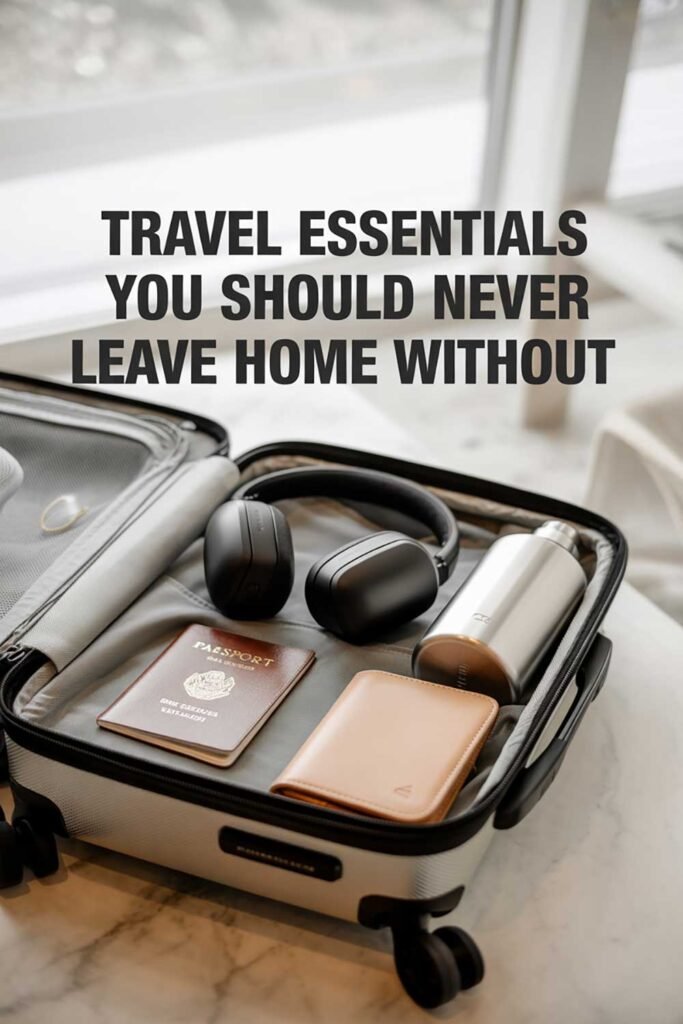
Pack the headphones — specifically, noise-canceling headphones — in the personal item’s accessible exterior pocket rather than the main compartment. The headphones not packed in the accessible pocket are the headphones located at the main compartment’s bottom after everything above them has been removed and placed in the seat pocket or on the tray table, which is the specific unpacking sequence that the already-seated middle seat passenger manages on behalf of the aisle and window seat passengers whose space the tray table excavation invades. Noise-canceling headphones in the accessible exterior pocket are on the head within thirty seconds of sitting down. The ambient engine noise, the cabin conversation, and the seatback screen of the adjacent passenger disappear. The downloaded content plays. The flight has begun properly.
The most comfortable traveler on any flight is the one who packed their personal item like they meant it.
Your personal item is your in-flight home base, and what goes inside it determines how comfortable and prepared you feel from the moment the cabin door closes.
Pack a short cable in the personal item’s exterior pocket alongside the headphones for the aircraft seats with the audio jack located in the armrest rather than on the seatback screen — older aircraft configurations where the seatback screen is used without Bluetooth. The short cable adapter converts the Bluetooth-only personal headphones to the wired connection that older seatback entertainment systems require. The passenger who reaches the seat on an older aircraft and discovers the audio jack in the armrest without the adapter has the personal downloaded content and can still use the headphones in wired mode. The passenger without either the adapter or the downloaded content has the engine noise and the cabin ambient sound for the full flight duration.
Let Us Plan the Trip That Makes the Flight Feel Like Part of the Adventure
The personal item packed with intention makes any flight better. The destination worth arriving at makes the flight worth packing for. Tell us where you want to go. We will book the trip. You build the personal item around the journey.
Plan Our EscapeThe aircraft cabin’s snack and meal service provides reasonable nutrition at the airline’s schedule rather than the passenger’s hunger. The gap between the boarding gate’s last meal and the aircraft’s first meal service is often two to three hours after a mid-morning departure or a late-evening boarding when the meal service falls at the wrong point in the flight’s schedule for the passenger’s actual hunger timing. The personal item snack supply is the gap coverage — the snacks that bridge the interval between the airport’s last food and the aircraft’s first service, and between the aircraft’s last service and the destination’s first meal.
Pack what you genuinely want to eat rather than the snack that feels virtuous to bring on an aircraft. The virtuous snack that goes uneaten through the flight and returns home in the personal item is the flight’s hunger event waiting to happen. The protein bar, the mixed nuts, the dried fruit, the specific chocolate, the crackers with the specific cheese — the snacks that the passenger actually wants at 35,000 feet — are the snacks that produce the comfortable, satisfied flight experience rather than the specific mid-flight hunger that the virtuous snack that went untouched does not prevent. Pack the snacks you will eat. Bring enough for the full flight’s snack gaps. Include one item that is genuinely enjoyable rather than purely functional — the specific biscuit, the good chocolate, the specific drink that makes the personal item feel like it was packed for comfort rather than just sustenance.
Avoid strongly scented snacks in the aircraft cabin as a courtesy to adjacent passengers: the tuna wrap, the egg salad, the pungent cheese, and similar high-scent items in an enclosed cabin with recycled air produce the specific adjacent seat experience that the passenger’s personal item choice imposes on people who did not choose it. Mildly scented snacks — nuts, crackers, chocolate, fruit, protein bars — are the personal item’s snack category that satisfies the packer without affecting the seats around them. Pack for your own comfort and your neighbors’ comfort simultaneously. The aircraft cabin is a shared small space, and the personal item’s snack choice is the individual decision with the most direct impact on the adjacent passenger’s flight experience of any personal item decision.
Pack snacks in the personal item’s outermost pocket alongside the other mid-flight access items rather than the main compartment. The snack retrieved from the outermost pocket while seated in the window seat during cruise is the snack that arrives without the main compartment excavation, without the tray table cleared for the bag placement, and without the adjacent passenger disturbed by the full bag rummage. The snack in the main compartment requires all of the above. The snack in the outermost pocket requires reaching forward, unzipping the exterior pocket, and retrieving the item. One motion. No adjacent passenger interaction. The flight continues uninterrupted.
Two items belong in the personal item on every flight regardless of the flight’s duration, the bag’s contents, or anything else in the packing: the travel documents and the phone charger. The travel documents — passport and boarding passes for every segment of the itinerary — are the items whose absence from the personal item and presence in the checked bag or the overhead bin carry-on produces the specific boarding gate problem, the immigration desk problem, and the connecting flight problem that every other item in the personal item exists comfortably without. Documents in the personal item. Every flight. No exceptions. The personal item is under the seat in front — accessible during taxi, takeoff, boarding, and any other moment when the overhead bin is closed and the carry-on within it is inaccessible. Documents in the personal item are accessible at those moments. Documents in the carry-on are not.
The phone charger — specifically a portable power bank in addition to the charging cable — is the personal item’s most consistently useful single item after the documents. The travel day’s phone battery drain from the boarding pass app, the navigation app, the check-in process, the social media update at the gate, and the entertainment streaming during the flight produces the specific phone battery situation of the arrival where the battery is at seven percent and the navigation app to the first accommodation is needed immediately. The power bank charged the night before departure and packed in the personal item’s accessible pocket is the travel day’s battery independence — the arrival with a charged phone, the navigation to the first hotel, the confirmation of the taxi booking, all from a device that the personal item kept charged without any seat-side outlet required. The seat-side outlet on most aircraft is not reliably available at the specific seat assigned; the power bank is always available because it traveled in the personal item from home.
Pack the charging cable in the personal item’s outermost pocket — the cable used most frequently during the travel day, connecting the phone to the power bank during the flight and to the airport outlet during the connection’s wait. The cable at the outermost pocket is the cable that connects and disconnects in under five seconds without the main compartment excavation. The cable at the main compartment bottom is the cable that requires the full bag rummage at the boarding gate when the phone is at twelve percent and the gate is about to close.
Pack a compact multi-port charger — a small wall adapter with at least two USB ports, ideally including one USB-C port — in the personal item alongside the power bank. The compact multi-port charger transforms any airport outlet into the simultaneous charging station for the phone and the power bank without occupying two separate outlets or requiring the passenger to choose between charging the phone or the bank at the connection. Most airport gate areas have limited outlets shared among many passengers; the multi-port charger doubles the value of the one outlet found by charging two devices from it simultaneously. The compact format — typically the size of a standard charger but with two ports — adds under one hundred grams to the personal item and multiplies the connection’s charging efficiency by a factor of two.
Find Booking Ideas and Travel Essentials on Our Favorites Page
Our favorites page has helpful booking ideas and travel essentials that we have found genuinely useful for air travel and personal item preparation. Whether you are planning your next flight or looking for resources that make every journey more comfortable, it is worth a look.
DND FavoritesA change of clothes in the personal item is the insurance against the checked bag delay and the specific flight-day clothing situation that the window seat passenger at hour three of a ten-hour flight experiences when the beverage service produces the specific beverage placement event. One change — top, bottom, underwear, socks — weighs under five hundred grams, takes minimal personal item volume, and covers both the contingency scenario (checked bag delayed at the destination) and the comfort scenario (arriving at the destination’s first impressions in fresh clothing rather than the travel day’s twelve-hour outfit). For flights over six hours, the change of clothes retrieved from the personal item and applied in the aircraft lavatory in the final hour of the flight converts the arrival from the travel day’s tired exit to the fresh start that the destination’s first activity deserves.
The comfort items that make the personal item the in-flight home base rather than a bag under a seat: a sleep mask that blocks light specifically for the sleep segment of longer flights, a travel neck pillow that fits in the personal item’s exterior pocket when compressed, a lightweight travel blanket or a warm layer for the aircraft’s variable cabin temperature (aircraft cabins run cold at altitude, and the airline’s thin blanket is the specific comfort item whose absence from the seat pocket — gate checked, not yet distributed, or simply not provided on the route — produces the specific cold hours that a personal item layer prevents), a small packet of lip balm for the cabin’s dehydrating effect on the lips across multi-hour flights, and a set of earplugs as the backup to the noise-canceling headphones for the sleep segment when wearing headphones is uncomfortable.
The hand sanitizer and the face wipe are the personal item’s in-flight hygiene items — the hand sanitizer for the tray table deployment and the post-aisle walk return, the face wipe for the mid-flight facial refresh that the long-haul’s dehydrating cabin air makes genuinely welcome at hour six. Both items are under the TSA’s 100-milliliter limit in travel size and belong in the quart bag for the security checkpoint, then in the outermost pocket for the in-flight access. Together they weigh under seventy grams and produce the specific mid-flight comfort maintenance that the dry cabin air continuously works to reduce.
The travel neck pillow format that works best in the personal item is the compressible version — the inflatable neck pillow or the compressible memory foam in its compression sack — rather than the standard U-shaped foam neck pillow that occupies significant volume even when not in use. The compressible pillow inflated or expanded at the seat takes the same size as the standard version. The compressible pillow in the personal item’s exterior pocket takes a fraction of the standard version’s volume. For the passenger whose personal item is already filled with the entertainment, snacks, documents, charger, change of clothes, and comfort items this article describes, the compressible neck pillow is the specific format that adds the comfort benefit without the volume cost that the standard format would impose.
The personal item stored under the seat in front during the flight is accessible throughout the flight — during cruise, during meal service, and at any moment when the need arises — without requiring the passenger to stand, to ask the adjacent passenger to move, to move to the aisle, or to retrieve the overhead carry-on. This accessibility is the personal item’s specific advantage over the carry-on in the overhead bin, which is inaccessible during taxi, takeoff, landing, and turbulence, and which requires standing and the adjacent passenger’s cooperation during cruise. The personal item’s accessibility advantage is only fully realized when the items needed during the flight are in the personal item rather than the overhead bin — and only fully efficient when the specific items needed mid-flight are in the outermost pocket rather than the main compartment.
The outermost pocket’s contents are the items needed during the flight without unbuckling and without a main compartment excavation: the headphones, the charging cable, the snacks, the hand sanitizer, the face wipes, the lip balm, the sleep mask, the earplugs, and the documents. These are the items needed at seat-side — reaching forward and unzipping one pocket — rather than the items needed once at the destination that can reasonably live in the main compartment. The outermost pocket is the in-flight drawer. Everything in the flight’s in-flight drawer belongs in the outermost pocket. Everything the destination needs but the flight does not is in the main compartment where the destination accesses it after arrival without any in-flight access friction.
The outermost pocket organization: the items that are needed most frequently nearest the pocket’s opening. The headphones at the very top — the first item placed and the first item retrieved. The snack pouch behind them. The charging cable and hand sanitizer beside the snack pouch. The sleep mask and earplugs at the back for the sleep segment, accessed once rather than repeatedly. The documents at the pocket’s flat interior — the most important items, in the most protected position within the outermost pocket, accessible without removing any other item from the pocket’s main area. Every item in its position. Every position assigned before boarding. Every mid-flight need met from the outermost pocket without the main compartment excavation.
Assign the outermost pocket’s positions consistently on every flight — headphones always at the top, snacks always in the middle, documents always at the flat interior — so the retrieval of any outermost pocket item is the automatic motion of reaching to the known position rather than the visual search for the item among the pocket’s contents in the dim cabin light. The passenger who reaches for the snacks in the same position they occupy on every flight finds them in under two seconds in the dark. The passenger whose outermost pocket contents change position from flight to flight searches the pocket’s contents each time. Consistency produces the automatic retrieval. Assign the positions once. Keep them.
The complete personal item system organizes the flight’s essentials into two zones within the personal item — the outermost pocket and the main compartment — based on when during the travel day each item is needed.
The outermost pocket — in-flight access, retrieved at seat without unbuckling: noise-canceling headphones at the top, short audio cable adapter beside them. Personal snack pouch with the selected snacks for the flight’s full duration. Charging cable. Hand sanitizer. Face wipes. Lip balm. Sleep mask. Earplugs. Documents — passport and boarding passes for all segments — in the flat inner section of the outermost pocket.
The main compartment — destination access, retrieved at the gate or after arrival: the device with all entertainment downloaded. The power bank, fully charged from the night before. The compact multi-port charger. The change of clothes in a small zip bag. The travel neck pillow in its compression sack. The lightweight travel blanket or warm layer. The quart bag of TSA-compliant liquids at the very top of the main compartment for the security checkpoint removal. Any book, journal, or physical activity item for the flight’s non-screen hours.
The load order: quart bag at the top of the main compartment. Neck pillow compression sack beside it. Device and books behind them. Change of clothes in zip bag at the main compartment bottom. Power bank and multi-port charger in the main compartment’s interior pocket or beside the device. Outermost pocket loaded in position order from the front: headphones, snacks, cable, hand sanitizer, face wipes, lip balm, sleep mask, earplugs, documents flat at the inner section.
Pack the personal item the evening before departure rather than the morning of. The personal item packed the night before is the personal item confirmed complete — every item in its assigned zone, the outermost pocket in its assigned positions, the quart bag at the top of the main compartment. The morning-of personal item assembly under departure time pressure produces the item missing from its position, the snack pouch forgotten on the kitchen counter, the headphones on the charger not transferred to the outermost pocket before the door closed. Five minutes the evening before. The departure morning is the personal item confirmed and the door closed. The security checkpoint is the quart bag removal in ten seconds. The seat is the headphones in thirty. The flight has begun.
The Ten Hours Kwame Spent at the Window Seat Wishing He Had Packed Differently
Kwame had approached the packing for his first long-haul international flight the way he approached packing for every trip: the clothes went in the checked bag, everything else went in the carry-on, and the carry-on went in the overhead bin at boarding. This system had worked fine on the domestic flights that were his reference experience — flights under three hours where the overhead bin’s inaccessibility during most of the flight was a minor inconvenience rather than a defining characteristic of the journey.
The ten-hour overnight international flight revealed the system’s limitation in the first forty-five minutes. The carry-on was in the overhead bin. He was in the window seat. The seatbelt sign was illuminated for the first twenty minutes of cruise due to turbulence. The headphones were in the carry-on in the overhead bin. The snacks were in the carry-on in the overhead bin. The neck pillow he had purchased specifically for this flight was in the carry-on in the overhead bin. The phone charger was in the carry-on in the overhead bin. When the seatbelt sign extinguished and he stood to retrieve the carry-on from the overhead bin, the aisle seat passenger stood to let him pass, then stood again as he squeezed back to the window seat with the carry-on, placed it in his lap on the fully reclined tray table, extracted the headphones, the neck pillow, the snacks, the charger, and returned the carry-on to the overhead bin, at which point the aisle seat passenger stood a third time.
At hour four, he needed the charging cable. The carry-on returned. The aisle seat passenger stood again. At hour seven, the flight attendant recommended he stow the item at his feet rather than keeping it on the tray table, which was required for the meal service. He slid the carry-on under the seat in front. There was not enough foot space for it plus his feet. He chose the carry-on. For the final three hours of the flight, his feet were on top of the carry-on that contained the neck pillow he had purchased specifically for this flight and that had been on his neck for most of it only because accessing it from the overhead bin had required the aisle seat passenger to stand three times.
Serena, who had packed her personal item before the flight, had her headphones on before the seatbelt sign illuminated. She had her snacks in her outermost pocket. Her neck pillow was inflated from the personal item’s exterior pocket before the aircraft pushed back. Her charging cable was connecting her phone to her power bank before the gate closed. She watched two downloaded films she had specifically chosen. She did the face wipe refresh at hour six. She changed into the fresh outfit in the lavatory at hour nine. She arrived at the destination having had an excellent flight. Kwame arrived having had the specific flight that produces the complete personal item system. This article is the personal item Kwame has packed on every flight since the window seat at hour seven when his feet were on top of the carry-on that contained the neck pillow he was not wearing.
Beyond the five core personal item principles, these six additional approaches address the specific in-flight scenarios the core system does not fully cover.
Pack a small reusable water bottle in the personal item’s side pocket and ask the flight attendant to fill it from the galley’s water supply at the first cabin service opportunity rather than relying on the small cup of water that the meal service provides as the hydration for a twelve-hour flight. The flight attendant who receives this specific, polite request typically accommodates it without hesitation — the galley has an adequate water supply for the flight’s passenger count, and the passenger who asks respectfully with a bottle rather than a cup is the passenger whose hydration need is served more efficiently from the galley’s perspective as well as the passenger’s. A refilled 500-milliliter bottle twice during a twelve-hour flight provides the hydration baseline that the two small cups from the meal service alone does not approach.
Bring a small notebook and a pen in the outermost pocket alongside the other mid-flight essentials. The flight’s hours in the specific quiet between the entertainment sessions, the meal service, and the sleep segment produce the specific mind-clearing thinking that the continuous daily routine’s noise does not allow space for — the trip’s plans, the observation about the destination that will be forgotten by arrival, the idea that occurred at altitude when the usual demands are on the ground. The specific flight thought that is not written down is the flight thought that is gone by the time the wheels touch the runway. A small notebook and a pen in the outermost pocket is the flight’s thinking tool at zero additional weight cost relative to its value.
Download a podcast series or an audiobook specifically for the sleep-to-wake transition hours of the overnight long-haul — the final two hours before the scheduled descent when the sleep segment has ended and the entertainment segment before arrival begins. The audiobook or the podcast that begins at hour eight of the ten-hour overnight flight and fills the final two hours with genuinely engaging content is the flight’s ending that the television series’ episode count does not guarantee covering: the series episode that ends on a cliffhanger at hour nine is the entertainment situation that the pre-downloaded single audiobook chapter does not produce.
Carry a thin travel pillow case or a soft scarf that can be wrapped around the airline’s pillow for the overnight flight’s sleep segment. The airline’s pillow is clean but its fabric cover is a standard pillow cover of uncertain softness. The personal pillow case or the scarf placed over the airline’s pillow converts the standard pillow into the softer, more comfortable surface that produces the specific sleep quality the flight’s sleep segment is attempting to deliver. The scarf doubles as the warm layer for the cold cabin hours that the warm layer in the main compartment was packed for, making it the personal item’s highest two-function item by weight after the change of clothes.
Position the personal item in the under-seat space with the zipper facing toward the passenger rather than toward the seatback in front. The personal item positioned with the outermost pocket’s zipper facing the passenger is the personal item whose outermost pocket is accessed without sliding the bag out from under the seat — the zipper is at the bag’s reachable edge, and the contents are accessible from the seated position with a forward lean. The personal item positioned with the zipper facing the seatback in front requires the bag to be slid out, the outermost pocket accessed, and the bag returned — three additional motions for every outermost pocket access during the flight. Correct bag orientation at seat placement. Every flight. One decision that reduces the effort of every subsequent mid-flight access.
Pack a small breath freshening item — a travel mouthwash in a TSA-compliant volume, a pack of sugar-free mints, or a travel-size dental floss pick — in the outermost pocket for use at the flight’s mid-point and at the pre-arrival freshening sequence. The twelve-hour flight’s morning-fresh oral state at boarding is the twelve-hour-ago oral state at arrival, and the specific social and sensory freshness of the arrival’s first interactions — the immigration officer, the taxi driver, the hotel check-in — is improved by the mid-flight oral care that the minuscule outermost pocket addition makes available at the lavatory stop before the descent announcement.
The personal item’s most important quality is not what is in it. It is that everything in it was placed there intentionally before boarding rather than assembled at the gate from whatever happened to be in the carry-on. The intentional personal item is the bag that was loaded the evening before, confirmed complete, and placed at the door for the departure morning. The unintentional personal item is the bag that received whatever was easiest to grab at the last moment — which is reliably the wrong things in the wrong quantities with the wrong items in the wrong positions. Pack the personal item like you mean it the evening before. The flight’s comfort is the result of a five-minute evening preparation that nobody sees and everybody feels for the full duration of the flight.
Book the Flight Worth Packing This Personal Item For
The personal item packed with intention makes any flight better. The destination worth arriving at makes the flight worth taking. Our travel agents book both. Let us plan yours.
Book A TripPersonal Item Packing Mistakes That Make Every Flight Harder Than It Needs to Be
Each of these is the three-time aisle seat passenger, the dead phone at arrival, or the headphones at the bottom of the main compartment. Each has a position-based resolution.
Putting the personal item in the overhead bin and using the carry-on under the seat
The item under the seat is the personal item. The item in the overhead bin is the carry-on. Reversing this arrangement means the most frequently accessed items — the headphones, the snacks, the charger, the documents — are in the overhead bin’s inaccessible storage rather than the under-seat accessible storage. Personal item under the seat. Carry-on in the overhead bin. This distinction is the difference between the window seat’s good flight and the window seat’s specific aisle-passenger-standing sequence.
Putting the headphones in the main compartment and excavating for them after boarding
The headphones in the main compartment require removing everything above them at the seated position, placing the removed items somewhere, extracting the headphones, and returning the removed items to the bag. The headphones in the outermost pocket require reaching forward and unzipping. Both headphones arrive at the ears for the same flight. The one in the outermost pocket arrives in thirty seconds. The one in the main compartment arrives after the specific first-class cabin observation of the middle seat passenger managing the full bag excavation. Outermost pocket. Always.
Not packing any snacks and relying entirely on the aircraft’s meal and snack service
The aircraft’s meal service is provided at the airline’s schedule. The passenger’s hunger occurs at the passenger’s schedule. These two schedules are not the same. The personal snack pouch in the outermost pocket is the food that is available at the passenger’s hunger moment rather than at the airline’s service moment. Pack snacks you will actually eat. Put them in the outermost pocket. Eat them when hungry rather than when the trolley passes.
Not packing a power bank and arriving at the destination with a dead phone
The travel day’s phone battery drain is consistent and predictable. The arrival’s navigation, confirmation, and communication needs are also consistent and predictable. Between these two predictables is the power bank in the personal item’s main compartment, charged the night before, connecting to the phone at the mid-flight low-battery moment via the charging cable in the outermost pocket. The phone arrives charged. The navigation works. Pack the power bank. Charge it before departure. The arrival’s seven-percent phone battery is the power bank not packed.
Not packing a change of clothes in the personal item for longer flights
The change of clothes in the personal item covers two scenarios simultaneously: the checked bag delayed at the destination and the first-impression arrival in fresh clothing rather than the twelve-hour travel day outfit. One change. Under five hundred grams. In a small zip bag in the main compartment. Retrieved in the lavatory in the flight’s final hour. The arrival that begins from a fresh start rather than a travel day continuation. Pack the change. Use it in the final hour.
Assembling the personal item at the gate the morning of departure rather than packing it the evening before
The gate-assembled personal item contains whatever was quickest to grab rather than what was intentionally selected. The headphones may have been left on the charger at the gate’s last use. The snack pouch may be empty from the previous flight. The power bank may be at forty percent rather than the full charge the evening-before preparation produces. Pack the personal item the evening before. Confirm each position. The departure morning is the confirmed bag and the closed door. The flight is the intentional personal item’s return on the five minutes the evening before.
Love Helping Travelers Make Every Part of the Journey Better?
Travel bookings are more enjoyable for everyone when the traveler arrives comfortable, prepared, and ready to begin rather than recovering from the journey. If becoming a home-based travel agent who helps people travel better from the first moment of the flight sounds like the right next step, see how the TravelPreneur system works.
Become An AgentFrequently Asked Questions
These are the questions travelers ask most often about packing the personal item correctly for any flight.
What is the difference between a personal item and a carry-on bag?
A personal item is a smaller bag — typically a purse, a backpack, a laptop bag, or a small tote — that is stored under the seat in front of the passenger during the flight. Most airlines allow one personal item in addition to the standard carry-on bag, which is stored in the overhead bin. The personal item’s size limit varies by airline but is typically around 18x14x8 inches or 45x36x20 centimeters, and the item must fit under the seat in front without protruding into the aisle. The carry-on is larger — typically 22x14x9 inches or 55x40x20 centimeters — and is stored in the overhead bin. The practical distinction for packing purposes: the personal item is accessible at your seat throughout the flight because it is under the seat, which is why it should contain the items needed during the flight. The carry-on is inaccessible during taxi, takeoff, turbulence, and landing, which is why it holds the items needed only at the destination rather than during the flight. Always confirm the specific size limits with the airline before travel, as these vary and may be strictly enforced.
What should I not put in my personal item?
Items that should not be in the personal item are items that are too large, too heavy, or too infrequently needed during the flight to justify the personal item’s limited volume. Heavy items — a full laptop, a large hard drive, heavy books — belong in the carry-on overhead bin where their weight is not affecting the under-seat space and the passenger’s foot comfort. Very large items that will not fit under the seat belong in the overhead bin carry-on. Items needed only at the destination — the full toiletry kit, all clothing beyond the change of clothes, destination guides — belong in the checked bag or the overhead carry-on rather than occupying the personal item’s limited volume. The personal item’s volume is best used entirely for in-flight use items. Items that are needed only after arrival are not in competition for the personal item’s space when the packing system correctly routes them to the carry-on or the checked bag.
Can I bring food through airport security in my personal item?
Solid food items — sandwiches, crackers, nuts, protein bars, fruit, chocolate, and most packaged snacks — can be brought through TSA security in the personal item without restriction. Liquid and gel foods — soups, yogurt, peanut butter in quantities over 100 milliliters, and any spreadable or pourable food — are subject to the TSA’s 3-1-1 liquids rule and must be in containers of 100 milliliters or less to be brought through security in the carry-on or personal item. For international flights, each country’s border security has its own regulations on food items that may be brought into the country; fresh fruit, meat, and dairy products are commonly restricted at international arrivals. Always check the destination country’s customs food restrictions before packing food items intended to be taken off the aircraft at the international destination.
What is the best personal item bag for air travel?
The best personal item bag for air travel is the bag that fits under the specific airline’s seat front at the passenger’s typical seat class, has an exterior pocket accessible from the seated position for the outermost pocket system this article describes, has a dedicated laptop or tablet sleeve accessible from the exterior for security checkpoints, and is comfortable to carry from the transit distance between the home and the aircraft seat. Specific format preferences vary: some travelers prefer the backpack format for even weight distribution on the transit walk; others prefer the tote or the crossbody for quick access during the boarding and gate process. The specific bag dimensions, construction quality, and brand that best serve any individual traveler’s flight frequency, carry weight, and aesthetic preferences are best identified through current travel bag reviews from experienced traveler platforms, as the best current products change as new options enter the market. Confirm the bag’s dimensions against the specific airline’s personal item size requirements before purchase if the airline’s size enforcement is known to be strict.
Do I need noise-canceling headphones or are regular headphones fine?
Noise-canceling headphones provide a meaningfully better in-flight audio experience than standard headphones or earbuds on most commercial aircraft because the aircraft cabin’s ambient noise — the engine sound, the air conditioning, the cabin conversation, the adjacent passenger’s seatback screen audio — is continuous and significant at a frequency range that standard headphones do not reduce. Noise-canceling headphones reduce this ambient background noise actively, producing a quieter listening environment that allows the entertainment’s audio to be heard at lower volume — which is both more comfortable for the ear across long listening periods and produces better sleep quality during the sleep segment when the noise canceling is used without any audio content. Standard earbuds and headphones without active noise cancellation are adequate for short domestic flights where the ambient noise exposure is brief. For flights over four hours, the noise-canceling benefit becomes increasingly significant to the flight’s comfort quality. The investment in a quality pair of noise-canceling headphones is one of the highest-return travel comfort purchases available for any regular air traveler.
How do I keep my personal item organized during a long flight without everything becoming a mess?
The personal item stays organized during the flight when every item has an assigned position and every used item is returned to that position after use. The outermost pocket’s position assignments — headphones at the top, snacks behind them, charging cable beside them, sleep mask at the back — are the organization’s foundation. Every time an item is used and returned to its position rather than placed loosely back in the pocket, the pocket maintains the organization it was loaded with. The main compartment’s organization is maintained by the same principle: the zip bag containing the change of clothes goes back in the main compartment after the lavatory change; the notebook goes back in the main compartment after the writing session; the neck pillow’s compression sack is used for its return when the neck pillow is no longer needed. The personal item that is organized at boarding is organized at arrival when every used item was returned to its assigned position rather than deposited at the first available space.
The passenger who had a good flight had their headphones on before the seatbelt sign lit. Their snacks were in the outermost pocket. Their phone was connected to the power bank they had charged the night before. The cabin door had closed on the trip already beginning. That is what packing the personal item like you mean it produces.
Picture the Moment the Cabin Door Closes
The personal item is under the seat in front, zipper facing toward you. The headphones came out of the outermost pocket before the door closed. The snacks are in the position behind them. The charging cable is connecting the phone to the power bank in the main compartment. The sleep mask is at the back of the outermost pocket for hour five. The change of clothes is in the zip bag in the main compartment for the final hour. The documents are in the flat inner section of the outermost pocket. The quart bag was removed at security in ten seconds from the main compartment’s top. The flight has begun. Everything needed for the next ten hours is within reach of the forward lean. That is the personal item packed with intention. That is every flight from here.
One More Thing Before Your Next Flight
Print our free Travel Packing Checklist and use the personal item section to confirm every in-flight item is in the outermost pocket, every destination item is in the main compartment, the power bank is charged, the quart bag is at the main compartment’s top, and the personal item is packed the evening before rather than assembled at the gate. The same checklist we use before every flight.
Get the Free ChecklistExplore Our Top Picks for a Better Trip
Visit our favorites page for helpful booking ideas and travel essentials that we have found genuinely useful for air travel. Whether you are planning your next flight or looking for resources that make every journey more comfortable and better organized, it is worth exploring.
See Our Top PicksTravel Prints and Printables From Our Shop
Visit Premier Print Works for personal item packing checklists, flight preparation guides, trip planners, travel journals, and wall art that makes every journey a little more beautiful and a lot more comfortable — from the evening the personal item is packed with intention to the moment the cabin door closes on the trip already beginning.
Visit Premier Print WorksDisclaimer
The information shared in this article is provided by Don and Diana’s Travels for general informational, educational, and inspirational purposes only. It reflects our personal experiences, opinions, and the experiences of travelers we have worked with. It is not professional travel or safety advice.
Airline Policies
Personal item size limits, carry-on policies, and in-flight regulations vary by airline, aircraft type, fare class, and route. Always confirm current policies with the specific airline before travel. We are not responsible for any airline policy outcome arising from information in this article.
TSA and Security Regulations
Security regulations, including liquids rules, are subject to change. Always confirm current requirements from official TSA and airport security sources before travel.
Food and Customs Regulations
International food import regulations vary by country and are subject to change. Always research current restrictions for the specific destination before packing food items intended to be brought into the destination country.
Affiliate and Partner Links
This article may contain affiliate and partner links that pay us a commission. Our recommendations are based on real use and genuine belief in the products and services we share.
Health, Safety, and Personal Responsibility
Travel involves personal risk. You are solely responsible for your own health, safety, and travel decisions. Don and Diana’s Travels accepts no liability for any loss, injury, delay, or inconvenience arising from information in this article.
Composite Stories
Stories on this site combine real experiences from Don, Diana, clients, and travelers we have worked with. Details may be adjusted for privacy and narrative clarity.
No Guarantees
We do not guarantee any specific result from using the information in this article. Your results depend on your own choices and circumstances.
Copyright and Use
All content is the copyrighted property of Don and Diana’s Travels. You may not copy or republish our content without prior written permission. You are welcome to share a direct link with proper credit.
By reading this article, you acknowledge that you have read and agree to this disclaimer.