Luggage Organization Systems: Built-In vs. Add-On Solutions
How to Decide Between Suitcases With Built-In Organization and Building Your Own System With Packing Cubes, Pouches, and Accessories
Introduction: The Packing Chaos Problem
You have been there. The night before a trip, standing over an open suitcase, staring at a growing pile of clothes, toiletries, chargers, shoes, documents, and all the other things you need to somehow fit into a single bag in a way that makes sense. You start folding and stacking. Shirts on one side. Pants on the other. Underwear and socks crammed into the gaps. Toiletry bag on top. Shoes wedged into the corners. Charger cables tossed somewhere in the middle.
By the time you zip the bag shut, everything looks organized. Twelve hours later, after the first time you open the bag at your destination and rummage through it looking for your phone charger, it looks like a laundry explosion. Things have shifted during transit. The carefully stacked shirts are now wrinkled and tangled with the socks. The toiletry bag has migrated to the bottom. The charger cable has disappeared into a dimension that exists only inside suitcases. And you are standing in a hotel room, pulling everything out piece by piece, trying to find the one thing you need while creating a mess that will take twenty minutes to repack.
This is the packing chaos problem. And it has exactly two solutions. You can buy luggage that has built-in organizational features — dividers, compartments, mesh pockets, compression panels, and dedicated sections for specific items — that are permanently integrated into the bag’s design. Or you can create your own organization system using add-on accessories — packing cubes, compression bags, pouches, cord organizers, and other portable tools that you place inside any suitcase to create structure and order.
Both approaches work. Both have passionate advocates. And both have real trade-offs that most travelers never think about before committing to one or the other. This article is going to help you make an informed decision. We are going to break down how built-in systems work, how add-on systems work, the genuine advantages and disadvantages of each, what experienced travelers have learned from trying both, and how to figure out which approach is right for your specific travel style and needs.
By the time you finish reading, you will have a clear strategy for keeping every item in your suitcase exactly where it belongs — from the moment you pack to the moment you unpack at your destination.
How Built-In Organization Works
Built-in organization refers to the structural features that are permanently designed and manufactured into the interior of a suitcase. These are not accessories you add after purchase — they are part of the bag itself, sewn in, attached, or integrated during manufacturing.
Common Built-In Features
Most mid-range to premium suitcases include at least some of the following built-in organizational features. Interior dividers or panels that split the bag into two distinct packing sections, typically secured with buckles, clips, or zippers. Mesh zippered pockets on the interior lid or divider panels for flat items like documents, socks, underwear, or small accessories. Compression straps that hold your clothing in place and compress it to maximize space and minimize shifting during transit. Dedicated shoe pockets or compartments — padded or lined sections designed specifically to separate shoes from clean clothing. Garment sleeves or hanging organizer panels designed to keep dress shirts, blazers, or delicate items wrinkle-free. Built-in toiletry pockets or wet-dry compartments with water-resistant lining. Laptop or tablet sleeves in carry-on bags. Small zippered pockets for jewelry, medication, or other small valuables.
The philosophy behind built-in organization is that the suitcase itself should handle the organizational work. You open the bag, place your items in the designated sections, close it, and trust that the bag’s internal structure will keep everything separated, compressed, and accessible throughout your trip.
The Premium Built-In Experience
High-end luggage brands invest significant engineering into their built-in organization systems. Some premium bags feature multi-compartment interiors with separate sections for shirts, pants, undergarments, toiletries, electronics, and shoes — all accessible independently without disturbing the rest of the contents. Others feature modular divider systems that can be repositioned or removed to customize the interior layout for different types of trips.
The best built-in systems feel intuitive and purposeful. Every pocket has a clear function. Every strap serves a specific purpose. The interior layout guides your packing process naturally, making it almost impossible to pack poorly because the bag’s design leads you toward the optimal arrangement.
How Add-On Organization Works
Add-on organization refers to the use of separate, portable accessories — most commonly packing cubes, compression bags, and specialty pouches — that you place inside any suitcase to create your own customized organizational structure.
Packing Cubes
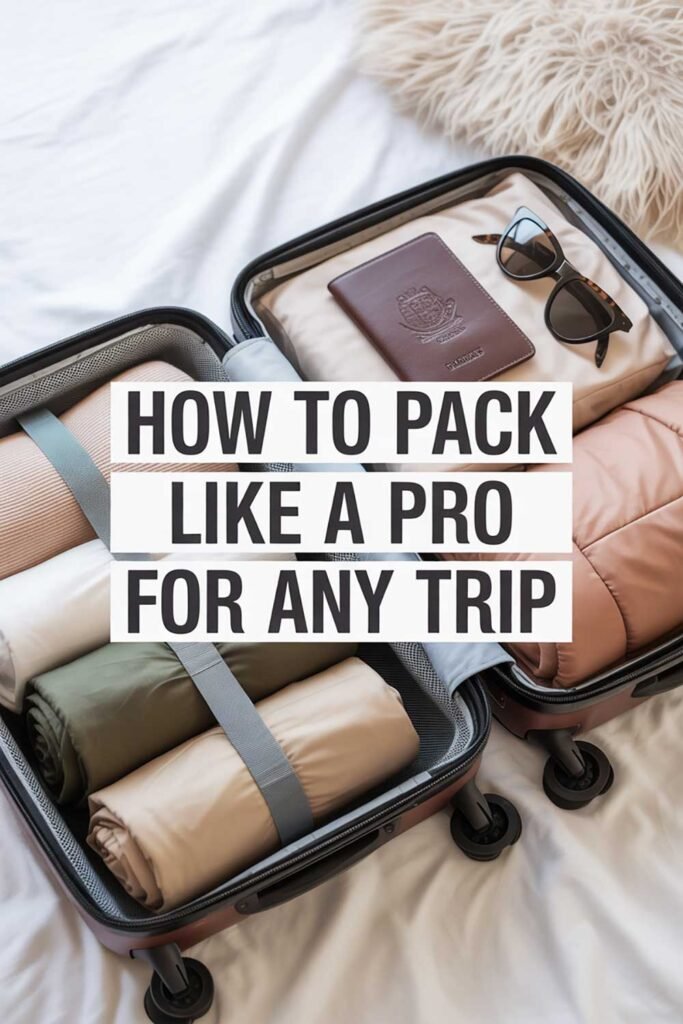
Packing cubes are lightweight, usually rectangular, zippered fabric containers that come in various sizes. You place groups of items inside each cube — all shirts in one cube, all pants in another, undergarments in a third, and so on — and then stack the cubes inside your suitcase. The cubes create clearly defined sections within the bag, keep items compressed and separated, and allow you to pack and unpack specific categories of clothing without disturbing the rest of your bag.
Compression packing cubes take this concept further by adding a second zipper that compresses the contents, squeezing out excess air and reducing the volume of your clothing significantly. This allows you to fit more into the same suitcase or to use a smaller bag than you otherwise would.
Specialty Pouches and Organizers
Beyond basic packing cubes, the add-on market includes an enormous variety of specialty organizers. Toiletry bags with hanging hooks and transparent compartments. Electronics organizers with elastic loops for cables, chargers, and adapters. Shoe bags that protect your clothing from dirty soles. Laundry bags that separate worn clothing from clean items. Jewelry rolls that prevent tangles and damage. Document wallets that keep passports, boarding passes, and travel paperwork together.
The Philosophy of Add-On Organization
The add-on approach is fundamentally different from built-in organization. Instead of relying on the suitcase to create structure, you create the structure yourself using modular, portable tools that can be customized, rearranged, and transferred between any bag you own. The same set of packing cubes that organizes your carry-on suitcase can organize your checked bag, your weekender duffel, your backpack, or any other bag you happen to use.
This modularity is the core advantage of the add-on approach. Your organizational system is not tied to any single piece of luggage. It lives independently, adaptable to any bag and any trip.
The Advantages of Built-In Organization
Convenience and Simplicity
Built-in organization requires zero setup. You do not need to buy separate accessories, figure out which sizes to get, or experiment with different arrangements. The organizational system is already there, designed by engineers who understand packing and integrated into the bag in a way that works out of the box. For travelers who want a straightforward, no-fuss packing experience, built-in systems offer the lowest barrier to entry.
Optimized for the Specific Bag
Built-in features are designed to fit the exact dimensions and shape of the suitcase. The dividers are cut to match the interior precisely. The mesh pockets are sized and positioned for optimal use of space. The compression straps are anchored at the right points to hold clothing securely. This precision fit means no wasted space, no gaps, and no accessories sliding around inside the bag.
When a built-in system is well-designed, it uses every cubic inch of the suitcase’s interior with an efficiency that add-on accessories can rarely match, because the accessories were not designed for that specific bag.
Nothing Extra to Buy, Pack, or Lose
With built-in organization, there is nothing extra to purchase, nothing extra to pack, and nothing extra to keep track of. You do not need to remember to bring your packing cubes. You do not need to worry about leaving a pouch behind in a hotel drawer. The organizational system is always there, permanently attached to the bag, ready to go whenever you are.
Real Example: Laura’s Weeklong Work Trip Routine
Laura, a 38-year-old pharmaceutical sales representative from Nashville, travels three to four times a month for work and swears by her built-in organization carry-on. Her bag — a premium softside spinner with an integrated suiter sleeve, two mesh lid pockets, a laptop compartment, compression wings, and a dedicated toiletry pocket — allows her to pack for a five-day business trip in under fifteen minutes using the same method every time.
Blazer and dress pants go in the suiter sleeve. Blouses go under the compression wings. Undergarments and sleepwear go in the lid pockets. Toiletries go in the dedicated pocket. Laptop goes in the padded sleeve. Shoes go in a separate section at the bottom. Every item has a permanent home inside the bag, and Laura says she can pack on autopilot at this point because the bag’s design makes it almost impossible to do it wrong.
Laura tried packing cubes once and found them unnecessary — her bag’s built-in system already did everything the cubes would do, and the cubes actually wasted space because their fabric walls took up volume that the bag’s thinner built-in dividers did not. She returned the cubes and has never looked back.
The Advantages of Add-On Organization
Total Customization
The biggest advantage of add-on organization is that you control every aspect of the system. You choose how many cubes to use, what size they are, how you arrange them, and what goes in each one. You can customize the system for every single trip — more cubes for a long trip, fewer for a weekend. Different pouches for beach gear versus business attire. A compression cube for bulky winter clothing on one trip and a slim cube for lightweight summer fabrics on the next.
This flexibility is especially valuable for travelers who take many different types of trips and need their organization to adapt. A one-size-fits-all built-in system works beautifully if every trip is similar, but it can feel restrictive when your packing needs change dramatically from trip to trip.
Portability Across Multiple Bags
If you own more than one bag — and most travelers do — an add-on system moves with you from bag to bag. Your packing cubes work in your carry-on, your checked suitcase, your weekend duffel, and your backpack. You invest in the system once and use it everywhere. With built-in organization, the system is locked to one specific bag. If you switch bags, you switch organizational systems, and whatever organizational advantages the old bag offered do not transfer.
Superior Compression
Compression packing cubes are one of the most effective tools in the traveler’s arsenal for maximizing suitcase capacity. By compressing clothing down to a fraction of its original volume, they can effectively increase the usable space inside any suitcase by twenty to forty percent. No built-in compression system — even the best compression straps and wings — matches the volume reduction that dedicated compression cubes achieve.
For travelers who consistently struggle to fit everything into their bag or who want to travel with a smaller bag than their wardrobe would normally require, compression cubes are a game-changer that built-in systems simply cannot replicate.
Easy Unpacking and Drawer Transfers
One of the most underrated benefits of packing cubes is how they change the unpacking experience. When you arrive at your destination, you can simply pull the cubes out of your suitcase and place them directly into hotel dresser drawers — one cube per drawer. Your clothing is instantly organized in the room without any unpacking, folding, or hanging required. When it is time to leave, you put the cubes back in the suitcase and you are packed in under two minutes.
This drawer transfer method turns packing cubes into portable dresser drawers that move with you from suitcase to hotel room to suitcase with zero effort. It is an incredibly efficient system that fundamentally changes how you interact with your clothing during a trip.
Real Example: Andre’s Packing Cube Conversion
Andre, a 30-year-old photographer from Toronto, resisted packing cubes for years. He thought they were unnecessary — just another travel gadget that influencers were promoting for affiliate commissions. He used a carry-on with decent built-in dividers and mesh pockets and considered his packing perfectly adequate.
Then a friend lent him a set of compression packing cubes for a two-week trip to Southeast Asia. Andre packed the cubes skeptically, convinced they would not make a meaningful difference. He was wrong.
The compression cubes reduced his clothing volume so dramatically that he was able to fit two weeks of clothes into a bag that normally held one week. At each hotel and hostel, he pulled the cubes out of his bag and dropped them into drawers — instantly organized without any unpacking. When he needed to find a specific shirt, he opened the cube labeled “shirts” and found it immediately, without rummaging through the entire bag. When he moved to a new city, he tossed the cubes back in his bag and was packed in ninety seconds.
Andre says the packing cubes did not just organize his suitcase — they changed his entire travel experience. He spent less time packing and unpacking, less time searching for items, and less mental energy thinking about his luggage. He has used packing cubes on every trip since and says he would never go back to packing without them.
The Disadvantages of Each Approach
Both systems have real limitations that are worth considering before you commit.
Built-In Limitations
Built-in organization is fixed. You cannot move the dividers to create a larger section for bulky items. You cannot remove a mesh pocket you do not need to free up space. You cannot rearrange the compartments to accommodate an unusual item. The system was designed for a specific type of packing, and if your needs do not match that design, the built-in features can feel more like obstacles than aids.
Built-in features also add weight and reduce usable volume. Every divider, strap, pocket, and panel takes up space and adds ounces to the bag’s empty weight. In a carry-on where every cubic inch and every ounce matters, the fabric and hardware of a complex built-in system can eat into your packing capacity more than you expect.
If your suitcase breaks, wears out, or needs to be replaced, your organizational system goes with it. You start over from scratch with whatever system the new bag offers, which may be completely different from what you were used to.
Add-On Limitations
Add-on accessories are additional items you need to purchase, maintain, and remember to bring. If you forget your packing cubes at home, your organizational system does not exist for that trip. If a cube tears or a zipper breaks, you need to replace it. There is a small but real ongoing cost and maintenance requirement.
Packing cubes, pouches, and organizers also add weight and volume of their own. The fabric of the cubes themselves — even lightweight ones — takes up space that could theoretically be used for clothing. For ultralight packers who count every gram, the weight of the cubes might not be justified by the organizational benefit.
The add-on approach also requires a learning curve. You need to experiment with different cube sizes, configurations, and packing methods to find what works best for your specific bag and your specific wardrobe. Getting the system dialed in can take a few trips of trial and error.
Real Example: Tanya’s Hybrid Discovery
Tanya, a 45-year-old teacher from Seattle, spent two years debating between built-in and add-on organization before having an insight that changed her entire approach. She realized she did not have to choose one or the other.
Tanya bought a carry-on with solid built-in features — a good interior divider, mesh lid pockets, compression straps, and a laptop sleeve. Then she added a set of slim packing cubes for her clothing, a small electronics pouch for her cables and chargers, and a hanging toiletry bag.
The built-in features handled the structural organization — keeping the two halves of the suitcase separated, holding the laptop securely, and providing quick-access pockets for small items. The packing cubes handled the clothing organization — keeping shirts, pants, and undergarments separated, compressed, and easy to transfer to hotel drawers.
Tanya says the hybrid approach gives her the best of both worlds. The built-in features provide the framework, and the packing cubes provide the customizable detail. She no longer feels like she has to choose between the two — they work together beautifully.
How to Decide What Is Right for You
The best organizational system depends on your travel style, your packing habits, and your personal preferences. Here are some guiding questions to help you decide.
Choose Built-In If…
You take the same type of trip most of the time and pack the same general items for each one. You value simplicity and want a system that works immediately without any additional purchases or setup. You only use one suitcase for the vast majority of your travel. You dislike having extra accessories to keep track of. You prefer a clean, minimalist interior without loose items inside the bag.
Choose Add-On If…
You take many different types of trips that require different packing approaches. You own multiple bags and want an organizational system that works across all of them. You prioritize maximum compression and want to fit as much as possible into the smallest bag. You like the convenience of transferring cubes to hotel drawers for instant unpacking. You enjoy customizing and optimizing your packing setup.
Choose a Hybrid Approach If…
You want the structural benefits of a well-designed bag interior combined with the flexibility and compression of packing cubes. You travel frequently enough that investing in both a good suitcase and a good set of packing accessories is worth the cost. You have tried both approaches and found that each one solves a different part of the organizational problem.
A Quick Guide to Choosing the Right Packing Cubes
If you decide to go the add-on route — or the hybrid route — choosing the right packing cubes makes a significant difference. Not all cubes are created equal.
Look for cubes made from lightweight, durable ripstop nylon or polyester. The fabric should be thin enough to minimize wasted volume but tough enough to survive years of packing and compression without tearing.
Choose a set that includes multiple sizes. A typical set might include one large cube for pants and bulky items, two medium cubes for shirts and dresses, and one or two small cubes for undergarments and socks. Having a range of sizes gives you flexibility to adapt your system to different trips.
Consider compression cubes if maximizing space is a priority. The second zipper that compresses the contents is the single most impactful feature for travelers who want to pack more in less space. Compression cubes are slightly heavier and bulkier than standard cubes, but the space savings they provide almost always more than compensate.
Choose cubes in different colors or with clear panels so you can identify the contents at a glance without opening each one. Being able to see or recognize which cube contains your shirts versus your undergarments saves time and prevents unnecessary rummaging.
Real Example: Sarah’s Color-Coded System
Sarah, a 36-year-old event planner from Miami, uses a color-coded packing cube system that she says has revolutionized her travel life. She assigns a specific color to each category of clothing — blue for tops, green for bottoms, yellow for undergarments and sleepwear, red for workout clothes, and a clear cube for accessories and miscellaneous items.
When she opens her suitcase, she can identify any category of clothing instantly by color without opening a single cube. When she arrives at a hotel, she pulls the cubes out and places them in drawers — blue cube in the top drawer, green in the second, yellow in the third. When it is time to leave, she reverses the process and is fully packed in under two minutes.
Sarah says the color-coded system eliminated two things she used to hate about travel — searching for specific items in a disorganized suitcase and the stress of repacking in a rush on checkout morning. She has used the same system and the same set of cubes for over three years and considers them the single best travel purchase she has ever made.
Organization Is Not About Perfection — It Is About Ease
Whatever system you choose — built-in, add-on, or hybrid — the goal is not to achieve Instagram-perfect packing symmetry. The goal is to make your travel life easier. Easier to pack. Easier to find what you need. Easier to unpack at your destination. Easier to repack when it is time to move on.
A good organizational system saves you time, reduces stress, prevents wrinkles, protects delicate items, and eliminates the frustrating experience of rummaging through a chaotic suitcase while your travel companions wait by the door. It transforms packing from a chore into a routine and unpacking from a task into a non-event.
The best system is the one you actually use consistently. A beautiful set of packing cubes sitting in a drawer at home does nothing for you. A built-in organizational feature you ignore because it does not match your packing style is wasted engineering. Find the approach that fits your habits, your travel patterns, and your personality. Test it. Refine it. And then trust it.
Because when your suitcase is organized — truly organized, in a way that survives transit and stays accessible throughout your trip — you spend less time thinking about your luggage and more time thinking about the adventure. And that is the whole point.
20 Powerful and Uplifting Quotes About Preparation, Simplicity, and the Journey Ahead
1. “A journey of a thousand miles begins with a single step.” — Lao Tzu
2. “The world is a book, and those who do not travel read only one page.” — Saint Augustine
3. “Travel is the only thing you buy that makes you richer.” — Anonymous
4. “Not all those who wander are lost.” — J.R.R. Tolkien
5. “Life begins at the end of your comfort zone.” — Neale Donald Walsch
6. “Adventure is worthwhile in itself.” — Amelia Earhart
7. “Wherever you go, go with all your heart.” — Confucius
8. “The biggest adventure you can take is to live the life of your dreams.” — Oprah Winfrey
9. “Travel makes one modest. You see what a tiny place you occupy in the world.” — Gustave Flaubert
10. “Do not follow where the path may lead. Go instead where there is no path and leave a trail.” — Ralph Waldo Emerson
11. “Once a year, go someplace you have never been before.” — Dalai Lama
12. “Man cannot discover new oceans unless he has the courage to lose sight of the shore.” — Andre Gide
13. “Collect moments, not things.” — Unknown
14. “We travel not to escape life, but for life not to escape us.” — Unknown
15. “To travel is to discover that everyone is wrong about other countries.” — Aldous Huxley
16. “Investment in travel is an investment in yourself.” — Matthew Karsten
17. “Jobs fill your pocket, but adventures fill your soul.” — Jaime Lyn Beatty
18. “The real voyage of discovery consists not in seeking new landscapes, but in having new eyes.” — Marcel Proust
19. “Take only memories, leave only footprints.” — Chief Seattle
20. “The right system makes every journey lighter.” — Unknown
Picture This
Close your eyes for a moment and really let yourself feel this.
It is the evening before a trip. You are in your bedroom, suitcase open on the bed, everything you plan to bring laid out beside it. Shirts, pants, undergarments, toiletries, chargers, shoes, a book, a small bag of snacks. A week ago, this scene would have filled you with low-grade dread — the familiar anxiety of figuring out how to cram everything into the bag without creating a wrinkled, tangled mess you would be digging through for the next seven days.
But tonight is different. Tonight you have a system.
You pick up the first packing cube — the medium blue one. You fold your shirts neatly, stack them inside, and pull the compression zipper. The cube compresses to half its original thickness. You place it on the right side of the suitcase. The green cube gets your pants. Same fold, same compression, same satisfying shrink. It goes next to the blue one. The small yellow cube takes your undergarments and socks. It tucks into the gap beside the others. The clear pouch holds your chargers, earbuds, and adapter. It slides into the mesh pocket on the lid.
Your toiletry bag hangs on the bathroom hook right now but will go in the bag last, on top. Your shoes go in a shoe bag in the bottom section. Your book and snacks go in the outer pocket.
In twelve minutes, you are done. The suitcase is packed. Everything is compressed, separated, accessible, and exactly where you will expect it to be when you open the bag tomorrow night in a hotel room a thousand miles away. You zip the suitcase closed with one smooth pull. No bulging. No fighting. No sitting on the bag while someone holds the zipper. Just a clean, easy close.
You set the bag by the front door. You go to bed with none of the packing anxiety you used to feel. No nagging worry that you forgot something. No mental replay of where you put the charger. No dread about unpacking at the other end. Everything is handled. Everything is organized. Everything is exactly where it belongs.
And tomorrow night, when you arrive at your hotel, you will unzip the bag, pull out the cubes, drop them into drawers, and be fully unpacked in ninety seconds. Your room will be organized. Your clothing will be wrinkle-free. Your chargers will be in the pouch in the lid pocket, right where you left them. And you will have the entire evening free to explore the city, eat a great meal, and start your trip in the best possible way — relaxed, organized, and completely free of luggage stress.
That is what a good organizational system feels like. Not fussy. Not complicated. Not Instagram-perfect for the sake of aesthetics. Just functional, reliable, and utterly freeing. A quiet upgrade to every single trip you take, starting from the moment you pack and lasting until the moment you unpack at home.
And the best part is that once you find the system that works for you — whether it is built-in, add-on, or a hybrid of both — it becomes automatic. You stop thinking about packing. You stop stressing about organization. You just do it the same way every time, and it works every time, and your energy goes where it belongs — toward the adventure itself.
Share This Article
If this article helped you understand the difference between built-in and add-on organization — or if it gave you a new approach to packing that you are excited to try — please take a moment to share it with someone who is still fighting the packing chaos battle.
Think about the people in your life. Maybe you know someone who dreads packing because their suitcase turns into a disaster the moment they open it at their destination. They need to know that the problem is not their packing skills — it is their system, or lack of one. This article gives them a clear path to solving it.
Maybe you know a frequent traveler who has been using the same disorganized packing approach for years and has never considered packing cubes, compression bags, or a more structured suitcase. They have accepted wrinkled clothes and rummaging as an unavoidable part of travel. This article could show them there is a better way.
Maybe you know someone who just bought a new suitcase and is wondering whether they need packing cubes too, or whether the bag’s built-in features are enough. The comparison in this article gives them the information they need to make a smart decision.
Maybe you know a first-time traveler who has no idea that luggage organization is even a thing. They are about to pack for their first big trip by throwing everything into a bag and hoping for the best. This article could save them from a week of packing frustration and give them a system they will use for the rest of their travel life.
So go ahead — copy the link and send it to that person. Text it to the friend who complained about wrinkled shirts after their last trip. Email it to the family member who always overpacks. Share it in your travel communities, your gear forums, and anywhere people are talking about packing tips and luggage advice.
You never know who might read this and have that moment of clarity — the moment they realize that organized packing is not about being meticulous or obsessive, but about having the right system in place. Help us spread the word, and let us help every traveler pack smarter, travel lighter, and spend less time thinking about their suitcase and more time enjoying the journey.
Disclaimer
This article is intended for informational, educational, and inspirational purposes only. All content provided within this article — including but not limited to luggage organization comparisons, product descriptions, packing strategies, brand mentions, personal stories, and general travel gear recommendations — is based on general consumer knowledge, widely shared traveler experiences, personal anecdotes, and commonly reported observations about luggage and packing accessories. The examples, stories, and scenarios included in this article are meant to illustrate common experiences and approaches and should not be taken as guarantees, promises, or predictions of any particular product’s performance, organizational effectiveness, or suitability for any specific traveler or travel situation.
Every traveler’s needs, preferences, packing habits, and travel patterns are unique. Individual experiences with luggage organization systems, packing cubes, and specific luggage brands will vary significantly depending on a wide range of factors including but not limited to the specific products used, the type of travel, the duration of the trip, the clothing and items packed, the traveler’s personal preferences, and countless other individual variables.
The author, publisher, website, and any affiliated parties, contributors, editors, or partners make no representations or warranties of any kind, express or implied, about the completeness, accuracy, reliability, currentness, suitability, or availability of the information, advice, product descriptions, brand mentions, opinions, or related content contained in this article for any purpose whatsoever. This article does not endorse, recommend, or promote any specific luggage brand, packing cube brand, or accessory manufacturer. Any reliance you place on the information provided in this article is strictly at your own risk.
This article does not constitute professional product testing, consumer advice, or any other form of professional guidance. Always evaluate packing products and organizational systems based on your own individual needs, travel patterns, and personal standards.
In no event shall the author, publisher, website, or any associated parties, affiliates, contributors, or partners be liable for any loss, product dissatisfaction, damage, expense, inconvenience, or negative outcome of any kind — whether direct, indirect, incidental, consequential, special, punitive, or otherwise — arising from or in any way connected with the use of this article, the reliance on any information contained within it, or any purchasing or packing decisions made as a result of reading this content.
By reading, sharing, bookmarking, or otherwise engaging with this article in any way, you acknowledge that you have read and understood this disclaimer in its entirety, and you voluntarily agree to release and hold harmless the author, publisher, website, and all associated parties from any and all claims, demands, causes of action, liabilities, damages, and responsibilities of every kind and nature, known or unknown, arising from or in any way related to your use, interpretation, or application of the content provided in this article.
Pack smart, travel organized, and always choose the system that works best for your unique travel style.