International Travel Packing Tips for Beginners
International packing is all about versatility. Neutral colors that mix and match across every day of the trip. Layers for unpredictable weather that changes between cities and climates. A universal adapter that works in every country. And the wisdom to pack less than you think you need and come home with exactly the right souvenirs. This article builds you that wardrobe before you ever open a suitcase.
Grab Our Travel Packing Checklist
International travel packing covers categories a domestic trip never touches. Universal adapters, document backups, medications with prescriptions, convertible layers for multiple climates, and the small items most first-time international travelers discover they needed only after they land. Our free checklist walks you through every category.
Get the Free ChecklistInternational travel packing lives or dies on the capsule wardrobe. No other packing approach gives you as many outfit combinations from as few pieces, and no other approach handles the unique demands of international travel, which often covers multiple cities, climates, dress codes, and occasions in a single trip, with as much versatility in as little weight.
The international capsule starts with two neutral base colors and one accent color that works across all of them. Navy and white with warm terracotta. Charcoal and cream with deep olive. Black and tan with rich burgundy. The entire wardrobe is built from these three colors so every piece pairs with every other piece and no item is orphaned in the bag because it only works with one thing you packed.
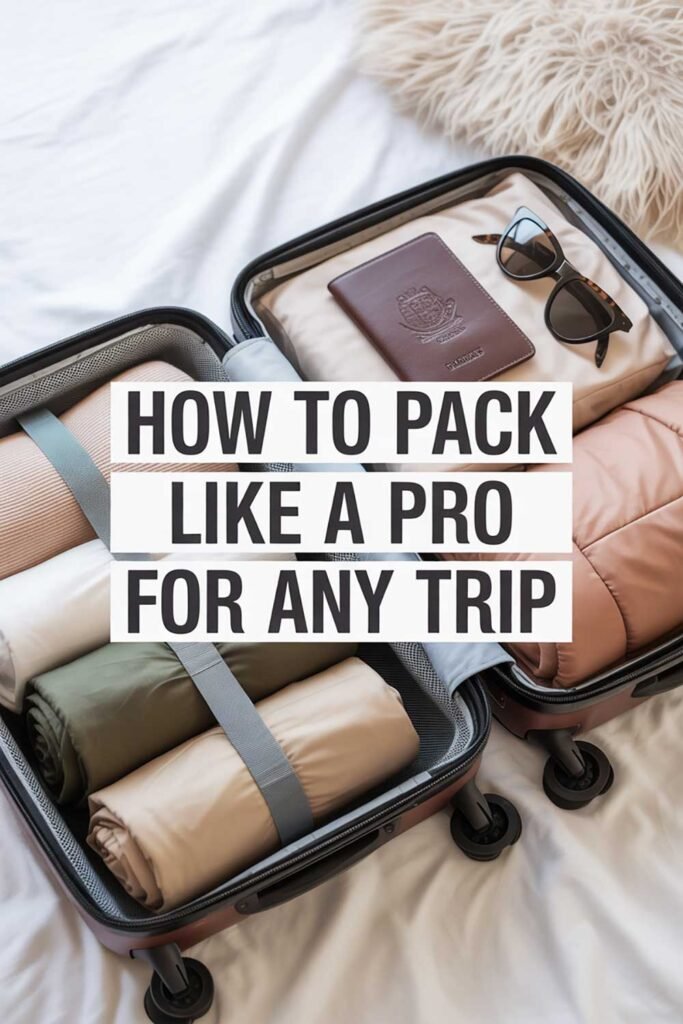
For a ten to fourteen day international trip, a complete versatile wardrobe looks like this. Four to five tops in your neutral palette including at least one that is dressier than the others for nicer restaurants or cultural sites. Two pairs of trousers or versatile bottoms that handle day walking and evening dining. One dress or jumpsuit that transitions from sightseeing to dinner with a shoe change. One lightweight jacket or blazer that works over anything and elevates casual outfits enough for smarter venues. One casual layer for daytime. Underwear for each day plus two extras. Three to four pairs of socks. Pajamas or sleepwear. That is the complete international wardrobe and it fits in a standard carry-on.
Choose fabrics with care. Wrinkle-resistant fabrics are not a luxury for international travel. They are a practical necessity when your clothes spend fourteen hours in a bag on a transatlantic flight and then need to look presentable at a dinner reservation. Merino wool is the gold standard for international travel. It regulates temperature, resists wrinkles, resists odor, and looks genuinely smart. Linen blends, jersey knit, and performance fabrics are strong alternatives. Avoid pure cotton for anything you care about looking good in since it wrinkles badly and takes forever to dry if you hand-wash it mid-trip.
The smartest international packers bring less than they think they need and come home with exactly the right souvenirs.
The capsule wardrobe is not a compromise. It is the realization that ten thoughtful pieces outperform twenty random ones every single time.
Do a full try-on session for every outfit in your planned wardrobe before you pack it. Wear each top with each bottom. Check that the combination works in good light and from all angles. Take a photo of every passing outfit and save them to a travel album on your phone. When you are tired and jet-lagged on day six of a fourteen-day trip and need to decide what to wear without thinking hard, you open the album and the decision is already made. This twenty-minute exercise at home saves you from packing things that look better in your head than in reality.
Let Us Plan Your International Escape
Your first international trip deserves the support of someone who knows the destination, the logistics, and the details that make first-time international travel feel exciting rather than overwhelming. Tell us where you want to go, your budget, and what kind of experience you want. We will build the trip that changes everything for you.
Plan Our EscapeInternational trips regularly cover multiple climates in a single journey. A flight from a cold departure city to a warm destination. A European trip that moves between coastal towns and mountain villages. A Southeast Asia trip where air-conditioned transit, outdoor markets, and indoor restaurants create dramatically different temperature environments in the space of a single afternoon. Layers handle all of this better than any single-climate wardrobe ever can.
The international layering system uses three types of pieces that combine in different configurations to cover temperatures from chilly morning sightseeing to air-conditioned restaurant evenings to warm afternoon walking tours. A base layer, typically a lightweight merino or moisture-wicking top. A mid layer, a light sweater, a zip cardigan, or a softshell layer that adds warmth over the base without adding bulk. An outer layer, a packable rain jacket or a light quilted jacket that packs into its own pocket and adds wind and rain protection without significant weight.
A packable rain jacket is the single most underrated international packing item. European and British weather in particular is famous for changing without warning. Many tropical destinations have daily afternoon rain that is over in thirty minutes. A packable jacket that weighs about six ounces and compresses into a bag the size of a water bottle handles every unpredictable weather scenario without adding meaningful weight or bulk to your luggage. Do not check the weather forecast and decide you do not need it. Pack it anyway.
A lightweight scarf deserves a permanent spot in every international packing list. It adds warmth as a neck layer, provides shoulder coverage when entering religious sites that require it, functions as a light blanket on cold flights, serves as a pillow cover on long train rides, and doubles as a beach sarong in warm destinations. One lightweight scarf weighs under two ounces and replaces at least three other single-purpose items you might otherwise pack.
Pack your mid layer in your carry-on specifically for wearing on the plane. Long international flights are cold. Very cold. Many traveler complaints about long-haul flights come down to being underdressed for the cabin temperature. Your packable mid layer on the plane keeps you comfortable in the air, does not take up space in the overhead bin, and arrives at your destination ready to wear without being wrinkled by a checked bag transit.
Technology for international travel has a specific set of requirements that domestic travel never surfaces. Different electrical outlets. Different voltages in some regions. No domestic carrier data. Navigation in an unfamiliar country. Translation needs. Every one of these has a simple solution that costs under $30 and weighs almost nothing. Not packing the solutions is the mistake that makes first international trips more stressful than they need to be.
A universal travel adapter is the most important tech accessory for any international trip. Outlet types vary by country and region. The United States uses Type A. The United Kingdom uses Type G. Continental Europe uses Type C and F. Australia uses Type I. Many countries in Asia and Africa use their own specific types. A universal adapter covers all of them with one compact device that costs $15 to $25 and lasts for years. Do not buy one at a foreign airport. They cost three times as much, the selection is limited, and you will only discover you need one after your devices go dead on arrival.
A power bank with at least 10,000 milliamp hours is essential for international days when you are away from your accommodation for eight to twelve hours and your phone is your navigation device, your translation tool, your boarding pass, and your camera simultaneously. International sightseeing days drain phone batteries faster than any domestic activity because of the continuous GPS use, the camera usage, and the connectivity management. A fully charged power bank in your day bag means your phone is still useful at hour ten of a long day out.
A USB multi-port charging hub plugs into one outlet on your universal adapter and lets you charge four to six devices simultaneously from a single outlet. International hotel and rental rooms often have limited outlet access near the bed or desk. One charging hub solves the international outlet scarcity problem completely and weighs under four ounces.
Check the voltage requirements of every device you plan to bring before your international trip. Most modern electronics, phones, laptop chargers, and camera chargers are dual voltage and work on both 110V and 220V systems, which covers the vast majority of the world’s electrical infrastructure. Older hair dryers, straighteners, and some small appliances are single-voltage only and will burn out on the wrong voltage system even with an adapter. Check the label on each device’s charger or body. If it says 100-240V, it is dual voltage and safe. If it says 110V only, do not use it abroad without a voltage converter.
The International Travel Gear We Pack Every Time
The universal adapter that has been in our bag on every international trip for years, the merino wool base layer that handles every temperature and every dinner, the packable rain jacket we have been grateful for more times than we can count, and the power bank we have never left home without. Real international travel gear from real global adventures.
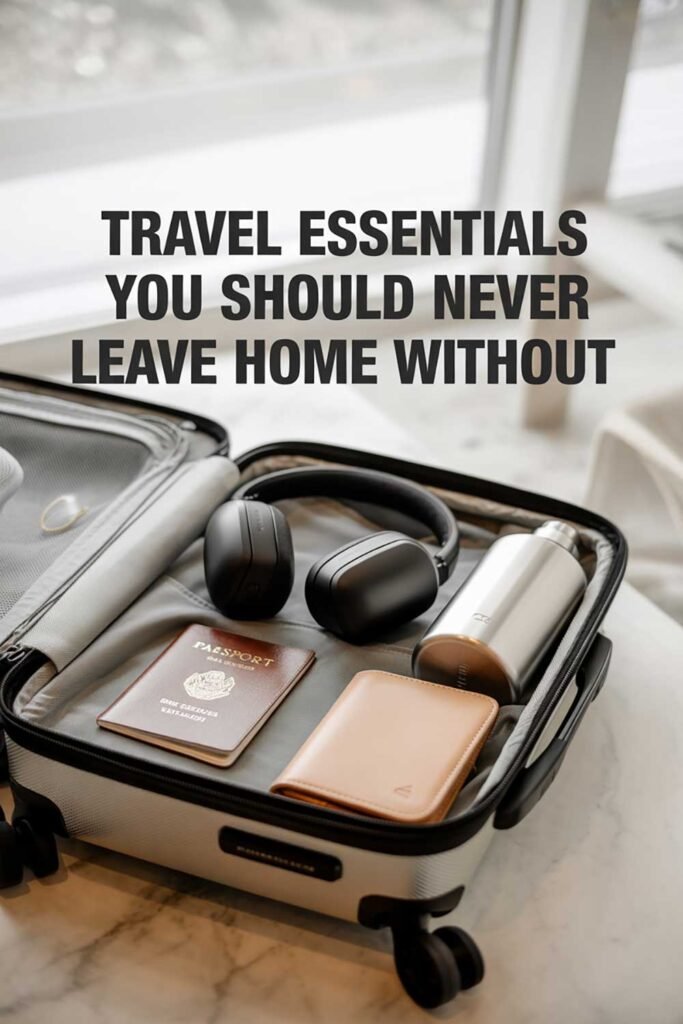
DND FavoritesThis is the international packing rule with no exceptions. Your passport, your travel documents, your medications, and your backup copies of everything irreplaceable go in your carry-on. Not your checked bag. Not the outer pocket of your checked bag. Your carry-on, where they stay on the plane with you and arrive at your destination when you do regardless of what happens to your checked luggage.
Your passport is the most important document you own while traveling internationally and the one most catastrophic to lose en route. A lost checked bag with your passport inside means you cannot enter the country you flew to, which results in potential deportation back to your departure point and significant disruption to your trip. A passport in your carry-on arrives safely regardless of what happens to checked luggage because carry-ons travel in the cabin, not the hold.
Copies of everything irreplaceable mean your passport photocopy, your visa if applicable, your travel insurance documents, your accommodation confirmations for your first night, your emergency contact information, and a small amount of local currency for your first hour. Keep copies in two locations within your carry-on, one in the outer accessible pocket and one deeper inside, so that losing one does not mean losing both.
All electronics, power banks, and lithium batteries must travel in your carry-on. Airlines worldwide prohibit lithium batteries in checked luggage due to fire risk in the cargo hold. Your phone, your power bank, your camera battery packs, and your laptop all have lithium batteries. All of them go in the carry-on. This is not optional and is enforced at the check-in and boarding stages of almost every international flight.
Pack a small personal item or day bag as your carry-on personal item on every international flight, not just a standard backpack or tote. A personal item sized for under the seat in front of you that has your most critical items, your passport, medications, phone, charger, power bank, a change of clothes, and any valuables, means that even if the overhead bin fills and your carry-on is gate-checked at the last minute, your most important items stay in the cabin with you. The gate check risk is real, particularly on full flights and on smaller connecting aircraft.
International pharmacies stock different products than what you are used to at home. Brand names differ. Active ingredient concentrations differ. Some medications that are over the counter at home require a prescription abroad. Some medications are simply not available. Packing the medications you regularly use or might reasonably need in a travel-sized supply is one of the most important and most overlooked international packing categories for beginner travelers.
Your international travel medication kit: all prescription medications in their original labeled bottles with enough supply for your full trip plus a buffer of five to seven extra days in case of delays or disruptions. A doctor’s letter on official letterhead describing each prescription, the dosage, and the medical reason for it is worth requesting for any controlled substance or medication that is restricted in some countries. Over-the-counter essentials that vary by country include your preferred pain reliever, antacid, antihistamine for allergies, anti-diarrheal, motion sickness medication, throat lozenges, and any topical creams or ointments you use regularly.
Pack feminine hygiene products in your preferred type and brand for your full trip duration if you have strong preferences since availability and brand selection vary significantly between countries and regions. The same applies to contact lens solution if you wear contacts, specific dietary supplements you rely on, and any sleep aids or mild sedatives you use for long flights since these are regulated differently in different countries.
Store all medications together in one clearly organized medication pouch in your carry-on. The pouch should be the first thing you can reach quickly if needed. Label prescription bottles clearly and keep prescription medications in the original pharmacy-labeled bottles for customs and airline security. Security officers may ask about medications, particularly liquids above the standard three ounce limit, and a prescription label and doctor’s letter resolve any question immediately.
Research your destination country’s restrictions on any medication you are bringing before you travel. Some common medications that are legal and over the counter in the United States or Europe are controlled substances or prohibited imports in other countries. Codeine-based pain relievers, certain ADHD medications, some allergy medications, and even melatonin are regulated or prohibited in specific destinations. Check your destination’s regulations through your government’s travel advisory or the destination country’s embassy website before packing any medication you are uncertain about.
The Trip That Taught Us Everything
Our first international trip, we packed like we were moving, not traveling. Diana had four pairs of shoes for eight days. We had clothes for every possible scenario including a formal dinner that never happened, an outdoor adventure that turned out to be a single afternoon walk, and weather that never materialized as cold as we had prepared for. Our combined luggage weighed over 80 pounds. We paid checked bag fees in both directions. We hauled heavy bags up five flights of stairs in a beautiful old apartment building with no elevator and arrived breathless and slightly resentful of every item we had brought.
We wore about half of what we packed. The other half traveled from city to city in our bags, was moved in and out of vehicles, was lifted through narrow train corridors, and was carried up staircases in charming old hotels that were not built for modern luggage. We came home having bought almost nothing because our bags were already too heavy and there was no room for the things we actually wanted to bring back.
We sat down after that trip and built the capsule system in this article. The neutral palette. The three-color rule. The layering instead of the scenario-specific packing. The packable rain jacket. The universal adapter already in the bag. The medications in the carry-on. The one pair of shoes worn and one pair packed. The deliberate 20 percent of empty space reserved for what we would come home with.
Our next international trip, we both packed in a single carry-on. We walked straight out of the airport. We carried everything ourselves up every beautiful old staircase. We came home with room in our bags for a ceramic piece from a market and a bottle of local wine and the scarf Diana bought in a small shop on a cobblestone street that she still wears every winter. The smartest international packers really do bring less than they think they need and come home with exactly the right souvenirs. It took us one hard lesson to understand what that meant.
The most practical packing tip for any international trip is the one that almost no beginner applies. Leave at least 20 to 25 percent of your bag empty when you depart. Not because you might need the space on the way there. Because you will absolutely need it on the way home.
International travel produces souvenirs in ways that domestic travel rarely does. The ceramic bowl from the market in the old city. The bottle of local olive oil from the farm you visited. The hand-embroidered tablecloth from a street vendor. The book you bought in a language bookshop on a rainy afternoon. The sweater you found at a market that fits perfectly and represents the trip better than any photograph. These things deserve room in your bag. If your bag is full when you leave home, you either pay to ship them, pay for an extra bag, or leave them behind.
Pack one nylon folding tote bag at the bottom of your main luggage. It weighs under one ounce and unfolds into a full-sized tote bag for the return journey when your purchases need a home. Most airlines allow a personal item plus a carry-on, so a folding tote becomes your personal item home and your carry-on holds the rest. The one-ounce investment in a folding tote has saved more international souvenir situations than any other single packing hack we know of.
Wear your heaviest and bulkiest items on the return flight rather than packing them. The heavy boots on your feet weigh nothing in your bag. The thick wool sweater worn through the airport adds zero bag weight. The jacket that takes up half a carry-on wears on your body instead. This exact strategy on the return journey frees enough bag space to bring home the things that matter without any extra fees, any checked bags, or any painful choices at the departure gate about which souvenirs make the cut.
Book Your International Trip the Smart Way
Your first international trip deserves more than a search engine and a travel website. It deserves agents who know the destination, the accommodation options that actually deliver what they advertise, and the practical details that online booking platforms never tell you. Our travel agents specialize in helping first-time international travelers book trips that become the experiences they dreamed about. Let us help.
Book A TripCommon International Packing Mistakes Beginners Make
Most first international trip packing regrets come from the same consistent set of mistakes. Here is what goes wrong most often and exactly what to do differently before you zip the suitcase for your first trip abroad.
Packing for scenarios that will not happen
The formal dinner that might come up. The outdoor adventure you might attempt. The cold snap that might arrive. The extra pair of shoes for an event that is not in your plans. International beginners pack for imaginary versions of their trip and arrive with bags full of things they never touch. Pack for the trip you are actually taking based on your confirmed itinerary, your confirmed climate, and your confirmed activities. Leave the just-in-case items at home. If something unexpected happens, buy what you need locally. It will almost certainly cost less than the checked bag fee you paid to bring it.
Forgetting the universal travel adapter
A universal travel adapter is on every packing list for first-time international travelers and is still one of the most commonly forgotten items. You discover you need it the moment you try to charge your phone in your hotel room and your plug does not fit the wall. Airport adapters cost two to three times the normal price. Hotels sometimes have loaner adapters but they are not reliably available. Buy a universal adapter before your trip, pack it in your electronics pouch, and never forget it again because it lives there permanently from now on.
Checking luggage with irreplaceable items inside
Checked luggage is delayed, lost, or misdirected on approximately 1 in 200 flights. If your passport, medications, laptop, power bank, travel documents, or anything truly irreplaceable is in your checked bag and that bag goes missing, the consequences range from severely inconvenient to genuinely trip-ending. Everything irreplaceable travels in your carry-on without exception. Checked luggage holds clothing and items you could replace or survive without for 24 to 48 hours while the airline locates and delivers your bag.
No packable rain jacket or layers for unpredictable weather
International weather in many popular destinations, particularly in Europe, the United Kingdom, and parts of Asia, is genuinely unpredictable regardless of season. A trip planned for summer weather in London or Paris can produce cold, rainy days with no warning. A packable rain jacket that weighs six ounces and compresses into its own pocket prevents the choice between ruining an afternoon to the cold or spending $80 on a tourist area umbrella shop purchase. Pack the jacket. Use it when you need it. Ignore it when you do not.
Leaving no room in the bag for souvenirs
A bag packed to capacity at departure is a bag that brings nothing home. International travel produces purchases in ways that domestic travel does not. A bag with 20 to 25 percent empty space on departure, plus a folding tote for the return journey, handles every souvenir situation comfortably. The beginner who packs everything they own pays to ship things home, pays for an extra checked bag, or stands at a market choosing between the ceramic and the textile because they can only fit one. Pack less. Come home with more.
Not checking voltage compatibility for personal appliances
A universal adapter changes the outlet shape but not the voltage. Most countries outside North America use 220V to 240V electrical systems rather than the North American 110V to 120V standard. Single-voltage appliances like older hair dryers, straighteners, and some electronic gadgets will burn out, overheat, or be permanently damaged if plugged into a 220V outlet with only an adapter and no voltage converter. Check every device you plan to bring. Dual-voltage devices show 100-240V on the label or power brick. If your device shows only 110V or 120V, either buy a voltage converter or leave it home.
Love Helping People See the World?
If helping first-time international travelers prepare for trips that change their lives, recommending destinations, and being the person who knows what to pack and why sounds like a career worth having, becoming a home-based travel agent might be exactly the right next step. Earn commissions, get insider travel perks, and build a real business from anywhere in the world. See how it works.
Become An AgentFrequently Asked Questions
These are the packing questions first-time international travelers ask most often before their first trip abroad. Real answers from real international travel experience.
Is it really possible to do a two-week international trip with only a carry-on?
Yes, genuinely. A standard carry-on sized 22 by 14 by 9 inches holds a complete two-week wardrobe when it is built around a capsule approach using packing cubes, rolled clothing, and wrinkle-resistant fabrics. The key factors that make it work are neutral colors that mix and match so fewer pieces produce more outfits, fabrics that hand-wash and dry overnight so you can refresh the wardrobe mid-trip, and the discipline to pack only what the planned itinerary actually requires rather than what every possible scenario might theoretically need. Millions of frequent international travelers travel carry-on only on trips of two weeks or more. The first time is the hardest. After one successful carry-on only international trip, most travelers never go back to checked luggage.
How do you pack for a trip that covers multiple countries with different climates?
A multi-climate international trip is exactly what the layering system is designed for. Pack a lightweight base layer, a versatile mid layer, and a packable outer layer that handles rain and wind. These three pieces combine in different configurations to cover temperatures from the mid-40s Fahrenheit to the mid-80s. Add and remove layers as the destination changes. For trips moving from cold to warm climates, wear your heaviest layers on the travel days between destinations to keep them out of your bag. For trips moving from warm to cold, pack your warm layers in accessible packing cubes so you can reach them quickly without unpacking everything. The same wardrobe handles a much wider temperature range than most people realize when it is built around layering rather than destination-specific separate wardrobes.
What shoes should I pack for a first international trip?
One pair of shoes on your feet and one pair in your bag is the international shoe strategy that experienced travelers consistently follow. The on-feet pair should be your most comfortable and most worn-in walking shoes since international sightseeing involves significantly more walking than most first-timers expect. Cobblestone streets, long museum galleries, hill towns, and market days can cover six to twelve miles in a single day. The in-bag pair should be versatile enough for dinner, a nicer restaurant, and any occasion that calls for something more than walking shoes. Modern white leather sneakers, comfortable leather loafers, or dressy sandals depending on your destination and style all serve this dual purpose. Skip the heels, the boots you have not broken in, and the third pair you are considering just in case. Your feet and your back will thank you.
Can I bring liquids in my carry-on on an international flight?
Most international airports follow the 3-1-1 rule or a very similar standard. Each liquid container must be three ounces or 100 milliliters or less. All containers must fit in one clear quart-sized bag. One bag per passenger. The bag is removed from your carry-on at security screening. This applies to toiletries, medications in liquid form, beverages, and any other liquid including gels, creams, and pastes. Medications above the standard liquid limit are allowed but may require a prescription label and a security discussion. Exceptions and specific rules vary by country and airport. Check current TSA or your country’s equivalent authority guidelines before travel since rules have been subject to change in recent years at some airports, particularly in the United Kingdom and Europe where temporary changes to liquid rules have been implemented.
Should I pack an iron or steamer for international travel?
Almost never. Most international hotel rooms have an iron and ironing board available on request or in the room. Travel irons and steamers add weight and must be checked for voltage compatibility with your destination. More practically, if your international wardrobe is built from the wrinkle-resistant fabrics recommended in this article, specifically merino wool, jersey knit, linen blends, and performance fabrics, the iron becomes largely unnecessary. Clothes that have been lightly wrinkled from packing typically fall out in a few hours of wearing. Hanging garments in the bathroom while you take a hot shower releases most wrinkles without any pressing at all. Save the bag space for something more useful than an appliance you will rarely use.
What toiletries should I pack for an international trip versus buying locally?
Pack the toiletries your skin and hair genuinely need that you cannot reliably substitute. Your specific prescription skincare, your preferred SPF face moisturizer, your prescription medications, feminine hygiene products in your preferred type, contact lens solution in the brand and formula your eyes tolerate, and any supplements you rely on. Skip or buy locally: basic shampoo and conditioner since most international hotels provide them, body wash and soap since these are available everywhere, sunscreen for general use since it is widely available internationally, and basic pain reliever, antacid, and cold medicine since pharmacies exist in every city worldwide and the local equivalent of familiar over-the-counter medications is usually available without a prescription. The swap saves significant toiletry bag weight and liquids allowance for the things you genuinely cannot replace locally.
The lightest bag you have ever packed is the one that traveled the most freely. International packing is the art of trusting that less is genuinely enough.
Picture Your International Departure Day
You close your carry-on and it zips easily with room to spare. Your documents are in the outer pocket of your personal item. Your medications are in the carry-on alongside your universal adapter and your power bank. Your capsule wardrobe is rolled into two packing cubes. Your packable rain jacket and your lightweight scarf are compressed into their pouches. You walk through the airport with one bag on wheels and a personal item over your shoulder. You board the plane. You slide your bag into the overhead bin without struggle. You arrive at your destination and walk straight out. You are ready for everything the trip has planned and everything it has not planned yet. That is a well-packed international traveler. That is you.
One More Thing Before You Pack
Print our free Travel Packing Checklist before your first international trip. It covers your capsule wardrobe, your layering system, your tech and adapter kit, your document backups, your medication pouch, and the small items most beginners forget until they land. The same checklist we use before every international trip we take.
Get the Free ChecklistExplore Our Top Picks for a Better Trip
From the universal travel adapter that has been in our bag on every international trip to the merino wool layer that handles every climate and every dinner, see the international travel products and resources we actually use and recommend. Real picks from real global adventures, tested and trusted across years of international travel together.
See Our Top PicksTravel Prints and Printables From Our Shop
Visit Premier Print Works for travel journals, world map prints, international trip planners, packing list printables, and wall art that makes every adventure a little more beautiful and a lot more organized from your first international departure to your most experienced journey.
Visit Premier Print WorksDisclaimer
The information shared in this article is provided by Don and Diana’s Travels for general informational, educational, and inspirational purposes only. It reflects our personal experiences, opinions, and the experiences of travelers we have worked with. It is not professional travel, legal, financial, medical, or safety advice, and it should not be relied on as such.
Travel Information and Booking
Travel conditions, airline policies, carry-on size restrictions, liquids rules, voltage regulations, customs requirements, medication import rules, and safety advisories change often and without notice. Before booking or traveling, always confirm current details directly with your airline, airport, accommodation, and relevant government authorities for your destination and country of origin. We make no guarantee that any information in this article is accurate, complete, or up to date at the time you read it.
Medication and Health Information
Any information in this article about medications, health preparations, medication restrictions by country, or medical packing is general educational guidance only and not professional medical, pharmaceutical, or legal advice. Always consult a licensed physician or pharmacist regarding your specific medications, dosages, and international travel health needs. Research the import regulations for any medication you are bringing through your government’s travel advisory and the destination country’s official authorities before travel. Medication regulations vary significantly between countries and change without notice. We are not responsible for any outcome related to medication packing or import decisions made based on information in this article.
Electrical Safety Information
The voltage and adapter guidance in this article is general educational information. Always verify the voltage compatibility of every electrical device you plan to bring on your specific trip by checking the device’s label or power supply. Using incompatible voltage without a proper converter can damage devices or create safety hazards. We are not responsible for any device damage, electrical injury, or safety incident related to electrical adapter or voltage decisions made based on information in this article.
Affiliate and Partner Links
This article may contain affiliate links, partner links, referral links, and links to products or services that pay us a commission. If you click a link and book a trip, make a purchase, sign up for a service, or complete any qualifying action, we may earn a small commission at no extra cost to you. This includes but is not limited to links to our travel booking platform, host agency, recommended products, the Premier Print Works shop, and any third-party retailers or service providers mentioned in the article. Our recommendations are based on real use and genuine belief in the products and services we share. Commissions help support the cost of running this site and producing free content for our readers.
Third-Party Websites and Services
We may link to third-party websites, services, and resources for your convenience. We do not control these sites and are not responsible for their content, terms of service, privacy practices, pricing, availability, accuracy, customer service, refund policies, or any product or service they sell. Your use of any third-party site is entirely at your own risk and subject to that site’s own terms and policies.
Health, Safety, and Personal Responsibility
Travel involves personal risk. You are solely responsible for your own health, safety, travel insurance, medications, vaccinations, documentation, financial decisions, and choices while planning or taking any trip. We strongly recommend purchasing comprehensive travel insurance including medical coverage for every international trip. Don and Diana’s Travels, its owners, employees, contractors, and affiliates accept no liability for any loss, injury, illness, delay, cancellation, damage, theft, customs issue, device damage, or inconvenience arising from your use of the information in this article or from any travel decisions you make.
Composite Stories and Characters
Some stories, examples, and traveler experiences shared on this site are composites. They are drawn from the real experiences of Don, Diana, clients, friends, and travelers we have worked with over the years. Names, identifying details, locations, and circumstances may be combined, changed, or fictionalized to protect privacy and to better illustrate a point. Any resemblance to a specific real person beyond the composite portrayal is unintentional.
No Guarantees
We do not guarantee any specific result, outcome, savings, experience, or financial return from using the information, tips, services, or products mentioned in this article. Your results depend on many personal factors, including your own choices, effort, circumstances, and external conditions outside of our control.
Copyright and Use
All content in this article, including text, images, graphics, design, and original stories, is the copyrighted property of Don and Diana’s Travels unless otherwise noted. You may not copy, republish, redistribute, modify, sell, or reuse our content in whole or in part without our prior written permission. You are welcome to share a direct link to this article with proper credit.
By reading and using the information in this article, you acknowledge that you have read, understood, and agree to this disclaimer in full.