How to Use Packing Cubes for Vacation
Packing cubes are the single most life-changing travel purchase most travelers wish they had discovered sooner. Organize by category not by day, use one cube per clothing type, a slim cube for documents, and a compression cube for bulky items. One trip with packing cubes and you will never go back to throwing everything in loose and hoping for the best. This article shows you exactly how the system works.
Grab Our Travel Packing Checklist
Our free packing checklist is designed to be used alongside a packing cube system. Each category in the checklist corresponds to a cube in the system so the packing process is not just organized at departure but organized throughout the trip and during the return pack. Print it before your next trip and use it as the structure that makes the packing cube system automatic rather than effortful.
Get the Free ChecklistThe most intuitive packing cube system that new users attempt, organizing by day rather than by category, is also the least functional one. A day-one cube with Monday’s complete outfit, a day-two cube with Tuesday’s complete outfit, and so on produces a system that works perfectly if the trip goes exactly as planned and requires no access to any item outside the specific day’s cube without disrupting the sequence. The moment the day-three lunch requires the nicer blouse from the day-four cube, or the rainstorm on day two means the jacket from the day-five cube is needed today, the day-based system requires opening multiple cubes and redistributing items in a way that undermines the organization it was intended to provide.
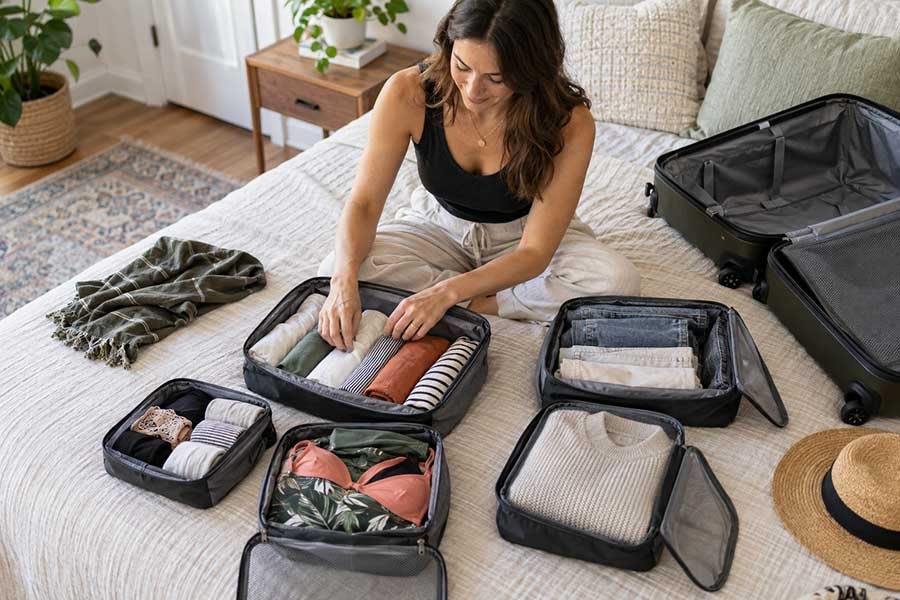
The category system, one cube per clothing type rather than per day, is the system that remains organized regardless of what the trip does. The tops cube contains every top in the bag. The bottoms cube contains every bottom. The underwear and socks cube contains all of both. The layers and accessories cube contains everything that does not fit neatly into the other clothing categories. When Monday’s outfit requires the nicer blouse that was intended for Wednesday, the tops cube is opened, the blouse is retrieved, and every other top remains in its cube undisturbed. When the jacket is needed earlier than planned, the layers cube is opened once and closed again. The category system provides the same access to every item in the bag with the same organizational integrity on day seven as it provided on day one.
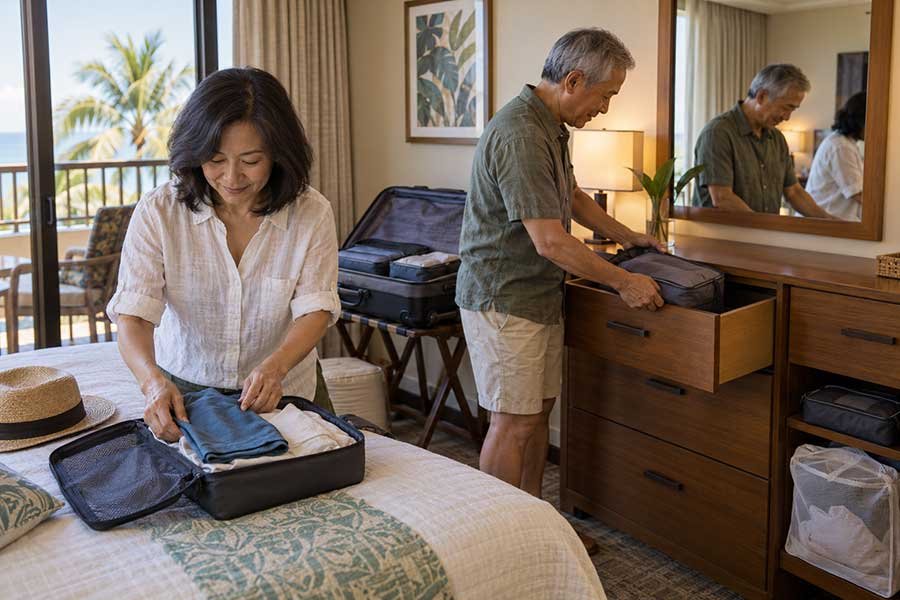
The category system also dramatically improves the accommodation experience at each overnight stop. With a category system, the packing process at the accommodation is not an unpack: the underwear cube goes in the drawer, the tops cube goes on the shelf or remains in the open suitcase for easy access, and the specific items needed for the day are retrieved from their specific cube without any disturbance to the rest of the bag’s organization. With a loose or day-based packing approach, the accommodation access requires a partial unpack that distributes items across the room and then a repack at departure that begins the slow deterioration of whatever organizational system the bag had when it left home.
The category system also makes the return pack at the end of the trip as fast as the departure pack. Clean clothes return to their specific cube from the accommodation’s drawers and hangers. Worn clothes go into the laundry cube or dirty laundry bag. Documents return to the document cube. Everything is in its category. The return suitcase closes in five minutes and arrives home organized rather than as the chaotic collection of items stuffed into the bag in whatever order they came off the hotel room floor.
One trip with packing cubes and you will never go back to throwing everything in loose and hoping for the best.
Packing cubes are the single most life-changing travel purchase most travelers wish they had discovered sooner. One set. Every trip. No exceptions.
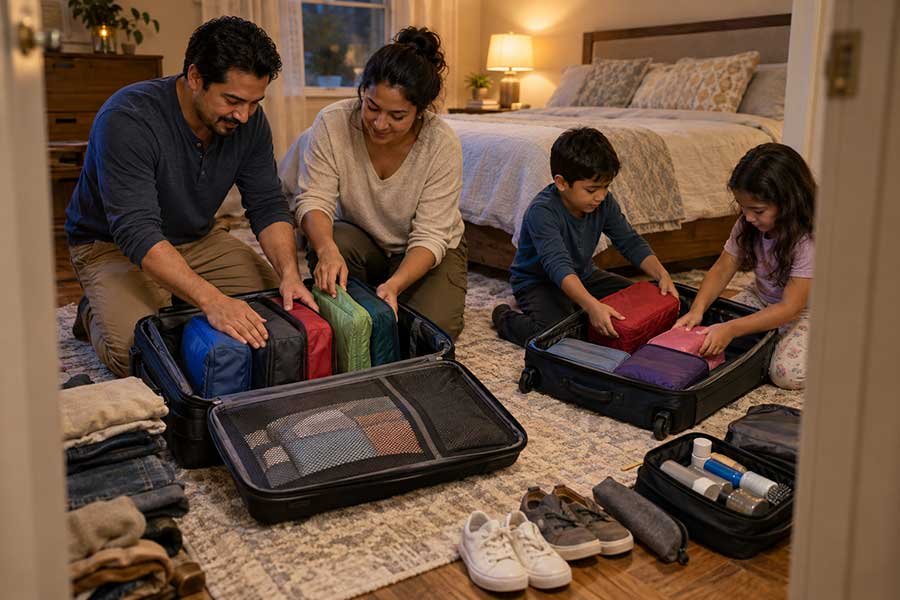
Color-code the cube set so each category is immediately identifiable by color rather than by reading a label or guessing by size. A red cube for tops, a blue cube for bottoms, a green cube for layers and accessories, a grey cube for underwear and socks, and a black compression cube for bulky items produces an identification system that works in the dark accommodation at 6 a.m. when the morning items are needed without disturbing a sleeping travel partner. Most quality packing cube sets are available in color-coded sets. Alternatively, a single color packing cube set with different-colored luggage tags attached to each cube produces the same identification efficiency at lower cost. The color system reduces the morning suitcase rummage from a thirty-second search to a three-second visual identification.
Let Us Plan the Trip That Makes a Packing Cube System Worth Having
The right trip for the organized traveler has multiple destinations, different occasion types across the days, and the kind of accommodation variety that makes the category system earn its organizational return every single night. Tell us where you want to go and what kind of trip you are planning. We will build the itinerary. You pack the cubes.
Plan Our EscapeThe one-cube-per-clothing-type principle is the foundation of the category system. Each major clothing category occupies its own dedicated cube: tops in one cube, bottoms in another, underwear and socks in a third, sleep and loungewear in a fourth. This is not a rigid rule that forbids combining minor categories in a shared cube. It is the principle that each cube serves a single dominant purpose so that accessing any one category of clothing requires opening exactly one cube rather than searching through a mixed-category cube for the specific item needed.
The clothing category cubes for a standard trip: a medium or large cube for tops, sized to hold four to eight tops in a roll-pack or flat-fold arrangement depending on the fabric and the cube’s depth. A medium cube for bottoms, holding two to four trousers or jeans or skirts. A small cube for underwear and socks, organized by day or simply folded flat. A medium cube for layers and outerwear, holding a lightweight cardigan or jacket that folds flat, a scarf, and any other accessories that need containment rather than hanging. For longer trips, a fifth cube for workout or casual wear that is separated from the daily clothing keeps the primary cubes from becoming too full to zip comfortably and keeps the purpose-specific clothing accessible without disruption to the daily rotation.
The folding and rolling technique within each cube affects both the cube’s capacity and the condition of the clothing it contains. The ranger roll or tight roll technique, which rolls each item tightly from the bottom hem to the collar, produces the smallest possible footprint per item and prevents unrolling during transit. Flat-fold stacking fills the cube efficiently for wrinkle-resistant fabrics that can be stacked without acquiring significant creases. A hybrid approach, rolling the most casual items and folding the most wrinkle-sensitive ones, produces the optimal balance of cube capacity and garment condition within a single cube. The key rule is consistency: whichever approach is used within a cube should be applied consistently to every item in that cube so the cube closes flat and the items remain in their arrangement throughout the trip rather than shifting and tangling during transit.
The cube capacity test before departure: every cube in the system should close comfortably with a smooth zip rather than requiring compression force to close the zipper. A cube that requires force to close is a cube packed too full for the bag’s needs. Items should be retrievable from the top of the cube without significant re-packing to access items below them. The cube that opens easily at the top and displays its organized contents without excavation is the correctly sized cube for its category. The cube that requires excavation to find the item at the bottom is either the wrong size cube for the category count or a cube that was packed without organization within the category.
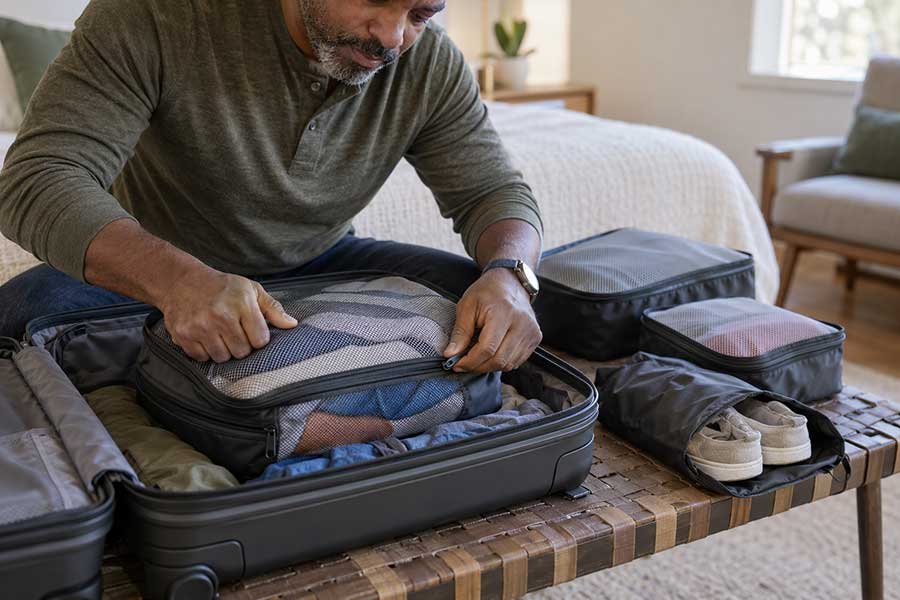
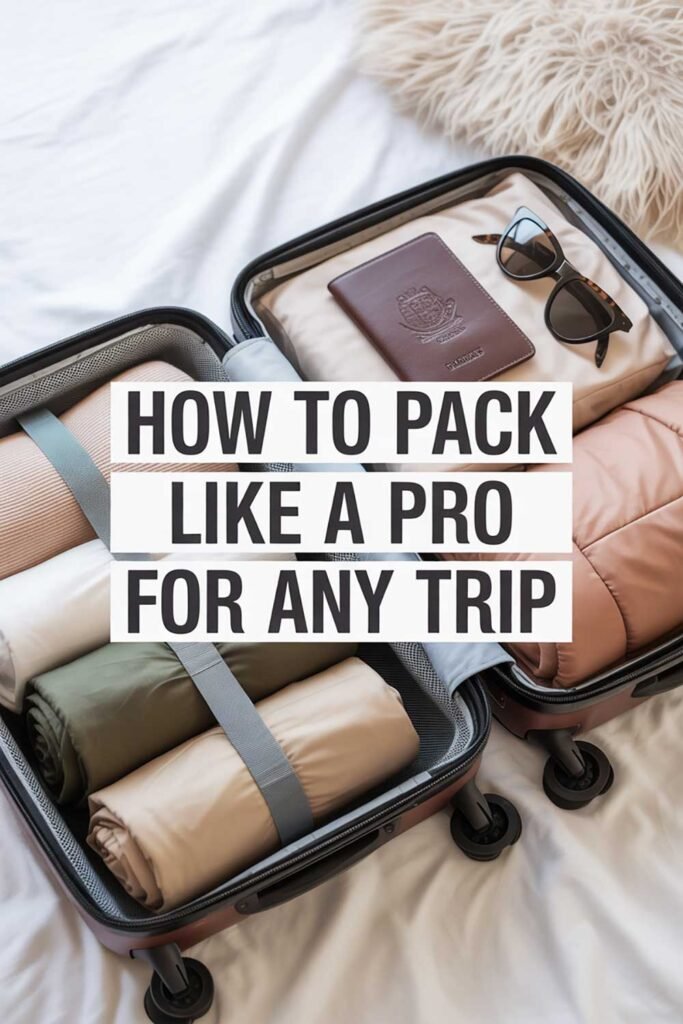
Pack the cubes into the suitcase in a specific layout that maximizes both the suitcase’s use of space and the accessibility of the most-used cubes. The compression cube with bulky items goes in the bottom of the suitcase against the spine, where it provides the firmest foundation. The less-accessed cubes, sleepwear, and layers, go next. The most-accessed cubes, tops and bottoms, go at the top nearest the suitcase opening. The slim document cube and accessories sit flat on top of the clothing cubes. This layout means that the suitcase’s opening always reveals the items most likely to be needed, while the bulky foundation at the bottom creates a stable base that prevents the cubes from shifting during transit and disturbing the layout that made the packing efficient in the first place.
The slim or flat packing cube, the shallowest cube type in most packing cube sets, earns its place in the system through a specific and underappreciated function: it holds flat items in a dedicated organized location within the suitcase or the carry-on where they remain accessible, undisturbed, and findable without searching through the clothing cubes that surround them. The most natural items for the slim cube are the items that would otherwise migrate to random locations in the bag: printed travel documents, maps and guidebooks, the travel wallet with cards and currency, backup documents such as printed hotel confirmations and insurance policies, and any flat accessories such as a silk scarf or a thin belt that folds flat rather than folding or rolling into a clothing cube without losing its organization.
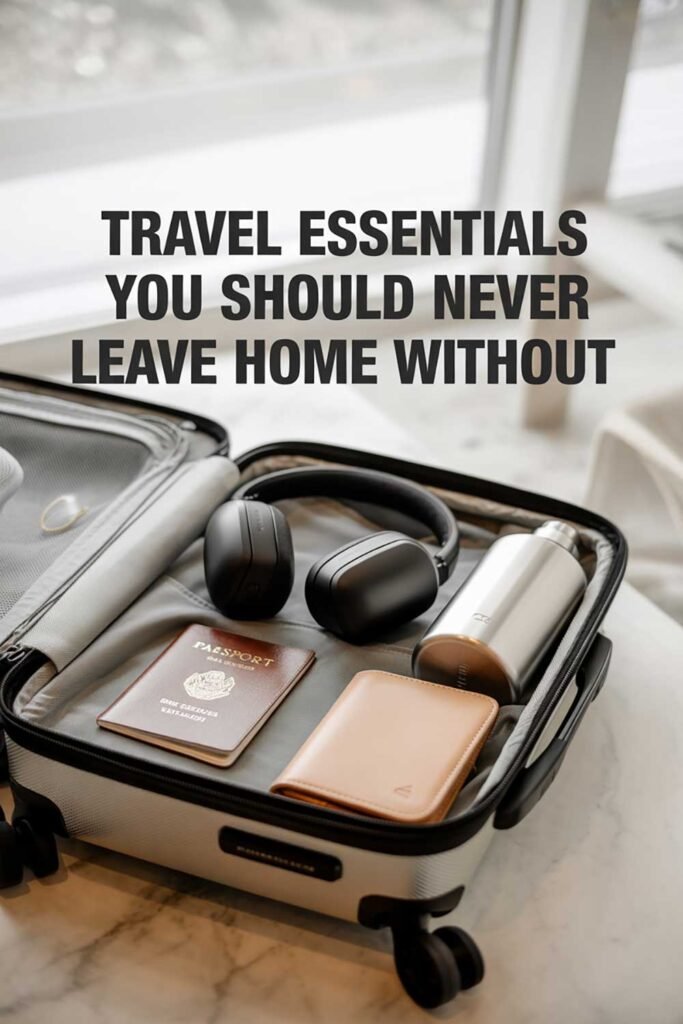
The document slim cube in the carry-on or personal item, rather than in the checked suitcase, is the specific use of this cube type that produces the most significant organizational return. All travel documents, every document needed from check-in through immigration through accommodation arrival, organized in a single flat cube that sits in the most accessible exterior pocket of the carry-on, provides every document needed at every official interaction across the journey from a single known location rather than from the assorted pockets, folders, and compartments where documents typically migrate and where the passport is most often not found when needed urgently at the immigration desk.
The slim cube is also the correct home for the trip’s small flat items that resist containment in other cubes: the earring organizer that holds the trip’s jewelry collection flat without tangling, the sunglasses case, the travel adapter and its flat documentation, the small notebook or journal, and the itinerary printout that travels through the trip as a reference document. These items in the slim cube are always in the same location, always accessible when needed, and never discovered at the bottom of a clothing cube mixed in with the day’s outfit choices.
Use the slim cube in the suitcase for items that need to come out at hotel security or customs: the travel adapter, any electronics that require separate screening, the document wallet for hotel check-in, and the day’s currency. A slim cube that unzips and lays flat on the conveyor belt or the check-in desk surface provides the same organized access point in the official interaction context that it provides in the accommodation context. The slim cube does not replace the carry-on’s exterior pocket for boarding passes and the immediate-access documents. It is the secondary layer of organized document and small item access that prevents the carry-on excavation that every traveler who has searched through a disorganized bag at an immigration desk recognizes as specifically avoidable.
The Packing Cube Sets We Actually Travel With
The six-piece color-coded set that has been on every trip since the first trip that converted us, the compression cube that handles the bulky items that previously took a third of the suitcase without compression, and the slim cube that holds every travel document and accessory in one flat accessible layer at the top of the carry-on. Real packing cube picks from real trips of every length and destination type.
DND FavoritesThe compression packing cube, which adds a second zip layer on the surface of the cube that compresses the contents to a fraction of their uncompressed volume, solves the specific problem that bulky items create in every packing system: they occupy a disproportionate amount of bag space relative to their use frequency and have no organizational container appropriate for their volume and irregular shapes. A fleece jacket that folds loosely and occupies a third of the suitcase when placed in a standard cube compresses to half its loose volume in a compression cube. Three pairs of athletic shoes, a down jacket, and a bulky sweater that would collectively occupy most of a large suitcase compress into a compression cube the size of a medium cube, leaving the rest of the suitcase for the organized clothing cubes and the slim document cube without the bulky items disrupting every other item’s arrangement.
The compression cube works through a secondary zip track that applies pressure across the face of the cube when closed, compressing the air out of the fabric items inside. This compression works most effectively on compressible fabrics, fleece, down, cotton knits, and similar air-entrapping materials, and less effectively on dense wovens or structured items that do not compress regardless of the pressure applied. Selecting items for the compression cube based on their compressibility rather than their bulk is the approach that produces the maximum compression efficiency: highly compressible items gain the most volume reduction from compression, while dense items gain limited reduction at the cost of wrinkles acquired from the compression force.
The compression cube in a carry-on bag is particularly valuable. Carry-on packing often comes down to the volume of one or two bulky items relative to the remaining space in the bag, and the compression of those items produces the margin that allows the carry-on to close comfortably rather than struggling at the zip. A down jacket compressed into a compression cube the size of a large water bottle occupies the carry-on space of a large water bottle rather than the space of a down jacket, which is the specific compression return that converts the marginally too-full carry-on into a comfortably zipped carry-on with room for the overhead bin’s other occupants.
Do not use the compression cube for items that wrinkle under compression and require their structure for their function. Formal wear, structured blazers, wrinkle-sensitive dresses, and any item that was packed to arrive presentable does not belong in the compression cube regardless of its volume. These items travel most safely in a standard clothing cube with flat-folded wrinkle-sensitive placement or in the suitcase’s hanging section if one exists. The compression cube is for the bulky-but-casual items whose function does not depend on their shape after unpacking: the down layer that puffs back to its loft after twenty minutes of unpacking, the athletic wear that goes directly from the cube to a workout, and the casual knitwear that shakes out to its natural drape within minutes of removal from compression.
The complete packing cube system scales from a weekend getaway to a month-long multi-destination trip using the same category principles at different scales. The system is not a fixed number of cubes. It is a fixed organizational approach, one cube per category, applied to whatever the trip’s clothing count requires.
For a weekend trip in a carry-on: two small to medium cubes for clothing (tops in one, bottoms and underwear in the other), one slim cube for documents and electronics, and one small compression cube for any bulky layer. Four cubes total. The carry-on closes, the overhead bin accepts it, and the hotel room organization takes three minutes at check-in rather than the fifteen-minute accommodation arrival unpack that the loose-packed carry-on requires.
For a one-week trip in a carry-on or small checked bag: a medium cube for tops, a small to medium cube for bottoms, a small cube for underwear and socks, a medium cube for layers and accessories, a slim cube for documents and flat accessories, and a compression cube for any bulky items. Six cubes total. Every item has a home. Every accommodation access is a one-cube interaction rather than a full suitcase excavation. The return pack takes five minutes from the last accommodation.
For a two-week-plus trip in a checked bag: the same six-cube structure as the one-week system, scaled to larger cube sizes for the larger clothing count, plus a seventh cube for laundry. The laundry cube receives each day’s worn items and is separated from the clean clothing cubes, keeping the clean and worn items organizationally distinct throughout the trip without any specific effort beyond dropping the worn items into the laundry cube rather than the suitcase floor. At the midpoint laundry stop, the laundry cube empties and the cleaned items return to their category cubes. The system remains organized through the full trip without any reorganization required at midpoint beyond the clean items returning to their correct cubes.
The packing cube system for shared travel, couples or family members sharing a suitcase: assign each person their own color of cube within the shared suitcase. His tops in red cubes, her tops in blue cubes. His and her individual cube colors produce the organization that prevents the shared suitcase from becoming the communal pile that neither person can navigate efficiently. Each person’s items are identifiable immediately by cube color. The shared suitcase is one container with two organized sub-systems, and finding any specific item requires only identifying whose color cube holds the category in question and opening that cube.
Label the cubes on the outside with a small luggage tag or a piece of masking tape and a pen for the first two to three trips while the category color system is still being established as a habit. The label during the learning period prevents the second-guessing of which color holds which category that produces the four-cube search on the first few trips. After three trips with the labeled system, the category-to-color association becomes automatic and the labels can be removed or left as permanent organizational identifiers. The first trip with a new packing cube system is always slightly slower than the established routine. By the third trip, the system is faster than any previous packing approach the traveler has used, and by the tenth trip, it is the only approach they can imagine using.
The Trip That Made Us Category Packers for Life
For years we packed the way most travelers pack: everything in the suitcase in roughly the order it was packed, heavier items at the bottom, smaller items filling the gaps, shoes in bags along the sides. We knew where things were approximately. We could find anything in the suitcase in thirty to sixty seconds if we were willing to move things around. The suitcase was organized enough for daily access if we were prepared to do a mini-excavation at each accommodation and a full repack at each departure. We were experienced travelers who had made peace with the chaos in the bag because we had never experienced the alternative.
Diana came home from a trip with a colleague and mentioned packing cubes. She described the colleague’s system: five colored cubes in the colleague’s carry-on for a week-long trip, each a different color for a different clothing category, the slim cube sitting flat on top with the trip’s documents and the day’s accessories. She described watching her colleague arrive at the hotel and access the day’s items in under two minutes without removing anything from the carry-on except the cube she needed. She described the colleague’s carry-on closing at departure in three minutes while Diana’s bag required fifteen.
We ordered a packing cube set the same week. The first trip with them, a long weekend in a coastal town, was the conversion trip. We used the category system: tops in one medium cube, bottoms in a small cube, underwear and socks in a small cube, layers in a third medium cube, documents and accessories in the slim cube. The carry-on closed with room to spare for the first time on this particular bag. At the hotel, the tops cube came out, a shirt was retrieved, and the cube went back in. The rest of the bag remained exactly as packed. At departure, each cube was repacked in under a minute and the carry-on closed in under three minutes. We could not identify a single thing that had been easier about the previous approach.
On the return flight, we talked about the trip the way we talk about every trip but we also talked about what had changed in the bag experience. The answer was that nothing had felt managed. The bag had been transparent the whole trip. We always knew where things were. We never had to move something to find something else. The accommodation had felt less like setting up and more like simply being there. The departure had felt like closing a container that had been organized the whole time rather than packing a bag that had been a managed chaos the whole time. We have used the same system on every trip since. The system in this article is the system we use.
Beyond the four core principles and the complete system, these six additional packing cube approaches address the specific use cases and advanced applications that experienced cube users discover and that new users benefit from knowing before their first trip.
Use a dedicated dirty laundry cube rather than a plastic bag for worn items. A mesh laundry cube within the suitcase allows air circulation around worn items, preventing the mildew smell that accumulates in sealed plastic bags over several days of wear, while keeping worn items clearly separated from clean items in the category cubes. The mesh laundry cube at the bottom of the suitcase fills gradually across the trip while the clean category cubes deplete. The visual ratio of full-mesh-laundry-cube to depleting-clean-cubes is a natural trip progress indicator that requires no counting or tracking.
Pack a small cube inside a large cube to use the large cube’s remaining space after the primary category is full. A tops cube filled with four rolled tops has remaining space in the corners and sides. A small accessories cube or a small underwear-and-socks cube tucked into that remaining space uses the dead space efficiently without mixing the categories, because each item category still has its own sealed container within the larger cube’s remaining space. This cube-within-a-cube approach is the packing efficiency technique that allows a five-cube system to carry the organizational capacity of a seven-cube system in the physical footprint of five.
Use a flat-entry cube rather than a top-entry cube for the most frequently accessed categories. Most standard packing cubes open via a zipper on one narrow end, which requires removing and reinsert items to access anything below the top layer. A flat-entry cube with a zipper across the entire face of the cube opens like a book and provides immediate visual and physical access to every item in the cube without removing anything. For the tops and bottoms cubes that are accessed most frequently across the trip, the flat-entry design produces a meaningfully better daily use experience than the top-entry design, even if the top-entry cubes are used for the less-frequently-accessed categories.
Pack the compression cube last, after all other cubes are placed in the suitcase, in the position where it fills the remaining space. The compression cube’s adjustability through the compression zip allows it to conform to the available space in the suitcase after the rigid-volume clothing cubes have been placed, making it the adaptive element in the suitcase layout rather than a fixed-volume cube competing for space with the others. The bulky items go in the compression cube last, the cube is placed in the remaining suitcase space, and the compression zip is tightened to fit the cube to the available volume rather than to the theoretical maximum compression.
Carry a small emergency cube in the personal item bag with one day’s essentials independent of the main luggage system. For any trip that involves a checked bag, the one-day emergency cube in the personal item contains enough for a night and a day independently of the checked bag: one change of underwear, a travel-size toiletry set, the essential medications, the charging cables, and the documents needed for the first night’s accommodation arrival. A delayed or lost checked bag at an international destination is a significantly less stressful situation when the personal item already contains what is needed for the first night and the first meeting of the following morning.
Use the packing cube system for the day bag as well as the main luggage. The day bag for a multi-day trip that is used daily for sightseeing, day trips, and excursions benefits from the same category organization at a smaller scale: a small electronics and cables cube, a small snacks cube, a small sunscreen and personal care cube, and the slim cube for the day’s specific documents and cash. The organized day bag that can be accessed without excavation produces the same daily use efficiency improvement that the organized suitcase provides, applied to the twenty daily moments when the day bag needs to be accessed quickly rather than the three accommodation-access moments the suitcase produces each trip day.
Store the packing cube set in the largest cube when not in use at home rather than in the original packaging or loose in a drawer. The largest cube becomes the home storage container for the full set: each smaller cube nests inside the large cube, the full set stays together, and the large cube is ready to be pulled out and deployed as the packing session begins without hunting for the individual cubes across different drawers and shelves. The packing session that begins with all cubes already together in their storage container produces the same organizational efficiency at home that the category system produces in the suitcase. The cube set that requires ten minutes to assemble from different storage locations at the start of each packing session adds friction to the packing process that eventually leads to its non-use on shorter trips where the full assembly feels disproportionate to the trip duration.
Book the Trip the Organized Bag Was Built For
The packing cube system earns its highest return on the multi-destination trip where the bag opens and closes at four different accommodations, on the long-haul trip where the checked bag needs to be accessed at connections, and on the trip where the day bag efficiency matters as much as the main suitcase’s organization. Our travel agents know those trips. Let us plan yours.
Book A TripCommon Packing Cube Mistakes to Avoid
Most packing cube disappointments come from the same consistent setup mistakes. These are the most common ones and what to do differently from the first trip with the system.
Organizing by day rather than by category
The day-based packing cube system is the most intuitive and the least functional of the available organizational approaches. It works exactly when the trip proceeds exactly as planned and fails at the first moment a specific item is needed from a day that has not yet been reached in the planned sequence. The category system is counterintuitive to first-time users because it requires thinking about the bag’s contents as a wardrobe rather than as a daily plan, but it remains organized regardless of what the trip does because accessing any item requires only opening the item’s category cube without affecting any other category.
Overfilling cubes until they require force to close
A cube that requires force to close is a cube packed beyond its functional capacity. The clothing inside an overfilled cube is compressed against the zipper, arrives wrinkled, and is difficult to retrieve without disturbing the arrangement of every other item. The correct cube fill level is the level at which the cube closes smoothly with a comfortable zipper pull and the contents are visible and accessible from the top opening without excavation. Overfilling is typically a symptom of using too few cubes for the clothing count or using the wrong cube size for the category. The solution is either an additional cube or a larger cube, not forcing more items into an existing cube.
Using one large cube for all clothing rather than one cube per category
One large cube for all clothing is a bag-within-a-bag that provides the same access problem as the loose-packed suitcase at a smaller scale. Finding the specific top from the bottom of a large mixed-clothing cube requires the same excavation as finding the specific top from the loose suitcase, with the added inconvenience of the excavation happening inside a contained cube rather than in the suitcase’s open space. The category system’s one-cube-per-clothing-type principle is the specific organizational design that produces the accessibility improvement. The single-cube approach eliminates the organizational design while retaining the containers.
Not using a dedicated laundry cube for worn items
Worn items returned to the clean clothing cubes mix the clean and worn items in a way that undermines the category system’s organizational clarity and produces the specific problem of an item believed to be clean being discovered worn when needed. Worn items returned loose to the suitcase floor produce the same bottom-of-the-bag archaeological situation that the packing cube system was intended to eliminate. A dedicated laundry mesh cube for worn items maintains the clean-worn separation that the category system requires without any additional effort beyond the habit of dropping worn items in the laundry cube rather than anywhere else.
Using compression cubes for wrinkle-sensitive items
Compression cubes apply significant pressure to their contents to achieve volume reduction. Items that wrinkle under pressure and require their structural presentation for their function arrive from the compression cube with the specific creases that high-pressure compression produces and that require professional steaming or an accommodation iron session to resolve. The compression cube is for the category of compressible-but-casual items whose function is not undermined by compression wrinkles. Formal items, structured blazers, wrinkle-sensitive dresses, and any item that was packed to arrive and be worn without additional treatment belongs in a standard flat-fold clothing cube, not in the compression cube regardless of its volume.
Abandoning the system mid-trip because a cube was opened in a hurry without re-organization
The packing cube system that is deployed at departure and then abandoned mid-trip as the trip’s pace produces hurried accommodations where the cube opened quickly and not re-organized is the cube that gradually loses its structure until it resembles the loose-packed suitcase it replaced. The system requires only that worn items return to the laundry cube and that the specific item retrieved is replaced in its category cube before the cube is closed. Each re-use of the cube takes thirty seconds more than just leaving items loose. The thirty seconds of re-organization per cube access is the investment that keeps the system functional for the full trip rather than only for the first two days.
Love Helping Travelers Travel Better, Starting With the Bag?
The traveler who packs well travels better in every measurable way: less bag fee spending, less accommodation setup time, less departure anxiety, more time actually at the destination. If becoming a home-based travel agent who helps people travel smarter from the bag outward sounds like the right next step, see how the TravelPreneur system works. Earn commissions and build a real business from anywhere.
Become An AgentFrequently Asked Questions
These are the questions new packing cube users ask most often before and after their first trip with the system. Real answers from real packing cube use across every trip type and bag size.
Do packing cubes actually save space or do they take up extra room in the bag?
Standard packing cubes do not save space in the bag compared to loose packing because the cube material itself occupies a small amount of the suitcase volume that loose items would not. The space benefit of standard packing cubes is organizational, not volumetric: they produce a structured suitcase that uses available space efficiently because the cubes stack and fit together without the empty pockets and wasted spaces that loose random packing produces between irregularly shaped items. Compression packing cubes do save meaningful space by reducing the volume of compressible items through the double-zip compression layer. For most travelers, the space investment in standard cubes is trivial (each cube’s material adds under fifty grams and under a centimeter of cube wall material to the total system) relative to the organizational return. The traveler comparing a well-organized cube-packed suitcase to a well-organized loose-packed suitcase will find similar total clothing count capacity. The traveler comparing a cube-packed suitcase to a poorly organized loose-packed suitcase will find the cube-packed version holds more clothing more efficiently because the organization eliminates the dead space that disorganization creates.
How many packing cubes do you need for a week-long trip?
A week-long trip in a carry-on is well-served by five to six packing cubes: one medium cube for tops, one small to medium cube for bottoms, one small cube for underwear and socks, one medium cube for layers and accessories, one slim cube for documents and flat items, and one compression cube for any bulky items. This six-cube system covers every clothing category for a week of travel with room in each cube for the category’s contents without overfilling. If the week-long trip includes a wider variety of occasions requiring more clothing variety, a seventh laundry cube prevents the clean-worn mixing that occurs without one. For a week-long trip in a checked bag, the same six or seven categories apply in larger cube sizes appropriate for the larger clothing count the checked bag accommodates.
Should you unpack packing cubes at the hotel or leave everything in the cubes?
The answer depends on the trip duration and the accommodation type. For stays of one to two nights at the same accommodation, leaving everything in the cubes and pulling the specific cube needed for the current day’s items is the most efficient approach: no unpack, no repack, total time in and out of the accommodation under five minutes. For stays of three or more nights at the same accommodation, partially unpacking the most frequently used cubes into the accommodation’s drawers and wardrobe space produces a more comfortable daily access experience while the less-frequently-used cubes remain in the suitcase. The laundry cube belongs in the suitcase rather than in a drawer regardless of stay length, since the worn items that fill it are collected in one location throughout the stay. The slim document cube belongs in the carry-on or the personal item rather than in the suitcase at any stay length, since the documents and accessories in it are the items most likely to be needed outside the room during the stay.
What are the best brands of packing cubes and what should you look for?
Packing cube brands, specific product features, and market availability change frequently, so specific brand recommendations in this article would risk being outdated by the time they are read. The characteristics worth evaluating in any packing cube set regardless of brand: durable YKK or equivalent quality zipper that will not fail mid-trip, lightweight mesh top panel that allows visual identification of the cube’s contents without opening, durable nylon or polyester shell in a weight that resists tearing from the contents’ normal pressure, smooth zipper pull large enough to operate with one hand, and accurate sizing that matches the described capacity. For compression cubes specifically, a double-zip design with the compression zip that has a different color or texture from the regular closing zip, to prevent accidentally pulling the compression zip when intending only to open the cube. A set that includes multiple cube sizes, at least small, medium, and large in the standard category and a slim and compression cube, provides the full system in a single purchase. Most quality sets weigh between 150 and 250 grams total for a six-piece set, which is the weight addition that the system represents relative to loose packing.
Can you use packing cubes in a backpack or only in a rolling suitcase?
Packing cubes work in any bag with interior volume sufficient to hold them: rolling suitcases, checked bags, carry-on bags, travel backpacks, duffel bags, and any other flexible or semi-rigid bag where the cube’s structure provides organizational value. Backpacks specifically benefit from packing cubes because backpacks are loaded from the top and the items at the bottom of an unorganized backpack are genuinely difficult to access without removing everything above them. Packing cubes in a backpack allow partial access to specific categories without emptying the bag: the tops cube is removed, a shirt is retrieved, and the cube is returned to its backpack position with every other item undisturbed. The cube’s rigid structure also helps a soft backpack maintain its shape better than loose items, which tend to shift and create the asymmetrical load distribution that makes a backpack uncomfortable to carry for extended periods. The same category organization principles apply to the backpack system as to the suitcase system. The only adjustment is the packing order: the heaviest cubes go closest to the back panel of the backpack, the medium-weight cubes in the middle, and the lightest and most frequently accessed cubes at the top.
Do packing cubes make it harder to get through airport security?
Packing cubes in a checked bag have no effect on airport security. Packing cubes in a carry-on require the same security screening as any carry-on bag. The individual cubes do not need to be removed from the carry-on at most security checkpoints in the same way that laptops and liquids require separate screening, though security regulations vary by airport and country and screening requirements should always be followed as directed by the specific security staff at each checkpoint. The organizational benefit of packing cubes at security is that the carry-on is organized and accessible when the security staff requests it be opened for inspection, and the specific item they are looking for is in its category cube at a known location rather than somewhere in a loose-packed carry-on requiring excavation. The slim document cube with the travel adapter and any electronics that require separate screening is the cube most likely to be relevant to a security interaction, and its accessible position at the top of the carry-on produces the most efficient security response of any location the adapter could have been stored.
The suitcase that opens at 6 a.m. in a dark hotel room and produces exactly what is needed in thirty seconds without waking anyone is not luck. It is a packing cube system that was worth ten minutes of setup at departure.
Picture the Suitcase on Day Five of the Trip
The tops cube has been opened and closed eleven times. It still looks exactly as it did when it was packed at home. The laundry cube is filling, which means the clean cubes are getting lighter, which means the return pack is getting easier every day. The slim cube came out at every check-in and held every document every official interaction has needed. The compression cube at the bottom of the suitcase has not been opened once because the down jacket it contains has not been needed this week and did not require reorganization to be unneeded. The departure from this accommodation will take five minutes and the suitcase will close on the first attempt. That is the system working. That is every trip from here. One set of cubes, every trip, no exceptions.
One More Thing Before You Pack
Print our free Travel Packing Checklist and use it to populate each packing cube by category before your next trip. The checklist is organized by the same categories the packing cube system uses so the packing session moves from checklist category to cube category without any cross-referencing or mental translation. The same checklist we use before every trip we take.
Get the Free ChecklistExplore Our Top Picks for a Better Trip
From the six-piece color-coded packing cube set that has been on every trip since the first conversion trip to the compression cube that handles the down jacket, the fleece, and the three pairs of athletic shoes that previously occupied a third of the suitcase, see the packing products and travel resources we actually use and recommend. Real picks from real trips where the organized bag made the travel experience genuinely better from check-in to check-out.
See Our Top PicksTravel Prints and Printables From Our Shop
Visit Premier Print Works for packing organizers, travel planning printables, trip preparation checklists, travel journals, and wall art that makes every trip a little more beautiful and a lot more organized from the moment the first cube is labeled to the last accommodation check-out that takes five minutes because the system has been working the whole trip.
Visit Premier Print WorksDisclaimer
The information shared in this article is provided by Don and Diana’s Travels for general informational, educational, and inspirational purposes only. It reflects our personal experiences, opinions, and the experiences of travelers we have worked with. It is not professional travel, legal, financial, or medical advice, and it should not be relied on as such.
Airline Baggage Policies
Airline baggage policies, carry-on size and weight limits, checked bag fees, and security screening requirements change frequently and vary by airline, fare class, route, airport, and country. Always confirm current baggage policies with the specific airline for the specific booking and follow all security screening instructions at every checkpoint. We are not responsible for any baggage fee, security outcome, or baggage-related result arising from information in this article.
Affiliate and Partner Links
This article may contain affiliate links, partner links, referral links, and links to products or services that pay us a commission. If you click a link and make a purchase or complete any qualifying action, we may earn a small commission at no extra cost to you. Our recommendations are based on real use and genuine belief in the products and services we share.
Third-Party Websites and Services
We may link to third-party websites, services, and resources for your convenience. We do not control these sites and are not responsible for their content, terms of service, pricing, availability, or any product or service they sell. Your use of any third-party site is entirely at your own risk.
Health, Safety, and Personal Responsibility
Travel involves personal risk. You are solely responsible for your own health, safety, travel insurance, medications, vaccinations, documentation, financial decisions, and choices while planning or taking any trip. We strongly recommend purchasing comprehensive travel insurance for every trip. Don and Diana’s Travels, its owners, employees, contractors, and affiliates accept no liability for any loss, injury, illness, delay, cancellation, damage, theft, or inconvenience arising from your use of the information in this article or from any travel decisions you make.
Composite Stories and Characters
Some stories, examples, and traveler experiences shared on this site are composites drawn from the real experiences of Don, Diana, clients, friends, and travelers we have worked with over the years. Names, identifying details, locations, and circumstances may be combined, changed, or fictionalized to protect privacy. Any resemblance to a specific real person beyond the composite portrayal is unintentional.
No Guarantees
We do not guarantee any specific result, outcome, savings, or experience from using the information, tips, services, or products mentioned in this article. Your results depend on many personal factors including your own choices, effort, circumstances, and external conditions outside of our control.
Copyright and Use
All content in this article is the copyrighted property of Don and Diana’s Travels unless otherwise noted. You may not copy, republish, redistribute, modify, sell, or reuse our content without our prior written permission. You are welcome to share a direct link to this article with proper credit.
By reading and using the information in this article, you acknowledge that you have read, understood, and agree to this disclaimer in full.