Common Packing Mistakes That Are Costing You Space and Money
You’ve packed for dozens of trips. You have a system. You know what you like to bring. And you’re probably making mistakes that are costing you real money and significant suitcase space without realizing it, because the mistakes don’t look like mistakes. They look like reasonable decisions, practical preparation, and common sense. That’s what makes them so persistent – they feel right even as they waste space and drain your travel budget trip after trip.
These aren’t dramatic packing failures like forgetting your passport or leaving your medication at home. These are quiet, habitual mistakes that add three pounds here, five dollars there, and one unnecessary item after another until your bag is heavier than it needs to be and your wallet is lighter than it should be. Individually, each mistake seems minor. Collectively, they’re transforming your packing from efficient to expensive and from streamlined to stuffed.
The good news is that most of these mistakes disappear the moment you see them clearly. Awareness is the fix.
Mistake #1: Packing Full-Size Toiletries
The Space Cost
A standard bottle of shampoo is 12-16 ounces. A travel-size bottle is 3 ounces. The difference seems small until you multiply it across shampoo, conditioner, body wash, face wash, lotion, sunscreen, and any other liquid product. Full-size toiletries for two people can easily occupy an entire packing cube and weigh three to five pounds.
The Money Cost
Full-size toiletries don’t just waste space – they create a cascade of costs. Liquids exceeding TSA’s 3-1-1 limits force checked bags, which cost $30-70 each way on most domestic airlines. A $6 bottle of shampoo that triggers a $35 checked bag fee is actually a $41 bottle of shampoo.
The Fix
Transfer products into reusable travel-size containers. Better yet, use solid toiletries (shampoo bars, solid conditioner, bar soap) that don’t count as liquids at all. Many accommodations provide basic toiletries, and anything you run out of mid-trip can be purchased locally for less than the cost of the extra luggage weight.
Mistake #2: Bringing Too Many Shoes
The Space Cost
Shoes are the single largest space consumers in any suitcase. A pair of casual sneakers occupies roughly the same volume as five rolled t-shirts. Every additional pair of shoes eliminates space that could hold multiple garments.
The Money Cost
Shoes are also the heaviest items per pair. Two extra pairs of shoes can add three to five pounds to your bag, pushing you toward or over airline weight limits. Overweight bag fees ($50-200 depending on the airline and how far over the limit you are) make those extra shoes extraordinarily expensive per wear.
The Fix
Limit shoes to two pairs maximum for most trips: one versatile walking shoe worn during transit and one lighter option packed. For many trips, one pair suffices entirely. Wear your heaviest shoes rather than packing them. Choose neutral colors that work with every outfit rather than shoes that match only one.
Mistake #3: Packing “Just in Case” Items
The Space Cost
The rain jacket for the destination with 10% chance of rain. The formal outfit for the dinner that might require one. The extra sweater because the temperature might drop. The power bank because your phone might die. Each individual “just in case” item seems reasonable. Collectively, they can consume 20-30% of your suitcase volume.
The Money Cost
“Just in case” items that go unused represent space that could have allowed you to pack in a carry-on instead of checking a bag. They also represent money spent purchasing items specifically for travel contingencies that rarely materialize. The travel-specific rain pants, the portable umbrella, the extra battery pack – all purchased for scenarios that occur on a fraction of trips.
The Fix
Apply the 80/20 rule: if there’s less than a 50% chance you’ll need an item, leave it at home. Most contingency items can be purchased at your destination if the unlikely scenario occurs, and the purchase cost is almost always less than the cumulative space and weight cost of carrying the item on every trip where you don’t need it.
Mistake #4: Rolling Everything or Folding Everything
The Space Cost
Rolling works beautifully for casual clothing – t-shirts, underwear, lightweight fabrics. Folding works better for structured garments – blazers, dress pants, button-down shirts. Using one method exclusively means some items are packed in the least space-efficient way possible.
The Money Cost
Inefficient packing methods increase your total packed volume, pushing you toward larger bags or checked luggage. The cost isn’t per-item but cumulative – an extra inch of wasted space per garment across twenty garments means significant total volume loss.
The Fix
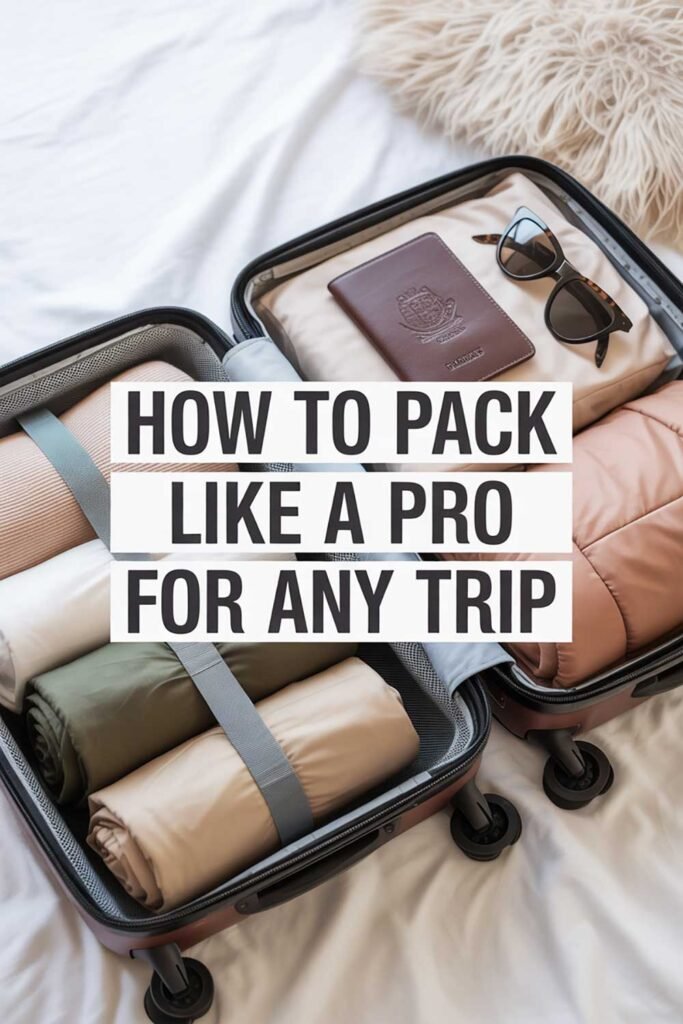
Use hybrid packing: roll soft, casual items and fold structured items. Place folded items on top of rolled items to minimize wrinkles. Consider bundle wrapping for dress clothes, which reduces wrinkles while maintaining space efficiency. Match the method to the garment rather than applying one technique universally.
Mistake #5: Not Wearing Your Bulkiest Items
The Space Cost
Your heaviest jacket, your bulkiest shoes, and your thickest pants represent the items with the highest space-to-necessity ratio. Packing them in your suitcase rather than wearing them during transit surrenders enormous volume to items that could travel on your body instead.
The Money Cost
A heavy winter coat packed in a suitcase can add two to four pounds and consume a quarter of a carry-on’s volume. Wearing it eliminates both costs simultaneously. The same logic applies to boots, heavy jeans, and layered outfits – anything bulky travels more efficiently on your body than in your bag.
The Fix
Plan your travel day outfit around your bulkiest items. Wear the heaviest shoes, the thickest pants, and the largest jacket during transit. If your destination is warm and your departure city is cold, carry the heavy items through the airport and stow them overhead – still more efficient than packing them.
Mistake #6: Ignoring Fabric Weight and Performance
The Space Cost
Cotton clothing is heavier and bulkier per garment than synthetic or merino wool alternatives. A cotton t-shirt weighs approximately 6-8 ounces and takes 24 hours to dry. A merino wool t-shirt weighs 4-5 ounces, dries in 4-6 hours, and resists odor for multiple wears.
The Money Cost
Heavy fabrics increase bag weight directly. But the larger cost is indirect: fabrics that require washing after every wear (cotton) force you to pack more items than fabrics that can be worn multiple times (merino, synthetic). Three merino shirts replacing five cotton shirts saves space, weight, and the cost of packing a larger bag.
The Fix
Gradually replace travel clothing with performance fabrics. Merino wool and quality synthetics cost more initially but reduce the number of items you need to pack, dry faster for mid-trip washing, and last longer through repeated travel use. The per-trip cost decreases with every journey.
Mistake #7: Bringing Redundant Items
The Space Cost
Two rain layers when one suffices. A jacket and a vest that serve the same temperature range. Three pairs of nearly identical pants. Redundant items occupy space without adding genuine capability to your wardrobe. They create the illusion of options without providing functionally different ones.
The Money Cost
Redundancy inflates your total packing volume, increasing the likelihood of checked bags, overweight fees, and larger luggage purchases. Every redundant item represents space that could remain empty or hold something that actually adds value.
The Fix
Before packing, lay out everything and ask: does any item serve a function that another packed item already covers? If two items overlap significantly in purpose, keep the more versatile one. A jacket that works for rain and cool weather eliminates both a separate rain layer and a separate cool-weather layer.
Mistake #8: Overpacking Underwear and Socks
The Space Cost
Packing one pair of underwear and one pair of socks per day for a fourteen-day trip means fourteen pairs of each. That’s twenty-eight items occupying meaningful space that could be dramatically reduced.
The Money Cost
Fourteen pairs of socks weigh more than you’d expect – often over a pound. The weight adds up, and the space they consume prevents other items from fitting in a carry-on.
The Fix
Pack four to five pairs for any trip length and plan to wash mid-trip. Quick-dry travel underwear and merino wool socks can be hand-washed in a sink and dried overnight. Laundry every three to four days keeps your supply fresh without packing for every day individually.
Mistake #9: Not Accounting for Souvenirs and Return Packing
The Space Cost
Packing your suitcase to 100% capacity on the outbound trip leaves zero room for anything acquired during travel. Souvenirs, gifts, food items, clothing purchases, and other acquisitions have nowhere to go except a hastily purchased extra bag.
The Money Cost
The emergency shopping bag or extra checked bag purchased to accommodate souvenirs often costs $30-50. If you’d packed with 15-20% space remaining, the return trip would cost nothing extra.
The Fix
Intentionally pack your outbound bag to approximately 80% capacity. The empty space isn’t wasted – it’s reserved for return trip additions. Alternatively, pack a lightweight foldable duffel bag that weighs almost nothing but can serve as a second carry-on or personal item for the return flight if needed.
Mistake #10: Buying Travel-Specific Versions of Things You Already Own
The Space Cost
The travel-specific item industry is enormous and largely unnecessary. Travel pillows, travel blankets, travel towels, travel clotheslines, travel adapters, travel locks, travel wallets, and travel organizers all occupy space and add weight.
The Money Cost
Individual travel accessories cost $10-40 each. A “travel gear” collection can easily total $200-400 in purchases that are used a few times per year and take up permanent residence in your suitcase. Many solve problems that don’t actually need solving or that could be solved with items you already own.
The Fix
Before purchasing any travel-specific product, ask two questions: Do I actually need this function solved? Can something I already own serve this purpose? A ziplock bag replaces a travel toiletry organizer. A regular pillowcase stuffed with a jacket replaces a travel pillow. A regular padlock replaces a travel lock. The travel-specific version is rarely worth its cost and space.
Mistake #11: Packing Based on Your Entire Trip Rather Than Your Laundering Schedule
The Space Cost
A ten-day trip packed as ten individual days of clothing requires roughly ten outfits. The same trip packed as a four-day clothing rotation with mid-trip laundry requires four to five outfits. The difference is five to six outfits’ worth of space – enough to determine whether you need a carry-on or a checked bag.
The Money Cost
The difference between a carry-on and a checked bag can be $35-70 per flight. For a round trip, that’s $70-140 saved by planning around laundry rather than packing for every day. Even if you pay $10-15 for laundry service at your destination, the net savings are substantial.
The Fix
Pack for four to five days regardless of trip length. Research laundry options at your destination: most hotels offer laundry service, many accommodations have guest laundry facilities, and laundromats exist in virtually every destination worldwide. Build one laundry session into your trip timeline and pack accordingly.
Mistake #12: Defaulting to Your Largest Suitcase
The Space Cost
Parkinson’s Law applies to luggage: possessions expand to fill the space available. Choosing your largest suitcase for every trip virtually guarantees filling it with items you wouldn’t have packed if the space weren’t available.
The Money Cost
Larger suitcases weigh more empty. A large checked bag might weigh 10-12 pounds before a single item goes in. A carry-on backpack weighs 2-3 pounds empty. The suitcase itself consumes weight allowance that could hold actual belongings.
The Fix
Choose the smallest bag that could plausibly fit what you need, then pack to fit that constraint. The constraint forces intentional choices. If everything doesn’t fit, evaluate what to remove rather than upgrading to a larger bag. The discipline of small-bag packing improves your packing decisions more effectively than any technique or organizer.
The Cumulative Financial Impact
These mistakes don’t cost you once. They cost you every single trip.
A typical trip with these mistakes: Checked bag fee ($35) plus overweight fee possibility ($50) plus unnecessary travel gear ($30 in products you didn’t use) plus emergency souvenir bag ($20). Total: $135 in avoidable costs for a single trip.
Multiply by trips per year: A traveler taking four trips annually who makes these mistakes consistently spends approximately $400-500 per year in unnecessary packing-related costs.
Over a decade: $4,000-5,000 in cumulative packing mistakes. That’s a free vacation funded entirely by packing smarter.
Real-Life Packing Mistake Revelations
Jennifer calculated that she’d spent over $600 in checked bag fees in one year because her full-size toiletries and extra shoes pushed her beyond carry-on limits. Switching to travel-size toiletries and a two-shoe maximum eliminated checked bags entirely.
Marcus packed identically for a weekend trip and a two-week trip – his large suitcase, filled to capacity both times. When a colleague pointed out the absurdity, he began matching bag size to trip length and discovered he’d been carrying ten to fifteen unnecessary pounds on short trips.
The Thompson family packed four “just in case” rain jackets for a trip where it never rained, four extra sweaters for evenings that stayed warm, and four pairs of dress shoes for restaurants that were casual. Sixteen unnecessary items weighed over twenty pounds and cost $140 in checked bag fees.
Sarah discovered that three of her five packed pairs of shoes were functionally identical – different colors of the same casual walking shoe. The variety served her visually but added nine pounds and displaced space that could have eliminated her checked bag entirely.
Tom bought $340 worth of travel-specific accessories over two years. After an honest assessment, he used the adapter and the packing cubes consistently. Everything else sat in a drawer between trips while occupying permanent suitcase space during them.
20 Powerful and Uplifting Quotes About Packing Mistakes
- “The most expensive packing mistakes don’t look like mistakes – they look like reasonable decisions repeated trip after trip.”
- “A six-dollar bottle of shampoo that triggers a thirty-five-dollar checked bag fee is actually a forty-one-dollar bottle of shampoo.”
- “Shoes are the largest space consumers in any suitcase. Every extra pair eliminates room for five rolled shirts.”
- “If there’s less than a fifty percent chance you’ll need it, leave it at home. Local purchase beats permanent packing weight.”
- “Wearing your bulkiest items during transit is the easiest space savings you’ll ever make.”
- “Three merino shirts replacing five cotton shirts saves space, weight, and money simultaneously.”
- “Packing your suitcase to one hundred percent capacity on the way out means buying an emergency bag on the way home.”
- “Before purchasing any travel product, ask: can something I already own solve this?”
- “Pack for four days regardless of trip length. Laundry exists everywhere you’re going.”
- “Parkinson’s Law of luggage: possessions expand to fill the suitcase available.”
- “The difference between carry-on and checked could save you five hundred dollars per year in bag fees alone.”
- “Redundant items create the illusion of options without providing functionally different ones.”
- “Fourteen pairs of socks for a fourteen-day trip means thirteen unnecessary wash-and-reuse opportunities missed.”
- “Every rolling-only packer has wrinkled blazers. Every folding-only packer has wasted space. Match method to garment.”
- “Your travel gear collection probably cost three hundred dollars and solves problems you don’t actually have.”
- “The smallest bag that could plausibly work forces better decisions than the largest bag that definitely fits everything.”
- “Ten years of packing mistakes add up to the cost of a free vacation. Pack smarter, travel more.”
- “The cumulative cost isn’t one trip. It’s every trip for the rest of your traveling life.”
- “Awareness is the fix. Most packing mistakes disappear the moment you see them clearly.”
- “Lighter bags don’t just save money – they save energy, time, stress, and the physical burden of dragging your mistakes through every airport.”
Picture This
Imagine yourself the night before a seven-day trip, standing in front of your open suitcase on the bed. You’ve packed the way you always pack. It looks right. It feels thorough. You zip it closed with the familiar effort that means it’s full but manageable.
Before you carry it to the door, you try something different. You unzip the suitcase and take everything out, placing it on the bed in categories.
Toiletries: Full-size shampoo, conditioner, body wash, face wash, lotion, and sunscreen. You line them up. They weigh over three pounds. You look at the hotel’s website – complimentary shampoo and conditioner in the room. You look at your destination city – pharmacies everywhere. You replace the full-size bottles with three-ounce transfers and a shampoo bar. The toiletry bag shrinks to a quarter of its previous size. You just eliminated two pounds and reclaimed enough space for three rolled shirts.
Shoes: Three pairs sitting at the bottom of the suitcase. Black walking shoes, brown casual shoes, sandals. You hold the black and brown side by side. They serve identical functions in different colors. Everything in your suitcase pairs with the black. Not everything pairs with the brown. The brown shoes go back in the closet. You’ll wear the black walking shoes and pack the sandals. Two pairs. Five pounds lighter than three.
“Just in case” items: A rain jacket (reasonable – 40% rain chance). A dressy blazer (for a dinner that might be upscale). An extra sweater (in case evenings are cool). A power bank (in case your phone dies). You check the restaurant dress code online – smart casual, no blazer needed. You check evening temperatures – low of 68, no sweater needed. The power bank weighs eight ounces for a problem your phone charger at the hotel solves nightly. Three items back in the closet. The rain jacket stays – that’s genuine preparation, not anxiety.
Clothing: You count. Eleven tops for seven days. You’ve packed based on “one per day plus extras.” But you’re bringing merino wool shirts that you can comfortably wear twice. Seven tops become five. The six remaining tops are now four plus one versatile button-down. Seven bottoms become three that pair with everything. You check for redundancy – two pairs of jeans in slightly different washes. One stays. One goes.
Underwear and socks: Seven pairs of each. You replace them with four pairs of quick-dry travel underwear and four pairs of merino socks. A sink wash on day four resets the cycle.
You repack. Everything fits with room to spare. The suitcase is noticeably lighter when you lift it. You step on the bathroom scale holding it, then without it. The difference is fourteen pounds lighter than your original packing.
You look at the items you removed. Thirteen things are going back in the closet. Tomorrow morning, you won’t carry them to the car, through the airport, onto the plane, through the arrival airport, into the taxi, and up to your hotel room. You won’t carry them between hotels on day four. You won’t carry them home on day seven. You won’t pay a checked bag fee because your bag now fits overhead.
Thirteen items. Fourteen pounds. Thirty-five to seventy dollars in bag fees. Zero impact on your trip experience because none of those items would have been used.
You zip the suitcase. It closes easily for the first time in memory. You lift it with one hand. It swings freely.
Tomorrow’s trip just got lighter. And so did every trip after it, because now you see the mistakes that were invisible before. You’ll never pack full-size toiletries again. You’ll never bring three pairs of shoes. You’ll never fill the suitcase simply because the space exists.
The money you save over the next ten years of travel is sitting on your bed right now, in the form of thirteen items you almost carried around the world for no reason.
Share This Article
Spending too much on checked bags or watching someone wrestle an overstuffed suitcase through an airport? Share this article with any traveler who packs their largest suitcase for every trip, friends and family who bring full-size toiletries and multiple pairs of shoes, anyone who’s ever bought an emergency bag for souvenirs that didn’t fit, or travelers ready to stop spending hundreds per year in avoidable packing costs! Every mistake identified is money saved. Share it on Facebook, Instagram, Twitter, Pinterest, or send it directly to the overpacker in your life. Help spread the word that smarter packing saves real money over a lifetime of travel. Your share might save someone five thousand dollars over the next decade – and a lot of sore shoulders!
Disclaimer
This article is provided for informational and educational purposes only and is based on general packing observations and common traveler experiences. The information contained in this article is not intended to be specific packing guidance for all travelers or all trip types.
Individual packing needs vary based on trip type, destination, personal requirements, medical needs, professional obligations, and many other factors. Some travelers may have legitimate needs for items described as unnecessary in general terms.
The author and publisher of this article are not responsible for any packing decisions, luggage fees, or travel experiences. Readers assume all responsibility for their own packing choices.
Airline baggage policies, fees, and weight limits vary by carrier and route and may change without notice. Verify current policies with your specific airline before traveling.
Cost estimates are approximate and based on common market rates. Actual savings vary based on individual travel frequency, airline choices, and packing habits.
Fabric performance and product recommendations are general guidance. Research specific items before purchasing.
This article does not endorse or criticize specific brands, products, or luggage manufacturers.
By using the information in this article, you acknowledge that you do so at your own risk and release the author and publisher from any liability related to your packing decisions and travel experiences.