Carry-On Size Guide: Every Major Airline’s Dimensions Compared
Your Complete 2026 Resource for Stress-Free Packing and Smooth Boarding
Why Knowing Your Carry-On Size Matters More Than Ever
Have you ever stood in line at the airport, luggage in hand, silently praying that your bag would fit in the overhead bin? If so, you are not alone. Millions of travelers every single year deal with the stress, confusion, and sometimes the embarrassment of having their carry-on bag pulled aside at the gate because it does not meet the airline’s size requirements. And in 2026, this is happening more than ever before.
Here is the thing most people do not realize: airlines are cracking down harder than ever on carry-on luggage sizes. In the past, gate agents might have looked the other way if your bag was a little too big. Those days are quickly disappearing. Many airlines are now using automated bag scanners at the gate that measure your luggage down to the millimeter. If your bag is even slightly over the limit, you could be forced to check it on the spot and pay a hefty fee that can range anywhere from $35 to over $100 depending on the airline.
That is why we created this complete carry-on size guide. We are going to walk you through every major airline’s carry-on dimensions, personal item rules, weight limits, and fees so that you never have to worry about being caught off guard again. Whether you are a first-time flyer or a seasoned traveler, this article is going to save you time, money, and a whole lot of headaches.
The Industry Standard: 22 x 14 x 9 Inches
Before we dive into each airline’s specific rules, let’s talk about the number that matters most in carry-on luggage: 22 x 14 x 9 inches. This is the dimension that most major U.S. airlines have agreed upon as the maximum size for a carry-on bag. It includes the height, width, and depth of your bag, and here is the important part: that measurement must include your wheels and handles.
That last detail catches a lot of travelers by surprise. You might buy a suitcase that says it is 21 inches on the product page, but once you add the wheels on the bottom and the handle on top, it could measure 23 inches or more. Suddenly, your supposedly carry-on-friendly bag is now oversized and you are paying extra at the gate.
The reason most airlines have settled on 22 x 14 x 9 inches is because this is roughly the size of a standard overhead bin on most commercial aircraft. When every passenger’s bag fits properly, boarding goes faster, flights leave on time, and everyone has space for their belongings. It is a win for the airline and a win for you.
However, not every airline follows this exact standard. Some airlines allow slightly larger bags, while others restrict free carry-ons altogether. That is exactly why having a comparison guide like this one is so valuable.
Carry-On Dimensions Compared: Every Major Airline at a Glance
Below is a side-by-side comparison of carry-on size limits for every major U.S. airline. Use this table as your quick reference before every trip.
| Airline | Carry-On (in) | Personal Item (in) | Weight Limit | Carry-On Fee |
|---|---|---|---|---|
| American Airlines | 22 x 14 x 9 | 18 x 14 x 8 | No limit | Free |
| Delta Air Lines | 22 x 14 x 9 | 18 x 14 x 8 | No limit | Free |
| United Airlines | 22 x 14 x 9 | 17 x 10 x 9 | No limit | Free* |
| Southwest Airlines | 24 x 16 x 10 | Under seat | No limit | Free |
| JetBlue Airways | 22 x 14 x 9 | 17 x 13 x 8 | No limit | Free* |
| Alaska Airlines | 22 x 14 x 9 | 17 x 13 x 8 | No limit | Free* |
| Spirit Airlines | 22 x 18 x 10 | 18 x 14 x 8 | 40 lbs | $65–$100 |
| Frontier Airlines | 24 x 16 x 10 | 18 x 14 x 8 | 35 lbs | $60–$100 |
| Allegiant Air | 22 x 14 x 9 | 7 x 15 x 16 | No limit | $45–$75 |
| Hawaiian Airlines | 22 x 14 x 9 | Under seat | 25 lbs | Free |
| Sun Country | 24 x 16 x 11 | 17 x 13 x 9 | 35 lbs | $30–$55 |
*Free = Included with most fare classes. Some basic economy fares may restrict carry-on bags to personal items only. Always check your specific fare class before flying.
A Closer Look at Each Airline’s Carry-On Policy
American Airlines
American Airlines allows one carry-on bag measuring up to 22 x 14 x 9 inches, plus one personal item measuring up to 18 x 14 x 8 inches. There is no weight limit for domestic flights, which is a huge relief for travelers who like to pack heavy. The best part is that this applies to all fare classes, including basic economy. That means even the cheapest ticket on American Airlines still gets you a free carry-on bag in the overhead bin.
One thing to note is that American Airlines has been removing traditional gate sizers at some airports, which means gate agents have more personal discretion about whether or not your bag gets flagged. The takeaway here is to make sure your bag genuinely fits within the published dimensions so there are no surprises.
Delta Air Lines
Delta allows carry-on bags up to 22 x 14 x 9 inches along with a personal item up to 18 x 14 x 8 inches. Like American, Delta does not enforce a weight limit on carry-on bags for domestic flights, and carry-ons are free for all ticket classes including basic economy.
Delta has earned a reputation for being fairly consistent with their enforcement. They have sizing bins at most gates, and while they do not measure every single bag, they will flag anything that is obviously oversized. If you are flying Delta, stick to a standard 22-inch bag and you will have no issues.
United Airlines
United Airlines follows the same 22 x 14 x 9 inch carry-on standard, with personal items limited to 17 x 10 x 9 inches, which is slightly smaller than what American and Delta allow.
The big catch with United is their basic economy fare for domestic flights. If you purchased the cheapest ticket available on a domestic route, you are only allowed to bring a personal item that fits under the seat. No overhead bin access for you unless you upgrade your fare or hold certain MileagePlus status. On the other hand, if you are flying basic economy on a transatlantic flight, you do get a carry-on.
This basic economy restriction is one of the biggest reasons travelers get surprised at the gate, so always double-check your fare type before heading to the airport.
Southwest Airlines
Southwest Airlines is the most generous of the major carriers when it comes to carry-on size. They allow bags up to 24 x 16 x 10 inches, which is noticeably larger than the 22 x 14 x 9 standard that most other airlines enforce. There is no weight limit and no fee for your carry-on bag regardless of what fare you purchased. Southwest also lets you check two bags for free, which is almost unheard of in the airline industry today.
If you are someone who tends to overpack or you are traveling with bulky items, Southwest is your best friend. Just keep in mind that this generous size limit does not carry over to other airlines, so if you buy a 24-inch bag specifically for Southwest flights, it may not fit on your next Delta or United trip.
JetBlue Airways
JetBlue allows carry-on bags up to 22 x 14 x 9 inches with a personal item up to 17 x 13 x 8 inches. There is no weight limit for carry-ons, which is great. However, if you purchased the Blue Basic fare, you are only allowed a personal item. No carry-on bag for the overhead bin is included with their lowest fare class.
This is similar to United’s basic economy restriction and it catches a lot of travelers off guard. If you want to bring a carry-on bag on JetBlue, make sure you are booking at least the Blue fare level or higher. The good news is that JetBlue’s regular fares are often very competitive, so the upgrade from Blue Basic usually does not cost much more.
Alaska Airlines
Alaska Airlines follows the standard 22 x 14 x 9 inch carry-on policy with personal items up to 17 x 13 x 8 inches. No weight limit applies. Like JetBlue, their Saver fare restricts passengers to a personal item only. If you upgrade to any other fare class, your carry-on is included for free.
Alaska Airlines has a loyal following among travelers on the West Coast and is known for good customer service, which extends to their baggage handling. They tend to enforce their carry-on rules fairly but not overly aggressively.
Spirit Airlines
Spirit Airlines is where things get interesting. Spirit actually allows a slightly larger carry-on bag than most major airlines at 22 x 18 x 10 inches. However, and this is a big however, you have to pay for it. Spirit charges anywhere from $65 to $100 for a carry-on bag depending on when you purchase it. If you buy the carry-on allowance at the time of booking, it is cheaper. If you wait until the airport or the gate, the price goes up dramatically.
The only free bag Spirit offers is a personal item measuring up to 18 x 14 x 8 inches. Spirit also enforces a 40-pound weight limit on carry-ons, which is one of the few domestic carriers to do so. If you are flying Spirit, plan ahead and pay for your carry-on when you book your ticket to get the lowest price.
Frontier Airlines
Frontier Airlines allows carry-on bags up to 24 x 16 x 10 inches with a 35-pound weight limit. Like Spirit, you will need to pay for the privilege of bringing a carry-on bag aboard. Fees range from about $60 to $100 depending on when you purchase.
Frontier is known for having gate agents who actively check bag sizes, and there are reports that the airline incentivizes agents to enforce these rules. Your only free option is a personal item measuring up to 18 x 14 x 8 inches. If you are a budget traveler flying Frontier, the smart move is to pack everything into a personal-item-sized bag or pay for the carry-on in advance at the lowest rate.
Allegiant Air
Allegiant Air follows the standard 22 x 14 x 9 inch carry-on size but charges for the privilege. Fees start around $45 when you book your ticket and can climb to $75 if you wait until the gate. Your free personal item is limited to just 7 x 15 x 16 inches, which is smaller than what most other airlines allow. No weight limit is specified for carry-ons, which is one small bright spot.
If you are flying Allegiant, it pays to travel light. Try to fit everything into a personal-item-sized bag to avoid the extra charge entirely.
Hawaiian Airlines
Hawaiian Airlines sticks with the industry standard 22 x 14 x 9 inches for carry-ons and includes them for free with every ticket. The catch is that they enforce a 25-pound weight limit, which is stricter than most domestic carriers. Your personal item must fit under the seat in front of you, though Hawaiian does not publish specific dimensions for it.
If you are heading to the islands, keep that weight limit in mind. Beach gear and souvenirs add up quickly, so pack strategically and save heavier items for your checked luggage.
Sun Country Airlines
Sun Country is a budget carrier based in Minneapolis that offers carry-on bags up to 24 x 16 x 11 inches with a 35-pound weight limit. However, like other budget airlines, carry-ons are not free. Expect to pay around $30 to $55 depending on when and how you purchase the carry-on allowance.
Your only free option is a personal item measuring up to 17 x 13 x 9 inches. Sun Country does have sizer boxes at the counter and gate, and they will check if your bag looks questionable. Plan ahead and purchase your carry-on allowance when you book to get the best rate.
What Changed in 2026: Stricter Enforcement Is Here
You might be reading this and thinking that these carry-on rules are not all that different from what they were a few years ago. And you would be right. The actual size limits have not changed dramatically. What has changed in a big way is how strictly airlines are now enforcing those limits.
In the past, most airlines relied on the honor system. If your bag looked about the right size, gate agents would wave you through without a second thought. But in 2026, airlines are investing in automated bag-scanning technology at check-in counters and boarding gates. These machines measure your bag instantly and flag anything that is even slightly over the limit. There is no negotiating with a machine. There is no sympathetic gate agent who lets your slightly oversized bag slide. If the scanner says it does not fit, it does not fly as a carry-on.
This shift is happening because overstuffed overhead bins have become one of the biggest causes of boarding delays. Airlines lose millions of dollars every year from delayed flights, and cramming oversized luggage into bins that were not designed for them is a major contributor to the problem. By enforcing size limits more consistently, airlines can speed up the boarding process, reduce delays, and ultimately save money.
For travelers, this means that the bag you have been flying with for years might suddenly get flagged. The rolling suitcase that used to work just fine could now be measured and deemed too large. The best way to protect yourself is to measure your bag at home, including the wheels and handles, and make sure it genuinely fits within your airline’s published dimensions.
Real-Life Examples: How Carry-On Rules Affect Everyday Travelers
Sarah’s Gate-Check Surprise
Sarah is a 28-year-old marketing professional from Denver who flies about four times a year for work. She had been using the same expandable carry-on suitcase for three years without any issues. One morning at the Denver International Airport, she was boarding a United flight to Chicago when a gate agent asked her to place her bag in the metal sizing frame. Because she had expanded the bag to fit an extra pair of shoes, it was about an inch too deep. The agent told her the bag would need to be gate-checked and charged her $40 on the spot.
Sarah was frustrated not because of the money, but because she had flown with that same bag dozens of times before. She learned the hard way that enforcement had gotten stricter and now always measures her bag before leaving home.
Marcus and His Family Vacation
Marcus is a father of three from Atlanta who was taking his family to Orlando on Frontier Airlines. He assumed each family member could bring a carry-on bag for free, just like they had on Delta the previous summer. When his family of five arrived at the Frontier check-in counter, they discovered that carry-on bags were not included in their fare.
To bring five carry-on bags aboard, the total fee was going to be over $400. Marcus ended up checking two bags instead and cramming essentials into personal items for the kids. The experience taught him that carry-on policies vary wildly between airlines and that budget carriers in particular charge for overhead bin space. Now Marcus always checks baggage policies before booking and factors those costs into his total trip budget.
Jenny’s Southwest Strategy
Jenny is a travel blogger from Portland who flies almost every week. She swears by Southwest Airlines specifically because of their generous carry-on policy. With a 24 x 16 x 10 inch carry-on limit and two free checked bags, Jenny never worries about baggage fees. She packs her carry-on with her camera equipment, laptop, and essentials for the flight, knowing it will fit in the overhead bin every single time.
For longer trips where she needs more clothing, she checks a bag for free. Jenny estimates she saves over $1,000 per year in baggage fees alone just by flying Southwest whenever possible.
David’s International Wake-Up Call
David is a retired teacher from San Francisco who was traveling to Japan through a connecting flight. His bag met Delta’s carry-on requirements for the domestic leg of his trip, but when he boarded the international connection, he learned that many Asian airlines enforce strict carry-on weight limits. His bag weighed over 20 pounds and the weight limit was just 15 pounds.
He had to reorganize his belongings at the gate, stuffing heavier items into his jacket pockets and personal item. David’s experience is a reminder that if you are connecting between domestic and international flights, you need to check the carry-on rules for every airline in your itinerary, not just the first one.
Smart Packing Tips to Stay Within Carry-On Limits
Now that you know the rules, here is how to work within them and still bring everything you need.
Always measure your bag at home before you leave. Use a tape measure and check the height from the bottom of the wheels to the top of the handle. Check the width at the widest point and the depth from front to back including any exterior pockets. Write down the exact measurements and compare them to your airline’s published limits.
Invest in a luggage scale. These small, inexpensive devices let you weigh your packed bag before you leave the house. If you are flying an airline with a weight limit, this little tool can save you from a costly surprise at the airport. You can find reliable luggage scales for as little as $10 to $15 online.
Do not expand expandable bags. Many modern suitcases have a zipper that lets you add an extra two or three inches of depth. While this is great for checked luggage, expanding your carry-on can push it over the size limit. If your bag has an expansion feature, leave it zipped shut when flying.
Wear your bulkiest items. If you are traveling with a heavy jacket, boots, or a sweater, wear them on the plane instead of packing them. Airlines do not count the clothing on your body toward your luggage limits. This simple trick can free up significant space and weight in your bag.
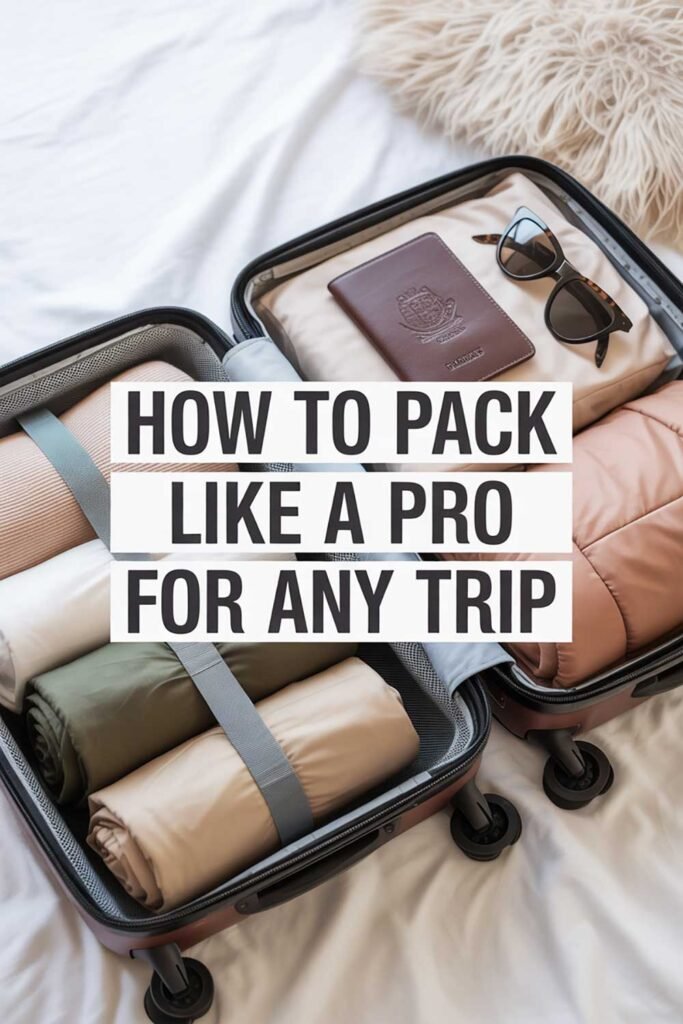
Use packing cubes. Packing cubes compress your clothing and keep everything organized inside your suitcase. They help you fit more into a smaller space without making your bag bulge or expand beyond its dimensions. Many experienced travelers consider packing cubes to be the single best packing investment they have ever made.
Always pay for your carry-on in advance if you are flying a budget airline. Spirit, Frontier, Allegiant, and Sun Country all charge less for carry-on bags when you purchase the allowance at the time of booking. Waiting until the airport or the gate can double or even triple the fee.
Understanding the Personal Item: Your Secret Weapon
Every airline allows one personal item in addition to your carry-on bag, and understanding how to maximize this allowance can be a game-changer, especially on budget airlines where the personal item is your only free bag.
A personal item is any bag that fits under the seat in front of you. This includes backpacks, laptop bags, purses, briefcases, and small duffel bags. For most airlines, the size limit for a personal item is somewhere around 17 x 13 x 9 inches, though specific dimensions vary by carrier.
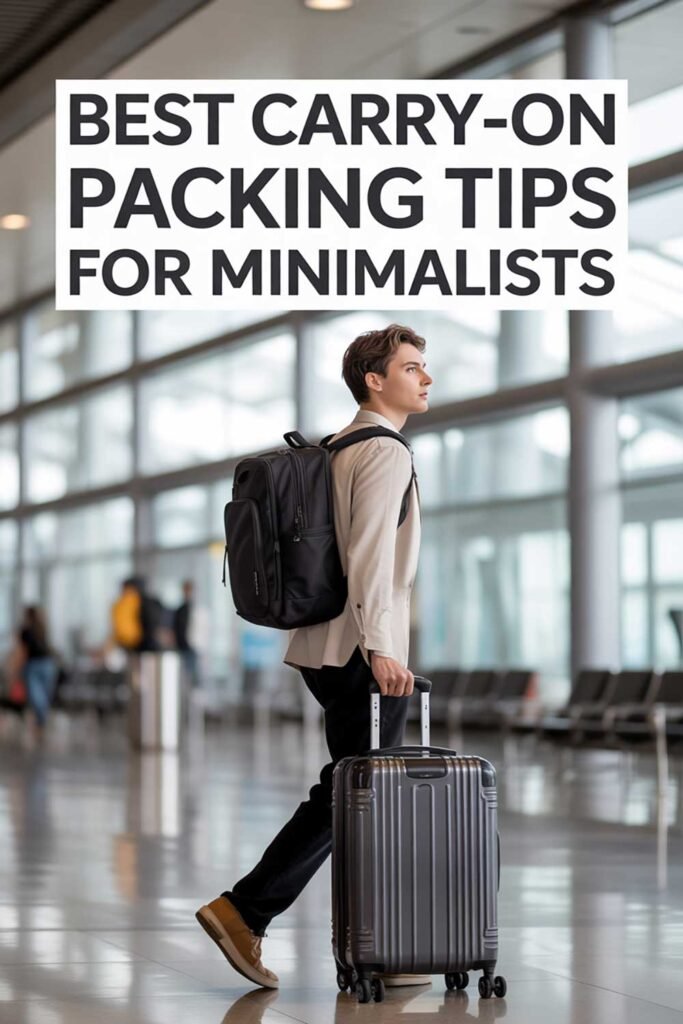
The key to making the most of your personal item is choosing the right bag. A well-designed travel backpack that is specifically sized to meet airline personal item dimensions can hold a surprising amount of stuff. Many travelers use these bags as their only luggage for short weekend trips, completely eliminating the need for a carry-on bag altogether. This is especially valuable on budget airlines where carry-ons cost extra.
Some travelers have gotten creative with oversized personal items, stuffing large backpacks to the brim and hoping they pass as personal items. In 2026, this strategy is riskier than ever. Airlines are cracking down on oversized personal items just as aggressively as they are on oversized carry-ons. If your personal item does not fit under the seat, it will be treated as a carry-on and you may be charged accordingly.
Free Items That Do Not Count Against Your Luggage Allowance
Here is something that many travelers do not realize: airlines do not count everything you bring aboard against your luggage allowance. There are several items you can carry on for free without them being considered a carry-on or personal item.
These typically include jackets and coats, umbrellas, duty-free purchases bought after security, assistive devices like wheelchairs and canes, food purchased at the airport, diapers and baby food if you are traveling with an infant, and FAA-approved child restraint seats.
Smart travelers use this to their advantage. Instead of packing your jacket in your suitcase, wear it through security. Carry an umbrella separately. Buy snacks and drinks after you clear the security checkpoint. Every little bit of space you save in your bag makes it easier to stay within the limits.
What Happens If Your Bag Is Too Big?
If your carry-on bag exceeds the airline’s size limits, you will typically face one of two outcomes.
The first and most common outcome is that your bag gets gate-checked. This means it is tagged and placed in the cargo hold of the aircraft. Depending on the airline, this might be free or it might come with a fee. On major airlines like American, Delta, and United, involuntary gate-checks are usually free, but you will not have access to your bag during the flight. On budget carriers, gate-check fees can range from $35 to $75.
The second possible outcome is that you are asked to check your bag at the ticket counter before heading to the gate. This is actually the cheaper option if fees are involved, because counter check-in fees are almost always lower than gate-check fees. If you suspect your bag might be borderline, arrive early and check it at the counter rather than risking a higher fee at the gate.
The worst-case scenario is that you arrive at the gate with an oversized bag, are told you must check it, and face a fee you were not expecting. This can range from $40 to over $100 depending on the airline. It is frustrating, it is stressful, and it is completely avoidable if you know your airline’s rules ahead of time.
20 Powerful and Uplifting Travel Quotes to Inspire Your Next Journey
- “The world is a book, and those who do not travel read only one page.” — Saint Augustine
- “Travel is the only thing you buy that makes you richer.” — Anonymous
- “Adventure is worthwhile in itself.” — Amelia Earhart
- “Not all those who wander are lost.” — J.R.R. Tolkien
- “Life is short and the world is wide.” — Simon Raven
- “To travel is to live.” — Hans Christian Andersen
- “Take only memories, leave only footprints.” — Chief Seattle
- “The journey of a thousand miles begins with a single step.” — Lao Tzu
- “Traveling – it leaves you speechless, then turns you into a storyteller.” — Ibn Battuta
- “Once a year, go someplace you’ve never been before.” — Dalai Lama
- “We travel not to escape life, but for life not to escape us.” — Anonymous
- “Jobs fill your pocket, but adventures fill your soul.” — Jaime Lyn Beatty
- “Travel makes one modest. You see what a tiny place you occupy in the world.” — Gustave Flaubert
- “The real voyage of discovery consists not in seeking new landscapes, but in having new eyes.” — Marcel Proust
- “Don’t tell me how educated you are, tell me how much you have traveled.” — Mohammed
- “Travel far enough, you meet yourself.” — David Mitchell
- “Life begins at the end of your comfort zone.” — Neale Donald Walsch
- “A journey is best measured in friends, rather than miles.” — Tim Cahill
- “Own only what you can always carry with you.” — Alexander Solzhenitsyn
- “Wherever you go, go with all your heart.” — Confucius
Picture This
It is the morning of your next trip. Your alarm goes off, and instead of feeling stressed, you feel excited. You already know your carry-on bag fits perfectly within your airline’s size limits because you measured it two days ago. You packed using packing cubes, so everything is organized and compact. Your liquids bag is ready to go in the front pocket.
You arrive at the airport with time to spare. You breeze through security without a hitch. When you reach the gate, you are not anxiously watching other passengers to see if the gate agent is checking bag sizes. You already know yours fits. You board the plane confidently, slide your bag into the overhead bin on the first try, and settle into your seat with your personal item tucked neatly under the seat in front of you.
No surprise fees. No awkward moments at the gate. No scrambling to rearrange your belongings while a line of impatient passengers waits behind you. Just a smooth, stress-free start to your trip.
That is what happens when you take five minutes to learn the rules, choose the right bag, and pack smart. Travel does not have to be stressful. It can be exciting, easy, and enjoyable from the very first moment you step into the airport. And it all starts with knowing your carry-on size.
Share This Article
Did you find this carry-on size guide helpful? Do you know someone who could use this information before their next flight? Share this article with your friends, family, and fellow travelers so they can avoid surprise fees and packing stress too. Post it on Facebook, send it in a group chat, pin it on Pinterest, or share it on X (formerly Twitter). The more people who know the rules, the smoother travel becomes for everyone. Help us spread the word and make travel better, one bag at a time!
Visit us at DNDTRAVELS.COM for more travel tips, guides, and inspiration.
Disclaimer
The information provided in this article is for general informational and educational purposes only. All airline carry-on dimensions, fees, and policies listed in this guide are based on publicly available information at the time of writing and may change at any time without notice. Airlines frequently update their baggage policies, and individual experiences may vary based on fare class, route, aircraft type, and gate agent discretion. DNDTRAVELS.COM and the authors of this article are not responsible for any fees, charges, inconveniences, or losses that may result from reliance on the information presented here. We strongly recommend verifying carry-on size limits and baggage policies directly on your airline’s official website before every trip. This article does not constitute professional travel advice and should not be treated as a substitute for consulting official airline resources. By reading this article, you acknowledge and agree that DNDTRAVELS.COM shall not be held liable for any actions taken based on the content provided.