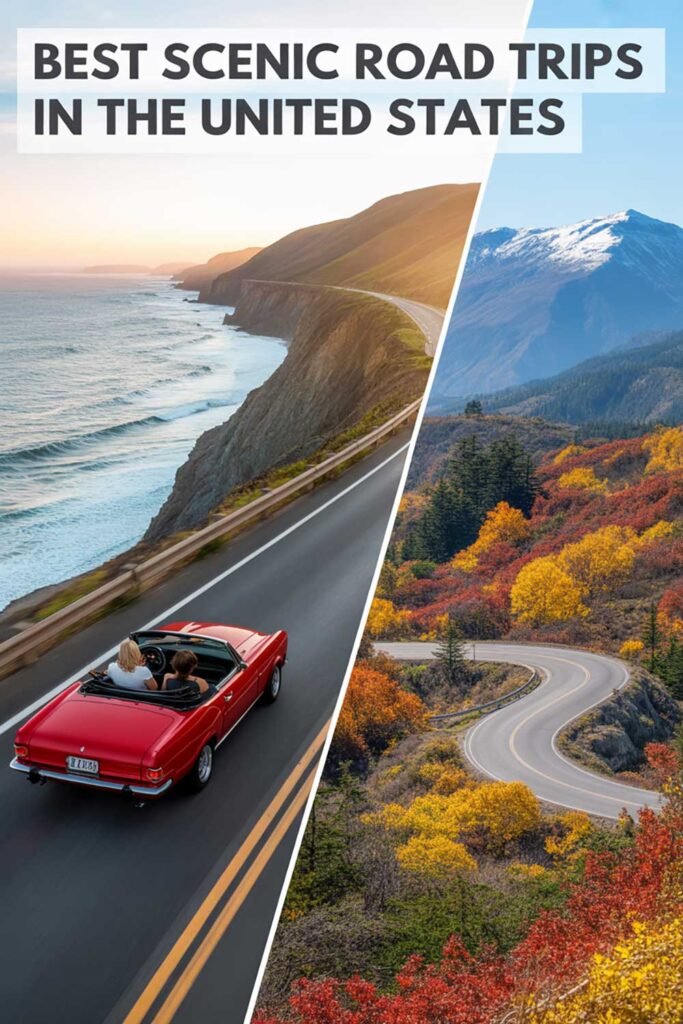
Best Road Trips in the USA for National Parks
America’s national parks represent some of the most spectacular landscapes on earth. Towering mountains, deep canyons, ancient forests, pristine coastlines, and unique geological formations await discovery across the country. While individual parks are incredible destinations, the true magic happens when you connect multiple parks through epic road trips that showcase the diversity and grandeur of America’s protected wilderness.
Road tripping through national parks combines the freedom of the open road with the awe of nature’s masterpieces. You’re not rushing to catch flights or bound by tour schedules – you’re exploring at your own pace, stopping at viewpoints that call to you, and experiencing the journey between parks as part of the adventure itself. These road trip routes take you through multiple national parks and monuments, creating journeys where every day brings new wonders.
Why National Park Road Trips Are Uniquely American
Before exploring specific routes, let’s celebrate what makes national park road trips special experiences that capture the American spirit.
The national park system represents America’s best idea – preserving spectacular landscapes for everyone forever. Road tripping through these protected areas connects you with this conservation legacy and democratic ideal.
Driving yourself creates freedom impossible with other travel methods. You set the pace, choose the stops, take detours that interest you, and spend as long as you want wherever you discover magic.
The landscapes change dramatically as you drive, showcasing geological and ecological diversity. You might start in desert and end in mountains, experiencing climate zones and ecosystems you’d never see staying in one place.
Wildlife viewing opportunities multiply on road trips covering diverse habitats. Bison in one park, bears in another, sea lions at a third – variety keeps experiences fresh and exciting.
Photography improves with road trip flexibility. You can return to locations during golden hour, wait for perfect light, and capture conditions that tour buses and tight schedules miss.
Connection with American history deepens as you follow routes pioneers traveled and see landscapes that shaped the nation’s character and stories.
Budget flexibility increases with road trips. You can camp to save money or splurge on park lodges. You control costs by choosing where and how you travel.
The Mighty Five: Utah’s National Park Circuit
Utah packs five incredible national parks into one compact area, creating America’s most concentrated park road trip.
The circuit covers about 800 miles through southern Utah, visiting Zion, Bryce Canyon, Capitol Reef, Arches, and Canyonlands National Parks. You can complete the loop in five to seven days, though two weeks allows proper exploration.
Zion National Park features towering red rock cliffs, narrow slot canyons, and hanging gardens. The Zion Canyon scenic drive and Angels Landing hike create unforgettable experiences. Spring and fall offer ideal weather avoiding summer crowds and heat.
Bryce Canyon National Park showcases thousands of hoodoos – colorful rock spires created by erosion – creating landscapes that look like fairy tale cities. Sunrise and sunset illuminate these formations in spectacular orange and red colors.
Capitol Reef National Park receives fewer visitors than other Utah parks despite equally stunning scenery. The Waterpocket Fold, pioneer orchards, and remote backcountry create peaceful exploration opportunities.
Arches National Park contains over 2,000 natural stone arches including the famous Delicate Arch featured on Utah license plates. The Windows Section and Devils Garden offer accessible arch viewing.
Canyonlands National Park divides into distinct districts with Island in the Sky providing dramatic overlooks and Mesa Arch framing spectacular sunrise views.
Route logistics require planning around park distances and limited services between parks. Springdale near Zion, Moab near Arches and Canyonlands, and towns near Bryce provide accommodation and supplies.
Consider adding Grand Staircase-Escalante National Monument and Monument Valley to extend this road trip with additional stunning landscapes.
The best time to drive this route is April through May or September through October when temperatures are moderate and crowds lighter than peak summer.
The Grand Circle: Southwest Canyon Country
Expanding beyond Utah’s Mighty Five, the Grand Circle connects additional parks and monuments throughout the Southwest in a longer, more comprehensive journey.
This route covers about 1,200 miles connecting Zion, Bryce Canyon, Grand Canyon, Petrified Forest, Monument Valley, Mesa Verde, Arches, Canyonlands, and Capitol Reef. You need at least two weeks for this epic circuit, though three weeks allows unhurried exploration.
Grand Canyon National Park needs little introduction – one of earth’s most spectacular natural wonders. Both the South Rim (open year-round) and North Rim (seasonal) deserve visits if time permits.
Petrified Forest National Park in Arizona showcases ancient trees turned to colorful stone along with badlands formations and petroglyphs. The park’s Painted Desert creates stunning photographic opportunities.
Mesa Verde National Park in Colorado protects ancient Puebloan cliff dwellings. Exploring these archaeological wonders adds cultural depth to geological spectacles.
Monument Valley on the Navajo Nation offers iconic Western landscapes of towering buttes and mesas. Guided tours with Navajo guides provide cultural context and access to restricted areas.
Natural Bridges National Monument, Canyon de Chelly National Monument, and numerous state parks add variety to this comprehensive Southwest journey.
Weather varies dramatically across elevations and locations. Summer brings intense heat to lower elevation parks while mountain parks remain pleasant. Winter closes some high-elevation areas but offers solitude and beauty elsewhere.
Pacific Coast Highway: Coastal Parks Adventure
California’s coast offers completely different national park experiences focused on ocean, redwoods, and coastal mountains rather than desert canyons.
Highway 1 from San Diego to the Redwood Coast covers about 750 miles of spectacular coastal driving connecting multiple national parks, monuments, and recreation areas.
Channel Islands National Park accessible by boat from Ventura protects five islands with unique ecosystems, sea caves, and incredible marine life. Day trips or overnight camping create island adventures.
Point Reyes National Seashore north of San Francisco features dramatic coastline, elephant seals, historic lighthouse, and excellent hiking through diverse coastal habitats.
Redwood National and State Parks preserve the world’s tallest trees. Driving through these ancient groves creates humbling experiences unlike anything else on earth. Lady Bird Johnson Grove and Tall Trees Grove offer accessible old-growth experiences.
Add stops at Big Sur’s dramatic coastline, Monterey’s marine sanctuary, and Santa Monica Mountains National Recreation Area for comprehensive coastal experiences.
Summer brings fog to much of the coast creating atmospheric conditions but limiting distant views. Spring wildflowers and fall clarity offer excellent road trip conditions.
This route combines easily with visits to Yosemite, Sequoia, and Kings Canyon by heading inland from the coast.
Pacific Northwest Park Loop
Washington, Oregon, and northern California offer volcanic peaks, rainforests, and rugged coastline creating diverse park experiences in America’s northwest corner.
This roughly 1,000-mile loop connects Olympic, Mount Rainier, North Cascades, and Crater Lake National Parks with potential extensions to Lassen Volcanic and Redwood parks.
Olympic National Park on Washington’s Olympic Peninsula contains three distinct ecosystems – alpine mountains, temperate rainforest, and wild Pacific coastline. Hurricane Ridge provides mountain views while Hoh Rainforest showcases moss-draped trees.
Mount Rainier National Park features Washington’s iconic volcanic peak rising dramatically above meadows filled with summer wildflowers. Paradise area lives up to its name during July and August wildflower season.
North Cascades National Park receives fewer visitors despite spectacular mountain scenery. The dramatic peaks, alpine lakes, and glaciers create Washington’s “American Alps.”
Crater Lake National Park in southern Oregon showcases America’s deepest lake filling an ancient volcanic caldera. The intense blue water surrounded by cliffs creates stunning views from Rim Drive.
Lassen Volcanic National Park in northern California extends this trip with geothermal features, volcanic landscapes, and fewer crowds than more famous parks.
Summer is essential for this route as snow closes many park roads and facilities until late June or July. September offers excellent weather with smaller crowds and beginning fall colors.
Rocky Mountain Parks Circuit
Colorado and Wyoming parks showcase America’s dramatic mountain scenery through a route connecting iconic Rocky Mountain destinations.
This approximately 900-mile loop visits Rocky Mountain, Great Sand Dunes, Black Canyon of the Gunnison, Mesa Verde, Grand Teton, and Yellowstone National Parks.
Rocky Mountain National Park offers easy access to genuine alpine environments via Trail Ridge Road, one of America’s highest paved roads. Elk viewing in fall during the rut creates unforgettable wildlife experiences.
Great Sand Dunes National Park features North America’s tallest sand dunes against a backdrop of 13,000-foot peaks. The surreal landscape looks more like the Sahara than Colorado.
Black Canyon of the Gunnison National Park protects one of America’s steepest, narrowest canyons. Sheer walls and dramatic depths create stunning overlooks.
Grand Teton National Park offers perhaps America’s most photogenic mountain range rising abruptly from valley floors. The Tetons provide spectacular hiking, wildlife viewing, and photography.
Yellowstone National Park needs little introduction – geysers, hot springs, wildlife, waterfalls, and diverse landscapes create America’s first national park. Allow at least three days minimum for Yellowstone’s extensive attractions.
Summer brings pleasant mountain weather but heavy crowds especially in Yellowstone. September offers excellent conditions with elk rutting season, fewer people, and aspen turning gold.
Winter transforms this route into a completely different experience with snow-covered landscapes and winter wildlife viewing, though many roads close.
Arizona’s Geology and Archaeology Route
Northern Arizona concentrates spectacular parks showcasing both geological wonders and ancient human history.
This 600-mile loop connects Grand Canyon, Petrified Forest, Saguaro, and Sunset Crater/Wupatki National Parks and Monuments with potential additions of Canyon de Chelly and Walnut Canyon.
Grand Canyon’s South Rim provides year-round access to one of earth’s greatest natural spectacles. Desert View Drive connects numerous viewpoints, each offering unique perspectives.
Petrified Forest contains not just ancient stone trees but also colorful badlands and extensive petroglyphs showing human presence spanning thousands of years.
Saguaro National Park protects iconic giant cacti in both east and west districts near Tucson. Spring wildflowers and cooler temperatures make this a winter destination.
Sunset Crater Volcano and Wupatki National Monuments near Flagstaff combine volcanic landscapes with ancient pueblos, telling stories of human adaptation to dramatic environmental changes.
Canyon de Chelly National Monument on Navajo Nation land requires Navajo guides for most access but rewards visitors with spectacular cliff dwellings and canyon scenery.
Winter and spring offer ideal temperatures for desert parks while summer heat becomes oppressive. Fall provides pleasant conditions throughout the region.
Appalachian Parks Journey
Eastern parks offer completely different experiences focused on ancient mountains, hardwood forests, and biodiversity.
This roughly 800-mile route through the Appalachians connects Great Smoky Mountains, Shenandoah, and New River Gorge National Parks with potential additions of Blue Ridge Parkway and Appalachian Trail crossings.
Great Smoky Mountains National Park straddles Tennessee and North Carolina as America’s most visited national park. Ancient mountains, diverse forests, and synchronized firefly displays attract millions annually.
Shenandoah National Park’s Skyline Drive provides 105 miles of scenic mountain driving through Virginia’s Blue Ridge Mountains. Fall foliage in October creates spectacular color displays.
New River Gorge National Park, America’s newest national park, protects one of the oldest rivers through dramatic gorge landscape perfect for whitewater rafting, rock climbing, and hiking.
The Blue Ridge Parkway connecting Shenandoah to Great Smoky Mountains creates one of America’s most scenic drives through mountain landscapes and past traditional Appalachian culture.
Spring wildflowers, summer greenery, and especially fall foliage create distinct seasonal experiences. Summer weekends bring crowds to these accessible East Coast parks.
Planning Your National Park Road Trip
Successfully executing national park road trips requires planning beyond typical vacations.
Research park-specific considerations including necessary permits, timed entry reservations, and seasonal road closures. Some parks now require advance reservations for popular areas.
Book accommodations well ahead especially for park lodges and nearby towns during peak season. Six months to a year advance booking isn’t excessive for popular parks.
Build flexibility into itineraries allowing weather delays, unexpected discoveries, and rest days. Rigid schedules create stress when natural wonders deserve lingering.
Consider shoulder seasons offering better weather than you might expect with far fewer crowds and easier logistics. Late September through October is spectacular many places.
Purchase an America the Beautiful Annual Pass covering entrance fees to all national parks for one year. The pass pays for itself after visiting just a few parks.
Prepare vehicles for long drives and various road conditions. Check tires, fluids, and carry emergency supplies. Remote areas may have limited services.
Pack for varying elevations and weather. Temperature swings between desert and mountain parks can be extreme even on single trips.
Download offline maps since cell service is limited or nonexistent in many parks. GPS devices and paper maps provide essential backup navigation.
Real-Life National Park Road Trip Experiences
The Williams family spent three weeks driving the Grand Circle with their two teenagers. They camped most nights, cooked their own meals, and hiked extensively. The parents say this trip created family memories and showed their kids America’s natural heritage in ways that classroom learning never could.
Sarah and Mark honeymooned driving Utah’s Mighty Five in ten days. They splurged on park lodges, took helicopter tours, and photographed each sunrise and sunset. They say the dramatic landscapes and adventure created perfect bonding experiences for starting their marriage.
Tom retired and spent an entire summer driving from Acadia in Maine to Olympic in Washington, visiting every national park he could reach. He camped in his truck, met fellow travelers at every stop, and says this journey gave him purpose and joy during a major life transition.
The Martinez family drives a different national park route every summer. Over five years, they’ve visited twenty-five parks, creating traditions around ranger programs, junior ranger badges, and park passport stamps. Their kids now plan each year’s route and research parks in advance.
These travelers discovered that national park road trips offer experiences that match any international destination while building deeper connection to America’s natural heritage.
Making the Most of Your Park Time
Once you arrive at parks, these strategies maximize your experiences.
Get up for sunrise at least a few mornings. Early light creates magical conditions and you’ll often have popular spots nearly to yourself.
Attend ranger programs which provide expert knowledge about ecology, geology, and history. These free programs enrich understanding beyond what you’d learn alone.
Hike trails beyond the most popular viewpoints. Even short walks away from parking areas dramatically reduce crowds and increase wildlife sighting chances.
Visit park visitor centers to orient yourself, check current conditions, and get ranger recommendations for current highlights.
Use park shuttles when available. This reduces traffic, parking hassles, and environmental impact while providing narrated information.
Respect wildlife by maintaining legal distances (25 yards from most animals, 100 yards from bears and wolves). Never feed animals or approach for photos.
Follow Leave No Trace principles to preserve parks for future visitors. Pack out all trash, stay on trails, and camp only in designated areas.
20 Powerful and Uplifting Quotes About National Park Road Trips
- “The road through America’s national parks teaches you that the journey and destination are equally magnificent, each mile revealing new wonders.”
- “National park road trips prove that America’s greatest treasures aren’t locked in vaults but spread across landscapes free for all to discover.”
- “Every national park you visit becomes part of your story, and road trips connecting multiple parks create chapters of adventure and awe.”
- “The driver who takes time to explore national parks discovers that natural beauty heals, inspires, and reminds us what truly matters.”
- “Road tripping through national parks connects you with the vision of those who fought to preserve these places for everyone forever.”
- “Each park offers different lessons – patience from watching sunsets, humility from standing beneath giant trees, perspective from viewing vast canyons.”
- “The freedom to drive yourself through America’s parks means controlling your pace, following your curiosity, and creating your own perfect adventure.”
- “National park road trips teach you that wealth isn’t measured in possessions but in experiences that take your breath away and expand your soul.”
- “Every sunrise in a national park, every trail hiked, every overlook discovered adds to the treasury of memories you’ll carry forever.”
- “The road through America’s protected landscapes proves that democracy works – these places belong to everyone, preserved by choice and conscience.”
- “When you road trip through national parks, you’re not just seeing scenery, you’re witnessing millions of years of earth’s history written in rock and tree.”
- “National parks remind us that humans aren’t separate from nature but part of it, and protecting these places protects our own future.”
- “The variety encountered on park road trips – desert to forest, mountain to canyon – shows that America’s landscapes are as diverse as its people.”
- “Every national park visit funded by your entrance fee helps preserve these treasures, making tourism a force for conservation and protection.”
- “Road trips connecting multiple parks create understanding that no single visit can – you see patterns, connections, and the whole magnificent system.”
- “The camper sleeping under stars in national parks experiences luxuries no five-star hotel can offer – silence, darkness, and genuine connection with earth.”
- “National park road trips prove that the best things in America are protected for everyone, not reserved for the wealthy or powerful.”
- “When you drive through these parks, you follow paths where indigenous peoples lived for millennia, early explorers marveled, and conservationists fought to protect.”
- “Every photograph you take in national parks captures not just beauty but proof that preservation works and protecting nature benefits everyone.”
- “The traveler who commits to visiting America’s national parks discovers their own country’s wonders rival anything found across oceans.”
Picture This
Imagine yourself driving through Utah on a perfect September morning. You left Bryce Canyon at dawn, watching sunrise light up the hoodoos in brilliant orange and red. Now you’re heading toward Capitol Reef, driving through landscapes that change with every mile.
Red rock formations tower on both sides of the highway. The road winds through valleys and climbs over passes, each turn revealing new vistas. You pull over at an unmarked viewpoint – just a dirt turnout with no facilities – and step out into the desert air.
The silence hits you first. No traffic, no human sounds, just wind and the distant call of a raven. The vastness spreads in every direction – layered red, orange, and white rock formations extending to the horizon under brilliant blue sky.
Your travel partner emerges from the car with the camera. You both just stand there, not speaking, absorbing the magnitude and beauty. This moment between parks, on an anonymous stretch of highway, might be as spectacular as anything inside park boundaries.
Back in the car, you continue driving. A sign indicates Capitol Reef National Park ahead. You’ve never heard of this park before planning this trip – everyone talks about Zion, Bryce, and Arches, but Capitol Reef remained unknown to you.
You enter the park and immediately see why it deserves national park status. The Waterpocket Fold rises ahead – a massive wrinkle in earth’s crust creating cliffs and canyons stretching 100 miles. You drive the scenic road through the park, stopping at pioneer orchards where fruit trees planted by Mormon settlers still produce apples and cherries.
At an overlook, you meet another couple from Germany who’ve been driving American national parks for a month. They rave about parks you haven’t visited yet and you share recommendations about parks you’ve already seen. This spontaneous traveler connection happens constantly on park road trips – shared enthusiasm for these places creates instant community.
You spend the afternoon hiking through slot canyons, your hands touching smooth walls carved by water over millions of years. The narrow passages frame perfectly blue sky above. You emerge back to the car tired, dusty, and absolutely thrilled.
That evening you reach your campsite – a simple spot in the park campground. You set up your tent, make dinner on your camp stove, and sit watching the Waterpocket Fold turn deep red in the setting sun.
Other campers set up around you. Kids run between campsites making friends. Someone plays quiet guitar. The temperature drops as the sun sets, and stars begin emerging – more stars than you’ve ever seen.
Tomorrow you’ll drive to Arches. The day after, Canyonlands. You have a week still ahead, five parks already behind you, and every single day has delivered moments of absolute wonder.
You crawl into your sleeping bag that night and lie awake thinking about the day. The sunrise at Bryce. The viewpoint where you stopped mid-drive. The slot canyon hike. The sunset on red cliffs. The stars now visible through your tent mesh.
This is what national park road trips deliver – day after day of spectacular experiences connected by beautiful drives through equally spectacular landscapes. This is why America’s national parks are treasures worth protecting, visiting, and sharing with anyone who’ll listen.
You fall asleep planning tomorrow’s adventures, grateful for the freedom to explore at your own pace and the foresight of those who preserved these places for everyone to enjoy.
Share This Article
Planning a national park road trip or know someone who is? Share this article with road trip partners, outdoor enthusiasts, or anyone dreaming of exploring America’s natural wonders! Whether you’re planning your first park visit or you’re a veteran hoping to connect multiple parks, these routes showcase the best national park road trips in America. Share it on Facebook, Instagram, Twitter, Pinterest, or send it directly to your adventure crew. Help spread the word that America’s national parks are treasures accessible to everyone through epic road trips that create lifetime memories. Your share might inspire someone to discover the parks and begin their own journey through America’s most spectacular landscapes!
Disclaimer
This article is provided for informational and educational purposes only and is based on research, personal experiences, and general travel information about various national parks and routes. The information contained in this article is not intended to be professional travel planning advice or comprehensive park guidance.
National park conditions, regulations, road status, and facility availability change frequently and vary by season. What is described may not reflect current conditions. Always verify current information directly with individual parks before making travel plans.
The author and publisher of this article are not responsible for any travel disruptions, disappointments, accidents, or problems that may occur during national park road trips. Travelers assume all responsibility for their own trip planning, safety, and park visits.
Permit requirements, timed entry reservations, and booking procedures vary by park and change frequently. Some parks now require advance reservations for entry or specific areas. Research current requirements for every park you plan to visit well before your trip.
Road conditions, weather, and seasonal closures affect route accessibility. Some routes described may be impassable during certain seasons. Winter snow closes many park roads. Always check current road conditions before traveling.
Accommodation availability varies dramatically by season and location. Park lodges and nearby towns fill up months in advance during peak seasons. Book accommodations as early as possible to secure preferred options.
Wildlife viewing involves inherent risks. Maintain legal distances from all wildlife, never feed animals, and follow all park regulations regarding wildlife interaction. Animal behavior is unpredictable and potentially dangerous.
Hiking and outdoor activities in national parks carry risks including injury, getting lost, weather exposure, and encounters with wildlife or dangerous terrain. Assess your physical abilities honestly and stay on designated trails.
This article does not endorse specific accommodations, tour operators, or services. Mentions are for illustrative purposes only and should not be considered recommendations or guarantees of quality.
Entrance fees, pass information, and costs mentioned may not reflect current pricing. Verify current fees and pass options before purchasing.
By using the information in this article, you acknowledge that you do so at your own risk and release the author and publisher from any liability related to your travel planning, national park visits, and road trip experiences.