Beach vacations with kids are pure magic when you pack smart and arrive prepared. The families having the most fun on the beach are the ones who packed everything they needed and nothing they did not. This article builds that family beach bag from the mesh bag up.

Best For
Families With Kids
Vibe
Ready for Anything
Read Time
12 Minutes
Walk Away With
The Complete Family Beach System
Free Download

Grab Our Travel Packing Checklist

Family beach packing has more categories than any single adult beach day, and missing one of them produces the specific beach moment where everything stops while a parent searches the car for something that should have been in the bag. Our free packing checklist includes the complete family beach day section so nothing gets left behind. Print it before you start packing and arrive at the beach with everything every child needs for the full day.

Get the Free Checklist

Pack a Mesh Bag for Wet Sandy Gear

The family beach bag that returns home full of sand is the beach bag that deposits that sand throughout the vacation rental, in the car, on the hotel room floor, across every towel, and into every corner of the suitcase where it will be discovered at the next destination three weeks later. For a family with children, the sand accumulation problem is not merely the adult problem of sand in the bag. It is the specific and compounding problem of wet sandy swimsuits, sandy towels, sandy water shoes, sandy sand toys, and wet swim nappies or swimwear bottoms from the youngest children all returning home in the same container. A fabric beach bag at the end of a family beach day is carrying approximately a quarter cup of sand and half a liter of retained water in its fibers. A mesh bag at the end of the same day is carrying nothing it did not leave with.

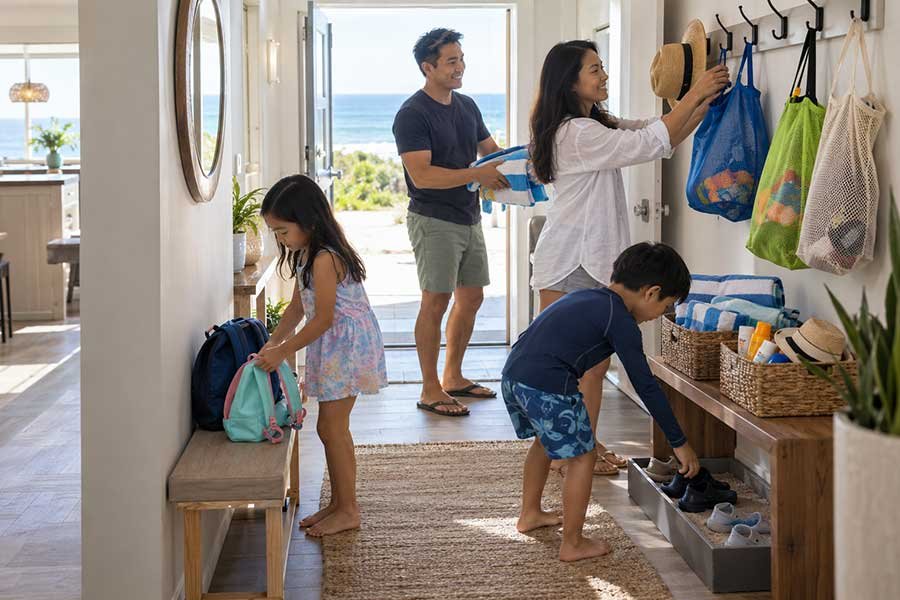
The mesh bag solution for families works best when it is the dedicated wet and sandy gear bag rather than the primary beach bag. The primary beach bag for a family contains sunscreen, snacks, dry clothes, first aid, and the items that need to stay clean and dry across the full beach day. The mesh bag receives everything that becomes wet or sandy during the day: swimsuits stripped off at the end of the beach session, towels after their final use, water shoes, and sand toys that do not need to be transported perfectly clean. The mesh bag is then shaken vigorously at the outdoor shower or above the sand before the return to the accommodation, and sand falls through the mesh rather than riding home in the bag’s fibers.

For families with multiple children, a labeled mesh bag per child produces the end-of-beach-day organizational clarity that one communal mesh bag does not. Each child’s wet gear goes in their specific mesh bag, which eliminates the communal wet pile that produces the specific question of whose swimsuit is whose at the accommodation. Each mesh bag hangs to dry on the accommodation’s outdoor railing or shower bar independently, so each child’s gear dries as a set rather than tangled together in a shared drying location. Label each bag with the child’s name in a permanent marker on a sewn-in fabric tag inside the mesh.

The families having the most fun on the beach are the ones who packed everything they needed and nothing they did not.

Beach vacations with kids are pure magic when you pack smart and arrive prepared. The packing is the part that makes the magic possible.

Insider Note

Pack a small waterproof wet bag specifically for soiled swim nappies, heavily soiled clothing, or any item that needs to be fully sealed rather than air-circulating through mesh. The mesh bag’s air circulation, which is its greatest advantage for wet sandy gear, is its limitation for items that produce odors that should be contained rather than aired. A small zippered wetbag with a waterproof lining and a double-zip seal handles the items the mesh bag should not, weighs under two ounces, and prevents the specific end-of-beach-day smell that travels home from a beach bag carrying unsecured soiled items in a warm car.

Ready to Go

Let Us Book the Family Beach Vacation This Packing List Was Built For

The right family beach destination has the calm water the children can wade and swim in safely, the beach infrastructure that makes a full day manageable for parents, and the accommodation proximity that makes the forgotten item a two-minute retrieval rather than a forty-minute round trip. Tell us what your family needs for the perfect beach vacation. We will find it and book it. You handle the packing.

Plan Our Escape

Individual Snack Pouches for Each Child

The shared family snack system at a beach produces a specific and consistent dynamic that every parent who has used it recognizes: one child’s snack pace does not match another’s, the sharing request arrives at the exact moment the requested item is consumed, and the parent who packs one family snack supply spends the beach day as the snack distributor rather than the beach observer. Individual snack pouches, one per child, containing each child’s specific portion of beach-appropriate foods, eliminate every one of these dynamics by making each child the manager of their own snack supply for the day.

The individual snack pouch approach has three practical advantages beyond conflict elimination. Each child’s snack pouch can be calibrated to their specific preferences, appetite size, and dietary requirements without requiring the family snack supply to accommodate all three simultaneously. A child who eats slowly and prefers savory snacks receives their specific pouch with their specific contents at the beginning of the day and manages it across the hours without parent intervention. A child who prefers sweet snacks and eats quickly receives their pouch and reaches the end of it when they reach it, without requiring redistribution from another child’s pouch. Each child’s snack pouch also provides the sensory and organizational structure that many children, particularly younger ones, find genuinely helpful: a specific container belonging to them that contains their specific things, which reduces the ambient snack negotiation that the communal supply consistently produces.

Choose snack pouch containers that are insulated, zippered, and easy for each child to open and close independently. A snack pouch that requires a parent to open it defeats the purpose of individual management. Each pouch should be labeled with the child’s name and packed with beach-appropriate snacks that hold up to the heat without spoiling: whole fruit like grapes and apple slices in a small ice pack, crackers and nut butter packets, rice cakes, dried mango, and trail mix. Avoid chocolate or chocolate-coated items that melt in the heat. Avoid highly salted snacks that increase thirst on a hot beach. Avoid foods with strong smells or crumbly textures that spread across the beach area and attract beach wildlife.

Include a labeled water bottle alongside each snack pouch rather than one shared family water bottle. Each child having their own water bottle eliminates the passing and sharing of a single bottle that spreads illness between family members, produces the bottle-ownership dispute when the shared bottle has been put down somewhere and is not where each child believes they left it, and ensures each child has consistent access to hydration without needing to locate the family water supply each time they want a drink. Freeze each water bottle the night before the beach day using the same two-thirds fill technique as the adult frozen bottle, so each child has cold water for the full beach day.

Insider Note

Pack a small prize snack in each individual pouch, a sealed piece of their favorite sweet treat or a small special item, that is designated as the end-of-beach-day reward rather than an any-time snack. The prize snack provides the late-afternoon motivation incentive that converts the this is boring and I want to leave period, which arrives consistently when children have exhausted their immediate beach activities and are not yet physically tired enough to want to leave, into a specific goal state: we are staying until this time and then you get your special snack. The prize snack is both a behavioral tool and a genuine acknowledgment that the child managed their snack pouch well across the full day.

Reef-Safe Sunscreen in Generous Quantities

Children’s skin at the beach requires more sunscreen than adults’ and more frequent reapplication than most parents anticipate before the first family beach day produces the first family beach sunburn. Children have thinner, more sensitive skin than adults, and the UV exposure that produces a mild tan in an adult produces a burn in a child significantly faster at the same exposure level. Children also move constantly through the beach day in ways that accelerate sunscreen degradation: entering and exiting the water repeatedly, having sunscreen rubbed off by toweling after each water exit, sweating through the sunscreen during active play in the sand and surf, and physically removing sunscreen through the friction of sitting and playing in the sand. Every one of these activities reduces the sunscreen’s effective protection, and the reapplication schedule for children needs to account for activity level rather than treating the two-hour clock interval as sufficient for active water play.

Reef-safe mineral sunscreen is the specific product required for any family beach vacation at a marine destination. Children are often the most physically immersed beach visitors at any family beach day: splashing in the shallows, snorkeling in the reef areas, and spending more total time in actual contact with the ocean water than the adults watching from beach chairs. The chemical ingredients in non-reef-safe sunscreen that bleach coral and disrupt the marine ecosystem are introduced into the water primarily through the skin of swimmers, which means the children who spend the most time in the water are the most significant contributors to the chemical sunscreen load in the reef environment. Reef-safe mineral sunscreen with zinc oxide or titanium dioxide as the active ingredient provides full-spectrum sun protection for children’s skin without the reef impact that chemical sunscreen produces.

Quantity calculation for a family beach day: each child requires approximately the same amount of sunscreen per application as an adult for full-body coverage, roughly one ounce or thirty milliliters. A family of two adults and two children applying sunscreen before departure and reapplying every two hours, or more frequently for children in the water, requires approximately four ounces per application session. For a seven-hour beach day with three application sessions, that is twelve ounces minimum without accounting for the additional reapplication that active water play produces. Pack significantly more than the calculated minimum to account for the additional reapplication the children’s activity level requires and to ensure no child enters the second half of the beach day with diminished sun protection because the sunscreen supply ran out.

Insider Note

Apply children’s sunscreen at the accommodation thirty minutes before departure for the same binding-time reason that applies to adult application: chemical sunscreen needs fifteen to twenty minutes to reach its rated protective level after application, and the walk to the beach, the setup of gear, and the children’s immediate eagerness to enter the water means that at-beach application provides meaningfully less protection during the critical first minutes of beach exposure than the pre-departure application provides from the first step onto the sand. For children who resist sunscreen application, the accommodation context, while still a negotiation, involves less competing stimulation than the beach itself, where the ocean’s visual and auditory presence makes any application task more difficult than it is at home.

Our Real Favorites

The Family Beach Products We Pack on Every Trip With Kids

The reef-safe mineral sunscreen that covers the whole family for a full week without running out, the individual labeled mesh bags that make end-of-beach-day cleanup a two-minute system rather than a forty-minute argument, and the insulated snack pouches that give each child independence and give parents the beach chair time they actually came for. Real family beach picks from real family beach days.

DND Favorites

A Change of Dry Clothes for Everyone in the Beach Bag

The family beach day that ends without a change of dry clothes for every family member ends at the beach rather than at the restaurant, the ice cream shop, the local market, or the evening walk on the waterfront that the family had planned after the beach. A family still in wet swimwear at 4 p.m. is a family whose post-beach plans have been replaced by a return to the accommodation to change, which adds forty-five minutes to an hour to the transition time and produces the specific scenario where children who have been in the sun all day arrive at the accommodation overtired and resistant to going out again while parents who have been managing the beach day all day arrive at the accommodation ready to not go anywhere else. One dry outfit per person in the beach bag, packed the night before and retrieved when the beach session ends, extends the day’s possibilities from the beach to whatever the family wants to do next without any accommodation stop required.

The dry clothes change also provides the physical comfort that makes the post-beach transition significantly easier for children. Salt water drying on children’s skin produces an itchy, tight, uncomfortable feeling that most children articulate as wanting to go home rather than as wanting to be out of their swimsuits. A dry outfit change at the beach shower eliminates this sensation and converts the child who was ready to leave into a child who is comfortable and accessible to the idea of a post-beach activity. The dry clothes change is simultaneously a comfort intervention for the children and a logistics tool for the parents who want to extend the day beyond the beach.

Pack the dry clothes change in a sealed plastic bag or a dry bag within the main beach bag to protect it from the moisture that the rest of the beach bag contains. Wet sunscreen, damp towels, and the general beach bag humidity will dampen an unprotected dry outfit if it is stored loose in the bag across a full day. A sealed bag or dry bag within the beach bag keeps the dry outfit genuinely dry for the full beach day regardless of what else happens in the bag around it. Include underwear in each child’s dry clothes change, since wet swimwear worn under dry clothing produces the same discomfort the dry outfit was intended to eliminate.

Insider Note

Pack the dry clothes change in the specific outfit the family will wear for the post-beach activity rather than generic comfortable clothing. If the post-beach plan is a beach-adjacent restaurant, the dry outfit is whatever the restaurant’s casual standard requires. If the plan is a waterfront ice cream walk, the dry outfit is comfortable and presentable. This specific planning eliminates the additional decision of what to wear after the beach, which is a decision that tired beach-day children are particularly poor at making efficiently, and ensures that the dry outfit change produces a family ready for the specific next activity rather than a family dressed for whichever item was grabbed first from the bag.

Rash Guards to Cut Down on Sunscreen Reapplication All Day Long

A child wearing a rash guard for the full beach day requires sunscreen on their face, neck, hands, and lower legs rather than on their entire body. This reduction in the total skin surface area requiring sunscreen coverage produces two practical family beach day improvements simultaneously: the total amount of sunscreen the family needs to bring is significantly reduced, and the time required for each reapplication session is cut by approximately sixty percent. At a beach day with three or four reapplication sessions for active water-playing children, the time saving is meaningful, and the coverage improvement is equally meaningful: the areas that rash guards cover consistently maintain their sun protection without degradation from water contact, toweling friction, or sweating in the same way that applied sunscreen does not.

Rash guards designed specifically for water use and sun protection carry a UPF rating, ultraviolet protection factor, which measures the fabric’s specific UV-blocking capability. A UPF 50 rash guard blocks 98 percent of UV radiation that reaches the fabric surface, providing sun protection for covered skin areas that is more reliable and more consistent than sunscreen application during water play. UPF 50 is the standard recommended for children’s beach sun protection and is widely available in children’s rash guard sizing from infant through teen. Long-sleeve rash guards cover the shoulders, upper arms, and torso, which are the areas most consistently missed during sunscreen reapplication and the areas that produce the characteristic beach vacation sunburn pattern on children who rely on sunscreen alone.

The practical barrier to rash guard adoption is the one-time investment of having enough rash guards for the children across the trip’s beach days. For a seven-night beach vacation with five to six beach days, two rash guards per child provides the daily rotation that keeps one clean and dry while the other is in use, without requiring a daily laundry session. Two rash guards per child for a family of three children is six rash guards. They pack to the size of a t-shirt each and weigh significantly less than the extra sunscreen they replace, making the rash guard collection a net-positive packing decision even on a weight and volume basis.

Pair the rash guard with swim shorts or a rash guard bottom for boys and a rash guard one-piece or rash guard bottom for girls to extend the coverage to the lower body as well. Full-coverage rash guard swimwear for children leaves only the face, neck, hands, and lower legs for sunscreen coverage, reducing the full-body sunscreen application to a fast two-minute face, neck, hands, and feet application rather than the ten-minute whole-body application that a standard swimsuit requires.

Insider Note

Rinse children’s rash guards in fresh water at the outdoor beach shower before leaving the beach and hang them to dry at the accommodation rather than storing them wet in the mesh bag overnight. Salt water left in a rash guard’s fabric degrades the UPF protection over repeated saltwater exposures without rinsing, as the salt crystals that form during drying abrade the fabric fibers that provide the UV-blocking protection. A fresh water rinse before drying maintains the rash guard’s UPF rating across the full beach vacation rather than allowing it to degrade across the repeated saltwater exposures of a week of daily beach days. This also prevents the salt-stiffened, uncomfortable texture that unrinsed rash guards develop overnight and that children resist wearing the following morning.

The Family Beach Day Before the System and the One After It

Priya and Marcus had been planning the family beach vacation for four months. Three children, ages four, seven, and ten, a week at a coastal destination they had been talking about for two years. They arrived at the beach on day one with one large fabric tote bag containing two shared tubes of regular sunscreen, a communal snack bag with chips and fruit in a single container, three towels, no change of clothes, and three standard swimsuits. The rash guards had been considered and left at home to save bag space.

By 11 a.m. the shared snack supply had become a negotiation. The four-year-old wanted the grapes at the exact moment the seven-year-old had the last of them. The communal fruit had been sitting in the beach bag in direct sun since 9 a.m. and was not cold anymore. By noon the first sunscreen tube was finished and the second had enough for one more body if applied sparingly. The ten-year-old had been in and out of the water six times. Nobody had been reapplied after the at-beach first application. By 2 p.m. the four-year-old was uncomfortable in her wet swimsuit and communicating this in the specific way that four-year-olds communicate discomfort. There were no dry clothes. The family left at 2:30 p.m. to return to the accommodation. The post-beach ice cream walk never happened. The four-year-old was asleep in the car before they reached the main road.

That evening, Marcus made a list while the children were in the bath. He searched for family beach day systems for twenty minutes. He found the hacks in this article. Priya drove to the local pharmacy and bought two more tubes of reef-safe mineral sunscreen and three individual insulated snack containers at the grocery store next door. She packed each container that night with each child’s preferences: the four-year-old’s grapes in an ice pack insert, the seven-year-old’s crackers and nut butter, the ten-year-old’s trail mix. Each container was labeled. Three individual water bottles went in the freezer. The next morning, Marcus bought three rash guards at the beach shop near the access point. They applied sunscreen at the accommodation thirty minutes before departure.

The second beach day ended at 5:30 p.m. Each child had managed their own snacks across the day without a single negotiation. The rash guards had cut the reapplication time to three minutes per session. The sunscreen supply was adequate. The dry clothes change at the outdoor shower produced three children who were comfortable and interested in the post-beach ice cream walk that the first day had not reached. The four-year-old was still awake at 7 p.m. The remaining five beach days of the vacation ran on the system. The list that Marcus wrote on day one evening is the packing list in this article. The family beach vacation they had planned for four months happened on days two through seven.

The Complete Family Beach Packing List

The complete family beach packing list is organized by category and built on the principle that the beach day with children requires more specific preparation than the beach day without them, and that the specific items children require are precisely the items most often left off a standard beach packing list because they do not appear on the adult equivalent. Every item in the family list below earns its place by preventing a specific scenario that would otherwise interrupt or end the beach day before the family was ready to leave.

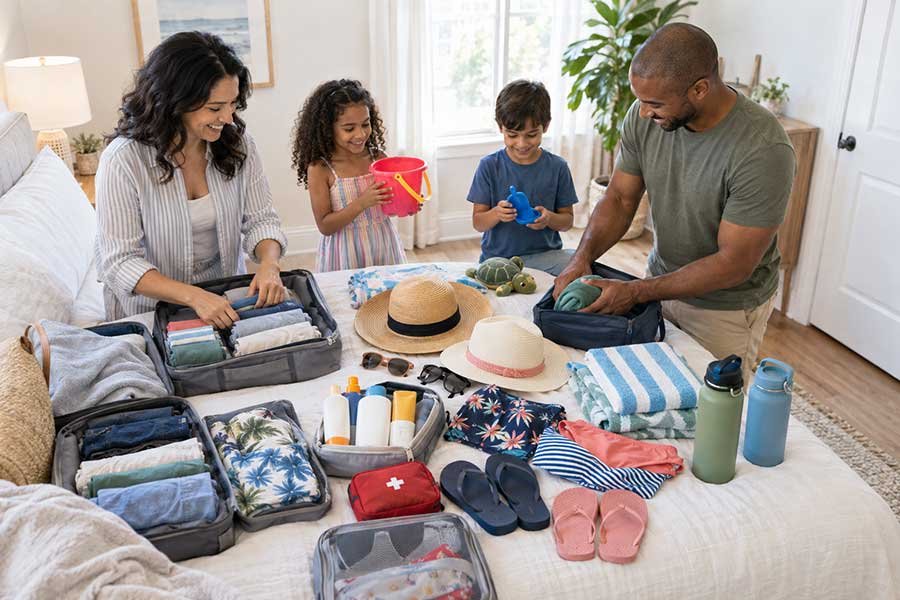
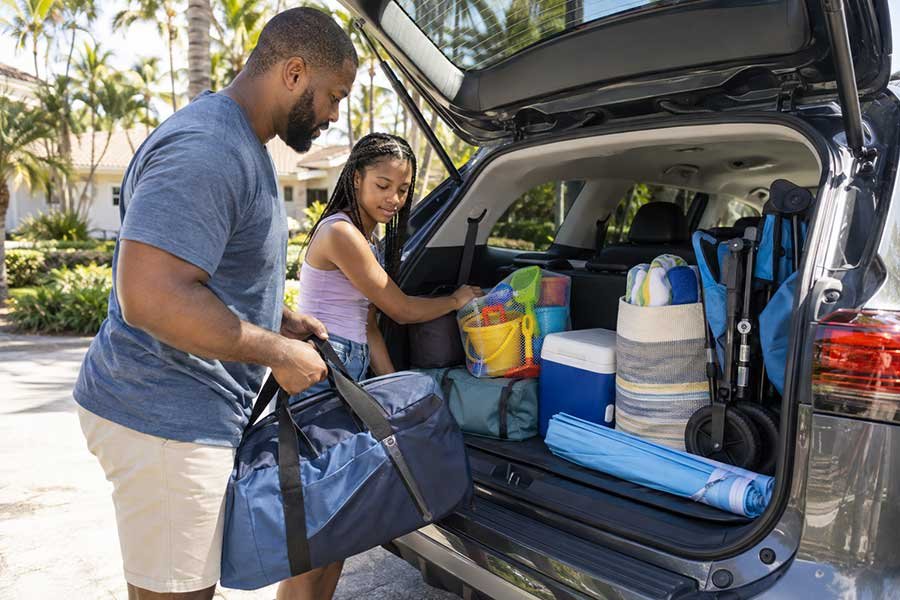
Bag and containment category: one large primary beach bag for dry items, one or two mesh bags for wet and sandy gear, one labeled mesh bag per child for their individual wet gear, one waterproof wet bag for soiled items, one dry bag within the primary bag for the change of dry clothes, one waterproof dry bag for adult valuables.

Sun protection category: reef-safe mineral sunscreen in SPF 50 or higher, calculated for four to five applications across the full family for the full day, rash guards for each child with UPF 50 rating in long-sleeve style, wide-brim hats for each child and each adult, UV-blocking sunglasses for adults and age-appropriate sun shades for younger children, SPF lip balm, reapplication timer or phone alarm set for every two hours.

Hydration and snack category: one individual insulated water bottle per family member frozen the night before, one labeled individual snack pouch per child packed with their specific preferences, a family snack reserve in a sealed insulated bag separate from the individual pouches for the afternoon hours after the children’s pouches are finished, a small ice pack inside the primary bag to keep the snacks cold near the frozen water bottles.

Clothing and comfort category: one complete change of dry clothes per family member in a sealed dry bag, one additional swimsuit per child for mid-day changes, one pair of water shoes per child for rocky or reef-adjacent beaches, a portable beach umbrella for guaranteed shade, a sand-free or quick-dry beach blanket large enough for the family, a small beach pillow or inflatable travel pillow for the youngest children’s nap possibility.

First aid and child-specific category: a family first aid kit including blister plasters, antiseptic wipes, pain reliever appropriate for each child’s age and weight, antihistamine cream for stings and rashes, a thermometer, motion sickness medication if any child is prone to it in the car or on boats, prescribed medications in their original packaging with dosage information, spare swim nappies for the youngest child, biodegradable baby wipes, a small emergency cash supply separate from the primary wallet.

Insider Note

Build the family beach kit as a permanent ready-to-go system rather than repacking from scratch before each beach day. At the end of each beach day, replace the consumed items in the bag that evening: refill the sunscreen, restock the snack pouches, replace any first aid items used, and put the water bottles back in the freezer. The beach bag that is always ninety percent ready and requires only a five-minute top-up each evening rather than a full thirty-minute repacking before each beach day produces a family that leaves for the beach at 8 a.m. on day two rather than at 10 a.m. with the items they remembered to pack. The permanent beach kit is the organizational system that makes the first-day system the every-day system.

Book With Us

Book the Family Beach Vacation That Makes Every Day the Day Two

The right family beach destination, the right accommodation within walking distance of the beach, and the right beach for children’s safety and enjoyment makes the difference between a vacation where the system works and one where even a perfect packing list is fighting the circumstances. Our travel agents specialize in family beach travel. We know the beaches, the properties, and the destinations that produce the family beach vacation that becomes the story you tell for years. You pack the bag. We book the rest.

Book A Trip

Common Family Beach Packing Mistakes to Avoid

Most family beach day interruptions come from the same consistent packing gaps. These are the most common ones and what to pack differently before the next beach day.

1

Using a single fabric beach bag for all wet and sandy family gear

A single fabric bag receiving all of a family’s wet sandy beach gear at the end of the day transports a significant quantity of sand and retained moisture to the accommodation, the car, and eventually the suitcase. For a family with multiple children each generating wet sandy gear, the fabric bag problem is compounded rather than scaled: more children means more items, more sand, more moisture, and more of it distributed throughout the accommodation when the single bag is unpacked. The mesh bag system, particularly individual labeled mesh bags per child, solves the accumulation problem at the structural level and eliminates the end-of-vacation suitcase sand discovery.

2

Packing a single communal snack supply for multiple children

A single communal snack supply for a family of multiple children is a snack supply that produces negotiation, pace conflict, and the specific dynamic of one child reaching the end of a desired item at the moment another child requests it. The individual snack pouch system per child eliminates all three of these dynamics by making each child responsible for managing their own portion. The negotiation about who gets the last item disappears because each child has their own last item of their own snacks. The pace conflict disappears because each child’s pouch runs at their pace rather than the group’s pace. The parental snack-distribution role at the beach disappears because each child manages their own supply.

3

Underestimating sunscreen quantity for a family with children in the water

Children in the water require more sunscreen reapplication than adults in beach chairs, and the calculation of sunscreen quantity for a family beach day needs to account for the children’s activity level rather than the adult two-hour clock interval. Children exiting the water every thirty to forty-five minutes for a snack break and then re-entering technically require sunscreen reapplication before each re-entry as well as at the two-hour clock interval. This produces significantly more reapplication sessions per beach day than the adult equivalent. Running out of sunscreen midway through the day, which is the outcome of underestimating quantity, means the children most at risk of sun damage spend the afternoon hours with inadequate or no sun protection. Calculate generously and bring more than the calculation suggests.

4

Not packing a change of dry clothes for every family member

A family without dry clothes at the end of the beach day returns to the accommodation to change before any post-beach activity rather than transitioning directly from beach to activity. For families with young children, the return to the accommodation at the end of a full sun day often ends the outing entirely: children who would have happily walked to the ice cream shop in dry clothes become children who fall asleep in the car or the accommodation before any post-beach plan is executed. The dry clothes change is the single item that most consistently extends the family beach day beyond the beach itself.

5

Leaving rash guards home to save bag space

The rash guards left home to save bag space produce the need for the extra sunscreen tubes that weigh more and occupy more space than the rash guards they replaced. Two rash guards per child pack to the size of two folded t-shirts. The sunscreen required to cover the torso, shoulders, and arms that the rash guards would have covered over a week of beach days occupies significantly more space and weight than those six t-shirt-sized items. The space-saving calculation that motivates leaving rash guards home consistently produces the opposite outcome to the one intended.

6

Rebuilding the beach kit from scratch before every beach day

A beach bag that is completely unpacked and repacked fresh before every beach day produces a different missing item on each of the vacation’s beach days, because repacking from scratch under morning conditions with children ready to leave is the specific context that produces incomplete packing. A beach kit maintained as a permanent system, with items restocked the evening before rather than repacked the morning of, is a beach kit that reaches the same completeness level every beach day because the evening top-up is calm and specific rather than the morning rush that produces the discovery of missing items at the beach rather than the accommodation.

Turn Travel Into Income

Love Helping Families Find the Perfect Beach Vacation?

Family beach travel requires specific destination knowledge: which beaches are safe for children, which accommodations have the beach proximity that makes the system work, and which destinations provide the combination of great beach and great family dining that makes a full day at the coast genuinely enjoyable for every age in the group. If becoming a home-based travel agent who specializes in family travel sounds like the right next step, see how the TravelPreneur system works. Earn commissions, build a real business, and help families have the vacation they planned.

Become An Agent

Frequently Asked Questions

These are the questions families ask most often about packing for a beach vacation with children. Real answers from real family beach experience across destinations, ages, and beach day types.

What age is appropriate for children to start using reef-safe sunscreen versus baby sunscreen?

Sunscreen guidelines for children vary by age and should always be confirmed with your child’s pediatrician, particularly for infants and very young children. General guidance from major pediatric health organizations suggests that infants under six months should be kept out of direct sun rather than using sunscreen, as their skin is too thin and sensitive for most sunscreen formulations. For infants six months and older, mineral sunscreen with zinc oxide or titanium dioxide as the sole active ingredient, formulated specifically for infants and young children, is generally considered the most appropriate option due to its lower likelihood of skin irritation compared to chemical sunscreen. For children of all ages, testing a small patch of skin before full application helps identify any sensitivity. Always consult your child’s pediatrician for specific sunscreen guidance appropriate to your child’s age, skin type, and health history, particularly for children with eczema or other skin conditions that affect sunscreen tolerance.

How do you manage sunscreen application on children who resist it?

Children who resist sunscreen application are one of the most consistent challenges of the family beach day, and the strategies that produce the most consistent compliance combine timing, choice, and efficiency. Apply sunscreen at the accommodation rather than at the beach, where the visible ocean produces higher resistance from children eager to be in the water. Offer two sunscreen-related choices rather than one unilateral application: do you want the lotion or the spray? Do you want to start with your arms or your face? Children are significantly more compliant when they have made a choice within the process rather than having the process done to them. Sunscreen mist or spray formulations are faster and require less contact than lotion formulations for resistant children. UPF rash guards reduce the total skin surface requiring sunscreen application, reducing the duration of the resistance significantly. Applying sunscreen to yourself first, narrating why you are doing it, and then asking your child to do theirs in the same order produces more compliance than directing the child while remaining un-sunscreened yourself.

What are the best snacks for children at the beach?

The best beach snacks for children are cool or cold, not too salty, not too sweet, not crumbly, and easy for children to manage independently without parental intervention. Cold fruit held near the frozen water bottle cooler is the highest quality beach snack for children: grapes, sliced watermelon, blueberries, and apple slices are hydrating, nutritious, and genuinely more pleasant cold. Whole grain crackers with individual nut butter or cream cheese packets, trail mix with nuts and dried fruit, rice cakes, and pouch-style fruit and vegetable purees for younger children all travel well in the heat. Avoid chocolate and chocolate-coated items, which melt and become a sticky mess. Avoid highly salted snacks like chips and pretzels, which increase thirst significantly on a hot beach day. Avoid foods with strong smells that attract gulls and other beach wildlife, which is a specific beach nuisance that ruins the snack experience for everyone in the immediate vicinity. Pack more than you think the children will need, as the combination of physical activity, fresh air, and sun exposure produces significantly more appetite in children than the same activities indoors.

How do you keep young children safe in the ocean water at a beach?

Ocean water safety for young children requires specific supervision and equipment considerations that significantly exceed the passive supervision appropriate for older children and adults. Young children, particularly those under eight years old, should be within arm’s reach of an adult whenever in ocean water beyond ankle depth, without exception. Swim floaties, water wings, and inflatable swimming aids provide buoyancy assistance but do not replace active adult supervision and should never be relied upon as safety devices in ocean water where current, wave activity, and unpredictable depth changes can affect their function. Personal flotation devices rated for the child’s weight are significantly more reliable than inflatable swimming aids for active ocean water use. Check current beach conditions, flag status, and posted warnings before any child enters the ocean. Swim only at beaches with lifeguard supervision if any family member is not an experienced, competent ocean swimmer. Establish and maintain clear line-of-sight supervision at all times, and assign supervision responsibility specifically rather than assuming it is shared, since shared supervision assumptions produce the specific scenario where each adult believes another is watching the child in the water.

What do you do when a child gets sand in their eyes at the beach?

Sand in a child’s eyes is one of the most consistent and distressing family beach day events, and the correct response depends on the severity of the exposure. For minor sand contact where one or two grains have entered the eye, the child’s own tear response typically flushes the sand out within a few minutes if the child is prevented from rubbing the eye, which embeds the sand further into the corneal surface and produces more irritation. If the eye is not clearing with tearing, flush it with clean water from the water bottle, directing the flow from the inner corner of the eye outward. Do not use ocean water or beach water for eye flushing. Do not rub the eye. If the child is in significant pain, the eye is persistently red and watering after fifteen minutes, or there is visible sand embedded in the eye surface, seek immediate medical attention. Pack a small sealed sterile eye wash solution in the family first aid kit for exactly this purpose, as it provides a clean isotonic flushing solution significantly better suited for eye contact than plain drinking water.

How do you handle a beach day when the youngest child needs a nap?

Managing a beach day around a young child’s nap schedule produces significantly less stress when the family plans around it rather than hoping the child adjusts to the beach day schedule. For children who nap in the late morning, arrive at the beach at or before 8 a.m. so the beach session captures the child’s peak energy morning hours before the nap need arrives. For children who nap after lunch, plan the beach morning from 9 a.m. through lunch, then return to the accommodation for the nap and return to the beach or transition to a shaded afternoon activity after the nap. A portable beach tent or sun shade provides a shaded, quieter space at the beach where a young child may nap on a travel blanket if the specific child can sleep in an outdoor environment, though this varies widely between children. A travel stroller that reclines fully provides the nap environment for a mobile family that does not want to return to the accommodation: the child naps in the reclined stroller under a sun shade while older siblings continue beach activities. Planning the beach day specifically around the nap schedule rather than hoping the nap can be skipped or postponed produces significantly more enjoyment for both the child and the family.

The family beach vacation that becomes the one everyone talks about for years is not the one where nothing went wrong. It is the one where the bag had everything it needed and the day was free to just be the beach.

Picture Your Family on the Beach Tomorrow Morning

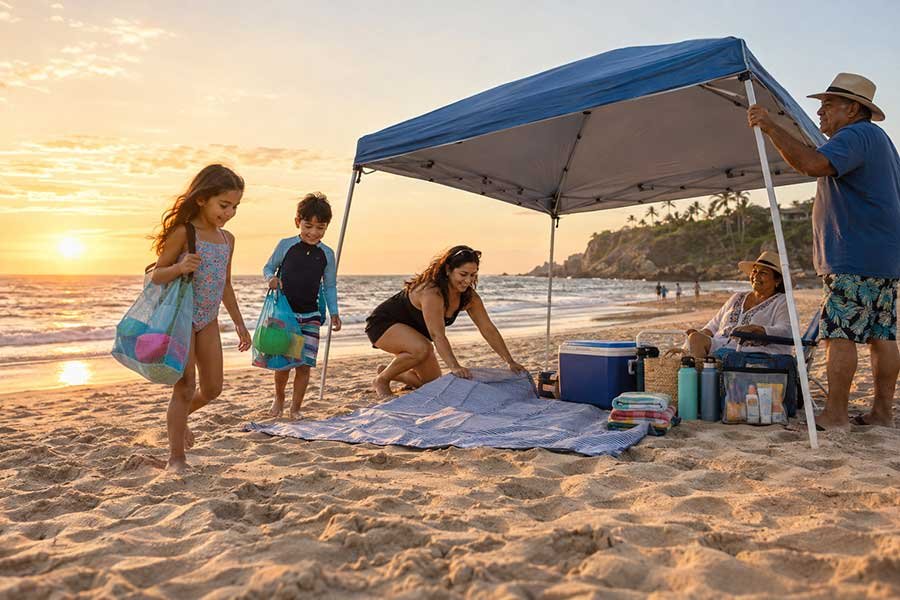
The sunscreen was applied at the accommodation thirty minutes ago. Each child’s rash guard is on. The individual snack pouches are labeled and packed. The frozen water bottles are in the bag. The mesh bags are ready for the end of the day. The dry clothes are sealed in the bag. You arrived at 8:30 a.m. and the family chose the waterfront position while it was still available. The children are in the water. You are in the beach chair. The snack negotiations that consumed last year’s beach day are not happening because each child has their own pouch with their own snacks. The reapplication alarm goes off every two hours and the coverage is done in three minutes because the rash guards are doing the rest of the work. You leave at 5:30 p.m., change at the outdoor shower, and walk to the ice cream shop on the waterfront. All five of you. Everyone is still awake. That is the family beach system working. That is every beach day from here.

Free Download

One More Thing Before You Pack

Print our free Travel Packing Checklist before your next family beach vacation. The family beach day section covers every item in this article, every item families consistently forget, and the pre-departure preparation checklist that produces a complete bag rather than a rushed morning scramble. The same checklist we recommend to every family we help plan a beach vacation for.

Get the Free Checklist

Explore Our Top Picks for a Better Trip

From the individual labeled mesh bags that make end-of-beach-day cleanup a two-minute system to the UPF 50 long-sleeve rash guards that transform the family sunscreen equation, see the family beach products and travel resources we actually use and recommend. Real picks from real family beach days at destinations of every coast and every tide.

See Our Top Picks

Travel Prints and Printables From Our Shop

Visit Premier Print Works for family beach vacation planners, packing list printables, kids’ beach day activity guides, family travel journals, and wall art that makes every family beach vacation a little more beautiful and a lot more organized from the night the snack pouches are packed to the last post-beach ice cream walk on the final evening.

Visit Premier Print Works

Disclaimer

The information shared in this article is provided by Don and Diana’s Travels for general informational, educational, and inspirational purposes only. It reflects our personal experiences, opinions, and the experiences of travelers we have worked with. It is not professional travel, legal, financial, or medical advice, and it should not be relied on as such.

Child Safety and Ocean Water Safety

The ocean safety information in this article about child supervision in ocean water, personal flotation devices, and related ocean safety matters is general educational information only and not professional lifeguard, safety, or medical instruction. Ocean conditions, currents, and hazards vary significantly by location, season, and individual circumstance. Always check current beach conditions and posted warnings, follow the instructions of lifeguards on duty, and maintain active adult supervision of all children in and near ocean water at all times. Never rely on inflatable swimming aids as safety devices. Seek emergency assistance immediately for any water safety emergency.

Sunscreen and Children’s Skin Health Information

The sunscreen and sun protection guidance in this article is general educational information only and not professional medical or dermatological advice. Sunscreen guidelines for children, particularly infants and young children, vary by age and individual health circumstance. Always consult your child’s pediatrician for specific sunscreen and sun protection guidance appropriate to your child’s age, skin type, and health history before using any sunscreen product. Reef-safe sunscreen regulations and recommendations vary by destination and change frequently. Research current regulations for your specific destination before travel.

First Aid and Medical Information

The first aid guidance in this article about sand in eyes, jellyfish stings, and other beach-related medical topics is general educational information only and not professional medical advice. Always seek appropriate medical attention for any injury, illness, or medical concern. The information provided is not a substitute for professional medical evaluation and treatment.

Affiliate and Partner Links

This article may contain affiliate links, partner links, referral links, and links to products or services that pay us a commission. If you click a link and make a purchase or complete any qualifying action, we may earn a small commission at no extra cost to you. Our recommendations are based on real use and genuine belief in the products and services we share.

Third-Party Websites and Services

We may link to third-party websites, services, and resources for your convenience. We do not control these sites and are not responsible for their content, terms of service, pricing, availability, or any product or service they sell. Your use of any third-party site is entirely at your own risk.

Health, Safety, and Personal Responsibility

Travel involves personal risk. You are solely responsible for your own health, safety, and the health and safety of all children in your care, travel insurance, medications, vaccinations, documentation, financial decisions, and choices while planning or taking any trip. We strongly recommend purchasing comprehensive travel insurance for every trip. Don and Diana’s Travels, its owners, employees, contractors, and affiliates accept no liability for any loss, injury, illness, delay, cancellation, damage, theft, or inconvenience arising from your use of the information in this article or from any travel decisions you make.

Composite Stories and Characters

Some stories, examples, and traveler experiences shared on this site are composites drawn from the real experiences of Don, Diana, clients, friends, and travelers we have worked with over the years. Names, identifying details, locations, and circumstances may be combined, changed, or fictionalized to protect privacy. Any resemblance to a specific real person beyond the composite portrayal is unintentional.

No Guarantees

We do not guarantee any specific result, outcome, savings, or experience from using the information, tips, services, or products mentioned in this article. Your results depend on many personal factors including your own choices, effort, circumstances, and external conditions outside of our control.

Copyright and Use

All content in this article is the copyrighted property of Don and Diana’s Travels unless otherwise noted. You may not copy, republish, redistribute, modify, sell, or reuse our content without our prior written permission. You are welcome to share a direct link to this article with proper credit.

By reading and using the information in this article, you acknowledge that you have read, understood, and agree to this disclaimer in full.