29 Packing Tips for Beach Trips, Flights, and Weekend Getaways
Whether you are heading to the beach for three days, catching a weekend flight to see someone you love, or throwing a bag together for a quick overnight getaway, the same handful of packing habits make every single one of those trips easier from the moment you start packing to the moment you walk back through your own front door. Short trips do not require less thought than long ones. They just require a different kind of thinking — one built around flexibility, simplicity, and the quiet confidence of knowing your bag is right before it even closes.
Overthinking a three-day bag is one of the most universal travel experiences there is. The mental gymnastics of trying to account for every possible scenario across seventy-two hours can somehow produce a bag that weighs more than what you would pack for two weeks abroad. These twenty-nine tips exist to stop that from happening. They are the habits that frequent short-trip travelers build over time and that first-timers wish someone had told them before their first overpacked weekend away.
Free Download: Our Travel Packing Checklist
Before you pack for your next beach trip, weekend flight, or quick getaway, use our free Travel Packing Checklist to make sure nothing gets left behind and nothing unnecessary makes the trip. It is the same checklist we use before every short trip we take.
Get the Free ChecklistThe Mindset Shift That Makes Every Short Trip Better
Before a single item goes in the bag, the most important packing decision for any short trip is a mental one. Most overpacking for weekend getaways and beach trips does not come from bad packing technique. It comes from a fundamentally flawed starting assumption: that the number of days dictates the size of the bag.
1. Pack by trip type, not by day count
A three-day beach trip and a three-day city break require completely different wardrobes, but both are often packed the same way — by calculating outfits per day and multiplying. The smarter approach is to identify the trip’s specific activities and occasions first, then pack for those. A beach weekend might need two swimsuits, one cover-up, one evening outfit, and one travel day look. That is four things. Not three days times three outfit changes. Pack for what the trip actually is, not for how long it lasts.
2. Never check a bag for anything under four days if you can help it
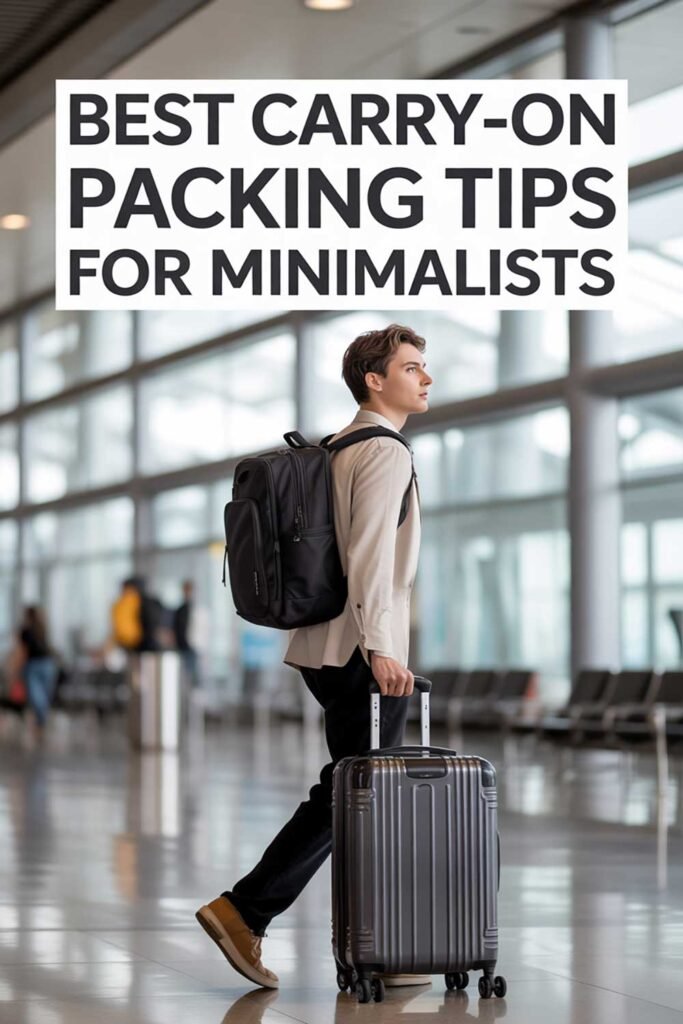
The checked bag on a short trip costs money, adds at least thirty minutes to every arrival, introduces the possibility of a delayed or lost bag on a trip too short to recover from it, and creates the psychological permission to overpack because the size limit is suddenly much larger. The carry-on or weekender bag constraint is the most effective packing discipline tool available. Use it. Under four days, the carry-on almost always wins.
3. Keep a dedicated weekender bag always partially stocked with your travel essentials
The single habit that makes frequent short trips feel effortless rather than stressful is maintaining a weekender bag that lives in a semi-packed state between trips. The toiletry kit is always in it. The travel adapter is always in it. The packing cubes are always in it. The charger cable is always in it. When a trip is announced, the bag is already half done. The travelers who always seem to pack quickly and calmly are almost always the ones who never fully unpacked from the last trip.
4. Pack the bag the day before — not the morning of
Short trips create the illusion that the packing can happen in the morning because it is just a few things. But the items most commonly forgotten on short trips are the ones that require the unhurried evening before to remember: the specific charger that lives in the desk drawer, the medication that was not in the toiletry kit, the sandals at the back of the wardrobe. The day-before pack is the quality control window for short trips just as much as long ones.
5. Decide on one bag before you start packing — and let the bag set the limit
Choose the smallest bag that can reasonably serve the trip type and let its physical limit do the editing work that the packing list sometimes cannot. The bag is not the container for the trip. It is the constraint that makes the trip packable. Choose it first. Let it work.
“The best weekend trips almost always belong to the people who packed light enough to move freely and stayed flexible enough to say yes to everything.”
The Beach Trip Packing System
Beach trips are among the most commonly overpacked of all short-trip types because the beach context creates anxiety around what to wear from the beach to everywhere else — leading to far more than the destination actually requires. A well-built beach packing system solves this with one or two versatile pieces rather than multiple single-use items.
6. Bring one versatile cover-up that works from beach to dinner
The single most valuable item in a beach bag is a cover-up with genuine range — a linen shirt dress, a lightweight wrap skirt, a cotton tunic — that works over a swimsuit at the beach bar, as a casual lunch outfit with sandals, and as an evening look with the right accessories. This one piece replaces what most beach packers bring as three or four separate options. Find it before the trip, confirm it works for the specific occasions the trip holds, and let it do the work of several items at the weight and volume of one.
7. Pack two swimsuits so one can always be drying
A wet swimsuit that goes back in the bag introduces dampness that affects everything around it. Two swimsuits rotating on alternating days solves both problems: one is always dry and ready, one is always drying. For a three or four-day beach trip, two swimsuits is the exact right number. More than two adds weight without adding function. Fewer than two means either a damp bag or the specific frustration of reaching for a wet swimsuit at eight in the morning.
8. Pack reef-safe sunscreen rather than planning to buy it there
Reef-safe sunscreen is not universally available at beach destinations, and where it is available it is almost always significantly more expensive than the same product purchased before the trip. A travel-size reef-safe sunscreen in the toiletry kit is both an environmental choice and a practical one. Do not count on buying it at the destination unless its availability has been specifically confirmed.
9. Use a mesh tote for beach gear that does not need to come inside
The sand problem at the end of a beach day is most cleanly solved by a lightweight mesh tote that holds everything sandy and stays on the balcony or outdoor shower area rather than coming through the accommodation’s front door. A mesh tote packs flat, weighs almost nothing, and eliminates the sand-migration problem that the main bag handles badly.
10. Include a waterproof phone pouch for water days
The waterproof phone pouch costs very little, weighs nothing, and is the difference between the phone that went swimming and the phone that watched from the towel. For beach trips with any kayaking, snorkeling, boat trips, or active water time, pack it before leaving home rather than hoping to find it at the destination.
11. Leave the full makeup kit at home — pack a minimal beach-appropriate edit
A minimal edit — tinted sunscreen that doubles as foundation, waterproof mascara, a lip balm with SPF, a small bronzer — covers the full range of a beach trip’s actual makeup needs at a fraction of the full kit’s weight and space. The items left at home are the ones that would have been packed and not opened.
Plan Our Escape
Ready to start planning your next beach trip or weekend getaway? Tell us where you want to go and we will take it from there.
Plan Our EscapeThe Weekend Flight System
A weekend flight — Friday to Sunday, or Thursday to Monday — is the trip most likely to be overpacked because the flight itself creates a psychological pressure to bring options. The weekend flight packing system is built around one principle: the bag should be lighter coming home than it felt going.
12. Roll everything to cut bulk in half
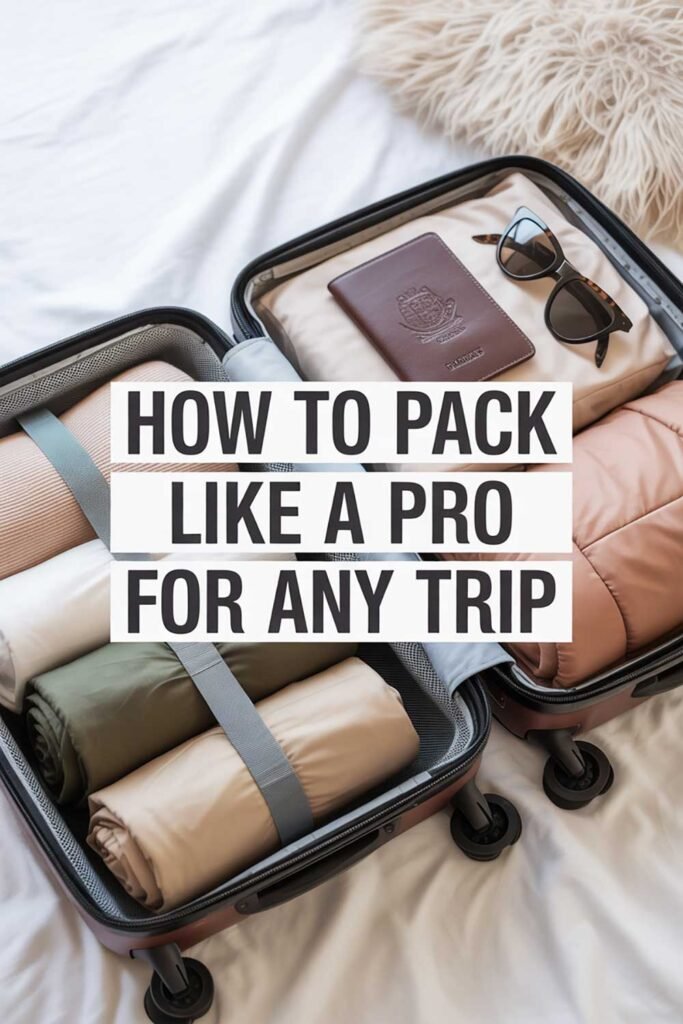
A t-shirt rolled into a tight cylinder occupies roughly one-third of the space of the same shirt folded flat. For a weekend bag where the total clothing requirement is genuinely small, rolling transforms the packing experience from a compression exercise into an organization one. Roll every soft item. Fold nothing that can be rolled.
13. Wear the heaviest shoes and the thickest layer on the travel day
Every item worn on the body on travel day is an item that does not occupy bag space or add to bag weight. The heaviest shoes, the thickest jacket or layer, and any bulky accessories worn through the airport cost nothing to the bag’s weight while covering the travel day’s outfit requirement.
14. Pack one outfit per day maximum with no backup maybes
Pack one complete, confirmed outfit per day. No backups. The outfit that had a confirmed role at packing time has a role at the destination. The backup came home folded exactly as it was packed. Leave every backup maybe in the wardrobe where it belongs until a specific day requires it.
15. Keep all electronics and the charger in the outer pocket
The phone charger, the earbuds case, and any travel adapters belong in the outer pocket where they are reached in a single motion at the gate outlet, the aircraft seat, and the accommodation’s first evening. The weekend traveler who unpacks the main compartment at the gate to find the charger had a bag organized for a longer trip, not this one.
16. Put the personal item to work on weekend flights
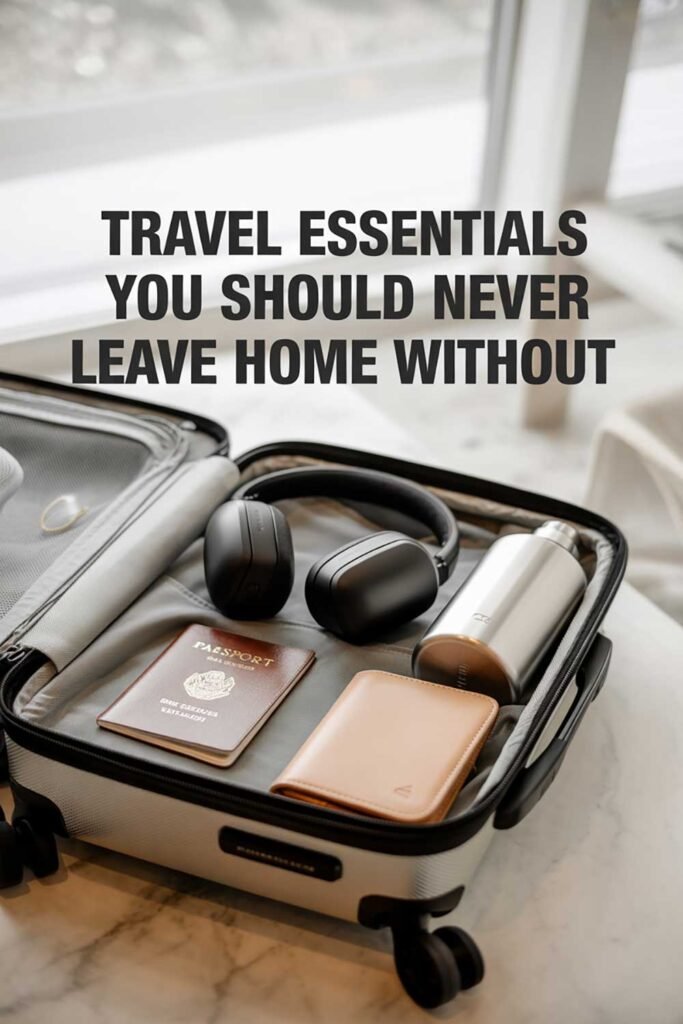
On a short weekend flight, the personal item that goes under the seat should hold everything needed for the journey: the boarding pass, the charger, snacks, headphones, lip balm, and travel documents. The overhead bag should be closeable without being opened again until the destination.
17. Snacks for the flight in the personal item — not the main bag
Short domestic flights often have no meal service or a minimal one. A snack in the personal item — something simple, familiar, and low-sodium — covers the journey’s food requirement without relying on the service cart. Keep it accessible in the outer pocket or top compartment, not buried in the main bag in the overhead.
DND Resources
Our travel resources page has trusted planning tools and official sources for every type of trip — from weekend getaways to longer adventures.
DND ResourcesThe Quick Getaway Packing Habits
The quick getaway — the spontaneous overnight, the last-minute long weekend, the trip announced on a Tuesday for a Friday departure — rewards the traveler who has a system in place more than any other trip type. Without a pre-existing system, the quick getaway produces the rushed pack that always forgets something.
18. Keep a pre-packed toiletry kit that never gets fully unpacked
The toiletry kit that lives in the weekender bag between trips is the most powerful single habit for reducing short-trip packing time and forgotten-item frequency. The kit holds travel-size versions of every toiletry used daily — filled to trip-length amounts and restocked immediately after every return. The quick getaway announced on a Tuesday needs this kit in the bag immediately.
19. Apply the two-color rule even on short trips
Two or three colors that all mix — navy and white, black and tan, olive and cream — means every top works with every bottom and every accessory works with every outfit. The weekend bag built from a coherent palette produces more outfit combinations from fewer items than the same number of items in uncoordinated colors.
20. Bring one statement piece for the trip’s nicest occasion
Pack specifically for the trip’s one nicest occasion: the dress or the outfit that works for that evening, confirmed before packing as a complete look with the right shoes and accessories. Everything else in the bag is casual and interchangeable.
21. Leave room for what you buy at the destination
Pack to approximately seventy-five percent of the bag’s capacity on the outbound journey and treat the remaining space as the return margin. The quick getaway almost always produces one purchase that needs room to come home. The bag packed with deliberate margin arrives home with the find already inside it and the zip closed without difficulty.
22. Use packing cubes even in a small weekender bag
One cube for tops, one for bottoms, one for underwear. The cubes compress the rolled items, keep the bag organized throughout the trip rather than just at departure, and make the post-trip reset faster. For the traveler whose weekender bag is a semi-permanent travel companion, the cube system is the infrastructure that keeps it functional.
23. Check the accommodation’s amenities before packing what it already provides
Two minutes checking the accommodation’s listed amenities before packing removes every item the destination provides. For a short trip where the bag’s total weight is already modest, the accommodation items removed from the packing list are often the difference between a bag that moves easily and one that is slightly heavier than it needed to be.
How Soren Finally Stopped Overpacking Short Trips
Soren was a frequent weekend traveler — beach trips, city breaks, long weekends — whose bags were consistently too heavy for their length. Not dramatically so. Just heavy enough to be noticeable at every set of stairs, every overhead bin, every walk from the station to the hotel. The trips were good. The bag was always slightly wrong.
The issue was not that Soren packed badly. The cubes were there. The rolling happened. The problem was that the packing started from a day-count calculation rather than a trip-type one. Three days meant three daytime outfits, three evening options, multiple casual layers, and the vague backup wardrobe that never quite materialized into anything worn.
The beach weekend that changed the system was the one where an airline’s strict carry-on limit forced a genuine edit. With a hard size constraint and a twenty-minute window before leaving for the airport, Soren packed for what the trip actually was: two swimsuits, the linen cover-up that had earned its space on every previous trip, one evening outfit, one casual day look, and the travel day clothes already being worn. The toiletry kit was already in the bag from the trip before. The whole thing took fifteen minutes.
The trip was the same. The beach was the same. The dinners were the same. The bag was half the size of every previous version and the weekend felt noticeably more mobile and spontaneous. The weekender bag has been packed this way ever since. These twenty-nine tips are the system that produced that fifteen minutes.
The Return Trip and the Reset
The return journey from a short trip is where the packing system either earns its keep or reveals its gaps. A well-organized bag repacks in five minutes. A bag that drifted across the weekend repacks in fifteen and often misses something.
24. Separate dirty clothes from clean ones from the first evening
A lightweight laundry bag placed in the weekender bag before departure is the clean/dirty system that keeps the bag organized throughout the trip. Every worn item goes into the laundry bag from the first evening. Every clean item stays in its cube. The bags return home with a clear separation whose post-trip laundry is straightforward rather than a mixed-content sort.
25. Do a thorough room check thirty seconds before leaving every accommodation
The charger in the outlet by the bed. The toiletry item on the bathroom shelf. The book on the nightstand. Thirty seconds of systematic checking — outlet, bathroom, surfaces, under the bed — catches the items that the rushed short-trip checkout misses. Do it before picking up the bag, not after the door is already closing.
26. Do not check a bag on the way home either
The return bag may be slightly heavier if the trip produced purchases — which is exactly why the deliberate packing gap from tip twenty-one exists. A bag packed to seventy-five percent capacity on departure absorbs the trip’s finds and still comes home as a carry-on. The overweight fee on the return is the cost of not leaving the gap.
27. Reset the weekender bag within twenty-four hours of returning home
The weekender bag reset on the evening of returning home is the habit that makes the next quick getaway fifteen minutes rather than forty-five. The laundry comes out and goes to the wash. The cubes are emptied and returned to their positions. The toiletry kit is restocked. The charger is back in its outer pocket. The bag is closed in its ready state.
28. Update the short-trip packing list while the memory is specific
The item that was wished for and not there. The item that came home unworn. The accommodation that provided the hair dryer that was packed unnecessarily. These memories are most specific on the day of returning home. Note the updates before the day ends. After five or six trips, the list almost writes itself.
29. Trust that the best short trips belong to the people who packed light enough to say yes
The spontaneous invitation to the boat. The walk to the market that requires a full afternoon. The restaurant that requires a twenty-minute walk rather than a taxi. None of these are available to the traveler whose bag is too heavy to be carried easily or too full to absorb a purchase. Pack light. Pack right. The trip that says yes to everything is the trip that was packed for the freedom to do it.
Book A Trip
Book your next beach trip, weekend flight, or quick getaway with a travel agent who plans the whole thing for you.
Book A TripPicture This
It is Thursday evening and the weekend trip was confirmed that morning. The weekender bag is already by the wardrobe with the toiletry kit inside it, the cubes stacked in their positions, the charger in the outer pocket. The only task is choosing the clothing for the specific trip type. Two swimsuits and the linen cover-up for the beach. One evening outfit, confirmed flat on the bed as a complete look before it goes in. The travel day outfit already being planned for what will be worn, not packed. The bag closes in twelve minutes. The morning is for picking it up and leaving.
At the beach, the cover-up goes from the poolside to the lunch table without a change. The evening look earns its one confirmed occasion and nothing else competes for the space it would have taken. The bag moves easily through every corridor, every staircase, and every overhead bin. On Sunday afternoon, the spontaneous boat trip happens because the bag is light enough to take on it. On the return, the small ceramic piece from the market fits easily in the gap that was left for it. The reset happens Sunday evening, the bag is closed and ready again by nine, and the Tuesday announcement of the following weekend’s trip is a fifteen-minute conversation with an already-packed bag waiting by the door.
That is twenty-nine tips working as a system. That is the weekend that belongs to the traveler who packed light enough to move freely and stayed flexible enough to say yes to everything the trip offered.
Before Your Next Short Trip: Grab the Free Packing Checklist
Our free Travel Packing Checklist is built for exactly this — the beach trip, the weekend flight, the quick getaway — with every category confirmed and every pre-departure step included so nothing gets forgotten and nothing unnecessary makes the bag. Download it and use it before the next one.
Get the Free ChecklistExplore Our Top Picks for a Better Trip
After years of beach trips, weekend flights, and quick getaways around the world, these are the booking platforms and travel services we personally rely on — tested, trusted, and recommended because they have made our own trips smoother and more memorable.
See Our Top PicksTravel Printables at Premier Print Works
Visit Premier Print Works for packing checklists, travel planners, weekend getaway guides, and beach trip printables that make every short trip more organized and every departure morning calmer than the one before it.
Visit Premier Print WorksBecome An Agent
Love helping travelers pack smarter for every beach trip, weekend flight, and quick getaway? See how to turn your passion for travel into a home-based travel business.
Become An AgentDisclaimer
The information shared in this article is provided by Don and Diana’s Travels for general informational, educational, and inspirational purposes only. It reflects our personal experiences, opinions, and the experiences of travelers we have worked with. It is not professional travel, legal, or financial advice.
Airline carry-on limits, baggage policies, weight allowances, and security requirements vary by carrier, airport, and country and are subject to change without notice. Always confirm current requirements with your specific airline and the relevant authorities before traveling. We are not responsible for any fees or outcomes arising from reliance on baggage or packing information in this article.
This article may contain affiliate and partner links that pay us a commission at no extra cost to you. Our recommendations are based on real use and genuine belief in the products and services we share. Stories on this site combine real experiences from Don, Diana, clients, and travelers we have worked with. Details may be adjusted for privacy and narrative clarity. All content is the copyrighted property of Don and Diana’s Travels. You may not copy or republish our content without prior written permission. By reading this article you acknowledge that you have read and agree to this disclaimer.