30 Packing Light Tips for People Who Always Overpack
The secret to packing light was never a bigger suitcase. It was getting honest about what you actually wear. Lay everything out, then put half of it back. Thirty packing light tips for the chronic overpacker who is tired of dragging forty pounds through a train station and ready to discover how much more of a trip you see when nothing is weighing you down.
Grab Our Travel Packing Checklist
Our free packing checklist is built around exactly this philosophy — everything you genuinely need and nothing you don’t. Use it to build your capsule, confirm your carry-on essentials, and pack light with a clear conscience instead of a heavy bag and a vague sense of regret.
Get the Free ChecklistThe traveler with the lightest bag almost always sees the most of the trip, because nothing is weighing down the parts that actually matter.
The secret to packing light was never a bigger suitcase. It was getting honest about what you actually wear.
The Mindset Shift: Get Honest About What You Actually Wear
Lay everything out on the bed, then put half of it back
This is the single most powerful packing-light habit there is, and it costs nothing but honesty. Lay out every item you plan to bring on the bed before a single thing goes in the bag. Then look at the pile and put half of it back in the closet. Not the half you are least attached to — the half you will not realistically wear. The overpacker’s pile is almost always built around imagined versions of the trip: the fancy dinner that may not happen, the workout you will probably skip, the weather you are bracing for instead of the weather you will likely get. The clothes that survive the cut are the clothes you actually wear. The ones that go back are the weight you were going to carry for nothing.
Pack for the trip you’ll actually have, not the one you’re imagining
Most overpacking is not about clothes. It is about anxiety dressed up as preparation. You pack the extra outfits for the version of the trip where you go out every night, the hiking gear for the hike you have not actually planned, and the formal option for the event that exists only as a “what if.” Look honestly at your real itinerary and pack for that. If three of your days are beach days and one is a nice dinner, pack for three beach days and one dinner — not for a parallel trip that lives only in your imagination. The trip you will actually have needs far less than the trip you are quietly bracing for.
Count your “just in case” items and cut most of them
Go through your laid-out pile and silently label each item: “definitely wearing” or “just in case.” The just-in-case items are where the weight hides — the second pair of dress shoes, the backup jacket, the extra three shirts beyond what the trip requires. Here is the honest truth about just-in-case items: almost anything you might need in a real pinch can be bought, borrowed, or improvised at your destination, usually for less hassle than carrying it the whole way would have cost. Keep the one or two just-in-case items that would be genuinely hard to replace. Cut the rest. The trip almost never punishes you for it.
Accept that you will re-wear clothes, because everyone does
The overpacker often packs a fresh outfit for every single day, as though re-wearing a pair of jeans were a social failure. It is not. Experienced light travelers re-wear almost everything — jeans for several days, a jacket for the whole trip, a shirt twice between washes. Nobody you meet on the trip is tracking your outfits, and the few people who would notice are at home, not on the road with you. Once you accept that re-wearing clothes is completely normal travel behavior rather than something to hide, your packing list shrinks by half on its own. The freedom is in giving yourself permission.
Pack for one week, even when the trip is longer
Trip length is the overpacker’s favorite excuse, and it is the easiest one to dismantle. A two-week trip does not require twice the clothes of a one-week trip. It requires the same clothes plus one load of laundry. For any trip longer than a week, pack roughly a week’s worth of clothing and plan to wash midway through, whether at a laundromat, a hotel service, or a sink. This single reframe is the difference between a manageable bag and a monster. The clothes for week two are not in your suitcase. They are the clothes from week one, clean again. Pack for seven days and let the washing machine handle the rest.
Ask of every item: would I pack this again on the way home?
This is the question that exposes dead weight better than any other. As you consider each item, imagine you are already at the end of the trip, repacking to go home, and you know exactly what you used and what you ignored. Would this item make the cut a second time? The things you never touched — the third pair of shoes, the “nice” outfit that stayed folded, the gadget that stayed in the bag — would not survive that honest repack, and they should not survive this one either. Pack the trip as if you have already taken it once and learned what mattered. On the next trip, you actually will have.
Let Us Plan a Trip You’ll Want to Pack Light For
The best trips are the ones where you spend your energy on the experience, not on hauling a heavy bag from one place to the next. Tell us where you want to go and how you want it to feel, and we will build the kind of trip that earns a light bag — easy to move through, full of the things that actually matter.
Plan Our EscapeThe Capsule Wardrobe: Fewer Pieces That All Work Together
Choose two or three colors that all mix and match
A capsule wardrobe is the single biggest space-saver an overpacker can adopt, and it starts with color. Choose two or three colors that all work together — a common combination is one neutral base like navy, black, or khaki, plus one or two accent colors that pair with it. When every piece you pack shares the same color story, every top works with every bottom, and a small number of items produces a surprising number of complete outfits. The overpacker’s closet, by contrast, is full of beautiful pieces that each go with only one other thing, which is exactly why the bag has to be so big. Pick your palette first. Pack within it without exception.
Pick neutral bottoms and let your tops do the talking
Bottoms are heavy, bulky, and slow to dry, which makes them the worst thing to over-pack and the best thing to minimize. Bring one or two pairs of neutral bottoms — a versatile pair of trousers or jeans plus maybe one alternative — in colors that go with everything. Then build variety with tops, which are lighter, smaller, and dry faster. A few different tops over the same two bottoms reads as a different outfit every day, while taking up a fraction of the space that multiple pairs of trousers would. The eye notices the top. The bottoms can quietly repeat all week and no one is the wiser.
Make sure every piece pairs with at least two others
Here is the rule that turns a pile of clothes into a true capsule: before any item goes in the bag, confirm it works with at least two other things you are packing. The piece that only matches one specific outfit is a piece that earns its weight only once. The piece that works with three tops and two bottoms earns its weight every single day. Run this check across your whole packing list and you will spot the dead-end items immediately — the shirt that needs the one specific jacket, the shoes that go with only one outfit. Cut them or replace them with something more flexible. Versatility is what lets a small bag dress you for a long trip.
Bring versatile pieces that dress up or down
The fastest way to pack two wardrobes in one bag is to pack neither — and instead pack pieces that move easily between casual and dressy. A simple dark pair of trousers works for a day of sightseeing and a nice dinner. A plain, well-fitting shirt looks relaxed with sleeves rolled and polished with sleeves down. A single versatile jacket reads as practical by day and put-together by night. When your pieces flex across occasions, you stop needing a separate “nice” outfit taking up space for the one dinner you might have. One adaptable wardrobe that bends to the moment beats two rigid ones that each only work half the trip.
Limit yourself to two or three pairs of shoes maximum
Shoes are the heaviest, bulkiest, most space-hungry thing most overpackers carry, and they are where the biggest single weight savings live. For nearly every trip, two pairs is plenty and three is the absolute ceiling: one comfortable walking pair you can wear all day, and one that works for nicer occasions or a different activity. The third pair, if it exists at all, should earn its place with a real purpose, like sandals for a beach trip. Wear the bulkiest pair on the plane so it never enters the bag. Every extra pair of shoes beyond this is the clearest example there is of weight carried for a use that rarely arrives.
Pack one versatile layer instead of three single-purpose ones
Overpackers prepare for cold by packing a sweater, a fleece, and a jacket — three separate items for one problem. The lighter solution is layering: one warm, packable layer plus a windproof or water-resistant shell handles a remarkable range of conditions, because the two together trap more warmth than either alone. A thin merino or fleece layer under a light shell will carry you from a cool morning to a chilly evening without three bulky garments taking turns in the bag. Pack the layering system, not the pile of standalone warm clothes. It weighs less, takes less space, and adapts to far more weather than any single heavy item.
Smart Techniques: Make Everything You Keep Take Less Space
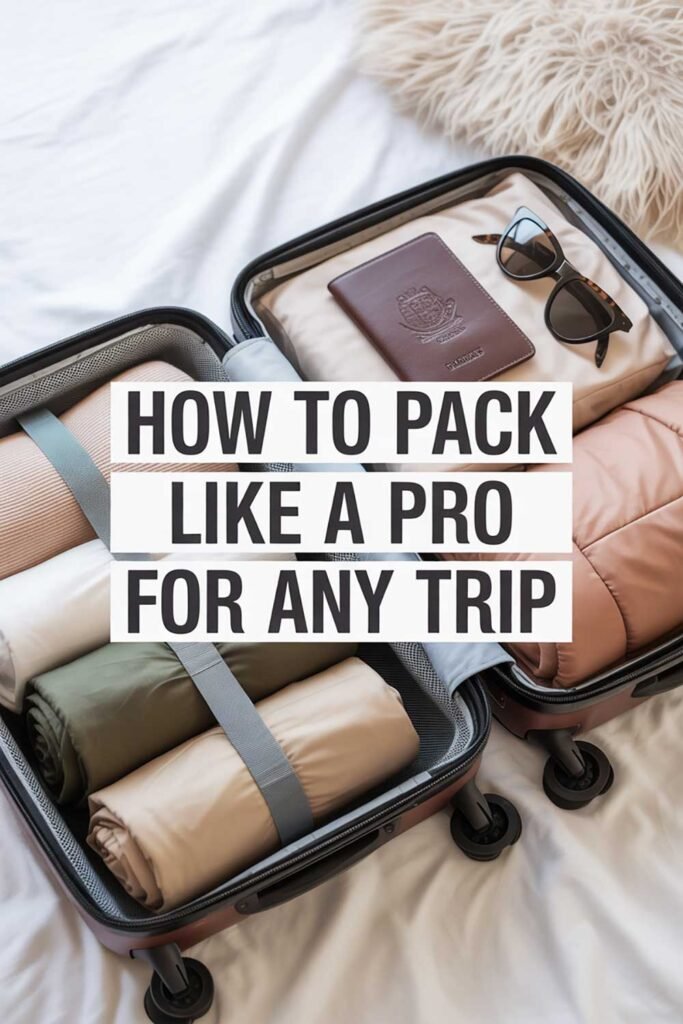
Roll your clothes instead of folding them
Rolling is the packing technique that converts dead space into usable space. Folded clothes stack in flat layers with air gaps between them; rolled clothes pack tightly into the corners and curves of a bag where folded stacks cannot reach. Rolling also tends to leave softer, more forgiving wrinkles than the sharp creases that folding presses in along the same lines every time. Roll your t-shirts, your casual trousers, your layers, and most of your soft items. Save folding for the few structured pieces that genuinely need it, like a blazer. For everything else, rolling fits more clothes into the same bag and gets them out looking better than folding does.
Use packing cubes to compress and organize
Packing cubes do two things at once for the overpacker, and both matter. First, they compress: stuffing a cube full and zipping it closed squeezes out the air that loose clothes carry, shrinking the same clothes into less space. Second, and just as valuable, they organize — tops in one cube, bottoms in another, layers in a third — so you stop unpacking the whole bag to find one shirt and repacking it badly every time. A bag organized into cubes is a bag you keep neat all trip, which means it stays as efficient on day ten as it was on day one. Compression cubes with a second zipper squeeze even further if you tend to push a bag’s limits.
Stuff socks and small items inside your shoes
The inside of your shoes is packing space you have already committed to carrying, and most people leave it completely empty. Roll your socks and tuck them inside each shoe, along with anything small and sturdy — a charger, a pair of sunglasses in a hard case, small toiletries in a bag. This reclaims space that would otherwise be wasted air, and it helps your shoes hold their shape in transit instead of getting crushed flat under everything else. It is a small trick, but light packing is the sum of small tricks. Every pocket of empty space you fill smartly is a pocket you do not have to find room for somewhere else.
Pack one large scarf that doubles as a blanket
A single large, lightweight scarf is one of the most versatile things a light packer can carry, because it quietly replaces several other items. It is a warm layer when the evening cools off, a blanket on a chilly plane or train, a cover-up for a religious site that requires covered shoulders, a cushion against a hard seat, and an accessory that makes a repeated outfit look intentional. One soft item that solves five problems is the opposite of the overpacker’s instinct to carry five items that each solve one. Choose a scarf in one of your capsule colors so it works with everything, and let it earn its place several times over on a single trip.
Choose fabrics that resist wrinkles and dry fast
The fabric a garment is made of decides how light it really travels, long before you pack it. Quick-drying, wrinkle-resistant materials like merino wool and many technical blends are the light packer’s best friends: they shrug off creases so you skip the iron, and they dry overnight so you can wash a few things in a sink and re-wear them the next day. Pure cotton, by contrast, wrinkles deeply and takes ages to dry, which quietly forces you to pack more of it. When you can, favor the fabrics that let one item do the work of two. The right materials are what make the rinse-and-re-wear strategy actually practical instead of a damp inconvenience.
Pack a thin laundry kit instead of extra clothes
A tiny laundry kit weighs almost nothing and replaces pounds of backup clothing. A small bottle of travel detergent or a few detergent sheets, a flat universal sink stopper, and a couple of feet of travel clothesline take up the space of a single rolled shirt and let you refresh your whole capsule in any sink, anywhere. This is the engine that makes packing for one week on a longer trip actually work. The choice on a long trip is simple: carry two weeks of clothes, or carry one week of clothes plus a laundry kit that weighs a fraction as much. The kit wins on weight, on space, and on every train platform you do not have to drag the difference across.
Renata Packed for Three Weeks and Learned in Three Days
Renata was a textbook overpacker, and she knew it, which somehow never stopped her. For a three-week trip across several cities she packed a large checked suitcase and a full carry-on, built around every version of the trip she could imagine: the fancy dinners, the long hikes, the cold snap, the heat wave, the rain. She packed seven pairs of shoes. She packed a “nice” outfit for an event that was, at the time of packing, entirely hypothetical. The suitcase weighed just under the airline’s limit, which she took as proof that she had packed correctly rather than as a warning.
The trip taught her otherwise within three days. The first city had cobblestone streets and a train station with a long staircase and no elevator in sight, and she stood at the bottom of it doing math about how many trips it would take to carry her bags up. The wheels caught in the gaps between the stones. The “nice” outfit stayed folded the entire trip, because the hypothetical event stayed hypothetical. By the end of the first week she had worn maybe a third of what she brought, and she was carrying the other two-thirds — clean, unworn, and heavy — from city to city like luggage for a stranger.
On the second week she did something she had never done: she found a laundromat, washed the clothes she actually wore, and ignored the rest. The unworn two-thirds of her suitcase became, in her mind, simply the weight she had volunteered to carry. She started leaving the big suitcase locked at each accommodation and exploring with just a small day bag, and she noticed she saw more of each place, because she was not constantly managing baggage. The trip got better the lighter she traveled within it, even though the heavy bag was still technically there.
Her next trip was different from the first item she laid out. She built a capsule in two colors, packed for one week with a laundry kit, brought two pairs of shoes and wore the bulkier one on the plane, and fit the whole thing in a single carry-on. She walked off the plane and straight out of the airport with no checked bag to wait for. The staircase that had defeated her the year before, she climbed in one trip. She did not pack lighter because she owned less. She packed lighter because she had finally gotten honest about what she actually wore. The thirty tips in this article are that honesty, written down before the suitcase comes out.
The Carry-On Strategy: Let the Bag Set the Limit
Commit to a carry-on and let its size set your limit
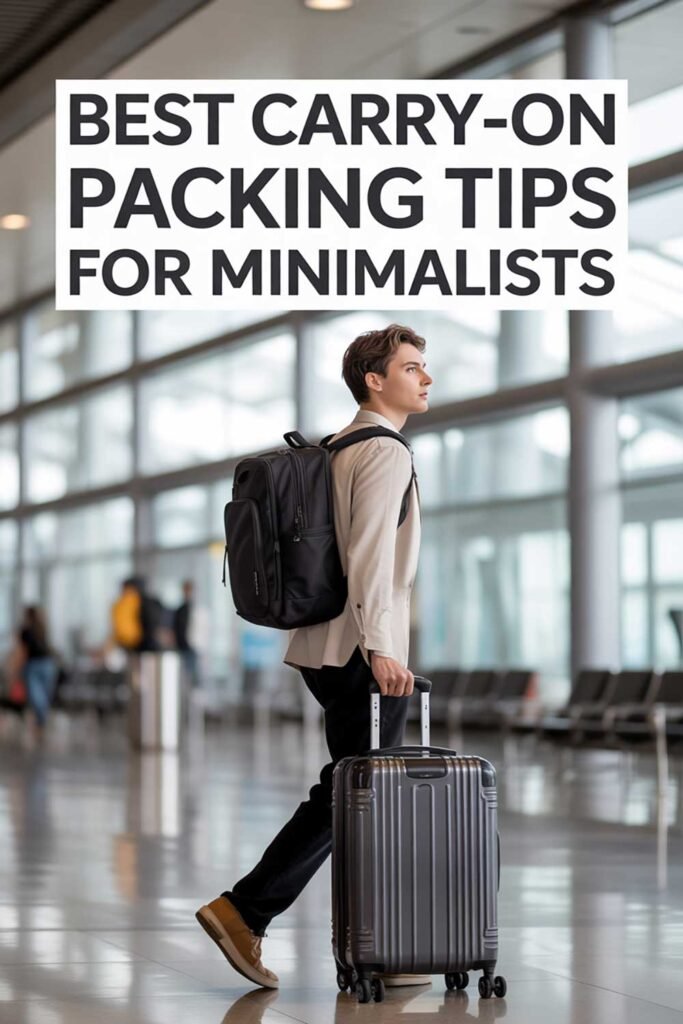
The most effective packing-light decision happens before you pack a single thing: choose to travel carry-on only and let the bag’s hard limits do the disciplining for you. An overpacker with a large suitcase will fill a large suitcase, every time, because the empty space practically demands it. An overpacker with a carry-on physically cannot, and that constraint forces every honest choice the earlier tips described. Carry-on travel also means no checked-bag fees, no waiting at baggage claim, no lost luggage, and the freedom to walk off the plane and straight out of the airport. The bag is not just smaller. It is a built-in editor that makes the hard decisions for you so you do not have to make them at the gate.
Wear your bulkiest jacket and shoes on the plane
The heaviest, bulkiest items you are bringing should never go in the bag at all — they should be on your body when you board. Wear your bulkiest pair of shoes and your heaviest jacket on the plane, even if it feels slightly silly walking through a warm airport in your coat. Those two items alone often represent a large share of your total packed weight and volume, and wearing them frees up a meaningful chunk of the bag for everything else. A roomy jacket with deep pockets can also carry small heavy items through security, like a charger and a phone. What you wear does not count against your bag. Put the heavy things on, and pack what’s left.
Keep one day’s essentials in your personal item
Even committed carry-on travelers usually get a personal item — a small backpack or tote — and how you use it matters. Keep one day’s essentials there: a change of basics, your medications, chargers, documents, and anything you would hate to be without if you and your main bag were briefly separated. This keeps the heaviest small items off your shoulders during the flight and gives you a self-contained day bag the moment you land, before you have even reached your accommodation. It also means the personal item earns its keep as your daily explorer’s bag for the rest of the trip, rather than being dead weight you carry just because the airline allowed it.
Weigh your bag at home before you ever leave
The worst place to discover your bag is overweight is at the airport check-in counter, where your only options are an unpleasant fee or a frantic public repack on the floor. Weigh your bag at home, where you have time and a closet to put things back into. A simple luggage scale, or just stepping on a bathroom scale while holding the bag and subtracting your own weight, tells you exactly where you stand while you can still do something graceful about it. If it is over, this is your last and best chance to apply the lay-it-out-and-cut rule one more time. Knowing the number at home turns a potential airport crisis into a calm decision made in your bedroom.
Leave deliberate room for what you’ll bring back
A bag packed completely full on the way out is a problem waiting to happen on the way home, because almost every trip generates a little extra: a souvenir, a gift, something you bought because you needed it, a bottle of something local. The overpacker who leaves zero margin ends up wearing layers home, sitting on the suitcase to close it, or buying a second bag at the destination. Pack out at roughly three-quarters full and treat the remaining space as reserved for the return. This is not wasted space — it is planned space. The light packer arrives home with room to spare and a closed zipper, instead of a bag fighting back the whole way.
Pack so the bag is genuinely easy for you to carry
The real test of light packing is not the number on the scale. It is whether you can comfortably carry your own bag up a flight of stairs, onto a train, and down a long platform without help and without dread. If lifting your bag into the overhead bin is a struggle, or if you are eyeing every staircase with worry, the bag is too heavy regardless of what the airline allows. Pack to a weight you can move easily and independently, because travel constantly asks you to move your own luggage — across cities, up to rooms, onto platforms. A bag you can carry without thinking about it is a bag that frees your attention for the trip instead of consuming it.
Our Curated Collection of Trusted Tools and Official Sources
Everything we use to plan, prepare, and travel with confidence — from official government travel tools to practical planning aids. We have pulled together the resources we trust most so every trip you take is better informed, better prepared, and a lot less stressful from start to finish.
DND ResourcesToiletries, Tech, and the Final Edit
Buy bulky toiletries at your destination instead of packing them
Toiletries are heavy, they are liquid, and they are available almost everywhere you are going, which makes packing full-size versions one of the clearest overpacking habits to break. There is a pharmacy or shop near nearly every destination selling shampoo, sunscreen, and toothpaste, often for a few dollars. Pack only what you need to get through the first day or two, and buy the rest when you arrive. You carry far less weight, you avoid liquid limits and leaks in your bag, and the small cost of buying basics on arrival is almost always less than the cost and hassle of carrying full bottles the whole way. Let the destination’s shops be your supply closet.
Decant the liquids you must bring into small reusable bottles
For the few toiletries you genuinely want to bring from home — your specific products, anything hard to find at your destination — decant them into small reusable travel bottles rather than packing full-size containers. A little of most products goes a long way, and a small bottle holds far more uses than its size suggests. This keeps you under carry-on liquid limits, eliminates the weight of mostly-empty large bottles, and shrinks your entire toiletry kit to something that fits in a small pouch. Refillable silicone bottles are reusable trip after trip, so this is a one-time setup that pays off on every journey. Bring the product, not the packaging it came in.
Pack one charging setup, not a separate one per device
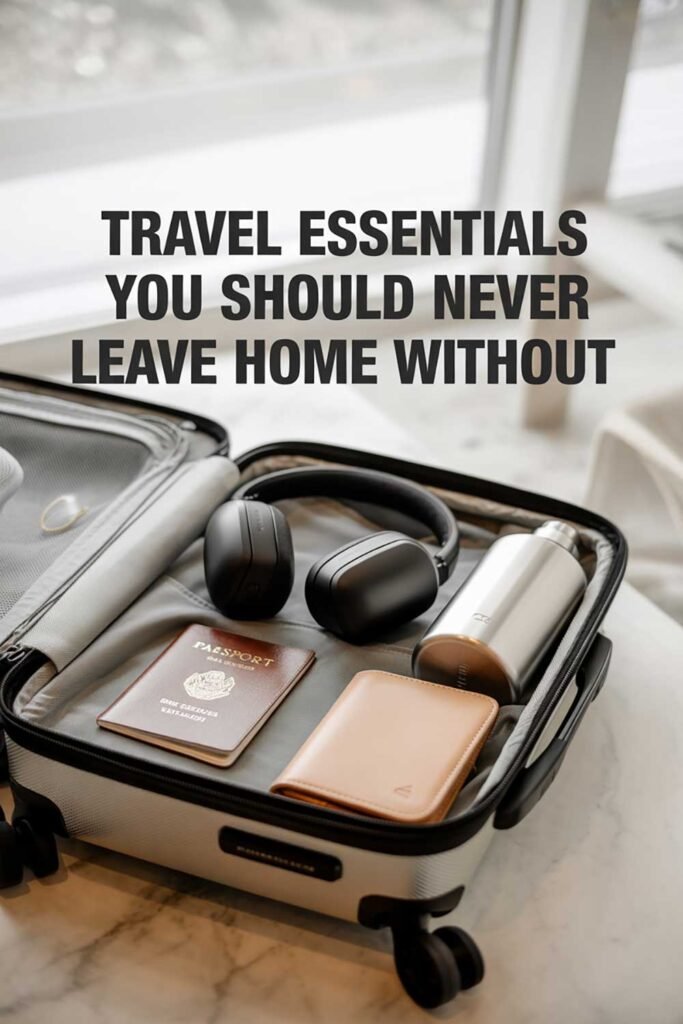
The tangle of chargers, cables, and adapters is a quiet but real source of overpacking, and it is easy to consolidate. Most modern devices charge over the same type of cable, so a single multi-port charging block plus one or two universal cables can power your phone, your headphones, and most everything else from one small setup. Add one travel adapter for the region you are visiting. This replaces the drawer-dump of individual chargers most people throw in their bag and reduces the whole electronics kit to a pouch the size of a sandwich. One block, a couple of cables, one adapter — that is genuinely all most travelers need to keep everything powered.
Skip the full-size everything, because the basics are already there
Beyond toiletries, the overpacker’s bag is often padded with full-size versions of things the destination already provides. Most hotels and many rentals supply towels, basic soap and shampoo, a hairdryer, and an iron, which means packing your own versions of these is carrying weight to a place that already has it. Before packing any bulky item, take ten seconds to check whether your accommodation provides it. The towel you do not pack, the hairdryer you leave home, and the iron you trust the room to have are each a meaningful chunk of space and weight saved for the price of one quick look at the listing or a short message to the host.
Do a final edit the night before and remove three things
Once the bag is packed and you think you are done, do one last deliberate edit: open the bag and remove three things. Not the obvious essentials — three of the borderline items you talked yourself into, the maybe-outfit, the second backup, the gadget you are not sure about. Almost every packed bag has at least three items that will go unused, and the night before is the calmest possible moment to find them, while you are home and unhurried. This habit consistently trims a bag without any real loss, because the things that survive a deliberate cut are the things you actually wanted. Make the final edit a ritual, and your bag gets lighter every trip on principle.
Trust that a shirt rinsed in a sink beats forty pounds in a train station
This is the tip that holds all the others together, and it is really a choice between two versions of your trip. In one version, you packed for every possibility, and now you drag forty pounds up the stairs, through the station, and across the platform, and you spend the trip managing your luggage. In the other, you packed light and trust that a shirt rinsed in a hotel sink and hung overnight will be ready by morning — and it always is. The rinse takes five minutes. The forty pounds takes the whole trip. Once you have felt the difference, you never go back, because the lightest bag is the one that lets you actually see the place you traveled all this way to find.
Book a Trip Worth Traveling Light For
The lighter you travel, the more of a trip you actually experience. Our travel agents plan trips designed to be moved through easily and remembered fully. Tell us where you want to go and let us handle the heavy lifting so your bag does not have to.
Book A TripThe traveler who climbed the stairs in one trip had packed two colors and a laundry kit. The one whose shirt was dry by morning had rinsed it in the sink. The one who saw the most of the trip was the one carrying the least. That is thirty tips. That is every departure from here.
Picture Yourself Walking Off the Plane
There is no checked bag to wait for, so you walk straight past the carousel and out the door. Everything you brought is in one carry-on you lifted into the overhead bin without a struggle, packed in two colors that all mix and match, rolled tight in cubes, with your bulkiest jacket and shoes already on your body. There is room to spare for what you’ll bring home. When you reach the station with the long staircase, you climb it in one trip without thinking twice. You spend the days exploring instead of managing luggage, and at night a rinsed shirt dries by morning. The bag never weighs down the parts of the trip that actually matter. That is thirty tips. That is what packing light feels like once you have gotten honest about what you actually wear.
One More Thing Before You Start Packing
Print our free Travel Packing Checklist and use it to build your capsule, confirm your carry-on essentials, and run your final edit before every trip. It is the same checklist we use to keep our own bags honest — everything we genuinely need, and nothing we’ll end up dragging across a train station for no reason.
Get the Free ChecklistExplore Our Top Picks for a Better Trip
After years of exploring the globe together, these are the exact tools, platforms, and services we rely on for every single trip — personally tested, traveler approved, all in one place. We don’t recommend anything we wouldn’t use ourselves, and this is the collection of booking platforms and travel tools that have made our adventures smoother, smarter, and more memorable.
See Our Top PicksLove Helping People Travel Smarter?
Helping a chronic overpacker discover the freedom of a light bag is one of the small joys of travel planning — and it is the kind of thing home-based travel agents do every day. If turning your love of travel into income sounds like the right next journey, see how the TravelPreneur system works.
Become An AgentPacking Light Printables at Premier Print Works
Visit Premier Print Works for capsule wardrobe planners, carry-on packing lists, travel journals, and printables that make every trip a little more beautiful and a lot more organized — from the night you lay everything out to the morning you walk off the plane with one easy bag.
Visit Premier Print WorksDisclaimer
The information shared in this article is provided by Don and Diana’s Travels for general informational, educational, and inspirational purposes only. It reflects our personal experiences, opinions, and the experiences of travelers we have worked with. It is not professional travel, financial, or medical advice.
General Travel Information
Packing recommendations, luggage guidance, and airline-related tips in this article are general suggestions based on our own travel experience. Airline baggage rules, size limits, weight limits, and fees vary by carrier and change frequently. Always confirm current requirements directly with your specific airline before you travel.
Affiliate and Partner Links
This article may contain affiliate and partner links that pay us a commission at no extra cost to you. Our recommendations are based on real use and genuine belief in the products and services we share.
Composite Stories
Stories on this site combine real experiences from Don, Diana, clients, and travelers we have worked with. Details may be adjusted for privacy and narrative clarity.
No Guarantees
We do not guarantee any specific travel experience or outcome from using the information in this article. Packing needs vary by destination, season, trip length, and personal circumstance, and remain your own responsibility.
Copyright and Use
All content is the copyrighted property of Don and Diana’s Travels. You may not copy or republish our content without prior written permission. You are welcome to share a direct link with proper credit.
By reading this article, you acknowledge that you have read and agree to this disclaimer.