30 Family Travel Hacks That Make Trips Easier
Family travel runs smoothest when every person has a role, every bag has a system, and every parent has a plan that accounts for the beautiful unpredictability of traveling with children. Thirty family travel hacks learned the hard way by experienced traveling parents, handed to you before your next adventure together so you can spend less time managing the logistics and more time making the memories.
Grab Our Travel Packing Checklist
Our free packing checklist includes a family travel section — responsibility backpacks, color codes, family documents, children’s carry-on essentials — organized so every family member’s bag is confirmed complete before the departure morning begins.
Get the Free ChecklistThirty family travel hacks learned the hard way by experienced traveling parents, handed to you before your next adventure together so you can spend less time managing the logistics and more time making the memories.
Family travel runs smoothest when every person has a role, every bag has a system, and every parent has a plan that accounts for the beautiful unpredictability of traveling with children.
Before You Leave Home: The Foundation of Every Smooth Trip
Color code every family member’s bags and items
Assign each family member a specific color — one for each adult, one for each child — and apply it to luggage tags, packing cubes, passport wallets, water bottles, and any other item that needs to be identified quickly in a crowded terminal, a shared hotel room, or a busy beach. The color-coded system eliminates the “whose bag is this” and “have you seen the blue one” conversations that crowd the mental bandwidth family travel requires for more important decisions. Children who choose their own travel color have personal investment in the system — they notice when their orange item is not where it should be, and they return it to the correct location with the ownership that assigned colors do not produce.
Assign each child their own responsibility backpack
The responsibility backpack is the child’s personal travel bag — sized for their carrying capacity, packed by them with guidance, and their responsibility for the full trip. It contains their comfort item, their entertainment, their snack pouch, their water bottle, and — for older children — their own color-coded document wallet. The responsibility backpack transforms the family travel dynamic from a two-parent logistics management exercise into a distributed system where each family member, including the children at age-appropriate levels, manages their own designated items. The child who carries their own bag and is genuinely responsible for its contents is the child who is more engaged with the travel experience and far less likely to leave their comfort item at the hotel.
Build the family packing list together — not for the family
The packing list built by one parent and distributed to the family is the packing list whose items are managed by one parent. The packing list built together — each family member contributing what they feel they need, each item discussed against the trip’s actual context — is the packing list whose items every family member has ownership of and is therefore more likely to manage correctly. The older children’s suggestions reveal what matters to them about the trip and what they are anxious about forgetting. The younger children’s contributions — even if only the stuffed animal they insisted be included — give them a stake in the preparation. A shared list produces shared investment. The trip is better for it.
Do a home practice run of the airport security sequence
For families with children who have not traveled by air before, or who traveled last when they were too young to remember, a brief home practice run of the security sequence — shoes off, bags on the imaginary belt, walking through the imaginary scanner, shoes back on — converts the security checkpoint’s first-time experience from the unknown that produces hesitation and delay into the familiar sequence that produces the efficient passage the family’s other passengers appreciate. The practice takes five minutes before the first flight. It works for ages three through twelve and produces the specific confidence that the child who has never been through airport security does not have without it.
Pack the night before — never the morning of a travel day
The family travel morning packed under departure pressure is the morning whose snack bag was left on the counter, whose child’s comfort item is still in the bedroom, whose family document wallet is on the coffee table rather than in the carry-on’s exterior pocket, and whose medical kit was not transferred from the shelf to the day bag. The family travel morning where every bag was packed the night before is the morning where the departure is the trip beginning rather than the resolution of the packing session. Pack every bag the evening before. Do a final room sweep. Place every bag at the door. The departure morning is confirmation and departure. Nothing else.
Let Us Plan the Family Trip While You Build the System
The family travel system works best around a well-planned itinerary with the right destinations, the right accommodation, and the right pace for traveling with children. Tell us where and when your family wants to travel. We will build the trip. You pack the system around it.
Plan Our EscapeDocuments and Organization: The System That Never Fails
Keep all family documents in one slim family wallet
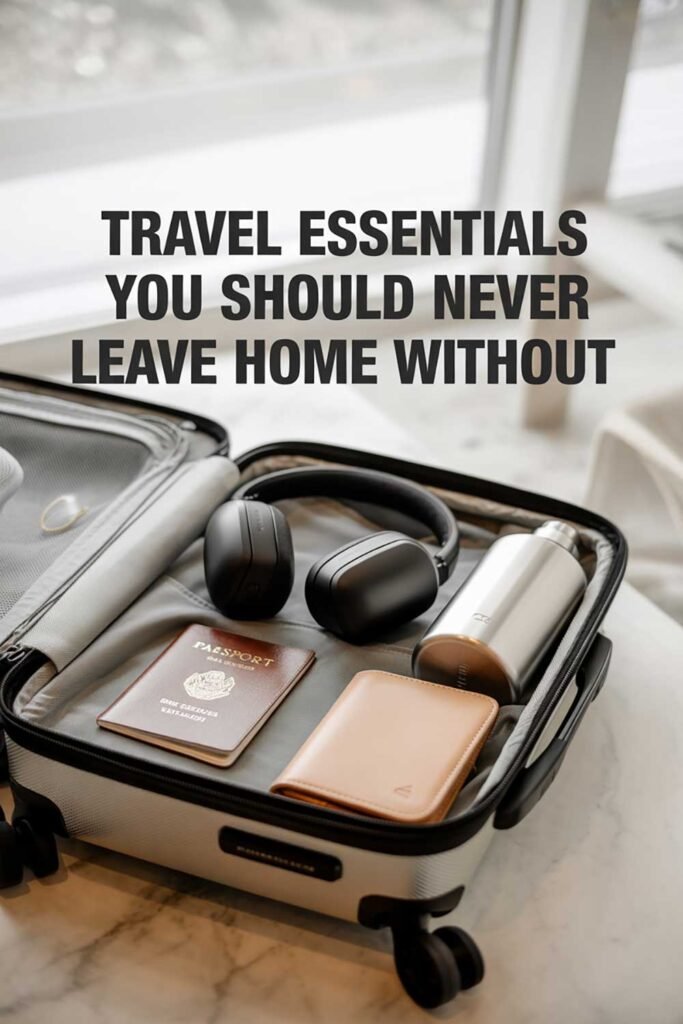
Every family member’s passport in their color-coded section, the boarding passes in the transparent window slots, the accommodation’s first address in the flat interior, the travel insurance emergency number on the physical backup card — all in one slim wallet in the carry-on’s outermost exterior pocket. The family whose documents are distributed across the adult’s purse, the other adult’s jacket pocket, and the children’s backpacks has documents in four locations requiring four searches at every checkpoint. The family wallet with one document set per labeled section requires one retrieval. Build it before the first trip. Keep it in the same location on every trip. The check-in counter is the automatic reach to the exterior pocket.
Always build more buffer time into every transition than feels necessary
Every experienced traveling parent arrives at the same conclusion from a different specific experience: the buffer time that felt excessive before the child’s pre-departure bathroom request, the dropped snack bag, the minor meltdown at the security lane, and the shoe-tying sequence at the belt was exactly correct. Family travel transitions take longer than solo travel transitions by a factor proportional to the number and age of the children involved. The buffer time that produces the unhurried, unstressed transition — the gate reached with time to spare, the boarding completed without the running sprint — is the buffer time the trip’s first memory is set by. Build it in. Every single transition.
Email digital backups of every document before departure
Every family member’s passport data page, the flight confirmations for all segments, the accommodation check-in instructions with physical addresses, the travel insurance policy and emergency number, and the Key Numbers document — all photographed and emailed to both adults’ email accounts and saved as offline photos on both phones. The digital backup exists for the lost passport that needs its number for the consulate’s emergency process, the dead phone whose boarding pass app is inaccessible, and the wet bag whose printed confirmation is unreadable at the hotel check-in. These scenarios are each individually unlikely. Their collective probability across a family’s travel history makes the five-minute email backup one of the highest-return pre-trip investments available.
Give children age-appropriate document responsibility
Children as young as six can be introduced to the concept of their own travel document — their passport in their color-coded wallet in their responsibility backpack’s critical item pouch — with the simple, clear instruction that this item is always in this location and is their specific job to keep track of. The phased introduction of document responsibility across multiple trips builds the habit before the full responsibility is transferred: the six-year-old carries the wallet but the parent confirms its presence at every checkpoint. The ten-year-old presents the passport at the gate with the parent beside them. The fourteen-year-old manages it independently. The habit built across these stages is the habit that produces the adult who does not have the missing passport conversation at their own check-in counter.
Photograph each child’s outfit at the start of every travel day
The photograph of each child in their complete outfit — shoes, jacket, bag — taken at the hotel room or accommodation before the day’s departure is the specific reference that the crowd separation scenario requires. If a child becomes separated from the group in a busy market, a crowded terminal, or a theme park with tens of thousands of visitors, the ability to tell a security officer or a helpful stranger exactly what the child is wearing at that precise moment is the information that shortens the reunion time from hours to minutes. Take the photograph. Keep it as the day’s most recent photo on the phone. The scenarios in which it is needed are uncommon. The scenarios in which it is needed and not available are the ones that produce the longest and most frightening waits.
The Trip That Taught Renee Everything on This List
Renee had been planning the family trip for four months. She had researched the destination, booked the accommodation, identified the best restaurants, and created a detailed daily itinerary. What she had not done was build a system for how the family would actually move through the trip — how the bags would be organized, who would carry what, where the documents would live, and how much time each transition actually required when it was happening with two children under ten rather than in the planning spreadsheet.
The departure morning began with the discovery that the snack bag was on the kitchen counter rather than in the carry-on. The middle child’s comfort stuffed animal was in the bedroom rather than in the backpack. The family’s passports were distributed between Renee’s handbag, her partner’s jacket pocket, and the eldest child’s backpack where they had been placed the previous evening for reasons that had made sense at the time. At the security lane, the youngest had not been through security before and did not know what to do with their shoes. The family arrived at the gate with four minutes to spare.
At the accommodation’s check-in, the confirmation email was in the inbox somewhere, found after three minutes of searching the phone under the desk agent’s patient observation. The first evening’s restaurant had been fully booked by the time they tried to reserve it, because the specialty dining reservation had not been made on arrival. The second day’s transition to the port took forty-five minutes longer than planned because the estimate had been calculated without accounting for two bathroom stops and a snack negotiation.
On the second family trip, the bags were packed the night before. Each child had their own color-coded responsibility backpack. The family document wallet had each passport in its labeled section. The digital backup email had been sent to both phones. The buffer time on every transition was double what felt necessary in the planning stage. The youngest had practiced the security sequence at home. The snack bag was in the carry-on’s exterior pocket. The comfort animals were at the top of each child’s backpack and were the first items checked on the departure morning sweep.
The departure morning of the second trip took twenty minutes from bags-at-door to car. The gate was reached thirty minutes before boarding. The children each had their own role and their own bag and were genuinely part of the travel team rather than passengers in the logistical exercise. The trip itself was not perfect — family trips never are — but the specific chaos that had consumed the first trip’s energy was gone. These thirty hacks are what replaced it. Every single one of them earned between those two departures.
Packing for Children: The Essentials That Change Everything
Pack a complete change of clothes per child in the carry-on
Children produce the specific clothing situations that the checked bag inaccessibility during transit most reliably compounds. The spilled airplane meal, the motion sickness incident, the juice that was going well until the turbulence, and the mystery stain that appeared between the taxi and the departure gate are all occasions where the change of clothes in the carry-on converts a two-hour wardrobe problem into a ten-minute lavatory visit. One complete change — top, bottom, underwear, socks — per child in a small zip bag in the carry-on’s main compartment. The change used on the flight is the change that arrives at the destination. The change not used on the flight is the first day’s spare. Either way, it earns its place every trip.
Pack more snacks than any reasonable estimate suggests
The snack quantity that experienced traveling parents recommend for family travel is the quantity that the pre-trip calculation felt excessive for and that ran out two hours before the trip ended. Children’s hunger and boredom are managed simultaneously by the snack that is available at the right moment — the airport delay’s fortieth minute, the flight’s third hour, the car journey’s midpoint, the wait at the immigration line. The snack not available at that moment is the hunger event that intersects with the travel stress at exactly the moment when both parents are least equipped to manage it. Pack for the best-case travel day’s snack quantity and then add thirty percent. The excess comes home. The shortage produces the specific airport food court transaction that the pre-packed snack costs a fraction of.
Bring entertainment that works completely without Wi-Fi
The assumption that inflight Wi-Fi will be available, reliable, and free enough for streaming is the assumption that produces the specific entertainment failure at the worst possible flight hour. Download everything before departure: the specific films and series each child has been promised, the age-appropriate apps with offline content, the audiobooks and podcasts downloaded to the specific device each child uses. Confirm every download shows the offline indicator before the device goes in the bag. The entertainment library confirmed before departure is the entertainment library that plays at cruising altitude over the Atlantic without a single loading indicator. Download before departure. Confirm each download. No Wi-Fi required.
Pack one non-negotiable comfort item per child — and protect it
The stuffed animal, the specific blanket, the worn and irreplaceable soft toy that has been with the child since infancy — this item is the child’s travel anchor, the constant in the variable environment of every unfamiliar hotel room and every new destination. Pack it at the very top of the child’s responsibility backpack where it is the first item seen and the first item confirmed present at every accommodation departure. The comfort item left in the hotel room is discovered at the next destination, and the journey back to retrieve it is measured in the specific emotional weight of its absence rather than in miles or hours. It goes in the backpack. It is confirmed on the sweep. It travels home the same way it arrived.
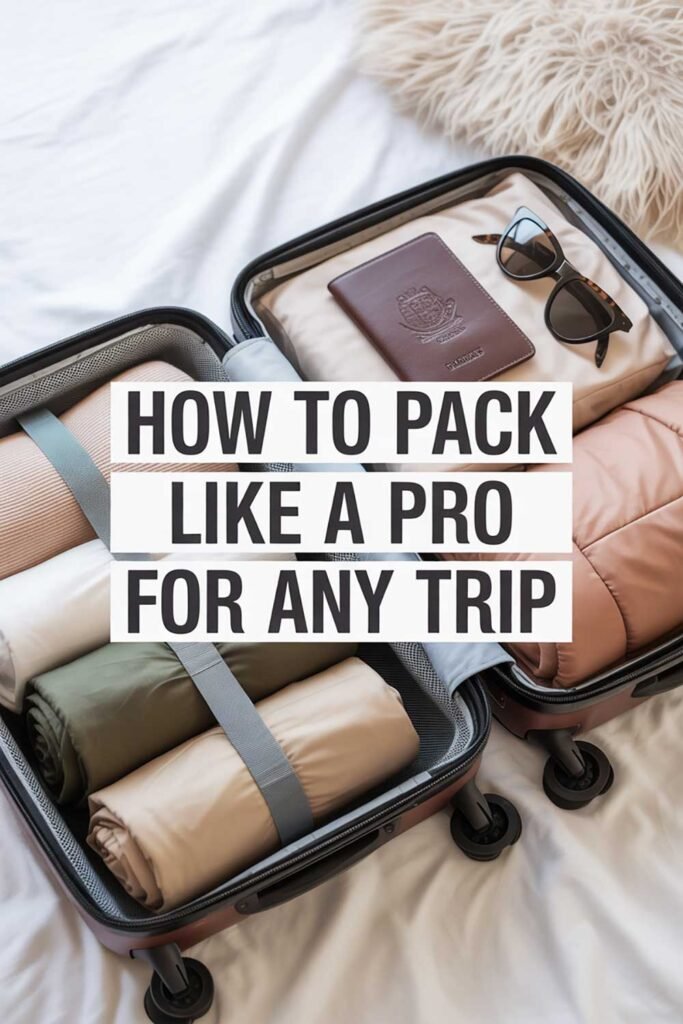
Use packing cubes — one color per family member
The packing cube system applied to family travel produces the specific organization that the shared suitcase without cubes cannot: every family member’s items in their own color-coded cube, the morning’s dressing routine as the retrieval of the correct cube rather than the excavation of the communal bag’s contents. One cube per person. The navy cube is the eldest’s. The teal cube is the youngest’s. The gold cube is one adult’s. Every item returns to its cube at the end of each day. Every departure morning is the cubes back into the bag rather than the items off every surface. The family that uses packing cubes consistently reports the hotel room that stays manageable across a seven-night stay rather than descending into the entropy that the cube-free shared bag reliably produces by day three.
Our Curated Collection of Trusted Travel Tools and Official Sources
From official government travel tools and passport resources to practical planning aids, we have pulled together the resources we trust most so every family trip is better informed, better prepared, and a lot less stressful from start to finish.
DND ResourcesAirports and Transitions: Moving the Team Through Every Checkpoint
Arrive at the airport earlier than any travel guide recommends
Standard airport arrival guidance for domestic travel is ninety minutes before departure. For international travel the guidance is two to three hours. For family travel with children under twelve, add thirty to sixty minutes to every published recommendation. The gap between the official guidance and the family travel reality is composed of the bathroom stop that was needed upon arrival, the security lane that was longer than anticipated, the child who needed to eat before boarding, and the gate that was further from security than the terminal map suggested. Arrive earlier than the guidance says. The buffer that felt excessive when purchasing the parking ticket is the buffer that produces the leisurely family boarding rather than the gate sprint.
Give every child a specific job during every transit
The child with a specific job during the airport transit — the youngest holds the boarding pass wallet, the eldest navigates from the security exit to the gate using the airport map, the middle child manages the family water bottles — is the child who is engaged with the transit process rather than bored by it, and whose engagement reduces the specific management overhead that the bored and undirected child produces in the exact environment where both parents’ attention is most divided. Age-appropriate transit jobs produce the genuine travel competence that the purely managed child does not develop, and the travel team that performs better on every subsequent trip because the roles were established and practiced on the earlier ones.
Never pass a bathroom without stopping — regardless of the reported need
The family travel bathroom rule is simple and absolute: every bathroom passed during a transit is an opportunity used regardless of any family member’s stated current need. The bathroom not used at the departure gate is the bathroom needed during the taxi sequence. The bathroom not used before the security lane is the bathroom needed while one adult manages the bins and the other manages the children at the belt. The stated “I don’t need to go” from the child who needed to go thirty minutes later at the least convenient moment is the specific experience that produces the rule and then confirms it on every subsequent journey it is applied. Pass no bathroom unused during a family transit.
Feed everyone before every transition — including the adults
The hungry family at the airport is a specific combination of circumstances that produces the specific outcomes that the fed family at the airport does not. Children’s patience, cooperation, and emotional regulation are all directly connected to their blood sugar state in a relationship that no amount of parental reasoning overcomes when the glucose is genuinely low. Feed everyone before the security line. Feed everyone before the boarding queue. Feed everyone before the long drive between the airport and the accommodation. The snack eaten five minutes before the transition is the transition that goes smoothly. The transition attempted on empty is the transition remembered for the wrong reasons.
Use family security lanes and family pre-boarding every single time
Family security lanes at major airports are specifically designed for the processing time that families with children, strollers, car seats, and the general volume of equipment that traveling with children involves require — without the adjacent passenger’s impatience that the standard lane’s family security process produces from the standard lane’s perspective. Family pre-boarding allows the family to be seated, bags stowed, children settled, and car seats secured before the standard boarding crowd fills the aisle. Both of these options are available, widely advertised, and used by a fraction of the families eligible for them. Ask the agent at the security checkpoint and at the gate. Use them every time. The family that is seated and settled before boarding is a different experience entirely from the family navigating the full aisle.
At the Destination: Making It Work Every Day
Establish a family meeting point at every new venue
At every new location — the theme park, the market, the beach, the museum, the airport terminal — the first five minutes after arrival is spent identifying and communicating a specific, visible, named meeting point. “If we get separated, meet at the big fountain at the park entrance” is the instruction that converts the crowd separation scenario from the panicked search to the calm reunion at the known location. Point to the meeting spot. Have the children confirm they can see it and identify it independently. For younger children, the instruction includes “stay where you are and ask a mother with children for help” as the alternative to the meeting point if the meeting point cannot be reached independently.
Build at least one completely unscheduled afternoon into the itinerary
The fully scheduled family vacation itinerary is the itinerary that does not account for the morning’s activity running long, the child who found something genuinely absorbing that the schedule requires leaving behind, the unexpected market encountered en route to the planned museum, and the simple afternoon where the family sat in a café and watched the destination’s life move past without any scheduled experience requiring attendance. The unscheduled afternoon is not a planning failure. It is the specific travel space where the memories that are not on the itinerary happen. Build one in. Protect it from the temptation to fill it. The children remember those afternoons with the specific clarity that the scheduled experiences do not always produce.
Give children age-appropriate daily choices about the itinerary
The child who had no input into the day’s plan is the child who has no investment in it. The child who chose the afternoon’s activity — even from a pre-approved list of two or three options — is the child who participates in it with a different quality of engagement. Age-appropriate choice within the family itinerary produces the travel partnership that the passenger-only travel role does not develop, and it produces the child whose genuine enthusiasm for their choice elevates the group’s afternoon. Daily choice does not mean surrendering the itinerary to the youngest family member’s agenda. It means identifying one moment per day where a genuine choice is offered and honored.
Choose accommodation with kitchen access for stays of four or more nights
Accommodation with a kitchen or kitchenette — a vacation rental, a suite with cooking facilities, an apartment-style hotel — provides the specific family travel capability that the hotel room without cooking facilities cannot: the breakfast made at the accommodation rather than purchased at the restaurant, the children’s reliable meal on the evening when the local cuisine’s unfamiliarity produces the specific dinnertime problem, and the late-night snack retrieved from the refrigerator rather than ordered at a premium from room service. For families staying four or more nights, the cooking facilities’ savings across the stay, combined with the flexibility they provide for the children’s eating preferences, make the kitchen-equipped accommodation consistently worthwhile at every price point.
Have a bad day plan — it will happen and it will pass
Every family travel experience of meaningful duration includes at least one day that does not go as planned — the child who woke up unwell, the rained-out excursion, the restaurant that was fully booked, the meltdown at the monument, the afternoon where everything felt hard and nothing felt worth the effort. The bad day plan is not the solution to these days — there is no solution to a bad travel day with children other than time and grace. The plan is the pre-decided response: the fallback activity that requires nothing except being somewhere comfortable, the meal that is familiar and reliable, the afternoon that is given over to rest and a film without any pressure for it to be anything else. Name the plan before the trip. Use it without guilt when the day requires it.
Book the Family Adventure Worth Applying All 30 Hacks To
The family travel system reaches its full value on the trip that is genuinely worth the preparation — well-chosen destination, the right accommodation, the pace that works for traveling with children. Our travel agents book those family adventures. Let us plan yours.
Book A TripThe Daily Habits That Hold the Whole Trip Together
Protect nap time and rest as fiercely as any other travel commitment
The child who skipped their nap to extend the morning’s museum visit is the child at the afternoon’s restaurant. The family that stretched the day’s activity past the point the youngest could sustain it has the specific evening that the protected rest would have prevented. Nap time and the younger child’s rest are not flexible items in the family travel schedule — they are the structural elements that the rest of the schedule is built around. The morning activity that is cut slightly short to return for the nap produces the afternoon and evening that the rested child and the recovered parent both make possible. Schedule around it. Protect it. The trip is better for its presence every day.
Set a one-word family crowd safety signal — and practice it at home
The family crowd safety signal is a single agreed-upon word that every family member knows means: stop immediately, do not move, and wait for a parent to reach you or for a parent’s instruction. Practiced at home before the first trip, the signal produces the automatic response at the market, the theme park, the crowded airport, or the beach where a child has wandered further than expected. The word itself is less important than its consistent use and its association with immediate compliance rather than delayed processing. Any word will work. The word practiced until its response is automatic is the word that works when the crowd is dense and the distance is growing and every second of the child’s stationary waiting is the second that closes it.
Keep a small medical kit accessible in the day bag at all times
The family travel day bag’s medical kit — blister plasters for the new walking shoes, children’s pain relief, antihistamine for the bee sting or the jellyfish encounter, antiseptic wipes for the knee scrape on the cobblestones, motion sickness medication for the boat excursion, and a digital thermometer — resolves the minor medical moment at the point of occurrence rather than requiring the return to the accommodation. The medical kit at the bottom of the main bag, accessed by unpacking everything above it at the street corner where the child scraped their knee, is the medical kit that produces a different experience than the accessible one in the day bag’s exterior pocket. Front pocket. Every day. Every destination.
Give the children the trip journal — let them write it
A small notebook and a pen given to each child who can write with the instruction to record one thing per day — one experience, one observation, one drawing, one thing that surprised them — produces the trip record that the parent’s photographs capture visually and that the child’s own words capture experientially. The child who writes in the trip journal is the child actively processing the travel experience through their own perspective. The journals collected across multiple family trips become the specific family document that the photographs alone do not produce: the trip as the children experienced it, in the words and drawings of the people for whom the trip was being made. Give them the journals. Read them on the flight home.
Debrief the trip with the family to build the next one’s better system
The family debrief — a brief, honest conversation within a week of returning — asks three questions of every family member old enough to answer: what was the best part, what was the hardest part, and what should we do differently next time. The answers to the third question are the raw material of the next trip’s improved system. The child who says “I wish I had more time at the beach and less time at the museum” is giving the itinerary feedback that the next trip’s planning uses. The adult who says “we always leave too late in the mornings” is identifying the buffer time adjustment the next departure incorporates. The family that debriefs after every trip improves with every trip. This article is the debrief that experienced traveling families wish they had received before the first trip. The next debrief builds on it.
Love Helping Families Create Adventures Worth Remembering?
Family travel bookings are some of the most meaningful agent work — these are the trips that become the family’s shared story for years. If becoming a home-based travel agent who helps families find and book their best adventures sounds like the right next step, see how the TravelPreneur system works.
Become An AgentThe family that moved through the airport without a sprint had packed the night before, arrived early, fed everyone before the security line, and given each child a job. The trip had already begun on the right terms. That is thirty hacks. That is every family adventure from here.
Picture Your Next Family Departure Morning
Every bag is at the door. Each one is packed in its color. The family document wallet is in the carry-on’s exterior pocket with every passport in its labeled section. Each child’s responsibility backpack has the comfort item at the top and the snack pouch accessible. The departure morning took twenty minutes from bags to car because everything was confirmed the night before. At the airport you are forty-five minutes early — not because you are anxious, but because that is what traveling with children takes and you built it in. The security lane is smooth because the youngest practiced it at home. The gate is reached with time to sit, eat a snack, and watch the aircraft arrive. The flight is good because the entertainment was downloaded last night. The trip has already begun the way it deserves to. That is the system. That is every family trip from here.
One More Thing Before Your Next Family Trip
Print our free Travel Packing Checklist and use the family travel section to confirm every bag is color coded, every child’s responsibility backpack is packed, the family document wallet is complete, the digital backup is sent, and every bag is at the door the evening before departure. The same checklist we recommend before every family adventure.
Get the Free ChecklistExplore Our Top Picks for a Better Trip
Visit our favorites page for helpful booking ideas and travel essentials that we have found genuinely useful for family travel. Whether you are planning your family’s next adventure or looking for resources that make every departure smoother and every destination more enjoyable, it is worth exploring.
See Our Top PicksFamily Travel Printables at Premier Print Works
Visit Premier Print Works for family packing checklists, trip planners, children’s travel journals, departure day guides, and printables that make every family adventure a little more beautiful and a lot better organized — from the evening the bags are packed to the debrief conversation on the flight home.
Visit Premier Print WorksDisclaimer
The information shared in this article is provided by Don and Diana’s Travels for general informational, educational, and inspirational purposes only. It reflects our personal experiences, opinions, and the experiences of travelers we have worked with. It is not professional medical, legal, or travel advice.
Child Safety
Child safety guidance in this article is general educational information. Parental judgment about each child’s specific development, maturity, and circumstances should always govern safety decisions. Never compromise child safety for the convenience of any travel system. Always supervise children appropriately for their age and the specific environment.
Health and Medical Information
Medical kit contents and health-related suggestions in this article are general guidance only and are not a substitute for professional medical advice. Always consult a healthcare provider for health guidance specific to your family’s circumstances, particularly for international travel.
Airline and Travel Policies
Family boarding policies, security lane availability, and all other airline and airport policies vary by carrier, airport, and jurisdiction and are subject to change. Always confirm current policies before travel.
Affiliate and Partner Links
This article may contain affiliate and partner links that pay us a commission. Our recommendations are based on real use and genuine belief in the products and services we share.
Composite Stories
Stories on this site combine real experiences from Don, Diana, clients, and travelers we have worked with. Details may be adjusted for privacy and narrative clarity.
No Guarantees
We do not guarantee any specific result from using the information in this article. Family travel experiences depend on many factors outside any individual’s control.
Copyright and Use
All content is the copyrighted property of Don and Diana’s Travels. You may not copy or republish our content without prior written permission. You are welcome to share a direct link with proper credit.
By reading this article, you acknowledge that you have read and agree to this disclaimer.