Winter Vacation Packing Tips for Women
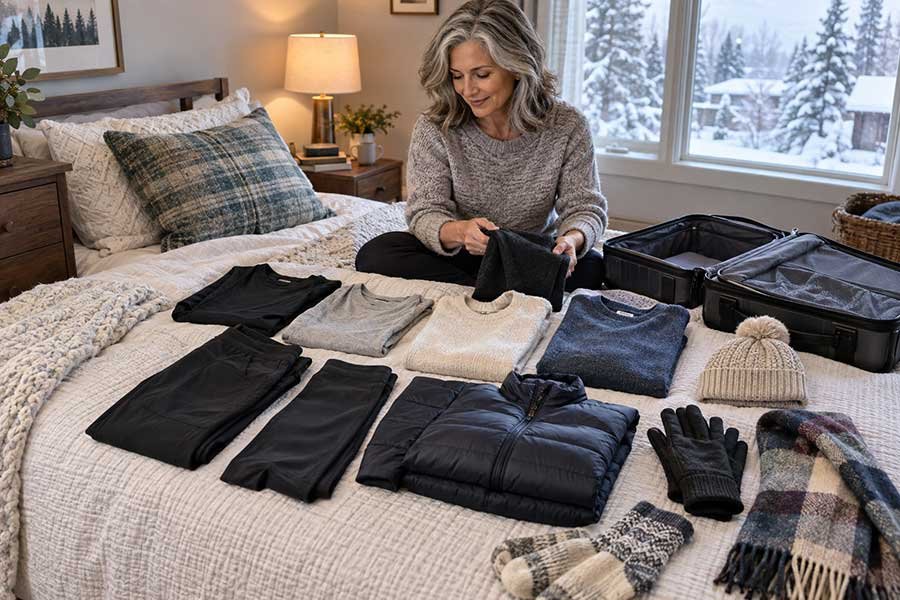
Winter packing is all about layers that work together rather than bulky pieces that only work alone. The best dressed women at any winter destination packed smarter not heavier and still had room in their bag for everything they found along the way. This article builds the winter wardrobe system that makes warmth light and style effortless regardless of the temperature outside.
Grab Our Travel Packing Checklist
Our free packing checklist includes a winter travel section organized by the layer system rather than by item type, so the packing session builds the complete thermal stack before adding the style layer above it. Print it before your next cold-weather trip and use it to confirm every layer from the thermal base to the packable outer is in the bag before the bag is closed.
Get the Free ChecklistThe single most significant winter travel wardrobe decision is the outer layer, and the outer layer decision comes down to a simple principle: the warmest outer layer a traveler can pack for a winter trip is the one that is actually in the bag when the trip departs. A heavy full-length down parka that is too large to fit in the checked bag after everything else is packed is a coat that stays home. A packable down jacket that compresses to the size of a large water bottle goes in the bag, in the overhead bin, in the day backpack, and in the personal item, and is available at every moment of the trip when the temperature requires it. The warmth per volume ratio of a modern packable down jacket is the specific metric that makes it the most effective outer layer choice for travel: more warmth per cubic centimeter of bag space than any other jacket category available.
The packable down jacket for travel compresses into its own interior pocket or into a small included stuff sack and reaches a packed volume of approximately one to two liters depending on the jacket’s length and insulation weight. A mid-length packable down jacket rated for temperatures below freezing compresses to the volume of a large thermos. At the destination, it expands to a coat that handles temperatures from the low thirties Fahrenheit down to the single digits with the correct underlayers beneath it. This is the specific warmth range that most winter travel destinations fall within, and the packable down jacket handles it from a packed volume that a standard fleece would not match in warmth despite occupying the same or more bag space.
Down vs. synthetic fill for travel: natural down provides a higher warmth-to-weight ratio than synthetic insulation of equivalent volume, meaning a down jacket is warmer for its weight and size than a synthetic equivalent. The practical limitation of natural down is its loss of insulating properties when wet, since the down clusters collapse under moisture rather than maintaining their loft. Synthetic fill maintains most of its warmth when damp. For winter travel that involves significant precipitation, wet snow, or outdoor activities in humid cold environments, a synthetic or treated-down fill that maintains insulation when wet provides better practical warmth than untreated natural down. For winter city travel, ski resort travel where the jacket stays dry in the lodge and is worn between the car and the slopes, and winter travel in dry cold climates, untreated natural down’s superior warmth-to-weight ratio makes it the better choice. Research the destination’s typical winter precipitation pattern before choosing between down and synthetic for the trip’s outer layer.
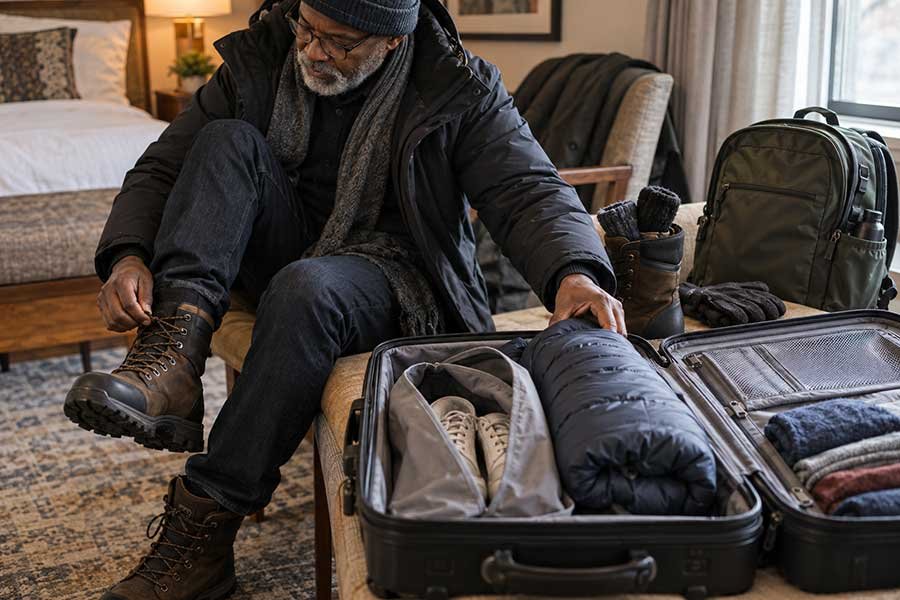
Wear the packable down jacket on the flight rather than packing it, and compress it into its stuff sack for stowage in the overhead bin or the under-seat personal item once seated. This approach removes the jacket’s volume from the bag entirely for the purposes of airline bag size and weight checks while ensuring it is with the traveler rather than in the checked bag. At the destination, the jacket leaves the stuff sack and begins its trip service as the outer layer over every outfit in the winter wardrobe rather than as the bag’s largest volume occupant.
The best dressed women at any winter destination packed smarter not heavier and still had room in their bag for everything they found along the way.
Winter packing is all about layers that work together rather than bulky pieces that only work alone. Warmth is a system, not a coat size.
Choose a packable down jacket in a neutral winter color, navy, black, camel, or charcoal grey, that works over every outfit in the winter wardrobe rather than a statement outerwear color that coordinates only with specific pieces. The packable down jacket is the layer that appears in every photograph from every outdoor moment of the trip, and a neutral color produces a trip photo set where the jacket is background context rather than the dominant visual element that dates every photograph to the specific color trend of the year it was purchased. A neutral jacket also means the scarf, hat, and gloves carry the color and visual personality of the cold-weather outfit rather than competing with an outer layer that has already made a strong color statement.
Let Us Book the Winter Destination Worth Packing This Carefully For
The right winter destination is the one where the cold is part of the magic: the European Christmas market, the cozy mountain lodge, the snow-dusted city that is a different and more beautiful place in winter than any other season. Tell us where you want to go and when. We will build the trip. You build the wardrobe system this article describes.
Plan Our EscapeThe thermal underlayer is the most undervalued component of the winter travel wardrobe and the most consequential. The warmth experienced at any winter destination is not primarily the product of the outer layer visible to everyone around the traveler. It is primarily the product of the base layer next to the skin that creates and retains the body heat generated by the traveler’s own warmth. A packable down jacket worn over a thin cotton t-shirt in twenty-degree weather produces a cold traveler despite the jacket’s insulation rating. The same packable down jacket worn over a merino wool thermal base layer and a mid-layer knit produces a warm traveler at the same temperature because the layering system builds the warmth from the body outward rather than relying on the outer layer alone to supply it.
The thermal base layer for women’s winter travel: a fine merino wool long-sleeve top and a merino wool bottom in the appropriate thickness for the destination’s temperature range. Merino wool is the optimal base layer material for travel specifically because it manages the specific challenges of the travel environment: it regulates temperature across a wide range so the same base layer performs in the cold outdoor walk and in the warm indoor restaurant rather than requiring removal and replacement. It manages moisture by wicking it away from the skin rather than holding it against the body the way cotton does. It is naturally odor-resistant through multiple wearings without washing, which is the specific quality that makes it the right choice for travel where laundry access is limited. And it is machine washable at delicate settings and dries quickly when hand-washed and hung, which means it can be laundered at the accommodation and ready for the next day without a laundromat stop.
The mid layer, between the base layer and the outer jacket, provides the insulating air pocket that amplifies the base layer’s warmth retention. A fine knit sweater, a merino cardigan that opens for indoor temperature adjustment, or a lightweight fleece half-zip provides the mid layer in a format that is itself a complete indoor outfit without the jacket, transitions to a fully warm outdoor outfit when the jacket is added, and packs flat in the wardrobe’s packing cube without the volume that a heavyweight knit or fleece would require. The mid layer in a neutral that coordinates with the base layer below and the jacket above is the winter wardrobe’s versatility piece: worn alone with the base layer in a heated museum, worn beneath the jacket in the outdoor Christmas market, worn over the base layer at the evening restaurant with the jacket left at the accommodation.
The total volume of a complete base layer and mid layer system, a merino long sleeve, merino bottoms, and a fine knit sweater or merino cardigan, is less than one standard packing cube and weighs under six hundred grams. The warmth they provide as the insulating foundation beneath the packable down jacket is the warmth that the outer layer alone cannot provide at similar packed volume. The layering system’s economics: more warmth per gram and per liter of bag space than any single heavy outer layer alternative, with the additional benefit of indoor-outdoor temperature adaptability that the single heavy coat cannot provide.
Pack two thermal base layer sets for any winter trip of five days or more. The merino base layer’s odor resistance means it can be worn for two to three days before requiring washing, but having a second set in rotation means one set can be washing and drying at the accommodation overnight while the other is worn, rather than the base layer drying race that a single set produces on the morning it was washed. The second base layer set adds under four hundred grams and one small packing cube to the system and eliminates the accommodation morning of is-it-dry-yet that the single-set approach periodically produces. The small additional weight and volume is the cost of never being cold because the base layer was still damp from last night’s hand wash.
The winter travel footwear challenge is the category where the heaviest items in any travel bag are typically found, where the most specialized single-use items tend to accumulate, and where the combination test fails most consistently. A pair of waterproof hiking boots, a pair of casual walking shoes, a pair of dinner shoes, and an apres-ski boot is four footwear items that occupy the majority of the checked bag’s available space at a weight that the airline scale notices. One pair of waterproof boots chosen specifically for their crossover functionality between walking and dinner eliminates three of these four items from the bag entirely and occupies the footwear category’s budget with a single pair of shoes that handles every winter travel occasion except the extreme-cold outdoor activity that requires specialized gear.
The one pair of waterproof boots that works for walking and dinner is not a compromise. It is a specific product category that the winter footwear market has developed extensively: the weatherproof ankle or knee boot with a leather or leather-look exterior that reads as intentional evening footwear, a waterproof or water-resistant treatment that handles snow, slush, and wet cobblestones, a low or block heel that provides stability on winter surfaces, and a sole with meaningful grip for icy or snowy pavement. This boot at a dinner table reads as a deliberate outfit choice. The same boot on a winter city’s cobblestones handles the wet surface without the slip anxiety that a smooth-soled dress shoe produces. The same boot on a snowy trail between the gondola and the ski lodge keeps the feet dry through the transit. The functional crossover is not theoretical: these boots exist, are widely available, and eliminate the footwear multiplication that winter packing most consistently produces.
Test any proposed single-pair winter travel boot for the full trip’s wear conditions before packing it. A boot that looks perfect for the walking-and-dinner crossover but that has never been worn for five consecutive hours of cobblestone walking in cold weather may have the specific comfort limitation that reveals itself at hour three of the Christmas market day. Wear the proposed boots for a full day of comparable activity before the trip, confirm the heel height is stable enough for the destination’s specific surfaces, and confirm the waterproofing treatment holds against the moisture conditions the destination produces. The five hours of wear testing before the trip is the investment that eliminates the day-three blister and the wet-feet afternoon that a different shoe choice would have prevented.
Apply a fresh waterproof treatment spray to the boots two to three days before departure, regardless of whether they were treated when purchased. Waterproof treatments on leather and suede boots diminish with wear and cleaning over time, and the boots that were waterproof when purchased last season may not be providing meaningful waterproofing at the start of this winter trip’s wettest day. The two-day pre-treatment window allows the treatment to fully cure and bond to the leather surface before the first wet-weather exposure, rather than applying the treatment the morning of departure and heading immediately into wet conditions where an uncured treatment provides only partial protection. A properly treated boot handles the wet cobblestone, the slush at the curb, and the light snow without soaking through to the wool sock beneath it.
The Winter Travel Wardrobe Items We Pack for Every Cold-Weather Trip
The packable down jacket in charcoal grey that has appeared in every winter trip photograph for three years without looking like it appeared in every winter trip photograph, the merino base layer set that manages twenty-degree outdoor walks and heated museum tours without requiring a full outfit change between them, and the ankle boot in black leather that has handled cobblestone markets, candlelit dinners, and morning snow walks on the same trip in the same pair of feet. Real winter travel wardrobe picks from real cold-weather trips.
DND FavoritesWool socks are the winter travel wardrobe item whose impact on the daily experience of the trip is most disproportionate to their size and weight. Feet in thin cotton socks inside waterproof winter boots walking cobblestone city streets or standing at outdoor markets are cold feet by hour two. The same feet in merino wool hiking socks that wick moisture away from the skin and maintain insulation even when slightly damp are warm feet at hour five of the same activity in the same boots at the same temperature. Merino wool socks regulate foot temperature across the range of indoor and outdoor winter travel contexts, from the heated museum floor to the outdoor Christmas market snow, without the moisture accumulation and temperature drop that cotton socks produce when the feet perspire in the heated interior and then immediately step into the cold exterior.
Pack three to four pairs of merino wool socks for any winter trip of five to seven days. Three pairs in rotation with the one-pair-worn-one-pair-washing-one-pair-ready rotation covers a week of travel without any laundromat visit, since merino wool socks hand-wash quickly and dry overnight at the accommodation. The specific merino wool sock weight, from lightweight to expedition weight, should match the boot’s interior depth: a thick expedition-weight sock in a snug-fitting boot eliminates the blood circulation that keeps feet warm. A medium-weight hiking sock in the same boot provides warmth without compression. Test the sock-boot combination before the trip to confirm the combination fits correctly and provides the warmth without the circulation restriction.
The large wool or wool-blend scarf that doubles as a blanket on the plane is the single most multi-functional item in the winter travel wardrobe. Worn as a scarf in the outdoor cold it provides neck and lower face coverage that is second only to a balaclava in effectiveness at the specific wind-exposed areas that winter travel most consistently chills. Worn as a shawl over the shoulders at the indoor restaurant or museum it converts the base layer and mid layer outfit to a warmer and more formal register without adding a separate layer. Used as a blanket on the flight it replaces the aircraft’s provided blanket, which is thinner and colder than most travelers find comfortable, with the traveler’s own wool blanket at a quality level the aircraft blanket never matches. Folded as a pillow at the accommodation when the pillow is insufficient it provides the additional loft that the travel-worn pillow sometimes lacks. The large wool scarf in the travel wardrobe is four items in one: scarf, shawl, flight blanket, and supplementary pillow. It packs flat in the carry-on’s main compartment and weighs under three hundred grams. Very few items in the travel wardrobe provide this return on bag space.
Choose the large wool scarf in the wardrobe’s one accent color. Where every other piece in the winter wardrobe is a neutral that coordinates with everything else, the scarf in a rich jewel tone, a deep burgundy, a forest green, a warm caramel, or a bold cobalt, is the piece that gives every outfit its personality without requiring any additional accessory to produce the visual interest that a fully neutral winter wardrobe can lack. The same neutral base layer, neutral mid layer, neutral packable down jacket, and neutral boots look like a different outfit in every photograph when the scarf that completes it is in a different position and a different drape. The scarf is the winter wardrobe’s accessory multiplier: one item in one color that transforms the visual register of the same five pieces across ten days of photography.
The complete winter travel wardrobe system builds from the thermal foundation outward through the style layer and the functional accessories to produce a wardrobe that handles the full range of winter travel contexts from morning outdoor activity to evening restaurant to overnight flight without requiring a separate outfit set for each context.
The thermal foundation: two sets of merino wool base layer tops and bottoms in a neutral that disappears beneath everything above it. Three to four pairs of merino wool socks in medium hiking weight confirmed to fit comfortably in the travel boots. One thermal underlayer tights or long underwear for extreme cold days or ski resort transitions. These items go in the smallest packing cube in the system and weigh under eight hundred grams combined.
The style layer: three to four tops in the neutral wardrobe palette, either fine knit turtlenecks or merino crewnecks that sit directly over the base layer and read as a complete indoor outfit without any additional layer. Two to three bottoms, a well-fitted straight leg trouser in a neutral, a midi skirt in a heavier fabric that layers naturally over thermal tights, and one pair of dark-wash jeans. One mid layer knit, a merino cardigan or a fine turtleneck ribbed sweater, that sits between the top layer and the outer jacket and provides the insulating air pocket the system requires in extreme cold. One packable down jacket in a neutral. These items occupy one medium and one large packing cube and constitute the visual wardrobe that the trip photographs show.
The functional accessories: the large wool scarf in the one accent color. A hat in a matching neutral that provides wind and cold protection without requiring a separate fashion hat that coordinates only with specific outfits. Gloves in a thin leather or leather-lined format that provide cold protection without the thickness that prevents phone use or bag access while wearing them. The one pair of waterproof boots worn on the journey. The items that would otherwise be footwear alternatives, the indoor flats for heavily heated spaces and the casual day shoe for mild-weather days, are eliminated by the single boot choice and by the addition of a thin packable flat or a small casual shoe that occupies the remaining shoe-shaped space in the bag if the destination specifically warrants it.
Pack a small tube of leather conditioner with the travel boots and apply it at the accommodation after any particularly wet or cold day’s wear. Winter travel conditions are the most demanding on leather footwear: the combination of wet surfaces, road salt, and cold temperatures dries and cracks leather more rapidly than any other wearing condition. A five-minute leather conditioning session after any particularly demanding day extends the boot’s waterproofing, restores the leather’s suppleness, and ensures the boots maintain their dinner-appropriate appearance for the full trip rather than arriving at the final dinner looking like they spent the week being used as winter walking boots, which they were.
The Checked Bag That Weighed More Than She Did and Still Left Her Cold
Tamara had always associated winter travel warmth with bulk. The bigger the coat, the warmer she would be. The more pairs of boots, the more situations she would be covered for. The more sweaters in the bag, the more outfit options she would have for the cold evenings. For a ten-day winter trip through two European cities, she packed a floor-length faux fur coat, a heavy wool parka as a backup, three pairs of boots covering casual, walking, and dress occasions, seven sweaters in various weights, two pairs of thermal leggings, and an assortment of scarves and hats that filled half of a second suitcase. The bag weighed twenty-nine kilos. She paid an overweight fee.
At the first city, the floor-length faux fur coat that had felt glamorous when she packed it was immediately impractical for the narrow cobblestone lanes between the Christmas market stalls, collecting every contact surface and producing the specific mid-market realization that a coat designed for entering hotel lobbies was not designed for navigating medieval European street plans. The heavy wool parka that was the backup stayed in the hotel room because packing it back each day was not an option she was willing to implement. The casual boots, the walking boots, and the dress boots were rotated once each before she settled into the walking boots for everything because changing footwear at the accommodation between activities was more effort than the occasion differentiation was worth.
On day four, cold despite the bulk, she bought a lightweight packable down jacket from a local outdoor gear shop. It fit in the smallest compartment of her day bag. It was warmer than the floor-length faux fur coat at less than a tenth of its size. She wore it under the heavy wool parka for the coldest day and in place of both coats for every other day. She bought a pair of merino wool socks from the same shop and wore them with the walking boots she had been wearing for everything and her feet were warm for the first time on the trip. She had spent two hundred euros on items that should have been in the bag before she left home.
On the return flight, she made a list of everything she had packed and never worn: the faux fur coat that had been too impractical to use after day one. The dress boots that she had worn once to a restaurant and found less stable on the icy street outside than the walking boots she had been using. Five of the seven sweaters, because she had been rotating the same two with the base layer system she had accidentally discovered by needing to rewear items when the others were in the hotel room. The half-suitcase of scarves and hats, most of which had not been unpacked. She flew home in the packable down jacket, the merino wool socks, the walking boots, and the large wool wrap scarf she had bought at the market on day five that she wished she had packed from home. The list became the system. This article is the wardrobe that the two hundred euros and the twenty-nine kilo checked bag produced as their lesson.
Beyond the five core winter wardrobe principles and the complete system, these six additional approaches address the specific winter travel packing challenges that most women encounter and that experienced cold-weather travelers have already resolved.
Pack hand warmers in the day bag rather than the checked bag. Disposable air-activated hand warmers are the one cold-weather item that no clothing system completely replaces at the moment the cold is extreme enough to make bare-hand activities, photography, phone use, and the specific ten-minute wait for the Christmas market mulled wine uncomfortable. They weigh under ten grams each, cost pennies individually, and convert the I cannot feel my fingers moment from an experience-limiting discomfort into a thirty-second resolution. Pack six to eight for a week-long trip and use them on the days the temperature or the wind makes them necessary rather than every day regardless of conditions.
Use packing cubes in compression format for the bulkier winter layers. The mid layer knit sweater, the base layer bottoms, and the thermal tights that are the bulk-driving items of the winter wardrobe benefit specifically from the compression cube’s volume reduction. A compression cube that reduces the mid layer knit to half its uncompressed volume produces the bag space savings that often make the difference between the winter wardrobe fitting in a carry-on and requiring a checked bag. The compression force does not damage the knit or thermal fabrics in the way it damages structured wovens, since these fabrics recover their loft and drape within minutes of removal from compression.
Research the indoor temperature culture of the destination before packing. Scandinavian and Northern European destinations typically maintain significantly warmer indoor temperatures than the outdoor cold would suggest necessary, and the traveler packed only for outdoor cold will be uncomfortable, overdressed, and perspiring indoors for a meaningful portion of the trip. This specific understanding influences the mid layer decision: in a destination with very warm indoor environments, the mid layer is worn primarily in transit between indoor spaces and is removed quickly in every heated interior, which means a cardigan that opens easily is more practical than a turtleneck mid layer that requires a full outfit change to remove. In a destination where indoor environments are also cold, the turtleneck mid layer provides consistent warmth without requiring management.
Bring a packable rain shell or waterproof wind layer if the destination’s winter weather includes significant precipitation. The packable down jacket is the warmth layer. It is not the weather layer in a destination where rain, freezing rain, or wet snow is the dominant winter precipitation type. A packable rain shell over the down jacket in wet conditions keeps the down jacket dry and fully functional as an insulator. A packable rain shell without the down jacket beneath it provides weather protection without meaningful warmth. The two layers together provide both weather protection and warmth in a total packed volume that is still smaller than one standard coat, and they can be used independently or together depending on the specific day’s conditions.
Pack the warmest pieces of the winter wardrobe for the flying day. The packable down jacket on the body, the wool scarf around the shoulders, the merino base layer beneath the travel outfit, and the wool socks in the boots: this is the maximum warmth wearing configuration that also removes the maximum cold-weather volume from the bag for the airline weight and size check. The items that are heaviest and most voluminous in the winter wardrobe are the ones that the body carries for free during travel. This approach works for both departure and return, eliminating the weight and volume of the biggest cold-weather pieces from the bag at the exact moments when bag limits matter most.
Bring one small, flat, packable hat that fits in the day bag’s exterior pocket and is available without opening the main compartment every time it is needed. Winter travel produces the hat rhythm: on outside, off inside, on outside, off inside, many times per day as the traveler moves between outdoor exploration and heated indoor environments. A hat that requires opening the main bag for each transition is a hat that is worn less often than it should be and left in the bag more often than the ears appreciate. A flat packable hat in the exterior pocket is on the head in five seconds and back in the pocket in five seconds, which is the hat management experience that makes wearing the hat the effortless choice at every outdoor moment rather than the deliberate effort that the bottom-of-the-bag version produces.
Pack a small concentrated laundry detergent strip or liquid in the toiletry bag specifically for the merino wool base layers and socks. Standard hotel shower gel and body wash, which most travelers use as an emergency hand-wash detergent for clothing in hotel bathrooms, are formulated for skin rather than wool and can damage the merino fiber’s natural structure over repeated washings, producing the pilling and shrinkage that makes well-loved merino base layers reach the end of their functional life sooner than the fiber’s natural durability warrants. A wool-safe travel detergent in strip or concentrated liquid format weighs under twenty grams, handles the full trip’s base layer maintenance, and keeps the merino items in the same condition on the return home as they were on departure, rather than the slightly felted condition that body wash produces after a week of daily hand-washing.
Book the Winter Destination Worth Building This Wardrobe For
The European Christmas market circuit. The cozy mountain lodge escape. The snow-dusted city that becomes a different and entirely more magical place in winter. Our travel agents know the winter destinations, the best timing, and the specific accommodations that make the cold part of the experience rather than a problem to manage. Let us book yours.
Book A TripCommon Winter Packing Mistakes to Avoid
Most winter travel packing regret comes from the same consistent patterns. These are the ones that appear most reliably in the bags that come home heavier than they should have been and still left their owner cold on the coldest days.
Equating warmth with bulk and packing single-purpose heavy outer layers
The heaviest, largest outer layer is not the warmest system available for winter travel. A floor-length parka that fills half the checked bag provides less cold-weather performance than a packable down jacket over a merino base layer and mid layer in most winter travel temperature ranges because the parka without effective underlayers is warming only the outside of the clothing while the layering system builds warmth from the body outward. Pack the system, not the size. The warmth is in the combination, not in the coat.
Packing cotton base layers rather than merino wool
A cotton base layer in a winter travel context absorbs perspiration and holds it against the skin rather than wicking it away, producing the specific cold-damp sensation that undermines the outer layer’s warmth at the moments of highest activity and coldest subsequent exposure. Merino wool wicks moisture away, retains warmth even when slightly damp, manages odor through multiple wearings without washing, and hand-washes quickly at the accommodation. The warmth difference between a merino base layer and a cotton t-shirt beneath the same outer layers in the same conditions is significant and consistent. Pack merino. The cotton base layer is the right choice for the warm destination, not the cold one.
Packing three or more pairs of boots for a single winter trip
Three pairs of winter boots occupy the majority of the checked bag’s available volume, add significant weight to the bag’s total, and are almost never all used across the trip because the walking boots that handle the day’s cobblestone and weather conditions are the boots that get worn for everything that comes after the day’s walking, including the dinner that the dress boots were packed for. One pair of waterproof crossover boots that handle both the walking and the dinner eliminates two pairs of boots from the bag and adds zero practical limitation to the trip’s actual footwear experience.
Packing thin cotton socks with waterproof winter boots
Cold feet in winter travel are almost always a sock problem rather than a boot problem. A waterproof boot over a thin cotton sock provides the foot with waterproofing and no meaningful insulation beyond the boot’s own limited thermal properties. Merino wool hiking socks in medium weight provide the insulation that the boot itself cannot, and the combination of a waterproof boot and a merino wool sock produces warm, dry feet in conditions that the same boot over a cotton sock would leave cold and damp from perspiration. Pack merino wool socks. The cotton sock’s role in the winter wardrobe is zero.
Not wearing the heaviest items on the flight to reduce bag weight and volume
The packable down jacket, the wool scarf, the merino base layer, and the wool socks are the winter wardrobe’s heaviest and most voluminous items. They are also wearable on any flight without discomfort. Wearing the maximum warmth configuration on the flight day removes the heaviest items from the bag at the exact moment when the airline is most likely to weigh or measure the bag, and provides the most accurate bag weight and volume for the warmth items that are too warm or too large to wear: specifically none of the winter wardrobe’s core items, since the layers that are too warm in the aircraft can be removed and stowed in the overhead bin within minutes of boarding.
Packing scenario-specific accessories for every possible weather situation
The large wool scarf is the one cold-weather accessory that handles every scenario the winter destination produces: neck coverage in the wind, face covering in extreme cold, shawl in heated interiors, flight blanket, supplementary pillow. The dedicated neck gaiter, the separate face mask, the specific indoor wrap, and the flight pillow that are packed as individual scenario solutions each occupy individual bag space for a scenario that the single large wool scarf covers as well or better. One large wool scarf in the carry-on, worn on the flight and available for every subsequent cold-weather context, is the accessory packing decision that produces the maximum warmth and comfort per gram of bag weight in the winter wardrobe.
Love Helping Women Pack Smart and Travel to Beautiful Winter Destinations?
Winter destination travel planning requires the specific knowledge of what makes a Christmas market circuit different from a ski resort different from a cold-city cultural trip, and the kind of layering recommendation that only comes from having been somewhere cold and knowing what worked. If becoming a home-based travel agent who helps women plan beautiful winter trips sounds like the right next step, see how the TravelPreneur system works. Earn commissions and build a real business from anywhere.
Become An AgentFrequently Asked Questions
These are the questions women ask most often about packing for winter travel. Real answers from real cold-weather trips across destinations, temperature ranges, and travel styles.
Can you really pack for a ten-day winter trip in a carry-on?
Yes, and many experienced winter travelers do. A ten-day winter trip in a carry-on requires the layering system in this article, the compression cube for the bulkier mid layer items, and the discipline of the combination test applied to every item in the wardrobe rather than packing for every possible scenario. The specific items that prevent most women from achieving carry-on winter travel are the extra pairs of boots, the single-purpose heavy outer coats that cannot be compressed, the excess sweater quantity beyond what the layering system requires, and the cotton items that take more space and provide less warmth than their merino wool equivalents. The one pair of crossover boots worn on the flight, the packable down jacket worn on the flight, the merino base layers in the compression cube, the three to four tops, the two to three bottoms, and the large wool scarf in the carry-on’s main compartment: this wardrobe fits a standard carry-on and covers ten days of winter travel with one mid-trip laundry session for the base layers and socks.
How do you keep a winter wardrobe looking fresh and intentional rather than like you are wearing everything you own?
The visual freshness of a winter travel wardrobe built on the layering system comes entirely from the accessory variation and the way the scarf, hat, and boot combination changes the register of the same base pieces across different days and different photographs. The neutral base layer and mid layer beneath the neutral packable down jacket is a blank canvas that the scarf in the accent color transforms daily. The scarf worn draped loosely over the shoulders at the outdoor market, wrapped tightly around the neck on the coldest day, folded as a lap covering at the heated restaurant, and tied as a half-knot at the collar for the museum visit: four different scarf positions on the same outfit produce four photographs that do not read as the same outfit four times. The neutral winter wardrobe does not look repetitive when the one accent color item that changes its register is handled with intention. It looks deliberately considered and effortlessly consistent, which is the aesthetic register of the best-dressed winter traveler rather than the I packed too much and still feel cold register of the heavy-bag approach.
What do you do if the destination turns out to be colder than expected?
The layering system handles a colder-than-expected destination more effectively than a single-piece heavy outer layer approach because the layering system can be amplified by adding available layers without requiring additional purchases. The full thermal stack, base layer plus mid layer plus packable down jacket plus large wool scarf at the neck, provides meaningful warmth across a temperature range that most urban and resort winter destinations fall within, including the days when the forecast was optimistic and the actual temperature is significantly lower. If the destination produces cold beyond what the packed system handles, the local outdoor gear or clothing shop at any significant winter destination can supplement the wardrobe for specific cold spikes without requiring the full outerwear purchase that the improperly packed traveler needs when their single coat is insufficient. The hand warmers in the day bag handle the extreme moments of cold at a ten-gram cost that no additional clothing can match for the specific pocket-warming function they provide.
How do you dress stylishly for winter travel when the layering system is primarily neutral and functional?
Style in winter travel is expressed through exactly the same mechanisms as style in any other travel context: the specific cut and quality of each piece, the proportion of the layering combination, and the accessory choices that communicate personal taste within the functional framework. A well-fitted fine merino turtleneck in navy under a mid-length packable down jacket in camel over straight-leg black trousers with an ankle boot in tan leather and a deep burgundy scarf wrapped at the shoulder is not a functional outfit that happens to be weather-appropriate. It is a considered and attractive winter look that would not look out of place at any restaurant in any of the world’s best winter cities. The style in winter travel is in the specifics: the cut of the turtleneck, the length of the jacket, the quality of the boot leather, and the proportion of the scarf’s drape. These details are not expensive to get right. They are specific and considered to get right, and a winter wardrobe built with those specifics in mind produces photographs from the trip that look like the traveler was dressed for the destination rather than dressed against it.
What are the best fabrics for winter travel clothing beyond merino wool?
Merino wool is the optimal base layer and sock fabric for the specific reasons described throughout this article. For the other layers in the winter wardrobe, the best fabric choices balance warmth, packability, wrinkle resistance, and care requirements in the travel environment. For the mid layer knit, fine merino, cashmere-merino blends, and high-quality lambswool all provide genuine warmth at a weight and packability level that heavy Aran or cable knit sweaters do not match. For the style tops worn over the base layer, a fine merino jersey, a brushed wool jersey, or a ponte knit provides warmth, wrinkle resistance under travel compression, and a finished appearance appropriate for evening contexts. For the bottoms, stretch ponte or a stretch wool blend provides the warmth of a woven wool without the wrinkle sensitivity that many woven wools exhibit after a day of travel. Cashmere for any travel item should be a high-quality, tightly woven cashmere rather than a loosely woven one, as loosely woven cashmere pills rapidly under the physical demands of travel wear. Whatever fabric is chosen for each layer should be tested for compression recovery before packing: scrunch it firmly and release, and observe whether the fabric recovers cleanly. A fabric that does not recover from thirty seconds of compression will not recover from twenty hours in a suitcase.
Is it worth investing in a quality packable down jacket or does an inexpensive version work just as well?
The packable down jacket category spans a significant quality range, from budget versions using lower fill-power down or synthetic fill in thin outer shells that provide modest insulation and moderate packability to premium versions using 800-plus fill power down in durable water-resistant outer shells that compress to a fraction of the budget version’s packed volume at significantly superior warmth-to-weight ratios. Whether the quality investment is worth it depends primarily on the expected frequency of use. A packable down jacket purchased for a single winter trip that will not be used for travel again is adequately served by a mid-range version that provides reasonable warmth and packability at a price that is easy to justify for occasional use. A packable down jacket that will travel on four to six winter trips per year is an item where the premium version’s higher fill power, better shell durability, and superior packability produce a meaningfully better return across multiple trips than the budget version whose fill power degrades and whose shell develops the specific worn-thin appearance that premium shells do not produce at the same rate of use. The general guidance: buy the best packable down jacket the travel frequency and the budget honestly warrant. It is a one-time purchase for what should be years of winter travel service.
The woman who packs the winter wardrobe correctly arrives at the Christmas market warm, arrives at the dinner without changing, and arrives at the end of the trip with room in the bag for the wool blanket from the market stall that she is carrying home as the best souvenir of the trip.
Picture the First Morning at the Winter Destination
The merino base layer is on. The fine knit turtleneck is over it. The straight-leg black trousers are on. The ankle boots are on, warm and dry from last night’s leather conditioning. The packable down jacket from the carry-on’s main compartment goes on over everything. The large burgundy wool scarf wraps at the collar. The flat hat from the day bag’s exterior pocket covers the ears. The hand warmers are in the jacket’s exterior pockets. You step outside. It is colder than the forecast suggested. You feel none of the cold that the temperature warrants feeling because the system is working from the base layer outward. You look completely intentional. The bag back at the accommodation weighs eight kilos and has room for the market discoveries. That is the wardrobe. That is every winter trip from here.
One More Thing Before You Pack for the Cold
Print our free Travel Packing Checklist and use the winter section to build the thermal foundation before adding the style layer above it. The same organizational approach that this article describes in the layering system is reflected in the checklist’s section order. Use it for the next winter trip and every winter trip after that. The same checklist we recommend to every traveler heading to a cold-weather destination.
Get the Free ChecklistExplore Our Top Picks for a Better Trip
From the packable down jacket in charcoal grey that has handled three years of winter trips at every temperature from forty degrees to single digits to the merino wool ankle sock in medium hiking weight that has kept feet warm through every cobblestone Christmas market and every heated museum floor without a single mid-day sock change, see the winter travel products and wardrobe picks we actually use and recommend. Real picks from real cold-weather trips.
See Our Top PicksTravel Prints and Printables From Our Shop
Visit Premier Print Works for winter travel packing planners, layering system guides, cold-weather trip preparation printables, travel journals, and wall art that makes every winter trip a little more beautiful and a lot more organized from the afternoon the merino base layers are confirmed in the compression cube to the morning the large wool scarf is wrapped and the door closes on the most prepared cold-weather departure you have ever made.
Visit Premier Print WorksDisclaimer
The information shared in this article is provided by Don and Diana’s Travels for general informational, educational, and inspirational purposes only. It reflects our personal experiences, opinions, and the experiences of travelers we have worked with. It is not professional health, safety, or fashion advice, and it should not be relied on as such.
Cold Weather Safety
This article provides general winter travel packing guidance and does not constitute professional cold weather safety advice. Hypothermia, frostbite, and other cold weather health risks are serious medical concerns that depend on temperature, wind chill, humidity, physical condition, time of exposure, and individual health factors. The clothing system described in this article is intended for typical urban and resort winter travel contexts and is not suitable for extreme cold, wilderness survival, or professional cold-weather work environments. Always follow current guidelines from relevant health and safety authorities for the specific cold weather conditions at your destination, dress in appropriate layers for the specific conditions encountered, and seek shelter and professional medical attention for any signs of cold weather injury or illness.
Airline Baggage Policies
Airline baggage policies, carry-on size and weight limits, and checked bag fees change frequently and vary by airline, fare class, route, and booking conditions. Always confirm current baggage policies with the specific airline for the specific booking before travel. We are not responsible for any baggage fee, gate check, or baggage-related outcome arising from information in this article.
Affiliate and Partner Links
This article may contain affiliate links, partner links, referral links, and links to products or services that pay us a commission. If you click a link and make a purchase or complete any qualifying action, we may earn a small commission at no extra cost to you. Our recommendations are based on real use and genuine belief in the products and services we share.
Third-Party Websites and Services
We may link to third-party websites, services, and resources for your convenience. We do not control these sites and are not responsible for their content, terms of service, pricing, availability, or any product or service they sell. Your use of any third-party site is entirely at your own risk.
Health, Safety, and Personal Responsibility
Travel involves personal risk. You are solely responsible for your own health, safety, travel insurance, medications, vaccinations, documentation, financial decisions, and choices while planning or taking any trip. We strongly recommend purchasing comprehensive travel insurance for every trip. Don and Diana’s Travels, its owners, employees, contractors, and affiliates accept no liability for any loss, injury, illness, delay, cancellation, damage, theft, or inconvenience arising from your use of the information in this article or from any travel decisions you make.
Composite Stories and Characters
Some stories, examples, and traveler experiences shared on this site are composites drawn from the real experiences of Don, Diana, clients, friends, and travelers we have worked with over the years. Names, identifying details, locations, and circumstances may be combined, changed, or fictionalized to protect privacy. Any resemblance to a specific real person beyond the composite portrayal is unintentional.
No Guarantees
We do not guarantee any specific result, outcome, savings, or experience from using the information, tips, services, or products mentioned in this article. Your results depend on many personal factors including your own choices, effort, circumstances, and external conditions outside of our control.
Copyright and Use
All content in this article is the copyrighted property of Don and Diana’s Travels unless otherwise noted. You may not copy, republish, redistribute, modify, sell, or reuse our content without our prior written permission. You are welcome to share a direct link to this article with proper credit.
By reading and using the information in this article, you acknowledge that you have read, understood, and agree to this disclaimer in full.