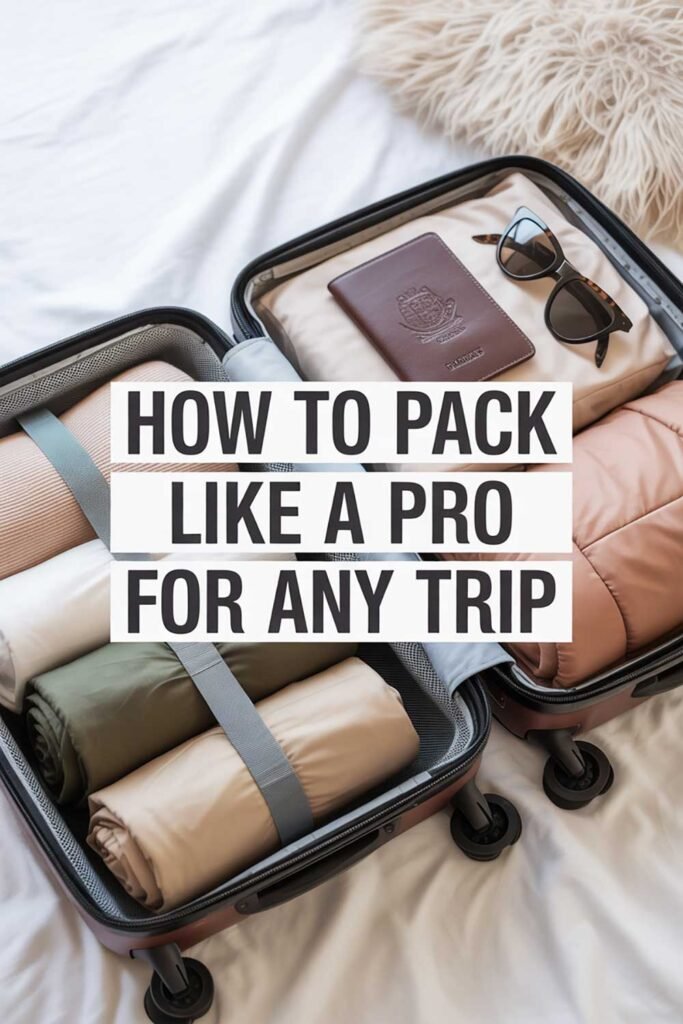
Travel Organization Hacks for Packing Smarter
Organized travelers do not pack better because they have more time. They pack better because they built a system. One reusable master checklist built once and used for every trip, a category-based organization approach, all documents in one place, the bag packed the same way every single time, and a final sweep before the door closes. This article builds that system from scratch.
Start With Our Travel Packing Checklist
The master checklist system in this article starts with a foundation document that covers every travel category. Our free packing checklist is exactly that foundation: a complete category-organized starting point that you adapt to your own travel pattern and reuse for every trip after that. Print it, personalize it, and use it as the starting point for the master checklist this article describes how to build.
Get the Free ChecklistThe packing session that begins without a checklist is a packing session that relies on memory, and memory during packing is the specific cognitive context where the items most likely to be forgotten are the ones most automatically used at home: the phone charger that has always been by the bed, the daily medication that is taken so automatically it does not register as a packing item, the specific toiletry that was last used in the morning before packing began and was therefore still in the bathroom when the bag was zipped. The checklist exists to offload the memory task entirely. The item is on the list. The list is checked. The item is in the bag. The memory is not required and its failure is not possible.
The master checklist is not a generic list downloaded from a travel website. It is a personally constructed document built from the traveler’s own travel history, adjusted for the traveler’s own needs, and refined trip by trip until it is accurate enough to be checked against with confidence rather than used as a suggestion to supplement with memory. Building the master checklist from scratch takes thirty to forty-five minutes on a dedicated afternoon rather than a deadline-adjacent evening. Start with the broad categories: clothing, footwear, toiletries, documents, electronics and chargers, medications, money and cards, accessories, and any trip-specific items. Within each category, list every item used on previous trips. After the first draft, review it against the last three trips’ actual packing and add any items consistently forgotten and remove any items consistently packed and never used.
The master checklist is maintained in a format that allows it to be checked and reset for each trip without rewriting. A digital note on the phone allows checkbox toggling and resetting between trips without printing a new copy. A printed laminated version allows dry-erase marker checking and resetting. A shared document in a note-taking app allows both members of a traveling couple to check off their sections from their own devices during the packing session. Whatever format allows the same list to be used trip after trip without being rebuilt from scratch for each one is the correct format for the master checklist.
The master checklist has two tiers: the core list of items packed on every trip regardless of destination or duration, and the destination-specific modifier list of items added for specific trip types. A beach trip adds the swimwear, sunscreen, and reef footwear modifier list. An international trip adds the passport, visa documents, and offline translation modifier list. A business trip adds the formal wear and presentation materials modifier list. The two-tier structure keeps the core list lean and accurate while accommodating the legitimate trip-type variations that a single universal list would handle by including every possible item on every trip, which produces a list too long to be checked practically and items irrelevant to the specific trip occupying mental space alongside the genuinely needed ones.
Organized travelers do not pack better because they have more time — they pack better because they built a system.
The master checklist is built once and used forever. It is the most valuable hour a frequent traveler ever spends.
Review and update the master checklist after every trip rather than waiting for a major packing failure to motivate the revision. The post-trip checklist review takes five minutes: add any item that was needed on this trip and was not on the list, remove any item that was on the list and was packed but genuinely never used across this and the previous two or three trips, and note any item whose packed quantity was wrong in either direction. After ten trips with this maintenance habit, the master checklist is a highly accurate document that reflects the actual travel pattern of its owner rather than a generic travel item inventory, and the packing session it governs takes less than half the time of the packing session done without it.
Let Us Plan the Trip the System Was Built For
An organized packing system earns its biggest return on the trip that has multiple destinations, shifting occasion types, and the kind of itinerary that rewards preparation over last-minute management. Tell us where you want to go and what kind of trip you are planning. We will build the itinerary. You work the system.
Plan Our EscapeThe category organization principle applies to both the packing process and the bag’s physical organization, and both matter. The packing process organized by category, packing all clothing before all toiletries before all electronics before all documents, produces a packing session where the checklist and the bag are aligned: the clothing category on the list is checked against the clothing items in the bag before the toiletries category begins, which means each category is complete before the next one starts and the session ends with every category confirmed rather than remembered. The packing process organized by any other principle, by whatever is in reach, by whatever feels most important to pack first, or by outfit-by-day, produces a session where the category confirmation is not structurally possible because the categories are interleaved rather than sequential.
The bag’s physical organization by category produces the specific daily access improvement that makes the organized bag a genuine quality-of-life upgrade over the unorganized bag at the destination. A bag organized by category has a known location for every item type: clothing in the packing cubes in the main compartment, toiletries in the toiletry bag in the side pocket, documents in the document wallet in the interior zip pocket, electronics and chargers in the electronics pouch in the other side pocket, and so on. Every item has a home. Every item returns to its home after use. The bag at day five of the trip is organized by the same category structure it had at departure, because the category structure is maintained by the habit of returning each item to its category location rather than to wherever there is space.
The category organization applied to the packing process and the bag’s physical structure also makes the pre-departure final sweep significantly more reliable. A bag organized by category can be checked against the master checklist category by category before departure: clothing category checked, toiletries category checked, documents category checked. A bag organized by proximity and feel cannot be checked this way because the items are not in known locations and the check requires physically retrieving each item rather than confirming the category location is occupied and the category’s items are present. The category organization is the structural foundation that makes every other organization habit function as designed.
Assign a specific home in the home environment for the travel organization tools that are used before the bag is packed: the master checklist, the packing cubes, the document wallet, the electronics pouch, and the toiletry bag. These items stored in a single designated location, a travel shelf, a travel drawer, or a travel basket, are assembled in one retrieval rather than hunted from the multiple locations they occupied after the last trip’s unpacking. The five-minute assembly of the packing infrastructure from a single location before the packing session begins is the pre-packing step that produces a fully organized packing environment before the first checklist item is confirmed. The packing infrastructure scattered across multiple locations is the pre-packing step that begins the session already slightly disorganized and produces a bag that reflects the disorganized starting point.
The document category is the highest-stakes category in any travel bag because the consequences of a missing or inaccessible document at an official interaction point, the immigration desk, the hotel check-in, the car rental counter, the airline gate, are immediate, concrete, and cannot be resolved by purchasing a replacement at the destination’s pharmacy. A missing charger can be replaced at the destination. A missing passport cannot. The document organization system earns its place in the travel organization hierarchy through this asymmetry: the cost of a document organization failure is categorically higher than the cost of any other packing category failure, which justifies a categorically more deliberate and consistent organizational approach.
The all-documents-in-one-place principle means a single dedicated document wallet or passport holder that contains every document needed for the trip, every document, in a single known location that is checked against the document category of the master checklist before departure. The document wallet for any trip: passport, every required visa and entry authorization, travel insurance policy number and emergency contact, accommodation confirmations with addresses for every overnight stop, car rental confirmation if applicable, copies of every card that will be used on the trip, international customer service numbers for every card, emergency contact information for two people at home, and any other document without which a specific trip interaction cannot proceed.
The document wallet lives in the carry-on or the personal item for any trip that involves a flight, and it does not transfer to the checked bag at any point during the journey. The checked bag is the bag that can be delayed, misdirected, or lost. The documents that cannot be replaced at the destination cannot be in the bag that can be lost. This is not a guideline that applies except when the carry-on is temporarily inconvenient. It is a rule that applies without exception because the exception is exactly the scenario where the rule’s protection matters most.
Digital backup copies of every document in the wallet are stored in the email as attachments and as downloaded images in the phone’s photo library before every trip. The email backup is accessible from any internet-connected device at the destination. The downloaded image backup is accessible without internet connectivity. Both are available if the physical wallet is lost or stolen. Neither replaces the physical documents for official purposes, but both provide the reference information that initiates the replacement process and supports the booking and accommodation confirmation tasks that the physical document wallet normally handles.
Keep a trip-specific information card, a small index card or a phone note, with the day-by-day itinerary, accommodation names, addresses in the local language where applicable, and the confirmation numbers for every booking. This card, distinct from the formal document wallet, is the quick-reference information layer that handles the questions the trip produces most frequently: what is the address for the taxi driver, what is the hotel confirmation number for check-in, what time does the tour depart tomorrow. Having this information in a single card or note reduces the accommodation lobby phone-searching for confirmation emails that most travelers do at every check-in and converts each check-in from a minor information retrieval task into a smooth exchange with a confirmation number already in hand.
The Travel Organization Products We Use on Every Trip
The document wallet that holds every travel document for a two-week international trip in a single organized slim profile that fits flat in the carry-on’s interior pocket, the color-coded packing cube set that makes the category organization automatic, and the electronics organizer that ended the cable archaeology at the bottom of every bag we ever packed before it. Real travel organization picks from real trips.
DND FavoritesThe consistent packing layout, packing the bag in the same physical organization on every trip, is the travel organization habit that produces the most significant long-term return from the smallest ongoing investment. The first trip with the consistent layout requires a deliberate decision about where each category lives in the bag: which compartment holds the packing cubes, which pocket holds the toiletry bag, which interior zip holds the document wallet, which side pocket holds the electronics pouch. This decision, made once and maintained on every subsequent trip, converts the bag into a predictable environment that the traveler can navigate without thinking, retrieve from without looking, and repack from memory rather than from deliberate placement.
The consistent layout matters most in three specific scenarios. At security, when the carry-on needs to be accessed quickly for the clear liquids bag or for an electronics item that requires separate screening, the traveler who knows their specific bag’s specific layout retrieves the item in seconds from its known location. The traveler who packed the same bag differently this trip than last trip searches the bag on the security conveyor, which produces the specific delay that experienced travelers recognize in themselves and resolve by never varying the layout. At the accommodation in the middle of the night when a medication or a phone charger is needed without turning on the room light, the traveler who knows their layout retrieves it without disturbing anyone. The traveler who packed differently this trip is turning on the light.
The consistent layout’s second benefit is the return pack at the end of the trip. The bag that was packed to a specific layout at departure has a specific layout to return to at checkout. The packing cubes go back in the main compartment in the same order they left in. The toiletry bag returns to its side pocket. The document wallet returns to the interior zip. The return pack from a consistent layout is not a repacking exercise. It is a replacement exercise, which is significantly faster and produces a consistently organized bag regardless of how disorganized the accommodation’s departure morning feels.
The consistent layout is personal and should be designed around the traveler’s specific access patterns rather than copied from a general recommendation. The item accessed most frequently during travel should be in the most accessible location. The item accessed least frequently should be in the least accessible location. For most travelers, this means documents at the front or in the interior zip for quick retrieval at official interaction points, electronics in a side pocket for in-seat access during flights, clothing cubes in the main compartment, and toiletries in a side pocket or the top of the main compartment depending on whether the bag is being used as a carry-on or checked.
Photograph the packed bag’s layout before closing it for the first three to five trips with the new consistent system. The photograph provides the reference for the return pack at each accommodation and prevents the gradual drift from the established layout that occurs over a multi-destination trip as items are accessed at different times and replaced in slightly different positions each time. A five-second layout reference photograph at departure produces the standard against which the return pack is checked, ensuring the bag arrives home in the same organization it left in rather than in the slightly degraded version that accumulates without the reference. After five trips with the reference photograph, the layout is automatic enough that the photograph is no longer needed.
The final sweep before departure is the last opportunity to catch the items that the checklist confirmed were packed, the packing session completed, and the bag zipped around, and that were then moved, used, or left behind between the packing session’s completion and the departure moment. The charger that was confirmed packed and then used to charge the phone overnight and is now on the nightstand. The sunglasses that were on the face during the packing session and are now on the kitchen counter. The medication that was packed, retrieved for the morning dose, and placed back next to the bag rather than back in the bag. The final sweep exists for this specific window between the last confirmed complete bag and the moment the door closes, and its consistent application is the habit that eliminates the specific this-was-definitely-packed-it-was-right-there discovery at the accommodation.
The final sweep route is a consistent path through every room and surface that travel items typically occupy: the bedroom, covering the nightstand, the dresser surface, the closet floor, the bathroom counter, the medicine cabinet, and the charging station. The kitchen and common areas, covering any surface where items were placed during the pre-departure morning. The entry area, confirming the bag is complete, the transport is arranged, the departure time is correct, and the home is secured for the trip duration. The route takes three to five minutes. It is walked once. The discoveries it produces are the items that would otherwise have produced the phone call from the departure gate, the turn-back from the first mile, or the airport pharmacy purchase for the item that was right there.
The home security component of the final sweep includes the items that the trip itself does not require but that the home’s security for the trip duration does: locks confirmed, windows confirmed, smart home devices set to trip mode if applicable, pet and plant care confirmed with whoever is responsible for it, mail and package delivery addressed, and any time-sensitive home tasks that arise during the departure window addressed or delegated before the door closes. These items are not on the packing master checklist because they are not packed. They benefit from their own checklist category, a departure checklist separate from the packing checklist, that covers the home security and delegation tasks that are consistently relevant at every departure.
Leave a short note or a phone reminder set for the return date with the specific home tasks that need to be done immediately on arrival: turning off the trip mode settings, checking any items that were left for others to manage, and addressing any time-sensitive matter that was deferred to the return. The return home from a trip is the specific cognitive context where the details left before departure are most easily forgotten because the returning traveler’s focus is on the trip just concluded rather than the home management tasks that were paused for it. A simple note on the kitchen counter or a phone reminder set for the return day provides the specific prompts that bridge the departure and arrival home management tasks without relying on the returning traveler’s memory to reconstruct them from nothing after an absorbing trip.
When Two Packing Systems Had to Become One
Leon and Adaeze had been traveling together for four years with the same dynamic every trip: Adaeze packed methodically, working from an internal checklist she had assembled in her head over years of travel, everything in a specific place, the bag finished the evening before departure and not reopened except for the charger she always left charging overnight. Leon packed the morning of departure, grabbing things from wherever they were, occasionally discovering at security that the charger was still in the outlet at home, arriving at the destination confident he had everything and discovering one missing item per trip with enough consistency that Adaeze had stopped asking if he had packed everything because she knew the answer was yes and the missing item would announce itself soon enough.
The system worked because Adaeze’s system worked and Leon’s non-system produced a low enough failure rate that neither of them had classified it as a problem requiring a solution. It was classified as a Leon thing, and Leon’s things were managed by Adaeze noticing what was missing and by the destination’s pharmacy or hotel shop. The cost was small per trip. Over four years it was not insignificant in aggregate, both financially and in the specific quiet tension of departure mornings when Adaeze’s organized calm and Leon’s organized chaos occupied the same bedroom at the same time producing the same result in different ways.
On a trip that required a connecting flight with a tight connection window, Leon discovered at the first airport that the travel adapter was still on the kitchen counter. At the connection airport, with forty minutes before the second flight, the adapter options were a thirty-dollar airport shop version, which they bought, or arriving at the destination without the ability to charge anything that night. Adaeze said nothing. Leon said he was going to build a checklist. Adaeze said she would help.
They built the master checklist together that evening in the hotel room. Leon described every item he consistently forgot. Adaeze described every item she had been quietly managing for him over four years. The list took forty minutes. It was longer than either of them expected. They divided it by category, not by person, so that both people used the same list for their own items in the same categories rather than separate his-and-hers lists that would require coordination rather than independence. They agreed on the same consistent bag layout: documents in the interior zip of the carry-on, toiletries in the top of the main compartment, chargers and cables in the left side pocket, and the one item most likely to be forgotten charged and placed physically inside the bag rather than adjacent to it the night before. Leon photographed the packed bag that evening.
Their departure on the return flight was the departure that changed the dynamic. Leon checked the list. Leon packed the night before. Leon swept the room before checkout and found the phone charger on the nightstand that had been placed there for overnight charging and retrieved it before it was left. Adaeze said nothing, which was different from the previous four years of saying nothing, because this time it was not the tactical silence of someone managing a recurring problem. It was the genuine quiet of a shared departure morning where both people had the same system and both systems were working. They have used the same checklist and the same layout on every trip since. This article is the system that the hotel room checklist-building session produced.
Beyond the five core system elements, these six additional travel organization approaches address the specific friction points that well-intentioned systems consistently encounter and that the most organized travelers have already resolved.
Create a separate electronics and cables organizer pouch rather than letting cables accumulate loose in the bag. An electronics pouch with individual elastic loops or zippered pockets for each cable, charger, adapter, power bank, and small electronic item produces a system where every cable has a designated slot and the morning-of-flight search for the specific charging cable ends permanently. The organizer is checked against the electronics category on the master checklist, confirmed complete, and placed in its consistent bag location. The specific cable that was always in the bag and then not there is now either in the organizer or not, and the checklist confirms which.
Schedule the packing session as a calendar event the evening before departure rather than leaving it as an informal intention. Packing scheduled on the calendar at a specific time on a specific evening is packing that happens at that time rather than packing that gets pushed by whatever the evening produces and ends up happening at midnight or the morning of departure. The calendar event also creates a natural reminder that the packing session is due, which surfaces the checklist review, the pre-packing inventory, and the toiletry kit preparation that need to happen in the days before the packing session rather than during it.
Keep a permanent running note on the phone titled next trip additions. Anything thought of between trips, an item that was useful in a context encountered since the last trip, an item that was missing on the last trip and since acquired, or a tip read or heard that belongs on the master checklist, goes directly into this note when thought of rather than being trusted to memory at the next packing session when the memory of the between-trips addition is not available. The next-trip-additions note is reviewed as the first step of the next packing session and its contents are incorporated into the master checklist before the session begins.
Use a digital itinerary app or a single shared document to consolidate all trip booking confirmations, addresses, and reservation details in one place accessible to everyone traveling. The scattered booking confirmation emails in four different inboxes with different subject lines and different reference numbers is the pre-digital itinerary that most travelers still use and that produces the lobby email-searching, the connection confirmation panic, and the where-did-I-save-that-confirmation moment at every check-in. A single consolidated itinerary document, whether built in a travel app or in a shared note with every confirmation number, address, and schedule detail in one place, converts every official interaction from an email retrieval exercise into a document reference of under ten seconds.
Set phone reminders for the time-sensitive pre-departure tasks that are consistently forgotten despite good intentions: the pre-authorization of cards with the bank, the offline map download, the travel insurance purchase, the accommodation confirmation call for properties whose booking needs direct confirmation. These tasks are not forgotten because the traveler does not care about them. They are forgotten because the trip planning period is a time of many competing attention demands and the specific tasks with a clear trip-proximity deadline are exactly the tasks that slip. A phone reminder set when the task is identified, not when the task is due, ensures the task is performed in the window before it becomes a problem rather than discovered in the window where it has already become one.
Establish a departure morning timeline that works backward from the departure time rather than forward from waking. A departure at 10 a.m. requires being in transit by 8 a.m. for a domestic flight, which requires being dressed, fed, and bag-confirmed by 7:45 a.m., which requires the final sweep to be complete by 7:30 a.m., which requires waking by 6:30 a.m. for a comfortable departure morning rather than a rushed one. The backward timeline makes the waking time a calculated output rather than an optimistic guess and produces a departure morning where each task happens in the time it actually requires rather than the time the optimistic forward-estimation assumes it will. Every traveler who has run to the gate has a departure morning timeline problem, not a flight proximity problem.
Build the return home packing into the same systematic approach as the departure pack. The return pack at each accommodation before checkout, using the same checklist category structure in reverse and the same consistent bag layout used at departure, produces a bag that arrives home in the same organized state it left in rather than the chaotic state that the unpacking of a week’s accumulated disorganization produces. The return pack checklist is simpler than the departure pack because it is a sweep of the accommodation rather than a confirmation of the home inventory, but the same category structure applies: clothing from closet and drawers to packing cubes, toiletries from the bathroom counter to the toiletry bag, electronics from the charging locations to the electronics pouch, documents from wherever they were used last back to the document wallet. Five minutes of systematic return packing produces a bag that arrives home ready to unpack into the correct home locations rather than a bag that needs to be reorganized before any single item can find its way to where it belongs.
Book the Trip the System Was Designed to Make Effortless
A travel organization system earns its full return when the trip it prepares is worth the preparation: the right destination, the right itinerary, and the right booking that makes every step from packing to arrival feel like it was designed to go smoothly. Our travel agents know how to build the trip that rewards the organized traveler with the experience that justifies the system. Let us book yours.
Book A TripCommon Travel Organization Mistakes to Recognize and Fix
Most packing chaos is systemic rather than accidental. These are the most consistent organizational patterns that produce it and what to replace them with.
Rebuilding the packing list from scratch before every trip
A packing list built from scratch before every trip is built from memory rather than from the calibrated travel record that a maintained master checklist represents. Memory during pre-departure preparation is the specific cognitive context where the items most consistently used at home are most consistently forgotten in the packing list because they are so automatic that they do not surface as items requiring conscious attention. The master checklist built from actual travel history and maintained across trips is the document that replaces memory entirely for the packing confirmation step, and the trip that is packed from it is consistently better packed than the trip whose list was reassembled from what seemed important the evening before departure.
Keeping documents in multiple locations across the carry-on and personal item
Documents split across the carry-on’s main compartment, the personal item’s front pocket, the passport in the jacket pocket, and the accommodation confirmation in the coat are documents that require a multi-location retrieval at every official interaction point. The traveler who is asked for the passport at the immigration desk and then the travel insurance information at the adjacent customs desk and then the accommodation address for the declaration form is retrieving documents from three different locations in three consecutive thirty-second windows under moderate official pressure. The all-documents-in-one-wallet approach converts the same interactions from multi-location retrievals into single-document-wallet openings and produces a measurably calmer official interaction experience.
Packing the bag differently on every trip without a consistent layout
The bag packed to a different layout on every trip is a bag without a known location for any specific item, which means every access to the bag requires a search rather than a retrieval. The search takes ten to thirty seconds per item and is repeated for every item the bag is accessed for across the full trip. The consistent layout, established once and maintained trip after trip, converts every access from a search to a retrieval. The cumulative time difference across a week-long trip with multiple daily bag accesses is not trivial, and the difference in experience between the predictable retrieval and the unpredictable search is even more significant than the time difference because the search adds minor friction to every bag interaction while the retrieval adds none.
Skipping the final sweep because the packing session felt complete
The packing session that felt complete is the packing session before the charger was retrieved for the overnight charge, the sunglasses were placed on the face for the departure morning, and the medication was taken from the bag for the morning dose and replaced next to the bag rather than inside it. The items that migrate between the completed bag and the departure moment are the items the final sweep exists to catch. The packing session feeling complete is not the same thing as the bag being complete at departure. The final sweep closes the gap between those two states and does so in three to five minutes that no departure morning cannot afford.
Packing the morning of departure rather than the evening before
The morning-of packing session competes with departure preparation, breakfast, final communications, and the accumulated anxiety of an imminent departure for cognitive bandwidth that the packing session requires to be done well. The evening-before packing session is competed for only by whatever the evening produces before the scheduled packing time, which is significantly less than the morning-of competition, and has the additional benefit of occurring when the departure is tomorrow rather than in three hours, which produces a categorically calmer decision-making context. Items packed under the departure morning’s time pressure are packed without the reduction consideration that the evening-before session produces, which is why bags packed the morning of departure are consistently heavier and more disorganized than bags packed the evening before.
Not consolidating all booking confirmations into a single accessible reference
The accommodation confirmation email in one inbox, the flight confirmation in another, the car rental in a third, and the tour booking in a travel app are four information retrieval tasks at four consecutive trip interaction points. Each retrieval produces the lobby phone search, the inbox scroll for the right subject line, and the minor delay at the check-in desk or the rental counter. The consolidated itinerary document with every confirmation number, address, and schedule detail in one place converts the same four interactions from four email retrievals into four reference lookups in one document that takes three seconds each. This is a fifteen-minute consolidation task done once before the trip that saves fifteen to twenty minutes of lobby-screen time across the trip’s interactions.
Love Helping Travelers Travel Smarter From the Very First Step?
Helping travelers build the systems that make travel feel effortless rather than managed is the kind of work that produces genuine client satisfaction. If becoming a home-based travel agent who helps people plan better trips with the preparation they deserve sounds like the right next step, see how the TravelPreneur system works. Earn commissions and build a real business from anywhere.
Become An AgentFrequently Asked Questions
These are the questions travelers ask most often about building and maintaining a travel organization system. Real answers from real experience across trip types, travel styles, and system-building approaches.
How long does it take to build a master packing checklist from scratch?
Building a master packing checklist from scratch takes thirty to forty-five minutes for most travelers, longer for travelers with more complex trip types or more extensive travel histories to draw on. The building session is most productive when approached as a dedicated task with the full attention it requires rather than as a fifteen-minute task squeezed into the day before departure. The most efficient structure: start with the broad category list (clothing, toiletries, documents, electronics, medications, accessories, and any trip-specific categories), then spend five to seven minutes per category adding every item used on previous trips within that category. After the first draft is complete, review it against the last three trips’ actual packing: add anything consistently forgotten, remove anything consistently packed and never used, and note any quantities that were consistently wrong. The first draft is usually approximately eighty percent accurate. The maintained version after five to ten trips with post-trip updates is typically ninety to ninety-five percent accurate, which is accurate enough to pack from with confidence rather than supplementing with memory.
How do you build a travel organization system when you travel with a partner who packs differently?
A shared travel organization system for two people with different packing styles works most effectively when it is built around shared categories rather than separate individual lists. The categories are the same for both travelers, clothing, toiletries, documents, electronics, and so on. The items within each category are individual. Both travelers use the same master checklist, each checking off their own items in the shared categories rather than maintaining separate his-and-hers lists that require coordination rather than independence. The consistent bag layout works most smoothly when agreed on before the first trip using it, since the layout determines where each person’s items go in the shared bag or what space each person’s individual bag occupies in the shared luggage situation. The building session for a shared system takes longer than a solo session because it surfaces the items each person had been assuming the other was responsible for, which is the most valuable discovery the joint session produces: the items that both people assumed were covered and neither person had packed.
What is the best way to manage a master checklist digitally?
The best digital format for a master checklist is the one the traveler will actually use consistently rather than the theoretically most powerful option that creates enough friction to be abandoned after two trips. For most travelers, a note in a notes app with checkboxes provides the minimum required features at zero learning curve: the checklist can be checked off before each trip, reset by unchecking all items after each trip, and updated with additions and removals after each trip without any specialized app knowledge. Apps specifically designed for travel packing, which provide category organization, trip type modifiers, and some form of cloud sync for access from multiple devices, are useful for frequent travelers who want more structural support than a basic note provides. Whatever format is chosen, the checklist should live in a location accessed multiple times daily on the traveler’s primary device rather than in a dedicated travel app that is opened only during the packing period, because the next-trip-additions note requires a low-access-friction location to be consistently used between trips when the additions are thought of.
How do you avoid packing too much when the master checklist includes everything you might need?
The master checklist that prevents overpacking is the checklist that includes everything that has been used on previous trips, not everything that might be useful on a future trip. The additions that make a checklist grow over time should come from the post-trip review of items actually used rather than from pre-trip additions of items that might be useful if a specific scenario materializes. The checklist maintained from actual usage history naturally stabilizes at a length that reflects the traveler’s real travel pattern rather than the anxiety-inflated version of it, because the items added from actual use are retained and the items consistently packed and unused are removed in the post-trip review. A checklist that has been trip-reviewed ten times is a significantly more accurate minimum-viable-trip-contents document than the first-draft version assembled from the full range of items the traveler has ever thought they might need.
What should the home final sweep checklist include beyond just the bag contents?
The home departure checklist, distinct from the packing checklist, covers the home security and handoff tasks that are relevant at every departure regardless of trip destination. A comprehensive home departure checklist: all doors and windows locked, thermostat set to absence temperature, smart home devices set to appropriate absence mode, lights on timers or smart switches if applicable, valuables secured, pet care confirmed and supplies left for the caretaker, plant watering arranged or completed, mail and package delivery addressed through hold or redirect, newspapers or deliveries paused, neighbors or building management notified of absence for security awareness, time-sensitive items requiring attention during the absence delegated, and any appliances that should not run during absence, such as dishwashers and washing machines with loads in them, addressed before departure. The home departure checklist is a three to five minute sweep distinct from the packing final sweep and is ideally walked at a specific time in the departure routine rather than assembled from memory at the moment the door is about to close.
How do you stay organized during the trip rather than just at departure?
Staying organized during the trip is a daily maintenance habit rather than a one-time departure achievement, and the habits that maintain the organization are extensions of the systems that created it. The consistent bag layout is maintained by returning every item to its category location after use rather than to wherever is convenient. The document wallet is maintained by returning every document to the wallet after every official interaction rather than to a jacket pocket or the hotel room safe where it may be forgotten at checkout. The packing cubes are maintained by returning worn items to the laundry cube rather than to the suitcase floor. The electronics pouch is maintained by returning cables to the pouch after charging rather than leaving them at the outlet. Each maintenance habit takes under thirty seconds per item and prevents the gradual disorganization that accumulates across a multi-day trip without maintenance. The trip that is organized at departure and maintained daily arrives home organized rather than as the chaotic heap that an unmaintained bag produces by day five. The maintenance is not a burden additional to the travel experience. It is what keeps the bag from becoming one.
The organized traveler is not the one who never forgets anything. It is the one who built a system that forgets nothing for them and leaves the trip’s mental energy entirely for the trip itself.
Picture the Evening Before Your Next Trip
The master checklist is open on your phone. The packing cubes are on the bed. The document wallet has every document for the trip confirmed against the document category on the list. The electronics pouch has every cable and charger confirmed in its slot. The bag is packed to the consistent layout at 9 p.m. the evening before departure. It is closed. You are not thinking about the bag. You wake up, sweep the home in three minutes, and leave. The charger that was left charging overnight is retrieved from the nightstand because the sweep exists and always finds it. The door closes at the calculated backwards-timeline time. The gate is reached in the time that was calculated to reach it. The trip has already started. That is the system. That is every departure from here.
One More Thing Before You Build Your System
Our free Travel Packing Checklist is the starting point for the master checklist this article describes. Print it, use it as the foundation, personalize it to your own travel pattern, and begin the first of the post-trip reviews that will turn it into the calibrated master checklist that every organized traveler eventually builds. It is free. The system it starts is permanent.
Get the Free ChecklistExplore Our Top Picks for a Better Trip
From the slim document wallet that holds every travel document for a two-week international trip in one organized profile that fits flat in the carry-on interior pocket to the electronics organizer that ended the cable search at the bottom of every bag, see the travel organization products and resources we actually use and recommend. Real picks from real trips where the system made the departure feel the way organized departures should feel.
See Our Top PicksTravel Prints and Printables From Our Shop
Visit Premier Print Works for master packing checklist templates, trip preparation planners, travel journal printables, itinerary organizers, and wall art that makes every trip a little more beautiful and a lot more organized from the evening the master checklist is opened to the morning the final sweep closes the door on a perfectly prepared departure.
Visit Premier Print WorksDisclaimer
The information shared in this article is provided by Don and Diana’s Travels for general informational, educational, and inspirational purposes only. It reflects our personal experiences, opinions, and the experiences of travelers we have worked with. It is not professional travel, legal, financial, or medical advice, and it should not be relied on as such.
Travel Documentation and Requirements
Travel documentation requirements, passport validity requirements, visa requirements, entry authorizations, and related requirements change frequently and vary by destination and traveler citizenship. Always confirm current requirements directly with official government sources and the destination country’s embassy or consulate before every trip. We are not responsible for any travel disruption arising from documentation issues based on information in this article.
Affiliate and Partner Links
This article may contain affiliate links, partner links, referral links, and links to products or services that pay us a commission. If you click a link and make a purchase or complete any qualifying action, we may earn a small commission at no extra cost to you. Our recommendations are based on real use and genuine belief in the products and services we share.
Third-Party Websites and Services
We may link to third-party websites, services, and resources for your convenience. We do not control these sites and are not responsible for their content, terms of service, pricing, availability, or any product or service they sell. Your use of any third-party site is entirely at your own risk.
Health, Safety, and Personal Responsibility
Travel involves personal risk. You are solely responsible for your own health, safety, travel insurance, medications, vaccinations, documentation, financial decisions, and choices while planning or taking any trip. We strongly recommend purchasing comprehensive travel insurance for every trip. Don and Diana’s Travels, its owners, employees, contractors, and affiliates accept no liability for any loss, injury, illness, delay, cancellation, damage, theft, or inconvenience arising from your use of the information in this article or from any travel decisions you make.
Composite Stories and Characters
Some stories, examples, and traveler experiences shared on this site are composites drawn from the real experiences of Don, Diana, clients, friends, and travelers we have worked with over the years. Names, identifying details, locations, and circumstances may be combined, changed, or fictionalized to protect privacy. Any resemblance to a specific real person beyond the composite portrayal is unintentional.
No Guarantees
We do not guarantee any specific result, outcome, savings, or experience from using the information, tips, services, or products mentioned in this article. Your results depend on many personal factors including your own choices, effort, circumstances, and external conditions outside of our control.
Copyright and Use
All content in this article is the copyrighted property of Don and Diana’s Travels unless otherwise noted. You may not copy, republish, redistribute, modify, sell, or reuse our content without our prior written permission. You are welcome to share a direct link to this article with proper credit.
By reading and using the information in this article, you acknowledge that you have read, understood, and agree to this disclaimer in full.