International Packing Tips for Women
International packing comes down to one simple rule: versatile pieces that work harder so you can pack less. The smartest international packers bring less than they planned and come home with exactly the right souvenirs. This article builds the international wardrobe and the pre-departure system that makes that possible.
Grab Our Travel Packing Checklist
Our free packing checklist includes the women’s international travel section that most general packing lists miss: the neutral wardrobe category breakdown, the specific document organization system, the medical and health preparation items, and the technical accessories that international travel requires. Print it before you start packing and arrive abroad with everything you need and room left for what you find.
Get the Free ChecklistThe international wardrobe that overpacks is almost always the wardrobe that was built as a collection of complete individual outfits rather than as an interlocking system of pieces that share a palette and multiply each other’s utility. A wardrobe of ten complete outfits for a ten-day trip is ten separate systems that share no pieces, offer no flexibility, and weigh significantly more than a wardrobe of twelve pieces in coordinating neutrals that produce thirty possible outfit combinations from the same number of days’ coverage. The neutral base international wardrobe is not a compromise on style or variety. It is the structural decision that produces more variety from fewer pieces by ensuring that every top works with every bottom, every layer works over every outfit, and every accessory works with every look.
The specific neutral palette for an international wardrobe should account for the destination’s context and formality range. A trip across multiple European cities requires a palette that transitions from daytime sightseeing through evening dining without a full outfit change: navy, black, white, camel, and stone work across every context from a museum to a Michelin-starred restaurant when they are combined deliberately. A tropical destination wardrobe uses the same principle with a lighter palette: white, cream, sand, warm terracotta, and soft olive that reads beautifully in direct sun and transitions from beach to resort dinner. In both cases, every piece in the wardrobe shares the palette and every piece works with every other piece. No orphaned items. No pieces that require a specific partner that is not in the bag.
Fabric selection for international travel requires specific consideration beyond style preferences. The international travel environment combines flight humidity and dryness, variable climates as the trip moves through different geographic contexts, limited laundry access compared to the home routine, and packing conditions that leave clothing compressed for days between wearings. The fabrics that succeed in this environment: wrinkle-resistant jersey knit for dresses and tops, matte crepe for evening and smarter casual pieces, quick-dry technical fabrics for casual and athletic wear, and lightweight merino wool for any layer that needs to manage both warmth and odor across multiple wearings without laundering. The fabrics that struggle: linen wrinkles immediately under compression and requires ironing, cotton takes twenty-four hours to dry when hand-washed, raw silk crumples and loses its drape in a packed suitcase, and any structured fabric that relies on its shape for its appeal loses that shape within the first day in the bag.
The international wardrobe’s color palette earns its most significant returns through the shoe and accessory efficiency it produces. A wardrobe where every piece shares a navy and cream base requires one pair of shoes and one bag for casual daytime, one pair of shoes and one bag for evening, and one scarf and two jewelry combinations that work across every outfit. A wardrobe of five color families requires five times the number of shoes, bags, and accessories to coordinate with each family, which multiplies the luggage weight and volume of the accessories category by five without adding any additional outfit experiences that the single-palette system could not have produced with a different accessory combination.
The smartest international packers bring less than they planned and come home with exactly the right souvenirs.
International packing comes down to one simple rule: versatile pieces that work harder so you can pack less. The fewer pieces that do the most work, the better the bag.
Build the international wardrobe on a physical surface, not mentally, before packing it. Lay every piece intended for the bag on the bed and test every combination: does this top work with this bottom? Does this layer work over this dress? Does this shoe work with this outfit? Every piece that cannot be paired with at least two other pieces in the collection is a piece that is not earning its weight allowance in the bag. The physical test takes thirty minutes and consistently produces a wardrobe that is three to five pieces lighter than the mental version, because the pieces that felt versatile in the imagination often reveal a single-pairing limitation when physically tested against the rest of the collection.
Let Us Book the International Adventure This Wardrobe Was Built For
The right international destination for your travel style, the right itinerary that hits the sightseeing, the dinners, and the authentic neighborhood experiences, and the right timing for the best version of wherever you are going. Tell us where you want to go and when you can travel. We will build the trip. You build the wardrobe.
Plan Our EscapeThe international traveler without a universal adapter is the international traveler who discovers, at the first accommodation, that every outlet in the room is a type that requires a specific adapter they do not have, and whose phone, camera, and every other device that has been running since departure is now either fully depleted or approaching depletion with no ability to charge until a solution is found at a local hardware store that may or may not be conveniently located relative to the accommodation. This scenario is not rare. Outlet standards vary by country and region in ways that are not intuitive: the UK uses Type G, Europe uses Type C or Type F, the United States and Canada use Type A or B, Japan uses Type A, Australia uses Type I, and South Africa uses Type D or Type M. A trip crossing multiple regions may encounter three or four different outlet standards. A universal adapter handles all of them from one compact device that weighs under two hundred grams and takes the space of a deck of cards in the bag.
The universal adapter is distinct from a voltage converter. Most modern personal electronic devices, phones, laptops, cameras, and tablet chargers, are dual voltage rated at 100-240V and do not require voltage conversion, only the correct physical outlet connection that the adapter provides. However, some personal care devices, particularly hair dryers, straighteners, and styling tools, are single-voltage and will be damaged or destroyed if plugged into an outlet at a different voltage than their rated input without a voltage converter. Check the voltage rating on the label of every electrical device before packing it and use a voltage converter for any single-voltage device used in a country with a different voltage standard. Most travel-specific hair dryers and styling tools are dual-voltage by design. Bringing a destination-specific single-voltage dryer in a country with a different voltage standard, even through a universal adapter, risks permanent device damage.
Choose a universal adapter with built-in USB-A and USB-C ports rather than a basic plug adapter without them. An adapter with USB ports allows multiple devices to charge simultaneously from a single wall outlet: phone via USB-C, earbuds via USB-A, and the laptop via the outlet connection all from one adapter rather than requiring a multi-outlet strip to run from. This multi-device charging capability from a single wall point is particularly valuable in hotel rooms and accommodation where wall outlets are limited and where the traveler’s device charging needs consistently exceed the available outlets without the adapter’s additional ports.
Research the specific outlet type and voltage standard for every country on the multi-destination itinerary before packing and confirm that the chosen universal adapter covers all of them. Most universal adapters cover the four to six major world outlet types and handle the majority of international destinations, but some regions’ outlet standards are covered by fewer general-purpose adapters. Verify coverage for specific destinations including South Africa’s Type D and M, Switzerland’s Type J, Brazil’s Type N, and Israel’s Type H, which are less commonly covered by budget universal adapters. A universal adapter that does not cover the trip’s specific outlet types is not a universal adapter for that trip.
The medication that is available over the counter at every pharmacy within a short distance at home may be prescription-only in the destination country, unavailable without a specific brand name the traveler does not know in the local language, sold in a different formulation than the traveler is accustomed to, or simply not stocked at the local pharmacy whose product range reflects the destination country’s common health needs rather than the traveler’s specific medical routine. The traveler who arrives at a foreign pharmacy with a headache expecting to buy ibuprofen in familiar form and price is the traveler who may spend thirty minutes with a translation app navigating a pharmacy display in a language they do not read, at a price point that reflects a tourist area pharmacy’s markup, looking for the specific product that was a two-minute purchase at home.
The international travel medical kit: prescription medications in their original labeled packaging with the prescription or pharmacy receipt for customs documentation purposes, in sufficient quantity for the full trip plus a buffer of at least three to five days in case of trip extension or loss of a portion. Non-prescription pain reliever in the brand and formulation familiar to the traveler’s system, since the same active ingredient in a different brand or formulation produces different results for some individuals. Antihistamine for allergy response to unfamiliar environments, foods, and plants. Anti-diarrheal medication, since changes in food, water, and environment produce gastrointestinal adjustment in many travelers that the local pharmacy equivalent may not handle in the same way as the familiar preparation. Motion sickness medication for any itinerary involving boats, small planes, winding mountain roads, or other motion-intensive transport. Any destination-specific health preparation recommended by a travel health clinic for the specific region, including antimalarial medication if required, topical insect repellent with DEET or picaridin for mosquito-borne disease risk areas, and altitude sickness medication for high-altitude destinations.
Feminine hygiene products deserve specific mention in the international women’s packing category. Brand availability, product variety, and the specific product type that each woman prefers varies significantly by country and destination. Major international cities typically carry a reasonable range, but rural destinations, smaller towns in many regions, and countries with different dominant product categories may not carry specific types or brands. Pack the full trip’s supply rather than planning to purchase at the destination, particularly for menstrual cups and discs, specific tampon applicator types, or any product category with limited international distribution. The weight and volume of a full trip’s supply of these items is modest and the inconvenience of their absence is significant.
Carry a copy of any prescription medication’s prescribing documentation, either the original prescription or a letter from the prescribing physician, for customs declaration purposes on international arrival. Some countries require documentation for prescription medications brought into the country, particularly controlled substances and medications that are prescription-only or prohibited at the destination even if legal at home. Research the import regulations for any prescription medication for each country on the itinerary before departure, since a medication that is legal and commonly prescribed at home may be a controlled substance or prohibited at the destination. Customs non-compliance for medication import is a serious matter regardless of the traveler’s intent.
The International Travel Essentials We Never Leave Home Without
The universal adapter with USB-C and USB-A ports that charged every device in every country from a single wall point, the wrinkle-resistant midi dress in navy jersey that appeared at every sightseeing day, dinner, and evening event on the trip without anyone questioning whether it had been worn before, and the compact packing cubes that kept the neutral wardrobe organized and the suitcase accessible without a full unpack at each accommodation. Real international packing picks from real international trips.
DND FavoritesA checked bag that is lost, delayed, or misdirected to a different destination is an inconvenience. A checked bag containing the passport, travel insurance policy, visa documentation, accommodation confirmations, and every other document necessary for the international trip is a crisis. The document that is not in the carry-on is the document that is not available for the immigration officer who requires it on arrival, the hotel check-in desk that cannot verify the reservation, and the travel insurance hotline that needs the policy number before authorizing the emergency medical treatment. Documents belong in the carry-on, within reach, regardless of the length of the flight or the convenience of having them in the checked bag alongside the clothing they were organized with.
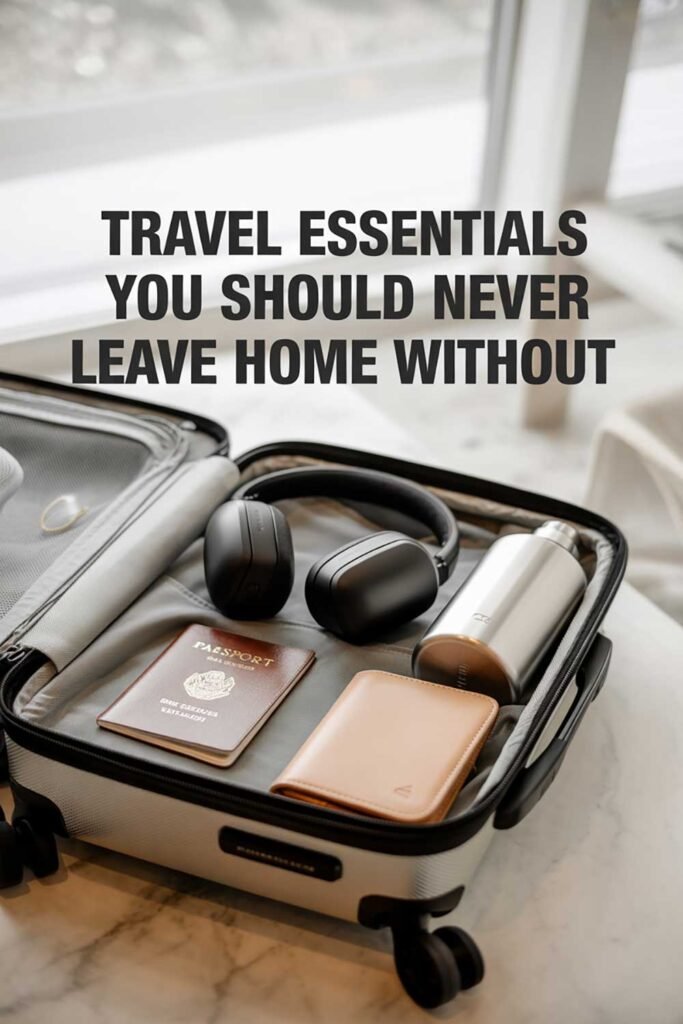
The carry-on document organization system: a dedicated travel document wallet or slim document organizer that holds the passport, every visa, entry documentation and electronic travel authorization confirmation printed or saved offline, travel insurance policy number and emergency contact number, accommodation confirmation with the address for each overnight stay, the copy of each credit and debit card that will be used on the trip, emergency contact information for two people at home, the international customer service numbers for each card, and health insurance or travel insurance card. This wallet does not leave the carry-on for the checked bag at any point during the journey, including the moment of checking in when the checked bag is being tagged and it is tempting to transfer organization from one bag to the other.
In addition to the physical documents in the carry-on, maintain digital backup copies of every critical document in the email as attachments accessible from any internet-connected device at the destination, and as downloaded images in the phone’s photo library accessible without internet connectivity. The physical passport itself must remain physical rather than being replaced by a digital copy for any official purpose, but the digital copy provides immediate reference information and serves as the documentation backup that allows the replacement process to begin if the physical passport is lost or stolen at the destination.
Research the document requirements for every destination country before departure rather than assuming that a valid passport is the only requirement. The European Union’s ETIAS, the Electronic Travel Information and Authorization System, will require pre-authorization for many nationalities at destinations that currently require only a valid passport. Australia and the United States require electronic travel authorization for visitors from many countries. Several destinations require specific health documentation. Confirm the current entry requirements for each destination country using the official government or embassy website, since these requirements change and travel advisories from the home country’s foreign ministry are updated more frequently than most travel guides.
Photograph or scan every document in the travel wallet before departure and email the full set to yourself and to one trusted contact at home. The email copy provides the specific reference information needed to initiate the passport replacement process, file an insurance claim, contact the accommodation without the original confirmation, or verify card information with the bank from any internet-connected device at any point in the trip. The trusted contact at home with the same copies can assist with document replacement processes, insurance claims, and emergency coordination from home if needed. Five minutes of photographing and emailing before departure provides the document backup infrastructure that most travelers only think of after it is needed.
The complete international wardrobe system for women builds from the neutral base outward through the specific clothing categories that international travel requires, with each item’s inclusion justified by the number of outfit combinations it enables and the number of occasions it serves. The system is organized by category rather than by outfit, and every item in every category shares the base palette and works with every item in every other category.
Tops category: three to four tops in the neutral base palette covering the full formality range from casual daytime through smart casual evening. A lightweight silk-effect blouse in a solid neutral serves sightseeing with trousers and the evening restaurant with the midi skirt. A fine-knit turtleneck or crewneck in a neutral layer serves as either a standalone top or an under-layer beneath the blazer or leather jacket. A casual linen or cotton blend tee in white or cream serves every casual day activity and doubles as the base layer for the blazer-as-evening-layer combination. One flowy blouse in a print that incorporates the base palette’s colors provides the one statement top that reads differently in photographs from the solids while still coordinating with every bottom in the collection.
Bottoms category: two to three bottoms that between them cover every occasion the trip presents. For most international trips, a well-fitted trouser in a neutral, a midi skirt in a coordinating neutral, and one pair of dark-wash jeans cover formal dining, smart casual evenings, sightseeing, and casual exploration. All three work with all four tops. All three work with both the casual flat and the low-heel shoe. All three pack without wrinkling in jersey, ponte, or stretch-blended fabrics. The fourth bottom that feels necessary before packing feels unnecessary at the destination when the three-bottom system is discovered to cover every daily situation without effort.
Outerwear and layers category: one primary layer appropriate for the destination’s temperature range, one lightweight weather layer, and one scarf or wrap that serves as both a warmth layer and an accessory transformation tool. The scarf wrapped at the shoulder elevates the casual tee and jeans combination to a smart casual register. The same scarf wrapped as a headscarf provides modest coverage at religious sites that require covered hair. Worn as a shawl at the evening restaurant, it converts the sightseeing outfit into the dinner outfit without requiring a clothing change. One scarf in the trip’s accent color or in a print that incorporates the base palette is the most versatile single item in the international bag.
Footwear category: the international footwear selection requires the most disciplined restraint of any clothing category. One comfortable walking shoe that has been tested for five-plus miles before departure and is confirmed to handle cobblestone, uneven pavement, and extended daily walking. One low-heeled or flat dressed shoe or sandal that transitions from smart casual dinners through more formal evening occasions. One casual sandal or slip-on for the accommodation, the beach if applicable, and the casual daytime when the walking shoe is being rested or drying from previous use. Three pairs covers every occasion of most international trips. Four pairs covers every occasion of every international trip and leaves room in the bag for the souvenirs that the fourth pair’s space could have accommodated.
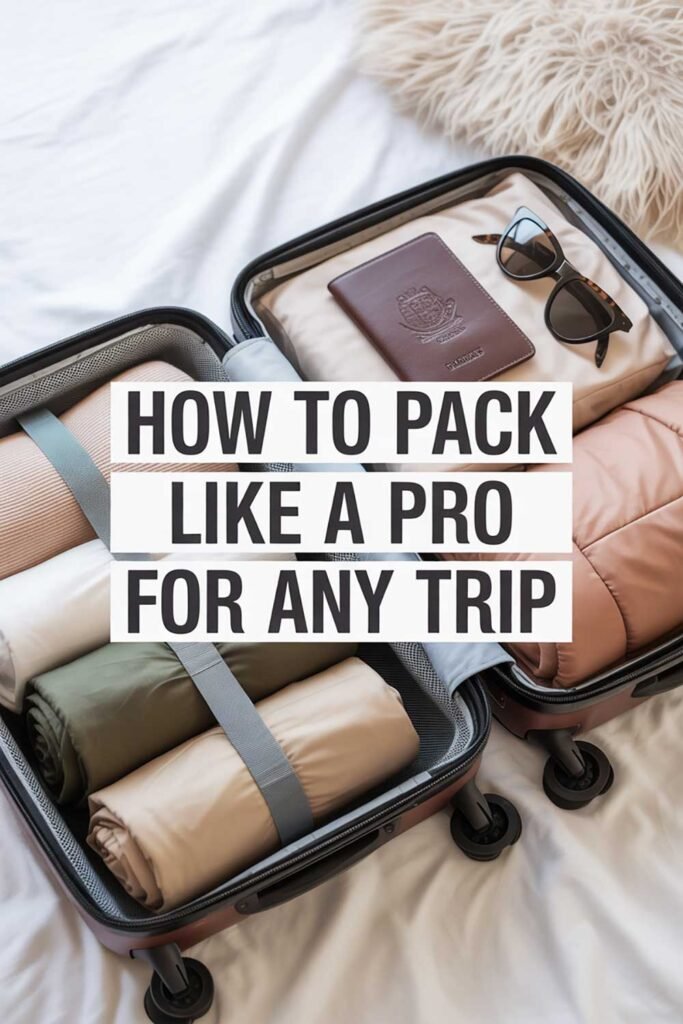
Pack packing cubes in a category-based organization system that matches the wardrobe’s structure: one cube for tops, one for bottoms, one for layers and accessories, and one for underwear and socks. The category-based packing cube system allows the suitcase to be accessed at each accommodation without a full unpack: the relevant cube is removed, opened, and used, and the other cubes remain organized and contained. This approach eliminates the suitcase archaeology of searching through a loosely packed bag for a specific item at each accommodation and prevents the daily disruption of the packing organization that produces the chaotic suitcase by day three of a ten-day trip. It also makes repacking at each accommodation a five-minute process rather than a full repack of a disorganized bag.
The Trip Where She Brought Everything and Wore Half of It, and the One After It
Priya had been planning her first international trip, a three-week solo journey through Western Europe, for a year. She packed for every scenario she could imagine: a formal dinner in Paris that might appear, a hiking opportunity in Switzerland that might arise, a beach day on the Amalfi Coast that was technically on the itinerary, and a business casual situation she could not specifically anticipate but felt uncomfortable planning without coverage for. Her suitcase weighed twenty-eight kilos. She paid a checked bag fee and an overweight bag fee. On the first morning in the first city, she discovered that the cobblestone street between the train station and her accommodation was not rollable at twenty-eight kilos.
By day five she had worn approximately half of what she had packed. The formal dinner in Paris had not materialized. The hiking opportunity in Switzerland had required the purchase of actual hiking shoes at a Swiss outdoor gear shop because the ones she had packed were not adequate. The beach day on the Amalfi Coast was one afternoon, not the three days the suitcase’s beach wardrobe had been packed for. She spent the second week wearing the same four outfits in rotation because they were the ones that worked for everything the trip was actually producing rather than the specific scenario-specific outfits that had been packed for the scenarios that had not appeared. The second week’s outfit rotation was navy trousers, a silk blouse, a cream tee, a midi skirt, and the lightweight blazer. Everything else in the suitcase was infrastructure for occasions that had not arrived.
On the flight home she wrote a list. It had fifteen items on it. The fifteen items covered everything the trip had actually required over three weeks of travel across five countries. The list included no hiking shoes, no business casual coverage, and nothing specifically for Paris formality. It included the navy trousers that had been worn ten times, the silk blouse that had appeared at every restaurant and every evening event, the cream tee that had worked under the blazer on the cooler days and alone on the warm ones, the midi skirt that she had worn for every occasion the trousers were too warm for, the lightweight blazer that had been the dinner outfit over every other piece in the collection, and the one silk scarf that had been worn as a shawl, a headscarf at every religious site, and an accessory that made the same outfit appear different in the photographs from one city to the next.
Her second international trip, eighteen months later, used the list from the first trip’s flight home as its packing guide. She packed in a carry-on. She paid no bag fees. She walked from every train station to every accommodation without assistance. She wore everything she brought at least three times. She came home with two kilos of souvenirs in the space the second suitcase’s half-worn outfits had occupied on the first trip. This article is the system that the list described.
Beyond the four core principles and the wardrobe system, these six additional international packing approaches address the specific gaps that most women discover on their first or second international trip and that experienced international travelers have already built into their standard pre-departure routine.
Research the destination’s modesty and dress code requirements before packing. Several international destinations require or strongly expect covered shoulders and covered knees in religious sites, which affects the wardrobe that is genuinely functional at the destination rather than merely stylish. A trip to Rome that includes the Vatican requires shoulder and knee coverage for entry into St. Peter’s Basilica and the Vatican Museums. A trip to Morocco, India, or Southeast Asian countries with active temple and mosque sites requires modesty coverage at the cultural sites that constitute the trip’s primary experiences. Research these requirements before packing and ensure the wardrobe includes the lightweight coverage layers that serve every site requiring them rather than the disposable fabric scarves sold to tourists outside the entrance at every site that did not accommodate the wardrobe’s gaps.
Pack a lightweight day bag or small backpack rather than depending on the accommodation or the destination to provide a suitable bag for daily sightseeing. The day bag for international sightseeing is the bag that carries the camera, the day’s water, the snacks for walking tours, the documents needed for the day, and the small purchases from markets and galleries. It needs to be comfortable for four to eight hours of walking, appropriately secure for tourist-dense environments where pickpocketing is a genuine concern, and small enough to be worn through crowded museums and markets without occupying the space of other visitors. A lightweight travel backpack with a hidden zipper back pocket for valuables or a crossbody bag with a zipper closure meets these requirements and folds flat for packing in the main bag when not in use.
Bring a small travel laundry kit for trips longer than one week. A travel laundry kit consists of a packet of travel laundry detergent strips or a small bottle of travel-size liquid detergent and a small travel clothesline or a few binder clips for drying items at the accommodation. Hand-washing one or two items at each accommodation and hanging them to dry overnight allows the wardrobe to repeat without visible wear and extends the functional number of days a given clothing quantity covers. The fifteen-item carry-on wardrobe functions for a three-week trip with periodic hand-washing. The same wardrobe without hand-washing covers approximately one week before the rotation becomes uncomfortable.
Include a packable rain jacket or compact umbrella rather than hoping the destination’s weather matches the forecast. Weather forecasts for international travel are as reliable as weather forecasts everywhere: useful as general indicators and unreliable as precise predictors. A packable rain jacket that compresses to the size of a small water bottle adds under three hundred grams to the bag and converts every unexpected rain event from a disruption requiring shelter to a manageable inconvenience managed with a hood and a jacket. For trips where the packable rain jacket is not aesthetically appropriate for the evening venues on the itinerary, a compact folding umbrella in the day bag provides coverage for every outdoor walking context without the visual register of an anorak at the restaurant.
Wear the heaviest items on the flight rather than packing them. The ankle boots, the leather jacket, the heavy sweater, the denim jeans: any item that is heavy relative to its volume is an item that the body can carry on the flight without adding to the checked or carry-on bag weight. Flight dressing, assembling the heaviest wearable items as the flying outfit and adding or removing layers to manage the flight temperature, is the packing hack that experienced international travelers use to bring the item that would have pushed the bag over the weight limit as part of the outfit they wear through the airport. A woman who boards a flight wearing her leather jacket, her jeans, her ankle boots, and her heaviest sweater arrived at the destination with those items without ever having put them in the bag weight calculation.
Pack a silk or satin sleep mask, earplugs, and a travel-size melatonin as the jet lag management kit rather than hoping the body adjusts to the destination time zone naturally. Jet lag on international trips significantly affects the first two to three days of the destination experience, which are typically among the most activity-dense days of the itinerary. The combination of a quality sleep mask that produces genuine darkness, earplugs that handle the accommodation’s ambient sound, and melatonin taken at the destination’s intended sleep time supports faster circadian rhythm adjustment than willpower alone. These three items weigh under one hundred grams collectively and fit in a small zippered pouch in the personal item bag.
Weigh the packed bag before every international departure and compare the total to the airline’s carry-on and checked bag weight limits for the specific airline and fare class on the specific booking. Weight limits vary significantly across airlines, between fare classes on the same airline, and between the domestic and international segments of a trip with multiple airlines. An international carry-on limit of 10 kilograms on a European low-cost carrier segment is a materially different constraint from the 23-kilogram checked allowance on a long-haul international carrier. Discovering the bag exceeds the limit at the airport check-in counter produces either the overweight fee or the gate-side repack that both add time and stress to the departure. Weighing before departure is a two-minute investment that eliminates both outcomes.
Book the International Adventure This Packing System Was Designed For
A carry-on-capable international wardrobe deserves a destination worthy of carrying only a carry-on. Our travel agents know the international destinations where the carry-on lifestyle works beautifully, where the restaurants are worth the silk blouse, and where the souvenirs fill the space the overpacking would have occupied. Let us book yours.
Book A TripCommon International Packing Mistakes Women Make
Most international overpacking and most international packing regret come from the same consistent patterns. These are the most common ones and what to do differently before the next departure.
Packing for every scenario rather than the likely itinerary
The formal dinner that might appear in Paris, the hiking day that might materialize in Switzerland, and the business meeting that could conceivably arise somewhere along the route are the hypothetical occasions that fill the bag with items that the trip never actually requires. The occasions that reliably appear on most international trips are the sightseeing days, the restaurant dinners from casual to smart casual, and the evenings that call for something that looks intentional rather than accidentally dressed. Pack for the likely itinerary. If the formal dinner appears, the silk blouse and midi skirt handle it without a dedicated formal outfit in the bag.
Building a wardrobe of complete individual outfits rather than a coordinating system
A wardrobe of ten complete individual outfits for a ten-day trip is ten separate systems that share no pieces, produce no flexibility, and weigh significantly more than a wardrobe of twelve coordinating pieces that produce thirty possible combinations. The outfit-by-outfit approach feels comprehensive at packing time and reveals its limitations when the trip produces different occasion requirements than anticipated. The coordinating neutral system feels sparse at packing time and reveals its adequacy when every piece works with every other piece and the accidental spill on day two does not leave the trip without the outfit for day five.
Packing a non-wrinkle-resistant fabric that destroys its own presentation in the bag
A beautifully pressed linen trouser packed in a carry-on for twenty hours of travel arrives at the destination with the specific creases that linen acquires under compression and cannot release without professional pressing. The same occasion covered by a matte crepe or ponte trouser arrives without a crease, having recovered from any compression within the first hour of hanging in the destination accommodation. Fabric selection for international travel is as important as style selection, and a beautiful fabric that cannot survive the transit in the bag is a fabric that cannot serve the occasion it was packed for.
Packing documents in the checked bag rather than the carry-on
The checked bag that is delayed or lost takes everything in it to wherever bags go when they are not at the destination. A passport, visa, travel insurance documentation, and accommodation confirmation in a delayed checked bag is an international traveler at the immigration desk without the document the immigration officer requires. Documents belong in the carry-on, accessible, available for every official interaction from check-in through immigration through accommodation arrival, regardless of how convenient it felt to pack them with the clothing they were organized alongside.
Assuming international pharmacy access for home-country medications and products
The medication that is familiar, affordable, and available without a prescription at home is the medication that may be prescription-only, unavailable in the familiar brand, or absent from the local pharmacy’s stock at the international destination. The feminine hygiene product that is a standard shelf item at home may not be carried in the specific type or brand at the destination’s pharmacies. Pack the full trip’s supply of any medication or personal care product the trip cannot comfortably do without rather than assuming international pharmacy equivalency.
Packing too many shoes and none of them tested for long walking distances
International travel typically involves more daily walking than almost any other travel context: sightseeing days covering five to ten miles, cobblestone streets that challenge every shoe not specifically designed for them, and the accumulated foot strain of days of activity in footwear that was chosen for appearance rather than function. Four pairs of beautiful but untested shoes produce the blister situation on day three that ends or significantly limits the walking itinerary for the rest of the trip. Three pairs of comfortable, tested shoes, including one pair specifically confirmed for extended walking on hard and uneven surfaces, produce ten days of comfortable travel at the destination.
Love Helping Women Pack Smart and Travel Confidently Abroad?
Helping women plan international trips with the confidence, the preparation, and the wardrobe system that makes travel feel effortless rather than anxious is genuinely rewarding work. If becoming a home-based travel agent who helps women travel internationally with less stress and more intention sounds like the right next step, see how the TravelPreneur system works. Earn commissions, build a real business, and make international travel more accessible for the women you help.
Become An AgentFrequently Asked Questions
These are the questions women ask most often about packing for international travel. Real answers from real international travel experience across destinations, trip lengths, and packing styles.
Can you really do a two-week international trip with just a carry-on?
Yes. A two-week international trip in a carry-on is a widely practiced approach among experienced women travelers that requires a deliberate wardrobe system rather than simply packing less. The carry-on international wardrobe for two weeks contains eight to twelve clothing pieces in a coordinating neutral base, hand-washes one to two items every two to three days at the accommodation, and produces thirty or more outfit combinations from those pieces across the two weeks. The items that prevent most travelers from achieving carry-on travel are the scenario-specific pieces packed for occasions that the trip consistently does not produce, the duplicate items packed as backups for the primary items that are unlikely to fail, and the non-wrinkle-resistant fabrics that require the full-size suitcase’s hanging compartment to maintain their presentation. Eliminate those three categories and the carry-on is consistently achievable for two weeks of thoughtfully structured international travel.
How do you handle laundry on a long international trip without access to a laundromat?
Hand-washing at the accommodation is the primary laundry solution for international trips without laundromat access, and the travel laundry kit described in this article makes it a five-minute routine rather than a laborious process. Laundry detergent strips or concentrated travel detergent, a sink or tub with a stopped drain, three to five minutes of hand-washing for lightweight fabrics, and a clothesline or binder-clipped drying location at the accommodation where the items dry overnight produces clean clothing daily without any laundromat. Quick-dry and merino wool fabrics specifically expedite this process: quick-dry technical fabrics dry in two to four hours, merino wool dries in four to six hours, and both are clean and ready by morning after an evening wash. Full-service hotel laundry is available at many international accommodations at a cost per item that is high for a full wardrobe but appropriate for a specific item that needs professional care. The combination of personal hand-washing for daily items and occasional hotel laundry for items requiring more thorough cleaning covers most international trip laundry needs without a dedicated laundromat trip on a tight sightseeing schedule.
What are the best fabrics for international travel clothing?
The best fabrics for international travel women’s clothing share four characteristics: they are wrinkle-resistant enough to remain presentable after extended compression in a packed bag, they are lightweight enough to contribute minimal weight relative to the coverage they provide, they are quick-drying enough to be hand-washed and ready to wear within twelve to twenty-four hours, and they are breathable and comfortable enough to wear for extended periods in varying climates including the dry recycled air of long-haul flights and the heat of summer destinations. The fabrics that best meet all four criteria: fine merino wool for knit items, matte crepe for structured pieces, jersey knit for dresses and casual tops, and technical travel fabrics specifically engineered for travel applications for casual and athletic wear. The fabrics that fail on one or more criteria: standard cotton wrinkles and dries slowly, linen wrinkles severely, raw silk loses its drape under compression, polyester fleece is bulky relative to its warmth value, and structured wovens lose their shape in pack-then-hang cycles. Fabric labels that say machine washable and wrinkle resistant are good starting signals. Test any potential travel piece by scrunching it firmly in the fist for thirty seconds and observing the result: a fabric that holds major creases from thirty seconds of compression will hold major creases from twenty hours in a suitcase.
How do you dress appropriately for both casual sightseeing and nice restaurants on the same day without changing?
The daytime-to-evening outfit transition without a full outfit change is the specific styling challenge of international travel days that include both sightseeing and evening dining, and the neutral wardrobe system solves it through accessory transformation rather than clothing change. The outfit that works for a day of sightseeing, a midi dress, trousers and a blouse, or jeans with a silk tee, transitions to the restaurant register with three changes: shoes from the walking flat to the low heel or dressed sandal, bag from the day backpack to the small evening shoulder bag or clutch, and accessories from the casual scarf and minimal jewelry to the statement earrings and the wrapped silk scarf at the shoulder. The clothing itself does not change. The shoes, the bag, and the jewelry change the entire register of the outfit from tourist to intentional. This transition takes five minutes at the accommodation before the evening reservation and requires only the space for the two shoe pairs, the two bag options, and the small jewelry and scarf selection that weighs collectively under five hundred grams.
What do you do if luggage is delayed or lost at an international destination?
A delayed or lost bag at an international destination is the specific scenario that the carry-on approach eliminates and that the documents-in-carry-on preparation makes manageable for checked bag travelers. File a delayed or lost baggage report with the airline at the destination airport before leaving the baggage claim area, since filing in person at the airport is significantly more efficient than filing later online or by phone. Obtain the reference number and the airline’s contact information for follow-up. Most delayed international bags are delivered to the accommodation within twenty-four to forty-eight hours of the initial delay. The airline’s delayed baggage policy typically provides a daily allowance for essential purchases while the bag is delayed, the amount of which varies by airline and fare class and which is documented in the baggage handling claim. Keep receipts for every essential purchase made during the delay period and submit them with the claim documentation when the bag arrives. If the bag is declared lost rather than delayed, the airline’s lost baggage compensation policy applies, which typically provides a per-bag payment based on the declared value of the contents. Travel insurance that includes baggage coverage often provides additional compensation beyond the airline’s liability limit and covers the replacement cost of essential items purchased during the delay.
How do you pack for a multi-climate international trip where the destinations have very different temperature ranges?
A multi-climate international itinerary, such as a trip that moves from Northern Europe in shoulder season through Southern Europe in summer, or from a temperate city through a tropical coastal destination, is the packing challenge where the layering system and the packable layer principle earn their most significant return. The core wardrobe for the warmest destination is the base: lightweight fabrics, fewer layers, the clothing appropriate for the warmest climate on the itinerary. The cooler destination is handled by layers added over the warm-climate base rather than by separate cold-climate clothing: a fine merino layer, the lightweight down jacket that compresses to a fist-sized ball, and the packable waterproof shell over the warm-climate base outfit produces a functional outfit for temperatures fifteen to twenty degrees Celsius cooler than the base wardrobe was designed for. The layering pieces are packed in the bag for the warmer destination and worn for the cooler one. They occupy the space of two to three items rather than a separate cold-weather wardrobe, and they return to the bag when the itinerary returns to warm climates. The multi-climate trip that packs a separate wardrobe for each climate is the multi-climate trip that requires a suitcase large enough for two separate wardrobes.
The woman who packed less and wore everything brought the most interesting bag home. It had space in it. That space was for the things she found.
Picture Your Bag on Arrival Day
The navy trousers and the cream tee are in the first packing cube. The silk blouse and the midi skirt are in the second. The blazer is folded on top. The silk scarf is in the accessories cube alongside the two jewelry combinations and the two shoe bags. The universal adapter and the document wallet are in the carry-on’s front pocket. The medications are in the small pouch next to the adapter. The bag weighs seven kilos. You wheel it off the plane, through immigration, and to the accommodation without assistance. You arrive wearing the same jeans and leather jacket you boarded in and they are the heaviest items in the trip’s entire outfit rotation. Tomorrow you wear the cream tee with the midi skirt and the flat sandal and you look like someone who lives there rather than someone who packed for every possible version of where she might end up. That is the wardrobe system working. That is every international trip from here.
One More Thing Before You Pack
Print our free Travel Packing Checklist before your next international trip. The women’s international section covers the full neutral wardrobe system, the document organization checklist, the medical and health preparation items, and the technical accessories that international travel requires. Use it alongside this article for the complete international packing session. The same checklist we recommend before every international trip we help plan.
Get the Free ChecklistExplore Our Top Picks for a Better Trip
From the wrinkle-resistant midi dress in navy jersey that worked for every occasion from museum to Michelin-starred restaurant without ever looking like the same outfit twice to the universal adapter with USB-C and USB-A ports that charged every device in every country from one compact device, see the women’s international travel products and resources we actually use and recommend. Real picks from real international trips.
See Our Top PicksTravel Prints and Printables From Our Shop
Visit Premier Print Works for international travel planners, packing list printables, wardrobe planning worksheets, travel journal templates, and wall art that makes every international trip a little more beautiful and a lot more organized from the afternoon the neutral wardrobe is laid out on the bed to the last souvenir that fit because the bag had room for it.
Visit Premier Print WorksDisclaimer
The information shared in this article is provided by Don and Diana’s Travels for general informational, educational, and inspirational purposes only. It reflects our personal experiences, opinions, and the experiences of travelers we have worked with. It is not professional travel, legal, financial, or medical advice, and it should not be relied on as such.
Travel Documentation and Entry Requirements
Visa requirements, passport validity requirements, electronic travel authorization requirements, and entry requirements for all countries change frequently and vary by traveler citizenship, destination, and current diplomatic and public health circumstances. Always confirm current entry requirements for every country on your itinerary directly with official government sources, the destination country’s embassy or consulate, and your home country’s foreign ministry travel advisory service before every international trip. We are not responsible for any travel disruption arising from documentation issues based on information in this article.
Medical and Medication Information
The medical and medication guidance in this article is general educational information only and not professional medical advice. Always consult a qualified healthcare provider before taking any medication, changing any medication routine, or making any health preparation decision related to international travel. The import regulations for prescription and non-prescription medications vary by destination country and change frequently. Research current medication import regulations for every destination country on the itinerary before travel. Some medications legal in the home country may be restricted, controlled, or prohibited at the destination. We are not responsible for any health or legal outcome arising from medication packing or import decisions based on information in this article.
Electrical and Electronic Device Information
The voltage and adapter information in this article is general educational information only. Always confirm the specific voltage requirements of every electrical device before connecting it to a foreign power outlet. Connecting a single-voltage device to a different voltage without an appropriate voltage converter can permanently damage the device. We are not responsible for any device damage arising from adapter or voltage decisions based on information in this article.
Airline Baggage Policies
Airline baggage policies, weight limits, size limits, carry-on allowances, and checked bag fees change frequently and vary by airline, fare class, route, and booking conditions. Always confirm current baggage policies with the specific airline for the specific booking before travel. We are not responsible for any baggage fee, confiscation, or baggage-related outcome arising from information in this article.
Affiliate and Partner Links
This article may contain affiliate links, partner links, referral links, and links to products or services that pay us a commission. If you click a link and make a purchase or complete any qualifying action, we may earn a small commission at no extra cost to you. Our recommendations are based on real use and genuine belief in the products and services we share.
Third-Party Websites and Services
We may link to third-party websites, services, and resources for your convenience. We do not control these sites and are not responsible for their content, terms of service, pricing, availability, or any product or service they sell. Your use of any third-party site is entirely at your own risk.
Health, Safety, and Personal Responsibility
Travel involves personal risk. You are solely responsible for your own health, safety, travel insurance, medications, vaccinations, documentation, financial decisions, and choices while planning or taking any trip. We strongly recommend purchasing comprehensive travel insurance for every international trip. Don and Diana’s Travels, its owners, employees, contractors, and affiliates accept no liability for any loss, injury, illness, delay, cancellation, damage, theft, or inconvenience arising from your use of the information in this article or from any travel decisions you make.
Composite Stories and Characters
Some stories, examples, and traveler experiences shared on this site are composites drawn from the real experiences of Don, Diana, clients, friends, and travelers we have worked with over the years. Names, identifying details, locations, and circumstances may be combined, changed, or fictionalized to protect privacy. Any resemblance to a specific real person beyond the composite portrayal is unintentional.
No Guarantees
We do not guarantee any specific result, outcome, savings, or experience from using the information, tips, services, or products mentioned in this article. Your results depend on many personal factors including your own choices, effort, circumstances, and external conditions outside of our control.
Copyright and Use
All content in this article is the copyrighted property of Don and Diana’s Travels unless otherwise noted. You may not copy, republish, redistribute, modify, sell, or reuse our content without our prior written permission. You are welcome to share a direct link to this article with proper credit.
By reading and using the information in this article, you acknowledge that you have read, understood, and agree to this disclaimer in full.