Weekend Trip Packing List for a Stress-Free Getaway
A weekend trip only needs a weekender bag, if you pack it right. The best weekend travelers pack in twenty minutes and spend zero time at baggage claim. Not because they are naturally minimal or naturally organized. Because they built the weekend packing system once and it works every single time after that. This article is that system.
Grab Our Travel Packing Checklist
The weekend version of our packing checklist is deliberately short — because weekend packing should be. Every essential covered, every common forgettable item included, and the editing reminders most weekend travelers need before they accidentally pack a week’s worth of clothes for two nights away. Print it once and use it every Friday before you go.
Get the Free ChecklistThe three-into-six outfit system is the organizing principle that makes weekend packing genuinely lightweight rather than just reduced. Three individual outfits with no crossover produce three looks. Three outfits built on pieces that work with each other produce six or more combinations from the same number of items, which means a complete two-night wardrobe with visible variety and zero feeling of wearing the same thing twice.
For a two-night weekend trip, the wardrobe foundation is two bottoms and three tops that all coordinate. Two neutral bottoms, dark jeans and a linen trouser or a casual midi skirt and shorts depending on the destination, paired with three tops in coordinating colors means six functional combinations from five pieces. Add one layer, a light cardigan, a denim jacket, or a linen shirt, and that same layer works over all six combinations and adds a seventh and eighth look for evenings or cooler conditions. Eight looks from six pieces. All of them work together because every single item was chosen against the same two or three color palette before anything went in the bag.
The neutral palette is what makes the three-into-six system work. If every piece shares a color family, navy, cream, and warm terracotta for example, or charcoal, white, and sage, every combination is inherently coherent rather than accidentally clashing. You do not have to think about what works together on a tired Friday evening when you are packing after work. Everything in the bag works with everything else because you built it that way at the planning stage rather than relying on in-bag luck.
Accessories convert the same outfit from casual to slightly more considered without adding meaningful bag weight. Two necklaces in different lengths that work with the existing pieces. A scarf that doubles as an evening layer and a belt alternative. A small crossbody bag that transitions from daytime to dinner without requiring a bag change. These items weigh almost nothing, occupy minimal space, and visually diversify a small wardrobe significantly. A weekend wardrobe of three outfits plus the right accessories looks more considered than a suitcase of seven specific pieces with no internal system.
The best weekend travelers pack in twenty minutes and spend zero time at baggage claim.
Three pieces that mix and match are worth more than six pieces that each only go with one other thing.
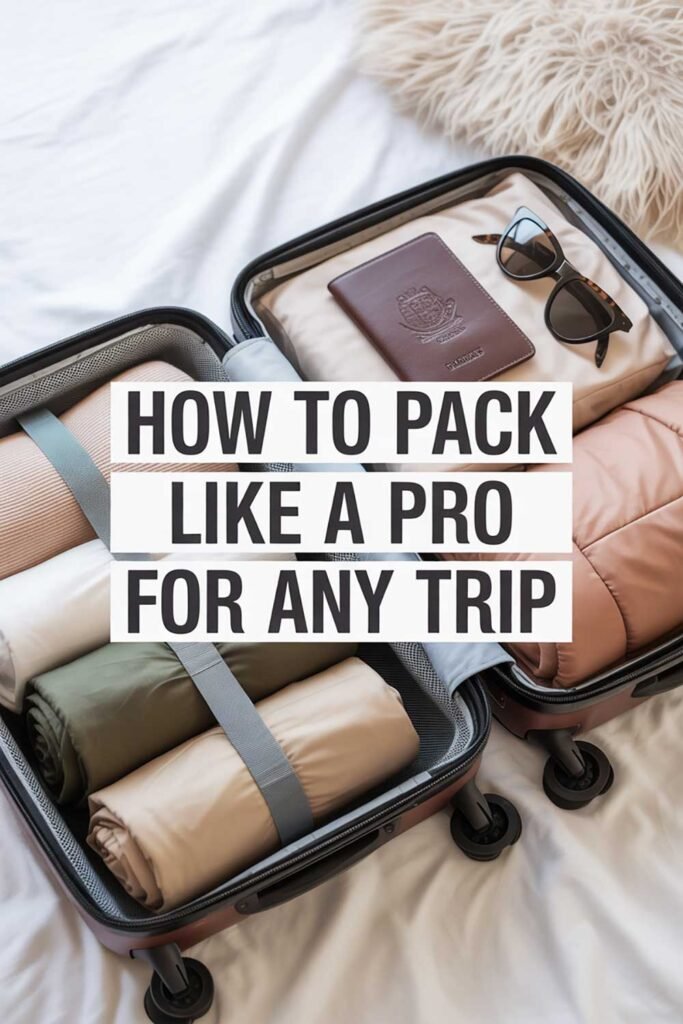
Roll everything soft and fold everything structured when packing the three-outfit system into a weekender. Rolled jeans, tops, and casual pieces compress significantly more than folded equivalents and produce fewer wrinkles in the compressed bag. Structured pieces, a blazer, a dressier top with stiff fabric, or a collared shirt, fold flat across the top of the bag where nothing compresses them. The roll-then-fold order in a weekender keeps the casual daily pieces tight and compact at the bottom and the nicer pieces wrinkle-free at the top where they are the first things you access on arrival.
Let Us Plan Your Weekend Getaway
A great weekender bag deserves a great destination. Whether you are dreaming of a coastal town, a mountain retreat, a city break, or a countryside escape within driving distance, we can match you with the perfect weekend getaway. Real travel agents, real weekend expertise, real results.
Plan Our EscapeShoes are the most disproportionate space and weight consumer in any weekend bag. A single pair of boots takes the space of three rolled pairs of jeans. Two pairs of shoes for a two-night trip takes space that could accommodate an entire outfit change. The weekend packing system that works is almost always built on one pair of versatile shoes worn through the journey and one pair of backup footwear that packs flat or barely at all.
The one versatile pair is the pair that handles every occasion a weekend trip typically produces. A well-chosen pair of leather sandals in a warm climate or a smart casual sneaker in a cooler city handles coffee in the morning, walking in the afternoon, and a casual dinner in the evening without any shoe change required. The test for whether a shoe qualifies as genuinely versatile is simple: can you walk three to five miles in it comfortably, and can you wear it to a casual restaurant without looking like you came directly from the gym? If the answer to both is yes, it is a weekend shoe.
The flat backup is not always necessary but earns its place on trips where the primary shoe is more formal. A pair of flip-flops that rolls flat takes up the space of one sock. A packable flat ballet slipper weighs two ounces. These go in only when the primary shoe is something that the trip might occasionally require you to take off, like at certain accommodation styles, cultural sites, or late-night stretches where carrying flat shoes in a small bag is more comfortable than being in the primary pair for hour twelve of a long day.
Wear the larger or heavier of the two shoe choices through every transit. Shoes on feet weigh nothing in the bag. Shoes in the bag weigh exactly what they are, which for most quality footwear is half a pound to a full pound per shoe. Walking to the train station in your chunkier weekend shoes rather than packing them frees meaningful bag space and weight for the things that actually need to be packed rather than worn.
When selecting the one versatile weekend shoe, choose a color that works with every piece in the three-outfit system. A shoe that only goes with some of the combinations introduces the same orphaned-piece problem that the neutral palette was designed to avoid. Tan, cognac, white, black, or a neutral metallic works with almost any neutral wardrobe palette. A statement color shoe works with exactly the combinations that share its color, which in a three-outfit weekend bag is often none of them.
The weekend toiletry kit should be the lightest version of any toiletry kit you ever pack because the weekend is the occasion where the distinction between the things you genuinely cannot go without and the things you habitually bring is clearest and most worth respecting. Two nights away does not require a full bathroom. It requires the ten to twelve items that constitute your non-negotiable daily routine and nothing more.
The complete weekend toiletry essentials: toothbrush and travel-size toothpaste, your face cleanser in a travel-size decant or a bar format, your daily moisturizer decanted into a small travel pot, your SPF if you will be outdoors, your deodorant, your razor if needed, your prescription medications for the trip duration, a lip balm, your contact lens solution and case if you wear lenses, and two travel packs of pain reliever and antacid as the minimum first aid. For some travelers, a travel-size dry shampoo if the destination does not allow hair washing access adds to this list. For most, the hotel, Airbnb, or accommodation provides shampoo and body wash that is more than adequate for two nights.
Decant into the smallest containers that hold enough for two days plus a small buffer. A one-ounce pot of moisturizer is more than enough for two nights of twice-daily face moisturizing for most formulas. A small squeeze of face wash covers four to six washes with room to spare. Packing full-size products for a two-night trip is carrying a full week’s worth of product for a usage window that requires a fraction of it. The weight and space savings from travel-size weekend decants compared to full-size products is meaningful in a bag where every ounce and inch of space is occupied by multiple categories of necessity.
Keep a permanently-packed weekend toiletry pouch that lives on a bathroom shelf between trips and goes directly into the weekend bag without any assembly required. Stock it with dedicated travel-size versions of your daily essentials refilled from home products after each trip. When Friday arrives and the weekend bag is being assembled in twenty minutes, the toiletry pouch is already done. One item off the assembly list that is already the most consistently forgotten and most time-consuming item to assemble under time pressure. The permanently-packed pouch is the weekend packing habit that experienced weekend travelers cite as the single most impactful change to their Friday night departure routine.
The Weekend Travel Gear We Actually Pack
The slim weekender that fits everything for two nights without a checked bag, the permanently-packed travel toiletry pouch that has been ready to go for years, and the neutral-palette three-outfit system that has never produced a weekend wardrobe we regretted. Real weekend picks from real weekend trips of every type and destination.
DND FavoritesThe forgotten charger is one of the most consistent weekend trip frustrations and one of the most entirely preventable. It is forgotten consistently because chargers are the last items added before departure, when they are still plugged in and actively being used, and are then left behind in the urgency of getting out the door. The solution is not more careful departure-morning attention. It is a packing habit that removes the charger from the departure-morning decision entirely.
Keep a dedicated travel charging kit that lives in your weekend bag permanently. A second phone charger cable and a compact USB wall adapter that never come out of the bag between trips. Not your everyday charger. A second set specifically designated for travel that charges back into the weekend bag after every trip. When your everyday charger is still in the wall at home, your travel set is already in the bag where it has been since you packed it.
A small power bank of 5,000 to 10,000 milliamp hours travels in the weekend bag alongside the charging kit. A weekend trip involving a long drive, a full day of sightseeing, or any time away from an outlet benefits from having battery top-up available without needing to find a wall outlet. The power bank that lives in the weekend bag is the power bank that is there when you need it rather than the power bank that was on the bedside table when you left.
For international weekend trips, the universal adapter belongs in the permanent weekend bag kit alongside the chargers. An adapter that is always in the bag rather than packed specifically for each international trip is an adapter that is never forgotten. The permanent charging kit, whether domestic or international, converts the charger category from the thing you most commonly forget into the thing that is always already there when you open the bag.
Pack a small cable organizer or a simple zip pouch specifically for the charging kit inside the weekend bag. Loose cables in a weekender migrate to every corner of the bag and become tangled with other items. A designated pouch takes thirty seconds to retrieve, keeps every cable organized and visible, and prevents the specific frustration of pulling out every item in the bag to find the charging cable that slid under everything else. The cable pouch is one of those organizational habits that seems minor until you have spent five minutes searching a weekend bag for a cable you know is in there somewhere.
This is the most personal item on any weekend packing list and the one most often dismissed as unnecessary until the specific quality-of-sleep difference it makes becomes impossible to ignore. One small item that connects your sleep environment away from home to the conditions that produce genuine rest for you specifically is worth more on a two-night trip than most of the clothing in the bag.
For most travelers, the one comfort item is one of a small set of things. A sleep mask that guarantees darkness in any room regardless of blackout curtain quality. Foam earplugs that guarantee quiet in any room regardless of corridor or street noise. Your own pillow cover or a silk eye mask that fits over any hotel pillow and makes the unfamiliar pillow feel slightly more like yours. A small candle or a room spray in a scent that signals relaxation to your nervous system. A downloaded playlist or white noise app that creates your sleep-time audio environment regardless of what is happening outside the room.
The sleep mask and earplugs together weigh under one ounce and cost under $20 for a quality set. The specific comfort item is different for every traveler and the common thread is that it addresses the specific aspect of an unfamiliar sleep environment that most affects your rest. If the light wakes you, the sleep mask is your item. If the noise does, the earplugs are. If it is the scent or the feel of an unfamiliar pillow, the candle or pillow cover is. One ounce of the right thing produces better sleep on a two-night trip than any number of wrong things that seem more practical.
Pack your sleep comfort item in the outside pocket of the weekender or in the very top of the bag. It is the first thing you access on arrival at the accommodation and the last thing you pack on departure morning. Having it immediately accessible when you arrive in a room and are orienting yourself removes the need to unpack anything to find it and means your sleep environment is set up for you the moment you walk in rather than after you have already started unpacking clothes and toiletries and have lost track of where the sleep mask ended up.
The Weekend We Finally Packed Like Weekenders
Eli and Cass had taken several weekend trips together before they figured out what weekend packing actually required. The first few times, each of them brought a carry-on sized rolling suitcase for two nights because that was the bag they used for longer trips and it seemed like the simplest approach. They checked the bags when they flew, waited at baggage claim on both ends, and arrived at their accommodation dragging rolling luggage through a charming narrow-street town that had clearly not been designed for wheeled suitcases.
On their third weekend trip they had a genuine conversation about it. Two nights. Why were they packing like they were moving? Eli identified that most of what was in his bag was just-in-case clothing that never got worn. Cass identified that her toiletry bag was the full version she used for two-week trips, not something specifically built for forty-eight hours. Neither of them had a permanently-packed charging kit so they both repacked chargers from home every time.
They spent twenty minutes before their fourth weekend trip building the system in this article. Three coordinating pieces each. One shoe. A slim toiletry pouch specifically assembled for weekends. A small charging kit that would stay in the weekender permanently. And the sleep mask and earplugs that Cass had kept meaning to add to her weekend kit for two years and finally put in. Both bags fit in the overhead bin. They walked off the plane and out of the airport in under ten minutes. They arrived at the accommodation carrying bags that fit through the doorway without repositioning.
The weekend was exactly as good as all the previous ones. The packing was better than any of them. They have not checked a bag for a weekend trip since and they have not had a weekend trip where the bag felt like it was working against them rather than serving the trip. Twenty minutes to pack. Zero time at baggage claim. That is the weekend packing system done right.
The right weekender bag makes the entire system work. The wrong one either limits what the system can hold or undermines the efficiency of the system by being difficult to access, impossible to carry comfortably, or structurally unsuited to the type of packing the weekend requires.
A weekender bag for a two-night trip should hold 30 to 40 liters of packed volume. This is enough for the three-outfit system, one shoe pair, the slim toiletry pouch, the charging kit, the comfort item, and a jacket or light layer. It should have at least one external zip pocket for the comfort item, the power bank, and any items you access frequently. It should have a shoulder strap or a carry handle that is comfortable enough for airport transits, short walks from transit to accommodation, and the kind of casual carrying that a weekend trip requires.
The structure matters differently for different trip types. A structured duffel or a structured weekender bag keeps its shape in overhead bins and on luggage racks without compressing the contents. An unstructured canvas or nylon tote is lighter and more packable but collapses against the items inside rather than maintaining a bag shape, which makes it harder to locate items in the bag and harder to set upright in overhead compartments. For flight-based weekend trips, the structured option is worth the slightly greater empty weight. For car-based weekend trips where the bag rides in the trunk rather than an overhead bin, the lighter unstructured option is more practical.
A weekender bag that fits as an airline carry-on personal item, typically 18 by 14 by 8 inches or smaller depending on the airline, is the most versatile option for any weekend travel. It travels under the seat in front of you on most aircraft, requires no overhead bin space, and deplanes fastest because it is always in front of you rather than above you. Check your specific airline’s personal item dimensions before purchasing a bag specifically for this purpose since requirements vary.
Choose a weekender bag in a solid neutral dark color rather than a light color or a pattern. Dark bags show less travel wear, hide scuffs and minor stains from overhead bin contact and floor placement, and photograph neutrally in any setting without competing with the visual content around them. A bag that looks good after fifty weekend trips is a bag worth investing in. The three qualities that predict longevity in a weekender bag are reinforced handles and straps with stitched rather than glued attachment points, a water-resistant exterior fabric, and zippers with metal pulls rather than plastic ones. All three are visible before purchase and save the cost and frustration of replacing a bag whose construction was not built for the frequency of use a regular weekend traveler puts on it.
Book Your Next Weekend Getaway
A well-packed weekender deserves a well-chosen destination. Our trusted booking platform lets you book weekend accommodation, flights, and rental cars in one place, with real travel agents who know the properties worth the weekend and the destinations that reward the light bag you are now bringing. Let us book it.
Book A TripCommon Weekend Packing Mistakes to Avoid
Most weekend packing frustrations come from applying longer-trip thinking to a two-night situation. These are the most consistent ones and what to do differently next Friday evening.
Packing a full-size rolling suitcase for two nights
A rolling carry-on suitcase for a two-night trip is a logistics overhead that the trip does not require. Checked bag fees at both ends. Baggage claim wait both directions. Rolling luggage through accommodation that was not designed for it. The same contents that filled the rolling suitcase fit in a weekender bag that goes in the overhead bin, deplanes faster, and moves through every transition of the trip as an extension of the traveler rather than as a separate object requiring its own management. The rolling suitcase for a weekend trip is almost always a symptom of not having built a deliberately minimal weekend packing system. Build the system and the rolling suitcase stays home.
Packing outfit options instead of a coordinated system
Five outfits for two nights is not more preparation. It is more weight, more volume, and more decision-making at the destination when you are tired and just want to leave the room rather than standing in front of open bag trying to remember which top goes with which bottom. Three pieces that all coordinate with each other produce more functional daily combinations than five separate outfits and take up less than half the space. The coordinated system does less visible repetition and creates less cognitive load at every dressing decision of the trip.
Bringing multiple pairs of shoes for two nights
A second pair of shoes in a weekender bag takes the space of multiple outfit changes and the weight of a significant portion of the clothing. For a two-night trip, one versatile pair worn through transit and a flat backup that packs in negligible space covers every occasion a weekend trip realistically produces. The third pair that might be needed for an occasion that might arise is the pair that converts a light, mobile weekender into a heavier, less comfortable bag for the entire trip on the off-chance it becomes useful for an hour.
Packing a full toiletry kit rather than a slim weekend pouch
A full-size toiletry bag assembled for a two-week trip carries a week’s worth of every product for a two-night usage window. The full-size shampoo that will be used twice. The full-size moisturizer that will be used four times. A slim weekend pouch with travel-size decants of the genuine daily essentials and nothing else weighs under eight ounces and takes up a fraction of the space of the full kit. The hotel, vacation rental, or accommodation almost always provides shampoo, conditioner, and body wash. The weekend traveler who brings only what the accommodation genuinely cannot provide arrives with significantly less bag weight for the same grooming outcome.
Forgetting chargers until departure morning
A charger still in the wall when the bag is being closed is a charger that is forgotten when the bag is being carried out the door. The permanently-packed weekend charging kit, a travel cable and adapter that live in the bag between every trip, eliminates the charger from the departure-morning memory list entirely. It is already there. It has been there since the last trip. It is the one item that most consistently gets left behind in the charging process and the one item that is most painfully missed on a weekend trip where the nearest electronics store may be an inconvenient distance from the accommodation.
No comfort item for sleep quality
A sleep mask and earplugs together weigh one ounce and cost under $20. They produce materially better sleep in any unfamiliar room regardless of the room’s blackout quality, street noise level, or corridor activity. For a two-night trip where every night of poor sleep is half the trip’s sleep, the sleep mask and earplugs represent the highest quality-of-experience return on any item in the bag. Skipping them on the basis that the room will probably be fine is the calculation that produces lying awake on the first night with the corridor light under the door and the street noise from the floor below and remembering that the sleep mask was on the bedside table at home.
Love Helping People Escape for the Weekend?
If recommending the perfect weekend getaway destinations, matching travelers with the right properties, and helping people find the weekend trips they will talk about for years sounds like work you would love, becoming a home-based travel agent might be exactly the right next step. Earn commissions, get insider travel perks, and build a real business from anywhere. See how it works.
Become An AgentFrequently Asked Questions
These are the questions weekend travelers ask most often about packing for a two-night getaway. Real answers from real weekend travel experience.
What is the difference between a weekender bag and a carry-on and which should I use?
A weekender bag is typically a soft-structured duffel or tote in the 30 to 45 liter range, designed to be carried by shoulder strap or top handle rather than rolled on wheels. A carry-on is any bag within airline carry-on dimensions, typically 22 by 14 by 9 inches for a rolling bag, and can include both rolling suitcases and soft bags. For a weekend trip the distinction is practical rather than technical. A soft weekender bag in the 30 to 40 liter range that fits as a personal item under the seat is the most efficient option for flight-based weekend travel. A small rolling carry-on that fits in the overhead bin works well for weekend trips involving more than three nights or particularly active destinations that require more gear. For car-based weekend trips, the bag choice is purely about what fits comfortably in the car and is easiest to carry into the accommodation.
How do you pack for a weekend trip that includes both casual and nicer occasions?
The three-outfit coordinated system handles mixed occasion weekends particularly well because the same pieces serve multiple formality levels through shoe and accessory variation rather than through separate outfit categories. Dark jeans that work for casual daytime exploring look entirely different for dinner with a nicer top, a simple necklace, and the good sandals instead of the walking shoes. A linen trouser that works with a casual tee for daytime reads as smart casual with a silk-effect blouse and a small crossbody bag for evening. The key is identifying one item in each outfit that elevates the combination for the nicer occasion and ensuring that item is in the bag. The one nicer piece rule, a single item one step above the rest of the bag, serves the elevated occasion without requiring a separate formal outfit category.
How do you handle toiletries for a weekend trip when the accommodation provides some basics?
Research what your specific accommodation provides before you pack a single toiletry item. Most hotels and many vacation rentals provide shampoo, conditioner, body wash, and soap. Some provide additional items like lotion, dental kits, and razors. Knowing what is already there before you pack means your slim weekend pouch contains only the items the accommodation genuinely cannot provide: your specific face cleanser and moisturizer, your medications, your contact lens supplies, your preferred deodorant, and anything where brand specificity or formulation matters to your daily routine. Everything else that the accommodation provides is weight and space you do not need to carry. A quick look at the accommodation’s website or app listing takes two minutes and can reduce your weekend toiletry kit by four or five items.
Is it really possible to pack for a weekend trip in twenty minutes?
With the system in this article fully built, yes. The twenty minutes works because the decisions that take time in unstructured packing have already been made. The coordinated outfit system means no decision-making about what goes with what. The permanently-packed toiletry pouch means no assembling from the bathroom cabinet. The permanently-packed charging kit means no charger hunting. The one versatile shoe means no footwear deliberation. The sleep comfort item that lives in the weekender means no remembering to add it. The bag is assembled from established components rather than built from scratch. The first time you build the system takes thirty to forty minutes. Every Friday evening after that takes twenty.
What do you do differently when packing for a weekend trip in cold weather versus warm weather?
Cold weather weekend packing requires the same coordinated three-piece system applied to heavier fabrics, which means the physical volume of the bag increases even with the same number of items. A wool sweater takes the space of two thin tops. Thick jeans take the space of linen trousers and a lightweight skirt combined. The adjustment is to choose the lightest weight items that provide the required warmth rather than the heaviest comfortable ones. A medium-weight merino wool sweater provides more warmth per ounce than a thick cotton hoodie. A fleece layer compresses significantly more than a down vest. The cold weather weekend bag works best when every item has been chosen for the warmth-to-weight ratio rather than purely for warmth. One good mid layer that works over every top in the bag replaces two or three separate cold weather layers and performs the same function with less bulk.
What should always be in the personal item or day bag on a weekend trip rather than the weekender?
Any item you need immediate access to during transit should be in your personal item or a small day bag rather than in the weekender. Your phone and charger cable. Your travel documents and ID. Any medication you take on a schedule. Your sleep comfort items for a long travel day. Snacks and a water bottle. Your earbuds or headphones. Your book or tablet. Your wallet and any cash. For flight travel specifically, your boarding pass in three accessible locations and any items that would make a gate-checked weekender bag loss a problem should be in your personal item. If the weekender were lost or delayed, the personal item should contain everything you need to function for twelve to twenty-four hours while the bag is located. For a two-night trip this is a surprisingly small list but it is worth identifying before departure rather than after.
A weekend trip is two nights. It needs a bag you can lift with one hand and leave in twenty minutes. Everything else is a choice about what you actually need versus what you are used to bringing.
Picture Your Next Friday Evening Before the Getaway
It is 7 p.m. on Friday. You pull your weekender off the shelf. The toiletry pouch and the charging kit are already in it from last time. You lay out three coordinated pieces, roll the soft ones, fold the one structured piece on top. Your one versatile shoe goes in a shoe bag on the side. The sleep mask is in the outer pocket. You add your medications and your ID. You close the bag. You lift it. It is light. You put it by the door. It is 7:20 p.m. You are ready. The weekend starts the moment you step over the threshold. Zero time at baggage claim, both directions. That is weekend packing done right. That is every Friday getaway from here.
One More Thing Before You Pack
Print our free Travel Packing Checklist before your next weekend getaway. The weekend section is deliberately short because weekend packing should be. Every essential covered, every common forgettable item included, and the editing reminder most weekend travelers skip. Pack it in twenty minutes. Leave in twenty-one.
Get the Free ChecklistExplore Our Top Picks for a Better Trip
From the weekender bag that has been on every short trip for years to the permanently-packed travel toiletry pouch that is always ready to go, see the weekend travel products and resources we actually use and recommend on every getaway we take. Real picks from real weekend trips, tested and trusted across years of Friday-evening departures.
See Our Top PicksTravel Prints and Printables From Our Shop
Visit Premier Print Works for travel journals, weekend trip planners, packing list printables, and wall art that makes every getaway a little more beautiful and a lot more organized from the first item packed to the last memory made.
Visit Premier Print WorksDisclaimer
The information shared in this article is provided by Don and Diana’s Travels for general informational, educational, and inspirational purposes only. It reflects our personal experiences, opinions, and the experiences of travelers we have worked with. It is not professional travel, legal, or financial advice, and it should not be relied on as such.
Travel Information and Booking
Airline personal item and carry-on size restrictions, baggage policies, accommodation standards, and related travel information change often and vary significantly between airlines, destinations, and specific properties. Always confirm current baggage size and weight requirements with your specific airline before travel. Personal item dimensions mentioned in this article are general guidelines and may not apply to all airlines or routes. We make no guarantee that any information in this article is accurate, complete, or up to date at the time you read it.
Affiliate and Partner Links
This article may contain affiliate links, partner links, referral links, and links to products or services that pay us a commission. If you click a link and book a trip, make a purchase, sign up for a service, or complete any qualifying action, we may earn a small commission at no extra cost to you. This includes but is not limited to links to our travel booking platform, host agency, recommended products, the Premier Print Works shop, and any third-party retailers or service providers mentioned in the article. Our recommendations are based on real use and genuine belief in the products and services we share. Commissions help support the cost of running this site and producing free content for our readers.
Third-Party Websites and Services
We may link to third-party websites, services, and resources for your convenience. We do not control these sites and are not responsible for their content, terms of service, privacy practices, pricing, availability, accuracy, customer service, refund policies, or any product or service they sell. Your use of any third-party site is entirely at your own risk and subject to that site’s own terms and policies.
Health, Safety, and Personal Responsibility
Travel involves personal risk. You are solely responsible for your own health, safety, travel insurance, medications, vaccinations, documentation, financial decisions, and choices while planning or taking any trip. We strongly recommend purchasing comprehensive travel insurance for every trip. Don and Diana’s Travels, its owners, employees, contractors, and affiliates accept no liability for any loss, injury, illness, delay, cancellation, damage, theft, or inconvenience arising from your use of the information in this article or from any travel decisions you make.
Composite Stories and Characters
Some stories, examples, and traveler experiences shared on this site are composites. They are drawn from the real experiences of Don, Diana, clients, friends, and travelers we have worked with over the years. Names, identifying details, locations, and circumstances may be combined, changed, or fictionalized to protect privacy and to better illustrate a point. Any resemblance to a specific real person beyond the composite portrayal is unintentional.
No Guarantees
We do not guarantee any specific result, outcome, savings, experience, or financial return from using the information, tips, services, or products mentioned in this article. Your results depend on many personal factors, including your own choices, effort, circumstances, and external conditions outside of our control.
Copyright and Use
All content in this article, including text, images, graphics, design, and original stories, is the copyrighted property of Don and Diana’s Travels unless otherwise noted. You may not copy, republish, redistribute, modify, sell, or reuse our content in whole or in part without our prior written permission. You are welcome to share a direct link to this article with proper credit.
By reading and using the information in this article, you acknowledge that you have read, understood, and agree to this disclaimer in full.