Family Travel Hacks for Easier Vacations
Family travel is not about executing the perfect itinerary. It is about creating the kind of shared experiences that become the stories your children tell their own children someday. With the right systems in place the journey can be just as good as the destination. These family travel hacks are built for real families navigating real trips — with everything that comes with it.
Grab Our Travel Packing Checklist
Packing for a family is one of the most overwhelming parts of any trip. Our free checklist walks you through every essential for adults and kids, from carry-on must-haves to the small items most families forget. Print it once and use it on every trip.
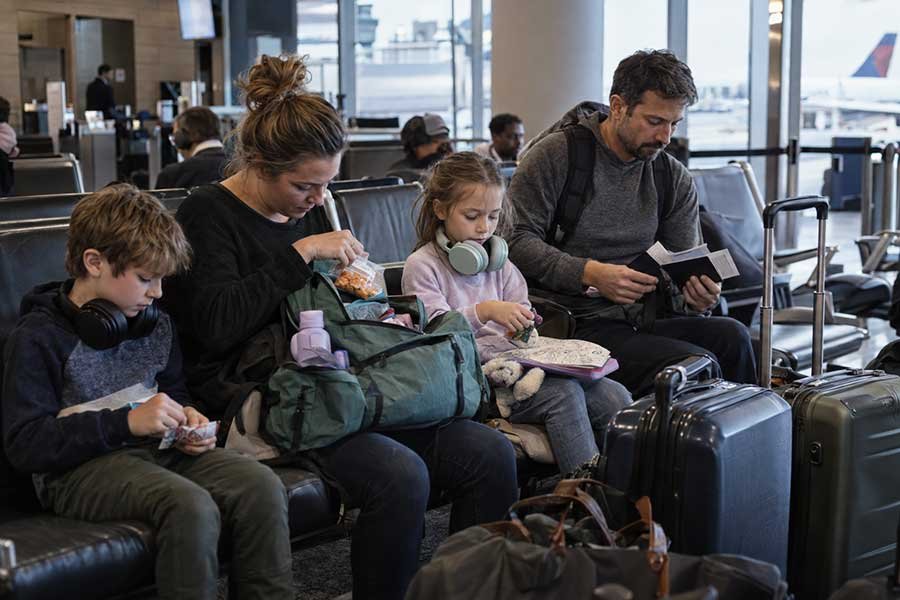
Get the Free ChecklistA dedicated kids activity bag is the single most impactful thing you can pack for any family travel day. Not the main luggage. A separate small bag that belongs to the journey itself, filled entirely with things that keep children engaged, entertained, and calm from departure to arrival.
Build the activity bag around your child’s age and attention span. For toddlers and young children, include a small coloring book and crayons, sticker sheets, a few small familiar toys, a downloaded show on a tablet, and a comfort item like a small stuffed animal. For older kids, add chapter books, puzzle books or activity pads, headphones for movies, a travel-size board game, and a journal where they can draw pictures or write about what they see.
The secret is novelty. Pull out the activity bag only on travel days, not at home. Kids who see the bag as something special and travel-only will engage with it far longer than kids who have already exhausted everything in it on a Tuesday afternoon. Rotate a few new items in before each trip. A dollar store has an entire activity bag’s worth of small surprises for about five dollars.
Keep snacks and comfort items for the journey in the activity bag too, not buried in the main luggage. When a child needs something, the last thing a traveling parent wants to do is unpack half a suitcase in an airport or on a plane. Everything the child needs within immediate reach means everything stays calmer for everyone.
The best family vacations are not the ones where everything went perfectly. They are the ones where something went sideways and everyone laughed about it at dinner.
Children do not need more to do on a travel day. They need the right things at the right moment. That is what the activity bag is for.
Wrap a few items in the activity bag with tissue paper or put them in small gift bags. The act of unwrapping something adds ten minutes of engagement on its own and makes the travel day feel like a small adventure rather than a waiting game. The most experienced family travelers swear by this trick.
Let Us Plan Your Family Escape
Planning a family trip involves more moving parts than any other kind of travel. Kid-friendly accommodations, the right destinations for different ages, activities that work for everyone. Let us handle the logistics. Tell us about your family and where you want to go and we will put together something everyone will love.
Plan Our EscapeBooking accommodations with a kitchen is one of the highest-impact money and sanity saving decisions a family can make. Hotels are designed for adults. Vacation rentals, apartment hotels, and family suites with kitchenettes are designed for how families actually live.
A kitchen on a family trip means breakfast every morning without hauling tired kids to a restaurant at 7 a.m. It means a quick lunch from the grocery store instead of a full restaurant meal when the kids are exhausted from a morning of sightseeing. It means snacks always available in the fridge without finding a convenience store at 9 p.m. when someone cannot sleep. It means saving anywhere from $30 to $100 a day in food costs, which adds up to several hundred dollars over a week.
Look for vacation rentals with a full kitchen and laundry. Laundry is one of the most underrated family travel advantages. Being able to wash clothes mid-trip cuts your packing load by almost half. You can pack lighter, save on checked bag fees, and arrive home with a bag that does not feel like the entire trip is somehow still traveling with you.
A separate bedroom for parents is also worth the search. Children go to sleep earlier than adults on vacation. Having a space where the adults can have a quiet evening, a glass of wine, and a conversation without whispering in the dark is worth more than any hotel amenity you will ever be offered.
On your first day, take thirty minutes to find the nearest grocery store and stock the kitchen with breakfast foods, lunch staples, snacks, and drinks. That thirty minute investment pays back every single morning and afternoon of the trip. Families who skip this step spend twice as much on food and twice as much time managing hungry children in restaurants.
One of the most common family travel mistakes is overscheduling. Adults think more activities means a better trip. Children experience it as relentless momentum with no space to breathe, play, or process what they are seeing. The result is exhaustion, irritability, and the feeling that the trip was a sprint rather than a vacation.
Plan one big activity and one relaxed unstructured day for every two days of travel. On a seven-day trip, that gives you three or four meaningful experiences and three or four days where the kids can swim in the hotel pool, explore a park near your rental, walk a neighborhood at their pace, or simply have a slow morning without an agenda.
The relaxed days are often the ones families remember most. The afternoon the kids discovered a fountain and played in it for an hour. The morning everyone stayed in pajamas eating breakfast and watching the rain out the window. The evening walk that turned into finding a gelato shop with mismatched chairs outside. These moments cannot be scheduled. They happen in the space you leave between the big plans.
Research child-friendly free activities near your accommodation before you arrive. Most cities have parks, playgrounds, beaches, walking trails, free museum days, and public spaces where kids can move and explore without a ticket or a time slot. These become the fallback on relaxed days and often turn into the highlights of the whole trip.
Family Travel Gear We Actually Use
The activity bag organizer that keeps everything together, the packable day bag that handles everything from beach days to city walks, the travel snack containers that survive a full travel day, and the packing cubes that make family luggage actually manageable. Real picks for real family trips.
DND FavoritesHunger is the number one cause of child meltdowns on travel days. Not boredom, not fatigue, not overstimulation. Hunger. And by the time a child tells you they are hungry, the window to prevent a full meltdown is already closing fast. The solution is to stay thirty minutes ahead of hunger at all times.
Pack more snacks than you think you will need, then double it. Include a mix of protein, complex carbs, and natural sugars. Cheese sticks and whole grain crackers. Nut butter packets with apple slices. Trail mix with dried fruit. Granola bars that are not too sweet. Fruit pouches for toddlers. Hard-boiled eggs wrapped in foil if you have fridge access before departure. These snacks provide steady energy instead of the sugar spikes and crashes that airline snack packs cause.
Offer a snack proactively every two hours during travel days, not in response to complaints. This single habit reduces meltdowns dramatically. Keep snacks in the front of the activity bag where they can be grabbed in seconds without digging through everything else.
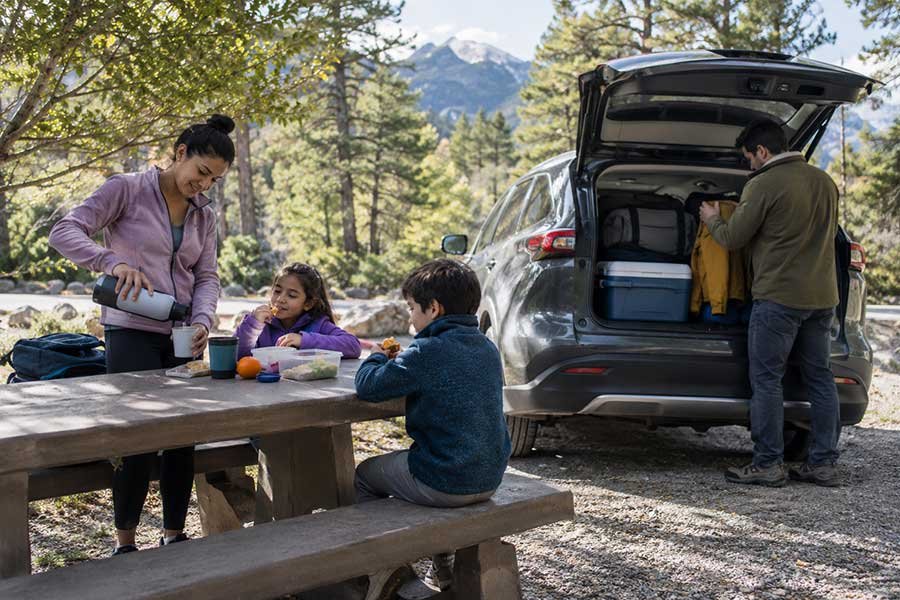
For longer trips, visit a grocery store on day one and stock a small reusable bag or soft cooler with snacks for every day out. Apples, bananas, individual cheese portions, crackers, and small juice boxes. This costs a fraction of what you would pay for snacks from tourist shops and cafes and means you are never caught in a museum with a hungry child and only vending machine options available.
Pack an empty soft insulated lunch bag in your luggage. On day one, fill it at the grocery store. Every day after that it serves as your family snack bag for excursions, beach days, and long travel segments. It weighs almost nothing packed flat and saves you the cost and stress of hunting for food at the wrong moment every single day.
Children experience time on a completely different schedule than adults. What takes an adult five minutes takes a child fifteen. Getting shoes on. Finding the stuffed animal that absolutely must come to the museum. The bathroom visit that becomes urgent only after everyone is buckled in. The goodbye to the hotel room that turns into a full emotional moment because this was a great trip and they are not ready to leave.
Build thirty minutes of buffer into every transition on a family trip. Before leaving the accommodation each morning. Before airport arrivals. Before catching a train or bus. Before a restaurant reservation. This is not wasted time. It is the difference between a family that moves through a trip with reasonable calm and one that is perpetually five minutes late and quietly seething about it.
At the airport specifically, arrive early. Two and a half hours for domestic flights with children. Three to three and a half hours for international flights. Security with young children takes longer than it does for adults. Car seats, strollers, liquids, snacks, and small shoes all add time to the security process. The buffer you build at the airport is an investment in starting the trip without adrenaline.
Tell your children the departure time is thirty minutes earlier than it actually is. They will still find ways to use every single minute. You will leave on time. This is not deception. It is parenting wisdom that every experienced traveling family eventually discovers on their own and wishes someone had told them sooner.
The Trip That Became Their Favorite Story
Priya and Marcus had planned their first big family trip for months. Theme park, beach, boat tour, two different cities in six days, everything scheduled down to the hour. They were going to give their kids, ages four and seven, the trip of a lifetime. By day two, the four-year-old had a meltdown outside the theme park entrance because she was hungry and overstimulated, the seven-year-old was in tears because he was exhausted from the previous day and did not want to go in, and Priya and Marcus were standing in the parking lot questioning every decision they had made.
They scrapped the plan. They drove back to the rental, ordered pizza, and spent the afternoon at the small pool in the backyard. The kids played for three hours. Nobody cried. Everyone laughed. That evening they walked to a small ice cream shop two blocks away and the four-year-old got a scoop so big it fell off the cone before she took a bite, and she thought it was the funniest thing that had ever happened to anyone in the history of the world.
They still went to the beach and the boat tour. But they dropped one city, added more pool time, and stopped scheduling every hour. The rest of the trip felt completely different. Slower. Easier. More fun for everyone. They came home and the kids did not talk about the theme park they had planned so carefully. They talked about the ice cream that fell on the ground and the afternoon in the pool and the morning they found a turtle on the beach path.
The best family vacations are not the ones where everything went perfectly. They are the ones where something went sideways and everyone laughed about it at dinner and talked about it for years. Plan less. Buffer more. Let the trip breathe.
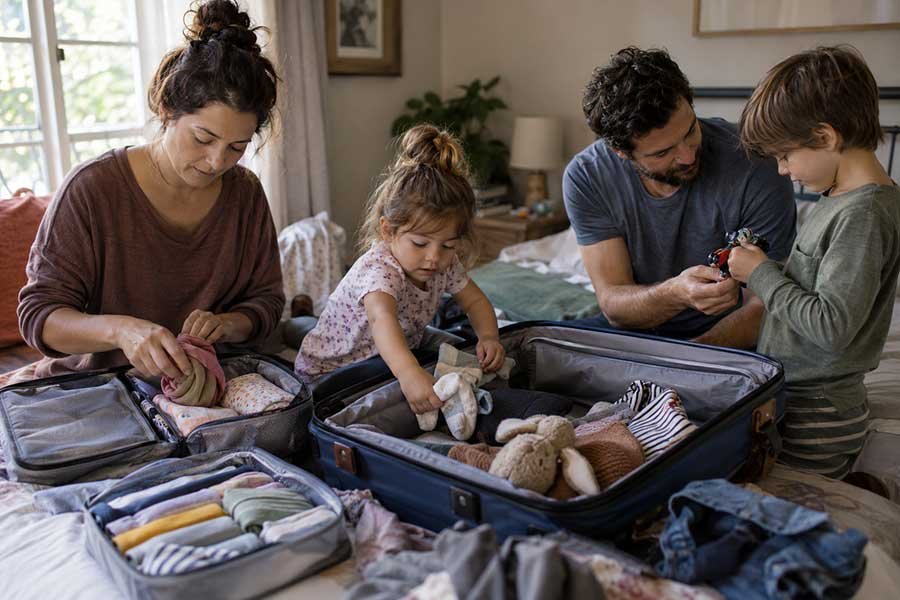
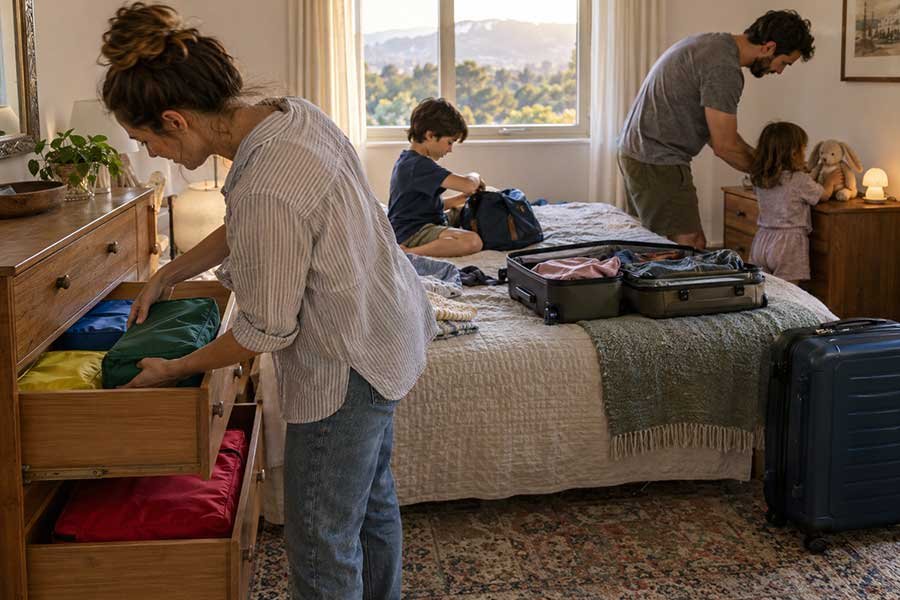
Family packing works best when every person has their own clearly organized bag and the system is set before anyone starts throwing things in. Get the system wrong and you spend the whole trip digging through everyone else’s belongings looking for sunscreen or a child’s spare underwear.
Give each child their own small backpack for the travel day. Even toddlers can carry a tiny bag with their stuffed animal, their water bottle, and a few snacks. Children who carry their own bag feel responsible and important, which changes their energy on travel days in a genuinely noticeable way. Older children can carry their own change of clothes, their activity bag, and their own water bottle without complaint.
For the main family luggage, pack each family member’s clothes in a separate labeled packing cube. When you arrive at the accommodation and need to find the youngest child’s pajamas at 8 p.m. after a long travel day, you pull out one cube instead of unpacking an entire suitcase in a dark room while trying not to wake anyone up.
Pack one dedicated family essentials pouch with sunscreen, a small first aid kit, children’s pain reliever, allergy medication if needed, bug spray for outdoor destinations, wet wipes, and hand sanitizer. This pouch goes in your day bag every time you leave the accommodation. Everything you need for a day out lives in one place and never gets left behind.
Pack two full changes of clothes for young children in your carry-on or day bag, not one. Children’s clothes get dirty at a rate that defies physics. Spilled juice, a muddy puddle that appeared from nowhere, a sand castle that somehow got into everything. Two changes means you are covered for whatever the day throws at the smallest members of your family.
Book Your Family Trip the Easy Way
Family travel has more moving parts than any other kind of trip. Kid-friendly accommodations with kitchens, destinations with the right mix of activities and downtime, flights and transfers that make sense for your family’s age and energy. Our travel agents specialize in helping families book trips that actually work. Let us help.
Book A TripCommon Family Travel Mistakes to Avoid
Most family travel stress comes from a handful of very avoidable mistakes. These are the ones that come up again and again, along with exactly how to handle each one differently next time.
Overscheduling every day
Fitting in as many activities as possible feels like good planning but works against families with children. Kids need unstructured time to process experiences, play spontaneously, and simply rest. An overscheduled trip produces exhaustion and resentment, not memories. One meaningful activity per day is almost always enough. Leave room for the unplanned moments that become the stories you tell for years.
Skipping the kitchen accommodation
Eating every meal out with children is expensive, logistically complicated, and exhausting for the kids who are already overstimulated from a full day of travel. A kitchen lets you control timing, diet, cost, and energy level in ways no restaurant can. The savings over a week easily cover the small premium a rental with kitchen often costs over a standard hotel room.
Packing the activity bag in checked luggage
The activity bag needs to be in the cabin with you during every flight and long travel segment. Parents who pack the entertainment and comfort items in the checked bag discover this problem during the first long wait at the gate. Everything the children need for the journey belongs in the carry-on or personal item within arm’s reach at all times.
Forgetting children’s medications and health essentials
Children’s pain reliever, allergy medication, any prescription medications, and a small first aid kit should be in your carry-on and in your day bag on every excursion. A child who develops a fever or an allergic reaction in an unfamiliar city is a manageable situation when you have what you need. Without it, you are navigating a foreign pharmacy under stress with a sick child.
Choosing adult-centric destinations for young children
A city famous for its nightlife, its fine dining, and its museums with strict quiet policies is not the right destination for a family with toddlers. Choosing a destination based on what it offers for children first and what it offers for adults second produces a far better trip for everyone. Beaches, nature destinations, cities with strong family infrastructure, and destinations with outdoor space for running and playing are almost always the better choice when kids are young.
Expecting the trip to look like your pre-kid travels
Family travel is its own category of trip. It is slower, louder, messier, and occasionally more chaotic than traveling as a couple or solo. The parents who enjoy it most are the ones who accept this completely and plan accordingly rather than trying to recreate a previous version of travel with children added in. The magic of family travel is entirely different from the magic of adult travel. It is not lesser. It is just different, and spectacularly worth it.
Help Other Families Travel Better
If planning family trips, finding kid-friendly destinations, and helping other parents navigate the logistics of traveling with children feels like something you are genuinely good at, becoming a home-based travel agent might be a perfect fit. Earn commissions, get insider perks, and build a business that works around your own family’s schedule. See how it works.
Become An AgentFrequently Asked Questions
These are the questions parents ask most often about traveling with children. Real answers built from real family travel experience.
What is the best age to start traveling with children?
There is no wrong age to start. Infants under six months are often the easiest travelers because they sleep most of the time and have simple needs. The most challenging ages are typically 18 months to three years when toddlers are mobile, curious, and not yet able to reason with. Ages four and up get progressively easier as children can understand explanations, participate in planning, and engage with new experiences more independently. The best advice is to start with shorter, lower-stakes trips close to home before attempting longer international travel so you can learn your family’s travel rhythm on lower-pressure trips first.
How do you handle jet lag with children?
Get into the destination time zone as quickly as possible. On arrival, get natural daylight exposure immediately and keep children awake until local bedtime even if they are exhausted. The first night will be rough regardless. By night two or three, most children have adjusted far faster than adults because their circadian rhythms are more flexible. Avoid long daytime naps on the first day as they delay the adjustment. Plan a slow, low-activity first day to allow everyone to settle rather than launching straight into a full sightseeing schedule.
How do you keep kids entertained on long flights?
Download movies, shows, and games on a tablet or phone before you leave and bring good headphones sized for children. Pack the activity bag with novelty items the kids have not seen before. Bring snacks they love. Walk the aisle every ninety minutes to let them move their bodies and reset. Window seats give children something to look at and a surface to lean against for sleeping. Manage expectations before the flight by explaining what is going to happen, how long it takes, and what they can look forward to on the other side. Children who know what to expect handle long flights far better than ones who are surprised by the duration.
Is it worth bringing a stroller for international travel?
For children under three or four, yes, almost always. A lightweight umbrella stroller weighs four to six pounds, gate-checks for free, and gives you a mobile nap station, a carrying device for an overtired child, and a place to hang bags. The tradeoff is navigating stairs and cobblestone streets in older cities. Research your destination before you decide. Cobblestone-heavy destinations like many European old towns can make strollers more trouble than they are worth, while beach destinations and modern cities are stroller-friendly and reward the effort of bringing one.
How do you handle different interests and ages within one family?
Build the trip around the youngest or most needs-based family member and find experiences that work across ages rather than trying to satisfy everyone separately. Most beaches, national parks, walking neighborhoods, local markets, and outdoor spaces offer something genuinely enjoyable for a four-year-old and a fourteen-year-old at the same time. Let older children have age-appropriate ownership over one decision per day, whether that is choosing the restaurant for dinner, picking the afternoon activity, or navigating on the map app. Ownership produces investment, and invested children are easier travelers.
Should you involve kids in the trip planning process?
Yes, in age-appropriate ways, and the benefits are significant. Children who help choose a destination, pick one activity they are excited about, or help pack their own bag arrive at the trip with a sense of investment and ownership that makes them easier to travel with. It does not mean handing over the entire itinerary. It means giving children one or two real choices and genuine participation in the process. Show them pictures of the destination beforehand. Read a children’s book set in the country you are visiting. Build anticipation together. The trip starts long before departure day when children are involved in making it happen.
The family trip where everything went sideways is always the one your children beg you to tell again. Plan well. Hold loosely. Let the story happen.
Picture Your Next Family Trip
You arrive at your rental with a kitchen and a yard. The kids run straight outside. You unpack in twenty minutes using labeled packing cubes. The next morning is slow. Breakfast at home, no rush. You spend the afternoon at a beach your youngest wanted to find. Something goes sideways in the funny way things do when children are involved. Everyone laughs. At dinner that night, the kids retell the story three times and you realize this is exactly what you came for. Not the itinerary. This.
One More Thing Before You Pack
Print our free Travel Packing Checklist before your next family trip. It covers adults and kids, carry-on essentials, the family day bag, and the small items most families forget until they need them most. The same checklist we recommend to every family before every trip.
Get the Free ChecklistExplore Our Top Picks for a Better Trip
From the family packing cubes that keep everyone organized to the lightweight stroller that survived years of travel, see the travel products and resources we actually recommend for families. Real picks tested on real family trips, not random affiliate roundups.
See Our Top PicksTravel Prints and Printables From Our Shop
Visit Premier Print Works for travel journals, family trip planners, kids travel activity sheets, wall art, and printable goodies that make every family trip a little more beautiful and a lot more organized.
Visit Premier Print WorksDisclaimer
The information shared in this article is provided by Don and Diana’s Travels for general informational, educational, and inspirational purposes only. It reflects our personal experiences, opinions, and the experiences of travelers we have worked with. It is not professional travel, legal, financial, medical, or insurance advice, and it should not be relied on as such.
Travel Information and Booking
Travel conditions, pricing, availability, entry requirements, visa rules, vaccination requirements, passport validity requirements, currency exchange rates, airline policies, baggage rules, stroller and car seat policies, and safety advisories change often and without notice. Before booking or traveling, always confirm current details directly with the airline, airport, hotel, cruise line, tour operator, embassy, consulate, or government travel advisory office for your destination and country of origin. We make no guarantee that any information in this article is accurate, complete, or up to date at the time you read it.
Child Safety and Medical Information
Any information in this article about traveling with children, managing children’s health needs, medications, jet lag, or child wellbeing while traveling is general educational guidance only and not professional medical or childcare advice. Always consult a licensed physician regarding your child’s health needs before travel, including vaccination requirements, medications, and any specific health conditions. Parents and guardians are solely responsible for the safety, health, and wellbeing of their children during travel. We are not responsible for any outcome related to decisions made based on the information in this article.
Affiliate and Partner Links
This article may contain affiliate links, partner links, referral links, and links to products or services that pay us a commission. If you click a link and book a trip, make a purchase, sign up for a service, or complete any qualifying action, we may earn a small commission at no extra cost to you. This includes but is not limited to links to our travel booking platform, host agency, recommended products, the Premier Print Works shop, and any third-party retailers or service providers mentioned in the article. Our recommendations are based on real use and genuine belief in the products and services we share. Commissions help support the cost of running this site and producing free content for our readers.
Third-Party Websites and Services
We may link to third-party websites, services, and resources for your convenience. We do not control these sites and are not responsible for their content, terms of service, privacy practices, pricing, availability, accuracy, customer service, refund policies, or any product or service they sell. Your use of any third-party site is entirely at your own risk and subject to that site’s own terms and policies.
Health, Safety, and Personal Responsibility
Travel involves personal risk. You are solely responsible for your own health, safety, and the health and safety of any minor children in your care, including travel insurance, medications, vaccinations, documentation, financial decisions, and choices while planning or taking any trip. We strongly recommend purchasing comprehensive travel insurance that covers all family members for every trip. Don and Diana’s Travels, its owners, employees, contractors, and affiliates accept no liability for any loss, injury, illness, delay, cancellation, damage, theft, missed connection, lost luggage, or inconvenience arising from your use of the information in this article or from any travel decisions you make.
Composite Stories and Characters
Some stories, examples, and traveler experiences shared on this site are composites. They are drawn from the real experiences of Don, Diana, clients, friends, and travelers we have worked with over the years. Names, identifying details, locations, and circumstances may be combined, changed, or fictionalized to protect privacy and to better illustrate a point. Any resemblance to a specific real person beyond the composite portrayal is unintentional.
No Guarantees
We do not guarantee any specific result, outcome, savings, experience, or financial return from using the information, tips, services, or products mentioned in this article. Your results depend on many personal factors, including your own choices, effort, circumstances, and external conditions outside of our control.
Copyright and Use
All content in this article, including text, images, graphics, design, and original stories, is the copyrighted property of Don and Diana’s Travels unless otherwise noted. You may not copy, republish, redistribute, modify, sell, or reuse our content in whole or in part without our prior written permission. You are welcome to share a direct link to this article with proper credit.
By reading and using the information in this article, you acknowledge that you have read, understood, and agree to this disclaimer in full.