The Minimalist Packing Philosophy: Travel With Less, Experience More
Most packing advice focuses on technique – how to roll clothes tighter, which cubes to buy, what combination of items covers the most outfits. This advice is useful. But it addresses the symptoms of overpacking without examining the cause. The cause isn’t poor technique. It’s a mindset that equates preparedness with volume, that treats every possible need as a packing requirement, and that confuses the comfort of having options with the comfort of traveling light.
Minimalist packing isn’t a technique. It’s a philosophy. It starts with a fundamental reexamination of what you actually need to travel well versus what you pack out of habit, anxiety, or the illusion that more stuff creates better experiences. Travelers who adopt this philosophy don’t just pack less – they experience travel differently. Their trips are physically lighter, logistically simpler, mentally freer, and consistently more enjoyable than when they traveled with more.
This isn’t about suffering through deprivation for the sake of a light bag. It’s about discovering that most of what you’ve been packing was never contributing to your experience in the first place.
The Mindset Behind the Method
Why We Overpack: The Psychology
Overpacking is an emotional behavior disguised as practical preparation.
Control anxiety: Travel involves uncertainty. Packing extra items creates an illusion of control over unpredictable situations. The rain jacket you might not need, the extra shoes for an occasion that might not arise, the formal outfit for a dinner that might not require one – each item addresses a “what if” that your anxiety generates.
Scarcity thinking: At home, your entire wardrobe is available. Leaving items behind triggers a scarcity response – the feeling that you’re depriving yourself of options you might want. This feeling persists even when logic confirms you won’t need those options.
Identity protection: We use clothing and possessions to express identity. Packing minimally can feel like traveling without your full self, as if leaving the boots behind means leaving behind the version of you that wears those boots.
Social comparison: Imagining what others will think if you wear the same outfit twice, if your clothing isn’t perfectly situation-appropriate, or if you look like a “backpacker” rather than a “traveler” adds items to your suitcase that serve your image rather than your experience.
The Minimalist Reframe
Each psychological driver has a counterpoint that minimalist packers internalize:
Control anxiety becomes trust: You’ll handle whatever weather, social situation, or unexpected event arises. You’ve handled every previous unexpected situation in your life. You don’t need a suitcase full of contingencies.
Scarcity thinking becomes abundance recognition: You have enough. Three good outfits that you actually wear provide more real value than twelve theoretical outfits that mostly stay packed.
Identity protection becomes identity confidence: You are not your clothing. Your personality, conversation, energy, and presence define you to everyone you meet – not your outfit variety.
Social comparison becomes social liberation: Nobody is tracking your outfit rotation. And if they are, that’s information about them, not about you.
What Minimalist Packing Actually Looks Like
The Core Principle: Need vs. Want vs. Fear
Every item you consider packing falls into one of three categories:
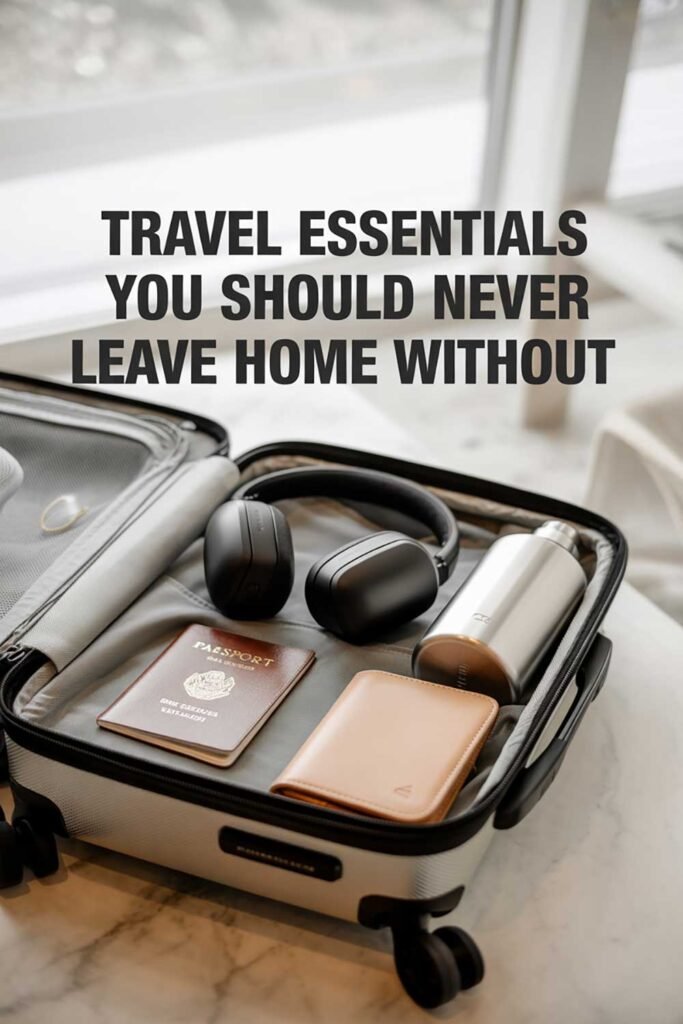
Need: Items without which your trip genuinely cannot function. Passport. Medication. Weather-appropriate base clothing. Essential toiletries. Charging cables.
Want: Items that would enhance comfort or enjoyment but whose absence wouldn’t ruin anything. That extra pair of shoes. The third jacket option. The book you might read.
Fear: Items packed to address scenarios that probably won’t happen. The formal outfit for the dinner that isn’t planned. The rain gear for a destination with 10% rain probability. The backup electronics for devices that rarely fail.
The minimalist filter: Pack all needs. Pack wants only when they earn their space through genuine, probable use. Leave fear items at home entirely.
The Numbers in Practice
Minimalist packing for a one-week trip typically involves:
Tops: Three to four. One or two can be merino wool or technical fabric for multi-day wear between washes.
Bottoms: Two to three. Neutral colors that pair with every top.
Layers: One to two. A light jacket or sweater and potentially a rain shell.
Shoes: One to two pairs maximum. One versatile walking pair and one lighter option if genuinely needed.
Underwear and socks: Three to four sets with plan to wash mid-trip.
Toiletries: Minimal. Travel-size only. Many available at your destination if needed.
Total clothing items: Approximately twelve to fifteen pieces covering seven days comfortably.
Total bag weight: Under fifteen pounds including the bag itself. Often under twelve.
What This Means for Bag Size
Minimalist packing typically fits in:
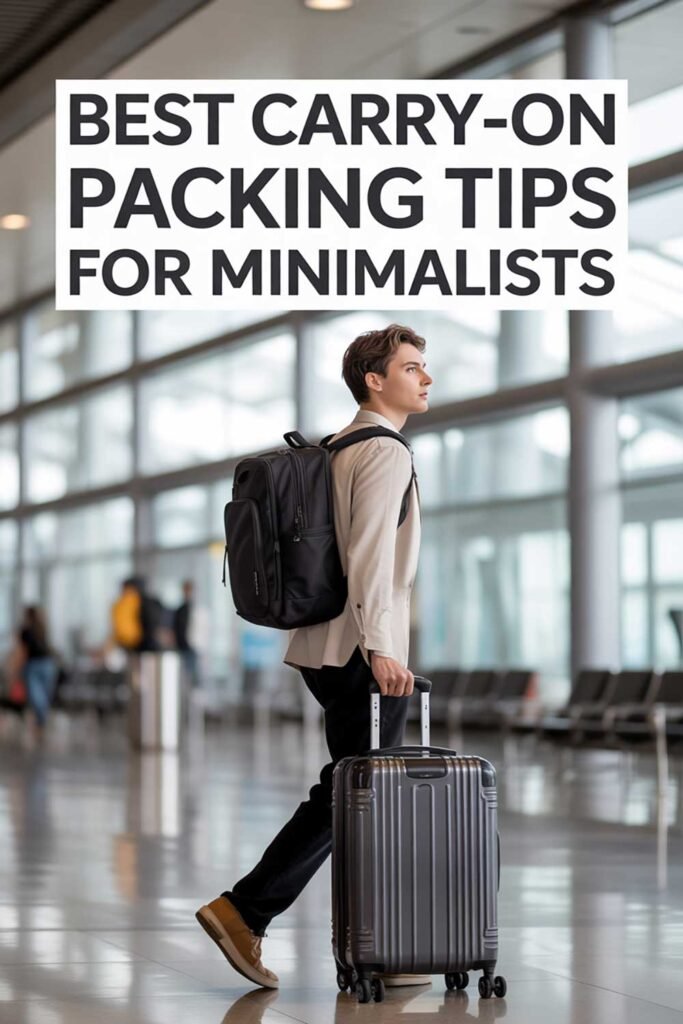
A carry-on backpack (40-45 liters): The most common minimalist choice. Fits overhead bins, eliminates checked bag fees, and allows hands-free mobility.
A personal item (20-25 liters): Achievable for warm-weather trips or trips with laundry access. Extreme minimalism but genuinely functional.
A small carry-on roller (30-35 liters): For travelers who prefer wheels over straps. Same volume constraint, different carrying method.
What it does not require: Checked luggage. Ever. For any trip length. This is the practical reality that minimalist packers discover and that skeptics find difficult to believe until they experience it themselves.
The Experience Transformation
Minimalist packing changes more than your luggage. It changes your trip.
Physical Freedom
The weight difference is immediate: Carrying twelve pounds through an airport feels fundamentally different from dragging forty-five pounds. Navigating public transit with a backpack feels different from wrestling a large suitcase through turnstiles and up stairs. Walking cobblestone streets with everything on your back feels different from searching for a luggage storage option before you can explore.
The freedom compounds: Every transportation decision becomes easier. Take the bus instead of a taxi because your bag fits. Walk the twenty minutes to your hotel instead of arranging a transfer. Accept the spontaneous invitation to change plans because your luggage isn’t constraining your movement.
The physical relief is daily: Not just at airports. Every time you move between locations, navigate a train station, climb stairs, or walk any distance, the lightness of minimalist packing improves the experience.
Logistical Simplicity
No checked bags: Eliminates waiting at baggage claim, risk of lost luggage, checked bag fees, and the need to arrive early for check-in. These savings compound across every flight.
Faster transitions: Arriving at a new destination and being ready to explore immediately – no waiting for luggage, no finding your hotel to drop heavy bags, no reorganizing after a chaotic suitcase opening. Your bag is on your back and you’re free.
Accommodation flexibility: Smaller bags fit in smaller spaces. Hostels, small guesthouses, compact city apartments, and overnight trains all become more comfortable when your luggage footprint is minimal.
Spontaneous travel becomes possible: Deciding to take a side trip, extend your stay, or change your route entirely is easy when everything you own for the trip is on your person. Heavy luggage anchors you to planned logistics.
Mental Clarity
Decision fatigue disappears: With three outfits, you’re not spending mental energy choosing what to wear each morning. The decision is made in seconds because the options are limited.
Worry reduces: You can’t lose what you don’t have. No anxiety about checked bags being lost. No concern about leaving valuables in a hotel room. No mental tracking of items spread across multiple bags and pockets.
Present-moment focus: Without the constant background management of heavy luggage – where to store it, how to transport it, whether everything is secure – your attention stays on the experience rather than the logistics.
The mindset transfers: Travelers who discover the freedom of minimalist packing often begin applying the same philosophy to other areas of their lives. If you don’t need thirty items for a week of travel, do you need thirty variants of things you barely use at home?
Financial Benefits
Direct savings: No checked bag fees ($30-70 per flight per bag, each direction). No oversized or overweight bag penalties. No need for porters, taxis, or storage services that heavy luggage sometimes requires.
Indirect savings: Minimalist packers rarely buy luggage accessories, packing organizers, or the latest suitcase innovations. The system is simple enough to require minimal gear.
The purchase reconsideration: When you know you’ll pack minimally, you stop buying travel-specific clothing and gadgets you don’t need. The industry that profits from “travel gear” loses a customer, and that customer keeps their money.
The Objections and Honest Responses
“I’ll Run Out of Clean Clothes”
The reality: Merino wool and synthetic technical fabrics can be worn two to three times between washes without odor or appearance issues. Quick-dry fabrics washed in a sink and hung overnight are ready by morning. Most accommodations have laundry access or affordable laundry services nearby.
The reframe: You don’t pack fourteen pairs of underwear for a two-week trip at home because you have a washing machine. Travel laundry achieves the same result with a sink and a clothesline.
“I Need Options for Different Situations”
The reality: Three versatile outfits cover virtually every situation a typical traveler encounters. Dark travel pants, a button-down shirt, and a jacket make any outfit dinner-appropriate. The same pants with a t-shirt work for daytime exploration. Actual situations requiring specialized clothing are far rarer than our anxiety predicts.
The reframe: When you watch people at restaurants, museums, and attractions during your travels, notice what they’re actually wearing. The variety is far less than you imagine, and nobody is evaluating your outfit.
“What If the Weather Changes?”
The reality: A layering system of base, mid, and outer layers handles temperature ranges from hot to genuinely cold with three to four items. Packable rain jackets weigh under twelve ounces and compress to fist-size. Weather preparedness doesn’t require heavy clothing.
The reframe: You’re preparing for a temperature range, not a fashion show. Functional coverage of weather conditions requires far less than fashion-appropriate coverage of weather conditions.
“I’m Not That Kind of Traveler”
The reality: Minimalist packing isn’t an identity or a traveler “type.” Business travelers, luxury travelers, family travelers, and cruise travelers all benefit from reduced luggage. The philosophy adapts to any travel style.
The reframe: You don’t have to look like a backpacker to pack like a minimalist. A small, elegant carry-on containing carefully chosen quality items is minimalist packing with a different aesthetic.
“It Works for Short Trips but Not Long Ones”
The reality: Minimalist packing for two weeks uses the same items as minimalist packing for one week – because laundry exists. The number of items doesn’t scale with trip length once you pass the one-week mark. Some minimalist travelers have circled the globe for months with a single carry-on backpack.
The reframe: Trip length determines how many times you wash, not how many items you pack.
How to Start: The Gradual Approach
Going from a fifty-pound checked bag to a twelve-pound backpack in one trip creates stress rather than freedom. The gradual approach works better.
Trip One: Reduce by 30%
The method: Pack as you normally would, then remove one-third of what you’ve selected. Force yourself to choose which third stays home.
What you’ll discover: You won’t miss what you removed. This experience provides the evidence your anxiety needs to permit further reduction.
Trip Two: Carry-On Only
The method: Use only a carry-on suitcase or backpack. No checked bags. This constraint forces meaningful choices about what earns space.
What you’ll discover: The carry-on constraint eliminates the “just in case” mentality because space is physically limited. And you’ll navigate airports, trains, and streets noticeably more easily.
Trip Three: Reduce the Carry-On
The method: Downsize from a maximum carry-on to a smaller bag. Or pack your carry-on and see how much empty space remains – that’s your reduction opportunity.
What you’ll discover: Your previous carry-on packing already included items you didn’t use. Reducing further removes those items and the experience doesn’t suffer.
Trip Four and Beyond: Refine
The method: After each trip, honestly assess what you wore, what you didn’t, and what you wished you had. Add the wished-for items, remove the unworn items, and your packing list self-optimizes through real experience.
What you’ll discover: Your packing list stabilizes at a number that works for you. This number is virtually always lower than where you started.
The Philosophy Beyond Packing
Minimalist packing often seeds a broader perspective shift.
Experiences over possessions: Traveling light demonstrates that experiences create happiness more reliably than having the right stuff. This realization extends beyond travel.
Enough is enough: Discovering that twelve items sustain a great week of travel challenges the assumption that more is always better in other contexts.
Freedom through reduction: The physical freedom of a light bag mirrors the mental freedom of reduced obligations, commitments, and possessions at home.
Confidence in capability: Handling a week of travel with minimal supplies builds confidence that you can handle life’s challenges with less support infrastructure than you assumed you needed.
Real-Life Minimalist Packing Experiences
Jennifer transitioned from a large checked suitcase to a 35-liter backpack over three trips. Her fourth trip – two weeks in Southeast Asia with twelve pounds on her back – was, by her own assessment, her best travel experience ever. Not despite the minimal packing, but because of it. Every spontaneous decision was possible because nothing anchored her.
Marcus resisted minimalist packing for years, insisting his business travel required a full-size suitcase. A delayed flight that caused his checked bag to arrive two days late forced him to survive on his personal item contents. He was fine. He later packed his standard business trip into a carry-on backpack and never checked a bag again.
The Thompson family adopted minimalist packing for a family of four and eliminated two checked bags from their travel routine, saving over $400 per round-trip in baggage fees. Their children learned to select their own minimal wardrobes, a skill that extends to daily life decision-making.
Sarah’s minimalist packing revelation came when she realized she’d worn the same three outfits through a ten-day European trip and received more compliments on her style than on trips where she’d packed fifteen outfit options. Fewer, better-quality items created a more cohesive appearance than abundant mediocre ones.
Tom packed a carry-on for a three-week trip for the first time at age sixty-three. His comment upon returning: “I spent thirty years carrying things I didn’t need to places that didn’t require them. The lightness changes everything.”
20 Powerful and Uplifting Quotes About Minimalist Packing
- “Minimalist packing isn’t about deprivation – it’s about discovering that most of what you packed was never contributing to your experience.”
- “The cause of overpacking isn’t poor technique. It’s a mindset that equates preparedness with volume.”
- “Three good outfits you actually wear provide more value than twelve theoretical outfits that mostly stay packed.”
- “You are not your clothing. Your personality defines you to everyone you meet, not your outfit variety.”
- “Every item packed out of fear addresses a scenario that probably won’t happen at the cost of weight that definitely will burden you.”
- “Twelve pounds through an airport feels fundamentally different from forty-five. The freedom is immediate and physical.”
- “Spontaneous travel becomes possible when everything you own for the trip is on your person.”
- “Decision fatigue disappears with three outfits. The choice takes seconds because the options are intentionally limited.”
- “Trip length determines how many times you wash, not how many items you pack.”
- “You don’t need to look like a backpacker to pack like a minimalist.”
- “The gradual approach works better than overnight conversion. Reduce by thirty percent and notice what you don’t miss.”
- “Minimalist packers don’t suffer through deprivation. They experience freedom that overpacked travelers can’t access.”
- “No checked bags means no waiting, no lost luggage risk, no fees, and no early airport arrival for check-in.”
- “The carry-on constraint eliminates ‘just in case’ thinking because space is physically limited.”
- “Watch what people actually wear at restaurants and attractions. The variety is far less than your anxiety imagines.”
- “After each trip, remove what you didn’t wear and add what you wished you had. Your list self-optimizes through experience.”
- “Business travelers, luxury travelers, and family travelers all benefit from lighter luggage. This isn’t a traveler type – it’s a philosophy.”
- “The purchase reconsideration is a hidden benefit. When you pack light, you stop buying travel gear you don’t need.”
- “Traveling light demonstrates that experiences create happiness more reliably than having the right stuff.”
- “The lightness changes everything. Not just your bag. Your movement, your decisions, your attention, your freedom.”
Picture This
Imagine two versions of yourself arriving in Lisbon.
Version one: You exit the plane and walk to baggage claim. Twenty minutes of watching the carousel, scanning for your large black suitcase among dozens of identical large black suitcases. There it is. You wrestle it off the belt – forty-three pounds of clothing, shoes, toiletries, and contingencies for scenarios that may never materialize.
You drag it through the terminal. The wheels catch on the textured floor. You navigate the narrow aisle of the airport train, blocking other passengers as you maneuver the suitcase into position. At your stop, you lift it down the stairs because the escalator is broken. Your shoulder protests. A bead of sweat forms.
Your hotel is a ten-minute walk from the metro station. You’d enjoy the walk through Lisbon’s streets – the tiles, the light, the sounds of a new city – but the suitcase turns every cobblestone into an obstacle. You focus on the sidewalk surface rather than the architecture above it. A beautiful tiled facade goes unnoticed because you’re steering around a broken paving stone.
You arrive at your hotel. Check in. Drag the suitcase to your room. Open it. Start unpacking. Thirty minutes later, your clothes hang in the closet and fill the drawers. The room looks like you’ve moved in.
Version two: You exit the plane and walk past baggage claim entirely. Everything you need is on your back in a twenty-eight-liter pack weighing eleven pounds. You don’t stop. You don’t wait. You don’t scan a carousel. You simply walk through the terminal and into the city.
The airport train is easy. Your pack sits on your lap. You watch Lisbon appear through the window as the train crosses the river. At your stop, you walk up the broken escalator stairs without effort.
The ten-minute walk from the metro to your hotel is your first experience of the city. Your hands are free. Your eyes are up. You notice the azulejo tiles on a building facade – blue and white, centuries old, catching afternoon light. You hear fado music drifting from an open window. You smell coffee from a corner cafe. You stop and buy a small espresso, standing at the counter with your pack comfortably on your back, watching the neighborhood live its ordinary afternoon.
You arrive at your hotel. Check in. Set your pack on the bed. Unzip it. Everything you need is visible in one glance. You pull out your toiletry kit, hang tomorrow’s shirt on the hook behind the door, and you’re unpacked. Three minutes.
You look at the time. Version one of you is still unpacking at the hotel. Version two of you has already had a coffee, noticed the tiles, heard the music, and is heading back out to explore with nothing but your phone and wallet.
Same flight. Same destination. Same traveler.
Completely different arrival experience. And the difference isn’t luck or circumstance. It’s a philosophy – one that decided before the trip that eleven pounds of carefully chosen items would serve you better than forty-three pounds of everything you might possibly need.
The rest of the week confirms what the arrival promised. Every bus, every train, every narrow staircase, every spontaneous decision to walk instead of taxi, every unplanned side trip to a village someone recommended at breakfast – all of it is easier, lighter, freer.
On day six, you sit at a rooftop bar watching the sun set over the Tagus River. Your entire trip is in the small pack under your chair. Everything you need. Nothing you don’t. The sunset is the same one the heavy-suitcase traveler sees from the same rooftop. But you arrived here without effort, without logistics, without the constant background management of stuff.
The sunset isn’t better because your bag is lighter. But you are more present for it. And presence, not possessions, is what travel is actually for.
Share This Article
Ready to transform your relationship with luggage or know someone who packs their entire closet for a weekend trip? Share this article with chronic overpackers who need a philosophical shift rather than another packing tip, travelers curious about carrying less, anyone whose heavy luggage is diminishing their travel experience, or friends who think minimalist packing means suffering! The philosophy changes more than your bag – it changes how you experience every moment of travel. Share it on Facebook, Instagram, Twitter, Pinterest, or send it directly to someone who deserves to experience the freedom of a lighter bag. Help spread the word that less luggage genuinely creates more experience. Your share might inspire someone to leave the extra suitcase behind and discover what traveling light actually feels like!
Disclaimer
This article is provided for informational and educational purposes only and is based on general minimalist packing philosophy and common traveler experiences. The information contained in this article is not intended to be prescriptive packing guidance for all travelers or all trip types.
Individual packing needs vary based on trip type, destination, personal requirements, medical needs, professional obligations, and many other factors. Minimalist packing may not be appropriate or achievable for all travelers or all circumstances.
The author and publisher of this article are not responsible for any packing decisions, travel experiences, or outcomes. Readers assume all responsibility for their own packing choices.
Carry-on size limits vary by airline and may change without notice. Verify current restrictions with your specific carrier before traveling.
Laundry availability varies by destination and accommodation type. Verify laundry options at your destination before relying on mid-trip washing.
Fabric performance claims vary by brand and product. Research specific items before purchasing.
This article presents one packing philosophy among many. It may not align with all travelers’ preferences, needs, or travel styles.
By using the information in this article, you acknowledge that you do so at your own risk and release the author and publisher from any liability related to your packing decisions and travel experiences.